Download as PPSX, PPTX
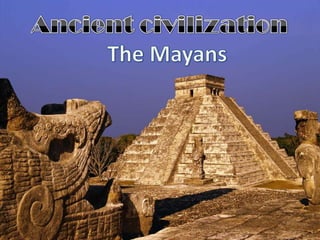
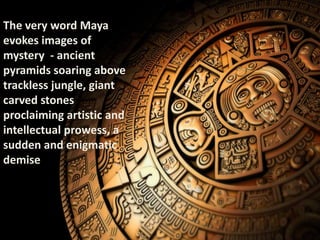


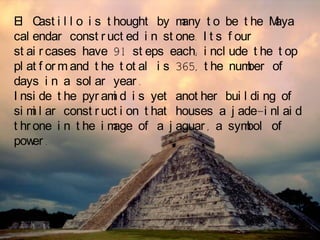


The Maya civilization flourished in Mesoamerica from around 250 AD to the arrival of the Spanish in the 16th century. They established many city-states across the Yucatan Peninsula, governed by hereditary rulers, where they developed advanced systems of writing, mathematics, astronomy, and architecture. Some of their greatest cities, like Chichen Itza, contained temples, ball courts, and structures like El Castillo pyramid that aligned with astronomical events. While their civilization mysteriously declined around 900 AD, Maya culture and influence continued through the Postclassic period until the Spanish conquest, and over 4 million Maya descendants still live on today maintaining aspects of their ancestral culture and language.


