



Currency verma
THE LAST LESSON
- BY ALPHONSE DAUDET
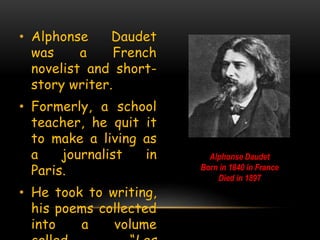
• Alphonse Daudet
was a French
novelist and short-
story writer.
• Formerly, a school
teacher, he quit it
to make a living as
a journalist in
Paris.
• He took to writing,
his poems collected
into a volume
Alphonse Daudet
Born in 1840 in France
Died in 1897
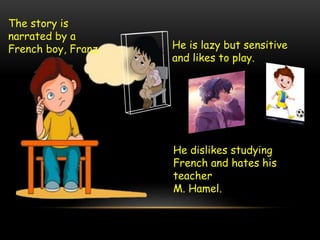
He is lazy but sensitive
and likes to play.
He dislikes studying
French and hates his
teacher
M. Hamel.
The story is
narrated by a
French boy, Franz.
After overpowering
their districts of
Alsace and Lorraine in
France,.
Berlin has ordered
that German language
instead of French be
taught in the schools
there.
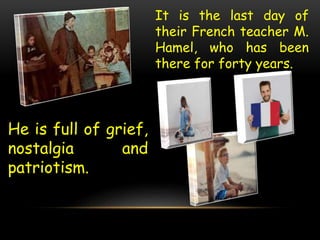
It is the last day of
their French teacher M.
Hamel, who has been
there for forty years.
He is full of grief,
nostalgia and
patriotism.
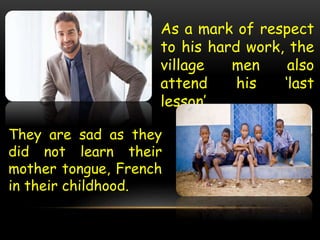
As a mark of respect
to his hard work, the
village men also
attend his ‘last
lesson’.
They are sad as they
did not learn their
mother tongue, French
in their childhood.
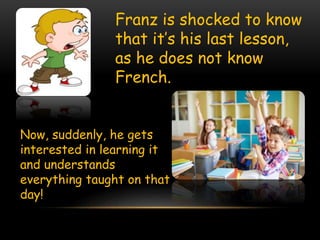
Franz is shocked to know
that it’s his last lesson,
as he does not know
French.
Now, suddenly, he gets
interested in learning it
and understands
everything taught on that
day!
He develops an instant
liking for the teacher, M.
Hamel and respects him
for his sincerity and hard
work.
He feels sad at departing
from him and is ashamed
for not being able to
recite the lesson of
participles.
M. Hamel tells
them that they
all are at fault
for not being
eager enough to
learn, putting it
off to the next
day.
He blames
himself for not
teaching them
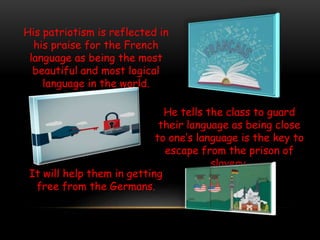
His patriotism is reflected in
his praise for the French
language as being the most
beautiful and most logical
language in the world.
He tells the class to guard
their language as being close
to one’s language is the key to
escape from the prison of
slavery.
It will help them in getting
free from the Germans.
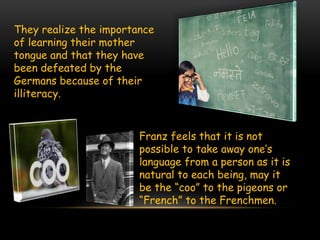
They realize the importance
of learning their mother
tongue and that they have
been defeated by the
Germans because of their
illiteracy.
Franz feels that it is not
possible to take away one’s
language from a person as it is
natural to each being, may it
be the “coo” to the pigeons or
“French” to the Frenchmen.
Thank
you

The last lesson

  • 1.
    Currency verma THE LASTLESSON - BY ALPHONSE DAUDET
  • 2.
    • Alphonse Daudet wasa French novelist and short- story writer. • Formerly, a school teacher, he quit it to make a living as a journalist in Paris. • He took to writing, his poems collected into a volume Alphonse Daudet Born in 1840 in France Died in 1897
  • 3.
    He is lazybut sensitive and likes to play. He dislikes studying French and hates his teacher M. Hamel. The story is narrated by a French boy, Franz.
  • 4.
    After overpowering their districtsof Alsace and Lorraine in France,. Berlin has ordered that German language instead of French be taught in the schools there.
  • 5.
    It is thelast day of their French teacher M. Hamel, who has been there for forty years. He is full of grief, nostalgia and patriotism.
  • 6.
    As a markof respect to his hard work, the village men also attend his ‘last lesson’. They are sad as they did not learn their mother tongue, French in their childhood.
  • 7.
    Franz is shockedto know that it’s his last lesson, as he does not know French. Now, suddenly, he gets interested in learning it and understands everything taught on that day!
  • 8.
    He develops aninstant liking for the teacher, M. Hamel and respects him for his sincerity and hard work. He feels sad at departing from him and is ashamed for not being able to recite the lesson of participles.
  • 9.
    M. Hamel tells themthat they all are at fault for not being eager enough to learn, putting it off to the next day. He blames himself for not teaching them
  • 10.
    His patriotism isreflected in his praise for the French language as being the most beautiful and most logical language in the world. He tells the class to guard their language as being close to one’s language is the key to escape from the prison of slavery. It will help them in getting free from the Germans.
  • 11.
    They realize theimportance of learning their mother tongue and that they have been defeated by the Germans because of their illiteracy. Franz feels that it is not possible to take away one’s language from a person as it is natural to each being, may it be the “coo” to the pigeons or “French” to the Frenchmen.
  • 12.