THE LAST LESSON
ALPHONSE DAUDET
Objectives
After going through this lesson the students will cultivate in
themselves the love for their native language
The students will know how their culture and language are related
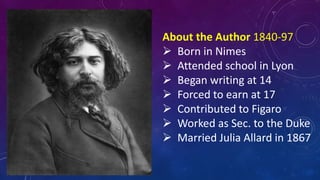
About the Author 1840-97
 Born in Nimes
 Attended school in Lyon
 Began writing at 14
 Forced to earn at 17
 Contributed to Figaro
 Worked as Sec. to the Duke
 Married Julia Allard in 1867
 Daudet joined army to fight in the Franco- Prussian war
 France’s defeat had a profound impact & is reflected in
his stories
 THEME Relates to culture & language
 Hegemony of the imperial & colonial power
 Uncontrolled desire for ruling the world and
dominating the culture & identities
 Pathos of the likely language crisis Language: an
asset, more so in times of crisis Fear
 shame & agony of losing freedom of learning & using
mother tongue
Nothing is important
until we lose it
What is freedom?
Have you felt that you
are free
Franco- Prussian War
Franco- Prussian War-field
An anthropomorphic view
of the nations subjugating
other nations
 German occupation of Alsace-Lorraine, a French Territory, in 1870
As usual Franz fears while going
to school
• Late for school
• Afraid of being scolded
• Had not learnt lesson on
participle
Franz’s Plan
• Thought of running away and
spending the day outside
because the day was bright
and warm
• Thought of enjoying the birds’
chirping
• Tempted to watch the drilling
of Prussian soldiers
• Overcoming his temptation
he rushed to school
Scene at the town Hall
• Bulletin board a source
of bad news
• A crowd in front of
bulletin board
School
Franz notices changes at school
Everything was silent
Mr. Hamel was in occasional
dress
Surprising things in the
classroom
Mr. Hamel was unusually kind
Serious look of the school
Village elderly people sitting on
backbenches
Students
Student’s attention
Students set to work quickly
Pin drop silence
Even beetles fail to distract them
Lack of learning; Hamel’s view
 Parents ignorant, not anxious to make their children learn
 Children preferred to be put to work on farms or mills
 Also blamed himself for sending children on errands
Mr. Hamel addressing the students
 Mr. Hamel demanded full attention
 Las lesson of French
 German will be taught in the schools of Alsace and Lorraine
 Franz felt sorry for ignoring his lesson
 Deeply pained at the thought of Mr. Hamel going away
Mr. Hamel teaches his last lesson
 Calls the French language the most beautiful language
 Gives them their lesson in grammar
 Wants to teach them everything in one go
 Gives a lesson in writing
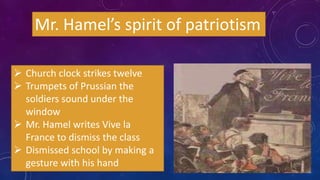
Mr. Hamel’s spirit of patriotism
 Church clock strikes twelve
 Trumpets of Prussian the
soldiers sound under the
window
 Mr. Hamel writes Vive la
France to dismiss the class
 Dismissed school by making a
gesture with his hand
Mr. Hamel’s Dedication
Served school for 40 years
Nothing had changed
Desks and benches were worn smooth
Walnut tree grew taller, hopvine reached to the roof

2. The last lesson.pptx

  • 1.
  • 2.
    Objectives After going throughthis lesson the students will cultivate in themselves the love for their native language The students will know how their culture and language are related
  • 3.
    About the Author1840-97  Born in Nimes  Attended school in Lyon  Began writing at 14  Forced to earn at 17  Contributed to Figaro  Worked as Sec. to the Duke  Married Julia Allard in 1867
  • 4.
     Daudet joinedarmy to fight in the Franco- Prussian war  France’s defeat had a profound impact & is reflected in his stories
  • 5.
     THEME Relatesto culture & language  Hegemony of the imperial & colonial power  Uncontrolled desire for ruling the world and dominating the culture & identities  Pathos of the likely language crisis Language: an asset, more so in times of crisis Fear  shame & agony of losing freedom of learning & using mother tongue
  • 6.
    Nothing is important untilwe lose it What is freedom? Have you felt that you are free
  • 7.
    Franco- Prussian War Franco-Prussian War-field
  • 8.
    An anthropomorphic view ofthe nations subjugating other nations
  • 9.
     German occupationof Alsace-Lorraine, a French Territory, in 1870 As usual Franz fears while going to school • Late for school • Afraid of being scolded • Had not learnt lesson on participle Franz’s Plan • Thought of running away and spending the day outside because the day was bright and warm • Thought of enjoying the birds’ chirping • Tempted to watch the drilling of Prussian soldiers • Overcoming his temptation he rushed to school
  • 10.
    Scene at thetown Hall • Bulletin board a source of bad news • A crowd in front of bulletin board School Franz notices changes at school Everything was silent Mr. Hamel was in occasional dress Surprising things in the classroom Mr. Hamel was unusually kind Serious look of the school Village elderly people sitting on backbenches
  • 11.
    Students Student’s attention Students setto work quickly Pin drop silence Even beetles fail to distract them
  • 12.
    Lack of learning;Hamel’s view  Parents ignorant, not anxious to make their children learn  Children preferred to be put to work on farms or mills  Also blamed himself for sending children on errands
  • 13.
    Mr. Hamel addressingthe students  Mr. Hamel demanded full attention  Las lesson of French  German will be taught in the schools of Alsace and Lorraine  Franz felt sorry for ignoring his lesson  Deeply pained at the thought of Mr. Hamel going away
  • 14.
    Mr. Hamel teacheshis last lesson  Calls the French language the most beautiful language  Gives them their lesson in grammar  Wants to teach them everything in one go  Gives a lesson in writing
  • 15.
    Mr. Hamel’s spiritof patriotism  Church clock strikes twelve  Trumpets of Prussian the soldiers sound under the window  Mr. Hamel writes Vive la France to dismiss the class  Dismissed school by making a gesture with his hand
  • 16.
    Mr. Hamel’s Dedication Servedschool for 40 years Nothing had changed Desks and benches were worn smooth Walnut tree grew taller, hopvine reached to the roof

Editor's Notes

  • #5 Objective of the lesson
  • #7 Nothing is important until we lose it
  • #9 An anthropomorphic view of the nations subjugating other nations victorious
  • #10 German occupation of Alsace-Lorraine, a French Territory, in 1870
  • #11 School
  • #12 Student’s attention
  • #13 Parents ignorant, not anxious
  • #14 Mr. Hamel demanded full attention
  • #15 Mr. Hamel’s Dedication
  • #16 Chruch clock strikes twelve
  • #17 Served school for 40 years