THE KAIZEN METHODOLOGY
What exactly is Kaizen?
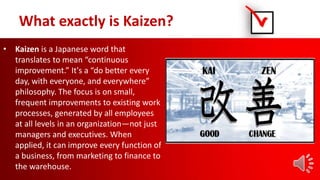
• Kaizen is a Japanese word that
translates to mean “continuous
improvement.” It's a “do better every
day, with everyone, and everywhere”
philosophy. The focus is on small,
frequent improvements to existing work
processes, generated by all employees
at all levels in an organization—not just
managers and executives. When
applied, it can improve every function of
a business, from marketing to finance to
the warehouse.
The Kaizen method consists
of 5 founding elements:
• Teamwork
• Personal discipline
• Improved morale
• Quality circle, and
• Suggestions for improvement.
Kaizen is part action plan and part philosophy.
• As an action plan, Kaizen is about organizing
events focused on improving specific areas
within the company. These events involve
teams of employees at all levels, with an
especially strong emphasis on involving plant
floor employees
The Dual Nature of Kaizen
Kaizen is part action plan and part philosophy.
The Dual Nature of Kaizen
• As a philosophy, Kaizen is about building a
culture where all employees are actively
engaged in suggesting and implementing
improvements to the company. In truly lean
companies, it becomes a natural way of thinking
for both managers and plant floor employees.
Implementing Kaizen Methodology
• Using the Kaizen methodology is an easy way to
engage employees and develop a culture of
continuous improvement. It seems obvious, but
employee engagement has a direct impact on
business processes and success. When you organize
and empower all employees to participate in the
big picture through small effects on their local
environments, they'll stick around longer and work
smarter.
Kaizen event procedure
1. Set goals and provide any necessary background.
2. Review the current state and develop a plan for
improvements.
3. Implement improvements.
4. Review and fix what doesn’t work.
5. Report results and determine any follow-up items.
Don’t seek perfection
Kaizen methodology doesn’t exist to suddenly perfect
processes, but to simply improve them. One might
even argue Kaizen suggests perfection is
unattainable—that regardless of how well things are
going, there are always ways to improve, from
product features to the way you manage projects.
Use 5S and other strategies
Kaizen process improvement is a mindset to always be
on the lookout for ways to improve. But, when the
time comes to implement improvements, you may
find it useful to take advantage of other process
improvement methodologies like Six Sigma or 5s,
which can act as a framework for data-driven decision
making.
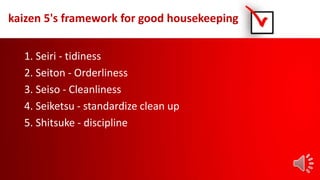
kaizen 5's framework for good housekeeping
1. Seiri - tidiness
2. Seiton - Orderliness
3. Seiso - Cleanliness
4. Seiketsu - standardize clean up
5. Shitsuke - discipline
What is the role of Kaizen in Toyota's
history of success?
• The Kaizen philosophy lies behind many Japanese management
theories and concepts such as Total Quality Control, Quality Control
Circles, Small Group activities, and labor relations.
• You might have heard the term Kaizen in reference to The Toyota
Way—a famous tale studied in business school. Or, maybe you've
heard it tossed around with other continuous improvement
methodologies like Six Sigma, Lean, Total Quality Management, 5S,
and the like
Kaizen and Toyota Motor Corporation
Relationship
• Kaizen is one of the core principles of The Toyota Production System,
a quest for continuous improvement and a single word that sums up
Toyota’s ‘Always a Better Way’ slogan.
• The history of Kaizen begins after World War II when Toyota first
implemented quality circles in its production process. This was
influenced in part by American business and quality management
teachers who visited the country. ... The term Kaizen actually
became famous around the world through the works of Masaaki
Imai.
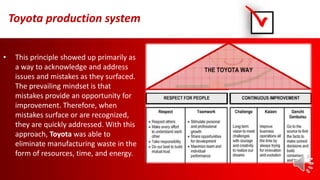
Toyota production system
• This principle showed up primarily as
a way to acknowledge and address
issues and mistakes as they surfaced.
The prevailing mindset is that
mistakes provide an opportunity for
improvement. Therefore, when
mistakes surface or are recognized,
they are quickly addressed. With this
approach, Toyota was able to
eliminate manufacturing waste in the
form of resources, time, and energy.
References
• www.blog.toyota.co.uk
• www.Kanabichi.com
• www.Lucidchart.com
• www.Leanproduction.com
• www.Mindtools.com
• Toyota Way Book by Jeffrey Liker (2003)

The kaizen methodology

  • 1.
  • 3.
    What exactly isKaizen? • Kaizen is a Japanese word that translates to mean “continuous improvement.” It's a “do better every day, with everyone, and everywhere” philosophy. The focus is on small, frequent improvements to existing work processes, generated by all employees at all levels in an organization—not just managers and executives. When applied, it can improve every function of a business, from marketing to finance to the warehouse.
  • 4.
    The Kaizen methodconsists of 5 founding elements: • Teamwork • Personal discipline • Improved morale • Quality circle, and • Suggestions for improvement.
  • 5.
    Kaizen is partaction plan and part philosophy. • As an action plan, Kaizen is about organizing events focused on improving specific areas within the company. These events involve teams of employees at all levels, with an especially strong emphasis on involving plant floor employees The Dual Nature of Kaizen
  • 6.
    Kaizen is partaction plan and part philosophy. The Dual Nature of Kaizen • As a philosophy, Kaizen is about building a culture where all employees are actively engaged in suggesting and implementing improvements to the company. In truly lean companies, it becomes a natural way of thinking for both managers and plant floor employees.
  • 7.
    Implementing Kaizen Methodology •Using the Kaizen methodology is an easy way to engage employees and develop a culture of continuous improvement. It seems obvious, but employee engagement has a direct impact on business processes and success. When you organize and empower all employees to participate in the big picture through small effects on their local environments, they'll stick around longer and work smarter.
  • 8.
    Kaizen event procedure 1.Set goals and provide any necessary background. 2. Review the current state and develop a plan for improvements. 3. Implement improvements. 4. Review and fix what doesn’t work. 5. Report results and determine any follow-up items.
  • 9.
    Don’t seek perfection Kaizenmethodology doesn’t exist to suddenly perfect processes, but to simply improve them. One might even argue Kaizen suggests perfection is unattainable—that regardless of how well things are going, there are always ways to improve, from product features to the way you manage projects.
  • 10.
    Use 5S andother strategies Kaizen process improvement is a mindset to always be on the lookout for ways to improve. But, when the time comes to implement improvements, you may find it useful to take advantage of other process improvement methodologies like Six Sigma or 5s, which can act as a framework for data-driven decision making.
  • 11.
    kaizen 5's frameworkfor good housekeeping 1. Seiri - tidiness 2. Seiton - Orderliness 3. Seiso - Cleanliness 4. Seiketsu - standardize clean up 5. Shitsuke - discipline
  • 12.
    What is therole of Kaizen in Toyota's history of success? • The Kaizen philosophy lies behind many Japanese management theories and concepts such as Total Quality Control, Quality Control Circles, Small Group activities, and labor relations. • You might have heard the term Kaizen in reference to The Toyota Way—a famous tale studied in business school. Or, maybe you've heard it tossed around with other continuous improvement methodologies like Six Sigma, Lean, Total Quality Management, 5S, and the like
  • 13.
    Kaizen and ToyotaMotor Corporation Relationship • Kaizen is one of the core principles of The Toyota Production System, a quest for continuous improvement and a single word that sums up Toyota’s ‘Always a Better Way’ slogan. • The history of Kaizen begins after World War II when Toyota first implemented quality circles in its production process. This was influenced in part by American business and quality management teachers who visited the country. ... The term Kaizen actually became famous around the world through the works of Masaaki Imai.
  • 14.
    Toyota production system •This principle showed up primarily as a way to acknowledge and address issues and mistakes as they surfaced. The prevailing mindset is that mistakes provide an opportunity for improvement. Therefore, when mistakes surface or are recognized, they are quickly addressed. With this approach, Toyota was able to eliminate manufacturing waste in the form of resources, time, and energy.
  • 15.
    References • www.blog.toyota.co.uk • www.Kanabichi.com •www.Lucidchart.com • www.Leanproduction.com • www.Mindtools.com • Toyota Way Book by Jeffrey Liker (2003)