THE INTERNET,
PEDAGOGY, AND
LEARNING
Fitri Hidayati (16716251005)
Severinus Sakaria
(16716259002)
Riska Okta Pratiwi
(16716251010)
NATURE AND HISTORY OF
THE INTERNET IN SCHOOLS
The National Curriculum for Schools in England (DfEE/QCA, 1999) sets
out four strands:
Finding things out
Developing ideas and making things happen
Exchanging and sharing information
Reviewing, modifying and evaluating work as it progresses.
BERNERS-LEE (IN DERN, 1994: 43)
DESCRIPTION OF DIFFERENT
ELEMENTS:
Wide-are
Hypermedia
Information retrieval
Universal access
Large universe of documents
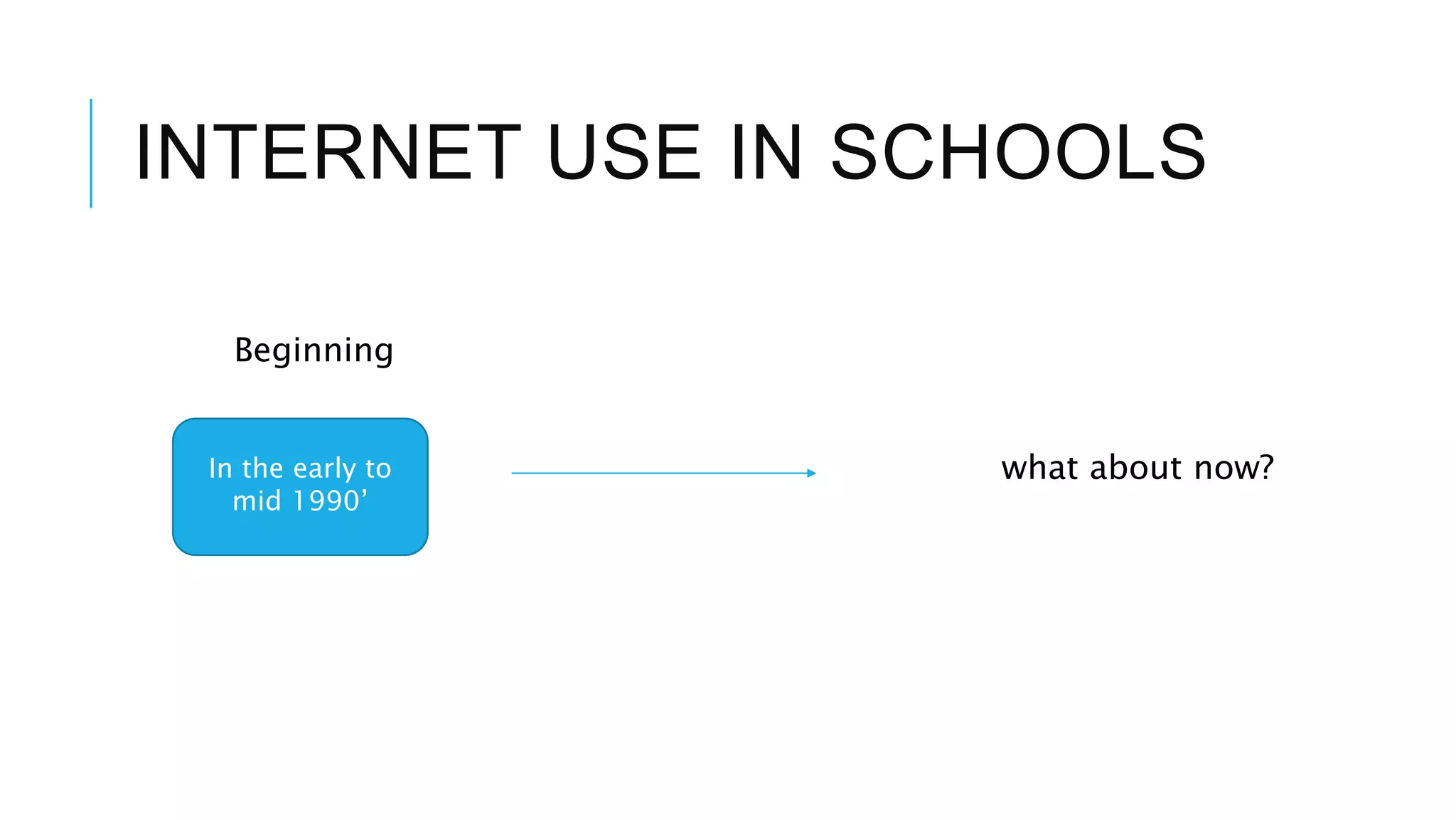
INTERNET USE IN SCHOOLS
Beginning
what about now?In the early to
mid 1990’
WEBSITE EVALUATION
Authority
Purpose
Audience
Relevance
Objectivity
Accuracy
Currency
Format
Links
Ease of use
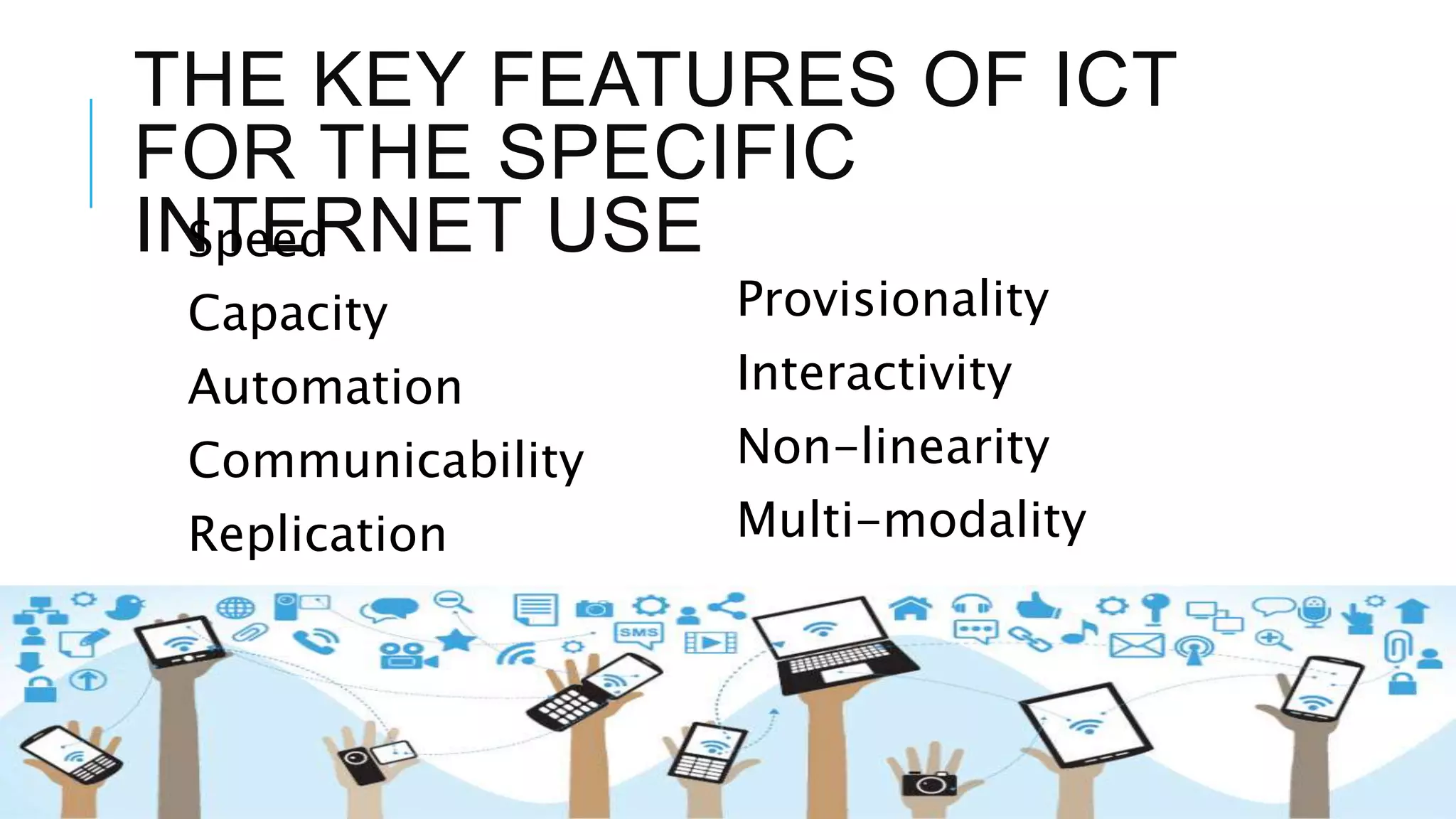
THE KEY FEATURES OF ICT
FOR THE SPECIFIC
INTERNET USESpeed
Capacity
Automation
Communicability
Replication
Provisionality
Interactivity
Non-linearity
Multi-modality
PEDAGOGY
Mortimore (1999: 17) describes pedagogical activity as,
“Any conscious activity by one person designed to enhance
learning in another”, which clearly includes decisions made by
teachers, and to extent by policy makers, concerning the place
of new technologies in teaching and learning.
-> pedagogy has come to refer to “the skills and approaches
used by teachers to achieve the aims of the lessons that they
teach, or methods which they employ.”
CONT.
Traditional pedagogies
For example: Victorian age
The prevailing view on teaching and learning was that children’s heads were
empty and it was the job of the teacher to remedy that by filling them with
information in the form of facts.
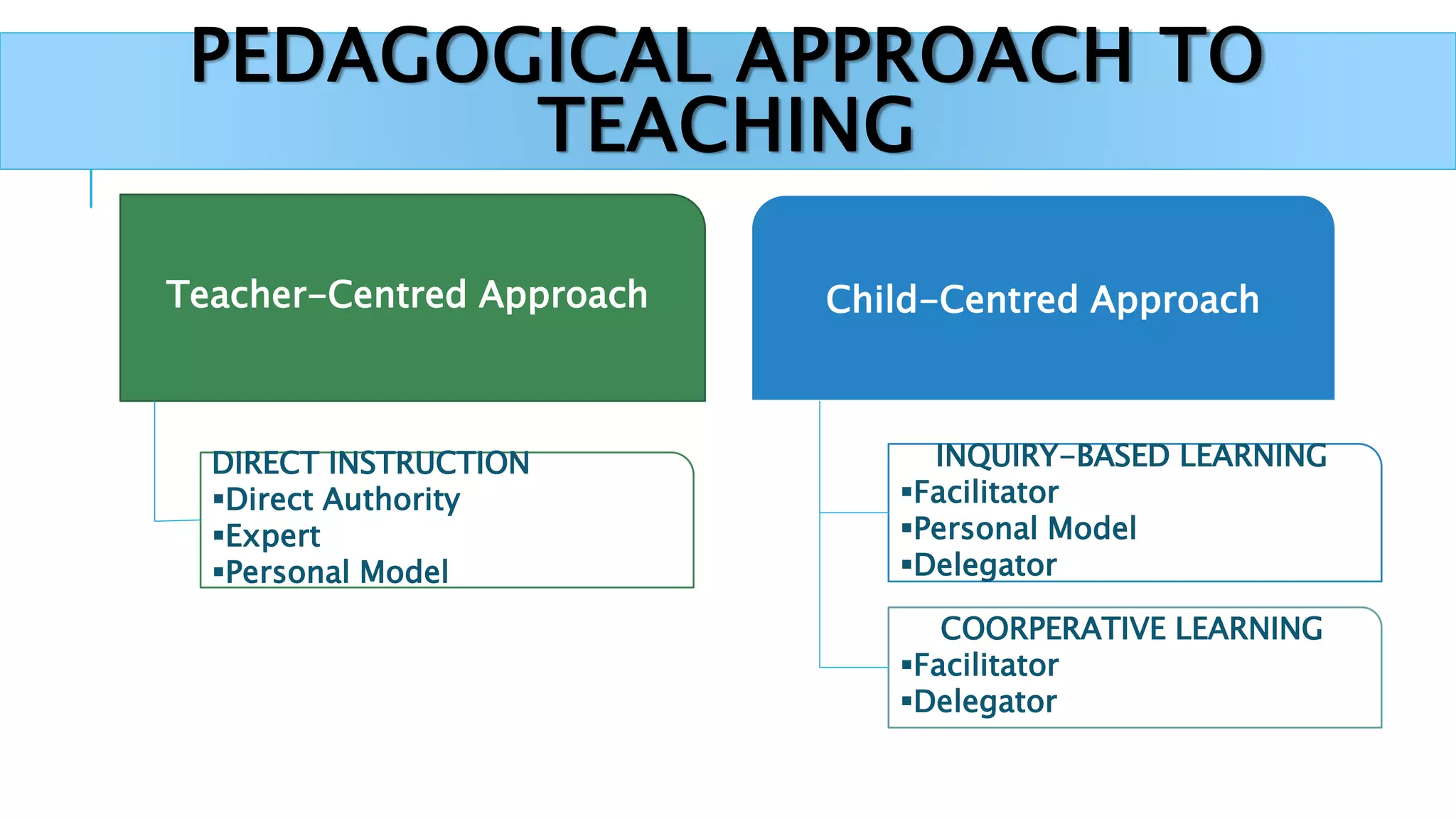
PEDAGOGICAL APPROACH TO
TEACHING
Teacher-Centred Approach
DIRECT INSTRUCTION
Direct Authority
Expert
Personal Model
INQUIRY-BASED LEARNING
Facilitator
Personal Model
Delegator
COORPERATIVE LEARNING
Facilitator
Delegator
Child-Centred Approach
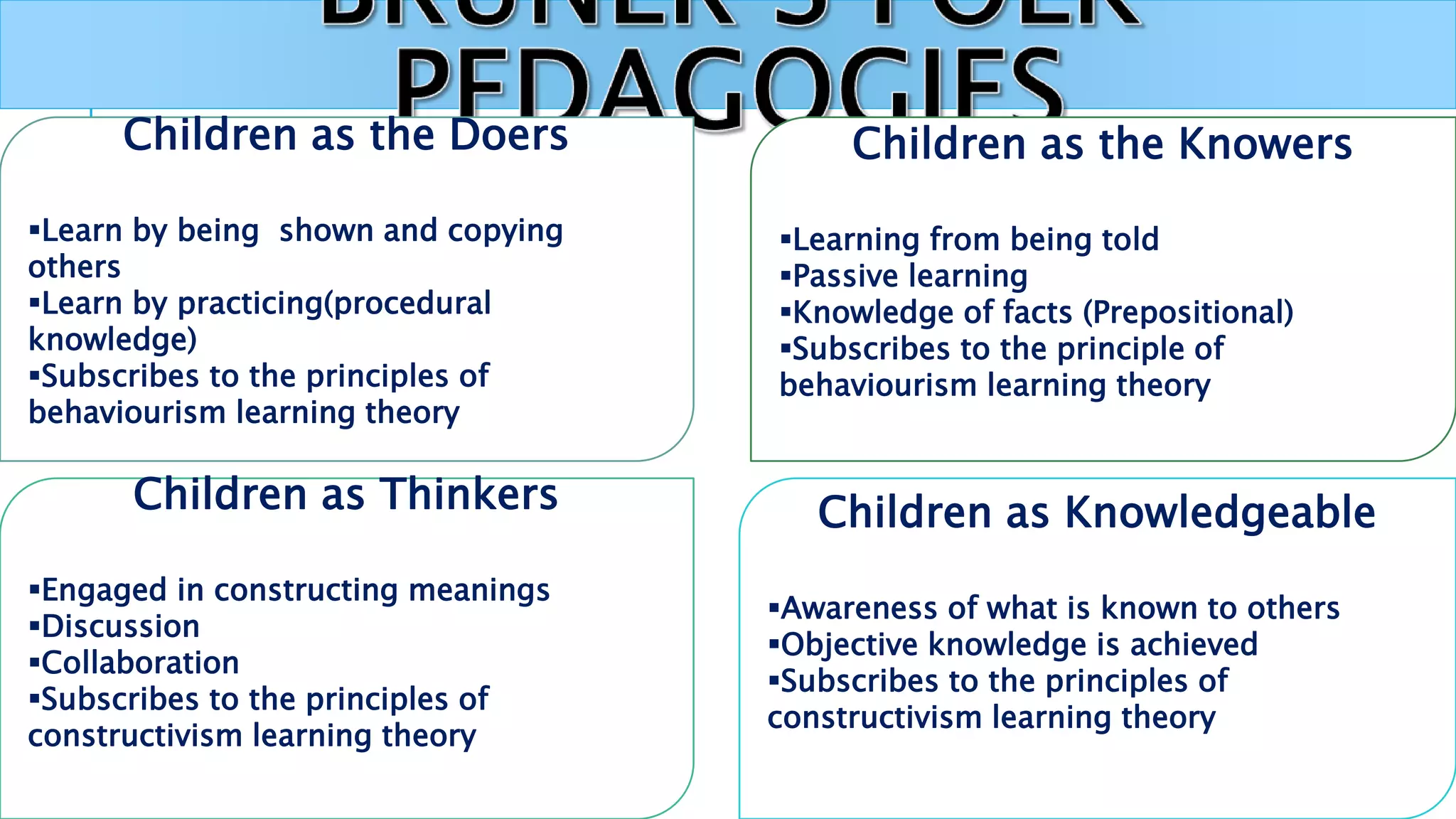
Children as Thinkers
Engaged in constructing meanings
Discussion
Collaboration
Subscribes to the principles of
constructivism learning theory
Children as the Doers
Learn by being shown and copying
others
Learn by practicing(procedural
knowledge)
Subscribes to the principles of
behaviourism learning theory
Children as Knowledgeable
Awareness of what is known to others
Objective knowledge is achieved
Subscribes to the principles of
constructivism learning theory
Children as the Knowers
Learning from being told
Passive learning
Knowledge of facts (Prepositional)
Subscribes to the principle of
behaviourism learning theory
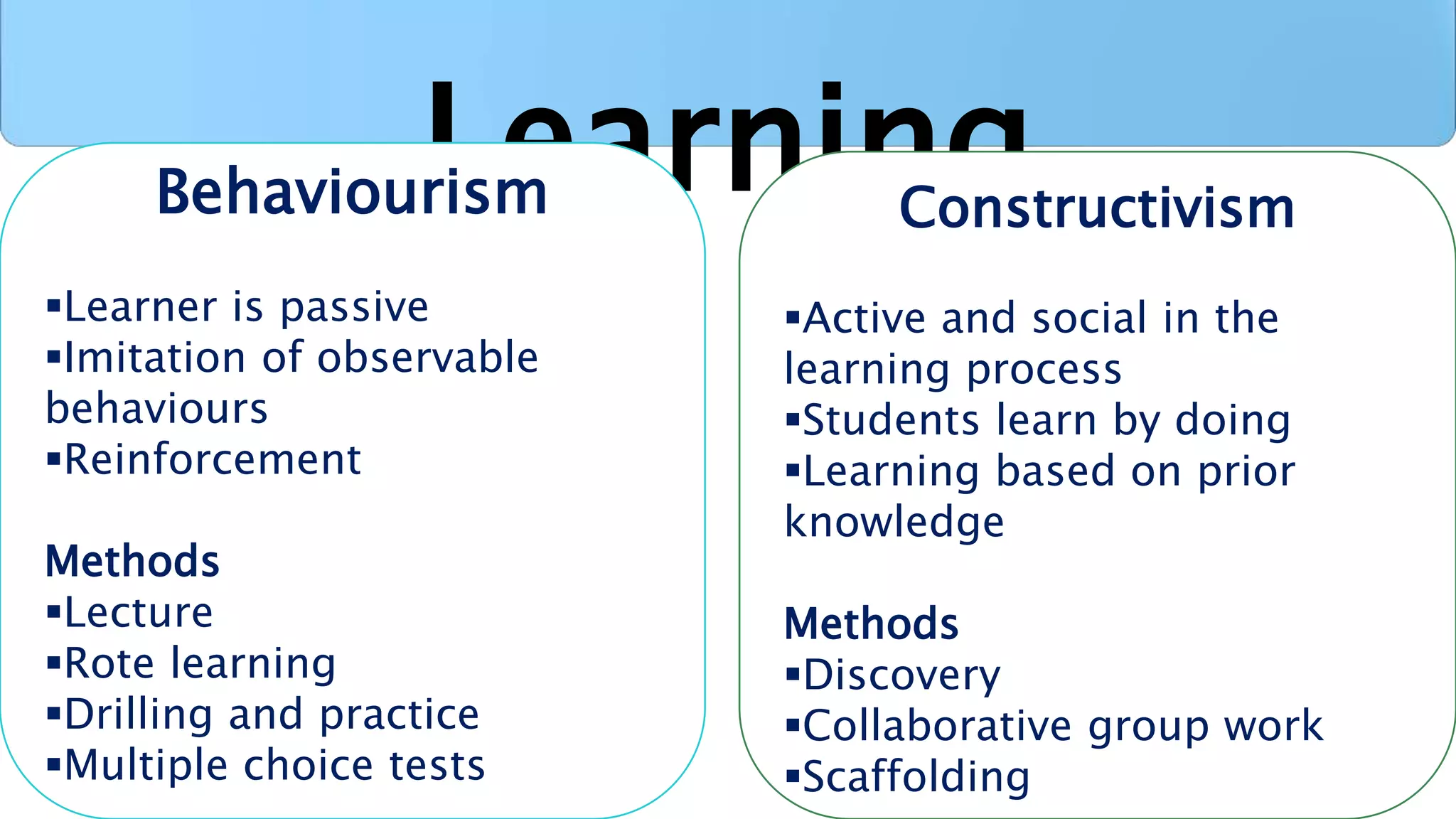
LearningBehaviourism
Learner is passive
Imitation of observable
behaviours
Reinforcement
Methods
Lecture
Rote learning
Drilling and practice
Multiple choice tests
Constructivism
Active and social in the
learning process
Students learn by doing
Learning based on prior
knowledge
Methods
Discovery
Collaborative group work
Scaffolding
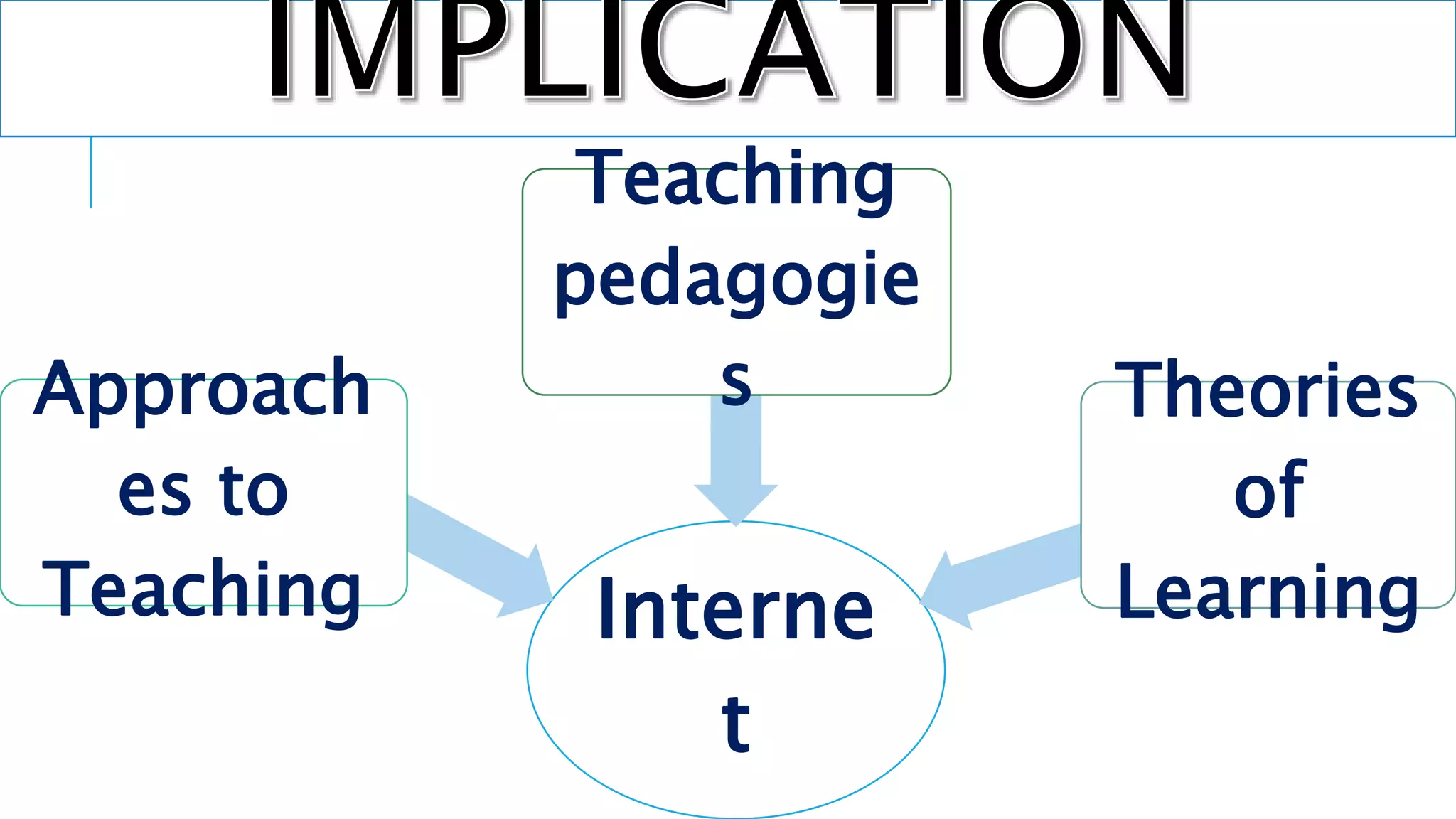
Interne
t
Approach
es to
Teaching
Teaching
pedagogie
s Theories
of
Learning
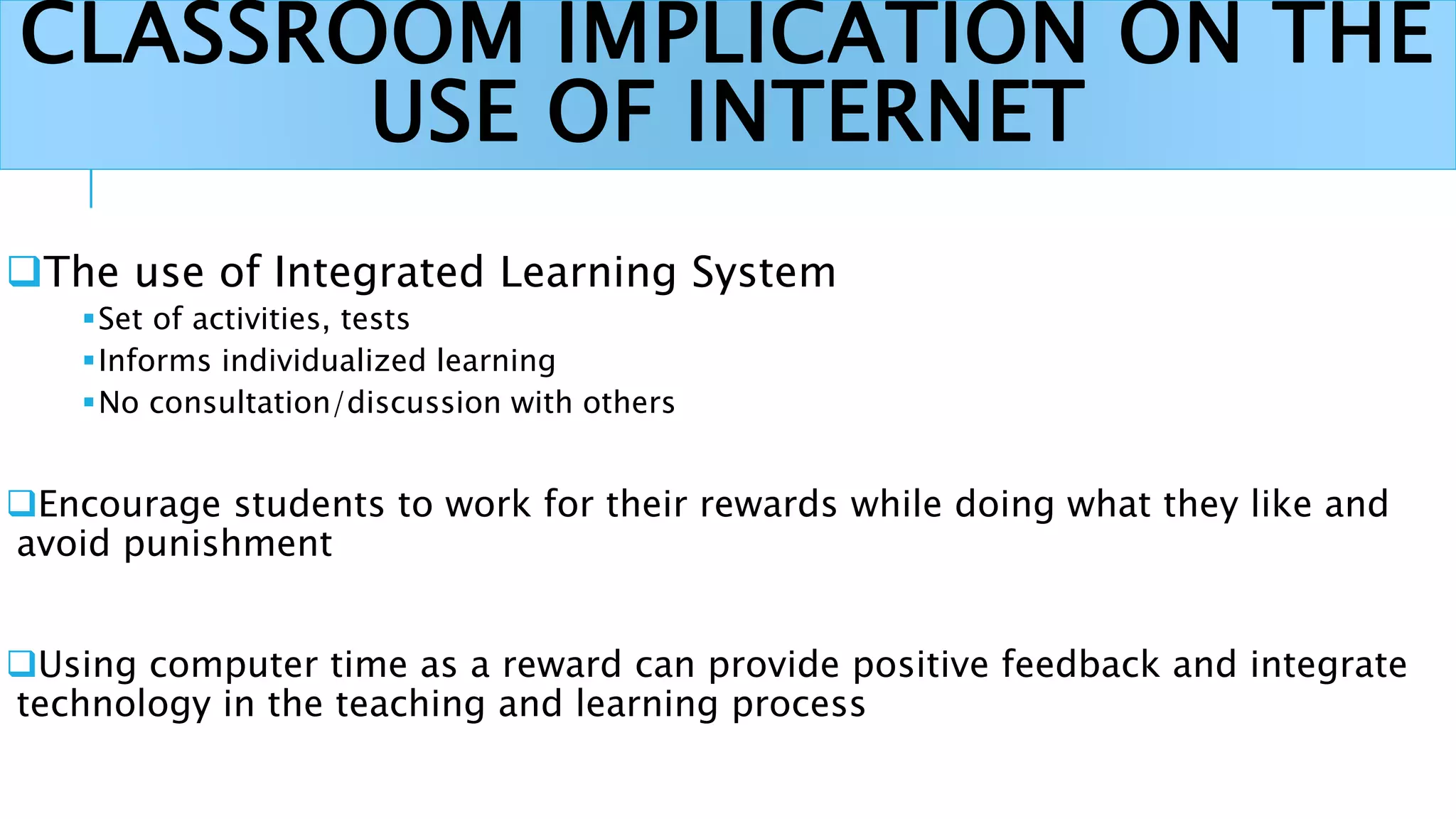
CLASSROOM IMPLICATION ON THE
USE OF INTERNET
The use of Integrated Learning System
Set of activities, tests
Informs individualized learning
No consultation/discussion with others
Encourage students to work for their rewards while doing what they like and
avoid punishment
Using computer time as a reward can provide positive feedback and integrate
technology in the teaching and learning process
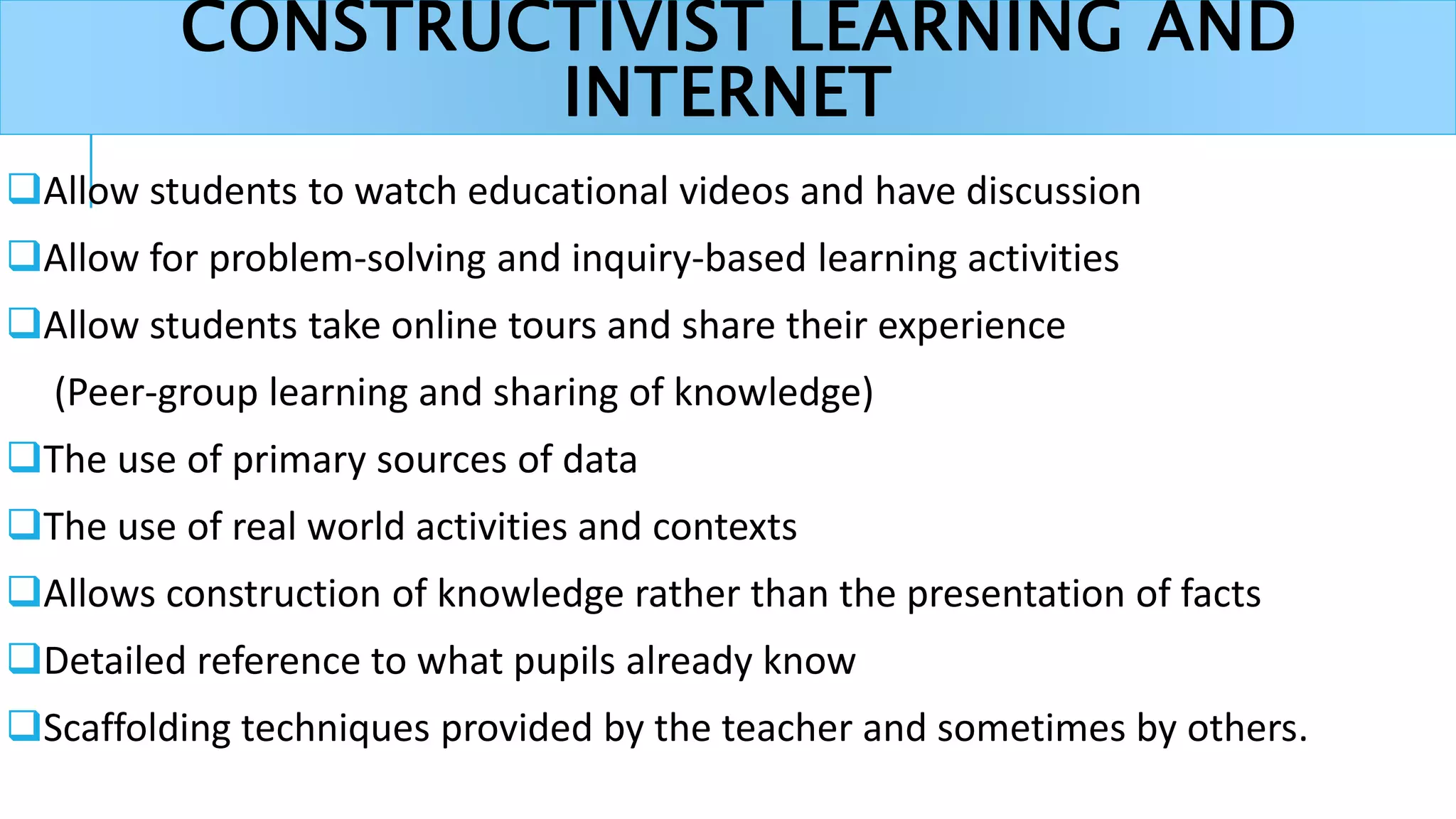
CONSTRUCTIVIST LEARNING AND
INTERNET
Allow students to watch educational videos and have discussion
Allow for problem-solving and inquiry-based learning activities
Allow students take online tours and share their experience
(Peer-group learning and sharing of knowledge)
The use of primary sources of data
The use of real world activities and contexts
Allows construction of knowledge rather than the presentation of facts
Detailed reference to what pupils already know
Scaffolding techniques provided by the teacher and sometimes by others.
The Internet, Pedagogy, and Learning

The Internet, Pedagogy, and Learning

  • 1.
    THE INTERNET, PEDAGOGY, AND LEARNING FitriHidayati (16716251005) Severinus Sakaria (16716259002) Riska Okta Pratiwi (16716251010)
  • 2.
    NATURE AND HISTORYOF THE INTERNET IN SCHOOLS The National Curriculum for Schools in England (DfEE/QCA, 1999) sets out four strands: Finding things out Developing ideas and making things happen Exchanging and sharing information Reviewing, modifying and evaluating work as it progresses.
  • 3.
    BERNERS-LEE (IN DERN,1994: 43) DESCRIPTION OF DIFFERENT ELEMENTS: Wide-are Hypermedia Information retrieval Universal access Large universe of documents
  • 4.
    INTERNET USE INSCHOOLS Beginning what about now?In the early to mid 1990’
  • 5.
  • 6.
    THE KEY FEATURESOF ICT FOR THE SPECIFIC INTERNET USESpeed Capacity Automation Communicability Replication Provisionality Interactivity Non-linearity Multi-modality
  • 7.
    PEDAGOGY Mortimore (1999: 17)describes pedagogical activity as, “Any conscious activity by one person designed to enhance learning in another”, which clearly includes decisions made by teachers, and to extent by policy makers, concerning the place of new technologies in teaching and learning. -> pedagogy has come to refer to “the skills and approaches used by teachers to achieve the aims of the lessons that they teach, or methods which they employ.”
  • 8.
    CONT. Traditional pedagogies For example:Victorian age The prevailing view on teaching and learning was that children’s heads were empty and it was the job of the teacher to remedy that by filling them with information in the form of facts.
  • 9.
    PEDAGOGICAL APPROACH TO TEACHING Teacher-CentredApproach DIRECT INSTRUCTION Direct Authority Expert Personal Model INQUIRY-BASED LEARNING Facilitator Personal Model Delegator COORPERATIVE LEARNING Facilitator Delegator Child-Centred Approach
  • 10.
    Children as Thinkers Engagedin constructing meanings Discussion Collaboration Subscribes to the principles of constructivism learning theory Children as the Doers Learn by being shown and copying others Learn by practicing(procedural knowledge) Subscribes to the principles of behaviourism learning theory Children as Knowledgeable Awareness of what is known to others Objective knowledge is achieved Subscribes to the principles of constructivism learning theory Children as the Knowers Learning from being told Passive learning Knowledge of facts (Prepositional) Subscribes to the principle of behaviourism learning theory
  • 11.
    LearningBehaviourism Learner is passive Imitationof observable behaviours Reinforcement Methods Lecture Rote learning Drilling and practice Multiple choice tests Constructivism Active and social in the learning process Students learn by doing Learning based on prior knowledge Methods Discovery Collaborative group work Scaffolding
  • 12.
  • 13.
    CLASSROOM IMPLICATION ONTHE USE OF INTERNET The use of Integrated Learning System Set of activities, tests Informs individualized learning No consultation/discussion with others Encourage students to work for their rewards while doing what they like and avoid punishment Using computer time as a reward can provide positive feedback and integrate technology in the teaching and learning process
  • 14.
    CONSTRUCTIVIST LEARNING AND INTERNET Allowstudents to watch educational videos and have discussion Allow for problem-solving and inquiry-based learning activities Allow students take online tours and share their experience (Peer-group learning and sharing of knowledge) The use of primary sources of data The use of real world activities and contexts Allows construction of knowledge rather than the presentation of facts Detailed reference to what pupils already know Scaffolding techniques provided by the teacher and sometimes by others.