Google
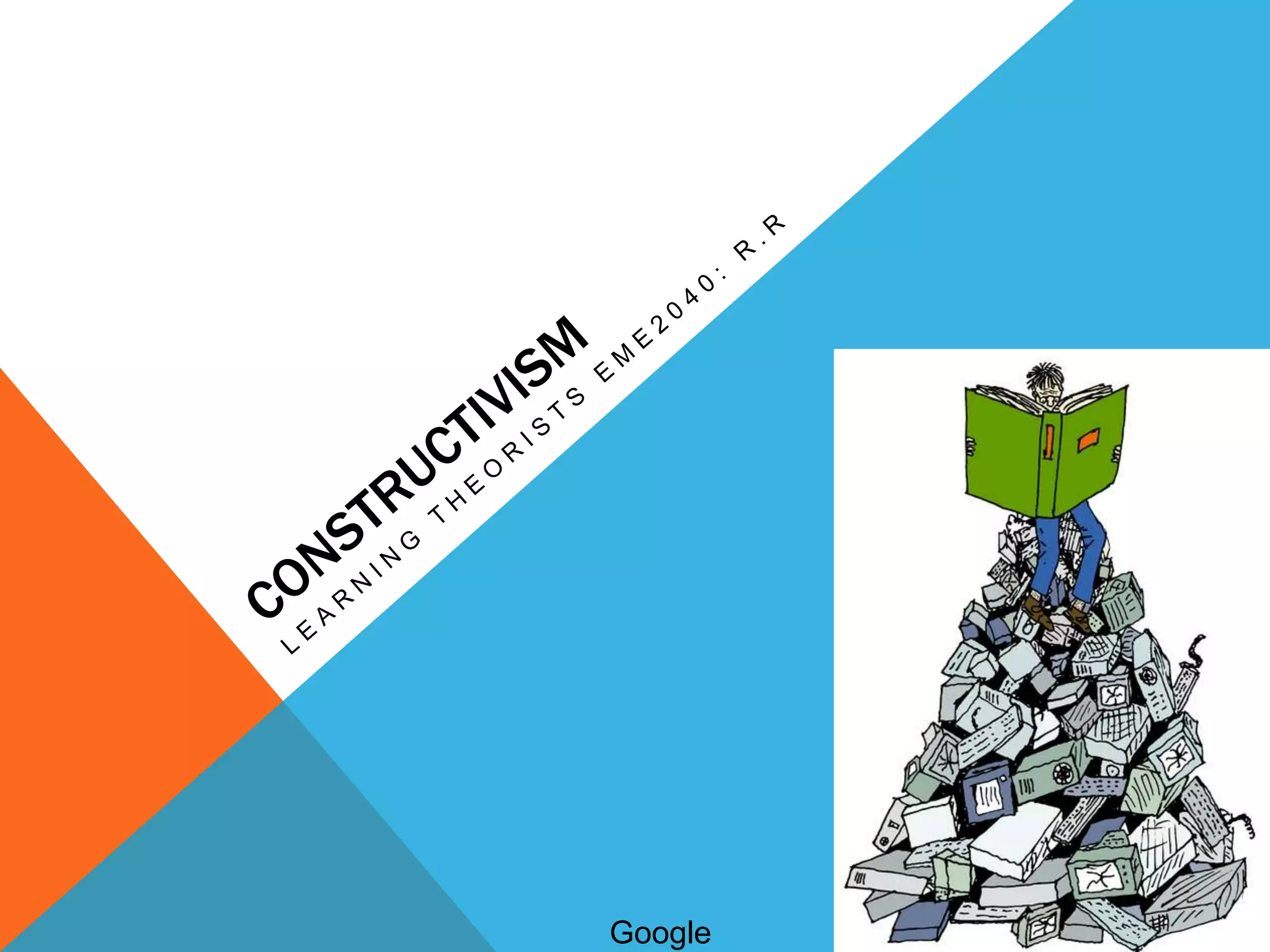
CONSTRUCTIVISM
•   Type of learning where the learner constructs what he or she is learning
    or comprehending.
•   Learning is active. Always on going and constructive. The learner is the
    “information constructor”
•   The learner creates or “constructs” their own perception of what they
    are learning.
IMPORTANT PEOPLE
•   Lev Vygotsky (1896- 1934)
          Russian Educational Psychologist
•   Jean Piaget (1896-1980)
          Psychologist
•   John Dewy (1859-1952)
          Educational Psychologist
•   Jerome Bruner (1915 –
          American Psychologist and Educator.
KEY POINTS
•   Jean Piaget- a psychologist who developed who developed cognitive
    learning
•   Jerome Bruner- also a psychologist. Purposed that learning was an
    active process
•   Lev Vygotsky- developed social cognition which was based on that
    learning was influenced by social development.
•   John Dewey- believed education was a social process as well, but
    believed that learning was active and ongoing.


All important people have different ideas about learning and how its done
    but it reflects back to the cognitive theory.
CONSTRUCTIVISM & TEACHERS
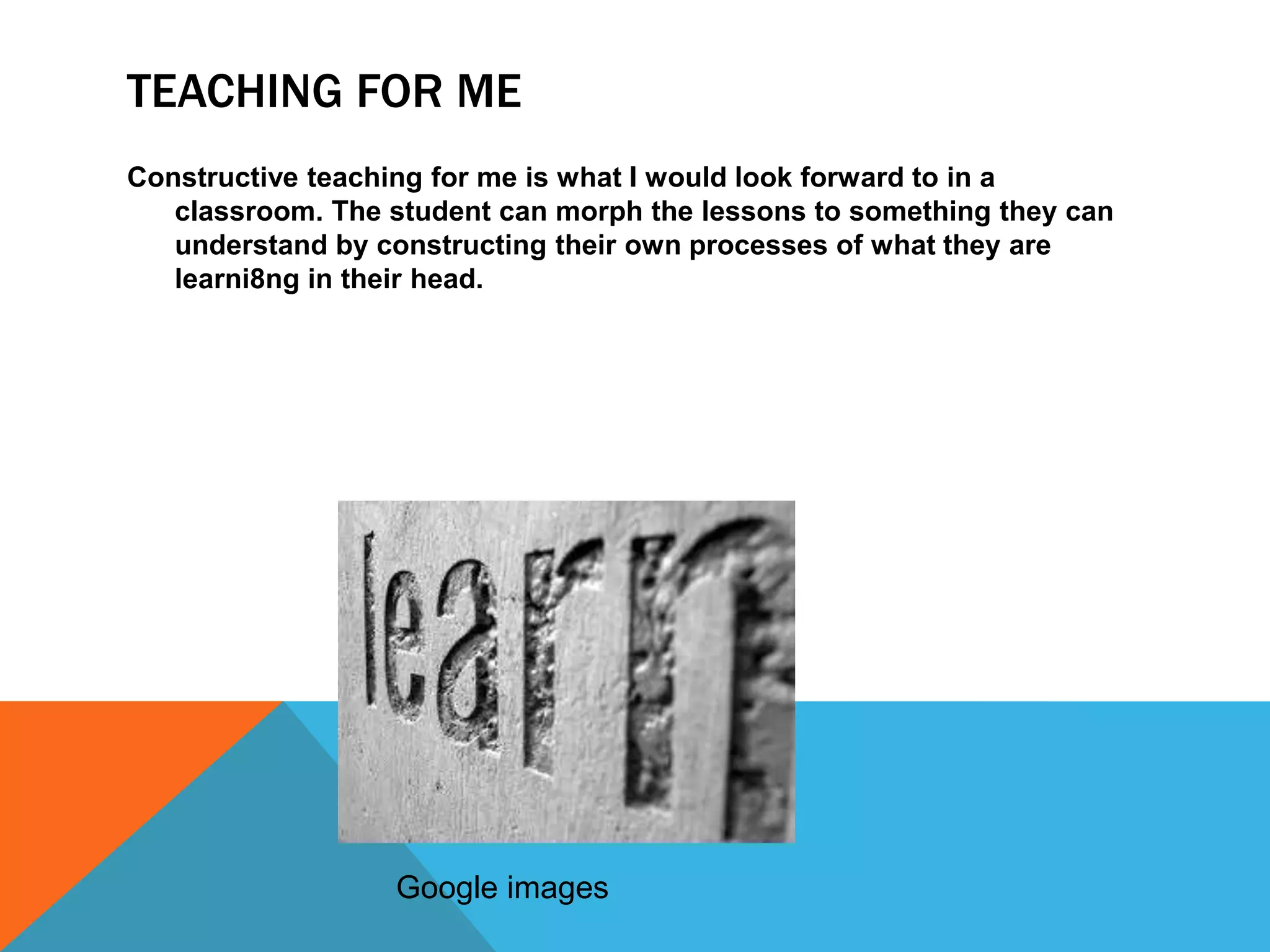
For technology, teachers can implement video games in the classrooms
   that deal with the lessons that go with the curriculum.
Teachers without technology can use games that coincided with the
   curriculum but the just wont be integrating technology into their
   lessons.


                                        Google images
CONSTRUCTIVISM & STUDENTS
Students with technology will engage in the video games and activities the
   teachers have planned for them.
Its more hands on when it comes to integrating the technology with this
    learning theory
Students without technology will bring out this learning theory through
   books and activities with other students ect.
TEACHING FOR ME
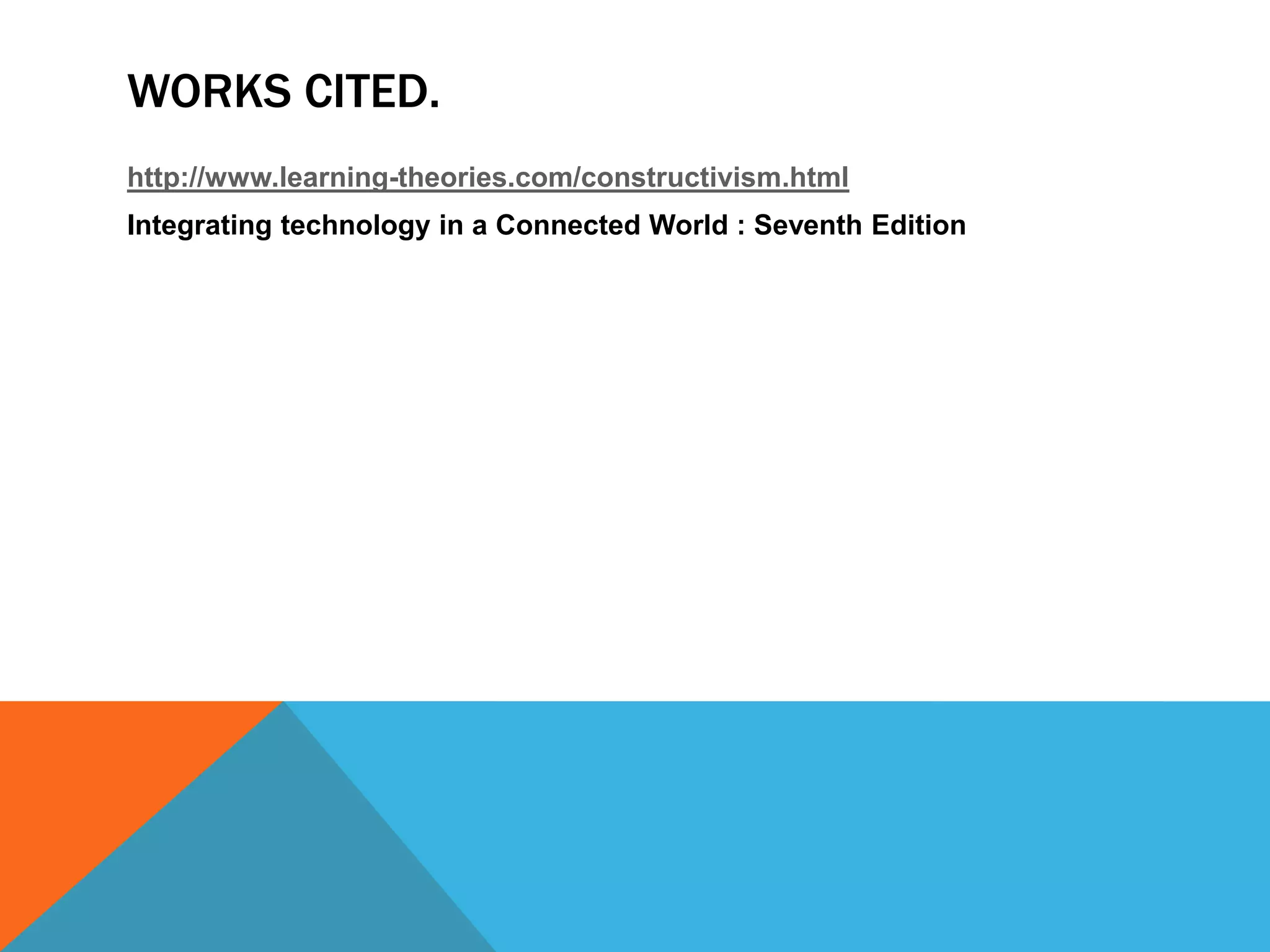
Constructive teaching for me is what I would look forward to in a
   classroom. The student can morph the lessons to something they can
   understand by constructing their own processes of what they are
   learni8ng in their head.


                  Google images
WORKS CITED.
http://www.learning-theories.com/constructivism.html
Integrating technology in a Connected World : Seventh Edition

Constructivism

  • 1.
  • 2.
    CONSTRUCTIVISM • Type of learning where the learner constructs what he or she is learning or comprehending. • Learning is active. Always on going and constructive. The learner is the “information constructor” • The learner creates or “constructs” their own perception of what they are learning.
  • 3.
    IMPORTANT PEOPLE • Lev Vygotsky (1896- 1934) Russian Educational Psychologist • Jean Piaget (1896-1980) Psychologist • John Dewy (1859-1952) Educational Psychologist • Jerome Bruner (1915 – American Psychologist and Educator.
  • 4.
    KEY POINTS • Jean Piaget- a psychologist who developed who developed cognitive learning • Jerome Bruner- also a psychologist. Purposed that learning was an active process • Lev Vygotsky- developed social cognition which was based on that learning was influenced by social development. • John Dewey- believed education was a social process as well, but believed that learning was active and ongoing. All important people have different ideas about learning and how its done but it reflects back to the cognitive theory.
  • 5.
    CONSTRUCTIVISM & TEACHERS Fortechnology, teachers can implement video games in the classrooms that deal with the lessons that go with the curriculum. Teachers without technology can use games that coincided with the curriculum but the just wont be integrating technology into their lessons. Google images
  • 6.
    CONSTRUCTIVISM & STUDENTS Studentswith technology will engage in the video games and activities the teachers have planned for them. Its more hands on when it comes to integrating the technology with this learning theory Students without technology will bring out this learning theory through books and activities with other students ect.
  • 7.
    TEACHING FOR ME Constructiveteaching for me is what I would look forward to in a classroom. The student can morph the lessons to something they can understand by constructing their own processes of what they are learni8ng in their head. Google images
  • 8.