Nurses’ Experiences of Antibiotic Use
in a
Healthcare Setting Caring for People
Over
Sixty-Five Years
Donna Mitchell
Clinical Nurse Specialist
Infection Prevention and Control,
St Mary’s Campus,
Phoenix Park,
Dublin 20
donna.mitchell@hse.ie
Telephone: 625 0427 or 0879195250
Antibiotics & over 65s
Background
• Antibiotics are the most prescribed medication globally
and resistance is an issue.
• The population of over 65s is increasing. Longer life
expectancy increases the chance of receiving antibiotics.
• Registered Nurses are the largest group of professionals
in the health service and work closely with people over
65.
Aim of the Study
To explore nurses ’ experiences of caring for patients who
are receiving antibiotics as part of their care plan, in a
healthcare setting caring for people over 65.
Research Design
Hermeneutic phenomenology was the chosen qualitative
method used:
to explore nurses’ experiences of caring for
patients receiving antibiotics
describe how they cared for and managed patients
receiving antibiotics
to inform discussions in relation to guideline
development on antibiotic use for people over 65
years of age.
Data Collection
Unstructured Interviews
Sample group
8 participants – registered nurses with a minimum of 6
month experience working with adults over 65 years
Data Analysis
5 step framework outlined by Cohen, Kahn &
Steeves (2000).
Findings
3 Themes emerged:
• Nursing Practice
• Infection Prevention
• Teamwork
Nursing Practice
• Registered Nursing practice in settings
caring for people over 65 was a key
theme.
• “Little changes” that was noted by staff
sometimes indicated infection. Nursing
models used for planning care.
• Data provided matches the literature for
reasons that antibiotics were prescribed.
• Varying perceptions on uses of antibiotics
– sometimes depended on the prescriber.
Infection Prevention
• Preventing antibiotic use in the first
instance was important.
• Quality nursing care came within this
theme.
• Registered nurses are responsible for
quality of care provided.
• Awareness of infections and how to
prevent them.
• Infection prevention measures.
Teamwork
• It is “everybody’s” role to work
collaboratively although nurses know
patients well to lead on care.
• Collaboration regarding infection
prevention and control via informal
networks as well as formal committees.
Teamwork
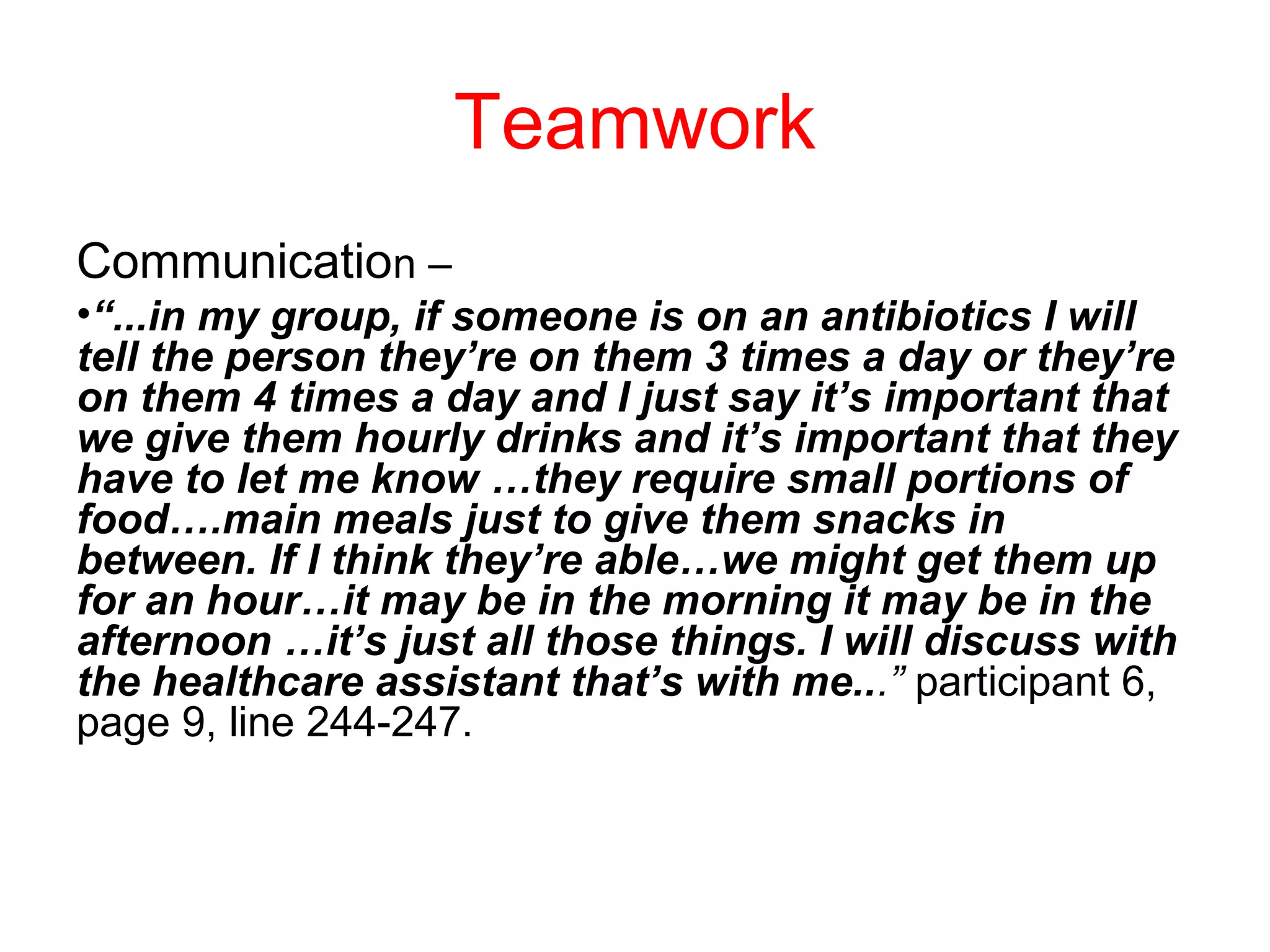
Communication –
•“...in my group, if someone is on an antibiotics I will
tell the person they’re on them 3 times a day or they’re
on them 4 times a day and I just say it’s important that
we give them hourly drinks and it’s important that they
have to let me know …they require small portions of
food….main meals just to give them snacks in
between. If I think they’re able…we might get them up
for an hour…it may be in the morning it may be in the
afternoon …it’s just all those things. I will discuss with
the healthcare assistant that’s with me...” participant 6,
page 9, line 244-247.
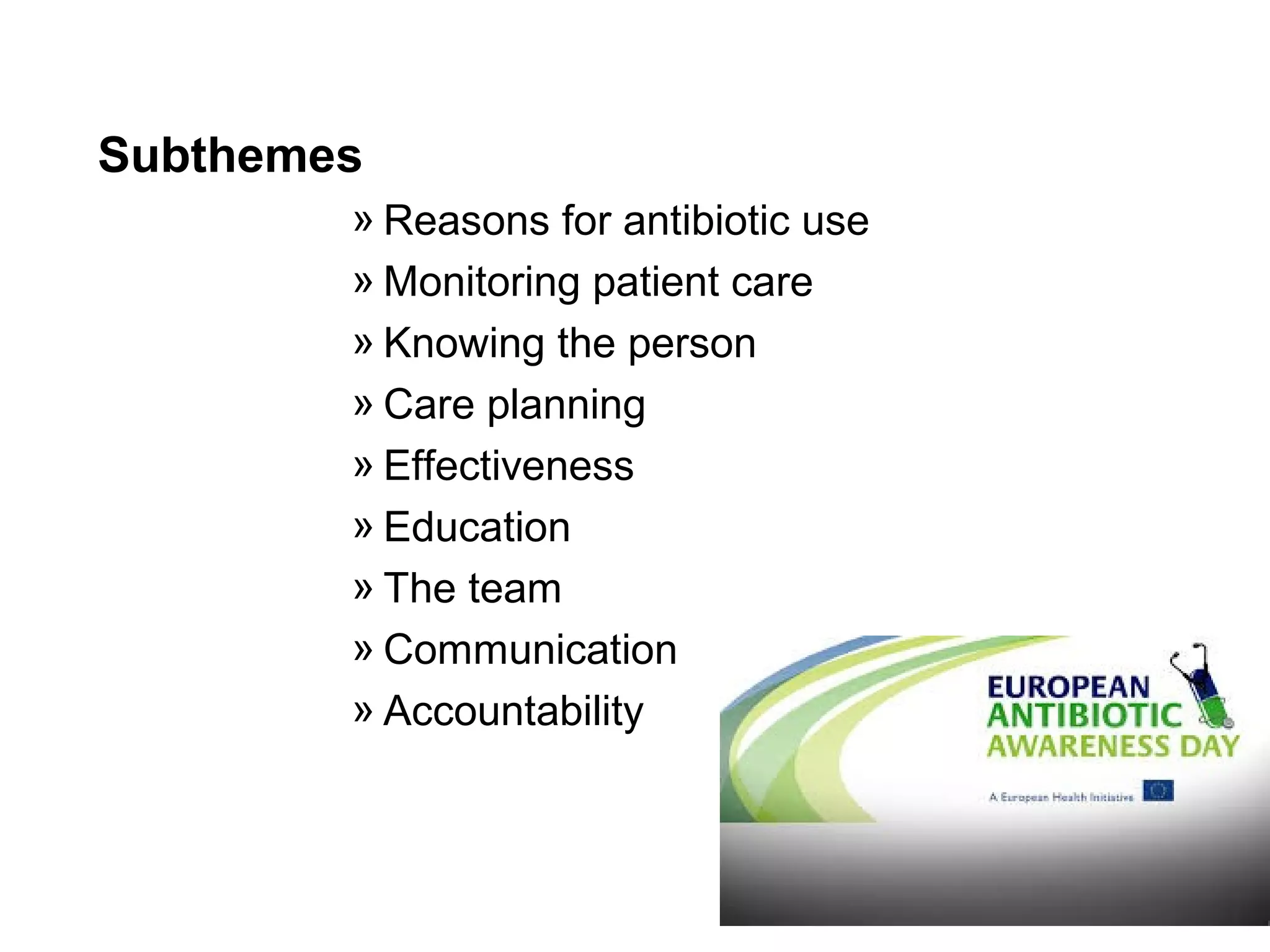
Subthemes
» Reasons for antibiotic use
» Monitoring patient care
» Knowing the person
» Care planning
» Effectiveness
» Education
» The team
» Communication
» Accountability
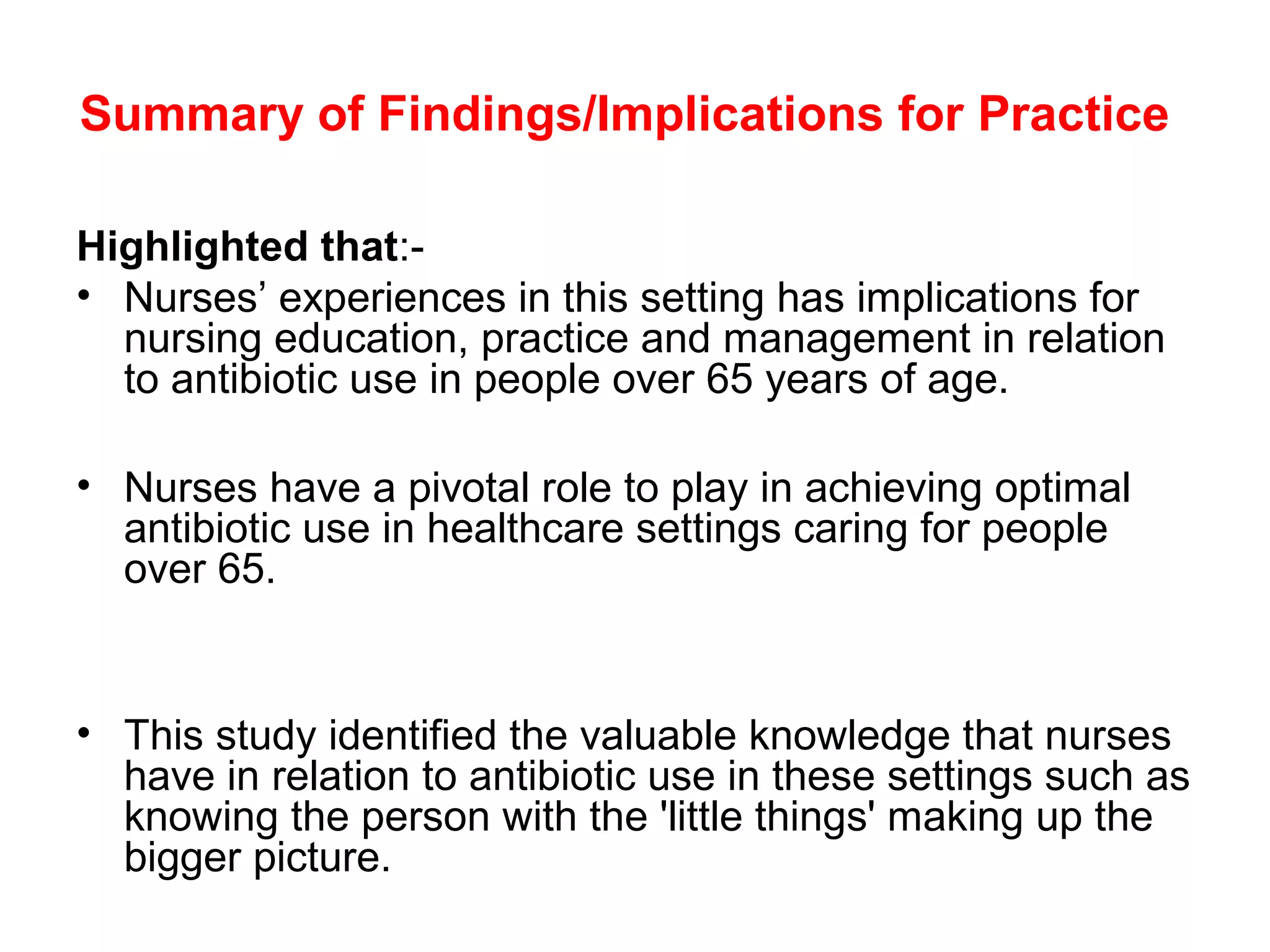
Summary of Findings/Implications for Practice
Highlighted that:• Nurses’ experiences in this setting has implications for
nursing education, practice and management in relation
to antibiotic use in people over 65 years of age.
• Nurses have a pivotal role to play in achieving optimal
antibiotic use in healthcare settings caring for people
over 65.

• This study identified the valuable knowledge that nurses
have in relation to antibiotic use in these settings such as
knowing the person with the 'little things' making up the
bigger picture.
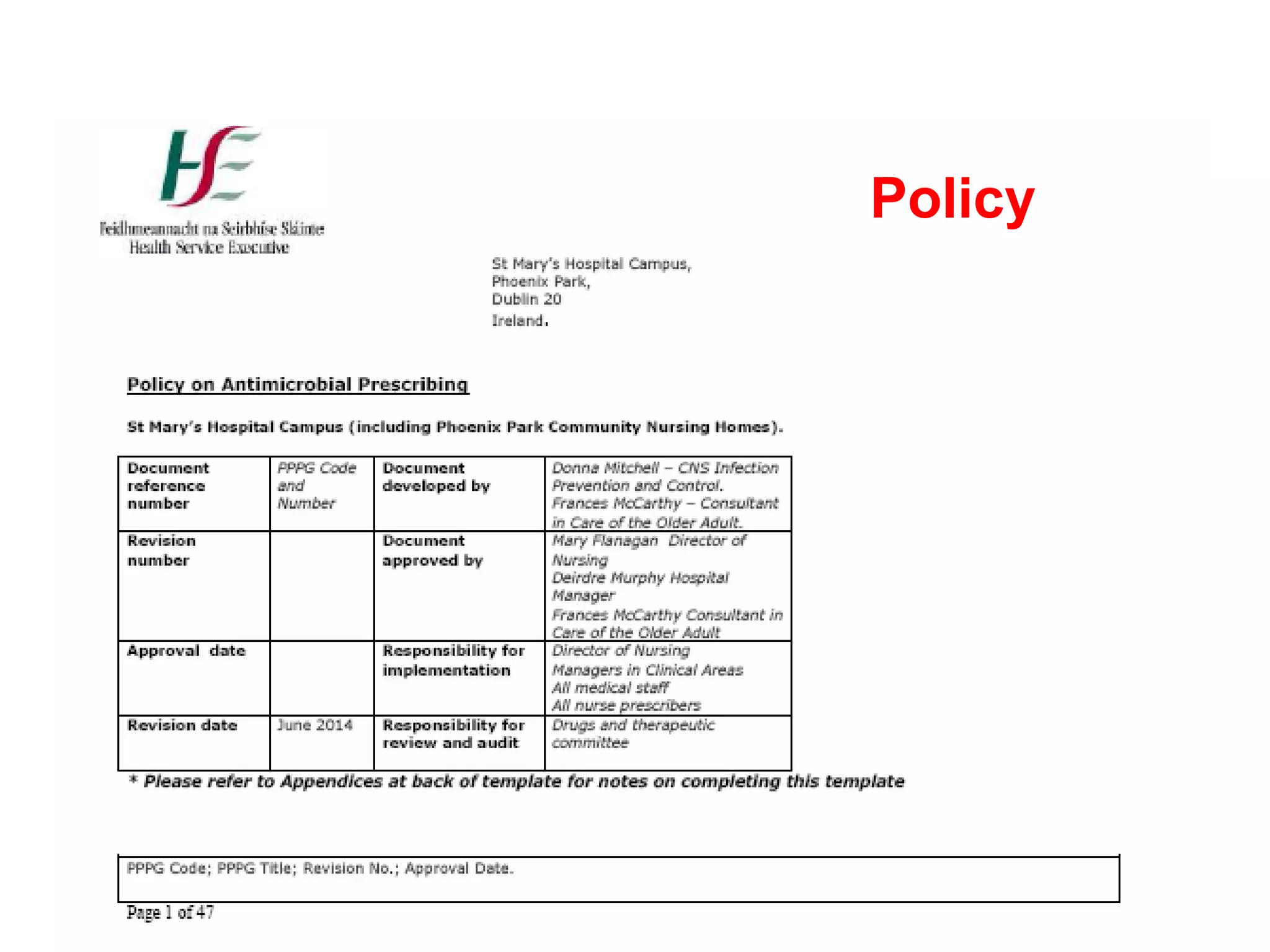
Policy
Policy
HALT – matching the data
National:
• 5910 residents surveyed
ranging from 5 to 203
beds
• 5.0% had HCAI
• 9.5% prescribed
antimicrobials
• 62% had access to IPC
practitioner [76% of these
based off-site]
• GP care 43%, medical
staff employed 33%, both
in 24%.

St Mary’s:

• Larger scale bed size
• 1.6% had HCAI
• 4.3% prescribed
antimicrobials
Finally
• You have a role to play in antibiotic
advice, responsibility, education and
practices.
• Nurses are in an ideal position to educate
patients and the public on changing /
appropriate antibiotic use.
• Utilise national guideline on antibiotic use
for reference – www.hpsc.ie
Thank you

Donna mitchell nurses experience of antibiotic use in pts over 65

  • 1.
    Nurses’ Experiences ofAntibiotic Use in a Healthcare Setting Caring for People Over Sixty-Five Years Donna Mitchell Clinical Nurse Specialist Infection Prevention and Control, St Mary’s Campus, Phoenix Park, Dublin 20 donna.mitchell@hse.ie Telephone: 625 0427 or 0879195250
  • 2.
    Antibiotics & over65s Background • Antibiotics are the most prescribed medication globally and resistance is an issue. • The population of over 65s is increasing. Longer life expectancy increases the chance of receiving antibiotics. • Registered Nurses are the largest group of professionals in the health service and work closely with people over 65.
  • 3.
    Aim of theStudy To explore nurses ’ experiences of caring for patients who are receiving antibiotics as part of their care plan, in a healthcare setting caring for people over 65. Research Design Hermeneutic phenomenology was the chosen qualitative method used: to explore nurses’ experiences of caring for patients receiving antibiotics describe how they cared for and managed patients receiving antibiotics to inform discussions in relation to guideline development on antibiotic use for people over 65 years of age.
  • 4.
    Data Collection Unstructured Interviews Samplegroup 8 participants – registered nurses with a minimum of 6 month experience working with adults over 65 years Data Analysis 5 step framework outlined by Cohen, Kahn & Steeves (2000).
  • 5.
    Findings 3 Themes emerged: •Nursing Practice • Infection Prevention • Teamwork
  • 6.
    Nursing Practice • RegisteredNursing practice in settings caring for people over 65 was a key theme. • “Little changes” that was noted by staff sometimes indicated infection. Nursing models used for planning care. • Data provided matches the literature for reasons that antibiotics were prescribed. • Varying perceptions on uses of antibiotics – sometimes depended on the prescriber.
  • 7.
    Infection Prevention • Preventingantibiotic use in the first instance was important. • Quality nursing care came within this theme. • Registered nurses are responsible for quality of care provided. • Awareness of infections and how to prevent them. • Infection prevention measures.
  • 8.
    Teamwork • It is“everybody’s” role to work collaboratively although nurses know patients well to lead on care. • Collaboration regarding infection prevention and control via informal networks as well as formal committees.
  • 9.
    Teamwork Communication – •“...in mygroup, if someone is on an antibiotics I will tell the person they’re on them 3 times a day or they’re on them 4 times a day and I just say it’s important that we give them hourly drinks and it’s important that they have to let me know …they require small portions of food….main meals just to give them snacks in between. If I think they’re able…we might get them up for an hour…it may be in the morning it may be in the afternoon …it’s just all those things. I will discuss with the healthcare assistant that’s with me...” participant 6, page 9, line 244-247.
  • 10.
    Subthemes » Reasons forantibiotic use » Monitoring patient care » Knowing the person » Care planning » Effectiveness » Education » The team » Communication » Accountability
  • 11.
    Summary of Findings/Implicationsfor Practice Highlighted that:• Nurses’ experiences in this setting has implications for nursing education, practice and management in relation to antibiotic use in people over 65 years of age. • Nurses have a pivotal role to play in achieving optimal antibiotic use in healthcare settings caring for people over 65. • This study identified the valuable knowledge that nurses have in relation to antibiotic use in these settings such as knowing the person with the 'little things' making up the bigger picture.
  • 12.
  • 13.
    HALT – matchingthe data National: • 5910 residents surveyed ranging from 5 to 203 beds • 5.0% had HCAI • 9.5% prescribed antimicrobials • 62% had access to IPC practitioner [76% of these based off-site] • GP care 43%, medical staff employed 33%, both in 24%. St Mary’s: • Larger scale bed size • 1.6% had HCAI • 4.3% prescribed antimicrobials
  • 14.
    Finally • You havea role to play in antibiotic advice, responsibility, education and practices. • Nurses are in an ideal position to educate patients and the public on changing / appropriate antibiotic use. • Utilise national guideline on antibiotic use for reference – www.hpsc.ie
  • 15.