Prepared by:
Orlando A. Pistan, MAEd
Psychology Instructor
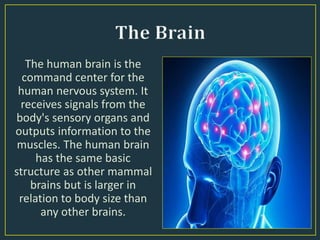
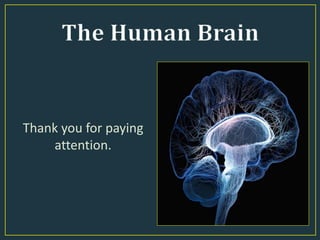
The human brain is the
command center for the
human nervous system. It
receives signals from the
body's sensory organs and
outputs information to the
muscles. The human brain
has the same basic
structure as other mammal
brains but is larger in
relation to body size than
any other brains.
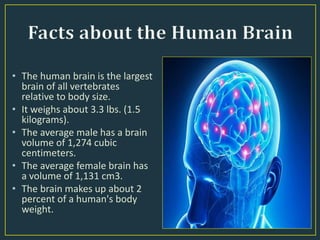
• The human brain is the largest
brain of all vertebrates
relative to body size.
• It weighs about 3.3 lbs. (1.5
kilograms).
• The average male has a brain
volume of 1,274 cubic
centimeters.
• The average female brain has
a volume of 1,131 cm3.
• The brain makes up about 2
percent of a human's body
weight.
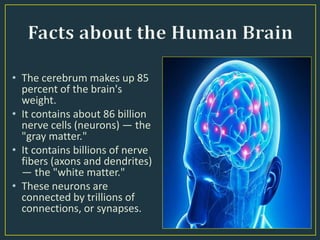
• The cerebrum makes up 85
percent of the brain's
weight.
• It contains about 86 billion
nerve cells (neurons) — the
"gray matter."
• It contains billions of nerve
fibers (axons and dendrites)
— the "white matter."
• These neurons are
connected by trillions of
connections, or synapses.
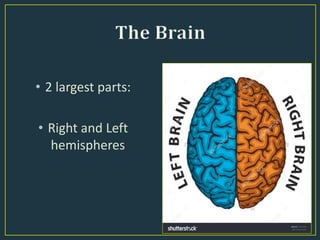
• 2 largest parts:
• Right and Left
hemispheres
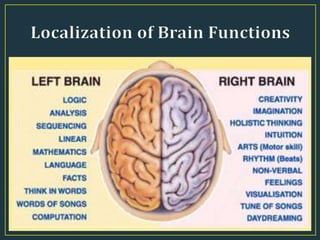
• The left side of the brain is
responsible for controlling the
right side of the body. It also
performs tasks that have to do
with logic, such as in science
and mathematics. On the
other hand.
• Right hemisphere coordinates
the left side of the body, and
performs tasks that have do
with creativity and the arts.
• 3 Principal sections:
• Hindbrain
• Midbrain and
• Forebrain
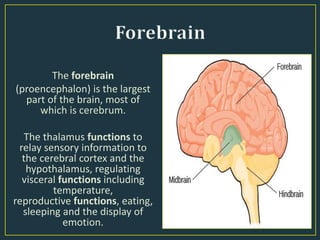
The forebrain
(proencephalon) is the largest
part of the brain, most of
which is cerebrum.
The thalamus functions to
relay sensory information to
the cerebral cortex and the
hypothalamus, regulating
visceral functions including
temperature,
reproductive functions, eating,
sleeping and the display of
emotion.
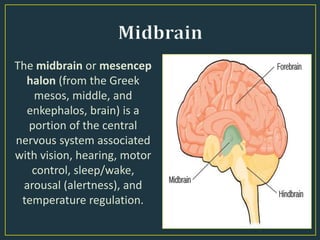
The midbrain or mesencep
halon (from the Greek
mesos, middle, and
enkephalos, brain) is a
portion of the central
nervous system associated
with vision, hearing, motor
control, sleep/wake,
arousal (alertness), and
temperature regulation.
The hindbrain (rhombence
phalon) is composed of the
medulla, the pons, and the
cerebellum. The medulla
lies next to the spinal cord
and
controls functions outside
conscious control, such as
breathing and blood flow.
In other words, the medulla
controls essential functions
• Refers to the
specific areas of the
brain that control
specific skills and
behaviours
The process of using one’s mind to consider or
reason about something; using though or rational
judgment.
Think implies the entrance of an idea into one's
mind with or without deliberate consideration or
reflection.
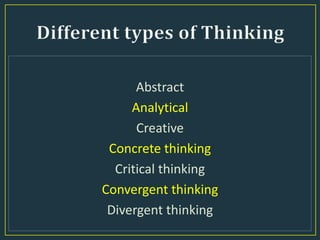
Abstract
Analytical
Creative
Concrete thinking
Critical thinking
Convergent thinking
Divergent thinking
Abstract thinkers are able to relate seemingly random
things with each other. This is because they can see the
bigger picture. They make the connections that others find
difficult to see.
They have the ability to look beyond what is obvious and
search for hidden meanings. They can read between the
lines and enjoy solving cryptic puzzles. They don’t like
routine and get bored easily.
Analytical thinkers like to separate a whole into its basic
parts in order to examine these parts and their
relationships. They are great problem-solvers and have a
structured and methodical way of approaching tasks.
This type of thinker will seek answers and use logic rather
than emotional thinking in life. However, they have a
tendency to overthink things and can ruminate on the
same subject for months.
Creative thinkers think outside the box and will come up
with ingenious solutions to solve their dilemmas in life.
They like to break away from the traditions and norms of
society when it comes to new ideas and ways of thinking.
They can sometimes be ridiculed as society prefers to
keep the status quo. Creative thinkers can also court
jealously if they manage to follow their dreams and work
in a creative field.
Concrete thinking focuses on the physical world, rather
than the abstract one. It is all about thinking of objects or
ideas as specific items, rather than as a theoretical
representation of a more general idea.
Concrete thinkers like hard facts, figures and statistics. For
example, you will not get any philosophers who think in
concrete terms. Children think in concrete terms as it is a
very basic and literal form of understanding.
Critical thinking takes analytical thinking up a level. Critical
thinkers exercise careful evaluation or judgment in order
to determine the authenticity, accuracy, worth, validity, or
value of something.
And rather than strictly breaking down the information,
critical thinking explores other elements that could have
an influence on conclusions.
Convergent thinking is a process of combining a finite
number of perspectives or ideas to find a single solution.
Convergent thinkers will target these possibilities, or
converge them inwards, to come up with a solution.
One example is a multiple choice question in an exam. You
have four possible answers but only one is right. In order
to solve the problem, you would use convergent thinking
By contrast, divergent thinking is the opposite of
convergent thinking. It is a way of exploring an infinite
number of solutions to find one that is effective.
So, instead of starting off with a set number of possibilities
and converging on an answer, it goes as far and wide as
necessary and moves outwards in search of the solution
Thank you for paying
attention.

The Human Brain

  • 1.
    Prepared by: Orlando A.Pistan, MAEd Psychology Instructor
  • 2.
    The human brainis the command center for the human nervous system. It receives signals from the body's sensory organs and outputs information to the muscles. The human brain has the same basic structure as other mammal brains but is larger in relation to body size than any other brains.
  • 3.
    • The humanbrain is the largest brain of all vertebrates relative to body size. • It weighs about 3.3 lbs. (1.5 kilograms). • The average male has a brain volume of 1,274 cubic centimeters. • The average female brain has a volume of 1,131 cm3. • The brain makes up about 2 percent of a human's body weight.
  • 4.
    • The cerebrummakes up 85 percent of the brain's weight. • It contains about 86 billion nerve cells (neurons) — the "gray matter." • It contains billions of nerve fibers (axons and dendrites) — the "white matter." • These neurons are connected by trillions of connections, or synapses.
  • 5.
    • 2 largestparts: • Right and Left hemispheres
  • 6.
    • The leftside of the brain is responsible for controlling the right side of the body. It also performs tasks that have to do with logic, such as in science and mathematics. On the other hand. • Right hemisphere coordinates the left side of the body, and performs tasks that have do with creativity and the arts.
  • 7.
    • 3 Principalsections: • Hindbrain • Midbrain and • Forebrain
  • 8.
    The forebrain (proencephalon) isthe largest part of the brain, most of which is cerebrum. The thalamus functions to relay sensory information to the cerebral cortex and the hypothalamus, regulating visceral functions including temperature, reproductive functions, eating, sleeping and the display of emotion.
  • 9.
    The midbrain ormesencep halon (from the Greek mesos, middle, and enkephalos, brain) is a portion of the central nervous system associated with vision, hearing, motor control, sleep/wake, arousal (alertness), and temperature regulation.
  • 10.
    The hindbrain (rhombence phalon)is composed of the medulla, the pons, and the cerebellum. The medulla lies next to the spinal cord and controls functions outside conscious control, such as breathing and blood flow. In other words, the medulla controls essential functions
  • 11.
    • Refers tothe specific areas of the brain that control specific skills and behaviours
  • 12.
    The process ofusing one’s mind to consider or reason about something; using though or rational judgment. Think implies the entrance of an idea into one's mind with or without deliberate consideration or reflection.
  • 13.
  • 14.
    Abstract thinkers areable to relate seemingly random things with each other. This is because they can see the bigger picture. They make the connections that others find difficult to see. They have the ability to look beyond what is obvious and search for hidden meanings. They can read between the lines and enjoy solving cryptic puzzles. They don’t like routine and get bored easily.
  • 15.
    Analytical thinkers liketo separate a whole into its basic parts in order to examine these parts and their relationships. They are great problem-solvers and have a structured and methodical way of approaching tasks. This type of thinker will seek answers and use logic rather than emotional thinking in life. However, they have a tendency to overthink things and can ruminate on the same subject for months.
  • 16.
    Creative thinkers thinkoutside the box and will come up with ingenious solutions to solve their dilemmas in life. They like to break away from the traditions and norms of society when it comes to new ideas and ways of thinking. They can sometimes be ridiculed as society prefers to keep the status quo. Creative thinkers can also court jealously if they manage to follow their dreams and work in a creative field.
  • 17.
    Concrete thinking focuseson the physical world, rather than the abstract one. It is all about thinking of objects or ideas as specific items, rather than as a theoretical representation of a more general idea. Concrete thinkers like hard facts, figures and statistics. For example, you will not get any philosophers who think in concrete terms. Children think in concrete terms as it is a very basic and literal form of understanding.
  • 18.
    Critical thinking takesanalytical thinking up a level. Critical thinkers exercise careful evaluation or judgment in order to determine the authenticity, accuracy, worth, validity, or value of something. And rather than strictly breaking down the information, critical thinking explores other elements that could have an influence on conclusions.
  • 19.
    Convergent thinking isa process of combining a finite number of perspectives or ideas to find a single solution. Convergent thinkers will target these possibilities, or converge them inwards, to come up with a solution. One example is a multiple choice question in an exam. You have four possible answers but only one is right. In order to solve the problem, you would use convergent thinking
  • 20.
    By contrast, divergentthinking is the opposite of convergent thinking. It is a way of exploring an infinite number of solutions to find one that is effective. So, instead of starting off with a set number of possibilities and converging on an answer, it goes as far and wide as necessary and moves outwards in search of the solution
  • 21.
    Thank you forpaying attention.