21st Primary school of Athens
“Lela Karagianni”
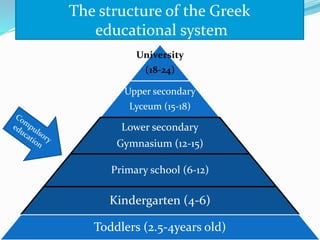
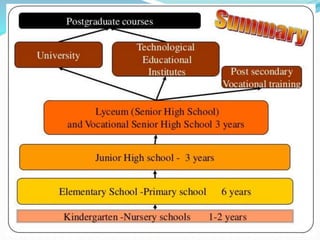
The structure of the Greek
educational system
University
(18-24)
Upper secondary
Lyceum (15-18)
Lower secondary
Gymnasium (12-15)
Primary school (6-12)
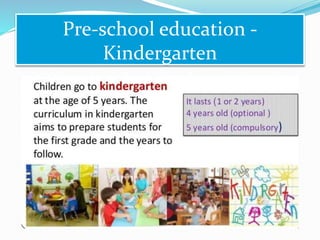
Kindergarten (4-6)
Toddlers (2.5-4years old)
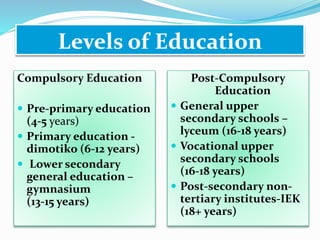
Levels of Education
Compulsory Education
 Pre-primary education
(4-5 years)
 Primary education -
dimotiko (6-12 years)
 Lower secondary
general education –
gymnasium
(13-15 years)
Post-Compulsory
Education
 General upper
secondary schools –
lyceum (16-18 years)
 Vocational upper
secondary schools
(16-18 years)
 Post-secondary non-
tertiary institutes-IEK
(18+ years)
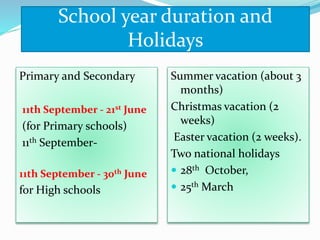
School year duration and
Holidays
Primary and Secondary
11th September - 21st June
(for Primary schools)
11th September-
11th September - 30th June
for High schools
Summer vacation (about 3
months)
Christmas vacation (2
weeks)
Easter vacation (2 weeks).
Two national holidays
 28th October,
 25th March
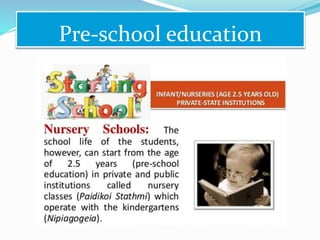
Pre-school education
Pre-school education -
Kindergarten
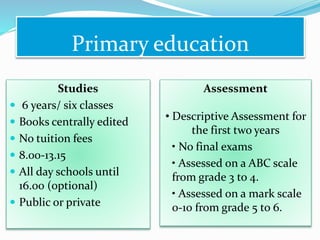
Studies
 6 years/ six classes
 Books centrally edited
 No tuition fees
 8.00-13.15
 All day schools until
16.00 (optional)
 Public or private
Primary education
Assessment
• Descriptive Assessment for
the first two years
• No final exams
• Assessed on a ABC scale
from grade 3 to 4.
• Assessed on a mark scale
0-10 from grade 5 to 6.
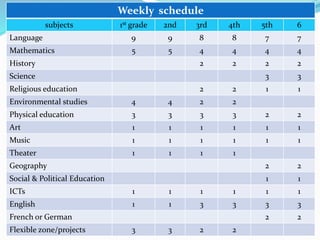
Weekly schedule
subjects 1st grade 2nd 3rd 4th 5th 6
Language 9 9 8 8 7 7
Mathematics 5 5 4 4 4 4
History 2 2 2 2
Science 3 3
Religious education 2 2 1 1
Environmental studies 4 4 2 2
Physical education 3 3 3 3 2 2
Art 1 1 1 1 1 1
Music 1 1 1 1 1 1
Theater 1 1 1 1
Geography 2 2
Social & Political Education 1 1
ICTs 1 1 1 1 1 1
English 1 1 3 3 3 3
French or German 2 2
Flexible zone/projects 3 3 2 2
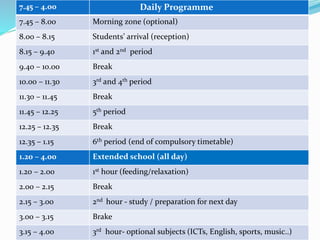
7.45 – 4.00 Daily Programme
7.45 – 8.00 Morning zone (optional)
8.00 – 8.15 Students’ arrival (reception)
8.15 – 9.40 1st and 2nd period
9.40 – 10.00 Break
10.00 – 11.30 3rd and 4th period
11.30 – 11.45 Break
11.45 – 12.25 5th period
12.25 – 12.35 Break
12.35 – 1.15 6th period (end of compulsory timetable)
1.20 – 4.00 Extended school (all day)
1.20 – 2.00 1st hour (feeding/relaxation)
2.00 – 2.15 Break
2.15 – 3.00 2nd hour - study / preparation for next day
3.00 – 3.15 Brake
3.15 – 4.00 3rd hour- optional subjects (ICTs, English, sports, music..)
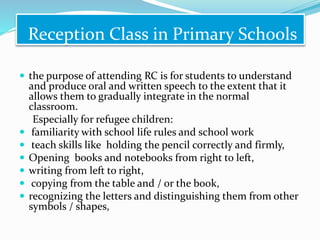
Reception Class in Primary Schools
 the purpose of attending RC is for students to understand
and produce oral and written speech to the extent that it
allows them to gradually integrate in the normal
classroom.
Especially for refugee children:
 familiarity with school life rules and school work
 teach skills like holding the pencil correctly and firmly,
 Opening books and notebooks from right to left,
 writing from left to right,
 copying from the table and / or the book,
 recognizing the letters and distinguishing them from other
symbols / shapes,
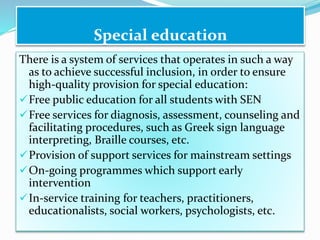
There is a system of services that operates in such a way
as to achieve successful inclusion, in order to ensure
high-quality provision for special education:
Free public education for all students with SEN
Free services for diagnosis, assessment, counseling and
facilitating procedures, such as Greek sign language
interpreting, Braille courses, etc.
Provision of support services for mainstream settings
On-going programmes which support early
intervention
In-service training for teachers, practitioners,
educationalists, social workers, psychologists, etc.
Special education
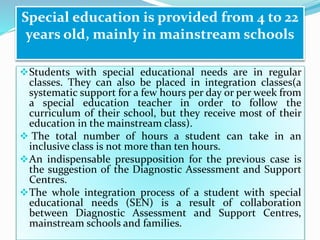
Students with special educational needs are in regular
classes. They can also be placed in integration classes(a
systematic support for a few hours per day or per week from
a special education teacher in order to follow the
curriculum of their school, but they receive most of their
education in the mainstream class).
 The total number of hours a student can take in an
inclusive class is not more than ten hours.
An indispensable presupposition for the previous case is
the suggestion of the Diagnostic Assessment and Support
Centres.
The whole integration process of a student with special
educational needs (SEN) is a result of collaboration
between Diagnostic Assessment and Support Centres,
mainstream schools and families.
Special education is provided from 4 to 22
years old, mainly in mainstream schools
The Diagnostic Assessment and Support Centre makes
proposals for the education of a pupil with SEN at
primary or secondary level, provided that a diagnosis
assessment has been carried out and the pupil’s
parents are in agreement.
The students participate in special educational programmes
adapted to their needs that are carried out by specially
trained educators.
The pupil attends primary or secondary school in one of the
following cases:
 when their special needs are considered to be particularly
serious and consequently need special assistance provided
by educators and specialists within special schools and
with the appropriate infrastructure; or
 when they seem to benefit from the special school setting.
Special education schools
other types of schools
 Cross-cultural Education Schools
 Minority schools
 School Units of Special Education
 Experimental Schools
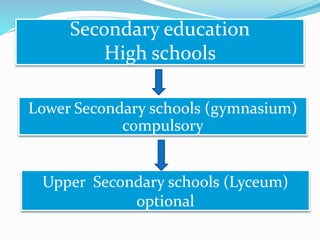
Secondary education
High schools
Lower Secondary schools (gymnasium)
compulsory
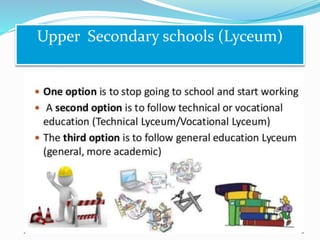
Upper Secondary schools (Lyceum)
optional
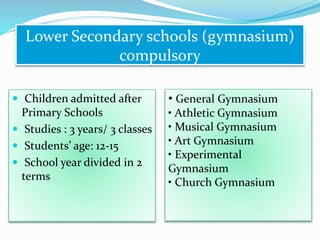
 Children admitted after
Primary Schools
 Studies : 3 years/ 3 classes
 Students’ age: 12-15
 School year divided in 2
terms
Lower Secondary schools (gymnasium)
compulsory
• General Gymnasium
• Athletic Gymnasium
• Musical Gymnasium
• Art Gymnasium
• Experimental
Gymnasium
• Church Gymnasium
Upper Secondary schools (Lyceum)
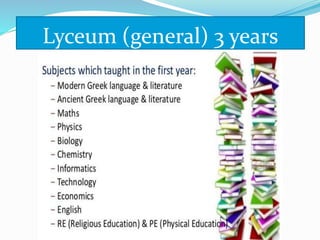
Lyceum (general) 3 years
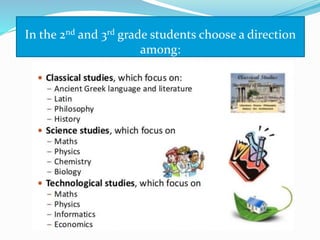
In the 2nd and 3rd grade students choose a direction
among:
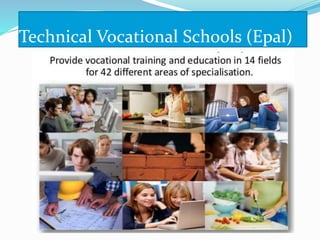
Technical Vocational Schools (Epal)
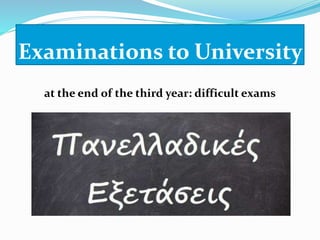
Examinations to University
at the end of the third year: difficult exams
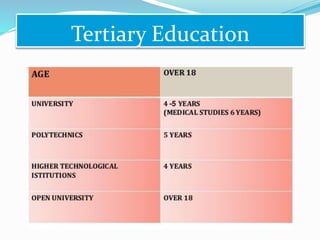
Tertiary Education
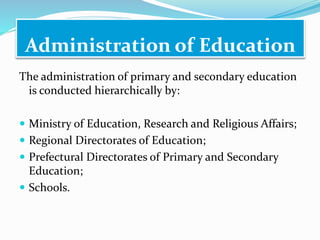
Administration of Education
The administration of primary and secondary education
is conducted hierarchically by:
 Ministry of Education, Research and Religious Affairs;
 Regional Directorates of Education;
 Prefectural Directorates of Primary and Secondary
Education;
 Schools.
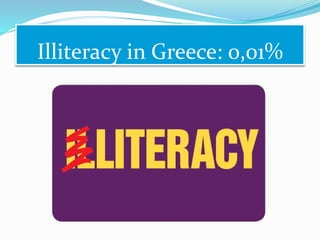
Illiteracy in Greece: 0,01%
The greek educational

The greek educational

  • 1.
    21st Primary schoolof Athens “Lela Karagianni”
  • 2.
    The structure ofthe Greek educational system University (18-24) Upper secondary Lyceum (15-18) Lower secondary Gymnasium (12-15) Primary school (6-12) Kindergarten (4-6) Toddlers (2.5-4years old)
  • 3.
    Levels of Education CompulsoryEducation  Pre-primary education (4-5 years)  Primary education - dimotiko (6-12 years)  Lower secondary general education – gymnasium (13-15 years) Post-Compulsory Education  General upper secondary schools – lyceum (16-18 years)  Vocational upper secondary schools (16-18 years)  Post-secondary non- tertiary institutes-IEK (18+ years)
  • 4.
    School year durationand Holidays Primary and Secondary 11th September - 21st June (for Primary schools) 11th September- 11th September - 30th June for High schools Summer vacation (about 3 months) Christmas vacation (2 weeks) Easter vacation (2 weeks). Two national holidays  28th October,  25th March
  • 5.
  • 6.
  • 7.
    Studies  6 years/six classes  Books centrally edited  No tuition fees  8.00-13.15  All day schools until 16.00 (optional)  Public or private Primary education Assessment • Descriptive Assessment for the first two years • No final exams • Assessed on a ABC scale from grade 3 to 4. • Assessed on a mark scale 0-10 from grade 5 to 6.
  • 8.
    Weekly schedule subjects 1stgrade 2nd 3rd 4th 5th 6 Language 9 9 8 8 7 7 Mathematics 5 5 4 4 4 4 History 2 2 2 2 Science 3 3 Religious education 2 2 1 1 Environmental studies 4 4 2 2 Physical education 3 3 3 3 2 2 Art 1 1 1 1 1 1 Music 1 1 1 1 1 1 Theater 1 1 1 1 Geography 2 2 Social & Political Education 1 1 ICTs 1 1 1 1 1 1 English 1 1 3 3 3 3 French or German 2 2 Flexible zone/projects 3 3 2 2
  • 9.
    7.45 – 4.00Daily Programme 7.45 – 8.00 Morning zone (optional) 8.00 – 8.15 Students’ arrival (reception) 8.15 – 9.40 1st and 2nd period 9.40 – 10.00 Break 10.00 – 11.30 3rd and 4th period 11.30 – 11.45 Break 11.45 – 12.25 5th period 12.25 – 12.35 Break 12.35 – 1.15 6th period (end of compulsory timetable) 1.20 – 4.00 Extended school (all day) 1.20 – 2.00 1st hour (feeding/relaxation) 2.00 – 2.15 Break 2.15 – 3.00 2nd hour - study / preparation for next day 3.00 – 3.15 Brake 3.15 – 4.00 3rd hour- optional subjects (ICTs, English, sports, music..)
  • 10.
    Reception Class inPrimary Schools  the purpose of attending RC is for students to understand and produce oral and written speech to the extent that it allows them to gradually integrate in the normal classroom. Especially for refugee children:  familiarity with school life rules and school work  teach skills like holding the pencil correctly and firmly,  Opening books and notebooks from right to left,  writing from left to right,  copying from the table and / or the book,  recognizing the letters and distinguishing them from other symbols / shapes,
  • 11.
    There is asystem of services that operates in such a way as to achieve successful inclusion, in order to ensure high-quality provision for special education: Free public education for all students with SEN Free services for diagnosis, assessment, counseling and facilitating procedures, such as Greek sign language interpreting, Braille courses, etc. Provision of support services for mainstream settings On-going programmes which support early intervention In-service training for teachers, practitioners, educationalists, social workers, psychologists, etc. Special education
  • 12.
    Students with specialeducational needs are in regular classes. They can also be placed in integration classes(a systematic support for a few hours per day or per week from a special education teacher in order to follow the curriculum of their school, but they receive most of their education in the mainstream class).  The total number of hours a student can take in an inclusive class is not more than ten hours. An indispensable presupposition for the previous case is the suggestion of the Diagnostic Assessment and Support Centres. The whole integration process of a student with special educational needs (SEN) is a result of collaboration between Diagnostic Assessment and Support Centres, mainstream schools and families. Special education is provided from 4 to 22 years old, mainly in mainstream schools
  • 13.
    The Diagnostic Assessmentand Support Centre makes proposals for the education of a pupil with SEN at primary or secondary level, provided that a diagnosis assessment has been carried out and the pupil’s parents are in agreement. The students participate in special educational programmes adapted to their needs that are carried out by specially trained educators. The pupil attends primary or secondary school in one of the following cases:  when their special needs are considered to be particularly serious and consequently need special assistance provided by educators and specialists within special schools and with the appropriate infrastructure; or  when they seem to benefit from the special school setting. Special education schools
  • 14.
    other types ofschools  Cross-cultural Education Schools  Minority schools  School Units of Special Education  Experimental Schools
  • 15.
    Secondary education High schools LowerSecondary schools (gymnasium) compulsory Upper Secondary schools (Lyceum) optional
  • 16.
     Children admittedafter Primary Schools  Studies : 3 years/ 3 classes  Students’ age: 12-15  School year divided in 2 terms Lower Secondary schools (gymnasium) compulsory • General Gymnasium • Athletic Gymnasium • Musical Gymnasium • Art Gymnasium • Experimental Gymnasium • Church Gymnasium
  • 17.
  • 18.
  • 19.
    In the 2ndand 3rd grade students choose a direction among:
  • 20.
  • 21.
    Examinations to University atthe end of the third year: difficult exams
  • 22.
  • 24.
    Administration of Education Theadministration of primary and secondary education is conducted hierarchically by:  Ministry of Education, Research and Religious Affairs;  Regional Directorates of Education;  Prefectural Directorates of Primary and Secondary Education;  Schools.
  • 25.