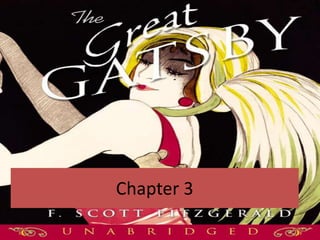
Chapter 3
GATSBY

In the first two chapters of the novel the reader has :
• seen Gatsby from a distance
• heard others talk about him
• heard Nick’s thoughts on him
   Yet, we have not met him
Why has Fitzgerald structured the
opening chapters in this way?
GATSBY

              “Somebody told me…….”
“Somebody told me they thought he killed a man once”
“It’s more that he was a German spy during the war”

The repetition of the conjecture about Gatsby
         further adds to his mystery.
“GREAT” GATSBY


The title is reminiscent of a magician like
           “The Great Houdini”

 Emphasises the theatrical and perhaps
 illusion like qualities of Gatsby’s life.
DREAMLIKE
   “In his garden men and girls came and went like
                       moths”
 “A tray of cocktails floated at us through the twilight”
• An air of illusion is successfully
               created.
 • There are lights and glitter and
    status that attracts people to
           Gatsby’s house.
  • Moths get burned by light -
              dangerous
CHARACTERISATION - GATSBY


Does this perhaps suggest that there
  is something illusionary about
          Gatsby himself ?
CHARACTERISATION - GATSBY


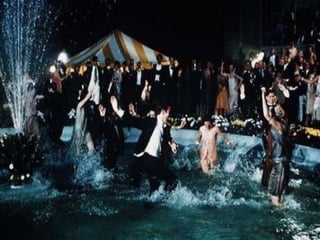
• Lots of movement before/during the party evokes
   the feeling of restlessness
• motion and light – Gatsby cannot stand to be alone
   with his thoughts, needs to show off his wealth now
   that he has earned it.
• The servants “repair the ravages of the night
  before” each day - a cycle of excitement and
  destruction
CHARACTERISATION - GATSBY


Fitzgerald clearly creates an air of isolation
              around Gatsby:

“standing alone on the marble steps and looking
         from one group to another”

“Sometimes they came and went without having
           met Gatsby at all”
CHARACTERISATION - GATSBY


 The repetition of the business calls
early in the morning perhaps suggests
  underworld business connections.
PARTY


• Fashionable and alive - “the air is alive with chatter and laughter”
• “enthusiastic meetings between women who never knew each other’s
   names”
• even though the conversations and meetings are
  friendly, they are superficial and no real connection
  between people occurs, all is for show
• “the groups change more swiftly, swell with new arrivals, dissolve
  and form in the same breath” –
• constant change and flux, restlessness
PARTY


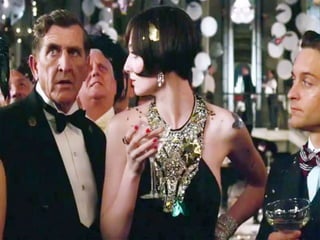
• wanderers, confident girls who weave here and there among the
  stouter and more stable”
• need constant and varied attention – restless
• “conducted themselves according to the rules of behavior associated
  with an amusement park. Sometimes they came and went without
  having met Gatsby”
• people are more concerned with having a good time
  than making friends with the host, Gatsby is a symbol
  and provider of the party, not a real friend or tangible
  person to them
APPEARANCES AND DECEPTION


     • Wealth covers up immoral behavior.
• Story about Gatsby’s generosity toward the girl
                that ruined her dress
      • Is he trying to fly under the radar?
  • Gothic library – staged; meant to be looked
         at, not used; a fashion statement
SYMBOLISM – OWL EYES


“Absolutely real – have pages and everything….they are absolutely real…It
                                fooled me”

• Owl Eyes is surprised to discover that the books are real and
  not just empty covers and cases.
• The people of West Egg and East Egg have ornate covers too
• Outward show of opulence covers up their inner corruption
  and moral decay
APPEARANCES AND REALITY


• pages of the books aren’t cut - Gatsby doesn’t read
  the books but spent a whole lot of money to look
  learned, intelligent and gentlemanly
• An illusion
• “if one brick was removed the whole library was
  liable to collapse”
• The extravagant wealth and appearance of Gatsby’s
  house may not be as stable and secure as it seems
  (danger)
DECEPTION AND REALITY


• The party is an elaborate theatrical production.
     People do not even really like each other –
         “East Egg condescending to West Egg”.
  • Gatsby’s whole life is merely a show – fake
    friends, pretend to like him, use him for his
                 parties and money
PERCEPTION VERSUS REALITY


“Most of the remaining women were now having fights with men
                 said to be their husbands”
  • Alcohol distorts vision but also reality
                 (dangerous)
       • Things are not as they seem.
   • People pretend to be happy, party to
    forget and get away from unfilled lives.
                    Restless.
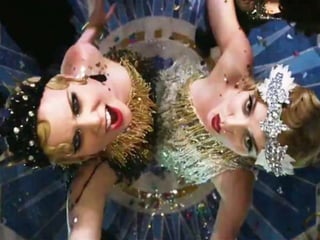
MORE ON THE PARTY


 “vacuous laughter” (empty) is heard and
      costume acts are performed - the
entertainment is grand, but empty; again, no
   joy is found in the connection between
                    people.
GATSBY’S SMILE


  “It was one of those rare smiles with a quality of
eternal reassurance in it, that you may come across
four or five times in life. It faced - or seemed to face
 - the whole external world for an instant, and then
  concentrated on you with irresistible prejudice in
    your favor. It understood you just as far as you
   wanted to be understood, believed in you as you
  would like to believe in yourself, and assured you
 that it had precisely the impression of you that, at
           your best, you hoped to convey.”
GATSBY’S SMILE AND BEHAVIOR

• It is a smile with depth, unlike Daisy’s charming though empty
  laugh.
• He has charm and character and seems real, not fake like the
  rest of society.
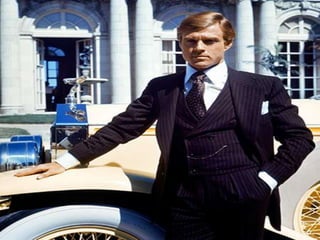
• He was an elegant roughneck in his early thirties that spoke with
  excessive formality.
• Careful with his words – wanted to seem intelligent.
• He is friendly with Nick, calling him “old sport” as an
  endearment
• Nick and Gatsby both served in the war together.
ISOLATED


• He was not drinking and instead of participating
  in the debauchery
• Gatsby intentionally sets himself apart from his
  guests and does not want to interact with the
  general rabble; he only interacts with those
  worth his time.
• Perhaps he is searching for something.
ISOLATED


 “A sudden emptiness seemed to flow now from the windows and
the great doors, endowing with complete isolation the figure of the
host, who stood on the porch, his hands up in a formal gesture of
                            farewell.”
Gatsby is a lonely man, and the spell wears
              off for him too.
CAR ACCIDENT – VIOLENCE AND
                       UNHAPPINESS

• Gatsby’s parties are an escape for the guests - a place
  where they can forget the real world, mingle with
  strangers, seeks glamour, drink themselves into a
  stupor and concern themselves with fashion and
  appearances.
• The spell comes to an end - unhappy marriage partners
  reunite and fight, the consequences of mindless
  partying are seen and there are repercussion for a lack
  of responsibility (Danger)
• The real world can only be suspended for so long.
NICK ON LONELINESS


 • Likes the racy, adventurous feel of the city - with its
         enchanting lights, people and machines.
 • The city is alive and in constant motion, but there’s
                         loneliness.
  • He imagines following romantic looking women
         home and perceives them smiling at him
• He says to feel a “haunting loneliness sometimes”
                   and he felt it in others.
LONELY IN A CROWD


 • “Forms leaned together in the taxis as they
  waited, and voices sang, and there was laughter
from unheard jokes, and lighted cigarettes outlines
    unintelligible gestures inside. Imagining that
   I, too, was hurrying toward gayety and sharing
  their intimate excitement, I wished them well.”
   • Nick is an observer, but not a
 participant in life. He has no deep or
      lasting human connections

"The Great Gatsby" Chapter 3

  • 1.
  • 3.
    GATSBY In the firsttwo chapters of the novel the reader has : • seen Gatsby from a distance • heard others talk about him • heard Nick’s thoughts on him Yet, we have not met him Why has Fitzgerald structured the opening chapters in this way?
  • 4.
    GATSBY “Somebody told me…….” “Somebody told me they thought he killed a man once” “It’s more that he was a German spy during the war” The repetition of the conjecture about Gatsby further adds to his mystery.
  • 5.
    “GREAT” GATSBY The titleis reminiscent of a magician like “The Great Houdini” Emphasises the theatrical and perhaps illusion like qualities of Gatsby’s life.
  • 6.
    DREAMLIKE “In his garden men and girls came and went like moths” “A tray of cocktails floated at us through the twilight” • An air of illusion is successfully created. • There are lights and glitter and status that attracts people to Gatsby’s house. • Moths get burned by light - dangerous
  • 7.
    CHARACTERISATION - GATSBY Doesthis perhaps suggest that there is something illusionary about Gatsby himself ?
  • 9.
    CHARACTERISATION - GATSBY •Lots of movement before/during the party evokes the feeling of restlessness • motion and light – Gatsby cannot stand to be alone with his thoughts, needs to show off his wealth now that he has earned it. • The servants “repair the ravages of the night before” each day - a cycle of excitement and destruction
  • 10.
    CHARACTERISATION - GATSBY Fitzgeraldclearly creates an air of isolation around Gatsby: “standing alone on the marble steps and looking from one group to another” “Sometimes they came and went without having met Gatsby at all”
  • 11.
    CHARACTERISATION - GATSBY The repetition of the business calls early in the morning perhaps suggests underworld business connections.
  • 13.
    PARTY • Fashionable andalive - “the air is alive with chatter and laughter” • “enthusiastic meetings between women who never knew each other’s names” • even though the conversations and meetings are friendly, they are superficial and no real connection between people occurs, all is for show • “the groups change more swiftly, swell with new arrivals, dissolve and form in the same breath” – • constant change and flux, restlessness
  • 14.
    PARTY • wanderers, confidentgirls who weave here and there among the stouter and more stable” • need constant and varied attention – restless • “conducted themselves according to the rules of behavior associated with an amusement park. Sometimes they came and went without having met Gatsby” • people are more concerned with having a good time than making friends with the host, Gatsby is a symbol and provider of the party, not a real friend or tangible person to them
  • 15.
    APPEARANCES AND DECEPTION • Wealth covers up immoral behavior. • Story about Gatsby’s generosity toward the girl that ruined her dress • Is he trying to fly under the radar? • Gothic library – staged; meant to be looked at, not used; a fashion statement
  • 17.
    SYMBOLISM – OWLEYES “Absolutely real – have pages and everything….they are absolutely real…It fooled me” • Owl Eyes is surprised to discover that the books are real and not just empty covers and cases. • The people of West Egg and East Egg have ornate covers too • Outward show of opulence covers up their inner corruption and moral decay
  • 18.
    APPEARANCES AND REALITY •pages of the books aren’t cut - Gatsby doesn’t read the books but spent a whole lot of money to look learned, intelligent and gentlemanly • An illusion • “if one brick was removed the whole library was liable to collapse” • The extravagant wealth and appearance of Gatsby’s house may not be as stable and secure as it seems (danger)
  • 19.
    DECEPTION AND REALITY •The party is an elaborate theatrical production. People do not even really like each other – “East Egg condescending to West Egg”. • Gatsby’s whole life is merely a show – fake friends, pretend to like him, use him for his parties and money
  • 21.
    PERCEPTION VERSUS REALITY “Mostof the remaining women were now having fights with men said to be their husbands” • Alcohol distorts vision but also reality (dangerous) • Things are not as they seem. • People pretend to be happy, party to forget and get away from unfilled lives. Restless.
  • 23.
    MORE ON THEPARTY “vacuous laughter” (empty) is heard and costume acts are performed - the entertainment is grand, but empty; again, no joy is found in the connection between people.
  • 25.
    GATSBY’S SMILE “It was one of those rare smiles with a quality of eternal reassurance in it, that you may come across four or five times in life. It faced - or seemed to face - the whole external world for an instant, and then concentrated on you with irresistible prejudice in your favor. It understood you just as far as you wanted to be understood, believed in you as you would like to believe in yourself, and assured you that it had precisely the impression of you that, at your best, you hoped to convey.”
  • 26.
    GATSBY’S SMILE ANDBEHAVIOR • It is a smile with depth, unlike Daisy’s charming though empty laugh. • He has charm and character and seems real, not fake like the rest of society. • He was an elegant roughneck in his early thirties that spoke with excessive formality. • Careful with his words – wanted to seem intelligent. • He is friendly with Nick, calling him “old sport” as an endearment • Nick and Gatsby both served in the war together.
  • 27.
    ISOLATED • He wasnot drinking and instead of participating in the debauchery • Gatsby intentionally sets himself apart from his guests and does not want to interact with the general rabble; he only interacts with those worth his time. • Perhaps he is searching for something.
  • 28.
    ISOLATED “A suddenemptiness seemed to flow now from the windows and the great doors, endowing with complete isolation the figure of the host, who stood on the porch, his hands up in a formal gesture of farewell.” Gatsby is a lonely man, and the spell wears off for him too.
  • 30.
    CAR ACCIDENT –VIOLENCE AND UNHAPPINESS • Gatsby’s parties are an escape for the guests - a place where they can forget the real world, mingle with strangers, seeks glamour, drink themselves into a stupor and concern themselves with fashion and appearances. • The spell comes to an end - unhappy marriage partners reunite and fight, the consequences of mindless partying are seen and there are repercussion for a lack of responsibility (Danger) • The real world can only be suspended for so long.
  • 32.
    NICK ON LONELINESS • Likes the racy, adventurous feel of the city - with its enchanting lights, people and machines. • The city is alive and in constant motion, but there’s loneliness. • He imagines following romantic looking women home and perceives them smiling at him • He says to feel a “haunting loneliness sometimes” and he felt it in others.
  • 33.
    LONELY IN ACROWD • “Forms leaned together in the taxis as they waited, and voices sang, and there was laughter from unheard jokes, and lighted cigarettes outlines unintelligible gestures inside. Imagining that I, too, was hurrying toward gayety and sharing their intimate excitement, I wished them well.” • Nick is an observer, but not a participant in life. He has no deep or lasting human connections