Reported by
MA. ROBELLE P. BAUTISTA
MSE English
THE GREAT GATSBY
INTRODUCTION
According to United Nation,America ,
formally known as United States of
American (USA) has the highest number
of immigrants (foreign-born individuals),
with 48 million in 2015. 1
One of the top
reasons why was simply express with the
famous phrase “American Dream. ”
THE GREAT GATSBY
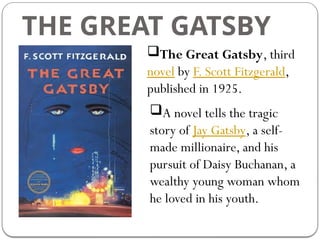
The Great Gatsby, third
novel by F. Scott Fitzgerald,
published in 1925.
A novel tells the tragic
story of Jay Gatsby, a self-
made millionaire, and his
pursuit of Daisy Buchanan, a
wealthy young woman whom
he loved in his youth.
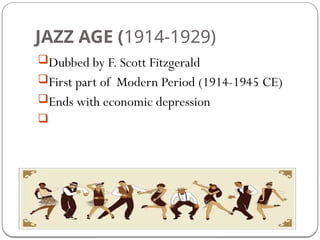
JAZZ AGE (1914-1929)
Dubbed by F. Scott Fitzgerald
First part of Modern Period (1914-1945 CE)
Ends with economic depression

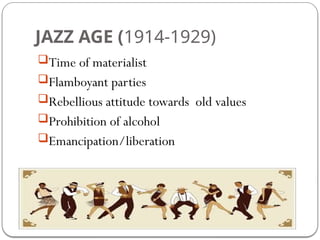
JAZZ AGE (1914-1929)
Time of materialist
Flamboyant parties
Rebellious attitude towards old values
Prohibition of alcohol
Emancipation/liberation
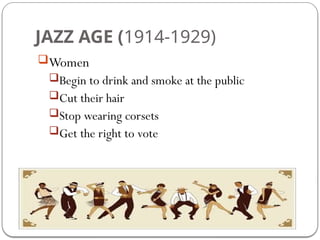
JAZZ AGE (1914-1929)
Women
Begin to drink and smoke at the public
Cut their hair
Stop wearing corsets
Get the right to vote
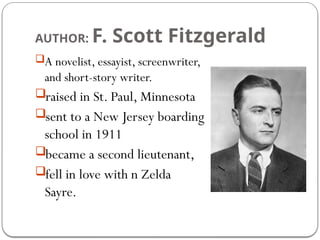
AUTHOR: F. Scott Fitzgerald
A novelist, essayist, screenwriter,
and short-story writer.
raised in St. Paul, Minnesota
sent to a New Jersey boarding
school in 1911
became a second lieutenant,
fell in love with n Zelda
Sayre.
AUTHOR: F. Scott Fitzgerald
A novelist, essayist, screenwriter,
and short-story writer.
raised in St. Paul, Minnesota
sent to a New Jersey boarding
school in 1911
became a second lieutenant,
fell in love with n Zelda
Sayre.
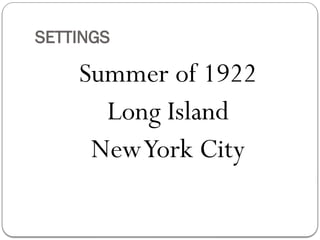
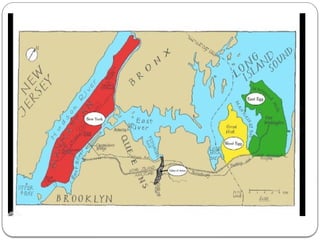
SETTINGS
Summer of 1922
Long Island
NewYork City
SETTINGS
CHARACTERS
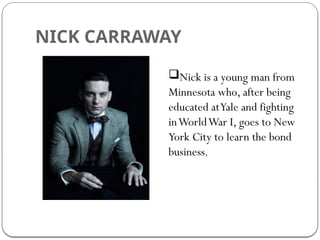
NICK CARRAWAY
Nick is a young man from
Minnesota who, after being
educated atYale and fighting
inWorldWar I, goes to New
York City to learn the bond
business.
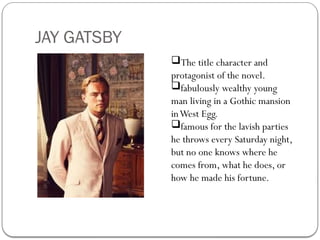
JAY GATSBY
The title character and
protagonist of the novel.
fabulously wealthy young
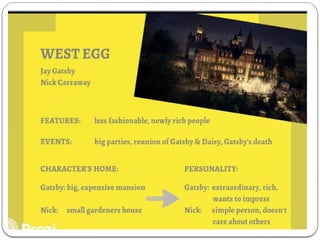
man living in a Gothic mansion
inWest Egg.
famous for the lavish parties
he throws every Saturday night,
but no one knows where he
comes from, what he does, or
how he made his fortune.
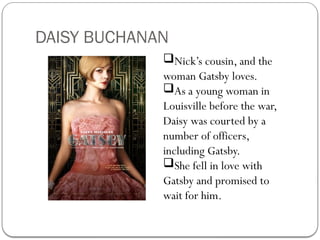
DAISY BUCHANAN
Nick’s cousin, and the
woman Gatsby loves.
As a young woman in
Louisville before the war,
Daisy was courted by a
number of officers,
including Gatsby.
She fell in love with
Gatsby and promised to
wait for him.
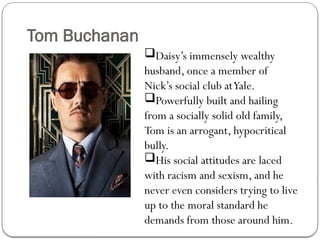
Tom Buchanan
Daisy’s immensely wealthy
husband, once a member of
Nick’s social club atYale.
Powerfully built and hailing
from a socially solid old family,
Tom is an arrogant, hypocritical
bully.
His social attitudes are laced
with racism and sexism, and he
never even considers trying to live
up to the moral standard he
demands from those around him.
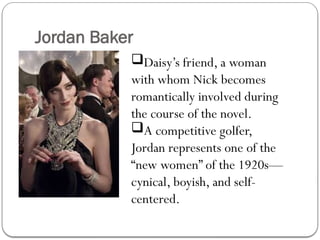
Jordan Baker
Daisy’s friend, a woman
with whom Nick becomes
romantically involved during
the course of the novel.
A competitive golfer,
Jordan represents one of the
“new women” of the 1920s—
cynical, boyish, and self-
centered.
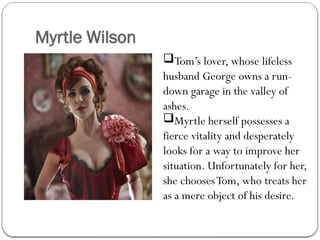
Myrtle Wilson
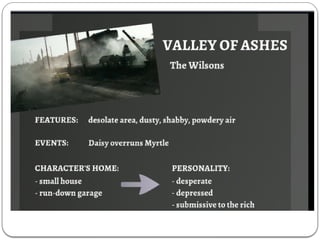
Tom’s lover, whose lifeless
husband George owns a run-
down garage in the valley of
ashes.
Myrtle herself possesses a
fierce vitality and desperately
looks for a way to improve her
situation. Unfortunately for her,
she choosesTom, who treats her
as a mere object of his desire.
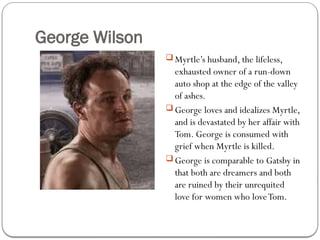
George Wilson
 Myrtle’s husband, the lifeless,
exhausted owner of a run-down
auto shop at the edge of the valley
of ashes.
 George loves and idealizes Myrtle,
and is devastated by her affair with
Tom. George is consumed with
grief when Myrtle is killed.
 George is comparable to Gatsby in
that both are dreamers and both
are ruined by their unrequited
love for women who loveTom.
PLOT: EXPOSITION
The narrator, Nick Carraway, has moved
east, to NewYork City, to pursue a
career in bonds.When he arrives, he
visits his wealthy cousin, Daisy, and her
husband,Tom Buchanan, for dinner.At
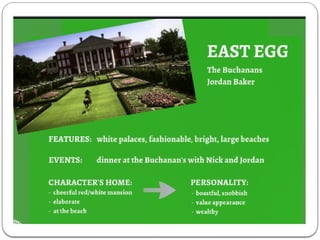
their home in East Egg, he meets Jordan
Baker, a famous golfer, and friend of
Daisy.
PLOT : CONFLICT
The novel’s conflict is framed
by Nick’s struggle to retell
the events of his life as it
relates to the mysterious Jay
Gatsby.
Rising Action
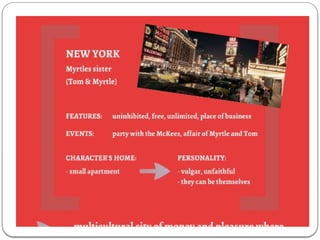
It’s revealed thatTom Buchanan is having an
affair with a woman named MyrtleWilson.
She is relatively poor and lives in theValley
ofAshes with her husband, George, a repair
station owner.
The rising action also reveals the identity
and background of Jay Gatsby, Nick’s
illustrious neighbor and Daisy’s former
lover. Nick later reunites them, and they
begin an affair.
Climax
 Daisy attempts to leaveTom for Gatsby.After a heated
argument, Daisy grows confused, and ultimately
changes her mind.
 Tom bitterly instructs Daisy to go home with Gatsby,
despite that she is now scared of him.
 Meanwhile, Myrtle, who was locked in her room
because her husband suspected her of having an affair,
escapes. Daisy is driving down the road, but Myrtle
thinks it isTom. She rushes towards the car; it hits her
and she is killed.
Falling Action and Resolution
George kills Gatsby and himself, believing
Gatsby was having an affair with Myrtle, and
was responsible for her death.
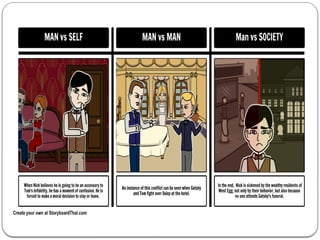
In the end, Nick is dismayed by the lack of
remorse shown by Daisy andTom, and by the
all the people who used Gatsby.
Nick arranges the funeral of Gatsby but
nobody shows up.
THEME
THEME
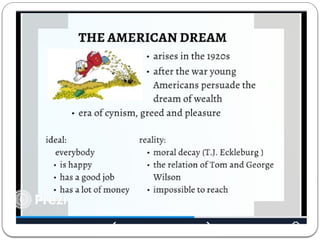
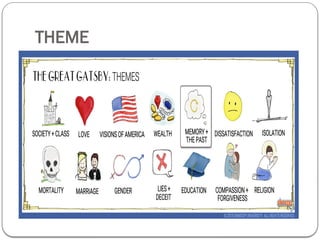
The Decline of the American Dream in the 1920s
 Fitzgerald portrays the 1920s as an era of decayed social and
moral values, evidenced in its overarching cynicism, greed, and
empty pursuit of pleasure.
The Hollowness of the Upper Class
It seems to lack in heart, as the East Eggers prove themselves
careless, inconsiderate bullies who are so used to money’s
ability to ease their minds that they never worry about hurting
others.
THEME:
Class
 They were careless people,Tom and Daisy—they smashed up
things and . . . then retreated back into their money . . . and let
other people clean up the mess they had made.
Love and Marriage
• centers on two loveless marriages: the union betweenTom and
Daisy Buchanan and between George and MyrtleWilson. In
both cases, the marriages seem to be unions of convenience or
advantage than actual love.
Literary Techniques/Devices
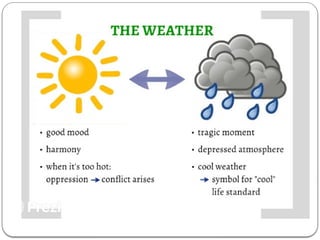
 Binary Opposition
 Flashback
occurs in chapter 4, starting when Jordan says “One October
day in nineteen-seventeen.”
 Simile
Nick narrates to us,” In his blue garden men and girls came and
went like moths among the whisperings and the champagne and
the stars.
 Metaphor
Nick in chapter 1 when she says,“You remind me of a- of a
rose, an absolute rose. Doesn’t he?
Literary Techniques/Devices
 Aphorism (sh ort saying / pointed statement)
Nick Carraway narrates for us the wise advice his
father had given him,“Whenever you feel
like criticizing anyone, just
remember that all the people in
this world haven’t had the
advantages you’ve had.
Literary Techniques/Devices
 Symbols
TheValley of Ashes
It represents how morality
and social code of conduct are
dropped out of the industrial
society
Foreshadowing
Foreshadowing is a significant technique
in The Great Gatsby. From the book’s
opening pages, Fitzgerald hints at the
book’s tragic end, with the mysterious
reference to the “foul dust that floated
in the wake of (Gatsby’s) dreams
Point of View
The Great Gatsby is written in
first-person limited perspective
from Nick’s point of view.This
means that Nick uses the word
“I” and describes events as he
experienced them.
DICTION
 The specific use of the words “sullen,”
“overhanging,” and “lusterless” create a dark,
uneasy feeling in the situation.
 .The word “shadow” immediately creates a tone of
awkwardness and a feeling of discomfort between
Gatsby and Daisy.
 The words “tense” and “unhappy” reveal directly
that Gatsby regrets the situation and is displeased
with the way that things are going between him and
Gatsby.
STYLE
The style of The Great Gatsby is
wry, sophisticated, and elegiac,
employing extended
metaphors, figurative imagery,
and poetic language to create a
sense of nostalgia and loss.
Moral Lesson
1. American Dream is unattainable.
2. Money cannot buy happiness or
friends
3. Don’t judge the book by its
cover

THE-GREAT-GATSBY-REPORTPRESENTATION.pptx

  • 1.
    Reported by MA. ROBELLEP. BAUTISTA MSE English THE GREAT GATSBY
  • 2.
    INTRODUCTION According to UnitedNation,America , formally known as United States of American (USA) has the highest number of immigrants (foreign-born individuals), with 48 million in 2015. 1 One of the top reasons why was simply express with the famous phrase “American Dream. ”
  • 3.
    THE GREAT GATSBY TheGreat Gatsby, third novel by F. Scott Fitzgerald, published in 1925. A novel tells the tragic story of Jay Gatsby, a self- made millionaire, and his pursuit of Daisy Buchanan, a wealthy young woman whom he loved in his youth.
  • 4.
    JAZZ AGE (1914-1929) Dubbedby F. Scott Fitzgerald First part of Modern Period (1914-1945 CE) Ends with economic depression 
  • 5.
    JAZZ AGE (1914-1929) Timeof materialist Flamboyant parties Rebellious attitude towards old values Prohibition of alcohol Emancipation/liberation
  • 6.
    JAZZ AGE (1914-1929) Women Beginto drink and smoke at the public Cut their hair Stop wearing corsets Get the right to vote
  • 8.
    AUTHOR: F. ScottFitzgerald A novelist, essayist, screenwriter, and short-story writer. raised in St. Paul, Minnesota sent to a New Jersey boarding school in 1911 became a second lieutenant, fell in love with n Zelda Sayre.
  • 9.
    AUTHOR: F. ScottFitzgerald A novelist, essayist, screenwriter, and short-story writer. raised in St. Paul, Minnesota sent to a New Jersey boarding school in 1911 became a second lieutenant, fell in love with n Zelda Sayre.
  • 10.
    SETTINGS Summer of 1922 LongIsland NewYork City
  • 11.
  • 16.
  • 17.
    NICK CARRAWAY Nick isa young man from Minnesota who, after being educated atYale and fighting inWorldWar I, goes to New York City to learn the bond business.
  • 18.
    JAY GATSBY The titlecharacter and protagonist of the novel. fabulously wealthy young man living in a Gothic mansion inWest Egg. famous for the lavish parties he throws every Saturday night, but no one knows where he comes from, what he does, or how he made his fortune.
  • 19.
    DAISY BUCHANAN Nick’s cousin,and the woman Gatsby loves. As a young woman in Louisville before the war, Daisy was courted by a number of officers, including Gatsby. She fell in love with Gatsby and promised to wait for him.
  • 20.
    Tom Buchanan Daisy’s immenselywealthy husband, once a member of Nick’s social club atYale. Powerfully built and hailing from a socially solid old family, Tom is an arrogant, hypocritical bully. His social attitudes are laced with racism and sexism, and he never even considers trying to live up to the moral standard he demands from those around him.
  • 21.
    Jordan Baker Daisy’s friend,a woman with whom Nick becomes romantically involved during the course of the novel. A competitive golfer, Jordan represents one of the “new women” of the 1920s— cynical, boyish, and self- centered.
  • 22.
    Myrtle Wilson Tom’s lover,whose lifeless husband George owns a run- down garage in the valley of ashes. Myrtle herself possesses a fierce vitality and desperately looks for a way to improve her situation. Unfortunately for her, she choosesTom, who treats her as a mere object of his desire.
  • 23.
    George Wilson  Myrtle’shusband, the lifeless, exhausted owner of a run-down auto shop at the edge of the valley of ashes.  George loves and idealizes Myrtle, and is devastated by her affair with Tom. George is consumed with grief when Myrtle is killed.  George is comparable to Gatsby in that both are dreamers and both are ruined by their unrequited love for women who loveTom.
  • 24.
    PLOT: EXPOSITION The narrator,Nick Carraway, has moved east, to NewYork City, to pursue a career in bonds.When he arrives, he visits his wealthy cousin, Daisy, and her husband,Tom Buchanan, for dinner.At their home in East Egg, he meets Jordan Baker, a famous golfer, and friend of Daisy.
  • 25.
    PLOT : CONFLICT Thenovel’s conflict is framed by Nick’s struggle to retell the events of his life as it relates to the mysterious Jay Gatsby.
  • 26.
    Rising Action It’s revealedthatTom Buchanan is having an affair with a woman named MyrtleWilson. She is relatively poor and lives in theValley ofAshes with her husband, George, a repair station owner. The rising action also reveals the identity and background of Jay Gatsby, Nick’s illustrious neighbor and Daisy’s former lover. Nick later reunites them, and they begin an affair.
  • 27.
    Climax  Daisy attemptsto leaveTom for Gatsby.After a heated argument, Daisy grows confused, and ultimately changes her mind.  Tom bitterly instructs Daisy to go home with Gatsby, despite that she is now scared of him.  Meanwhile, Myrtle, who was locked in her room because her husband suspected her of having an affair, escapes. Daisy is driving down the road, but Myrtle thinks it isTom. She rushes towards the car; it hits her and she is killed.
  • 28.
    Falling Action andResolution George kills Gatsby and himself, believing Gatsby was having an affair with Myrtle, and was responsible for her death. In the end, Nick is dismayed by the lack of remorse shown by Daisy andTom, and by the all the people who used Gatsby. Nick arranges the funeral of Gatsby but nobody shows up.
  • 29.
  • 30.
    THEME The Decline ofthe American Dream in the 1920s  Fitzgerald portrays the 1920s as an era of decayed social and moral values, evidenced in its overarching cynicism, greed, and empty pursuit of pleasure. The Hollowness of the Upper Class It seems to lack in heart, as the East Eggers prove themselves careless, inconsiderate bullies who are so used to money’s ability to ease their minds that they never worry about hurting others.
  • 31.
    THEME: Class  They werecareless people,Tom and Daisy—they smashed up things and . . . then retreated back into their money . . . and let other people clean up the mess they had made. Love and Marriage • centers on two loveless marriages: the union betweenTom and Daisy Buchanan and between George and MyrtleWilson. In both cases, the marriages seem to be unions of convenience or advantage than actual love.
  • 33.
    Literary Techniques/Devices  BinaryOpposition  Flashback occurs in chapter 4, starting when Jordan says “One October day in nineteen-seventeen.”  Simile Nick narrates to us,” In his blue garden men and girls came and went like moths among the whisperings and the champagne and the stars.  Metaphor Nick in chapter 1 when she says,“You remind me of a- of a rose, an absolute rose. Doesn’t he?
  • 34.
    Literary Techniques/Devices  Aphorism(sh ort saying / pointed statement) Nick Carraway narrates for us the wise advice his father had given him,“Whenever you feel like criticizing anyone, just remember that all the people in this world haven’t had the advantages you’ve had.
  • 35.
    Literary Techniques/Devices  Symbols TheValleyof Ashes It represents how morality and social code of conduct are dropped out of the industrial society
  • 40.
    Foreshadowing Foreshadowing is asignificant technique in The Great Gatsby. From the book’s opening pages, Fitzgerald hints at the book’s tragic end, with the mysterious reference to the “foul dust that floated in the wake of (Gatsby’s) dreams
  • 41.
    Point of View TheGreat Gatsby is written in first-person limited perspective from Nick’s point of view.This means that Nick uses the word “I” and describes events as he experienced them.
  • 42.
    DICTION  The specificuse of the words “sullen,” “overhanging,” and “lusterless” create a dark, uneasy feeling in the situation.  .The word “shadow” immediately creates a tone of awkwardness and a feeling of discomfort between Gatsby and Daisy.  The words “tense” and “unhappy” reveal directly that Gatsby regrets the situation and is displeased with the way that things are going between him and Gatsby.
  • 43.
    STYLE The style ofThe Great Gatsby is wry, sophisticated, and elegiac, employing extended metaphors, figurative imagery, and poetic language to create a sense of nostalgia and loss.
  • 44.
    Moral Lesson 1. AmericanDream is unattainable. 2. Money cannot buy happiness or friends 3. Don’t judge the book by its cover