THE BIG PICTURE
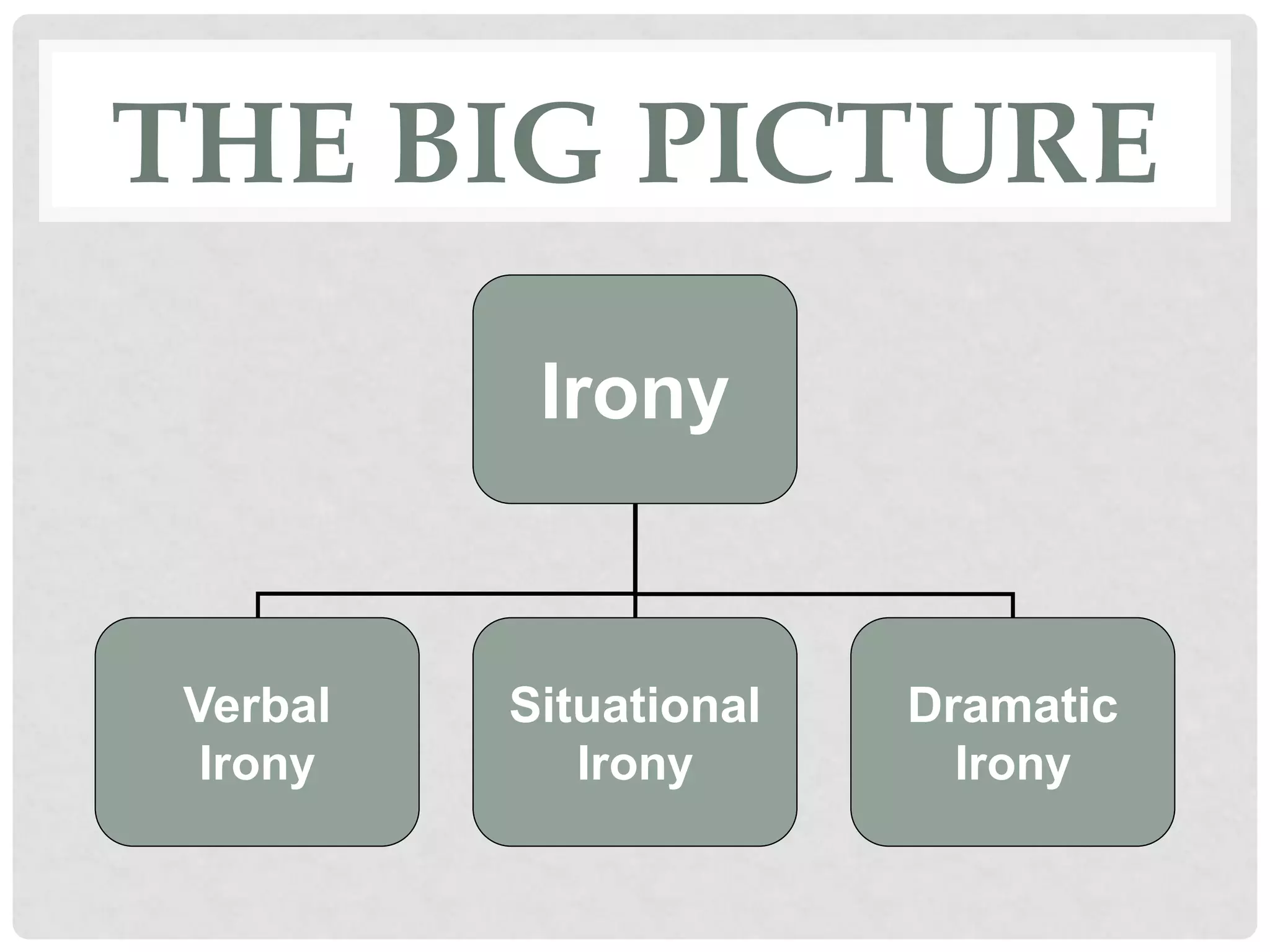
Irony
Verbal
Irony
Situational
Irony
Dramatic
Irony
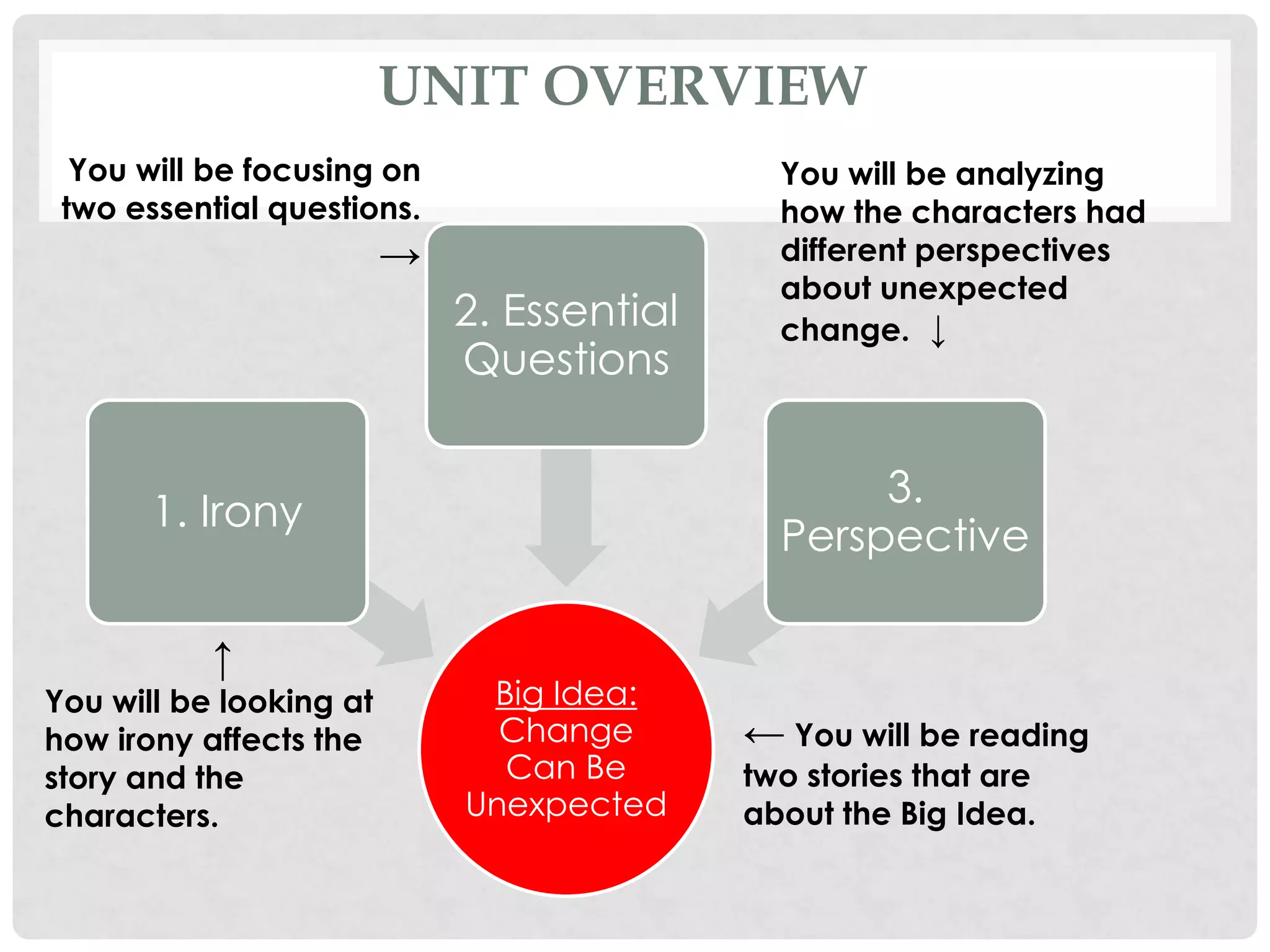
UNIT OVERVIEW
Big Idea:
Change
Can Be
Unexpected
1. Irony
2. Essential
Questions
3.
Perspective
← You will be reading
two stories that are
about the Big Idea.
↑
You will be looking at
how irony affects the
story and the
characters.
You will be analyzing
how the characters had
different perspectives
about unexpected
change. ↓
You will be focusing on
two essential questions.
→
ESSENTIAL QUESTIONS
• How do people respond to
unexpected change?
• How do authors use irony to build
mystery, tension, and surprise?
WHAT IS IRONY?
• A Surprise!
• It is the difference between what we expect
to happen, and what actually does
happen.
• It is often used to add suspense and interest.
• It is also used to keep the reader thinking
about the moral of the story.
VERBAL IRONY
• The simplest kind of irony.
• You use it everyday when you say one thing
and really mean another.
• It is often similar to a sarcastic response.
Example:
• When you appear to be sick and someone
asks you if you’re okay. You say “Of course!”
But in the meantime you are vomiting and
fainting and have 104 degree fever.
SITUATIONAL IRONY
• Occurs when a situation turns out to be the
opposite of what you thought it would be.
Example:
• The teacher’s daughter is a High School
drop out.
• The mayor’s wife gets caught stealing.
• The chef won’t eat his/her own cooking.
• The barber always needs a haircut.
DRAMATIC IRONY
• Occurs when the audience knows
something that the characters in the story,
on the screen, or on the stage do not know.
• This is used to engage the audience and
keep them actively involved in the storyline.
DRAMATIC IRONY
CONTINUED…
Example:
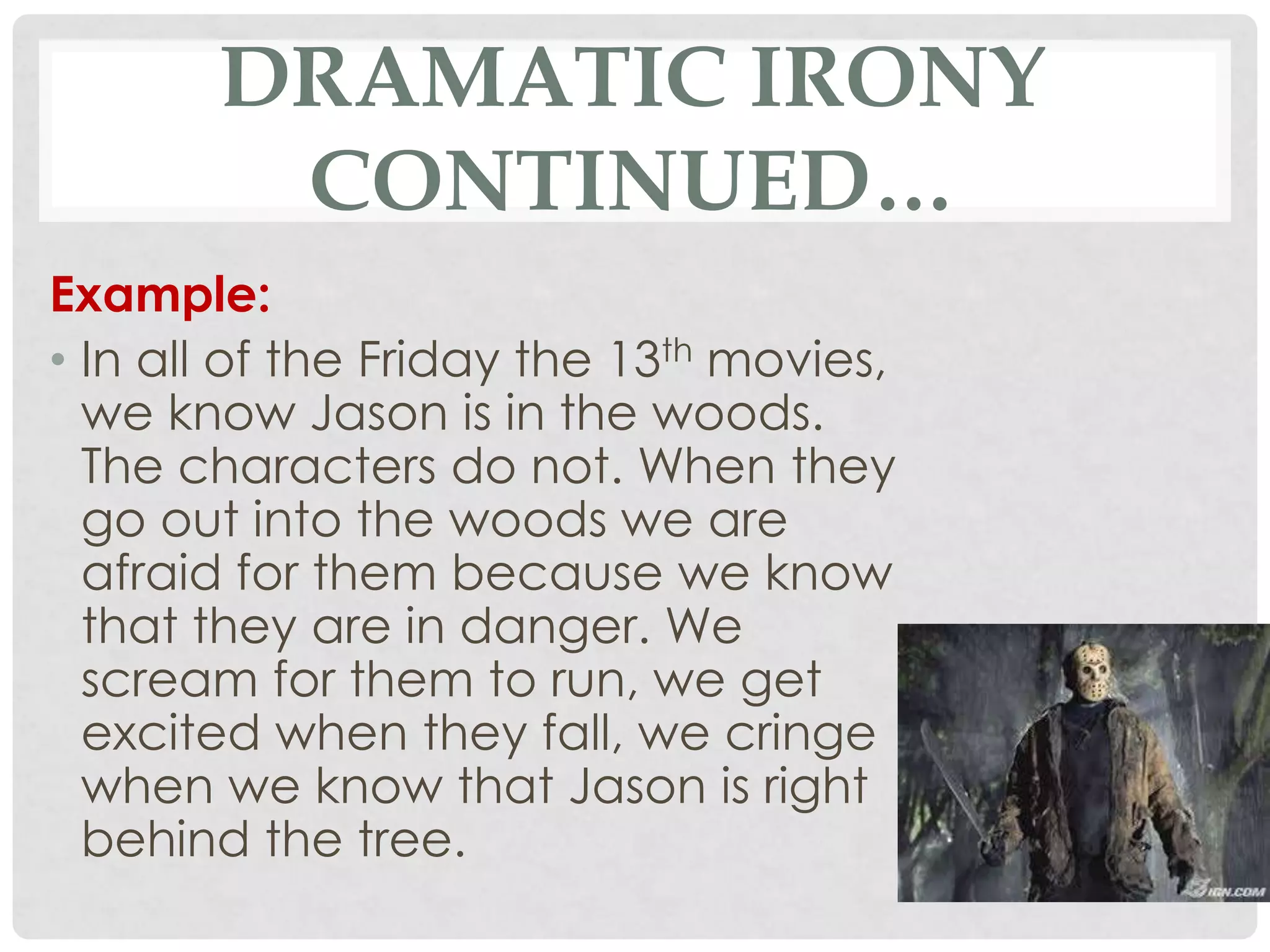
• In all of the Friday the 13th movies,
we know Jason is in the woods.
The characters do not. When they
go out into the woods we are
afraid for them because we know
that they are in danger. We
scream for them to run, we get
excited when they fall, we cringe
when we know that Jason is right
behind the tree.
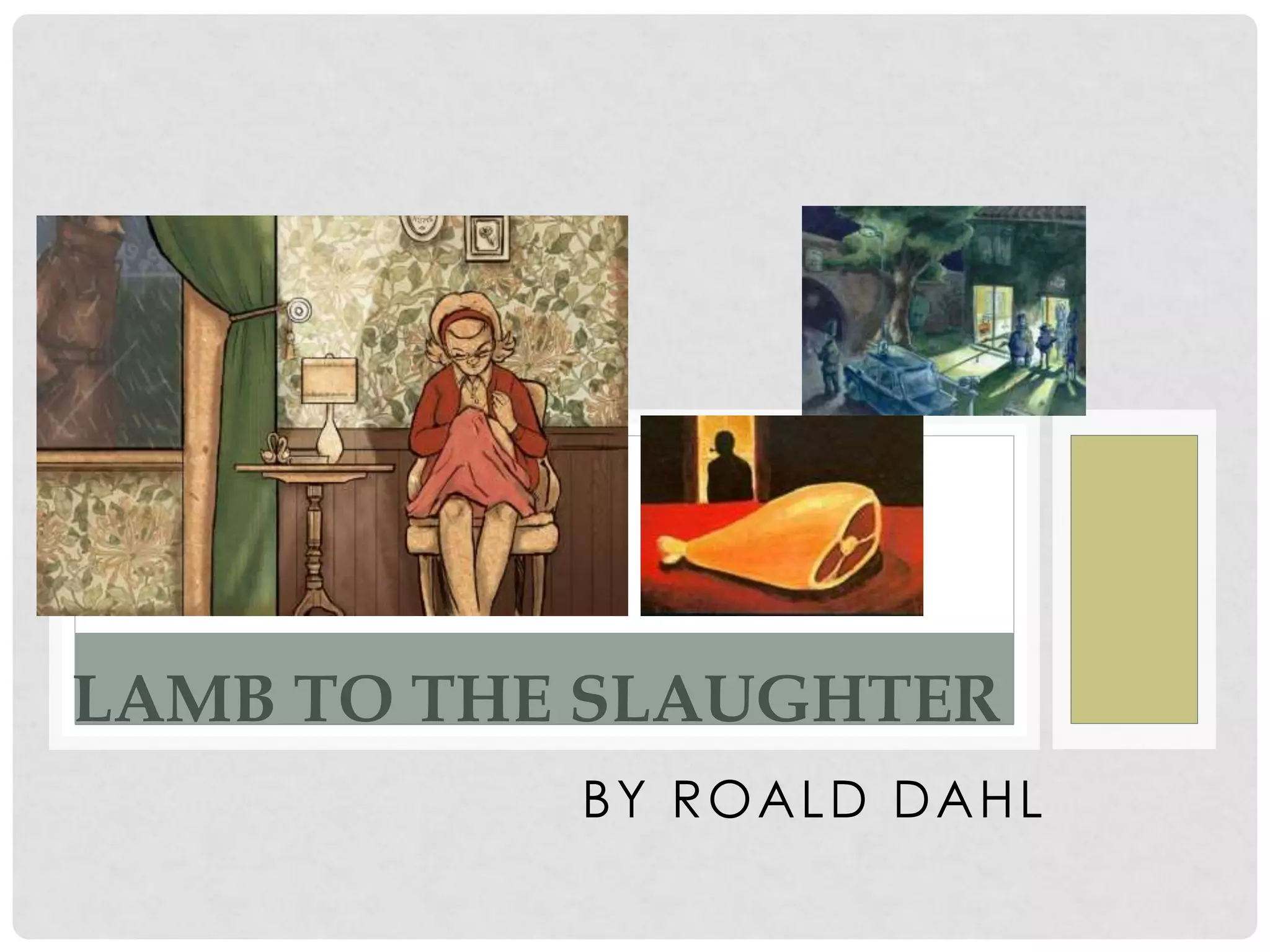
BY ROALD DAHL
LAMB TO THE SLAUGHTER
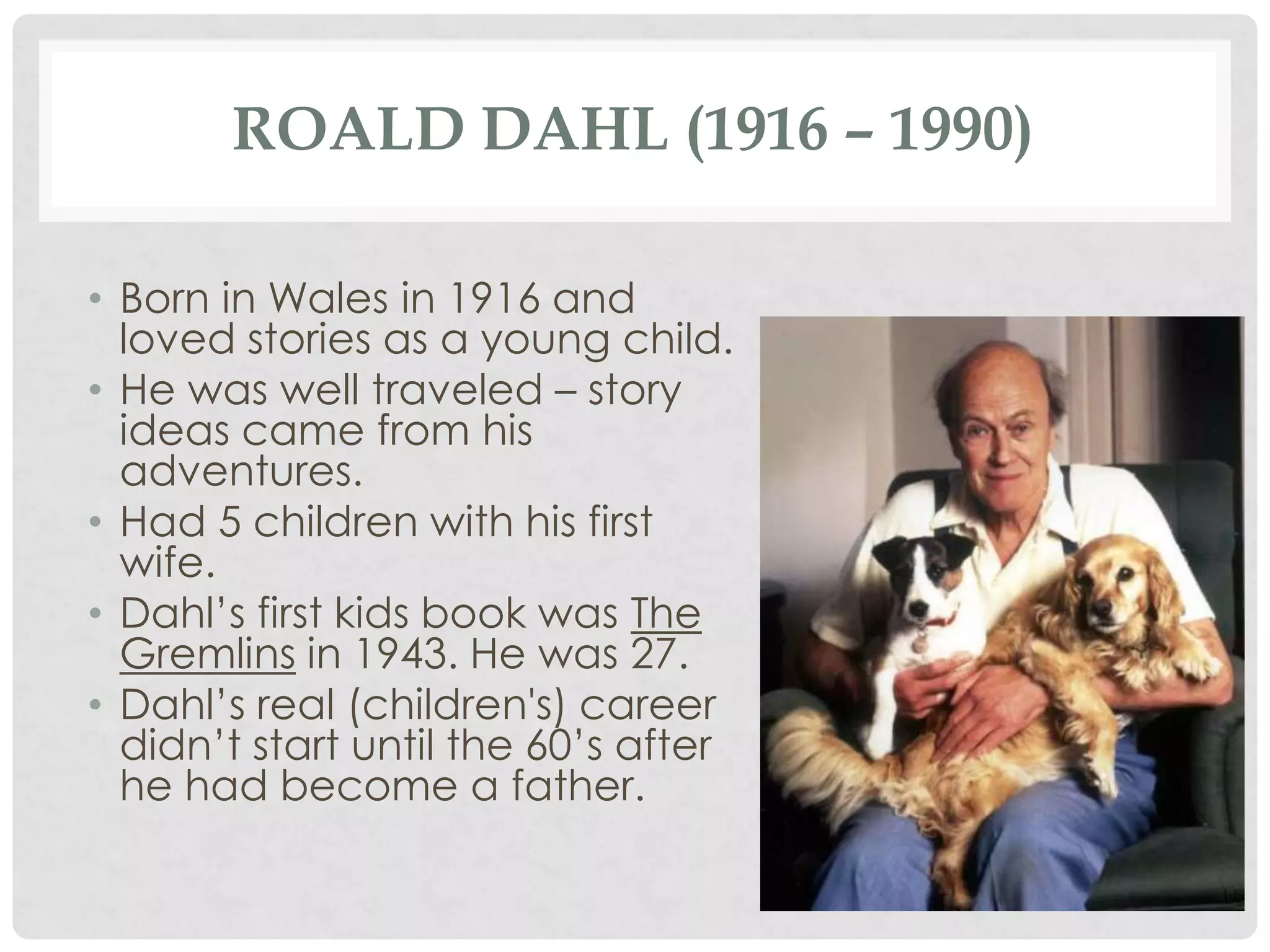
ROALD DAHL (1916 – 1990)
• Born in Wales in 1916 and
loved stories as a young child.
• He was well traveled – story
ideas came from his
adventures.
• Had 5 children with his first
wife.
• Dahl’s first kids book was The
Gremlins in 1943. He was 27.
• Dahl’s real (children's) career
didn’t start until the 60’s after
he had become a father.
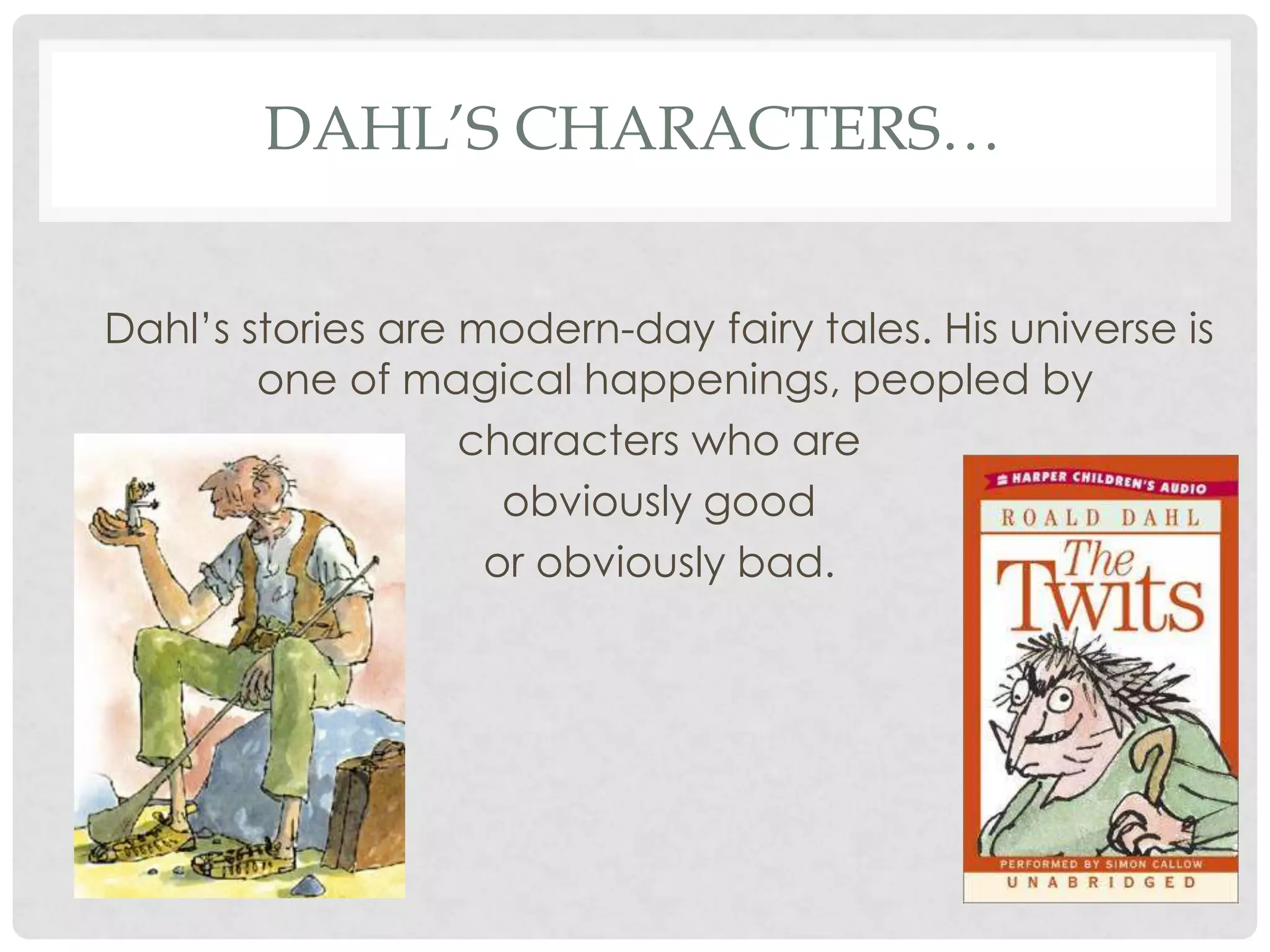
DAHL’S CHARACTERS…
Dahl’s stories are modern-day fairy tales. His universe is
one of magical happenings, peopled by
characters who are
obviously good
or obviously bad.
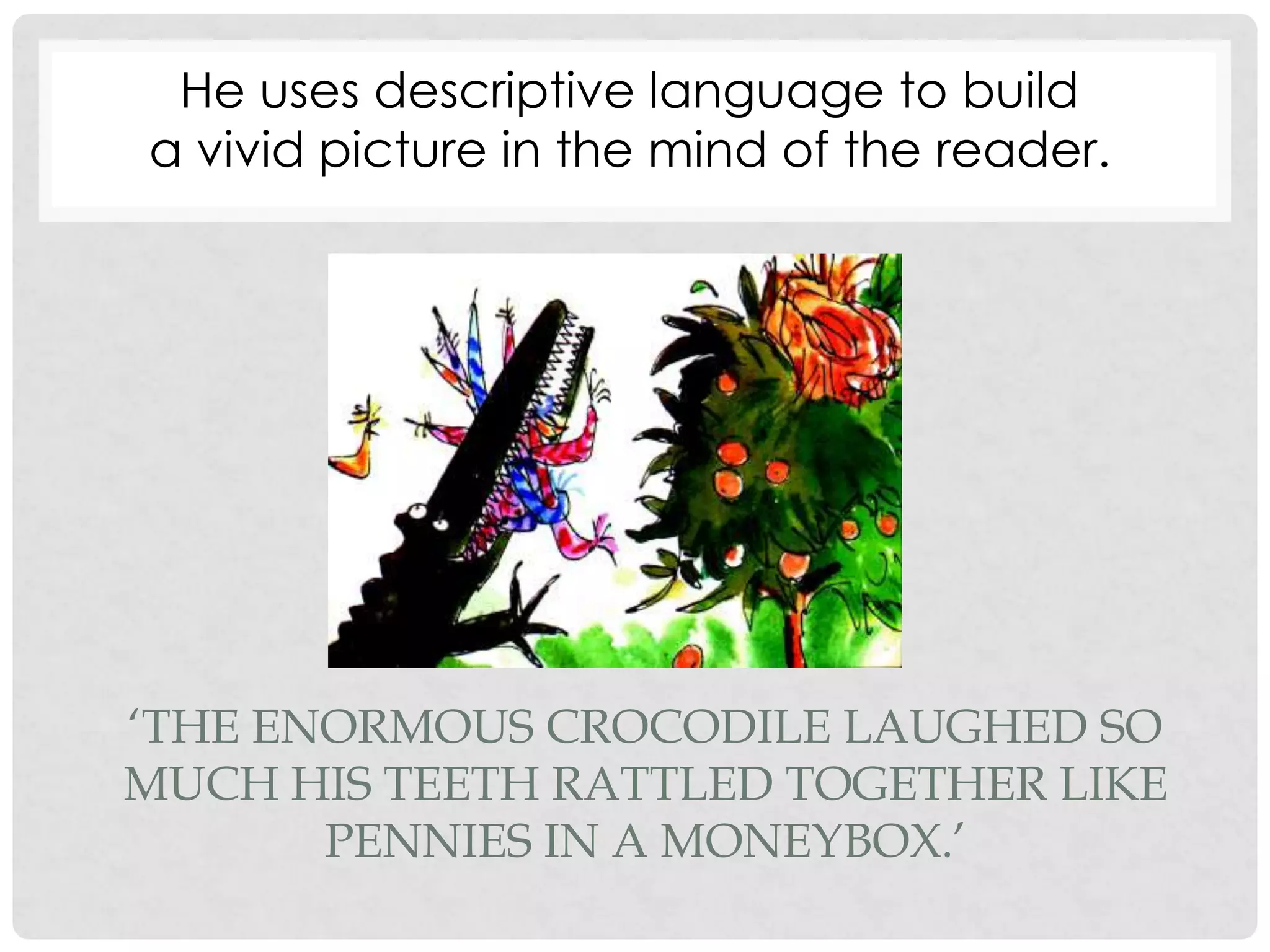
‘THE ENORMOUS CROCODILE LAUGHED SO
MUCH HIS TEETH RATTLED TOGETHER LIKE
PENNIES IN A MONEYBOX.’
He uses descriptive language to build
a vivid picture in the mind of the reader.
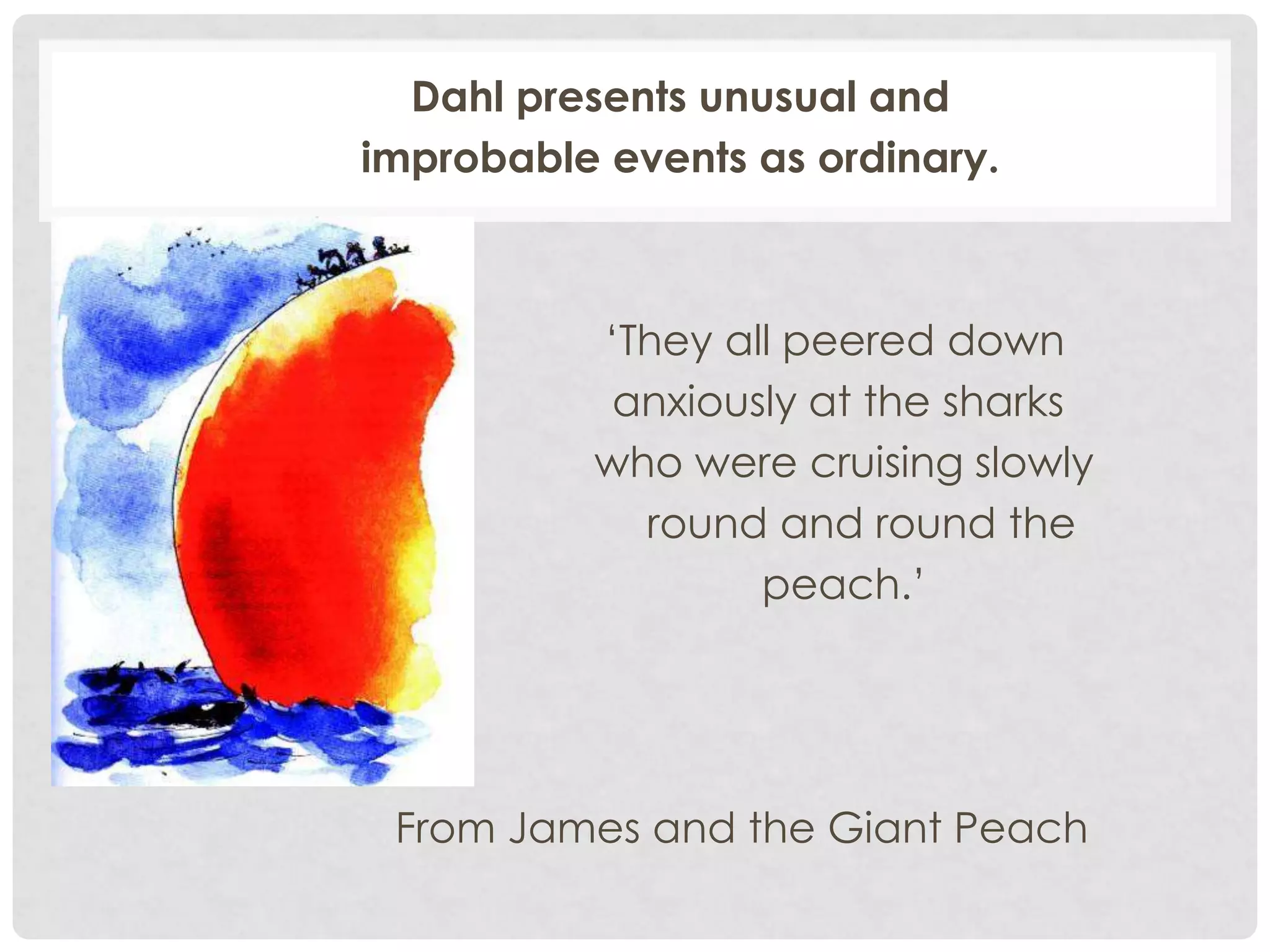
Dahl presents unusual and
improbable events as ordinary.
‘They all peered down
anxiously at the sharks
who were cruising slowly
round and round the
peach.’
From James and the Giant Peach
FAMOUS CHILDREN’S BOOKS
• James and the Giant Peach
• Charlie and the Chocolate Factory
• The BFG
• Danny, the Champion of the World
• The Twits
• The Witches
• Boy
• Going Solo
• Matilda
• The Magic Finger
• Fantastic Mr. Fox
• Charlie and the Great Glass Elevator
• The Enormous Crocodile
• George’s Marvelous Medicine
• The Giraffe and Pelly and Me
• Esio Trot
• The Vicar of Nibbleswicke
• The Min Pins
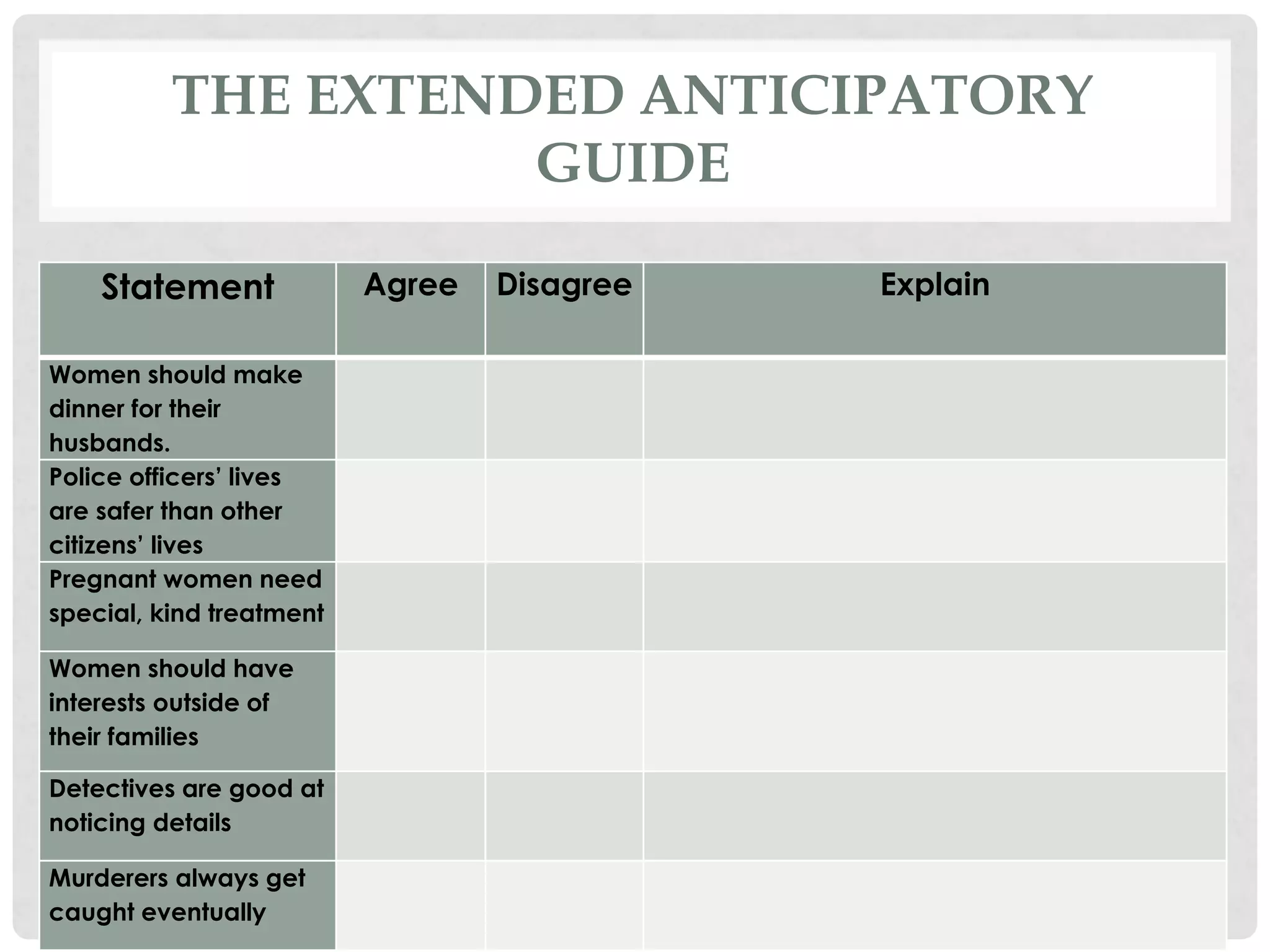
THE EXTENDED ANTICIPATORY
GUIDE
Statement Agree Disagree Explain
Women should make
dinner for their
husbands.
Police officers’ lives
are safer than other
citizens’ lives
Pregnant women need
special, kind treatment
Women should have
interests outside of
their families
Detectives are good at
noticing details
Murderers always get
caught eventually

Irony and lamb to the slaughter intro lesson

  • 1.
  • 2.
    UNIT OVERVIEW Big Idea: Change CanBe Unexpected 1. Irony 2. Essential Questions 3. Perspective ← You will be reading two stories that are about the Big Idea. ↑ You will be looking at how irony affects the story and the characters. You will be analyzing how the characters had different perspectives about unexpected change. ↓ You will be focusing on two essential questions. →
  • 3.
    ESSENTIAL QUESTIONS • Howdo people respond to unexpected change? • How do authors use irony to build mystery, tension, and surprise?
  • 4.
    WHAT IS IRONY? •A Surprise! • It is the difference between what we expect to happen, and what actually does happen. • It is often used to add suspense and interest. • It is also used to keep the reader thinking about the moral of the story.
  • 5.
    VERBAL IRONY • Thesimplest kind of irony. • You use it everyday when you say one thing and really mean another. • It is often similar to a sarcastic response. Example: • When you appear to be sick and someone asks you if you’re okay. You say “Of course!” But in the meantime you are vomiting and fainting and have 104 degree fever.
  • 6.
    SITUATIONAL IRONY • Occurswhen a situation turns out to be the opposite of what you thought it would be. Example: • The teacher’s daughter is a High School drop out. • The mayor’s wife gets caught stealing. • The chef won’t eat his/her own cooking. • The barber always needs a haircut.
  • 7.
    DRAMATIC IRONY • Occurswhen the audience knows something that the characters in the story, on the screen, or on the stage do not know. • This is used to engage the audience and keep them actively involved in the storyline.
  • 8.
    DRAMATIC IRONY CONTINUED… Example: • Inall of the Friday the 13th movies, we know Jason is in the woods. The characters do not. When they go out into the woods we are afraid for them because we know that they are in danger. We scream for them to run, we get excited when they fall, we cringe when we know that Jason is right behind the tree.
  • 9.
    BY ROALD DAHL LAMBTO THE SLAUGHTER
  • 10.
    ROALD DAHL (1916– 1990) • Born in Wales in 1916 and loved stories as a young child. • He was well traveled – story ideas came from his adventures. • Had 5 children with his first wife. • Dahl’s first kids book was The Gremlins in 1943. He was 27. • Dahl’s real (children's) career didn’t start until the 60’s after he had become a father.
  • 11.
    DAHL’S CHARACTERS… Dahl’s storiesare modern-day fairy tales. His universe is one of magical happenings, peopled by characters who are obviously good or obviously bad.
  • 12.
    ‘THE ENORMOUS CROCODILELAUGHED SO MUCH HIS TEETH RATTLED TOGETHER LIKE PENNIES IN A MONEYBOX.’ He uses descriptive language to build a vivid picture in the mind of the reader.
  • 13.
    Dahl presents unusualand improbable events as ordinary. ‘They all peered down anxiously at the sharks who were cruising slowly round and round the peach.’ From James and the Giant Peach
  • 14.
    FAMOUS CHILDREN’S BOOKS •James and the Giant Peach • Charlie and the Chocolate Factory • The BFG • Danny, the Champion of the World • The Twits • The Witches • Boy • Going Solo • Matilda • The Magic Finger • Fantastic Mr. Fox • Charlie and the Great Glass Elevator • The Enormous Crocodile • George’s Marvelous Medicine • The Giraffe and Pelly and Me • Esio Trot • The Vicar of Nibbleswicke • The Min Pins
  • 15.
    THE EXTENDED ANTICIPATORY GUIDE StatementAgree Disagree Explain Women should make dinner for their husbands. Police officers’ lives are safer than other citizens’ lives Pregnant women need special, kind treatment Women should have interests outside of their families Detectives are good at noticing details Murderers always get caught eventually