The Demand Glossary
Calling It Like You See It
Speaking of Demand
By definition, “demand” is a predisposition. Awareness of the emerging primacy of
Demand has reached most corners of management in most organizations. Virtually every
area is now aimed at the phenomenon of stakeholders presenting the dual challenge of
rapid change and immediate benefit.
Response to demand is not simply “supply”. Instead, it is demand management – which
concerns the assurance that demand is acknowledged or developed; identified and
prioritized; and correctly represented -- to parties that will use it constructively for benefit.
The idea behind this effort is that Demand is, in effect, opportunity.
As a result, the language used to describe and guide the response to demand has become
most prominent in talking about operations, but the evolution of the language use has
often generated ambiguity, as numerous terms crossed each other’s paths and audiences,
while gaining attention.
Given the right perspective, we can sort that out.
States of Demand
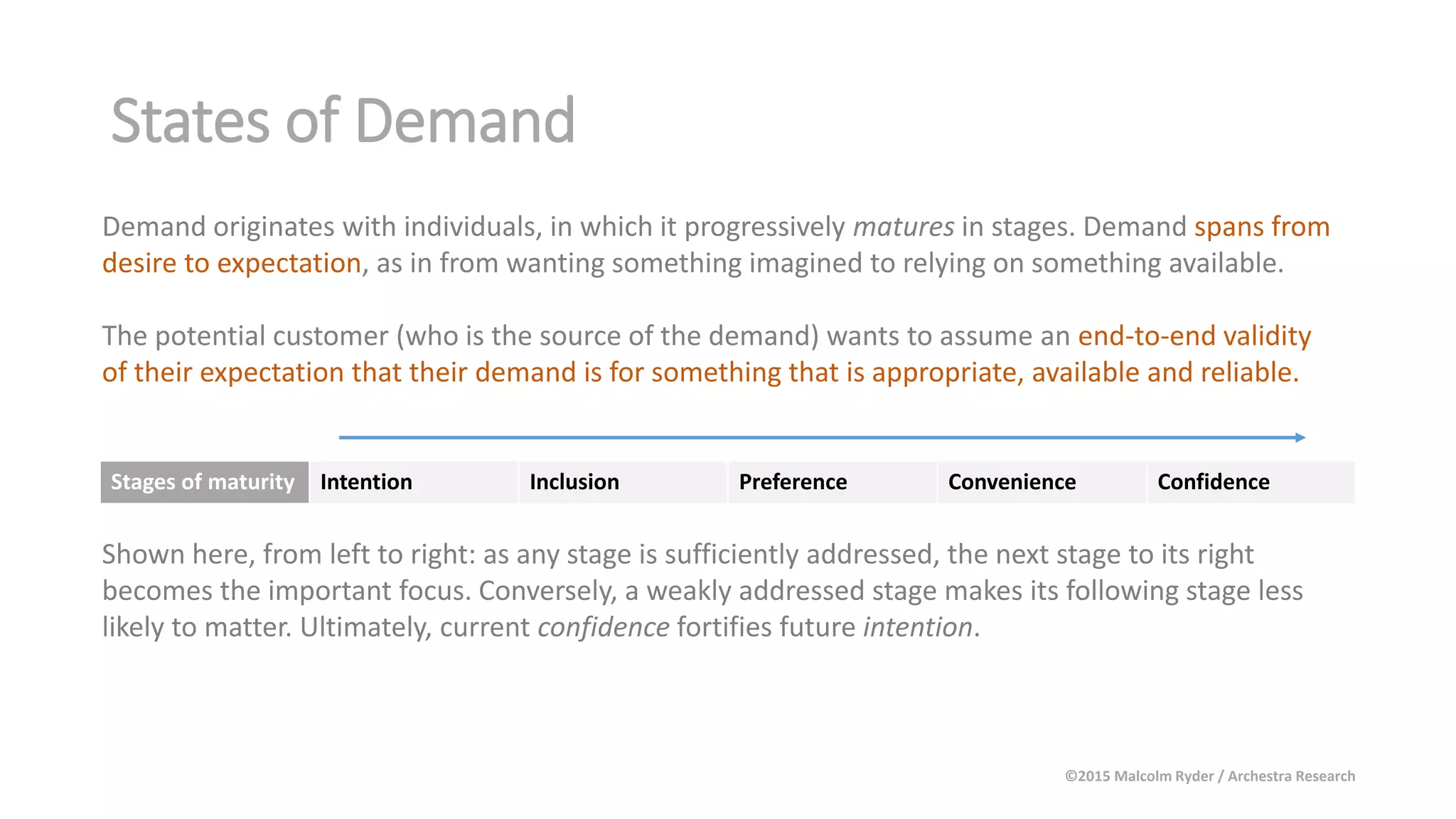
Stages of maturity Intention Inclusion Preference Convenience Confidence
Demand originates with individuals, in which it progressively matures in stages. Demand spans from
desire to expectation, as in from wanting something imagined to relying on something available.
The potential customer (who is the source of the demand) wants to assume an end-to-end validity
of their expectation that their demand is for something that is appropriate, available and reliable.
Shown here, from left to right: as any stage is sufficiently addressed, the next stage to its right
becomes the important focus. Conversely, a weakly addressed stage makes its following stage less
likely to matter. Ultimately, current confidence fortifies future intention.
©2015 Malcolm Ryder / Archestra Research
Responding to Demand
Element of
Demand
a.k.a.
“Customer ___”
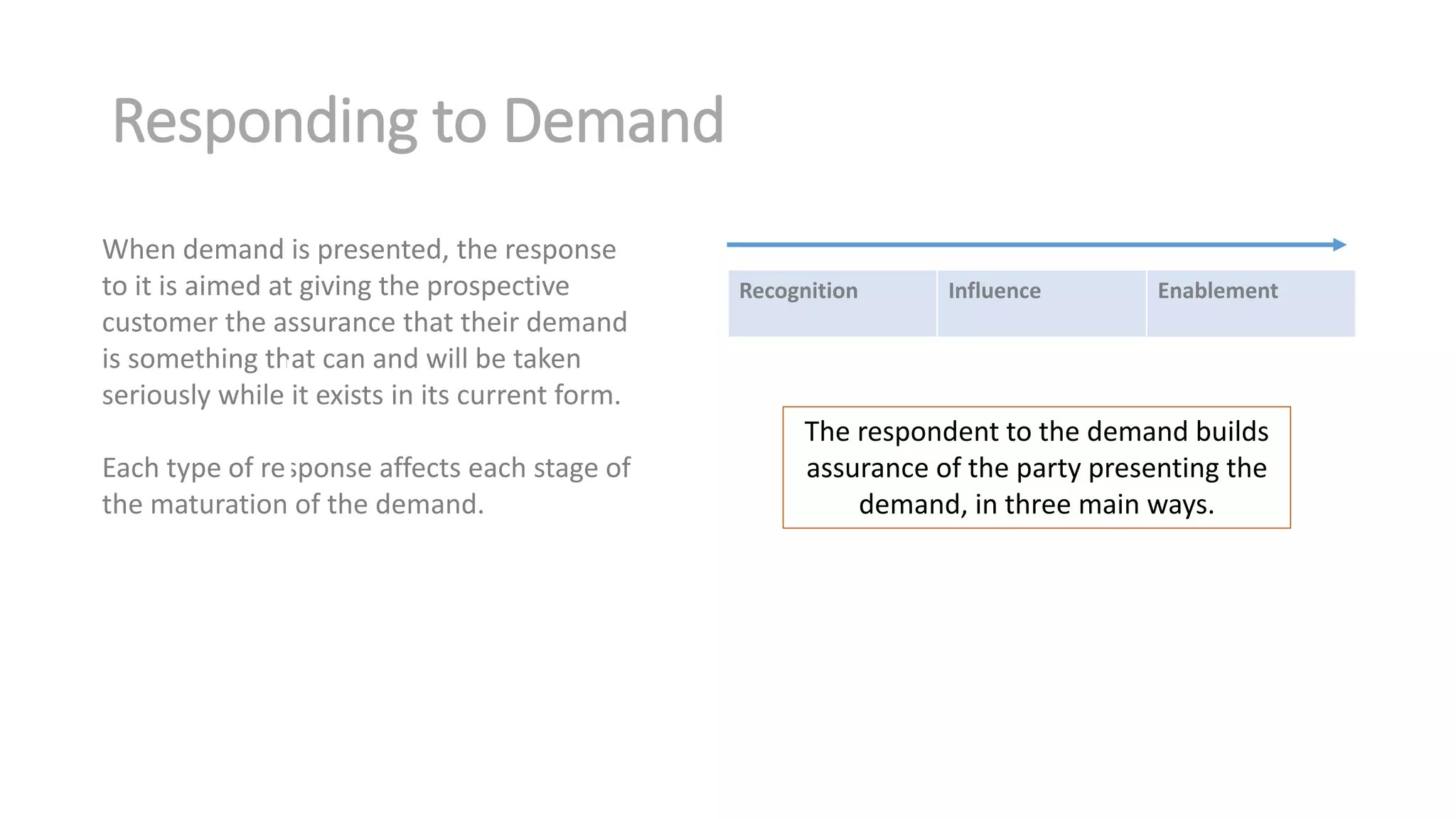
Recognition Influence Enablement
When demand is presented, the response
to it is aimed at giving the prospective
customer the assurance that their demand
is something that can and will be taken
seriously while it exists in its current form.
Each type of response affects each stage of
the maturation of the demand.
The respondent to the demand builds
assurance of the party presenting the
demand, in three main ways.
Demand and Management
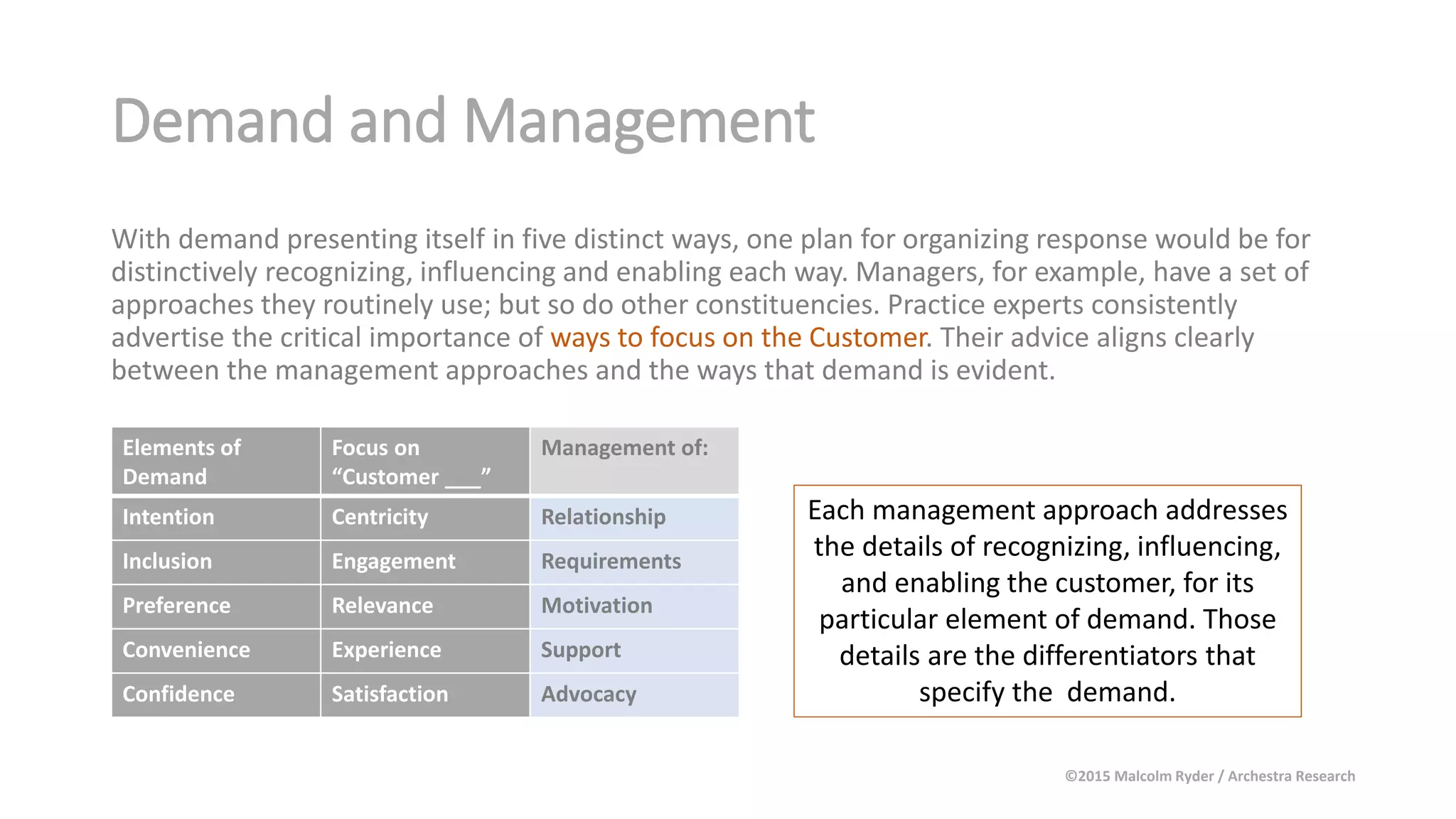
With demand presenting itself in five distinct ways, one plan for organizing response would be for
distinctively recognizing, influencing and enabling each way. Managers, for example, have a set of
approaches they routinely use; but so do other constituencies. Practice experts consistently
advertise the critical importance of ways to focus on the Customer. Their advice aligns clearly
between the management approaches and the ways that demand is evident.
Elements of
Demand
Focus on
“Customer ___”
Management of:
Intention Centricity Relationship
Inclusion Engagement Requirements
Preference Relevance Motivation
Convenience Experience Support
Confidence Satisfaction Advocacy
Each management approach addresses
the details of recognizing, influencing,
and enabling the customer, for its
particular element of demand. Those
details are the differentiators that
specify the demand.
©2015 Malcolm Ryder / Archestra Research
The Demand Glossary
Element of
Demand
a.k.a.
“Customer ___”
Management of: Recognition Influence Enablement
Intention Centricity Relationship Circumstance Offer Priority
Inclusion Engagement Requirements Presence Endorsement Empathy
Preference Relevance Motivation Need Purpose Agency
Convenience Experience Support Fit Effect Delivery
Confidence Satisfaction Advocacy Acceptance Proof Feedback
vocabulary DifferentiatorSuccess factors
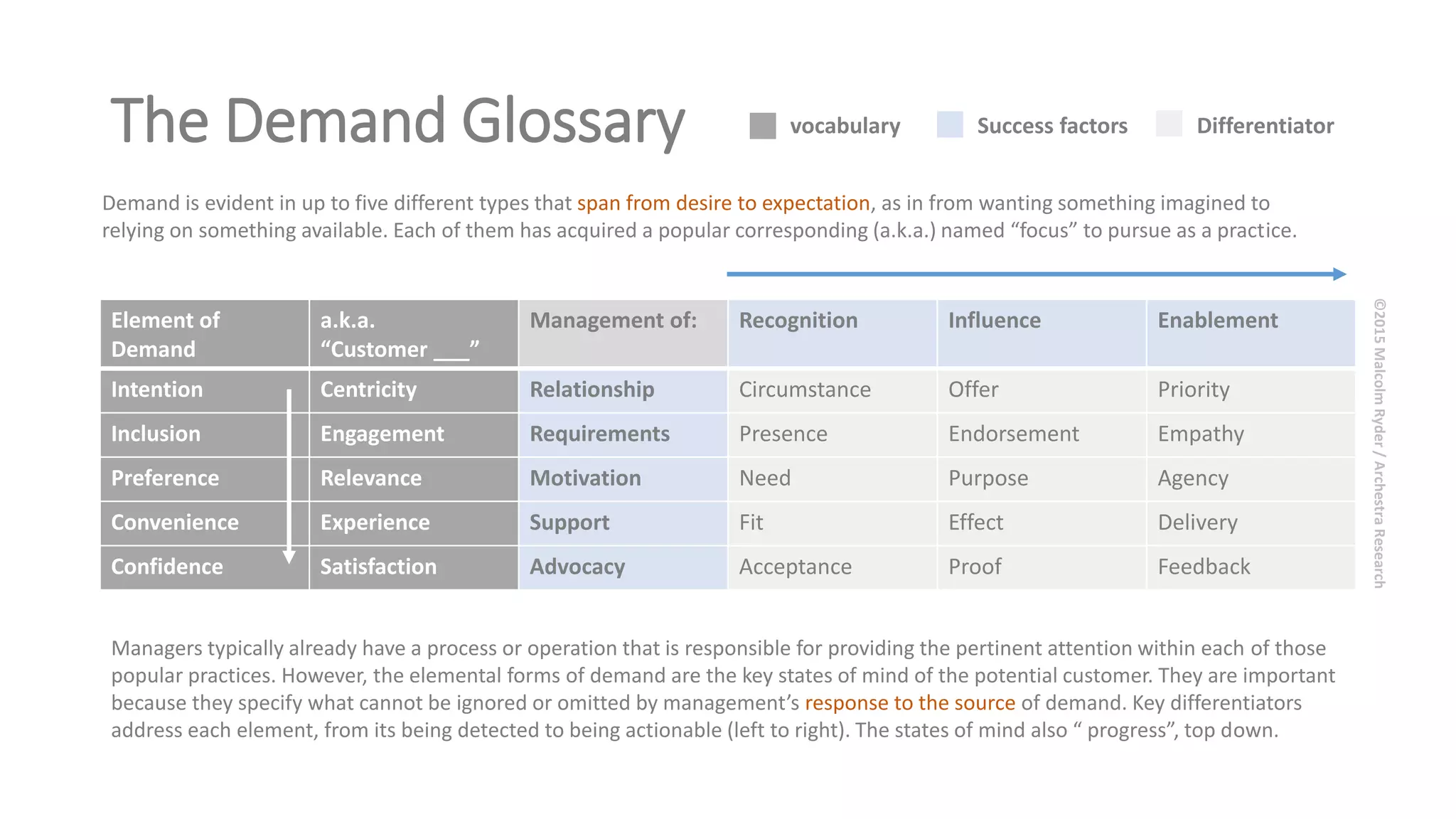
Managers typically already have a process or operation that is responsible for providing the pertinent attention within each of those
popular practices. However, the elemental forms of demand are the key states of mind of the potential customer. They are important
because they specify what cannot be ignored or omitted by management’s response to the source of demand. Key differentiators
address each element, from its being detected to being actionable (left to right). The states of mind also “ progress”, top down.
Demand is evident in up to five different types that span from desire to expectation, as in from wanting something imagined to
relying on something available. Each of them has acquired a popular corresponding (a.k.a.) named “focus” to pursue as a practice.
©2015MalcolmRyder/ArchestraResearch
Demand Responders
Element of
Demand
Intention Inclusion Preference Convenience Confidence
a.k.a.
“Customer ___”
Centricity Engagement Relevance Experience Satisfaction
Management of: Relationship Requirement Motivation Support Advocacy
Recognition Circumstance Presence Need Fit Acceptance
Influence Offer Endorsement Purpose Effect Proof
Enablement Priority Empathy Agency Delivery Feedback
Primary attentive
party:
proposers designers solvers producers owners
vocabulary DifferentiatorSuccess factors
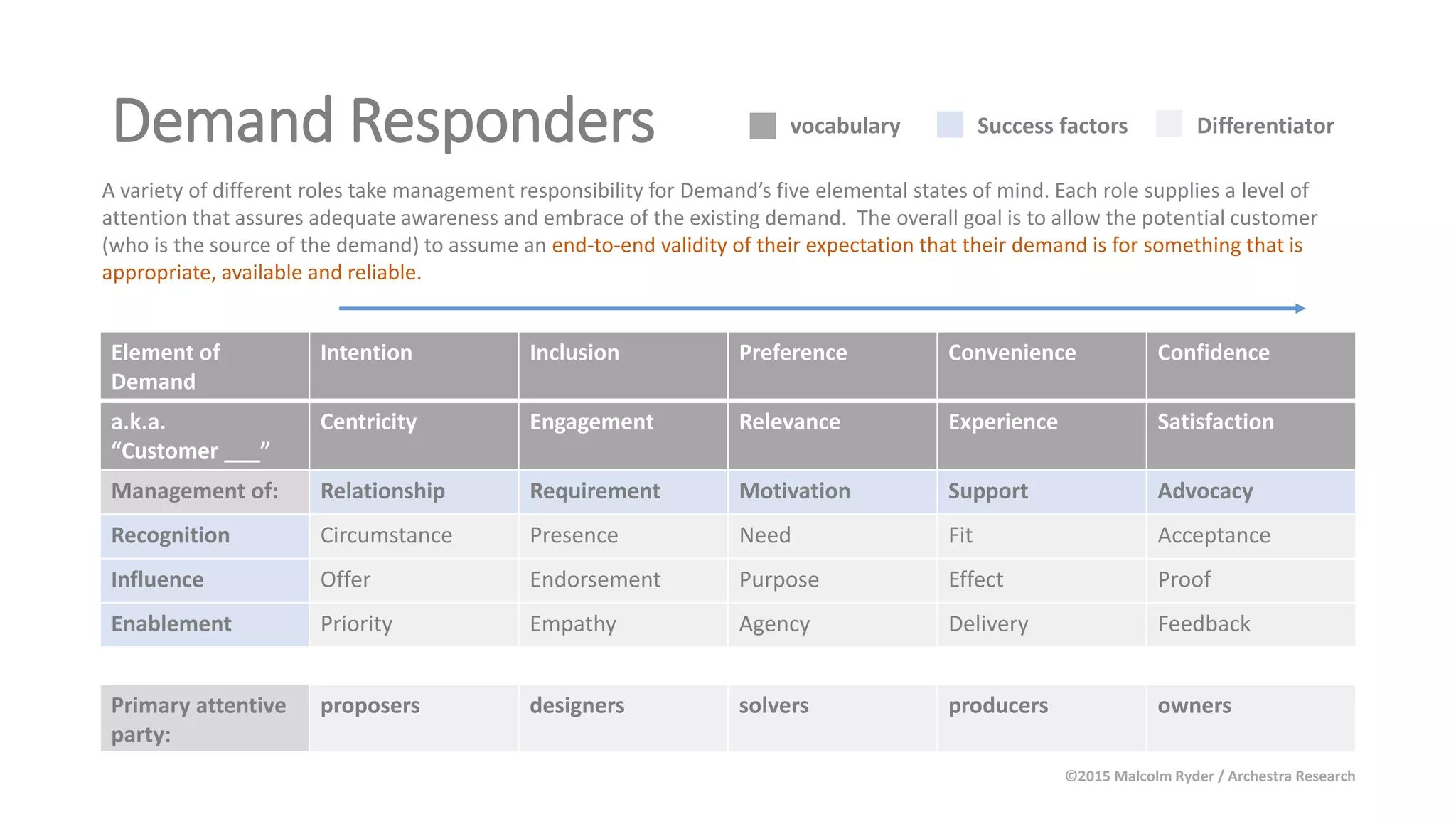
A variety of different roles take management responsibility for Demand’s five elemental states of mind. Each role supplies a level of
attention that assures adequate awareness and embrace of the existing demand. The overall goal is to allow the potential customer
(who is the source of the demand) to assume an end-to-end validity of their expectation that their demand is for something that is
appropriate, available and reliable.
©2015 Malcolm Ryder / Archestra Research
www.archestra.com
mryder@archestra.com

The Glossary of Demand

  • 1.
    The Demand Glossary CallingIt Like You See It
  • 2.
    Speaking of Demand Bydefinition, “demand” is a predisposition. Awareness of the emerging primacy of Demand has reached most corners of management in most organizations. Virtually every area is now aimed at the phenomenon of stakeholders presenting the dual challenge of rapid change and immediate benefit. Response to demand is not simply “supply”. Instead, it is demand management – which concerns the assurance that demand is acknowledged or developed; identified and prioritized; and correctly represented -- to parties that will use it constructively for benefit. The idea behind this effort is that Demand is, in effect, opportunity. As a result, the language used to describe and guide the response to demand has become most prominent in talking about operations, but the evolution of the language use has often generated ambiguity, as numerous terms crossed each other’s paths and audiences, while gaining attention. Given the right perspective, we can sort that out.
  • 3.
    States of Demand Stagesof maturity Intention Inclusion Preference Convenience Confidence Demand originates with individuals, in which it progressively matures in stages. Demand spans from desire to expectation, as in from wanting something imagined to relying on something available. The potential customer (who is the source of the demand) wants to assume an end-to-end validity of their expectation that their demand is for something that is appropriate, available and reliable. Shown here, from left to right: as any stage is sufficiently addressed, the next stage to its right becomes the important focus. Conversely, a weakly addressed stage makes its following stage less likely to matter. Ultimately, current confidence fortifies future intention. ©2015 Malcolm Ryder / Archestra Research
  • 4.
    Responding to Demand Elementof Demand a.k.a. “Customer ___” Recognition Influence Enablement When demand is presented, the response to it is aimed at giving the prospective customer the assurance that their demand is something that can and will be taken seriously while it exists in its current form. Each type of response affects each stage of the maturation of the demand. The respondent to the demand builds assurance of the party presenting the demand, in three main ways.
  • 5.
    Demand and Management Withdemand presenting itself in five distinct ways, one plan for organizing response would be for distinctively recognizing, influencing and enabling each way. Managers, for example, have a set of approaches they routinely use; but so do other constituencies. Practice experts consistently advertise the critical importance of ways to focus on the Customer. Their advice aligns clearly between the management approaches and the ways that demand is evident. Elements of Demand Focus on “Customer ___” Management of: Intention Centricity Relationship Inclusion Engagement Requirements Preference Relevance Motivation Convenience Experience Support Confidence Satisfaction Advocacy Each management approach addresses the details of recognizing, influencing, and enabling the customer, for its particular element of demand. Those details are the differentiators that specify the demand. ©2015 Malcolm Ryder / Archestra Research
  • 6.
    The Demand Glossary Elementof Demand a.k.a. “Customer ___” Management of: Recognition Influence Enablement Intention Centricity Relationship Circumstance Offer Priority Inclusion Engagement Requirements Presence Endorsement Empathy Preference Relevance Motivation Need Purpose Agency Convenience Experience Support Fit Effect Delivery Confidence Satisfaction Advocacy Acceptance Proof Feedback vocabulary DifferentiatorSuccess factors Managers typically already have a process or operation that is responsible for providing the pertinent attention within each of those popular practices. However, the elemental forms of demand are the key states of mind of the potential customer. They are important because they specify what cannot be ignored or omitted by management’s response to the source of demand. Key differentiators address each element, from its being detected to being actionable (left to right). The states of mind also “ progress”, top down. Demand is evident in up to five different types that span from desire to expectation, as in from wanting something imagined to relying on something available. Each of them has acquired a popular corresponding (a.k.a.) named “focus” to pursue as a practice. ©2015MalcolmRyder/ArchestraResearch
  • 7.
    Demand Responders Element of Demand IntentionInclusion Preference Convenience Confidence a.k.a. “Customer ___” Centricity Engagement Relevance Experience Satisfaction Management of: Relationship Requirement Motivation Support Advocacy Recognition Circumstance Presence Need Fit Acceptance Influence Offer Endorsement Purpose Effect Proof Enablement Priority Empathy Agency Delivery Feedback Primary attentive party: proposers designers solvers producers owners vocabulary DifferentiatorSuccess factors A variety of different roles take management responsibility for Demand’s five elemental states of mind. Each role supplies a level of attention that assures adequate awareness and embrace of the existing demand. The overall goal is to allow the potential customer (who is the source of the demand) to assume an end-to-end validity of their expectation that their demand is for something that is appropriate, available and reliable. ©2015 Malcolm Ryder / Archestra Research
  • 8.
    ©2015 Malcolm Ryder/ Archestra Research www.archestra.com mryder@archestra.com