The Future of the OPAC...? lipstick, cowbells and serendipity Dave Pattern, Library Systems Manager University of Huddersfield [email_address] http://library.hud.ac.uk/barcelona
Contents OPAC 1.0 – does your OPAC “suck”? OPAC 1.? – the Huddersfield experience OPAC 1.? – other Libraries OPAC 2.0 – crystal ball time! Creative Commons Attribution-Noncommercial-Share Alike 3.0 License  http://creativecommons.org/licenses/by-nc-sa/3.0/
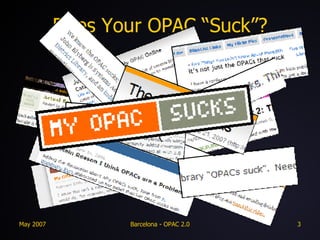
Does Your OPAC “Suck”?
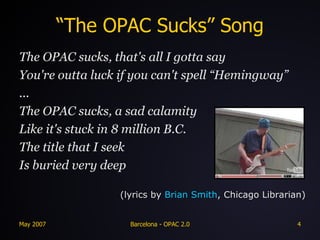
“The OPAC Sucks” Song The OPAC sucks, that's all I gotta say You're outta luck if you can't spell “Hemingway” ... The OPAC sucks, a sad calamity Like it's stuck in 8 million B.C. The title that I seek Is buried very deep (lyrics by  Brian Smith , Chicago Librarian)
 
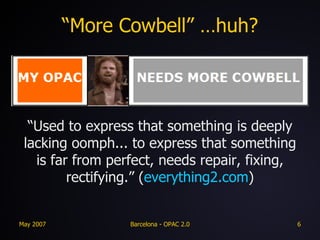
“More Cowbell” …huh? “ Used to express that something is deeply lacking oomph... to express that something is far from perfect, needs repair, fixing, rectifying.” ( everything2.com )
 
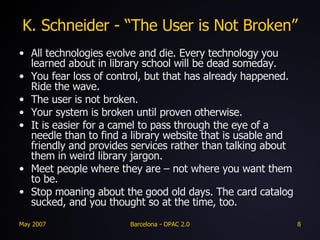
K. Schneider - “The User is Not Broken” All technologies evolve and die. Every technology you learned about in library school will be dead someday. You fear loss of control, but that has already happened. Ride the wave. The user is not broken. Your system is broken until proven otherwise. It is easier for a camel to pass through the eye of a needle than to find a library website that is usable and friendly and provides services rather than talking about them in weird library jargon.  Meet people where they are – not where you want them to be. Stop moaning about the good old days. The card catalog sucked, and you thought so at the time, too.
Quick OPAC Survey One criticism of OPACs is that they rarely have cutting edge features (or perhaps even basic features) that our users expect from a modern web site.  On a scale of 1 to 10, how well do you think your OPAC meets the needs and expectations of your users? 4.5
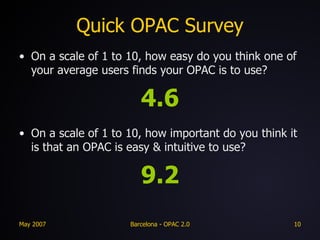
Quick OPAC Survey On a scale of 1 to 10, how easy do you think one of your average users finds your OPAC is to use? 4.6 On a scale of 1 to 10, how important do you think it is that an OPAC is easy & intuitive to use? 9.2
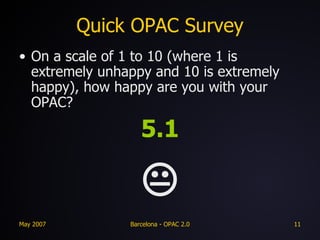
Quick OPAC Survey On a scale of 1 to 10 (where 1 is extremely unhappy and 10 is extremely happy), how happy are you with your OPAC? 5.1 
The Huddersfield Experience definitely not OPAC 2.0 enhancements to the existing OPAC (HIP) user suggestions from surveys “ 2.0” inspired features borrowing good ideas from other web sites  new features launched with no/low publicity “ perpetual beta” required staff buy-in and a willingness to experiment and take risks
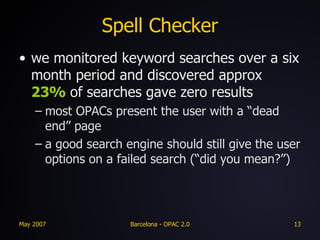
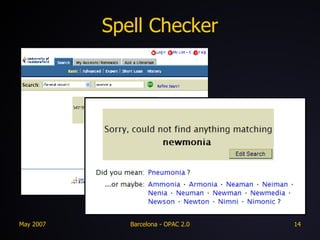
Spell Checker we monitored keyword searches over a six month period and discovered approx  23%  of searches gave zero results most OPACs present the user with a “dead end” page a good search engine should still give the user options on a failed search (“did you mean?”)
Spell Checker
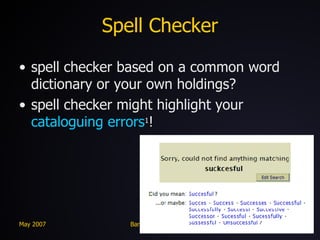
Spell Checker spell checker based on a common word dictionary or your own holdings? spell checker might highlight your  cataloguing errors 1 !
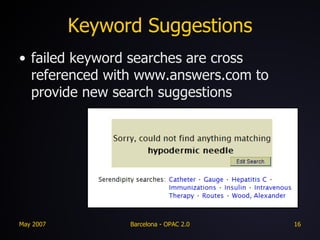
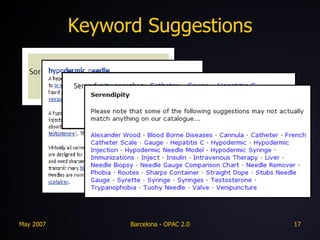
Keyword Suggestions failed keyword searches are cross referenced with www.answers.com to provide new search suggestions
Keyword Suggestions
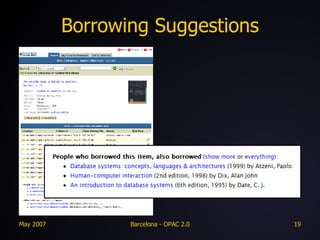
Borrowing Suggestions we had details of over 2,000,000 CKOs spanning 10 years stored in the library management system and gathering virtual dust Web 2.0 – “ Data is the Next Intel Inside 1 ” historic circulation data can be  mined 2  to uncover the hidden trends and links between potentially disparate library items
Borrowing Suggestions
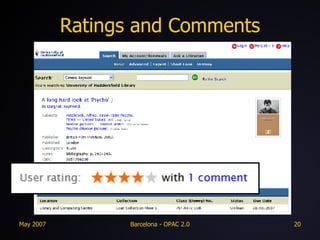
Ratings and Comments
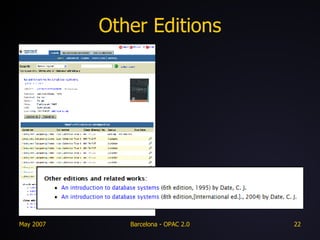
Other Editions uses FRBR-y web services provided by OCLC and LibraryThing to locate other editions and related works within local holdings OCLC’s  xISBN 1 LibraryThing’s  thingISBN 2
Other Editions
RSS Feeds
RSS Aggregators
a9.com (“Stealth OPAC”)
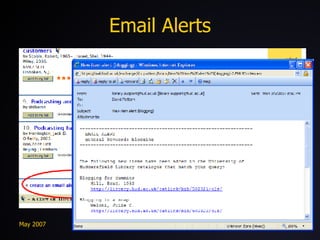
Email Alerts
Lipstick on the Pig “ We need to focus more energy on important, systemic changes rather than cosmetic ones. If your system is more difficult to search and less effective than Amazon.com, then you have work to do.  After all, you can put lipstick on a pig, but it's still very much a pig.”    (Roy Tennant,  Library Journal , 2005)
Problems ...Challenges! there was no formal process for discussing and agreeing new OPAC features so we organised a web/library 2.0 afternoon for staff some initial scepticism from staff would users think borrowing suggestions were formal recommendations from the library? aren’t borrowing suggestions just for selling books? how relevant will the suggestions be? would sudden changes confuse users?
Solutions encourage suggestions from staff include users in decision making process encourage play and experimentation don’t be afraid to make mistakes! look widely for ideas “build crappy prototypes fast” monitor usage if usage is poor then remove it
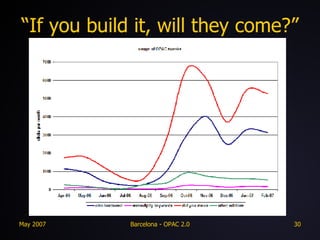
“If you build it, will they come?”
Other Libraries Ann Arbor District Library North Carolina State University Plymouth State University (WPopac)
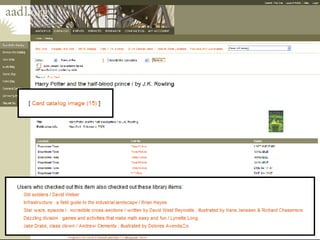
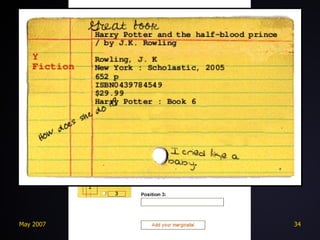
Ann Arbor District Library OPAC deeply embedded in Library portal virtual catalogue cards (with graffiti!) user tagging, ratings, and reviews borrowing suggestions RSS feeds http://www.aadl.org/catalog/
 
 
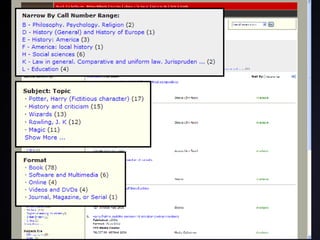
North Carolina State University facetted browsing http://www.lib.ncsu.edu/catalog/
 
Plymouth State University Casey Bisson’s WPopac OPAC built from popular blogging software enriched content from Amazon tags (user generated?) related items user comments and reviews “ trackbacks” (blog equivalent of citations) http://www.plymouth.edu/library/opac/
 
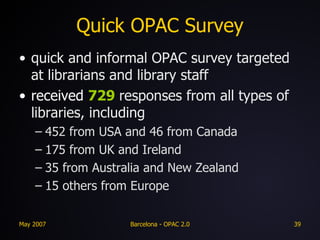
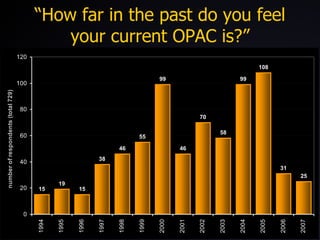
Quick OPAC Survey quick and informal OPAC survey targeted at librarians and library staff received  729  responses from all types of libraries, including 452 from USA and 46 from Canada 175 from UK and Ireland 35 from Australia and New Zealand 15 others from Europe
“ How far in the past do you feel your current OPAC is?”
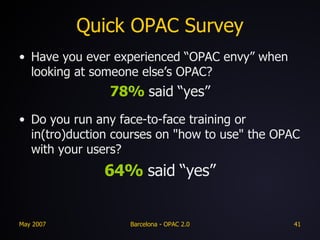
Quick OPAC Survey Have you ever experienced “OPAC envy” when looking at someone else’s OPAC? 78%   said   “yes” Do you run any face-to-face training or in(tro)duction courses on "how to use" the OPAC with your users? 64%   said   “yes”
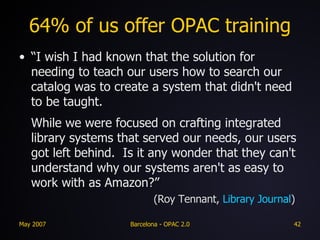
64% of us offer OPAC training “ I wish I had known that the solution for needing to teach our users how to search our catalog was to create a system that didn't need to be taught. While we were focused on crafting integrated library systems that served our needs, our users got left behind.  Is it any wonder that they can't understand why our systems aren't as easy to work with as Amazon?”     (Roy Tennant,  Library Journal )
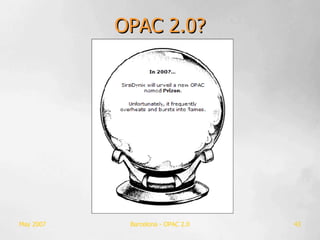
OPAC 2.0?
OPAC 2.0 “The best way to predict the future is to invent it.” (Alan Kay, computer scientist and  former Xerox PARC researcher) “The future is here.  It's just not widely distributed yet.” (William Gibson, science fiction author and creator of the word “cyberspace”)
OPAC 2.0 shopping list of features: spell checking (“did you mean?”) relevancy ranking, search refining, and facets manual recommendations (“best bets”) automated suggestions (based on both global and user-specific data) user participation (“read-write OPAC”) foster communities of interest
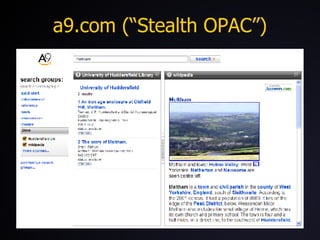
OPAC 2.0 shopping list of features: improve serendipity expose hidden links between items APIs and Web Services to expose data promote unintended uses user personalisation embed external data (e.g. Wikipedia) RSS feeds and OpenSearch
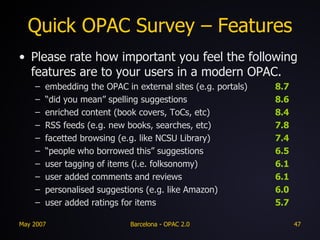
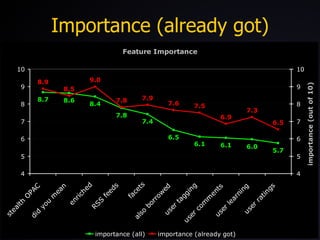
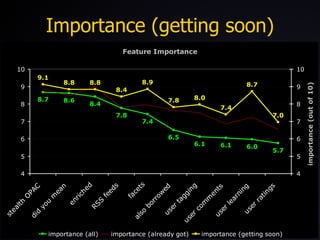
Quick OPAC Survey – Features Please rate how important you feel the following features are to your users in a modern OPAC. embedding the OPAC in external sites (e.g. portals) 8.7 “ did you mean” spelling suggestions 8.6 enriched content (book covers, ToCs, etc) 8.4 RSS feeds (e.g. new books, searches, etc) 7.8 facetted browsing (e.g. like NCSU Library) 7.4 “ people who borrowed this” suggestions 6.5 user tagging of items (i.e. folksonomy) 6.1 user added comments and reviews 6.1 personalised suggestions (e.g. like Amazon) 6.0 user added ratings for items 5.7
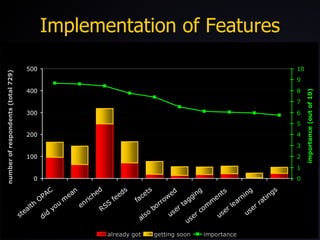
Implementation of Features
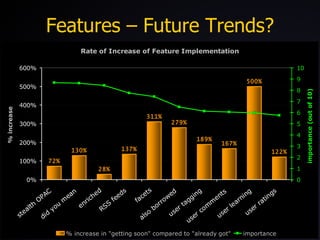
Features – Future Trends?
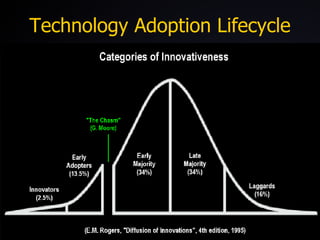
Technology Adoption Lifecycle
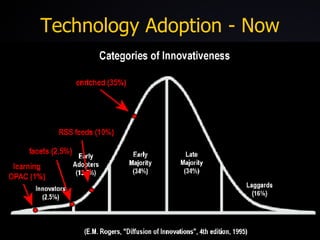
Technology Adoption - Now
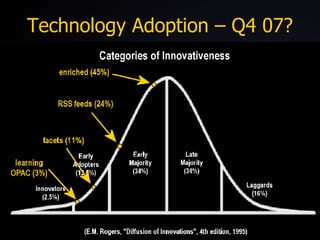
Technology Adoption – Q4 07?
Importance (already got)
Importance (getting soon)
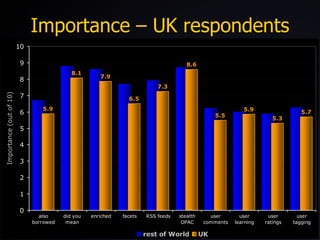
Importance – UK respondents
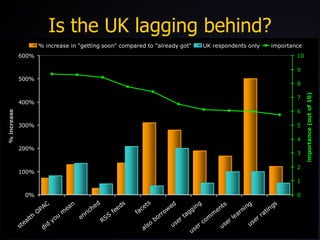
Is the UK lagging behind?
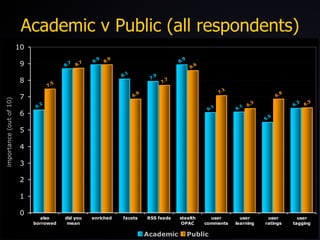
Academic v Public (all respondents)
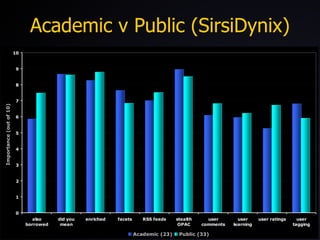
Academic v Public (SirsiDynix)
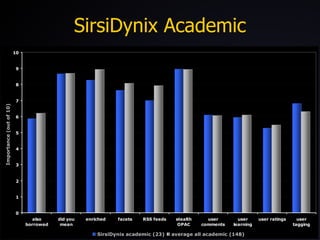
SirsiDynix Academic
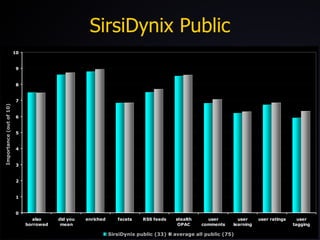
SirsiDynix Public
Some Final Quotes “The best thing about the future is that it only comes one day at a time.”    (Abraham Lincoln) “There is nothing wrong with change, if it is in the right direction.”    (Winston Churchill) “Change is inevitable - except from a vending machine.”      (Robert C. Gallagher)
Thank you!  Any quick questions?

The Future of the OPAC...?

  • 1.
    The Future ofthe OPAC...? lipstick, cowbells and serendipity Dave Pattern, Library Systems Manager University of Huddersfield [email_address] http://library.hud.ac.uk/barcelona
  • 2.
    Contents OPAC 1.0– does your OPAC “suck”? OPAC 1.? – the Huddersfield experience OPAC 1.? – other Libraries OPAC 2.0 – crystal ball time! Creative Commons Attribution-Noncommercial-Share Alike 3.0 License http://creativecommons.org/licenses/by-nc-sa/3.0/
  • 3.
    Does Your OPAC“Suck”?
  • 4.
    “The OPAC Sucks”Song The OPAC sucks, that's all I gotta say You're outta luck if you can't spell “Hemingway” ... The OPAC sucks, a sad calamity Like it's stuck in 8 million B.C. The title that I seek Is buried very deep (lyrics by Brian Smith , Chicago Librarian)
  • 5.
  • 6.
    “More Cowbell” …huh?“ Used to express that something is deeply lacking oomph... to express that something is far from perfect, needs repair, fixing, rectifying.” ( everything2.com )
  • 7.
  • 8.
    K. Schneider -“The User is Not Broken” All technologies evolve and die. Every technology you learned about in library school will be dead someday. You fear loss of control, but that has already happened. Ride the wave. The user is not broken. Your system is broken until proven otherwise. It is easier for a camel to pass through the eye of a needle than to find a library website that is usable and friendly and provides services rather than talking about them in weird library jargon. Meet people where they are – not where you want them to be. Stop moaning about the good old days. The card catalog sucked, and you thought so at the time, too.
  • 9.
    Quick OPAC SurveyOne criticism of OPACs is that they rarely have cutting edge features (or perhaps even basic features) that our users expect from a modern web site. On a scale of 1 to 10, how well do you think your OPAC meets the needs and expectations of your users? 4.5
  • 10.
    Quick OPAC SurveyOn a scale of 1 to 10, how easy do you think one of your average users finds your OPAC is to use? 4.6 On a scale of 1 to 10, how important do you think it is that an OPAC is easy & intuitive to use? 9.2
  • 11.
    Quick OPAC SurveyOn a scale of 1 to 10 (where 1 is extremely unhappy and 10 is extremely happy), how happy are you with your OPAC? 5.1 
  • 12.
    The Huddersfield Experiencedefinitely not OPAC 2.0 enhancements to the existing OPAC (HIP) user suggestions from surveys “ 2.0” inspired features borrowing good ideas from other web sites new features launched with no/low publicity “ perpetual beta” required staff buy-in and a willingness to experiment and take risks
  • 13.
    Spell Checker wemonitored keyword searches over a six month period and discovered approx 23% of searches gave zero results most OPACs present the user with a “dead end” page a good search engine should still give the user options on a failed search (“did you mean?”)
  • 14.
  • 15.
    Spell Checker spellchecker based on a common word dictionary or your own holdings? spell checker might highlight your cataloguing errors 1 !
  • 16.
    Keyword Suggestions failedkeyword searches are cross referenced with www.answers.com to provide new search suggestions
  • 17.
  • 18.
    Borrowing Suggestions wehad details of over 2,000,000 CKOs spanning 10 years stored in the library management system and gathering virtual dust Web 2.0 – “ Data is the Next Intel Inside 1 ” historic circulation data can be mined 2 to uncover the hidden trends and links between potentially disparate library items
  • 19.
  • 20.
  • 21.
    Other Editions usesFRBR-y web services provided by OCLC and LibraryThing to locate other editions and related works within local holdings OCLC’s xISBN 1 LibraryThing’s thingISBN 2
  • 22.
  • 23.
  • 24.
  • 25.
  • 26.
  • 27.
    Lipstick on thePig “ We need to focus more energy on important, systemic changes rather than cosmetic ones. If your system is more difficult to search and less effective than Amazon.com, then you have work to do. After all, you can put lipstick on a pig, but it's still very much a pig.” (Roy Tennant, Library Journal , 2005)
  • 28.
    Problems ...Challenges! therewas no formal process for discussing and agreeing new OPAC features so we organised a web/library 2.0 afternoon for staff some initial scepticism from staff would users think borrowing suggestions were formal recommendations from the library? aren’t borrowing suggestions just for selling books? how relevant will the suggestions be? would sudden changes confuse users?
  • 29.
    Solutions encourage suggestionsfrom staff include users in decision making process encourage play and experimentation don’t be afraid to make mistakes! look widely for ideas “build crappy prototypes fast” monitor usage if usage is poor then remove it
  • 30.
    “If you buildit, will they come?”
  • 31.
    Other Libraries AnnArbor District Library North Carolina State University Plymouth State University (WPopac)
  • 32.
    Ann Arbor DistrictLibrary OPAC deeply embedded in Library portal virtual catalogue cards (with graffiti!) user tagging, ratings, and reviews borrowing suggestions RSS feeds http://www.aadl.org/catalog/
  • 33.
  • 34.
  • 35.
    North Carolina StateUniversity facetted browsing http://www.lib.ncsu.edu/catalog/
  • 36.
  • 37.
    Plymouth State UniversityCasey Bisson’s WPopac OPAC built from popular blogging software enriched content from Amazon tags (user generated?) related items user comments and reviews “ trackbacks” (blog equivalent of citations) http://www.plymouth.edu/library/opac/
  • 38.
  • 39.
    Quick OPAC Surveyquick and informal OPAC survey targeted at librarians and library staff received 729 responses from all types of libraries, including 452 from USA and 46 from Canada 175 from UK and Ireland 35 from Australia and New Zealand 15 others from Europe
  • 40.
    “ How farin the past do you feel your current OPAC is?”
  • 41.
    Quick OPAC SurveyHave you ever experienced “OPAC envy” when looking at someone else’s OPAC? 78% said “yes” Do you run any face-to-face training or in(tro)duction courses on "how to use" the OPAC with your users? 64% said “yes”
  • 42.
    64% of usoffer OPAC training “ I wish I had known that the solution for needing to teach our users how to search our catalog was to create a system that didn't need to be taught. While we were focused on crafting integrated library systems that served our needs, our users got left behind. Is it any wonder that they can't understand why our systems aren't as easy to work with as Amazon?” (Roy Tennant, Library Journal )
  • 43.
  • 44.
    OPAC 2.0 “Thebest way to predict the future is to invent it.” (Alan Kay, computer scientist and former Xerox PARC researcher) “The future is here. It's just not widely distributed yet.” (William Gibson, science fiction author and creator of the word “cyberspace”)
  • 45.
    OPAC 2.0 shoppinglist of features: spell checking (“did you mean?”) relevancy ranking, search refining, and facets manual recommendations (“best bets”) automated suggestions (based on both global and user-specific data) user participation (“read-write OPAC”) foster communities of interest
  • 46.
    OPAC 2.0 shoppinglist of features: improve serendipity expose hidden links between items APIs and Web Services to expose data promote unintended uses user personalisation embed external data (e.g. Wikipedia) RSS feeds and OpenSearch
  • 47.
    Quick OPAC Survey– Features Please rate how important you feel the following features are to your users in a modern OPAC. embedding the OPAC in external sites (e.g. portals) 8.7 “ did you mean” spelling suggestions 8.6 enriched content (book covers, ToCs, etc) 8.4 RSS feeds (e.g. new books, searches, etc) 7.8 facetted browsing (e.g. like NCSU Library) 7.4 “ people who borrowed this” suggestions 6.5 user tagging of items (i.e. folksonomy) 6.1 user added comments and reviews 6.1 personalised suggestions (e.g. like Amazon) 6.0 user added ratings for items 5.7
  • 48.
  • 49.
  • 50.
  • 51.
  • 52.
  • 53.
  • 54.
  • 55.
    Importance – UKrespondents
  • 56.
    Is the UKlagging behind?
  • 57.
    Academic v Public(all respondents)
  • 58.
    Academic v Public(SirsiDynix)
  • 59.
  • 60.
  • 61.
    Some Final Quotes“The best thing about the future is that it only comes one day at a time.” (Abraham Lincoln) “There is nothing wrong with change, if it is in the right direction.” (Winston Churchill) “Change is inevitable - except from a vending machine.” (Robert C. Gallagher)
  • 62.
    Thank you! Any quick questions?