The Future of Computer
Technology
…and what’s in store for
Computer Technicians/Scientist/
Engineers/Programmers…
How do we see the Future?
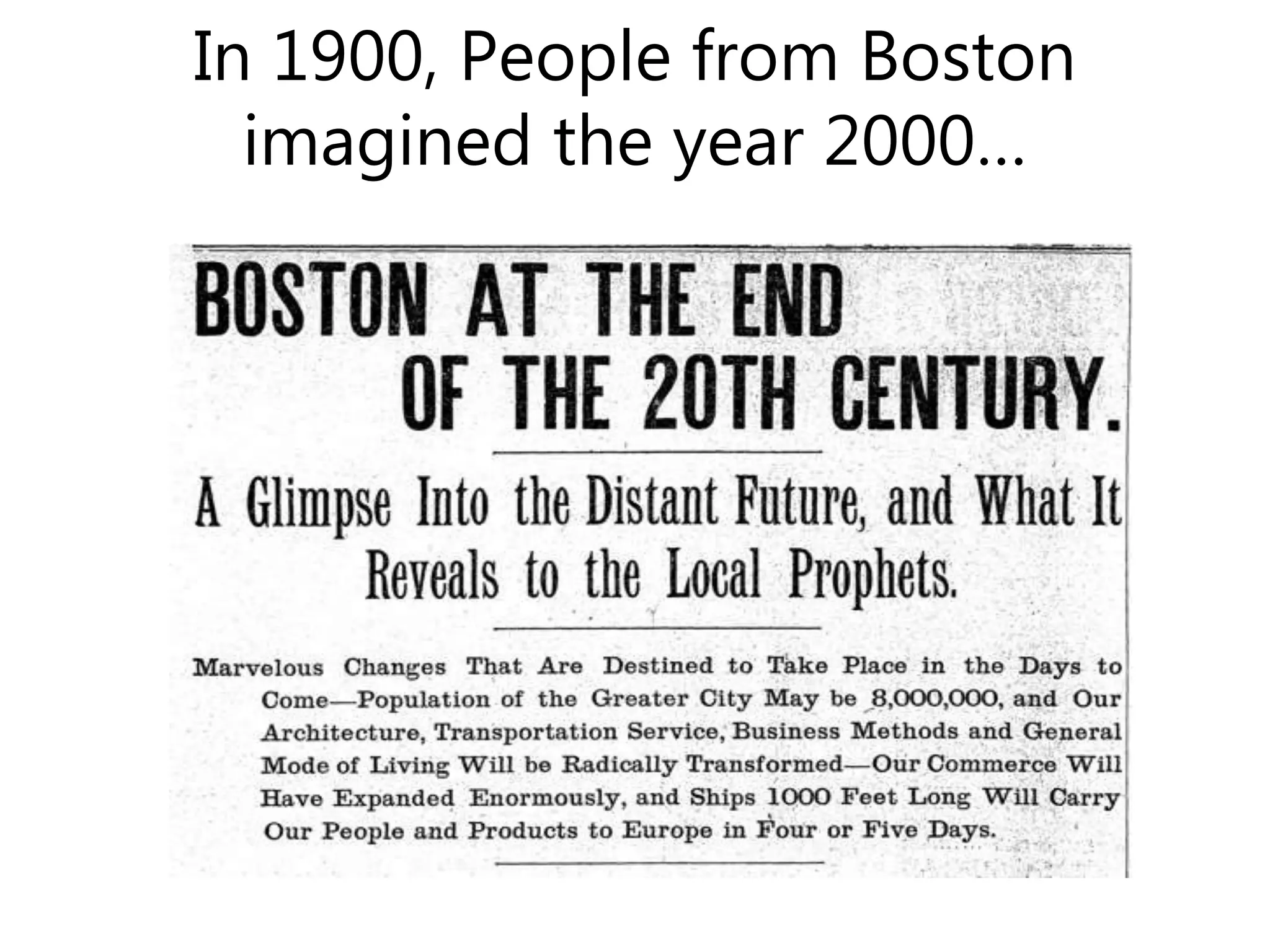
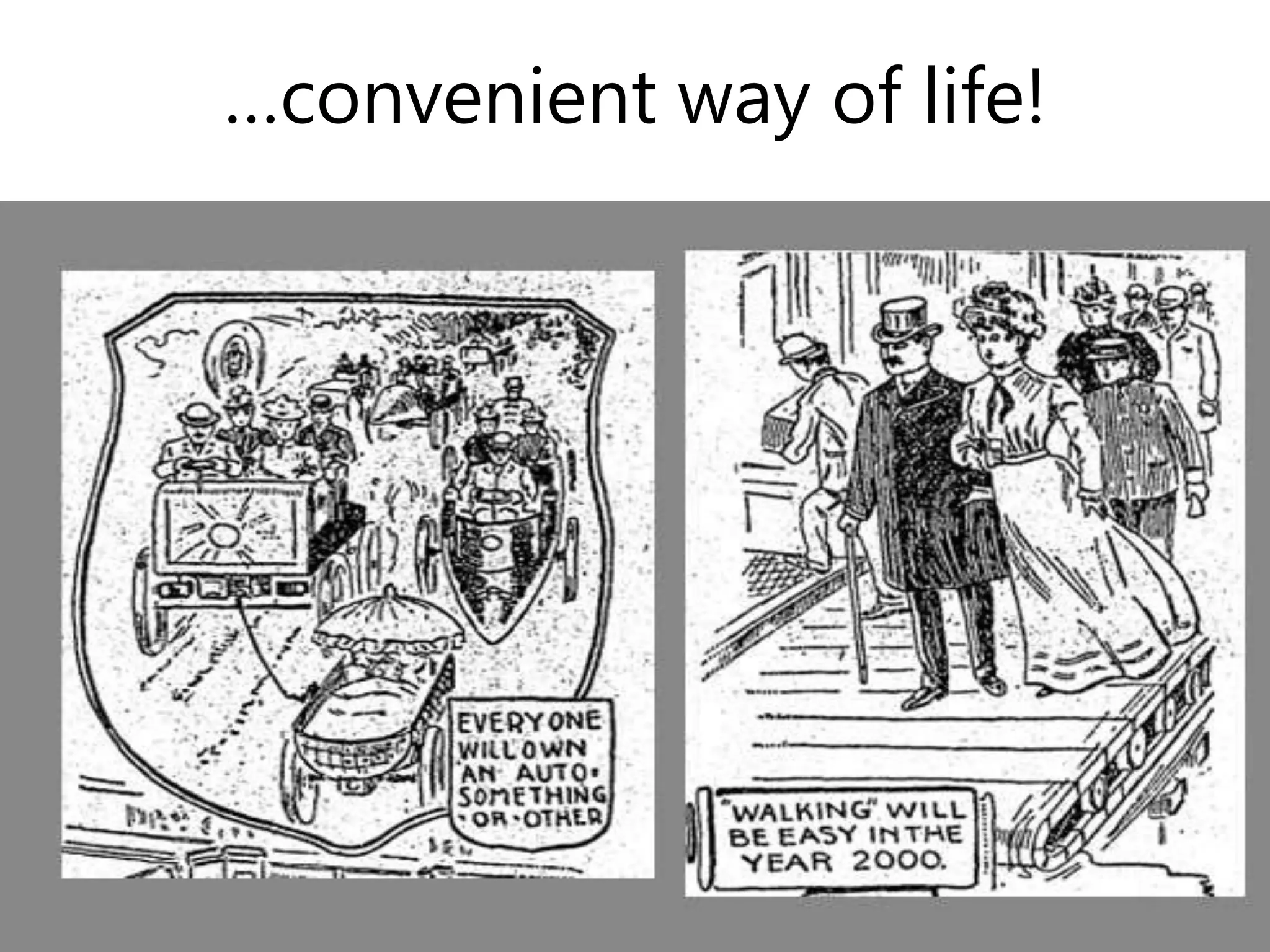
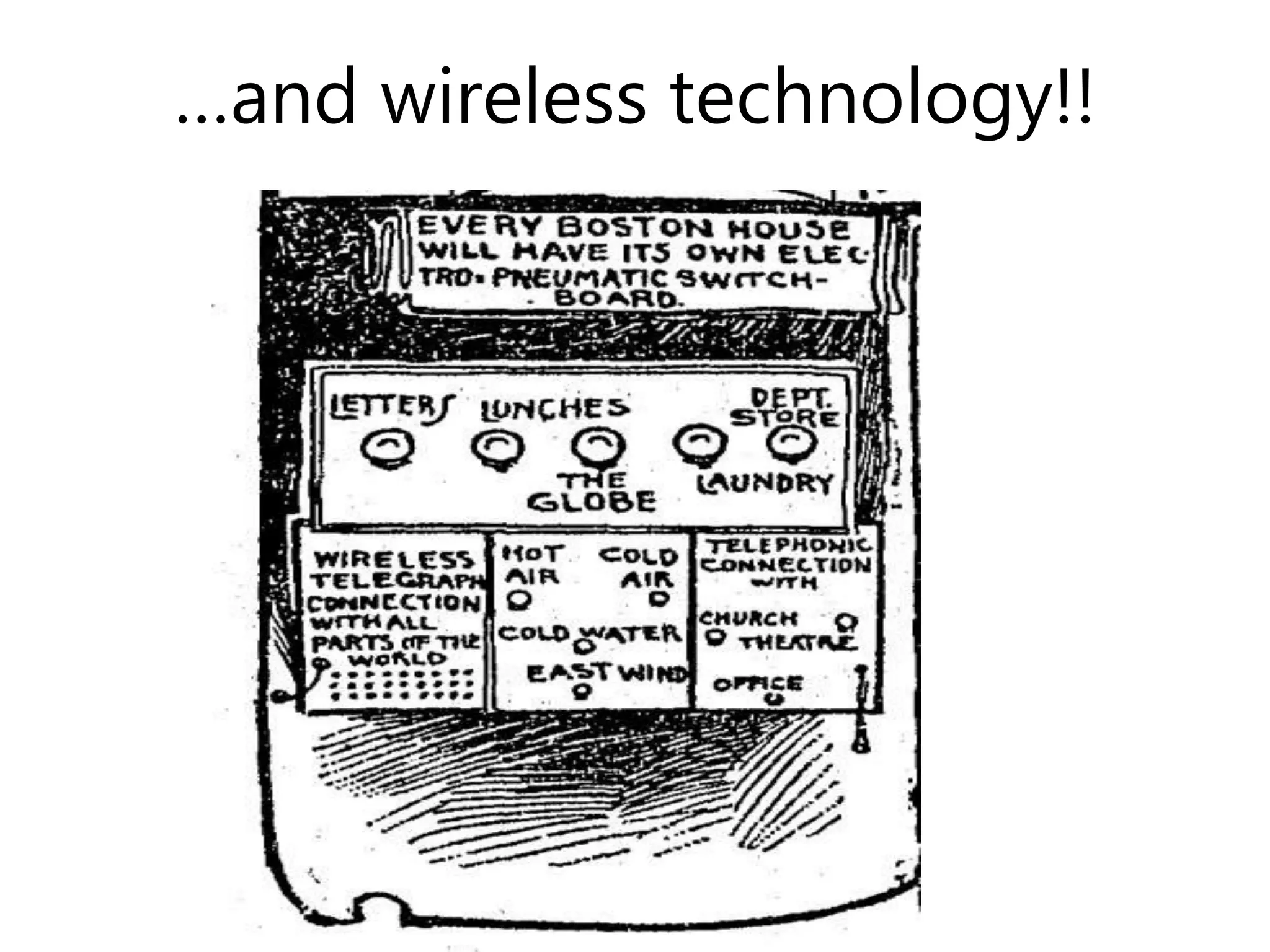
In 1900, People from Boston
imagined the year 2000…
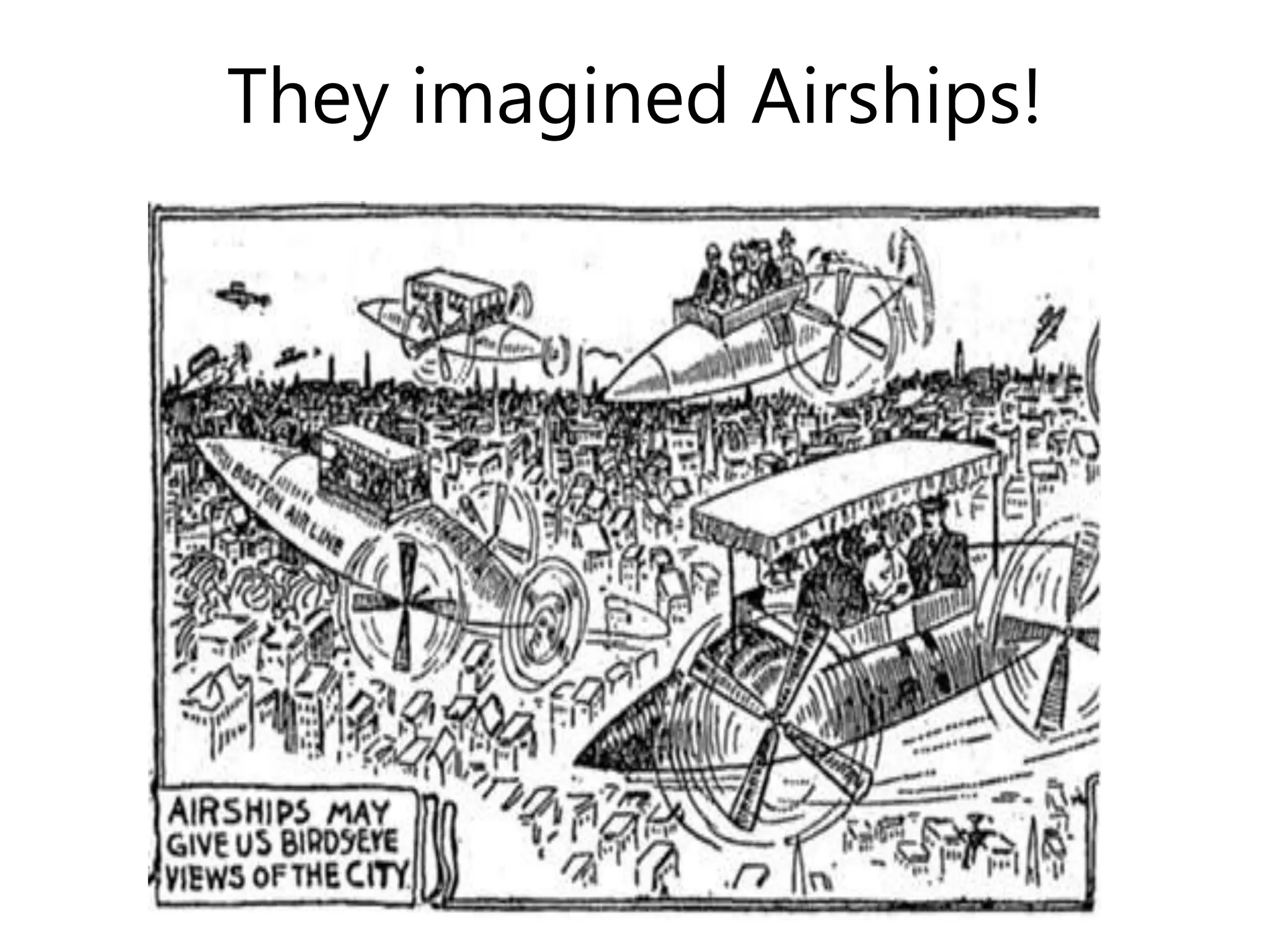
They imagined Airships!
…convenient way of life!
…and wireless technology!!
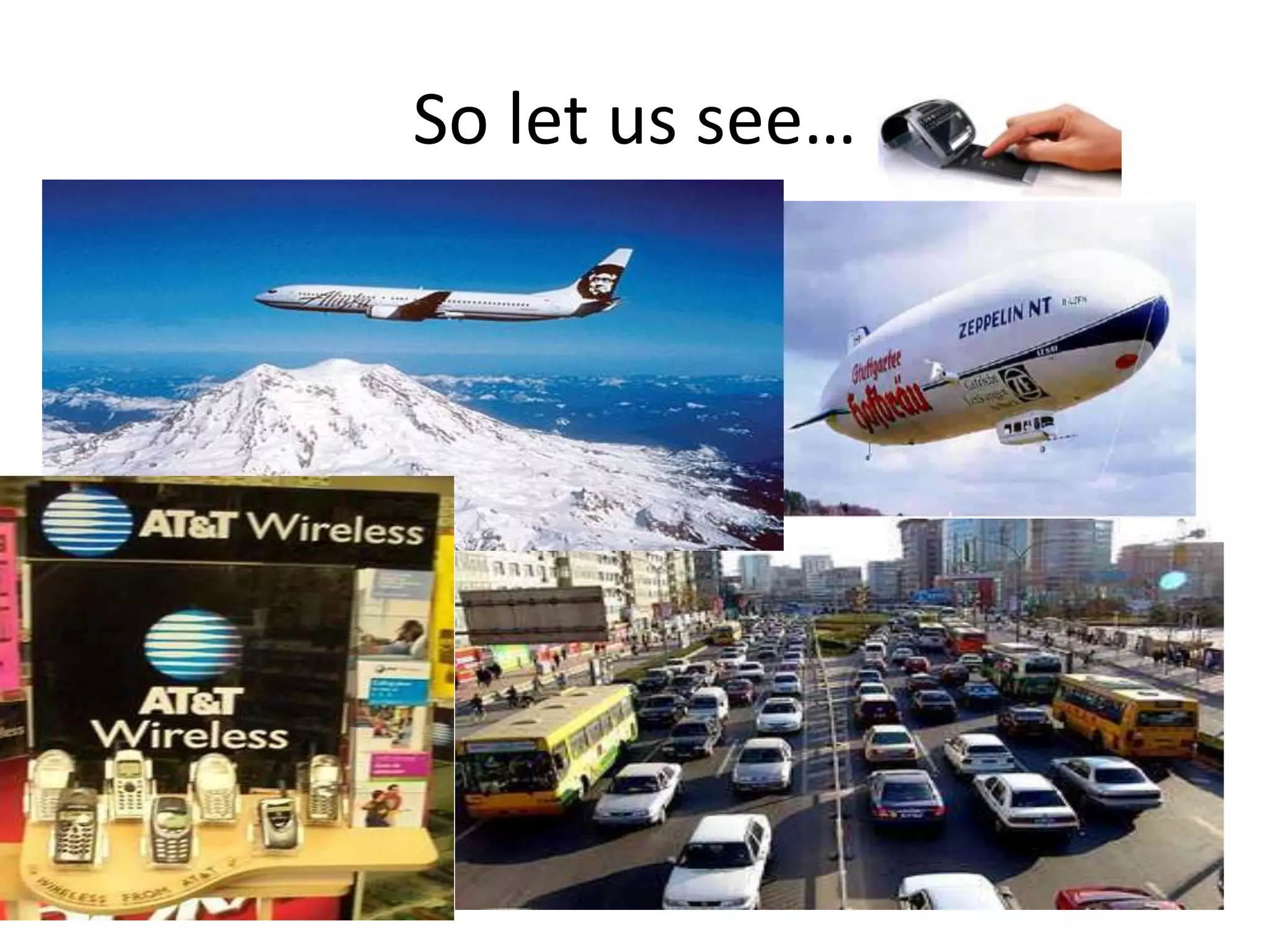
So let us see…
they did see the future!
Although no one can exactly determine
what the future is…
We can have a glimpse of the future:
• By Learning from the Past..
• By Studying the Present…
• By Anticipating what comes next…
• Which is….the FUTURE!
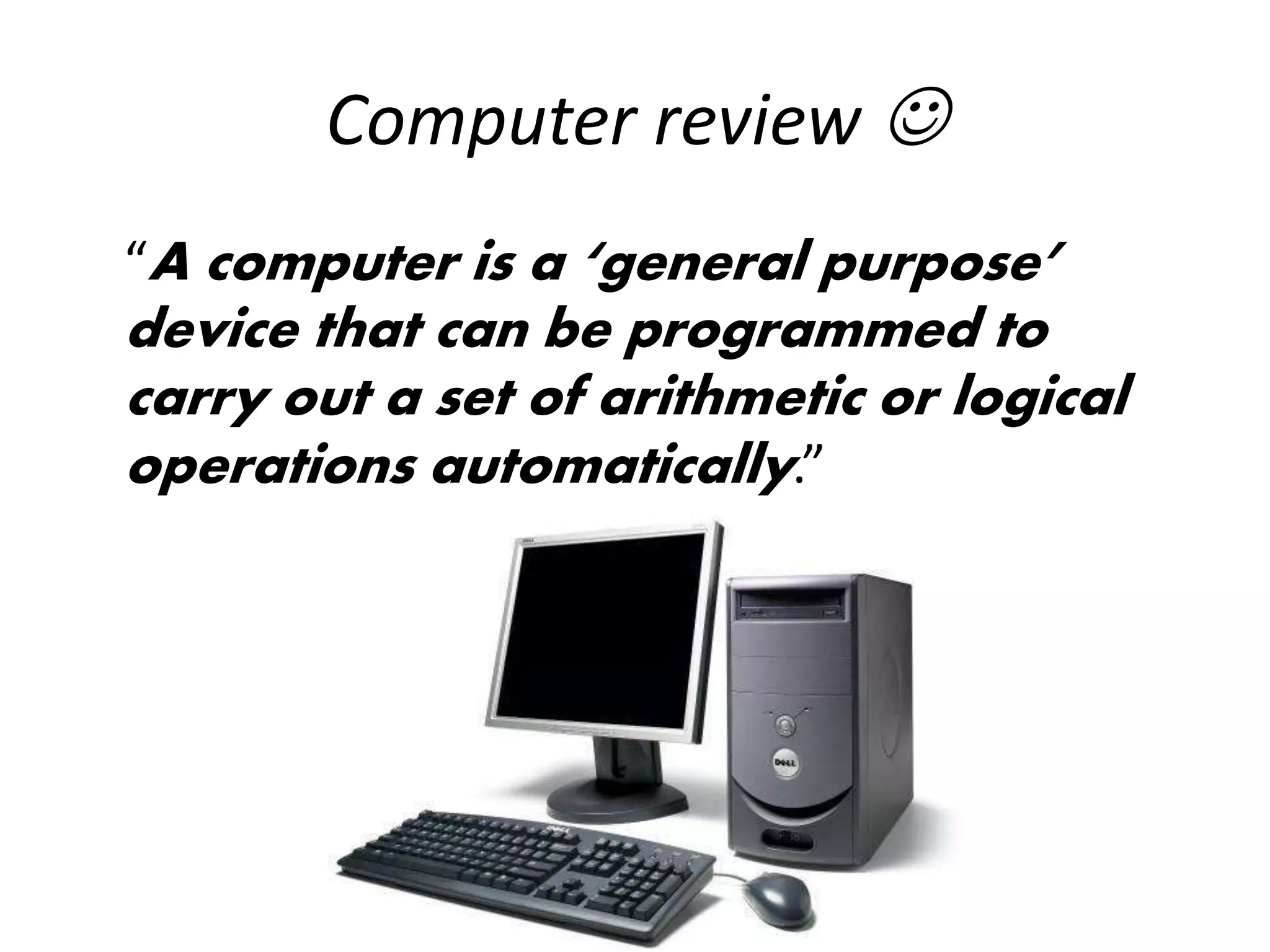
Computer review 
“A computer is a ‘general purpose’
device that can be programmed to
carry out a set of arithmetic or logical
operations automatically.”
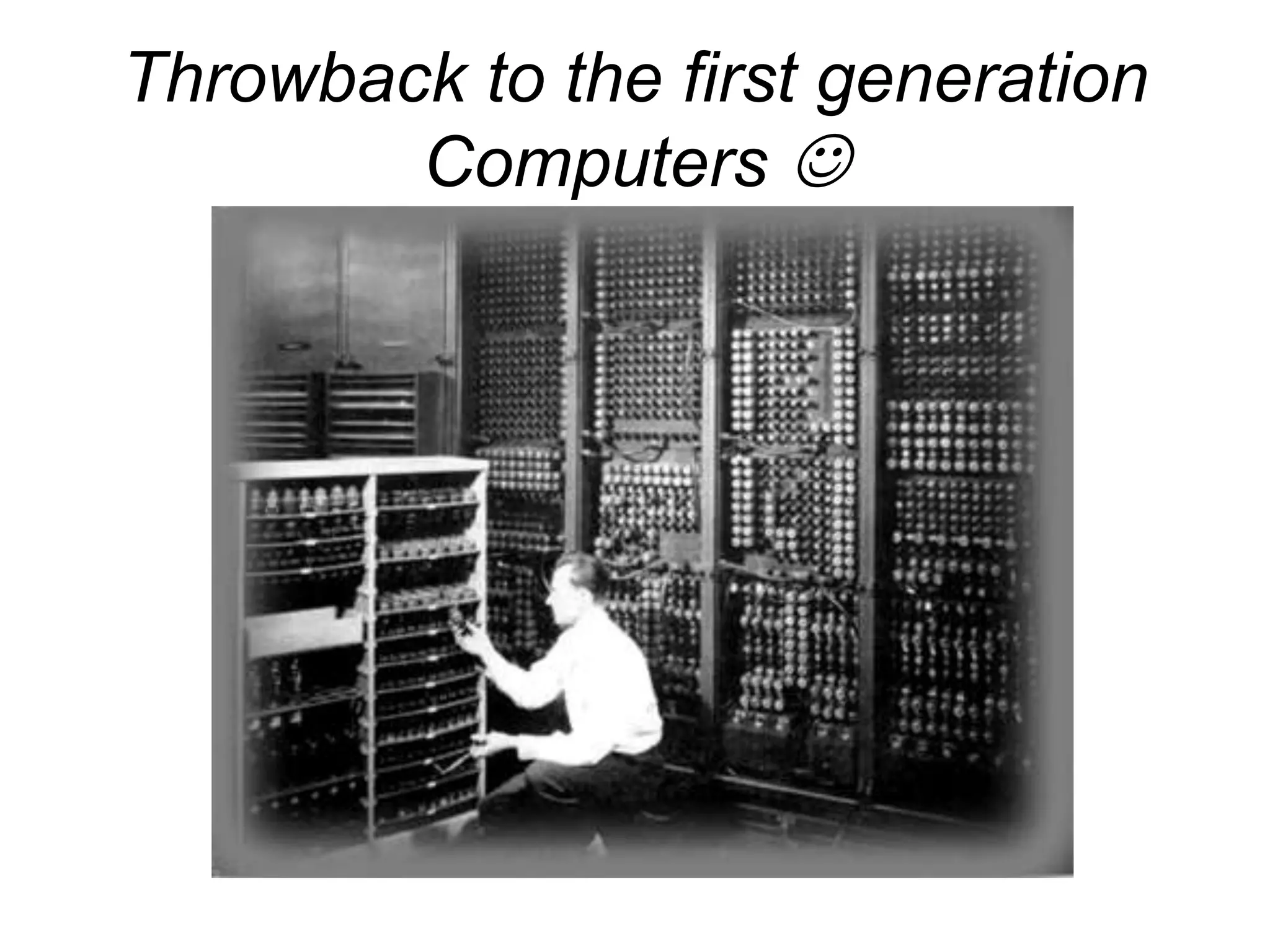
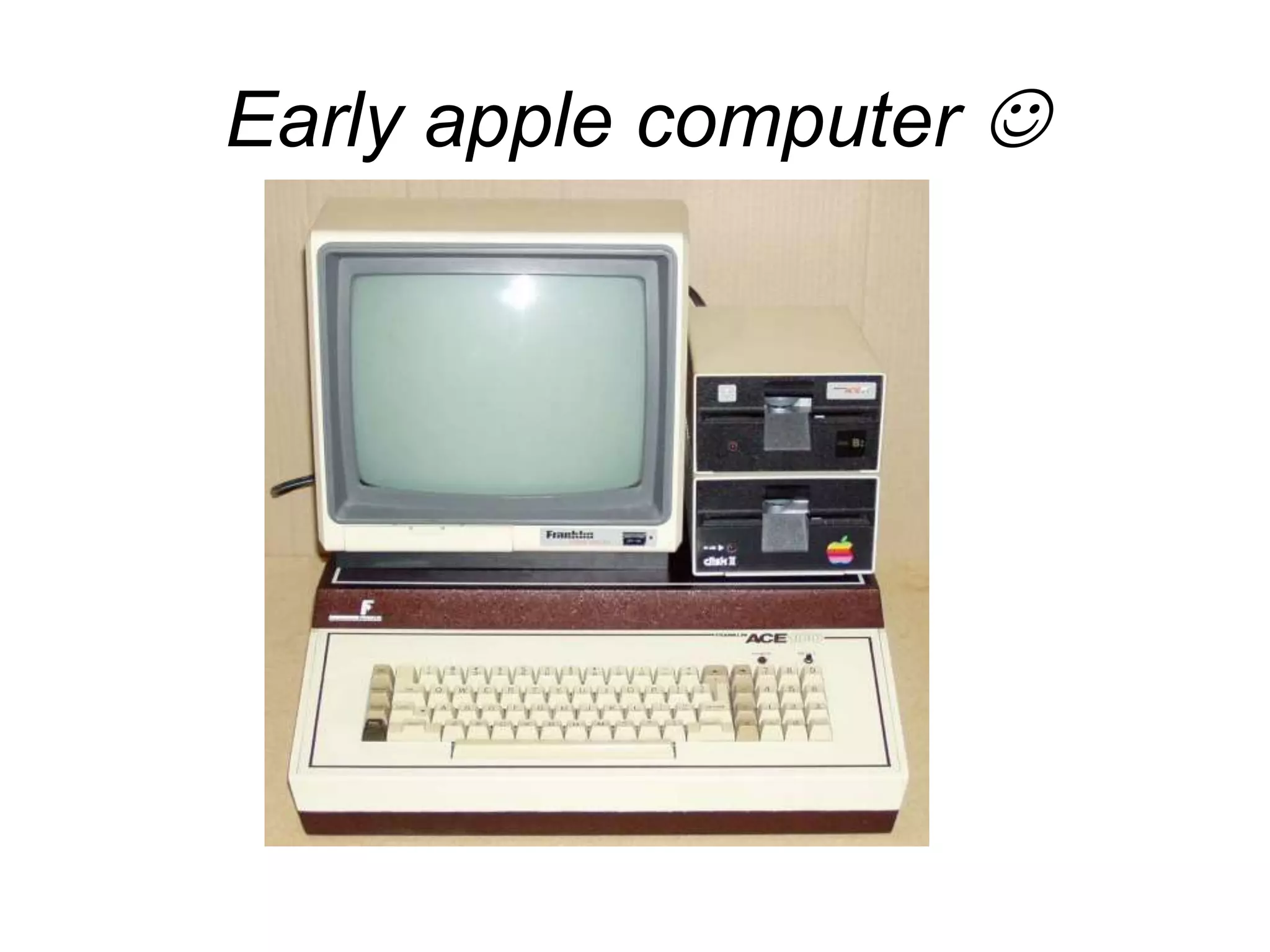
Throwback to the first generation
Computers 
Early apple computer 
Sometimes, the future we expect will
surprise us…
Example:
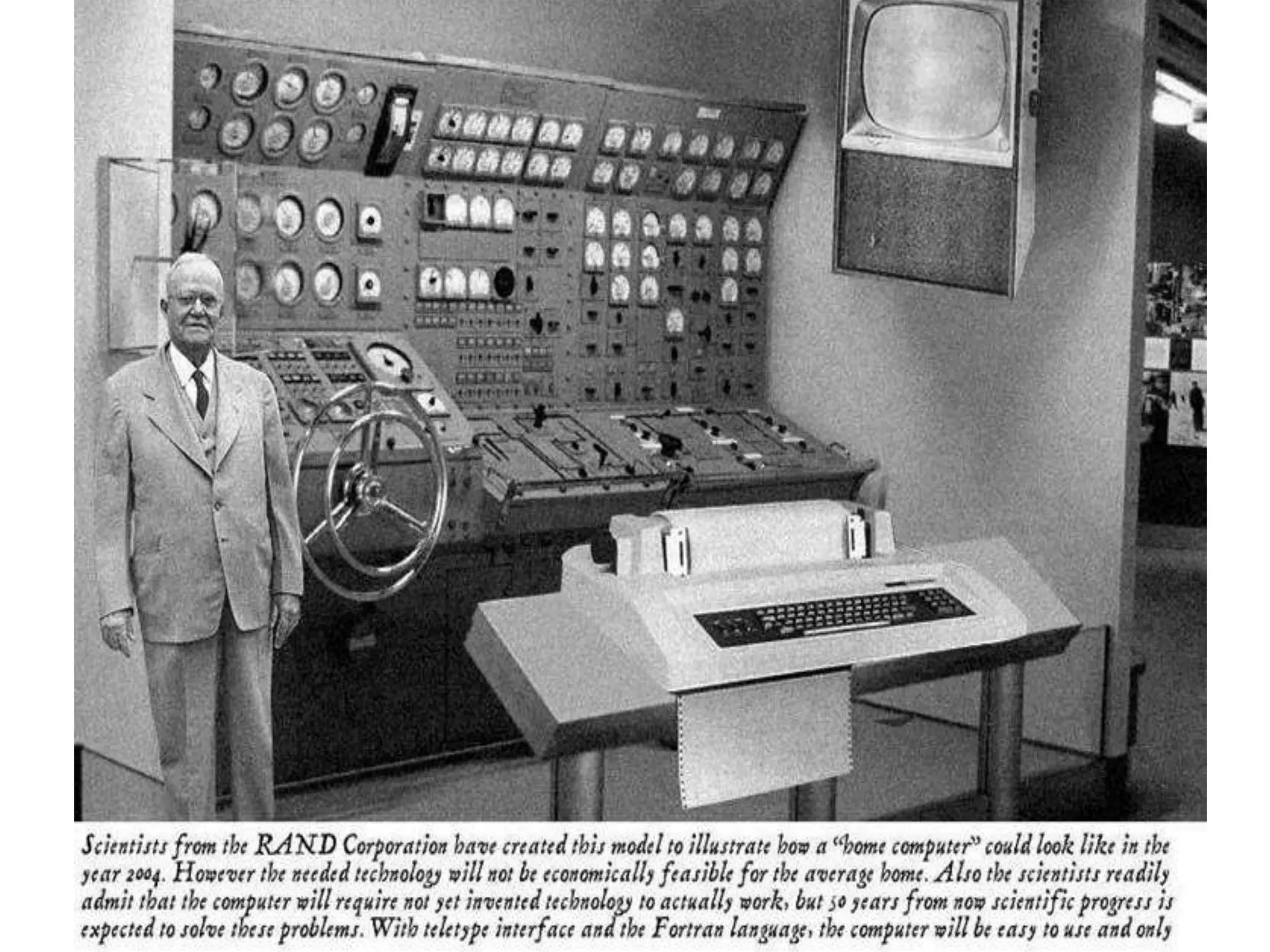
In the 1950s, Scientists from RAND
Company) came up with a model for a
Home Computer for the year 2004…
This is what they came up with….
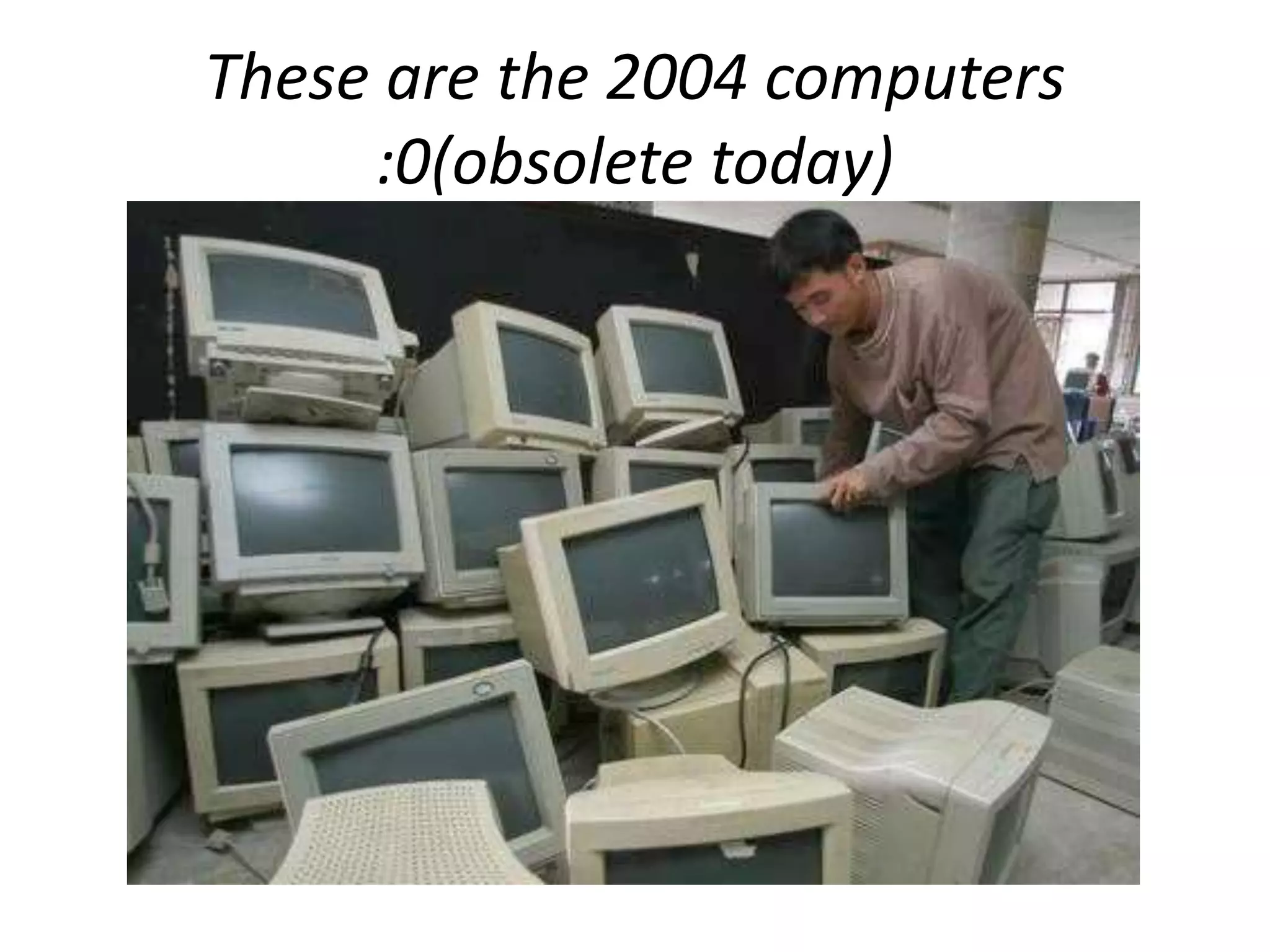
These are the 2004 computers
:0(obsolete today)
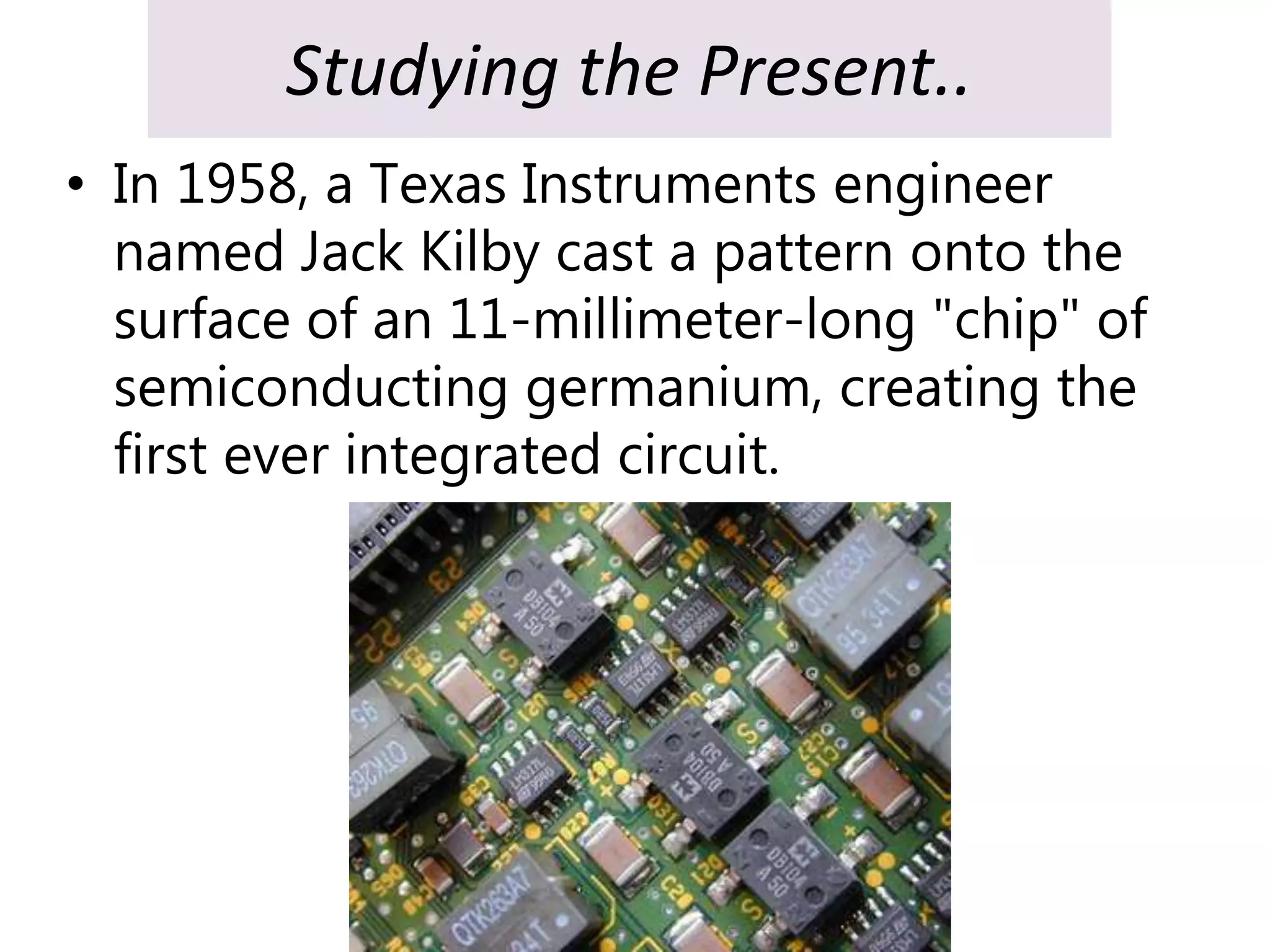
Studying the Present..
• In 1958, a Texas Instruments engineer
named Jack Kilby cast a pattern onto the
surface of an 11-millimeter-long "chip" of
semiconducting germanium, creating the
first ever integrated circuit.
• Since then, and with consistency, engineers
have managed to double the number of
transistors they can fit on computer chips
every two years.
• They do it by regularly halving the size of
transistors. Today, after dozens of
iterations of this doubling and halving rule,
transistors measure just a few atoms
across, and a typical computer chip holds 9
million of them per square millimeter.
• The doubling of computing power every
two years is known as "Moore's law," after
Gordon Moore, the Intel engineer who
first noticed the trend in 1965.
• Moore's law renders last year's laptop
models obsolete, and it will undoubtedly
make next year's tech devices
breathtakingly small and fast compared to
today's.
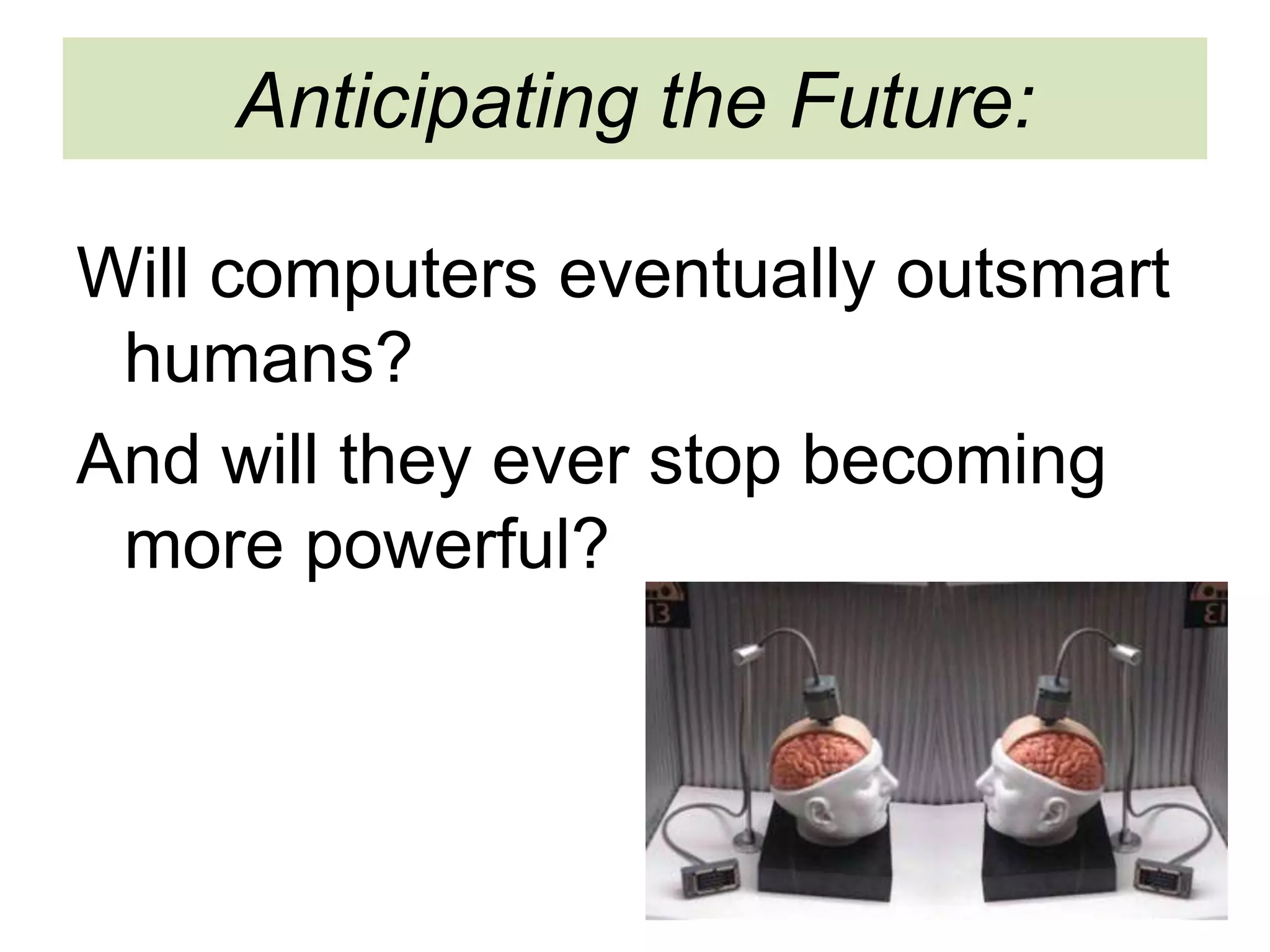
Anticipating the Future:
Will computers eventually outsmart
humans?
And will they ever stop becoming
more powerful?
Scientists and Visionaries expect:
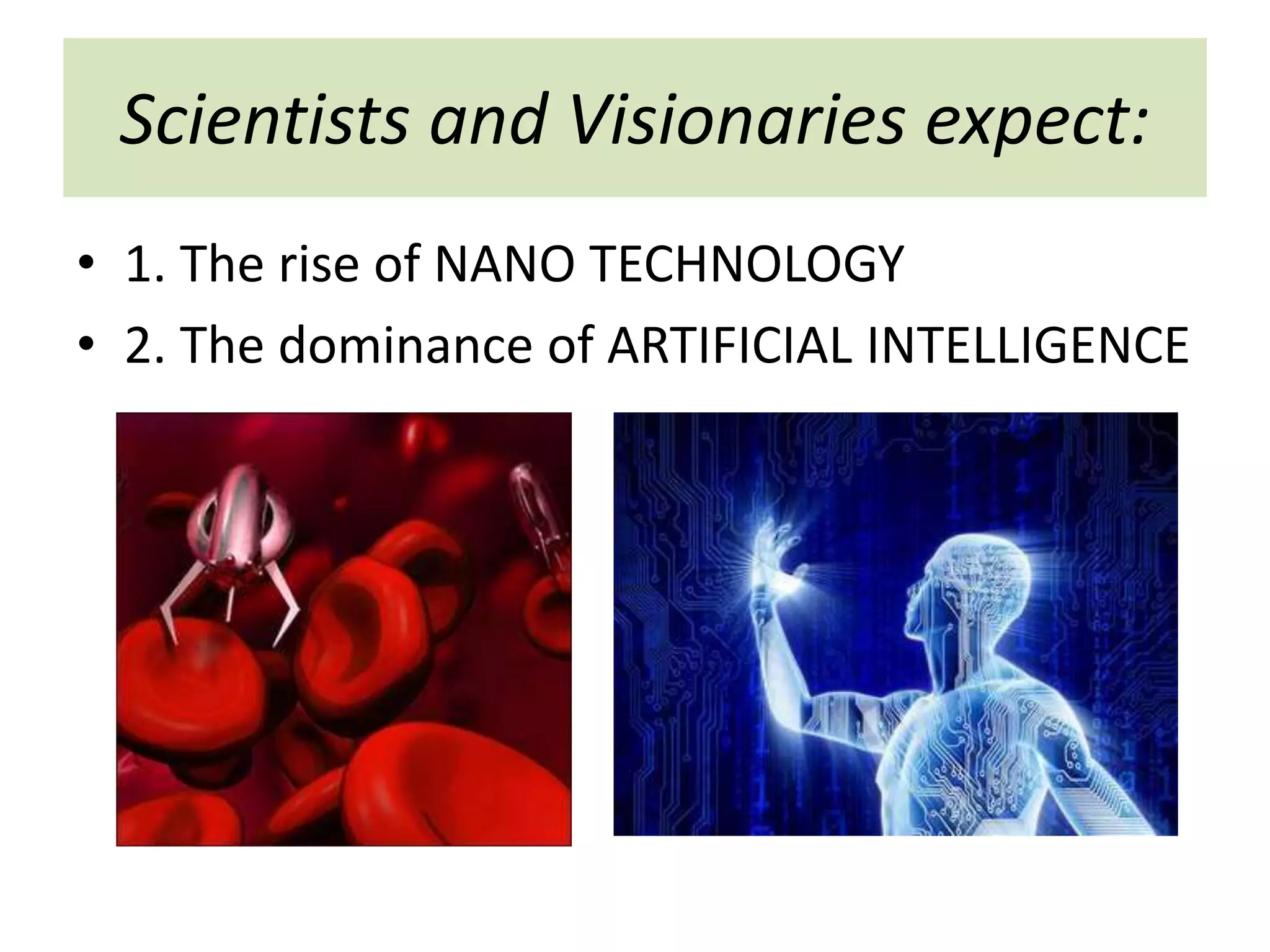
• 1. The rise of NANO TECHNOLOGY
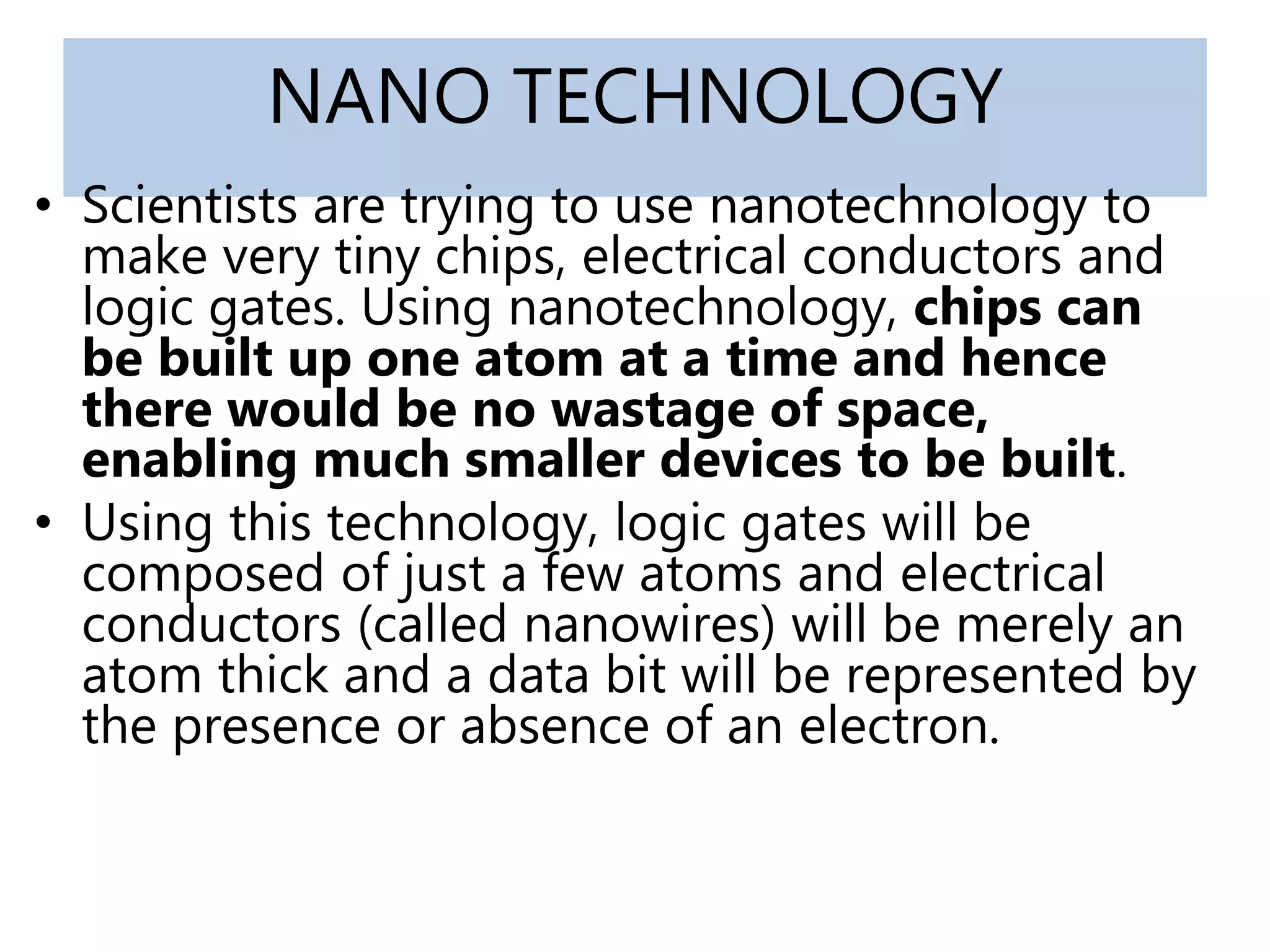
• 2. The dominance of ARTIFICIAL INTELLIGENCE
NANO TECHNOLOGY
• Scientists are trying to use nanotechnology to
make very tiny chips, electrical conductors and
logic gates. Using nanotechnology, chips can
be built up one atom at a time and hence
there would be no wastage of space,
enabling much smaller devices to be built.
• Using this technology, logic gates will be
composed of just a few atoms and electrical
conductors (called nanowires) will be merely an
atom thick and a data bit will be represented by
the presence or absence of an electron.
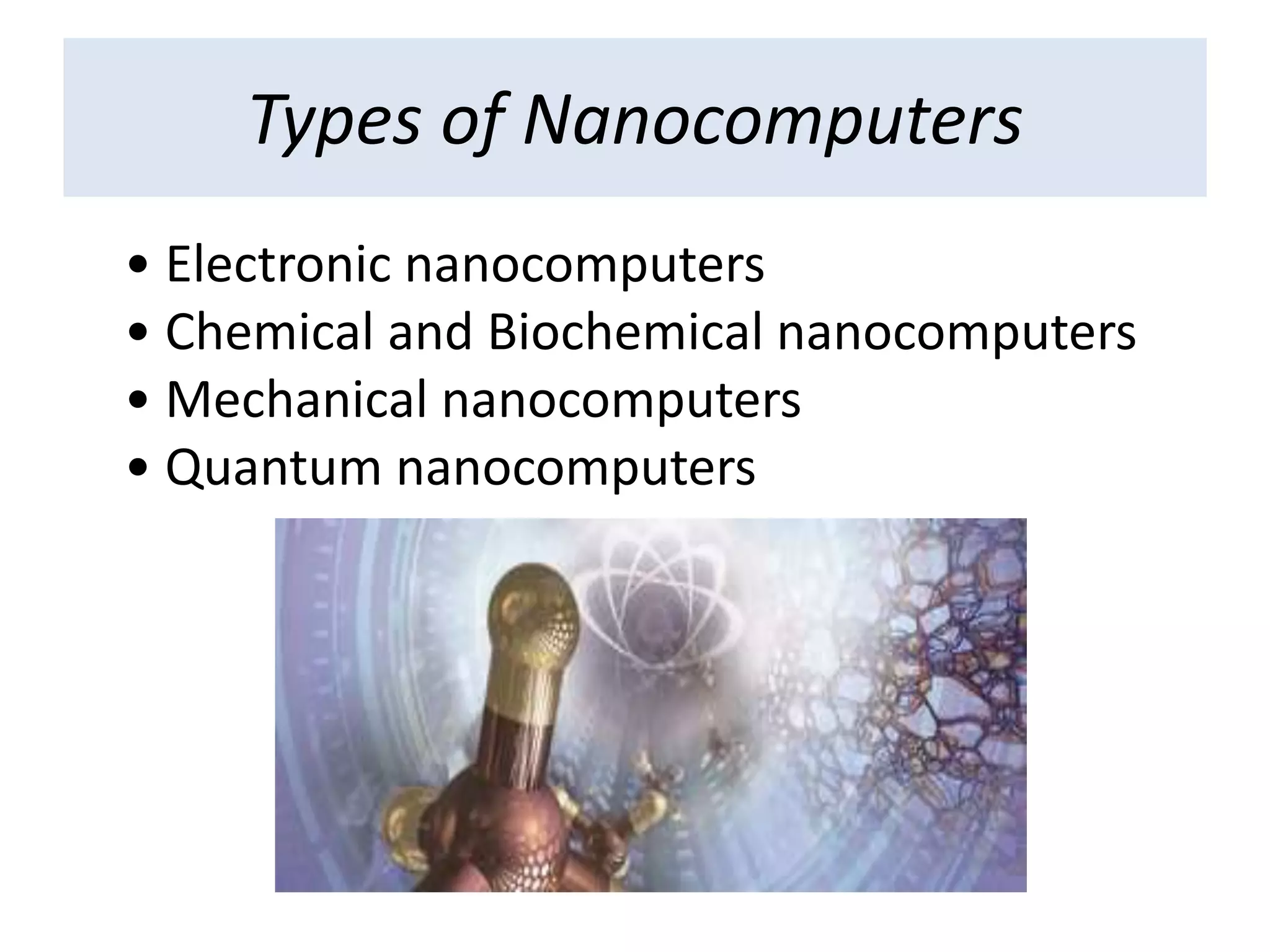
Types of Nanocomputers
• Electronic nanocomputers
• Chemical and Biochemical nanocomputers
• Mechanical nanocomputers
• Quantum nanocomputers
NANOROBOTS
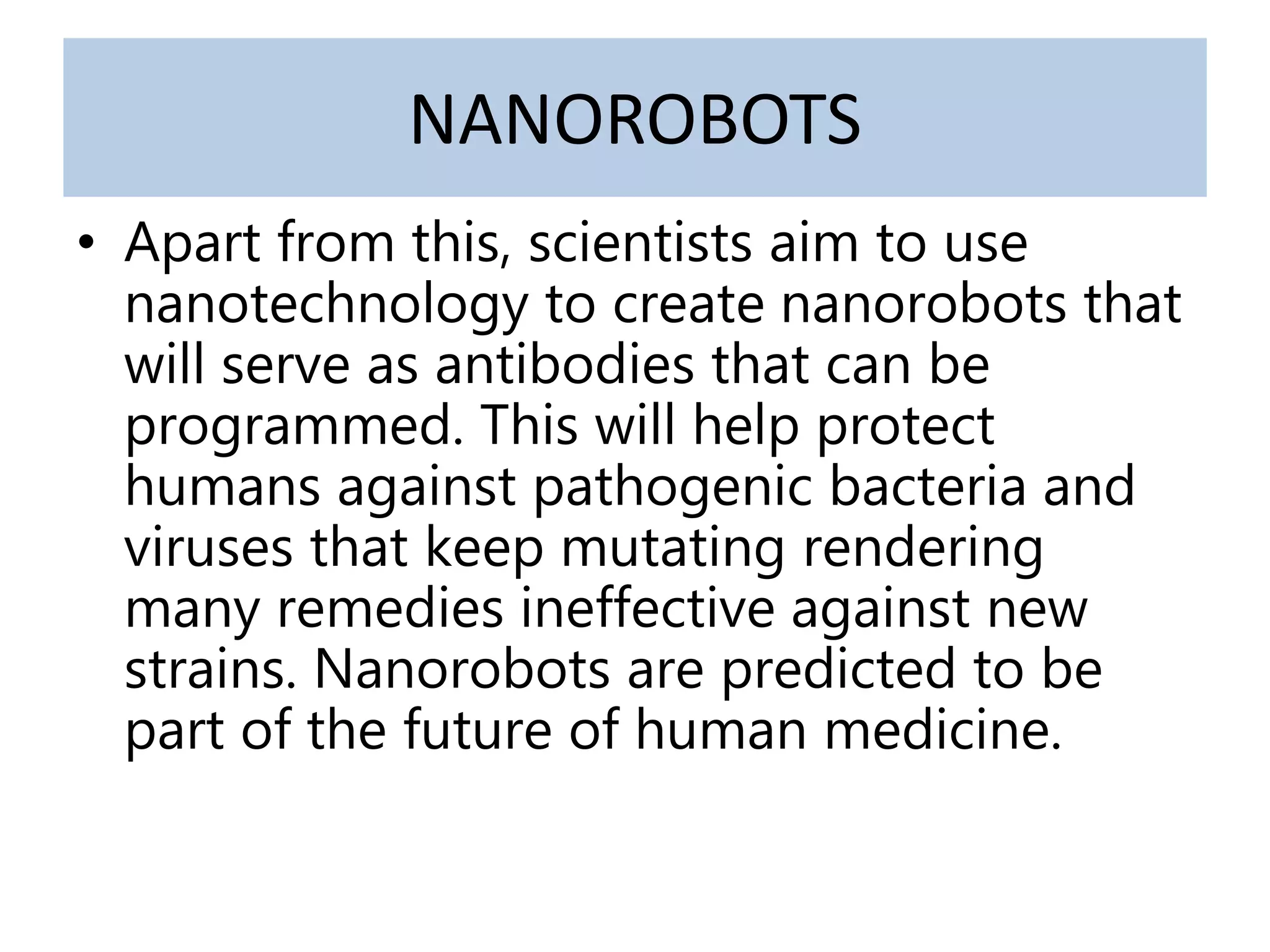
• Apart from this, scientists aim to use
nanotechnology to create nanorobots that
will serve as antibodies that can be
programmed. This will help protect
humans against pathogenic bacteria and
viruses that keep mutating rendering
many remedies ineffective against new
strains. Nanorobots are predicted to be
part of the future of human medicine.
ARTIFICIAL INTELLIGENCE
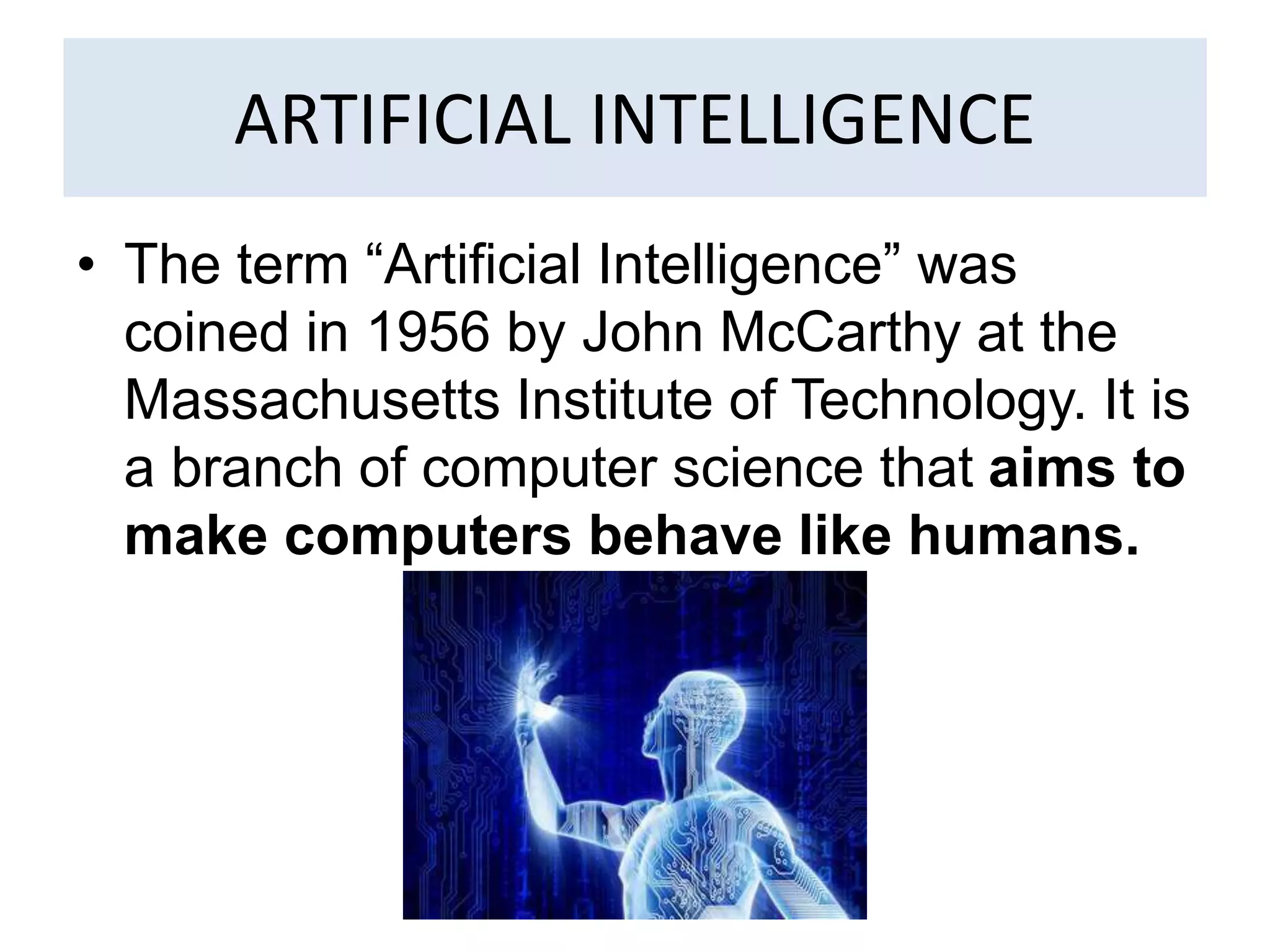
• The term “Artificial Intelligence” was
coined in 1956 by John McCarthy at the
Massachusetts Institute of Technology. It is
a branch of computer science that aims to
make computers behave like humans.
Artificial Intelligence includes programming
computers to make decisions in real life
situations (e.g. some of these “expert systems”
help physicians in the diagnosis of diseases
based on symptoms), programming computers
to understand human languages (natural
language), programming computers to play
games.
Programming computers to hear, see and react
to other sensory stimuli(robotics) and designing
systems that mimic human intelligence by
attempting to reproduce the types of physical
connections between neurones in the human
brain (neural networks).
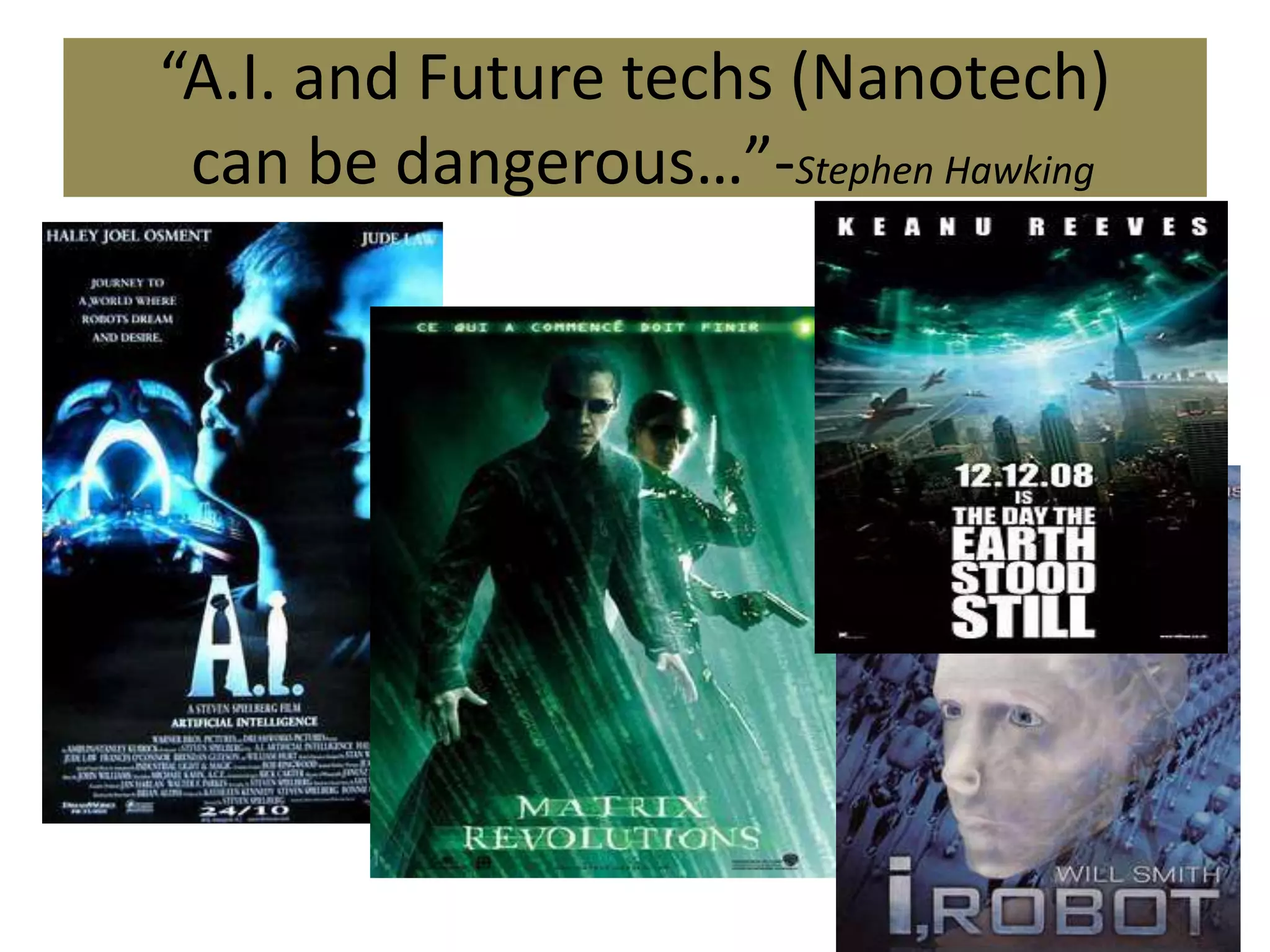
“A.I. and Future techs (Nanotech)
can be dangerous…”-Stephen Hawking
It can either be a Utopia or Dystopia…
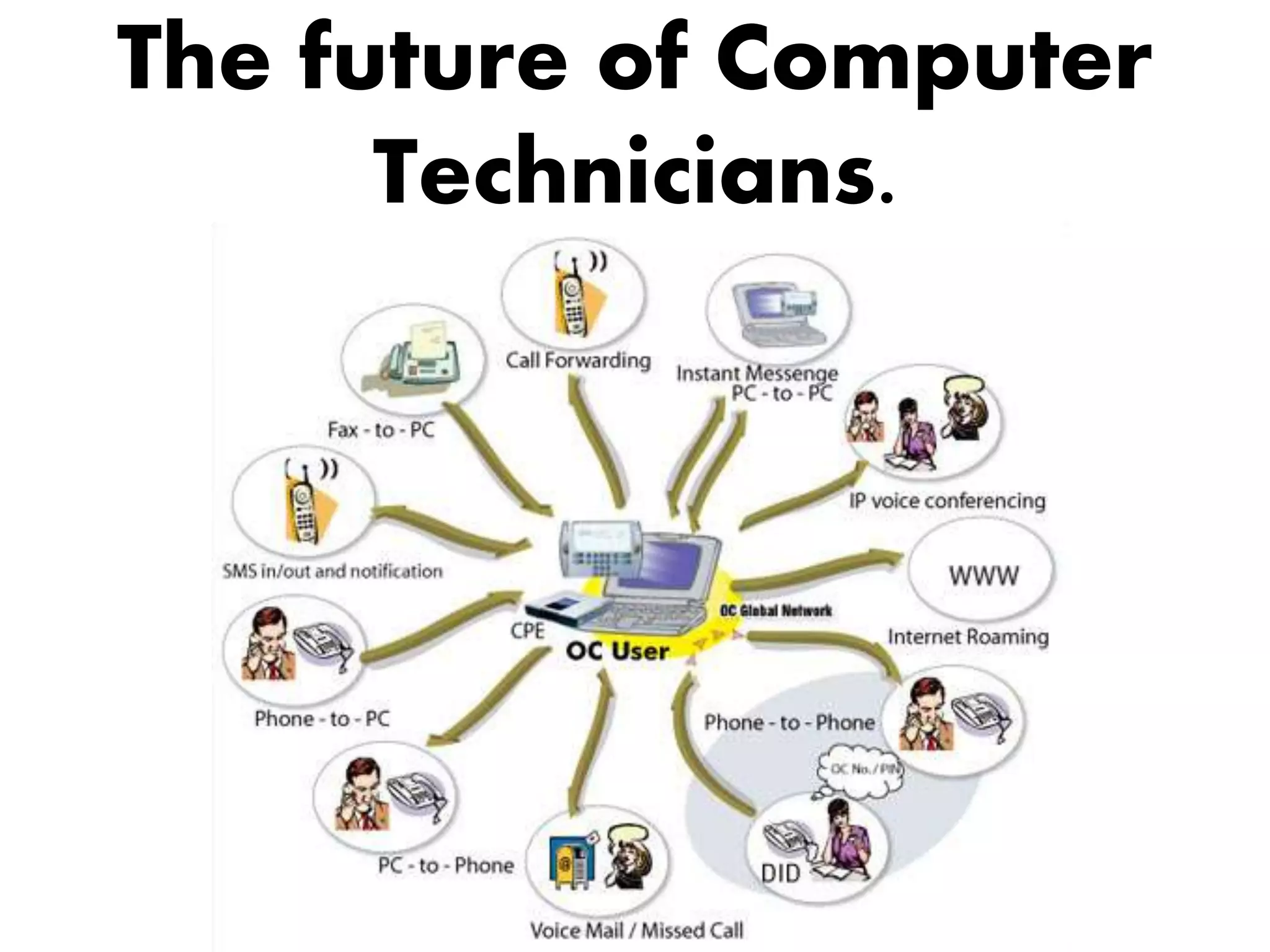
The future of Computer
Technicians.
In a modern world revolving around
computers and technology, Computer
technicians hold a very important role
in the present and for the future.
“Those who hold the fire, can
certainly light the dark night..”
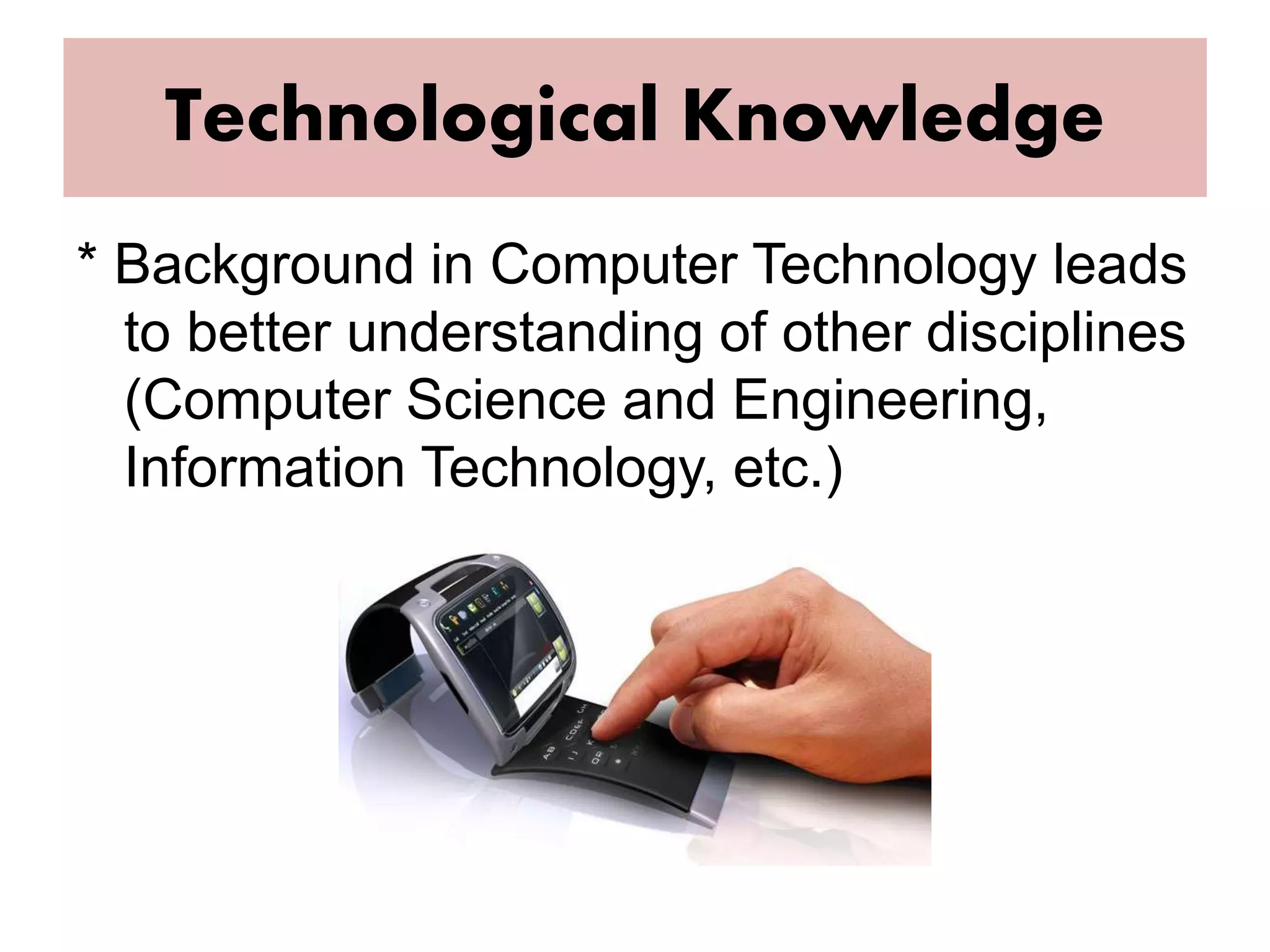
Technological Knowledge
* Background in Computer Technology leads
to better understanding of other disciplines
(Computer Science and Engineering,
Information Technology, etc.)
Great career path
• If we project that almost everyone will own
a personal computer, cell phone, tabs, and
other gadgets in the next 10 years, then
there is no doubt that an abundant
demand for those who know the field
exists!
(Including production, maintenance,
innovations etc…)
Other rising work demands:
• data mining: it is used by e-commerce websites like Amazon to understand
consumer behavior; also used by banks to calculate how likely the debt will be
payed back;
• systems design, that can have high throughput: this is used by search engines like
Google, but also in conterterrorism, and finance;
• geographic information systems: companies like TomTom and Foursquare, but also
airports and airline companies
• performance analysis and finding bottle necks in systems: this is any company that
has a big investment in ICT;
• embedded systems programming: Siemens, Erickson and other companies and
producers of embedded devices, also electronics for cars;
• hardware software interface in mobile systems: Motorola, Samsung, Apple, you
name it;
• operating systems for mobile devices: Nokia and Microsoft are doing a lot of work
here, also Google and Apple
• mathematical models in finance
• power grid networks management systems: Austin Energy, Etap
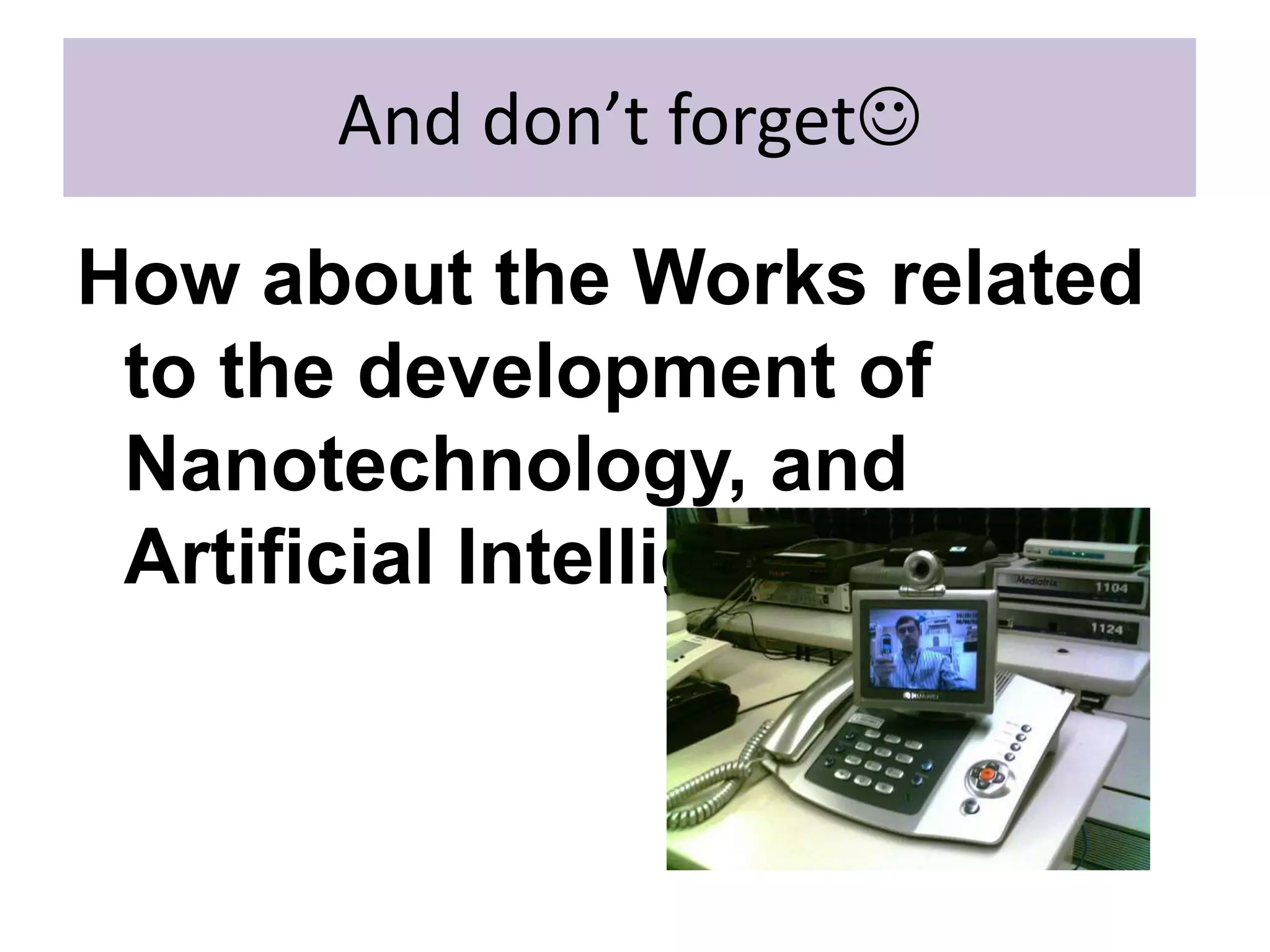
and
How about the Works related
to the development of
Nanotechnology, and
Artificial Intelligence?
And don’t forget
So be Proud Computer Technicians!
“Computer Technology is like fire…it can
cook your food…but it can also burn your
house down.”
The future of computer technology

The future of computer technology

  • 1.
    The Future ofComputer Technology …and what’s in store for Computer Technicians/Scientist/ Engineers/Programmers…
  • 2.
    How do wesee the Future?
  • 3.
    In 1900, Peoplefrom Boston imagined the year 2000…
  • 4.
  • 5.
  • 6.
  • 7.
    So let ussee…
  • 8.
    they did seethe future!
  • 9.
    Although no onecan exactly determine what the future is… We can have a glimpse of the future: • By Learning from the Past.. • By Studying the Present… • By Anticipating what comes next… • Which is….the FUTURE!
  • 10.
    Computer review  “Acomputer is a ‘general purpose’ device that can be programmed to carry out a set of arithmetic or logical operations automatically.”
  • 13.
    Throwback to thefirst generation Computers 
  • 14.
  • 15.
    Sometimes, the futurewe expect will surprise us… Example: In the 1950s, Scientists from RAND Company) came up with a model for a Home Computer for the year 2004… This is what they came up with….
  • 17.
    These are the2004 computers :0(obsolete today)
  • 18.
    Studying the Present.. •In 1958, a Texas Instruments engineer named Jack Kilby cast a pattern onto the surface of an 11-millimeter-long "chip" of semiconducting germanium, creating the first ever integrated circuit.
  • 19.
    • Since then,and with consistency, engineers have managed to double the number of transistors they can fit on computer chips every two years. • They do it by regularly halving the size of transistors. Today, after dozens of iterations of this doubling and halving rule, transistors measure just a few atoms across, and a typical computer chip holds 9 million of them per square millimeter.
  • 20.
    • The doublingof computing power every two years is known as "Moore's law," after Gordon Moore, the Intel engineer who first noticed the trend in 1965. • Moore's law renders last year's laptop models obsolete, and it will undoubtedly make next year's tech devices breathtakingly small and fast compared to today's.
  • 21.
    Anticipating the Future: Willcomputers eventually outsmart humans? And will they ever stop becoming more powerful?
  • 22.
    Scientists and Visionariesexpect: • 1. The rise of NANO TECHNOLOGY • 2. The dominance of ARTIFICIAL INTELLIGENCE
  • 23.
    NANO TECHNOLOGY • Scientistsare trying to use nanotechnology to make very tiny chips, electrical conductors and logic gates. Using nanotechnology, chips can be built up one atom at a time and hence there would be no wastage of space, enabling much smaller devices to be built. • Using this technology, logic gates will be composed of just a few atoms and electrical conductors (called nanowires) will be merely an atom thick and a data bit will be represented by the presence or absence of an electron.
  • 24.
    Types of Nanocomputers •Electronic nanocomputers • Chemical and Biochemical nanocomputers • Mechanical nanocomputers • Quantum nanocomputers
  • 25.
    NANOROBOTS • Apart fromthis, scientists aim to use nanotechnology to create nanorobots that will serve as antibodies that can be programmed. This will help protect humans against pathogenic bacteria and viruses that keep mutating rendering many remedies ineffective against new strains. Nanorobots are predicted to be part of the future of human medicine.
  • 26.
    ARTIFICIAL INTELLIGENCE • Theterm “Artificial Intelligence” was coined in 1956 by John McCarthy at the Massachusetts Institute of Technology. It is a branch of computer science that aims to make computers behave like humans.
  • 27.
    Artificial Intelligence includesprogramming computers to make decisions in real life situations (e.g. some of these “expert systems” help physicians in the diagnosis of diseases based on symptoms), programming computers to understand human languages (natural language), programming computers to play games.
  • 28.
    Programming computers tohear, see and react to other sensory stimuli(robotics) and designing systems that mimic human intelligence by attempting to reproduce the types of physical connections between neurones in the human brain (neural networks).
  • 29.
    “A.I. and Futuretechs (Nanotech) can be dangerous…”-Stephen Hawking
  • 30.
    It can eitherbe a Utopia or Dystopia…
  • 31.
    The future ofComputer Technicians.
  • 32.
    In a modernworld revolving around computers and technology, Computer technicians hold a very important role in the present and for the future. “Those who hold the fire, can certainly light the dark night..”
  • 34.
    Technological Knowledge * Backgroundin Computer Technology leads to better understanding of other disciplines (Computer Science and Engineering, Information Technology, etc.)
  • 35.
    Great career path •If we project that almost everyone will own a personal computer, cell phone, tabs, and other gadgets in the next 10 years, then there is no doubt that an abundant demand for those who know the field exists! (Including production, maintenance, innovations etc…)
  • 36.
    Other rising workdemands: • data mining: it is used by e-commerce websites like Amazon to understand consumer behavior; also used by banks to calculate how likely the debt will be payed back; • systems design, that can have high throughput: this is used by search engines like Google, but also in conterterrorism, and finance; • geographic information systems: companies like TomTom and Foursquare, but also airports and airline companies • performance analysis and finding bottle necks in systems: this is any company that has a big investment in ICT; • embedded systems programming: Siemens, Erickson and other companies and producers of embedded devices, also electronics for cars; • hardware software interface in mobile systems: Motorola, Samsung, Apple, you name it; • operating systems for mobile devices: Nokia and Microsoft are doing a lot of work here, also Google and Apple • mathematical models in finance • power grid networks management systems: Austin Energy, Etap
  • 37.
    and How about theWorks related to the development of Nanotechnology, and Artificial Intelligence? And don’t forget
  • 38.
    So be ProudComputer Technicians!
  • 39.
    “Computer Technology islike fire…it can cook your food…but it can also burn your house down.”