Evolution and RevolutionEvolution and Revolution
as Organizations Growas Organizations Grow
Larry E. Greiner
Chris Bahr, Keith Bolden, Christina
Greer, Matt Rice, & Kelly Shepherd
Main ConceptsMain Concepts
 Future development is determined by five key forces:
 Age
 Size
 Evolution
 Revolution
 Industry Growth
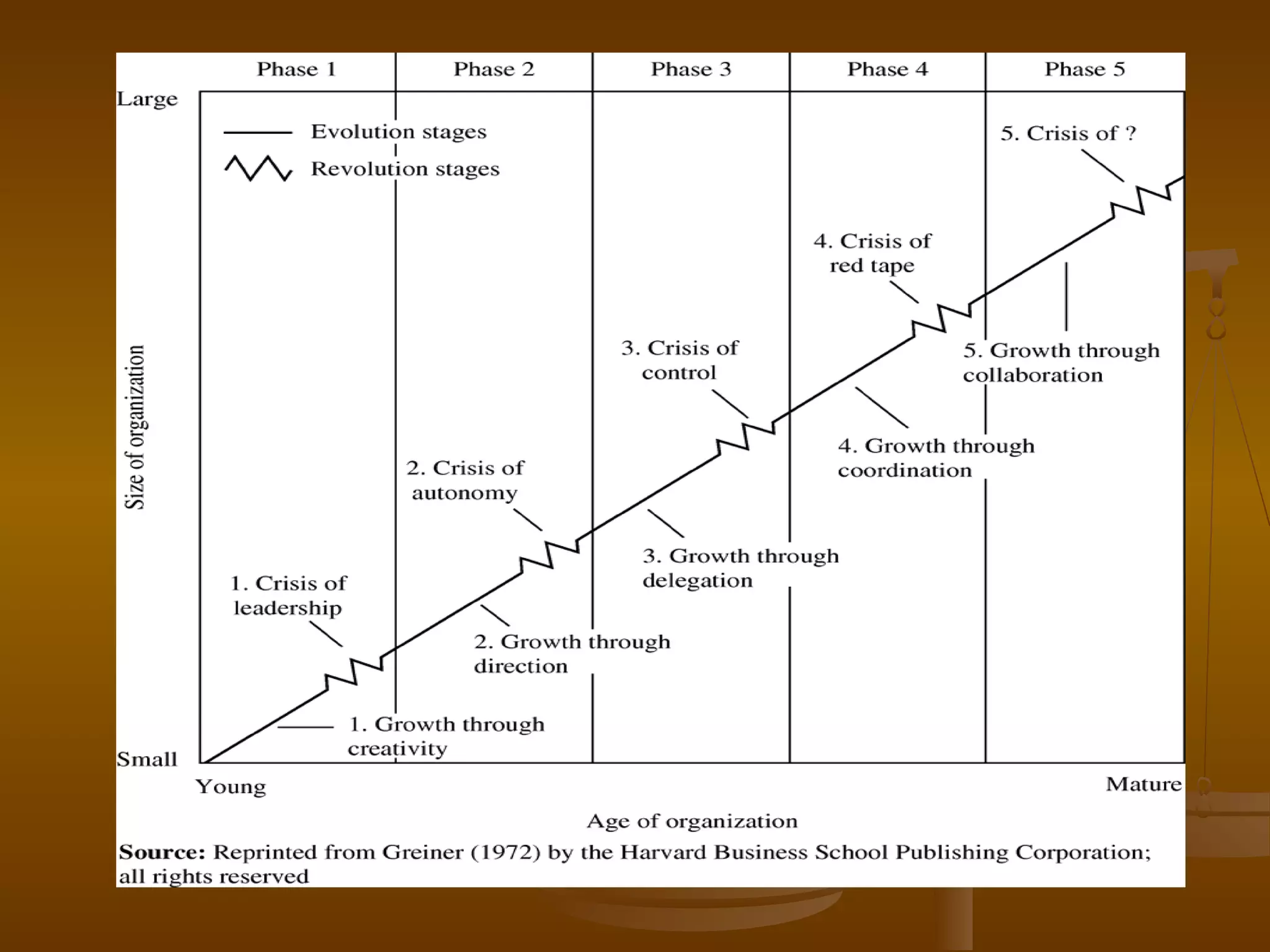
 There are five distinct phases of growth:
 Creativity
 Direction
 Delegation
 Coordination
 Collaboration
 Know what phase management is in, solutions are not
permanent, and each solution breeds new problems.
Costco ExampleCostco Example
 Growth through Collaboration
Crisis of ???
 Annual “Employee Rulebook” changes
ApplicationsApplications
 Where does your organization lie within the five phases?
 Figure out the next step management should take to keep
growing/developing.
Examples:
 If crisis is autonomy, increase delegation.
 If experiencing growth through coordination, prepare for a
crisis of red tape.
 Remember that each solution breeds a new crisis, and be
prepared for it.
Tip for Group ProjectsTip for Group Projects
 When recommending change in an
organization; view it through the context
of the five phases.
 This allows you to use foresight and
offer warning of a potential crisis in the
future.
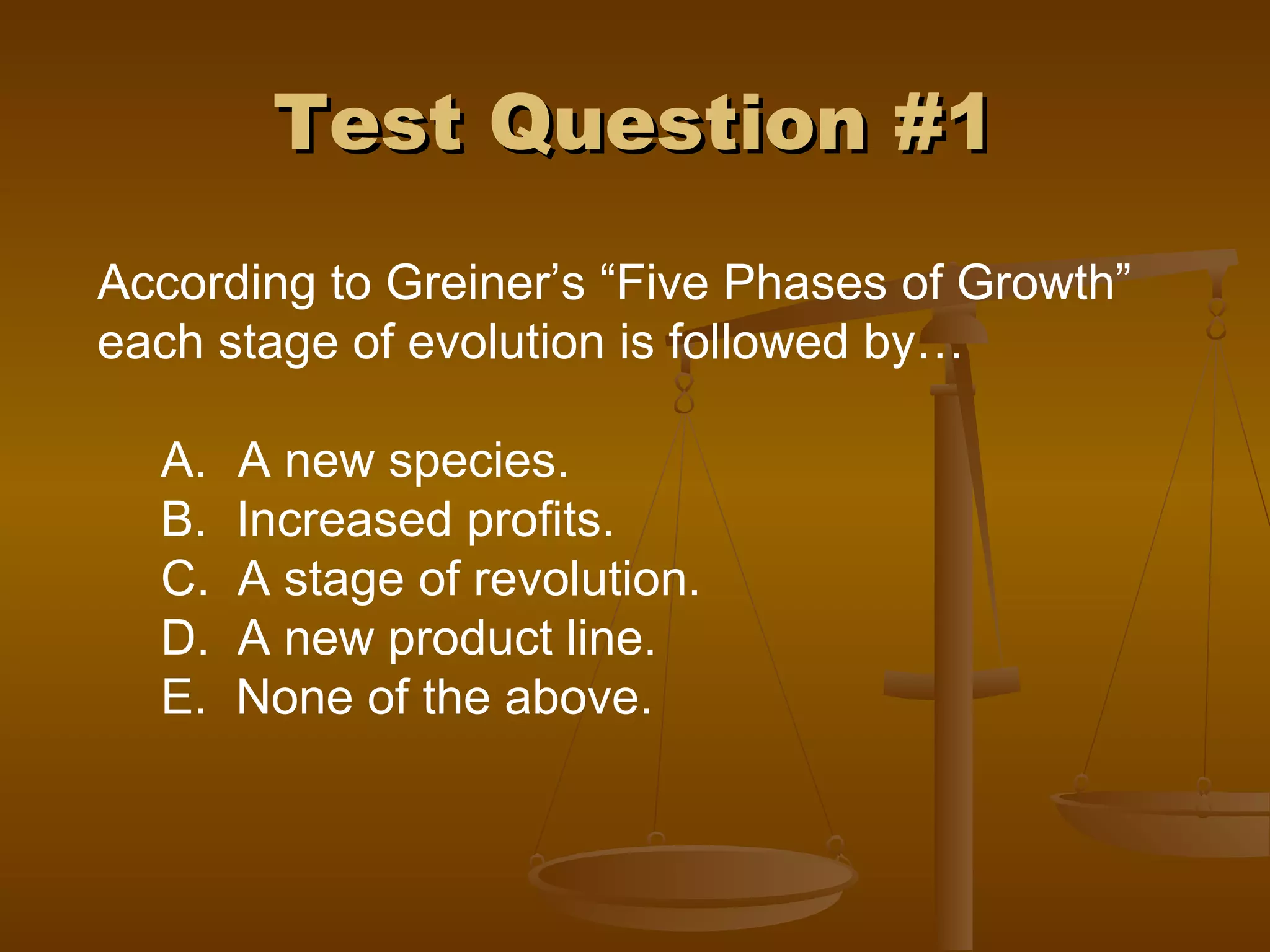
Test Question #1Test Question #1
According to Greiner’s “Five Phases of Growth”
each stage of evolution is followed by…
A. A new species.
B. Increased profits.
C. A stage of revolution.
D. A new product line.
E. None of the above.
AnswerAnswer
 The correct answer is C.The correct answer is C.
Test Question #2Test Question #2
 If a company has a crisis of autonomy andIf a company has a crisis of autonomy and
handles it through delegation, theirhandles it through delegation, their
problems are solved completely. True orproblems are solved completely. True or
False?False?
AnswerAnswer
 False! Each new solution breeds a futureFalse! Each new solution breeds a future
crisis.crisis.

The Five Stages of Evolution & Revolution for an Organization

  • 1.
    Evolution and RevolutionEvolutionand Revolution as Organizations Growas Organizations Grow Larry E. Greiner Chris Bahr, Keith Bolden, Christina Greer, Matt Rice, & Kelly Shepherd
  • 2.
    Main ConceptsMain Concepts Future development is determined by five key forces:  Age  Size  Evolution  Revolution  Industry Growth  There are five distinct phases of growth:  Creativity  Direction  Delegation  Coordination  Collaboration  Know what phase management is in, solutions are not permanent, and each solution breeds new problems.
  • 4.
    Costco ExampleCostco Example Growth through Collaboration Crisis of ???  Annual “Employee Rulebook” changes
  • 5.
    ApplicationsApplications  Where doesyour organization lie within the five phases?  Figure out the next step management should take to keep growing/developing. Examples:  If crisis is autonomy, increase delegation.  If experiencing growth through coordination, prepare for a crisis of red tape.  Remember that each solution breeds a new crisis, and be prepared for it.
  • 6.
    Tip for GroupProjectsTip for Group Projects  When recommending change in an organization; view it through the context of the five phases.  This allows you to use foresight and offer warning of a potential crisis in the future.
  • 7.
    Test Question #1TestQuestion #1 According to Greiner’s “Five Phases of Growth” each stage of evolution is followed by… A. A new species. B. Increased profits. C. A stage of revolution. D. A new product line. E. None of the above.
  • 8.
    AnswerAnswer  The correctanswer is C.The correct answer is C.
  • 9.
    Test Question #2TestQuestion #2  If a company has a crisis of autonomy andIf a company has a crisis of autonomy and handles it through delegation, theirhandles it through delegation, their problems are solved completely. True orproblems are solved completely. True or False?False?
  • 10.
    AnswerAnswer  False! Eachnew solution breeds a futureFalse! Each new solution breeds a future crisis.crisis.