The Five Key
Trends
Defining
Internal
Communication
in 2013
5 Key Trends
1. Digital communication
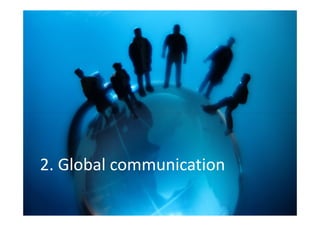
2. Global communication
3. Measurement
4. Operating model
5. Change
6. A small exercise
1. Digital
Communication
Digital Communication
• The emergence of the “digital communication manager”
who bridges the gap between comms and IT
• The need to meet the expectations of employees who
increasingly consume media online, outside of work
• Graphics, video, gamification - content as entertainment
• The need to give up control – making the switch from
“controller” to “facilitator”
• The challenge of making it happen!
2. Global communication
Global Communication
• Balancing consistency vs cut-through
• Trust regional reps to do what’s needed
• Can sometimes be caused by not having solid key
messaging established as part of strategy
• Again, it’s about being facilitators, not controllers
3. Measurement
Measurement
• Time to stop with the excuses
• If you’re serious about being taken seriously, you need
the numbers
• Sometimes, measurement is much easier than we think
(and sometimes it’s not!)
• Yes, it’s not always about numbers – what are we going
to do about that?
4. Operating
model
Operating model
• Centralised/decentralised
• Generalist – specialist – generalist
• “Seat at the table”
• It’s a good time to be an internal communications
professional
5. Change
Change
On that note...
... time for a change ...
... of presenters!

But before I hand over...
Room assessment
• Nominate your top three issues in your table groups
• Chose from the four I’ve presented, or add something
new
• Digital communication
• Global communication
• Measurement
• Operating model
• ???
• Scribe at each table to create the list
• I’ll collate and share results
Melissa Dark, MA, ABC

mdark@melissadark.com.au

www.melissadark.com.au

The Five Key Trends Defining Internal Communication in 2013

  • 1.
  • 2.
    5 Key Trends 1.Digital communication 2. Global communication 3. Measurement 4. Operating model 5. Change 6. A small exercise
  • 3.
  • 4.
    Digital Communication • Theemergence of the “digital communication manager” who bridges the gap between comms and IT • The need to meet the expectations of employees who increasingly consume media online, outside of work • Graphics, video, gamification - content as entertainment • The need to give up control – making the switch from “controller” to “facilitator” • The challenge of making it happen!
  • 5.
  • 6.
    Global Communication • Balancingconsistency vs cut-through • Trust regional reps to do what’s needed • Can sometimes be caused by not having solid key messaging established as part of strategy • Again, it’s about being facilitators, not controllers
  • 7.
  • 8.
    Measurement • Time tostop with the excuses • If you’re serious about being taken seriously, you need the numbers • Sometimes, measurement is much easier than we think (and sometimes it’s not!) • Yes, it’s not always about numbers – what are we going to do about that?
  • 9.
  • 10.
    Operating model • Centralised/decentralised •Generalist – specialist – generalist • “Seat at the table” • It’s a good time to be an internal communications professional
  • 11.
  • 12.
    Change On that note... ...time for a change ... ... of presenters! But before I hand over...
  • 13.
    Room assessment • Nominateyour top three issues in your table groups • Chose from the four I’ve presented, or add something new • Digital communication • Global communication • Measurement • Operating model • ??? • Scribe at each table to create the list • I’ll collate and share results
  • 14.
    Melissa Dark, MA,ABC mdark@melissadark.com.au www.melissadark.com.au