BALRAJ SHUKLA
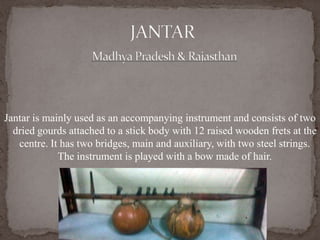
Jantar is mainly used as an accompanying instrument and consists of two
dried gourds attached to a stick body with 12 raised wooden frets at the
centre. It has two bridges, main and auxiliary, with two steel strings.
The instrument is played with a bow made of hair.
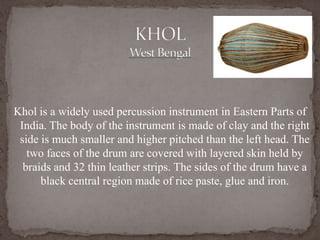
Khol is a widely used percussion instrument in Eastern Parts of
India. The body of the instrument is made of clay and the right
side is much smaller and higher pitched than the left head. The
two faces of the drum are covered with layered skin held by
braids and 32 thin leather strips. The sides of the drum have a
black central region made of rice paste, glue and iron.
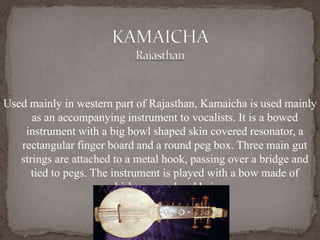
Used mainly in western part of Rajasthan, Kamaicha is used mainly
as an accompanying instrument to vocalists. It is a bowed
instrument with a big bowl shaped skin covered resonator, a
rectangular finger board and a round peg box. Three main gut
strings are attached to a metal hook, passing over a bridge and
tied to pegs. The instrument is played with a bow made of
shisham wood and hair.
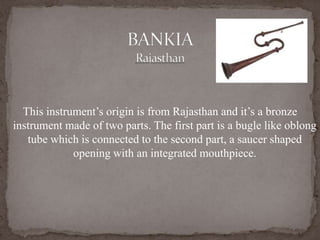
This instrument’s origin is from Rajasthan and it’s a bronze
instrument made of two parts. The first part is a bugle like oblong
tube which is connected to the second part, a saucer shaped
opening with an integrated mouthpiece.
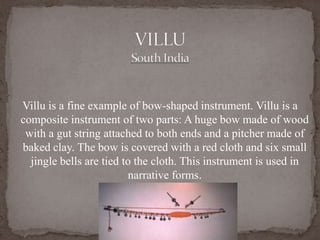
Villu is a fine example of bow-shaped instrument. Villu is a
composite instrument of two parts: A huge bow made of wood
with a gut string attached to both ends and a pitcher made of
baked clay. The bow is covered with a red cloth and six small
jingle bells are tied to the cloth. This instrument is used in
narrative forms.
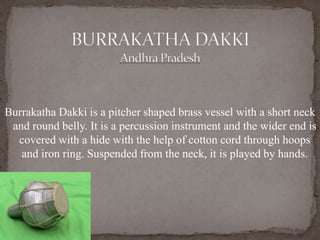
Burrakatha Dakki is a pitcher shaped brass vessel with a short neck
and round belly. It is a percussion instrument and the wider end is
covered with a hide with the help of cotton cord through hoops
and iron ring. Suspended from the neck, it is played by hands.
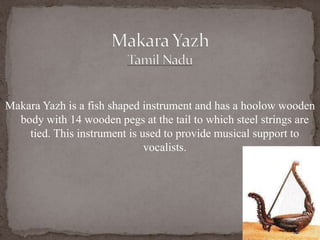
Makara Yazh is a fish shaped instrument and has a hoolow wooden
body with 14 wooden pegs at the tail to which steel strings are
tied. This instrument is used to provide musical support to
vocalists.
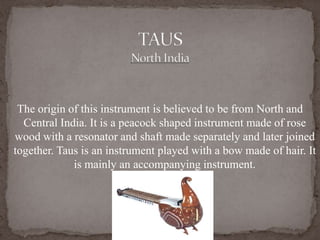
The origin of this instrument is believed to be from North and
Central India. It is a peacock shaped instrument made of rose
wood with a resonator and shaft made separately and later joined
together. Taus is an instrument played with a bow made of hair. It
is mainly an accompanying instrument.
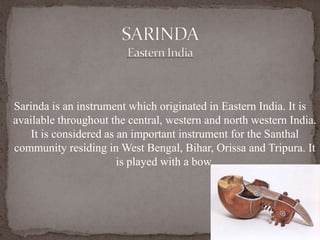
Sarinda is an instrument which originated in Eastern India. It is
available throughout the central, western and north western India.
It is considered as an important instrument for the Santhal
community residing in West Bengal, Bihar, Orissa and Tripura. It
is played with a bow.
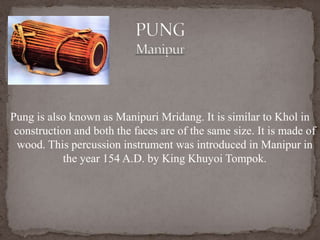
Pung is also known as Manipuri Mridang. It is similar to Khol in
construction and both the faces are of the same size. It is made of
wood. This percussion instrument was introduced in Manipur in
the year 154 A.D. by King Khuyoi Tompok.
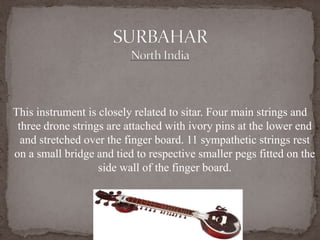
This instrument is closely related to sitar. Four main strings and
three drone strings are attached with ivory pins at the lower end
and stretched over the finger board. 11 sympathetic strings rest
on a small bridge and tied to respective smaller pegs fitted on the
side wall of the finger board.
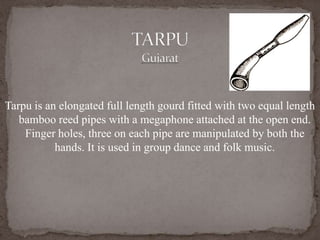
Tarpu is an elongated full length gourd fitted with two equal length
bamboo reed pipes with a megaphone attached at the open end.
Finger holes, three on each pipe are manipulated by both the
hands. It is used in group dance and folk music.
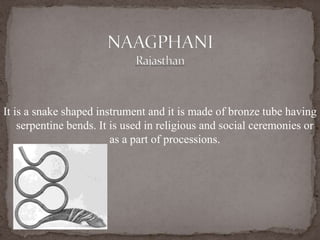
It is a snake shaped instrument and it is made of bronze tube having
serpentine bends. It is used in religious and social ceremonies or
as a part of processions.
FOR MORE AMAZING MUSICAL FACTS…
JOIN..
www.facebook.com/balrajshukla

The Fading Notes & Beats

  • 1.
  • 2.
    Jantar is mainlyused as an accompanying instrument and consists of two dried gourds attached to a stick body with 12 raised wooden frets at the centre. It has two bridges, main and auxiliary, with two steel strings. The instrument is played with a bow made of hair.
  • 3.
    Khol is awidely used percussion instrument in Eastern Parts of India. The body of the instrument is made of clay and the right side is much smaller and higher pitched than the left head. The two faces of the drum are covered with layered skin held by braids and 32 thin leather strips. The sides of the drum have a black central region made of rice paste, glue and iron.
  • 4.
    Used mainly inwestern part of Rajasthan, Kamaicha is used mainly as an accompanying instrument to vocalists. It is a bowed instrument with a big bowl shaped skin covered resonator, a rectangular finger board and a round peg box. Three main gut strings are attached to a metal hook, passing over a bridge and tied to pegs. The instrument is played with a bow made of shisham wood and hair.
  • 5.
    This instrument’s originis from Rajasthan and it’s a bronze instrument made of two parts. The first part is a bugle like oblong tube which is connected to the second part, a saucer shaped opening with an integrated mouthpiece.
  • 6.
    Villu is afine example of bow-shaped instrument. Villu is a composite instrument of two parts: A huge bow made of wood with a gut string attached to both ends and a pitcher made of baked clay. The bow is covered with a red cloth and six small jingle bells are tied to the cloth. This instrument is used in narrative forms.
  • 7.
    Burrakatha Dakki isa pitcher shaped brass vessel with a short neck and round belly. It is a percussion instrument and the wider end is covered with a hide with the help of cotton cord through hoops and iron ring. Suspended from the neck, it is played by hands.
  • 8.
    Makara Yazh isa fish shaped instrument and has a hoolow wooden body with 14 wooden pegs at the tail to which steel strings are tied. This instrument is used to provide musical support to vocalists.
  • 9.
    The origin ofthis instrument is believed to be from North and Central India. It is a peacock shaped instrument made of rose wood with a resonator and shaft made separately and later joined together. Taus is an instrument played with a bow made of hair. It is mainly an accompanying instrument.
  • 10.
    Sarinda is aninstrument which originated in Eastern India. It is available throughout the central, western and north western India. It is considered as an important instrument for the Santhal community residing in West Bengal, Bihar, Orissa and Tripura. It is played with a bow.
  • 11.
    Pung is alsoknown as Manipuri Mridang. It is similar to Khol in construction and both the faces are of the same size. It is made of wood. This percussion instrument was introduced in Manipur in the year 154 A.D. by King Khuyoi Tompok.
  • 12.
    This instrument isclosely related to sitar. Four main strings and three drone strings are attached with ivory pins at the lower end and stretched over the finger board. 11 sympathetic strings rest on a small bridge and tied to respective smaller pegs fitted on the side wall of the finger board.
  • 13.
    Tarpu is anelongated full length gourd fitted with two equal length bamboo reed pipes with a megaphone attached at the open end. Finger holes, three on each pipe are manipulated by both the hands. It is used in group dance and folk music.
  • 14.
    It is asnake shaped instrument and it is made of bronze tube having serpentine bends. It is used in religious and social ceremonies or as a part of processions.
  • 15.
    FOR MORE AMAZINGMUSICAL FACTS… JOIN.. www.facebook.com/balrajshukla