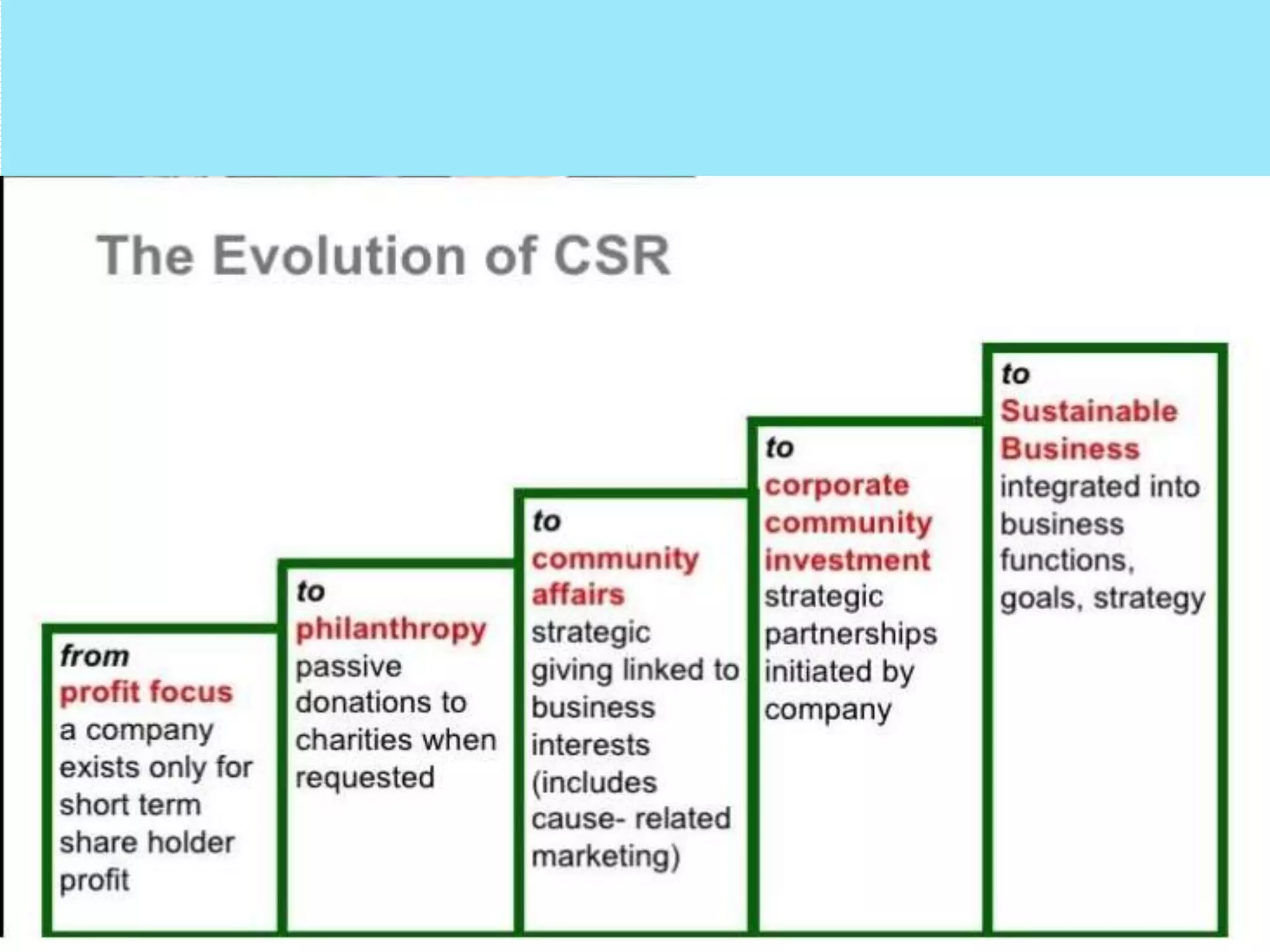

THE EVOLUTION OF CSR:
FROM PHILANTHROPY TO SUSTAINABILITY
Shahla Gahramanova
UNEC Business School
shahla.gahramanova@unec.edu.az; gahramanovas@gmail.com
UNEC Business School
History of CSR
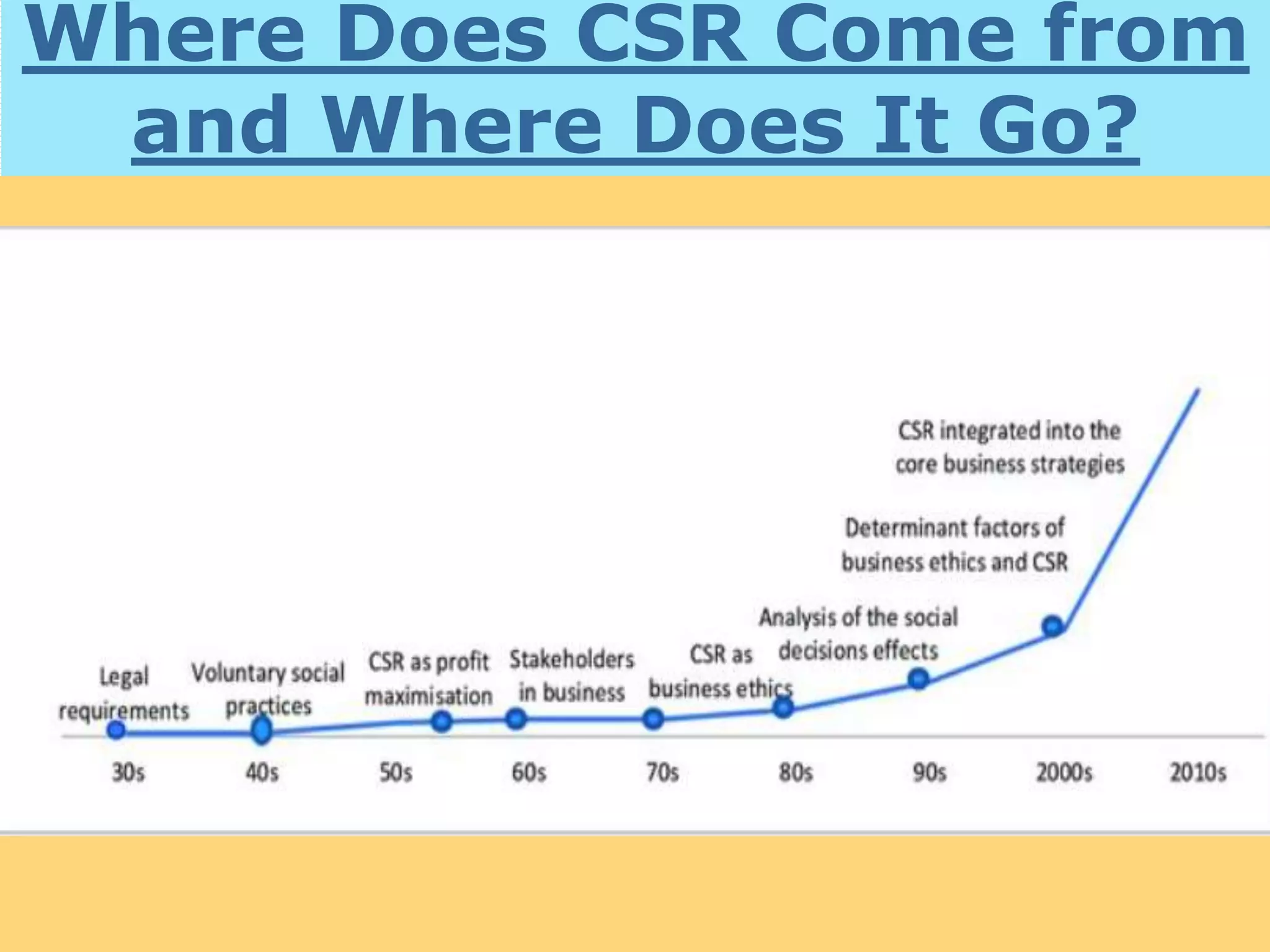
Where Does CSR Come from and Where Does It Go?
https://www.mdpi.com/2076-3387/10/3/60
The Origins of CSR
 The 1800s and the Birth of Responsible Organizations
 CSR as a concept (since 1953)
 Howard Bowen - “father of CSR.”
 Social Responsibilities of the Businessman (published in 1953)
Universal Acceptance of Corporate
Social Responsibility
 The 1990s marked the beginning of widespread
approval of CSR.
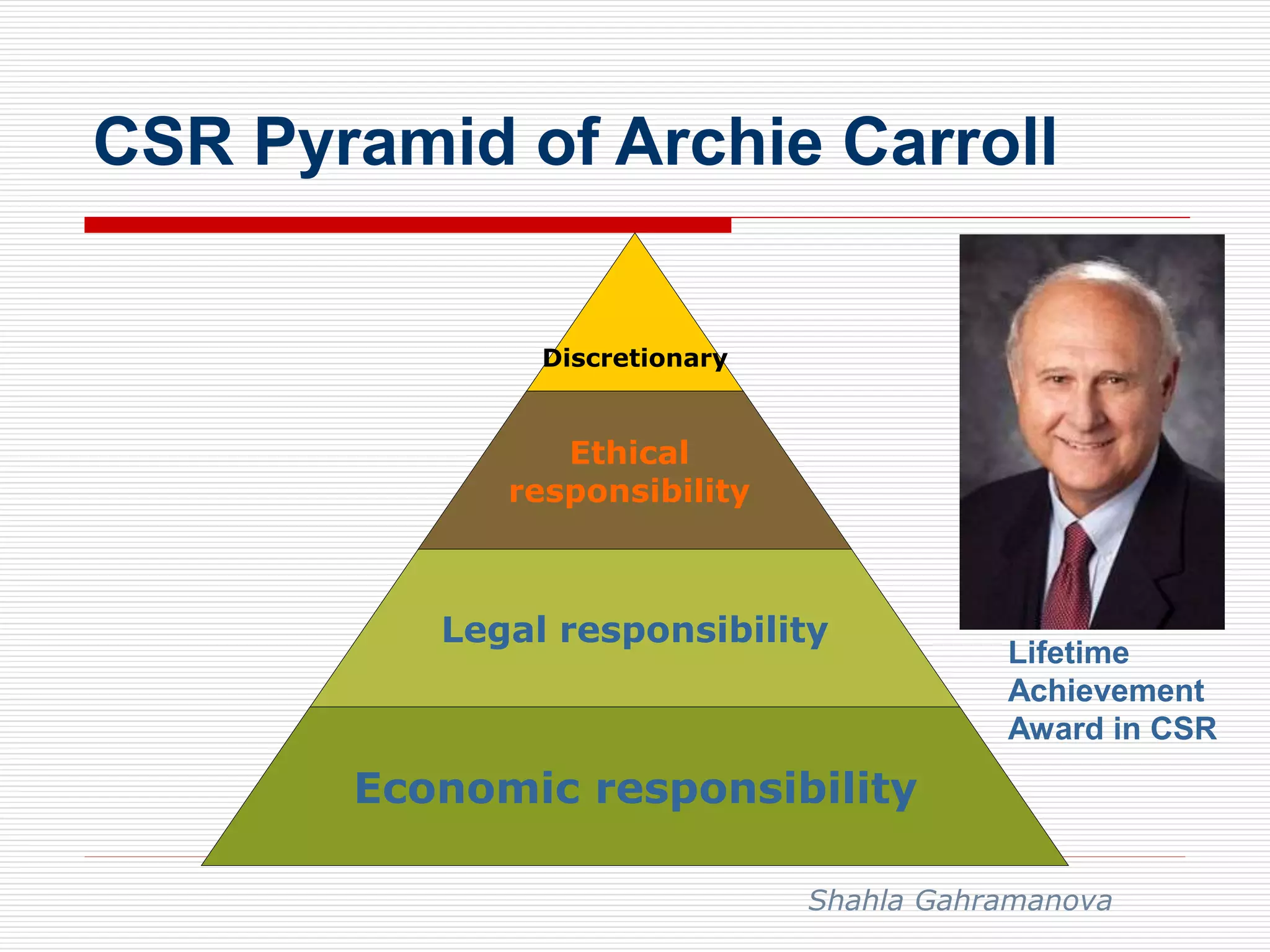
 The Pyramid of Corporate Social Responsibility.
 Early 2000s - CSR had become an essential strategy
for many organizations
 Coca-Cola, Walt Disney, Pfizer and others
Where Does CSR Come from
and Where Does It Go?
Approaches to CSR
Archie Karoll vs Milton Friedman
Milton Friedman and Archie Carroll offer two
contrasting views of the responsibilities of
business firms to society.
Shahla Gahramanova
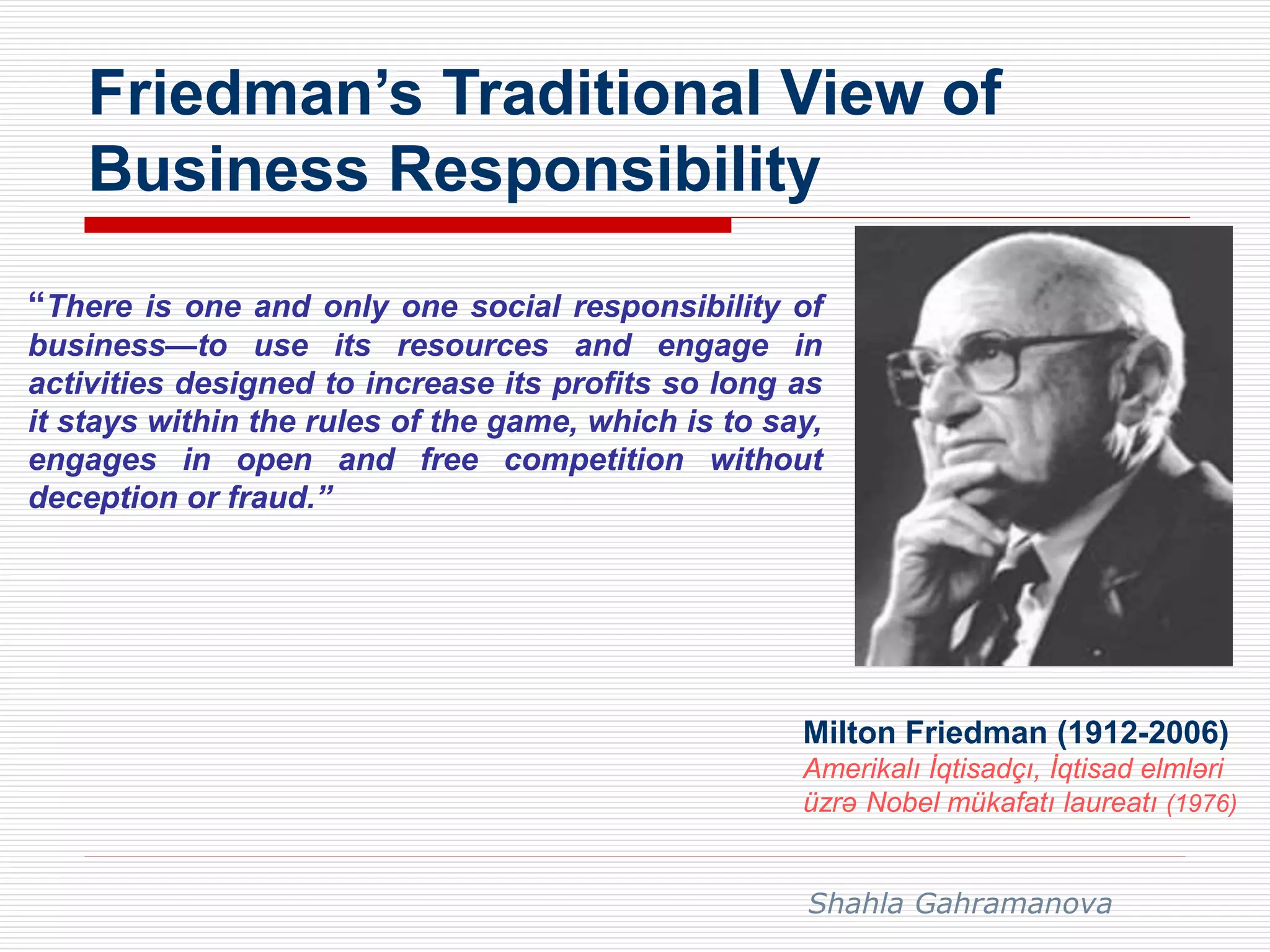
Friedman’s Traditional View of
Business Responsibility
“There is one and only one social responsibility of
business—to use its resources and engage in
activities designed to increase its profits so long as
it stays within the rules of the game, which is to say,
engages in open and free competition without
deception or fraud.”
Milton Friedman (1912-2006)
Amerikalı İqtisadçı, İqtisad elmləri
üzrə Nobel mükafatı laureatı (1976)
Shahla Gahramanova
CSR Pyramid of Archie Carroll
Discretionary
Ethical
responsibility
Legal responsibility
Economic responsibility
Lifetime
Achievement
Award in CSR
Shahla Gahramanova
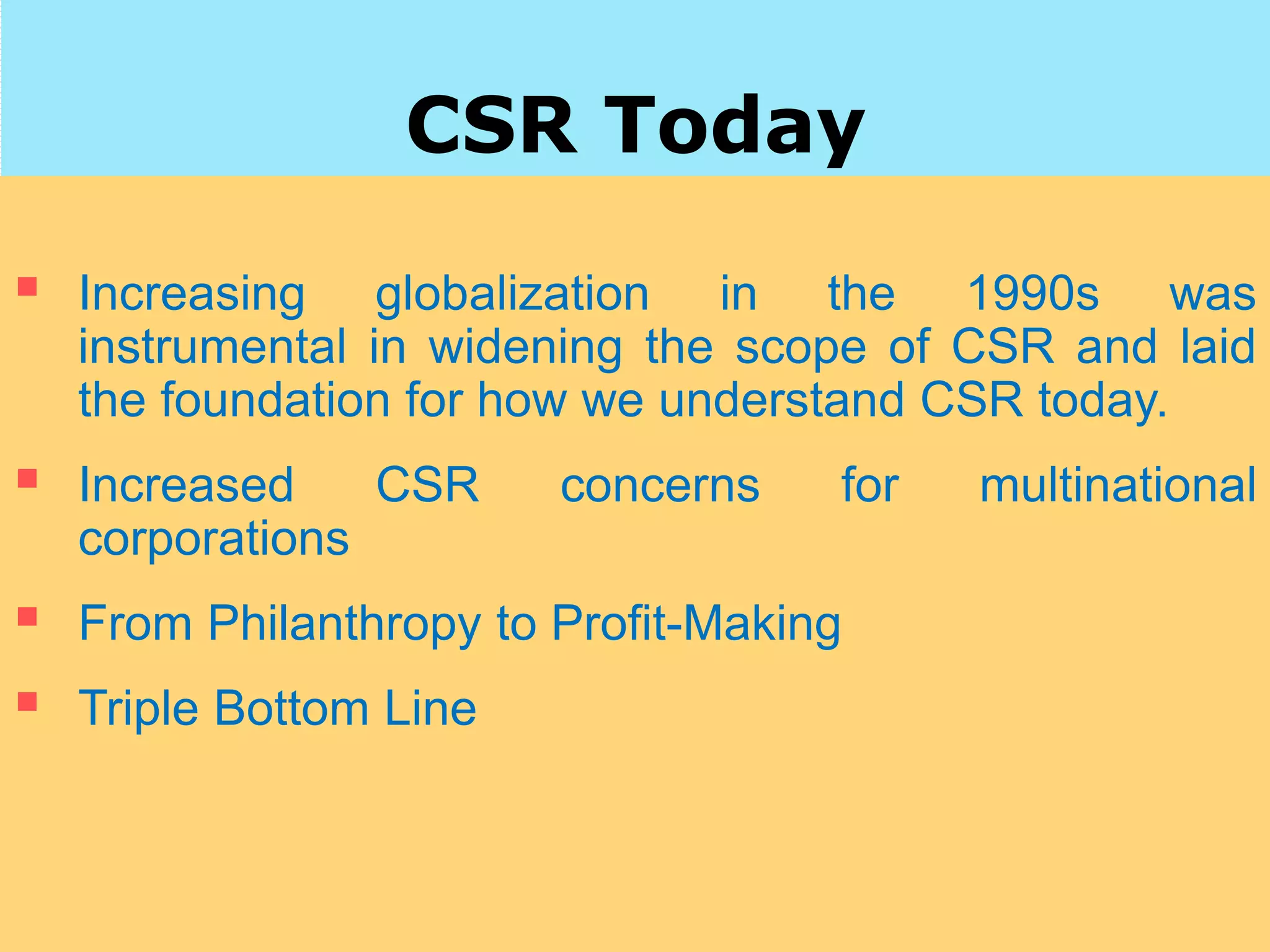
CSR Today
 Increasing globalization in the 1990s was
instrumental in widening the scope of CSR and laid
the foundation for how we understand CSR today.
 Increased CSR concerns for multinational
corporations
 From Philanthropy to Profit-Making
 Triple Bottom Line
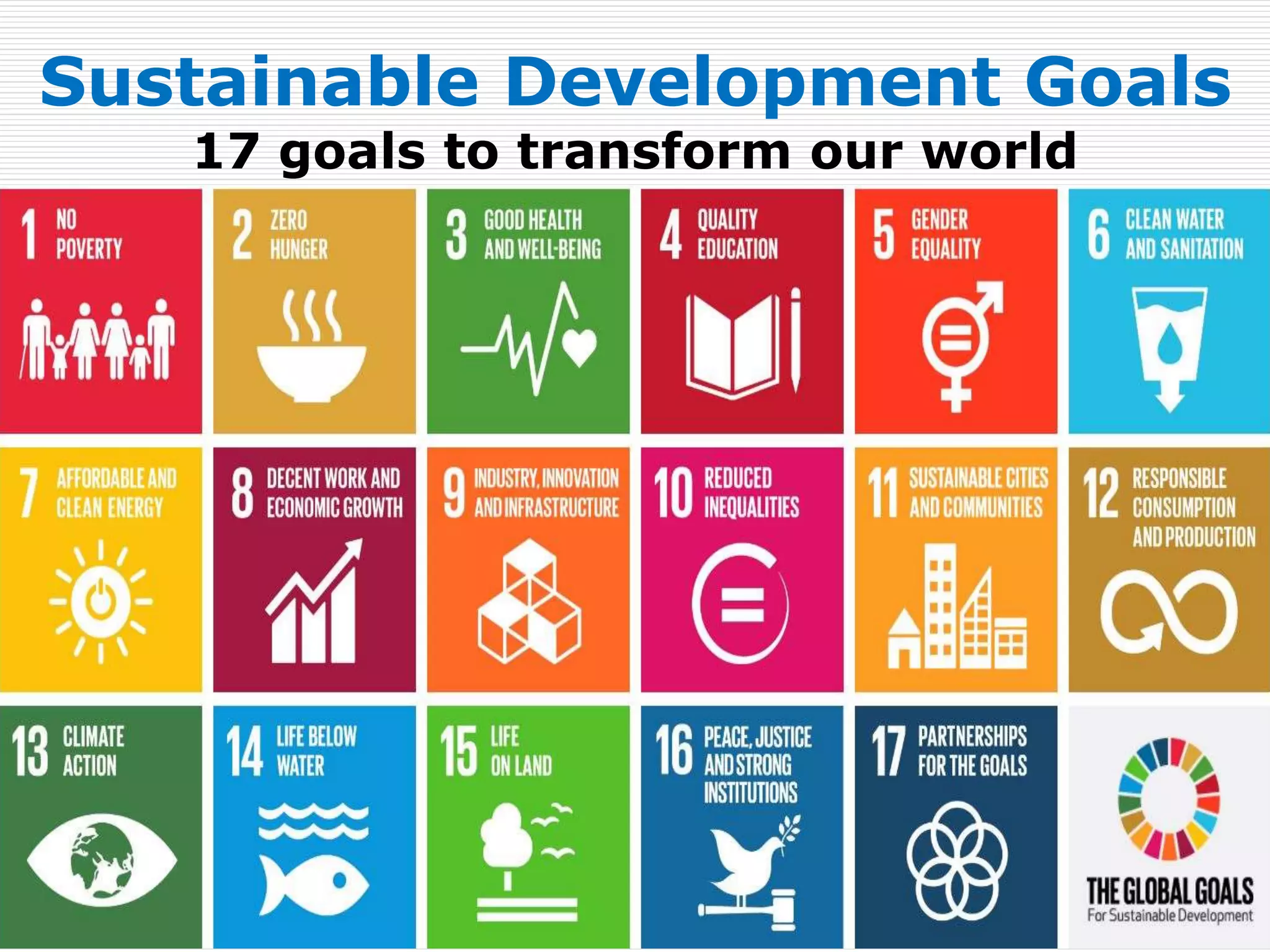
CSR programs around
the UN’s 17 sustainable
Development goals
Sustainable Development Goals
17 goals to transform our world
ESG
 Environment
 Society
 Governance
Business’ Responsibility in XXI
century
 Demonstrate a commitment to society’s values and contribute
to society’s social, environmental, and economic goals through
action.
 Insulate society from the negative impacts of company
operations, products and services.
 Share benefits of company activities with key stakeholders as
well as with shareholders.
 Demonstrate that the company can make more money by
doing the right thing.

The Evolution of CSR.ppt

  • 1.
    THE EVOLUTION OFCSR: FROM PHILANTHROPY TO SUSTAINABILITY Shahla Gahramanova UNEC Business School shahla.gahramanova@unec.edu.az; gahramanovas@gmail.com UNEC Business School
  • 2.
    History of CSR WhereDoes CSR Come from and Where Does It Go? https://www.mdpi.com/2076-3387/10/3/60
  • 3.
    The Origins ofCSR  The 1800s and the Birth of Responsible Organizations  CSR as a concept (since 1953)  Howard Bowen - “father of CSR.”  Social Responsibilities of the Businessman (published in 1953)
  • 4.
    Universal Acceptance ofCorporate Social Responsibility  The 1990s marked the beginning of widespread approval of CSR.  The Pyramid of Corporate Social Responsibility.  Early 2000s - CSR had become an essential strategy for many organizations  Coca-Cola, Walt Disney, Pfizer and others
  • 6.
    Where Does CSRCome from and Where Does It Go?
  • 7.
    Approaches to CSR ArchieKaroll vs Milton Friedman Milton Friedman and Archie Carroll offer two contrasting views of the responsibilities of business firms to society. Shahla Gahramanova
  • 8.
    Friedman’s Traditional Viewof Business Responsibility “There is one and only one social responsibility of business—to use its resources and engage in activities designed to increase its profits so long as it stays within the rules of the game, which is to say, engages in open and free competition without deception or fraud.” Milton Friedman (1912-2006) Amerikalı İqtisadçı, İqtisad elmləri üzrə Nobel mükafatı laureatı (1976) Shahla Gahramanova
  • 9.
    CSR Pyramid ofArchie Carroll Discretionary Ethical responsibility Legal responsibility Economic responsibility Lifetime Achievement Award in CSR Shahla Gahramanova
  • 10.
    CSR Today  Increasingglobalization in the 1990s was instrumental in widening the scope of CSR and laid the foundation for how we understand CSR today.  Increased CSR concerns for multinational corporations  From Philanthropy to Profit-Making  Triple Bottom Line
  • 11.
    CSR programs around theUN’s 17 sustainable Development goals
  • 12.
    Sustainable Development Goals 17goals to transform our world
  • 13.
  • 14.
    Business’ Responsibility inXXI century  Demonstrate a commitment to society’s values and contribute to society’s social, environmental, and economic goals through action.  Insulate society from the negative impacts of company operations, products and services.  Share benefits of company activities with key stakeholders as well as with shareholders.  Demonstrate that the company can make more money by doing the right thing.