CSR Second Class
Source (pic) - http://www.flickr.com/photos/metatron1050/1400813198/sizes/o//
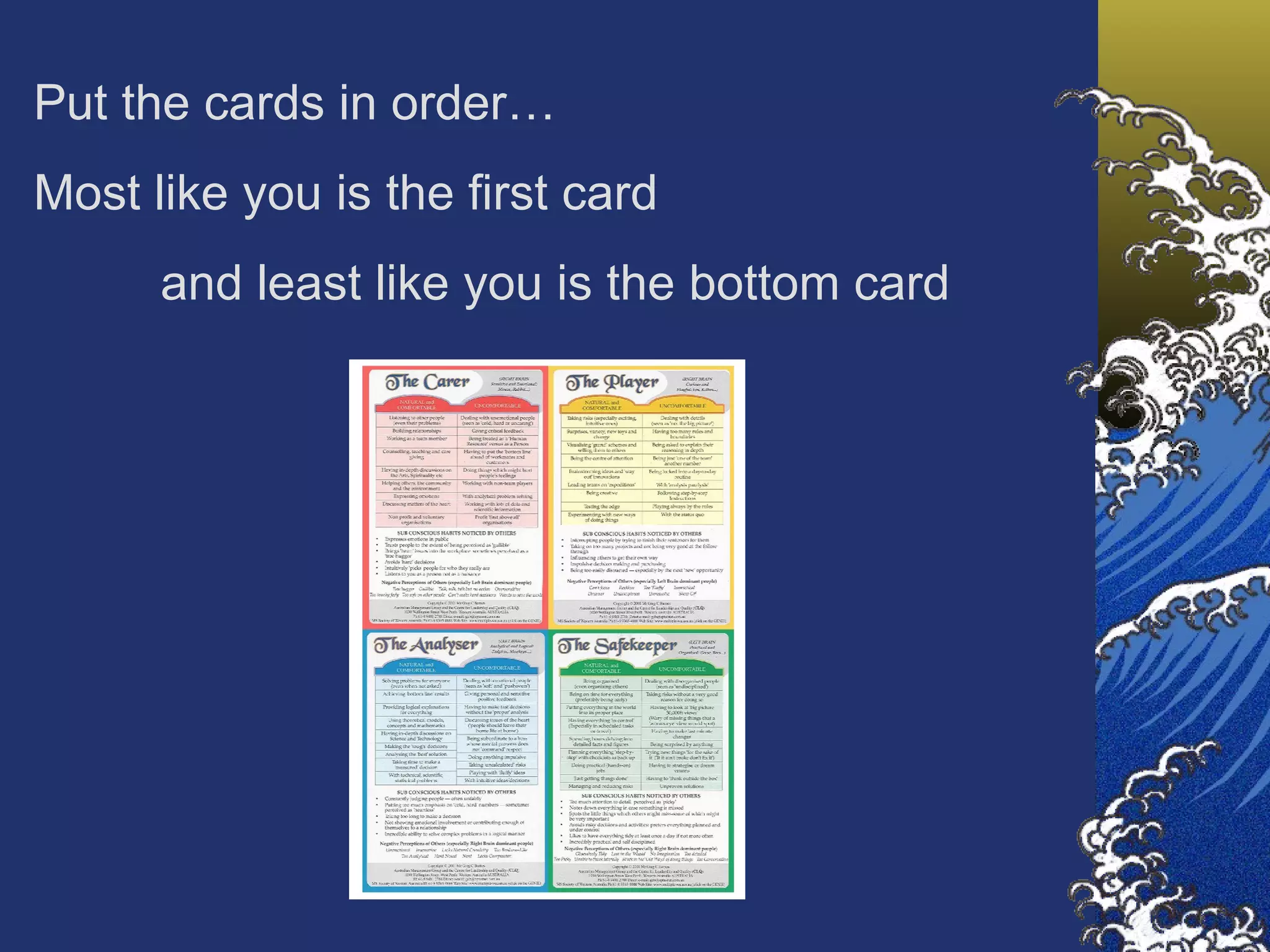
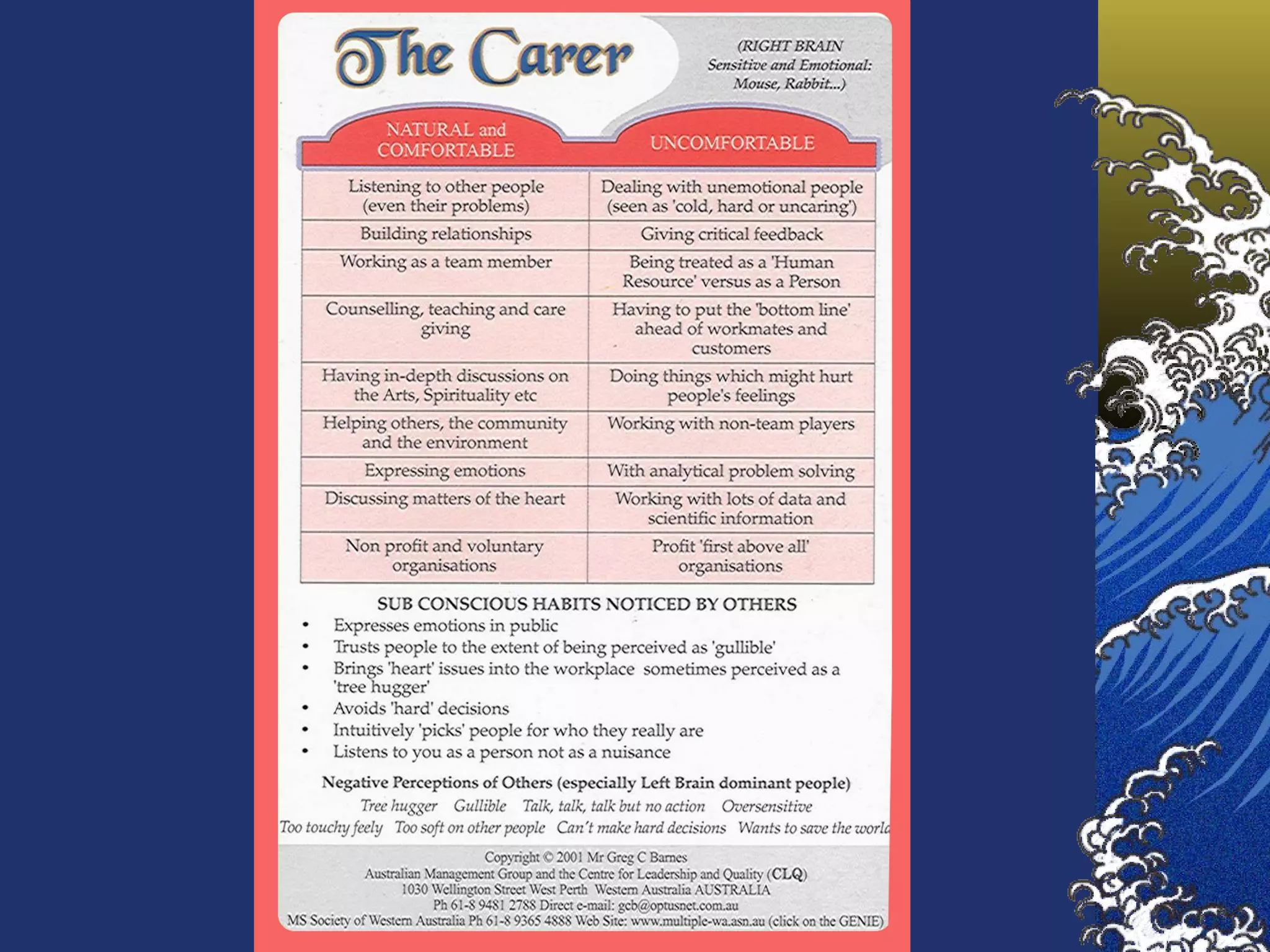
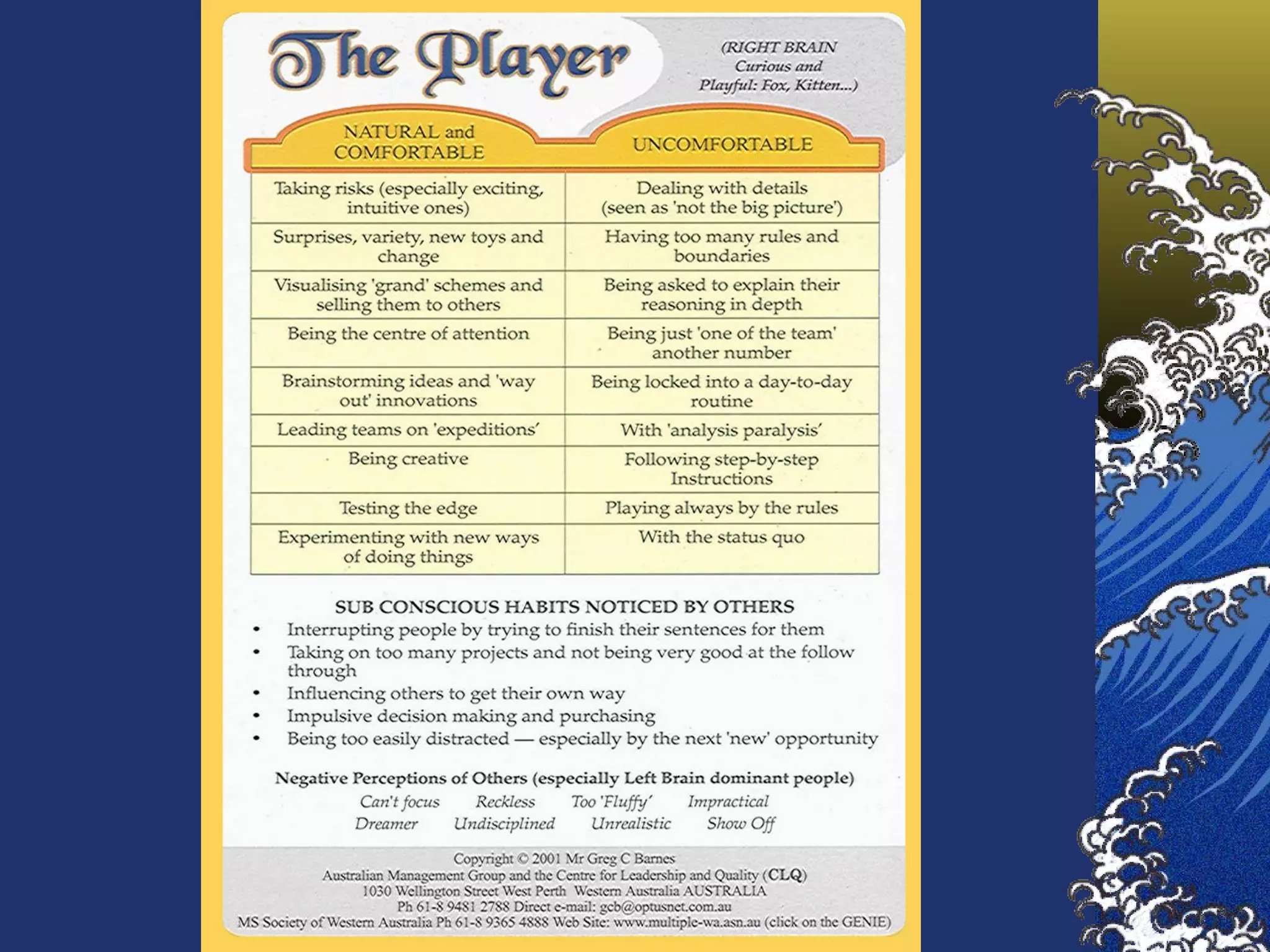
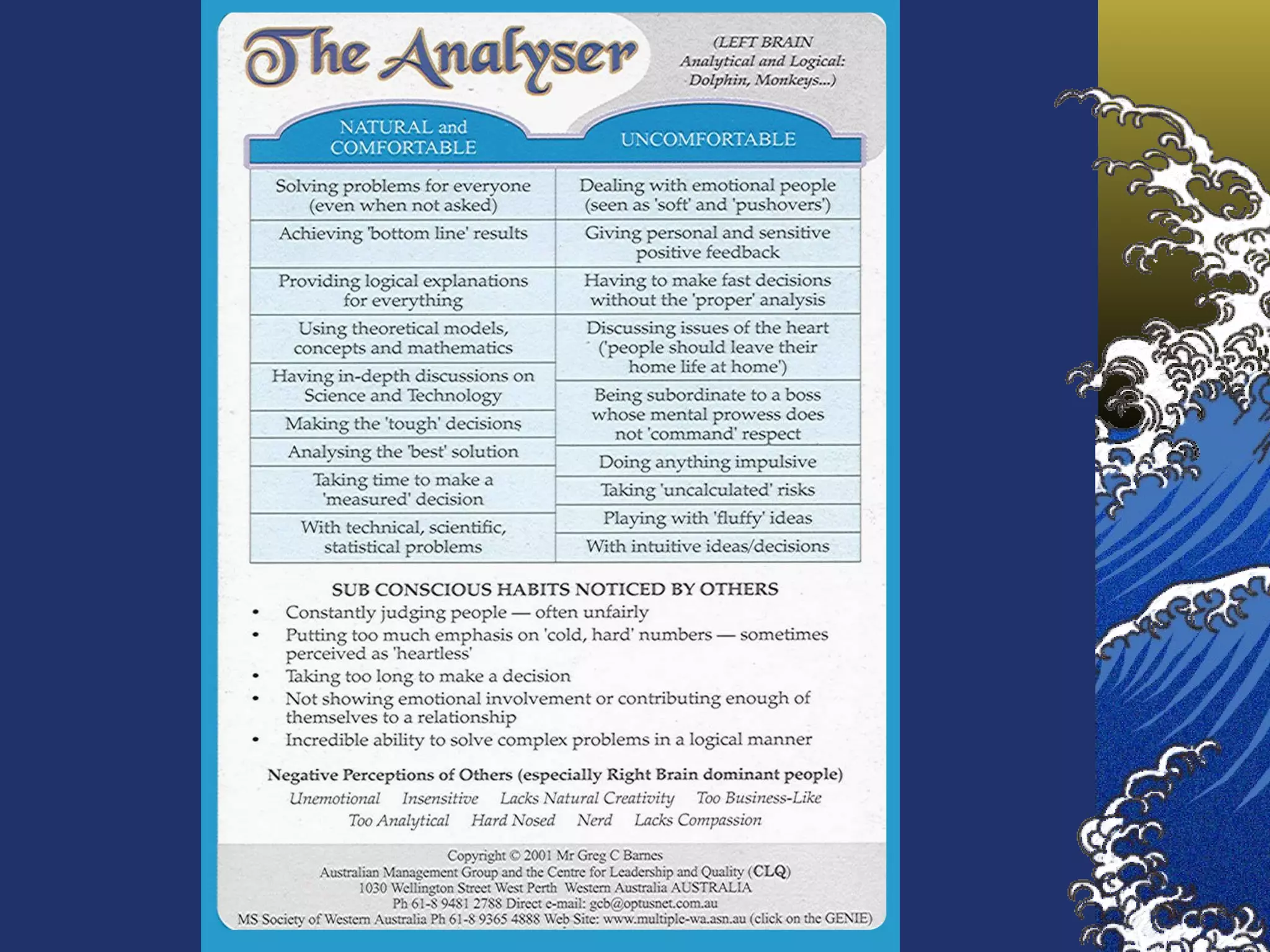
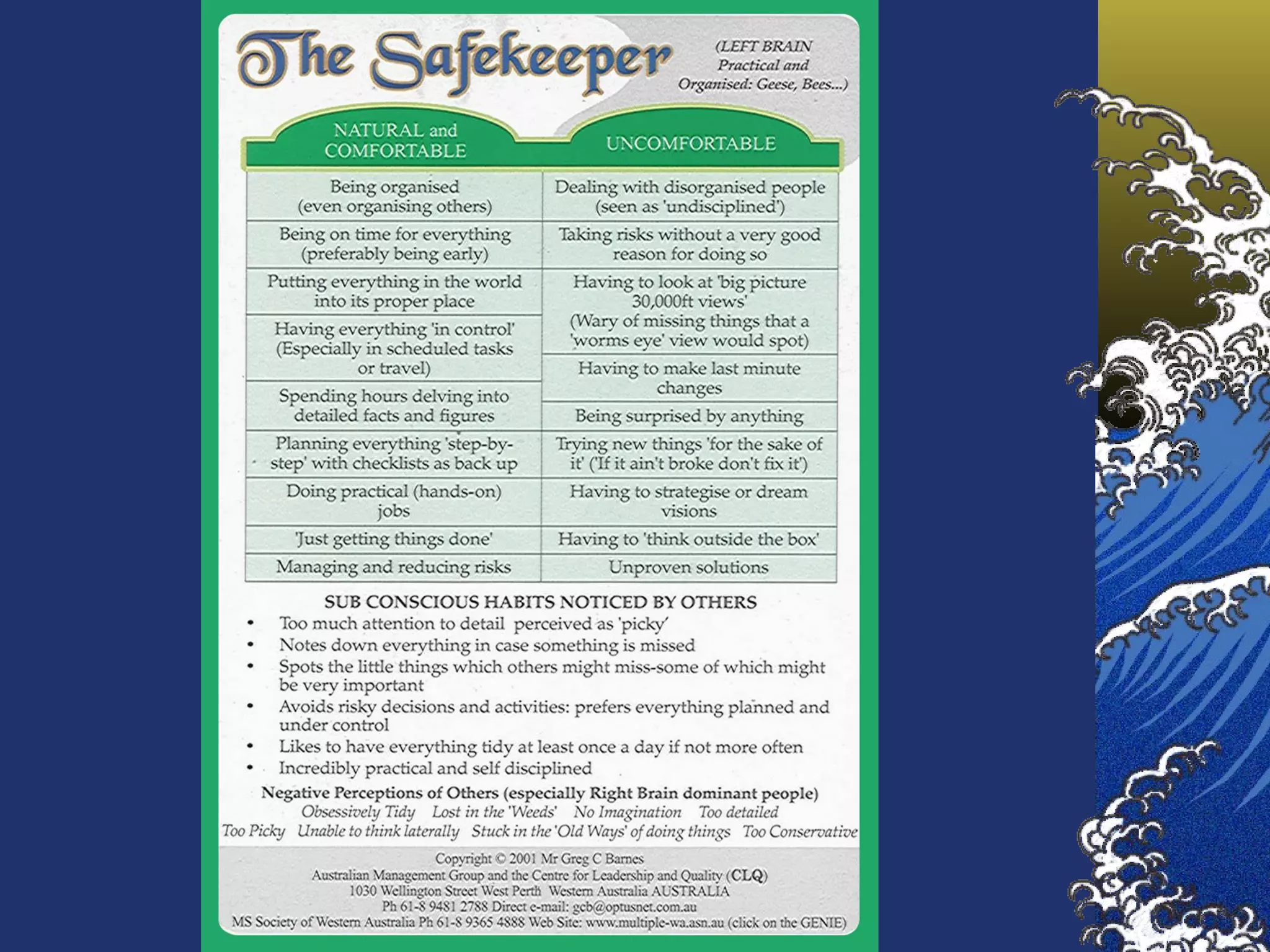
Put the cards in order… Most like you is the first card and least like you is the bottom card


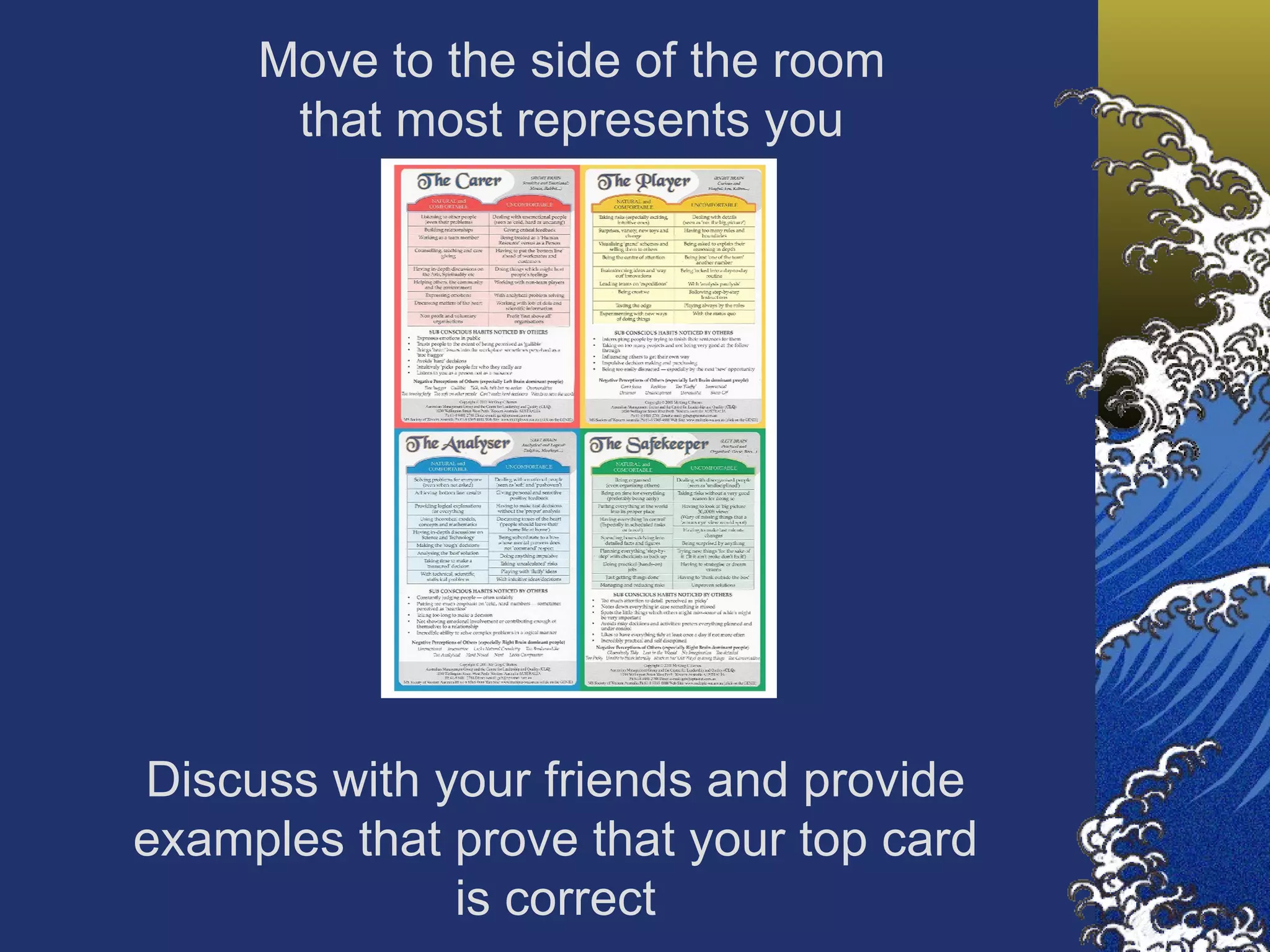
Move to the side of the room that most represents you Discuss with your friends and provide examples that prove that your top card is correct
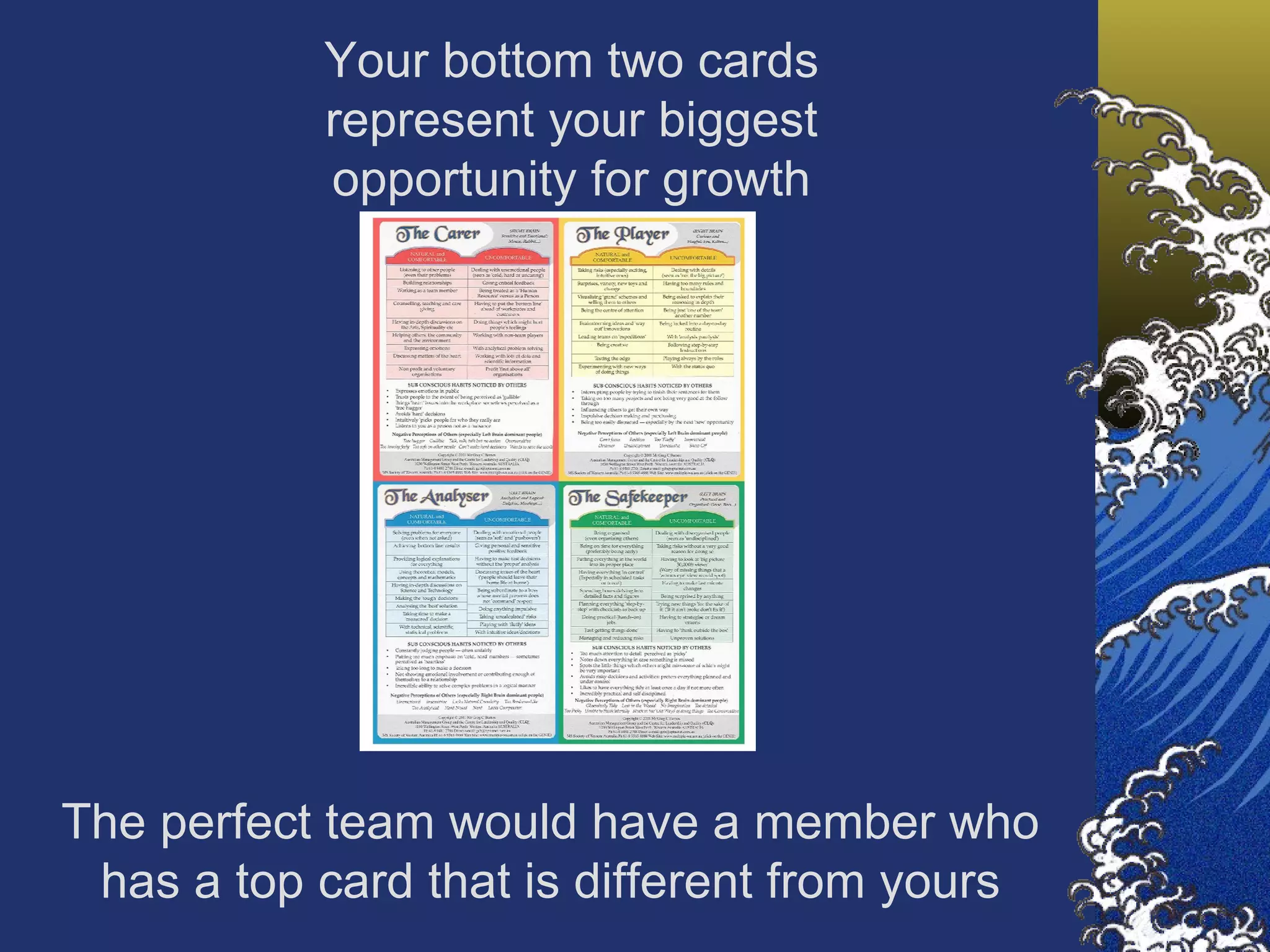
Your bottom two cards represent your biggest opportunity for growth The perfect team would have   a member who has a top card that is different from yours
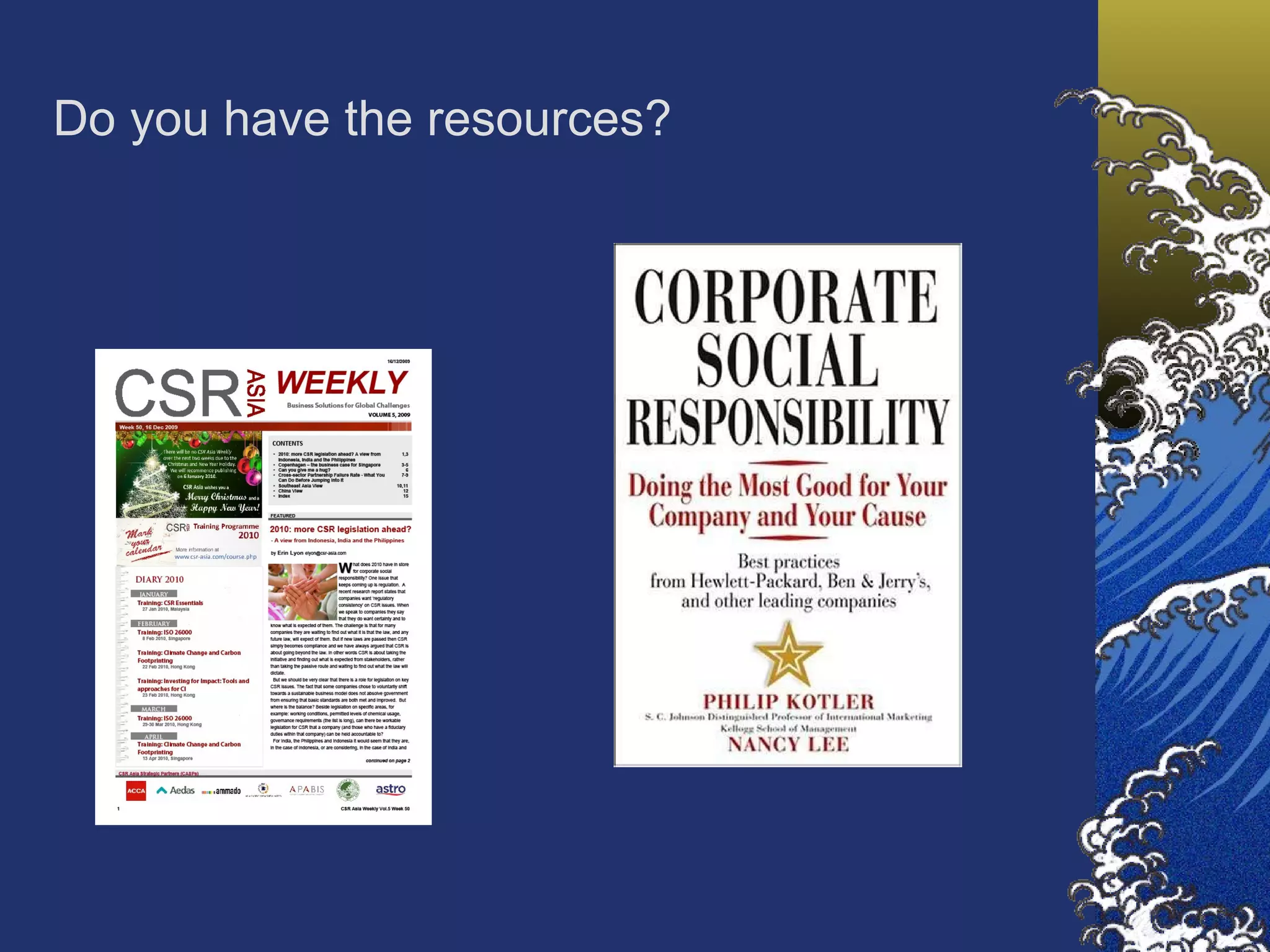
Do you have the resources?
1st presentation (January 24)  The 10-15 minute presentation should be followed by a lively discussion. The PPT should summarize the assigned social initiatives and prepare a short presentation that includes the following; Introduction Examples of initiatives Benefits  &Concerns Keys to Success When to consider Ideas for  Assumption University Conclusion and  Discussion Pair work OK for next week?
Generation Trends Short Lecture
The “Six Options for Doing Good” (Corporate Social Initiatives) Marketing Related Cause Promotions Cause-Related Marketing Corporate Social Marketing Not typically Marketing Related Corporate Philanthropy Community Volunteering Socially Responsible Practices
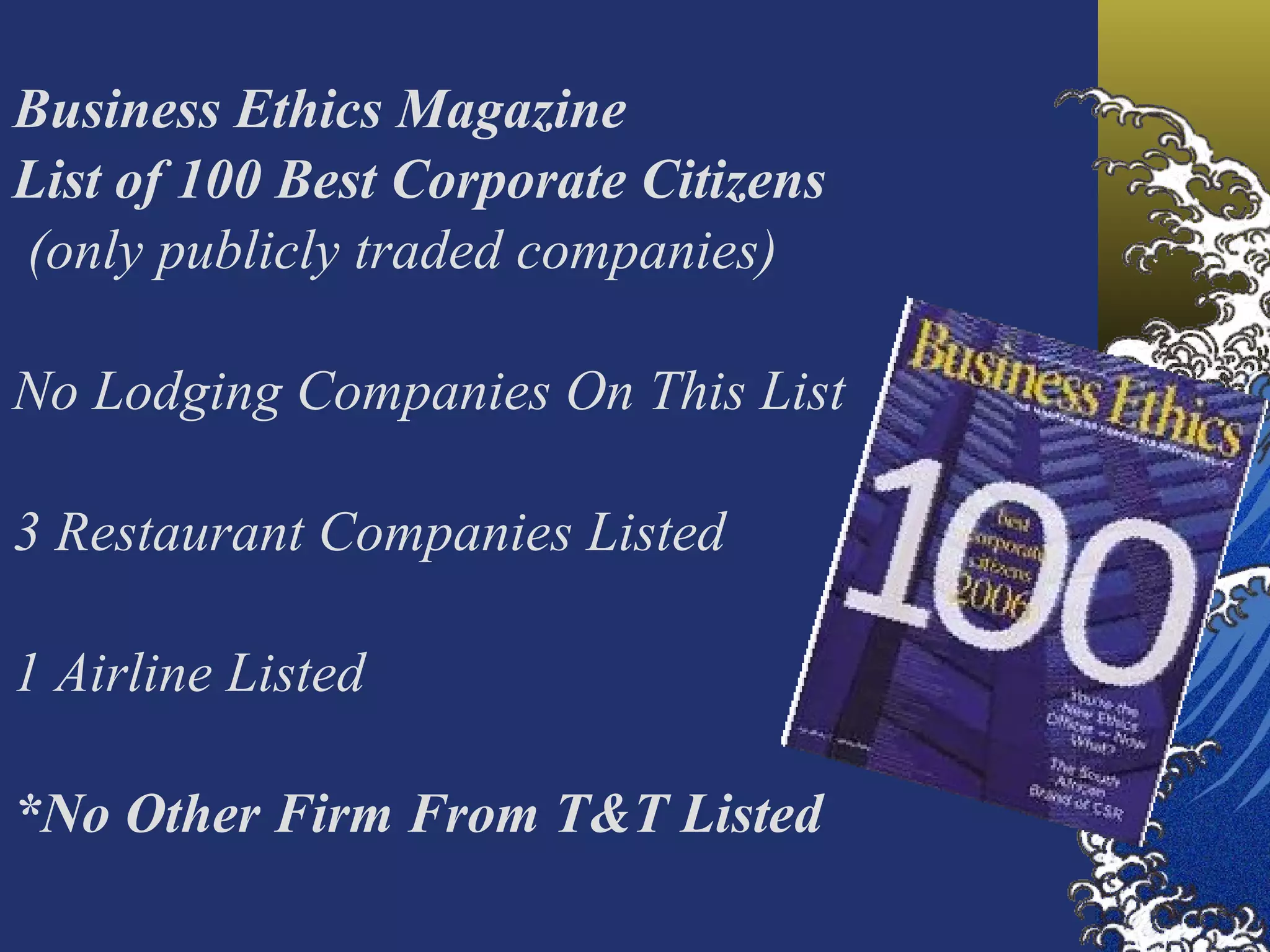
Business Ethics Magazine List of 100 Best Corporate Citizens  (only publicly traded companies) No Lodging Companies On This List 3 Restaurant Companies Listed 1 Airline Listed *No Other Firm From T&T Listed
 
 
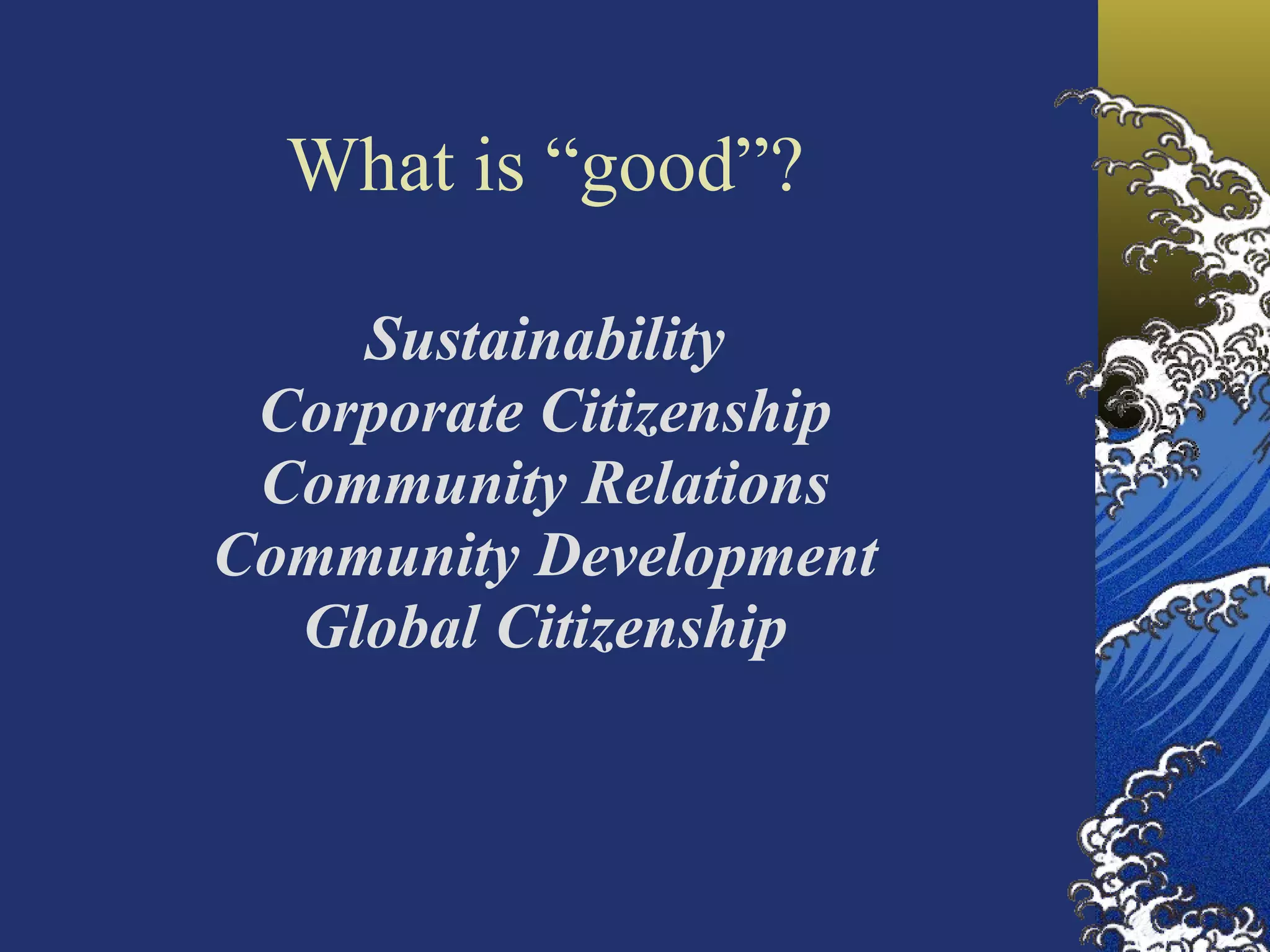
What is “good”? Sustainability Corporate Citizenship Community Relations Community Development Global Citizenship
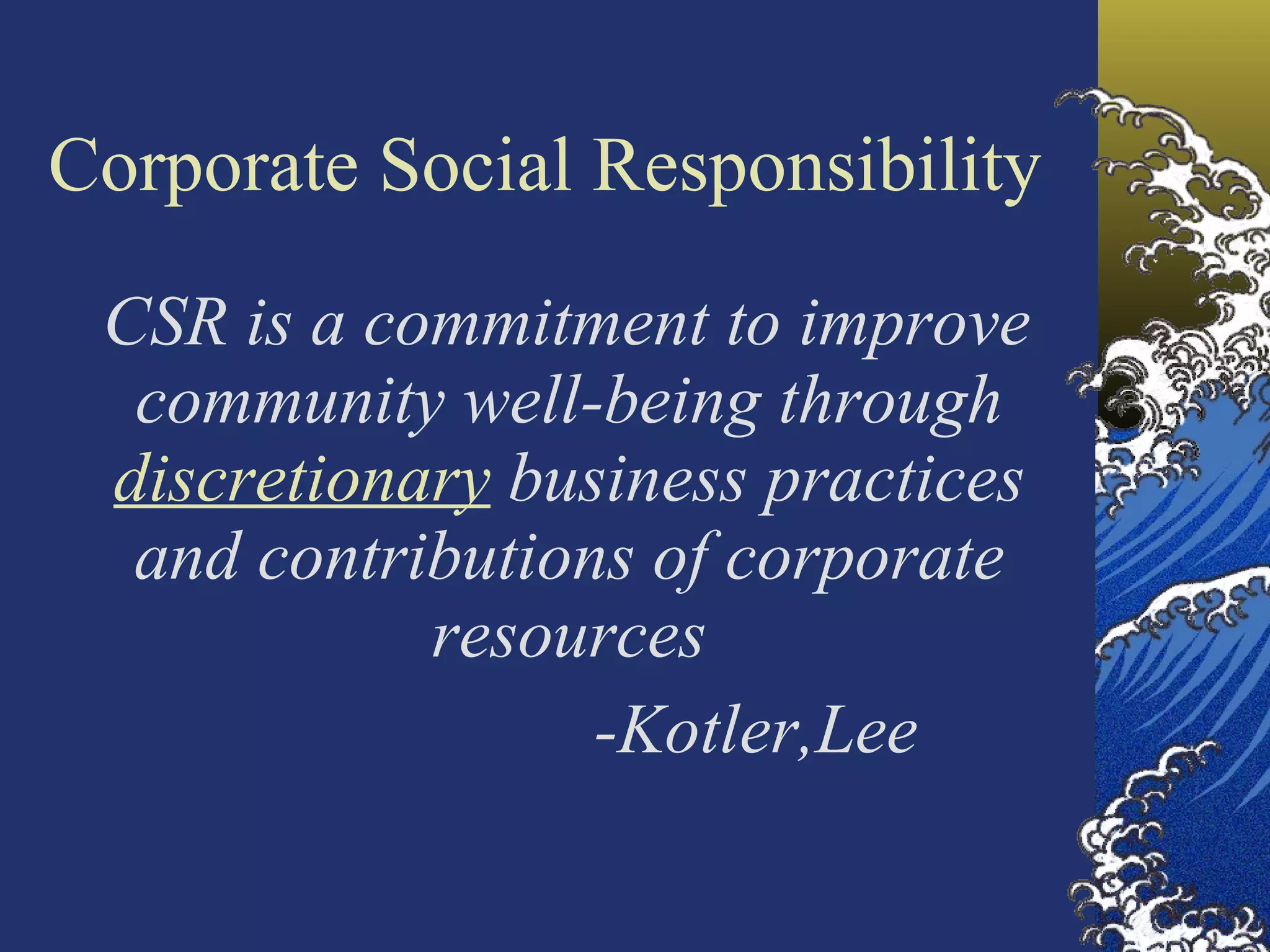
Corporate Social Responsibility CSR is a commitment to improve community well-being through  discretionary  business practices and contributions of corporate resources -Kotler,Lee
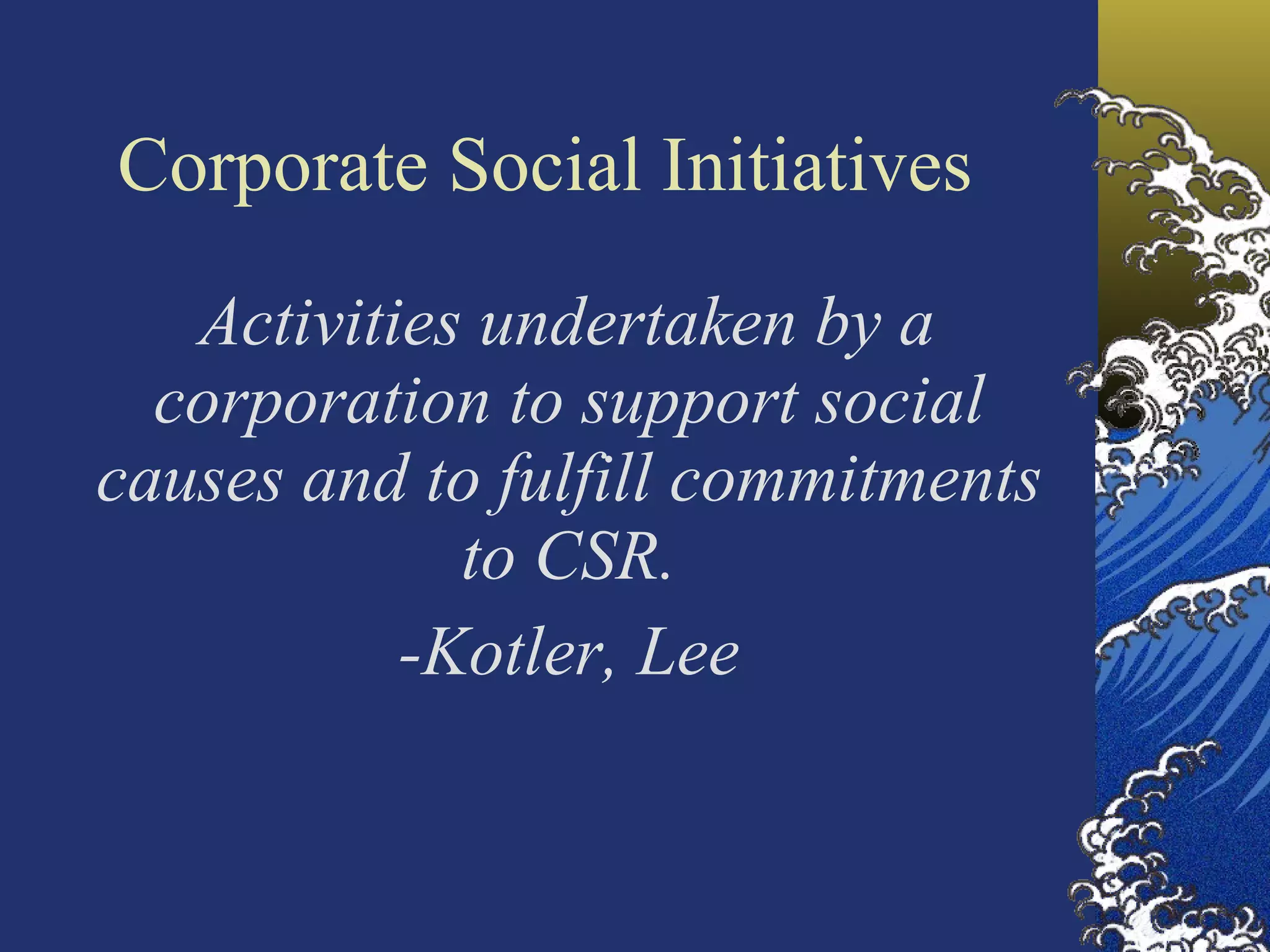
Corporate Social Initiatives Activities undertaken by a corporation to support social causes and to fulfill commitments to CSR. -Kotler, Lee
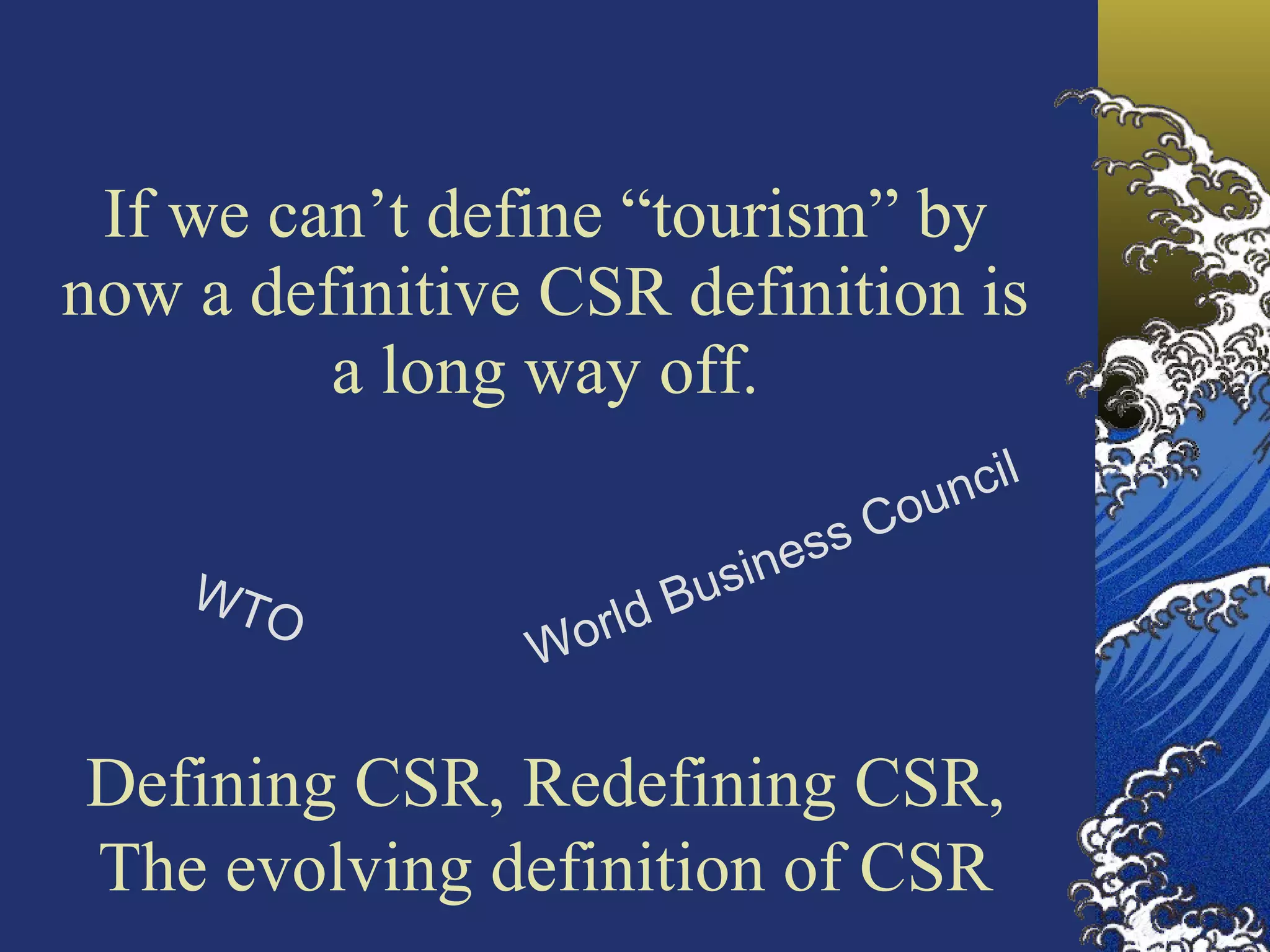
If we can’t define “tourism” by now a definitive CSR definition is a long way off. WTO World Business Council Defining CSR, Redefining CSR, The evolving definition of CSR
What are the trends? Increased Giving Increased Reporting Establishment of a Corporate Norm to Do Good A shift from Obligation to Strategy
The Traditional Approach Fulfilling an Obligation The New Approach Supporting Corporate Objectives
Why Do Good Increased Sales and Market Share Strengthened Brand Position Improved Corporate Image and Clout Increased Ability to Attract, Motivate and Retain Employees Decreased Operating Costs Increased Appeal to Investors and Financial Analysts
Challenges to Doing Good Choosing a Social Issue Selecting an Initiative to Address the Issue Developing and Implementing Program Plans Evaluation and Measurement
And that’s Chapter 1   any Questions?
 
Social Responsibility: …..more definitions Corporate Social Responsibility The idea that business has social obligations above and beyond making a profit. Business has an obligation to groups in society other than stockholders and beyond that prescribed by law.
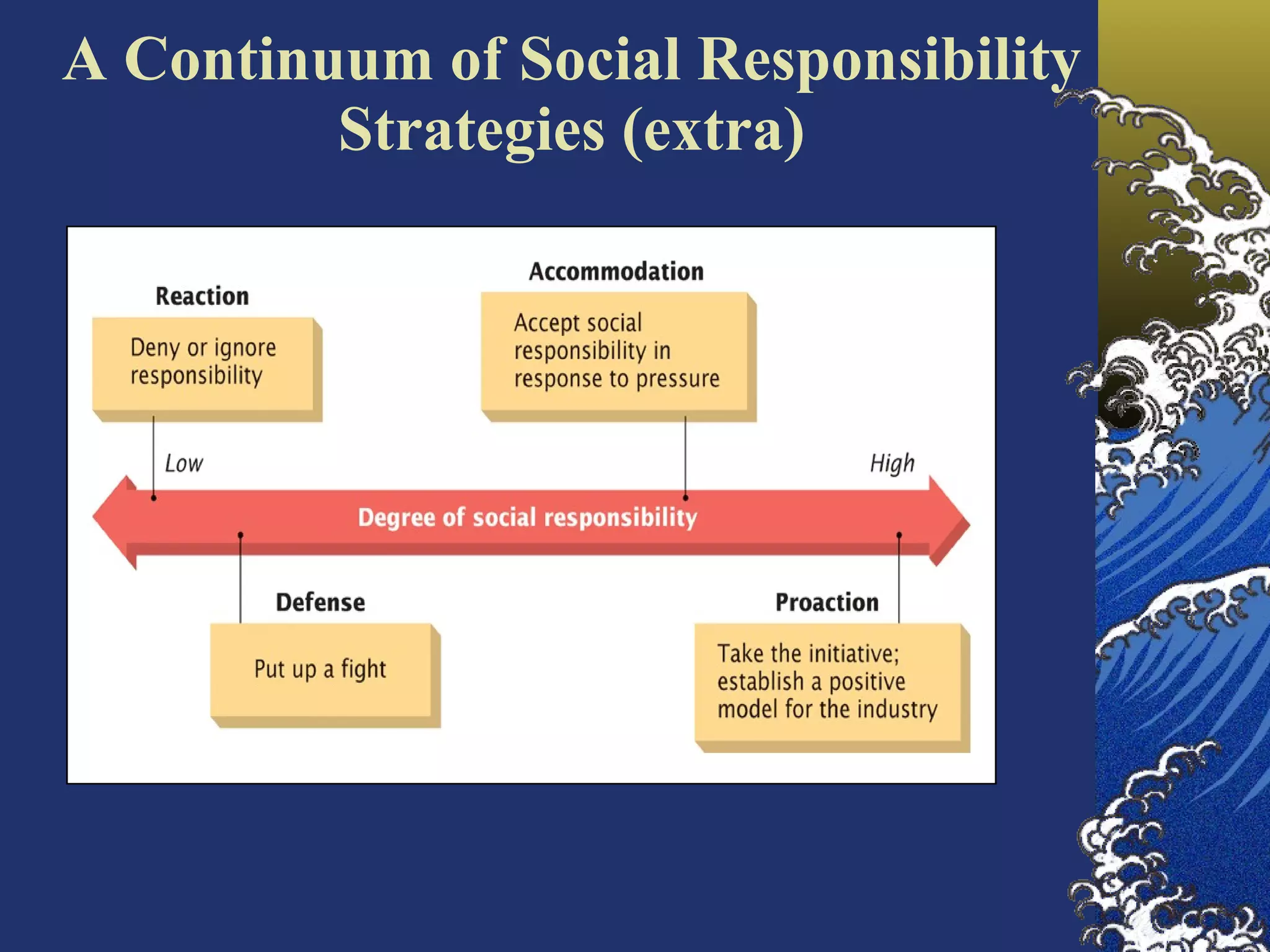
A Continuum of Social Responsibility Strategies (extra)
Social Responsibility Strategies Reactive Strategy Denying responsibility while striving to maintain the status quo by resisting change. Defensive Strategy Resisting additional social responsibilities with legal and public relations tactics.
Social Responsibility Strategies  (cont’d) Accommodation Strategy Assuming social responsibility only in response to pressure from interest groups or the government. Proactive Strategy Taking the initiative in formulating and putting in place new programs that serve as role models for industry.
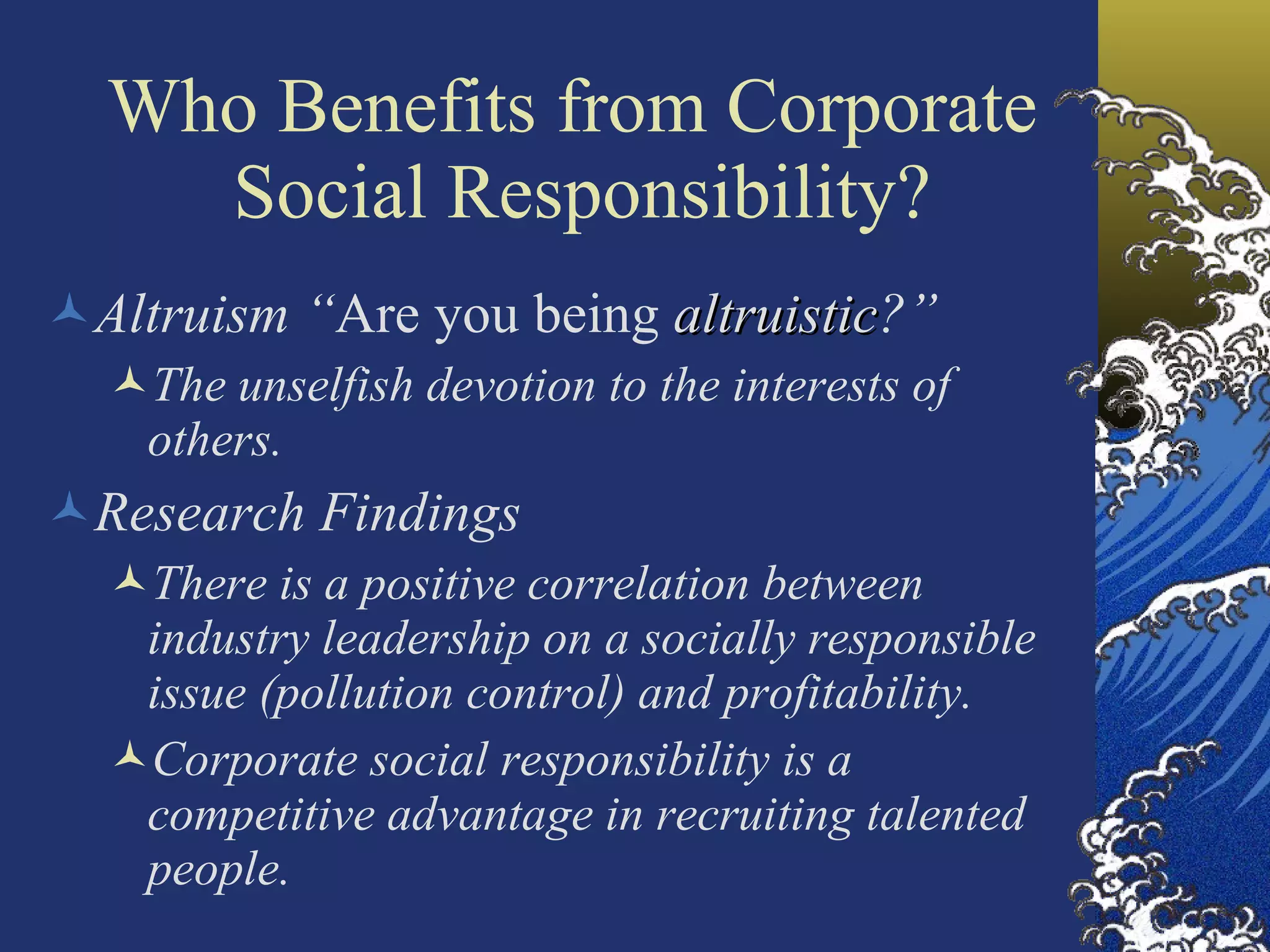
Who Benefits from Corporate  Social Responsibility? Altruism “ Are you being  altruistic ?” The unselfish devotion to the interests of others. Research Findings There is a positive correlation between industry leadership on a socially responsible issue (pollution control) and profitability. Corporate social responsibility is a competitive advantage in recruiting talented people.
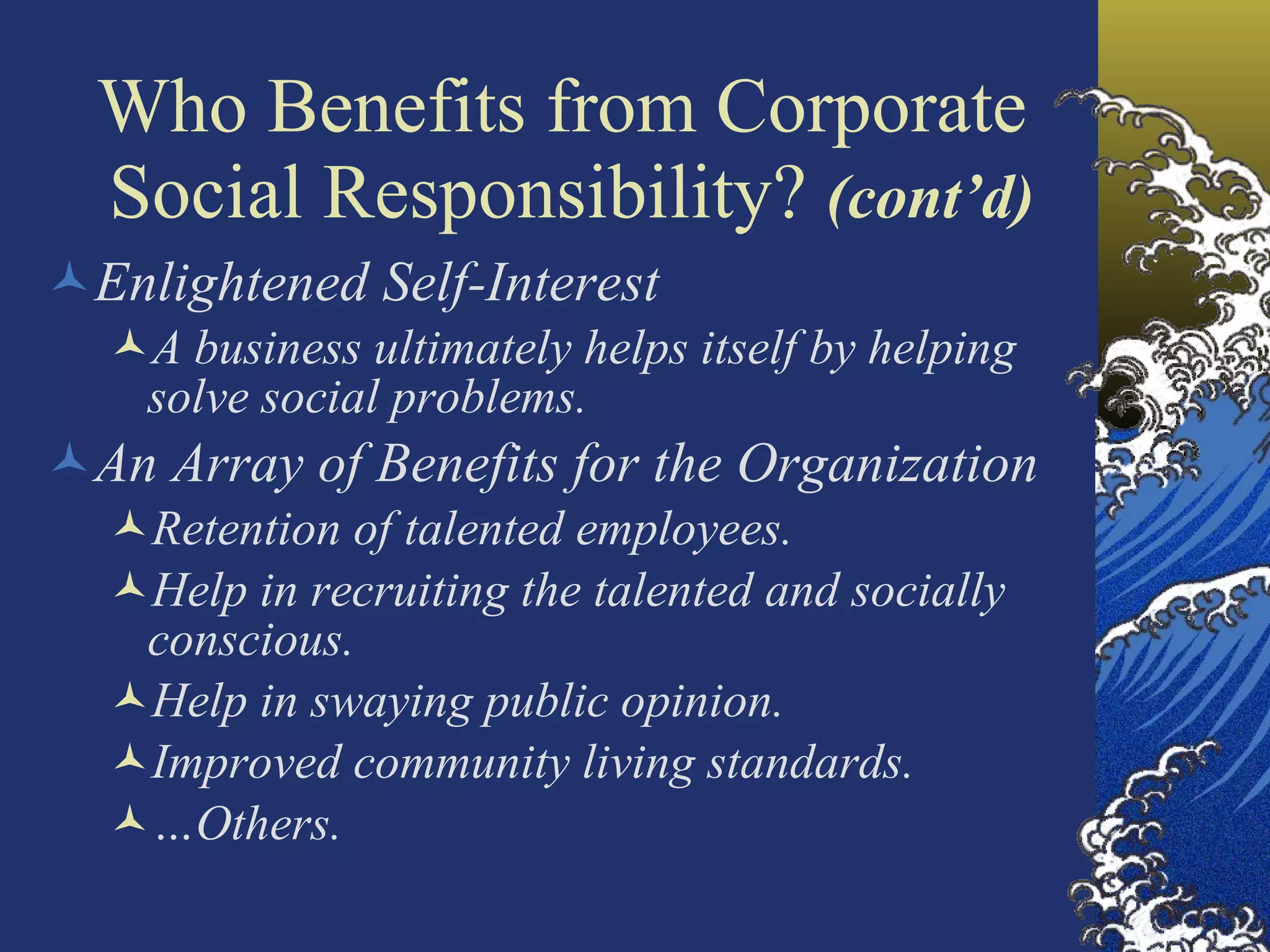
Who Benefits from Corporate  Social Responsibility?  (cont’d) Enlightened Self-Interest A business ultimately helps itself by helping solve social problems. An Array of Benefits for the Organization Retention of talented employees. Help in recruiting the talented and socially conscious. Help in swaying public opinion. Improved community living standards. … Others.
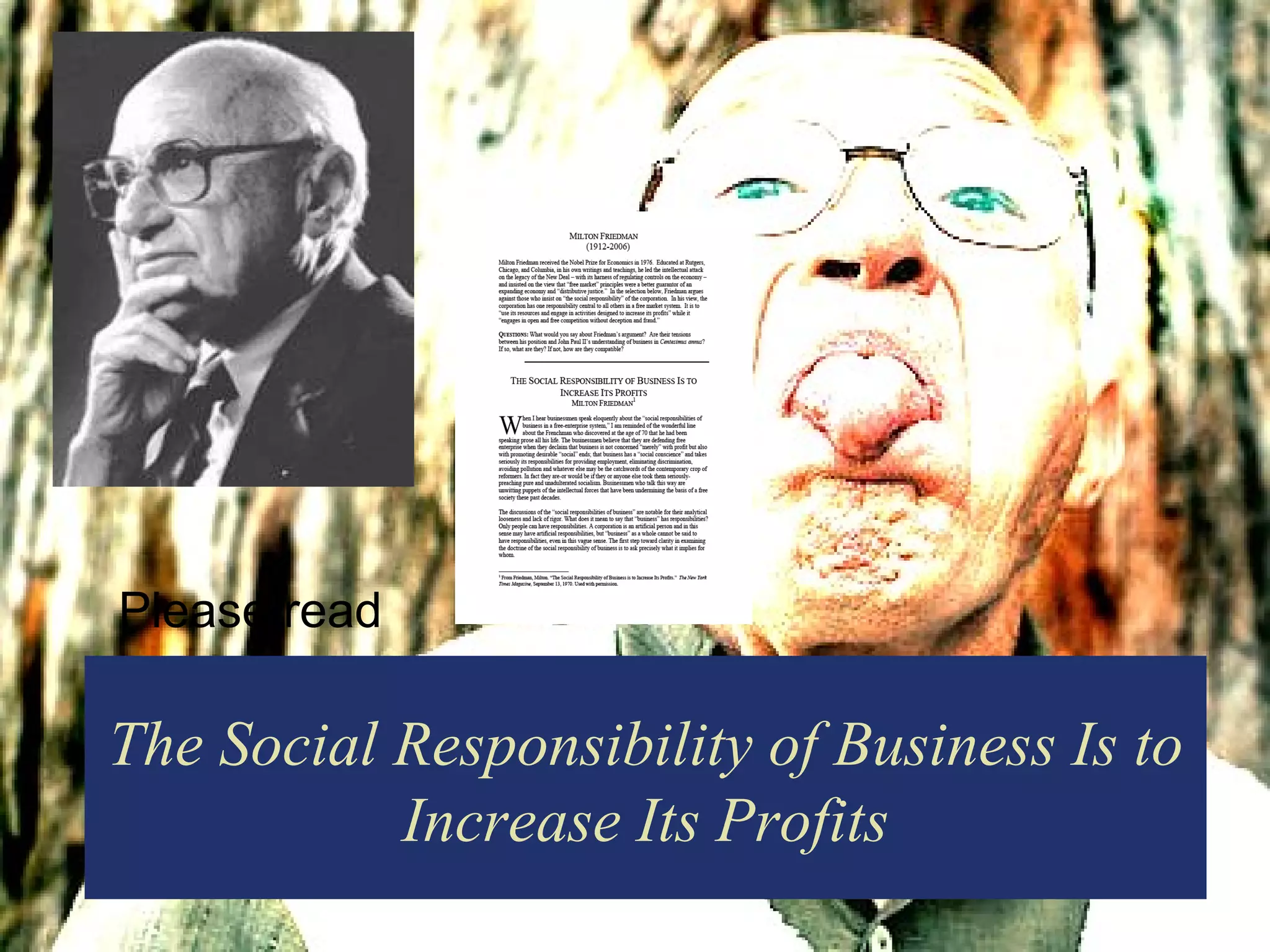
The Social Responsibility of Business Is to Increase Its Profits Please read
Source - http://www.flickr.com/photos/tatianacardeal/36956189 / CSR?
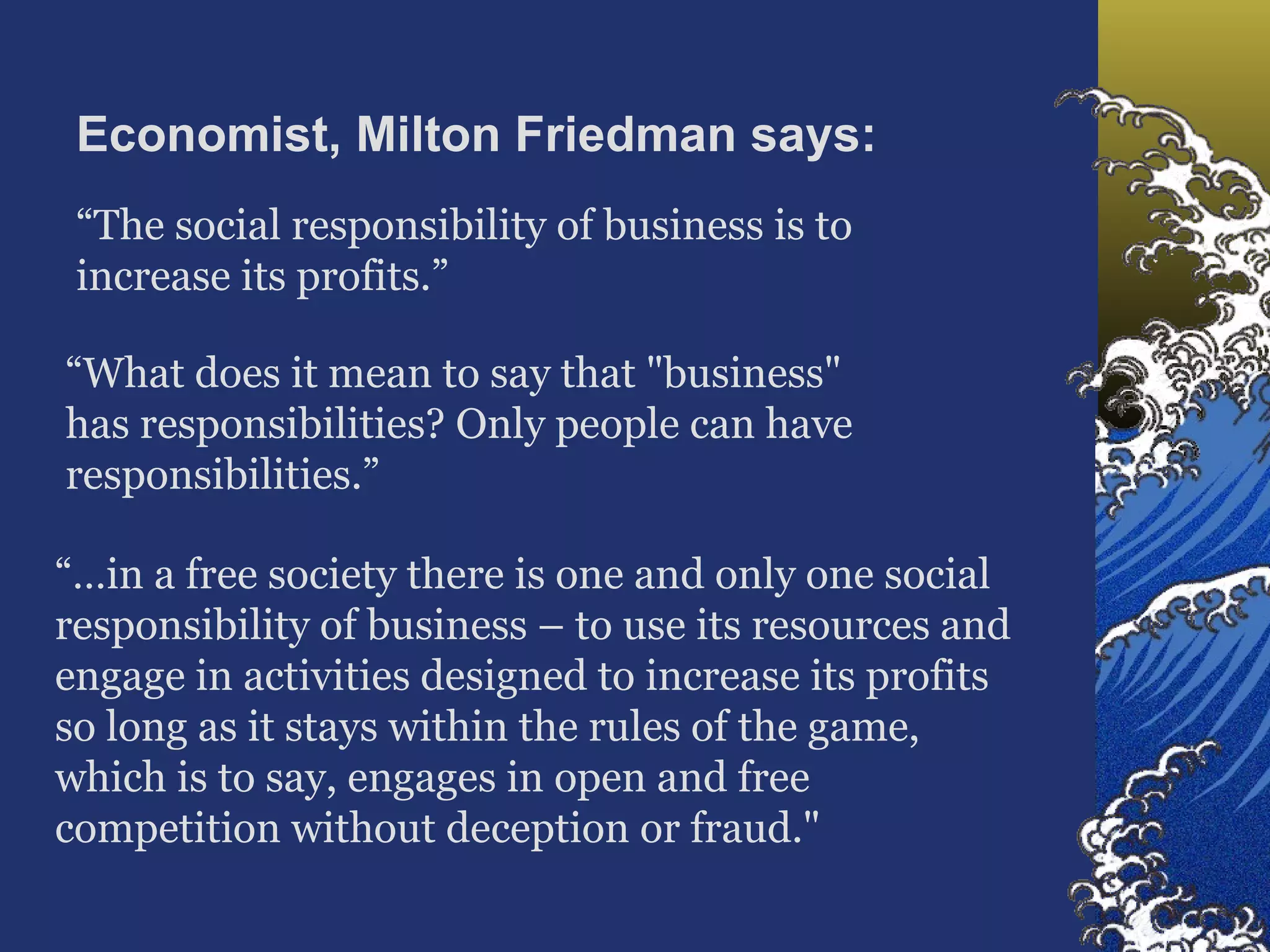
Economist, Milton Friedman says: “ The social responsibility of business is to increase its profits.”  “ What does it mean to say that "business" has responsibilities? Only people can have responsibilities.”  “… in a free society there is one and only one social responsibility of business – to use its resources and engage in activities designed to increase its profits so long as it stays within the rules of the game, which is to say, engages in open and free competition without deception or fraud."
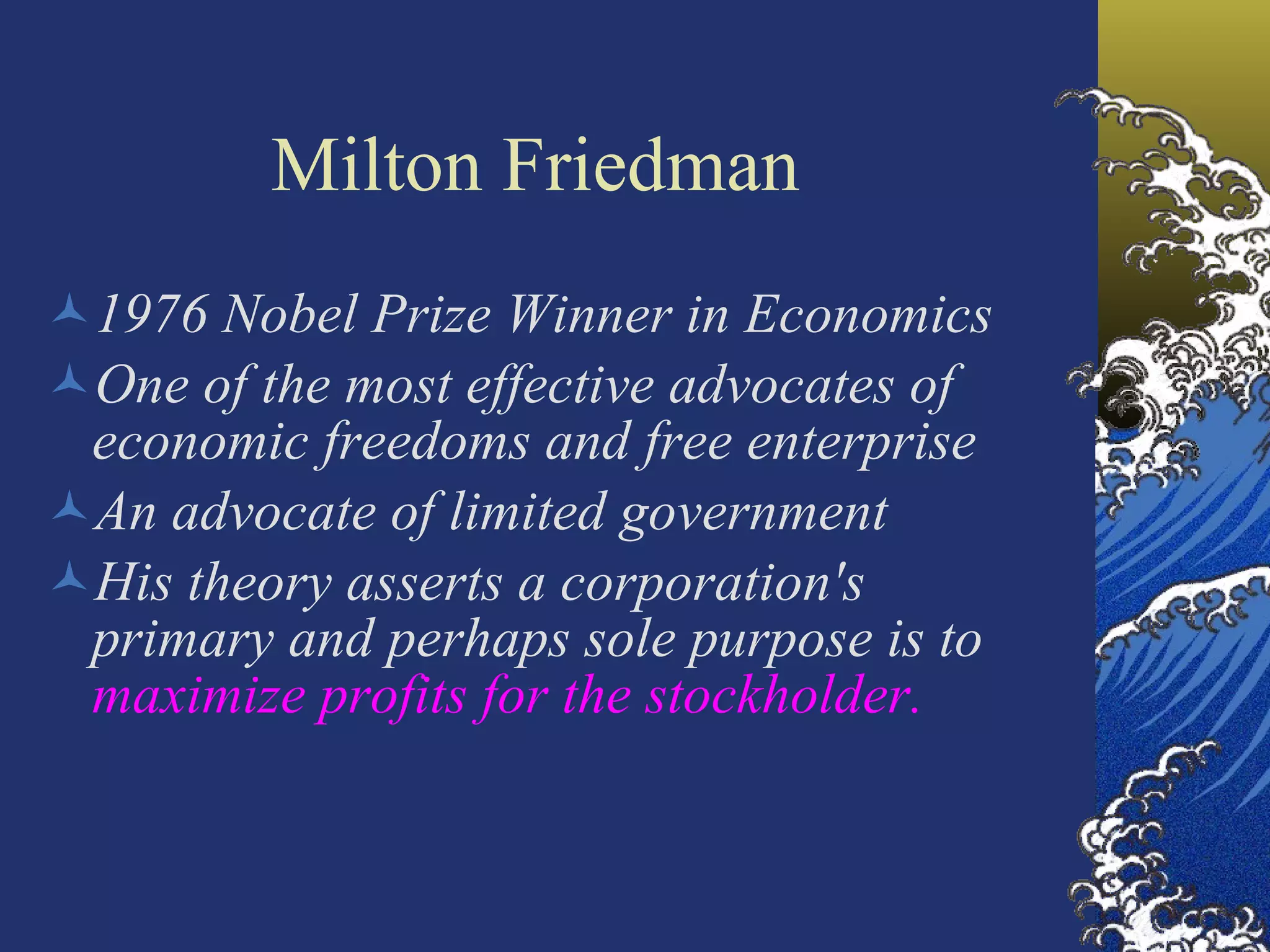
Milton Friedman   1976 Nobel Prize Winner in Economics  One of the most effective advocates of economic freedoms and free enterprise An advocate of limited government His theory asserts a corporation's primary and perhaps sole purpose is to  maximize profits for the stockholder .
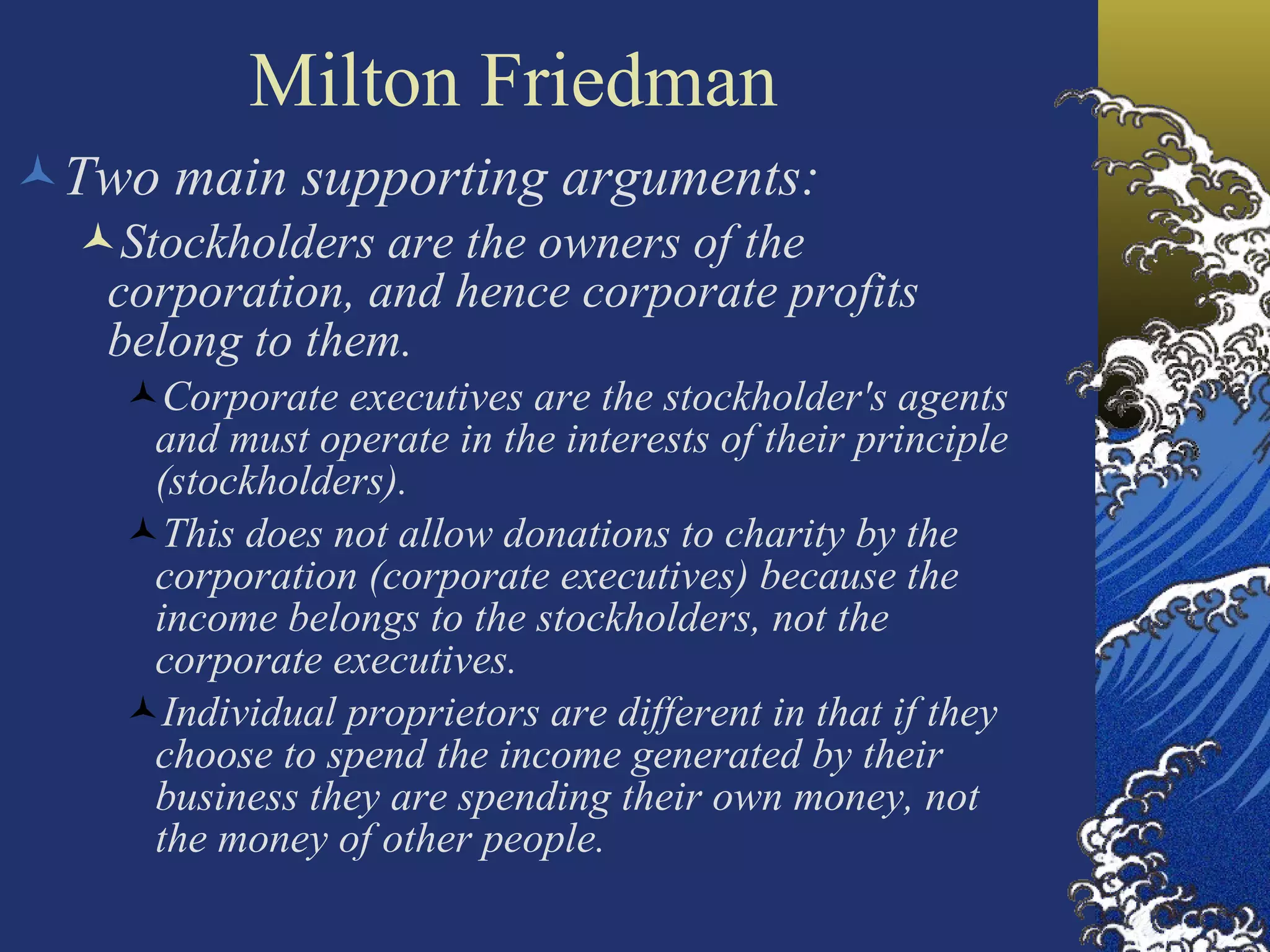
Milton Friedman Two main supporting arguments: Stockholders are the owners of the corporation, and hence corporate profits belong to them. Corporate executives are the stockholder's agents and must operate in the interests of their principle (stockholders). This does not allow donations to charity by the corporation (corporate executives) because the income belongs to the stockholders, not the corporate executives. Individual proprietors are different in that if they choose to spend the income generated by their business they are spending their own money, not the money of other people.
Milton Friedman Stockholders/Stakeholders Stockholders are entitled to their profits as a result of a contract among the corporate stakeholders. A stakeholder in this context refers to employees, managers, customers, suppliers, the local community, and the stockholders.  Each stakeholder group has a contractual relationship with the firm, since they receive the remuneration they freely agreed to in a pre-established agreement (contract).
Encouraging Ethical Conduct Code of Ethics Published statement of moral expectations for employee conduct Requirements for an effective ethics code Must describe specific practices as unethical  (e.g., kickbacks, payoffs, gifts, falsification of records, and misleading product claims). Must be firmly supported and fairly enforced by  top management.
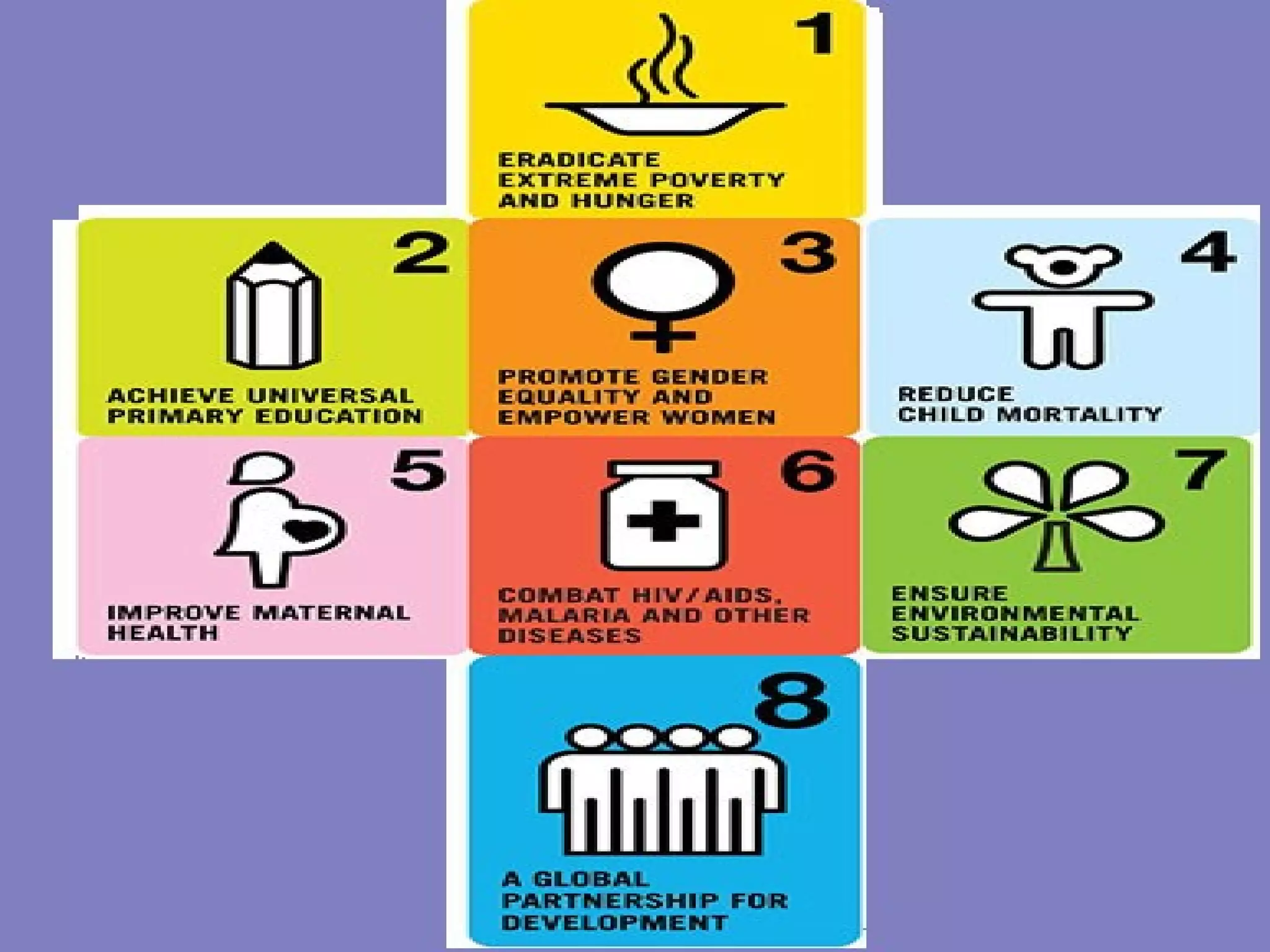
Millennium Development Goals What are they?
 
Introduction Agreed during the 2000 session of the United Nations General Assembly Every UN Member State made the same commitment to meet the Goals by 2015 7th July 2007 marked the official “half-way” point
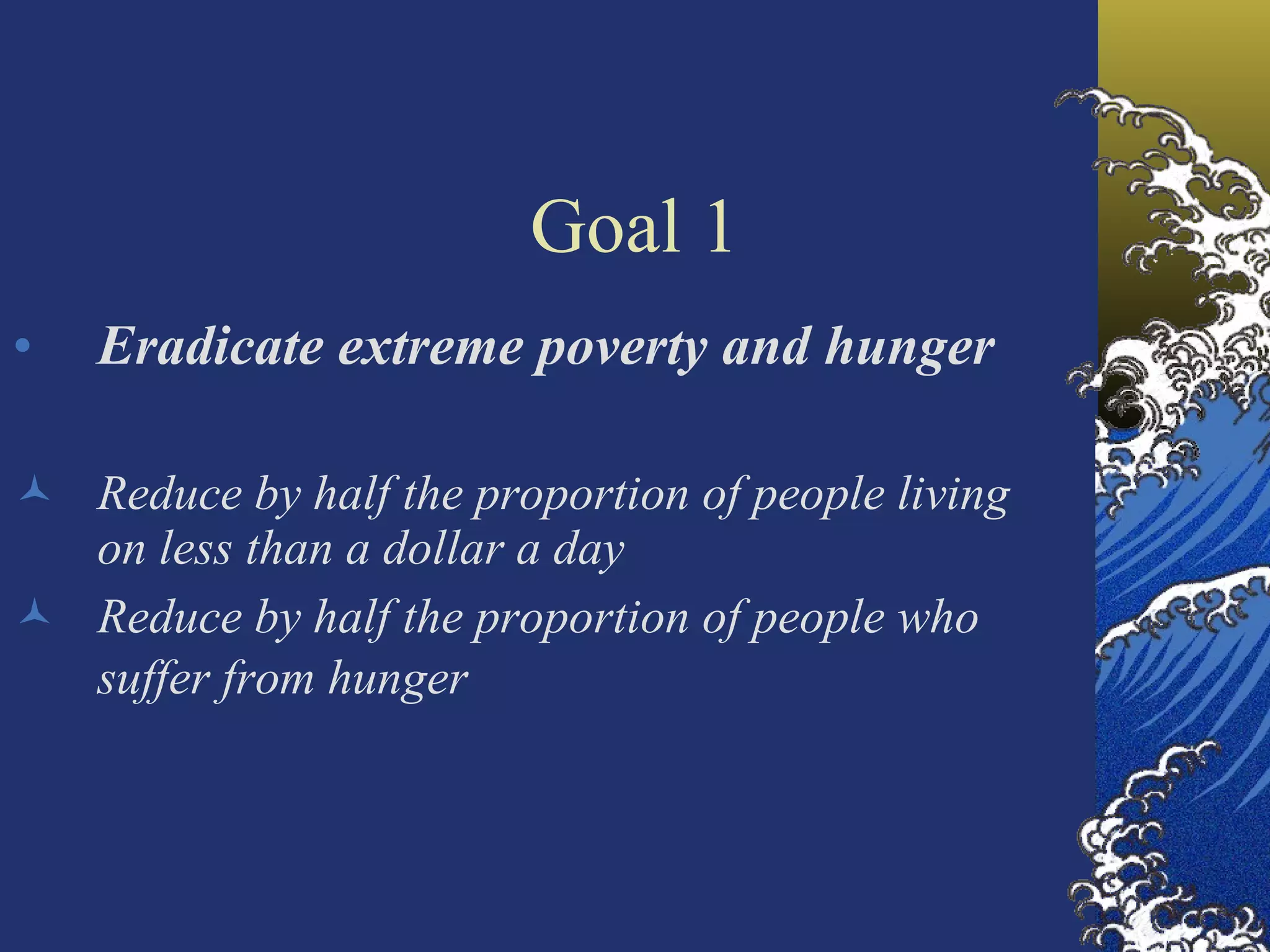
Goal 1 Eradicate extreme poverty and hunger Reduce by half the proportion of people living on less than a dollar a day Reduce by half the proportion of people who suffer from hunger
Goal 2 Achieve universal primary education Ensure that all boys and girls complete a full course of primary schooling
Goal 3 Promote gender equality and empower women Eliminate gender disparity in primary and secondary education preferably by 2005, and at all levels by 2015
Goal 4 Reduce child mortality Reduce by two thirds (2/3) the mortality rate among children under five
Goal 5 Improve maternal health Reduce by three quarters the maternal mortality ratio
Goal 6 Combat HIV/AIDS, malaria and other diseases Halt and begin to reverse the spread of HIV/AIDS Halt and begin to reverse the incidence of malaria and other major diseases
Goal 7 Ensure environmental sustainability Integrate the principles of sustainable development into country policies and programmes; reverse loss of environmental resources  Reduce by half the proportion of people without sustainable access to safe drinking water Achieve significant improvement in lives of at least 100 million slum dwellers, by 2020
Goal 8 Develop a global partnership for development Address the least developed countries' special needs Develop further an open trading and financial system that is rule-based, predictable and non-discriminatory, includes a commitment to good governance, development and poverty reduction - nationally and internationally
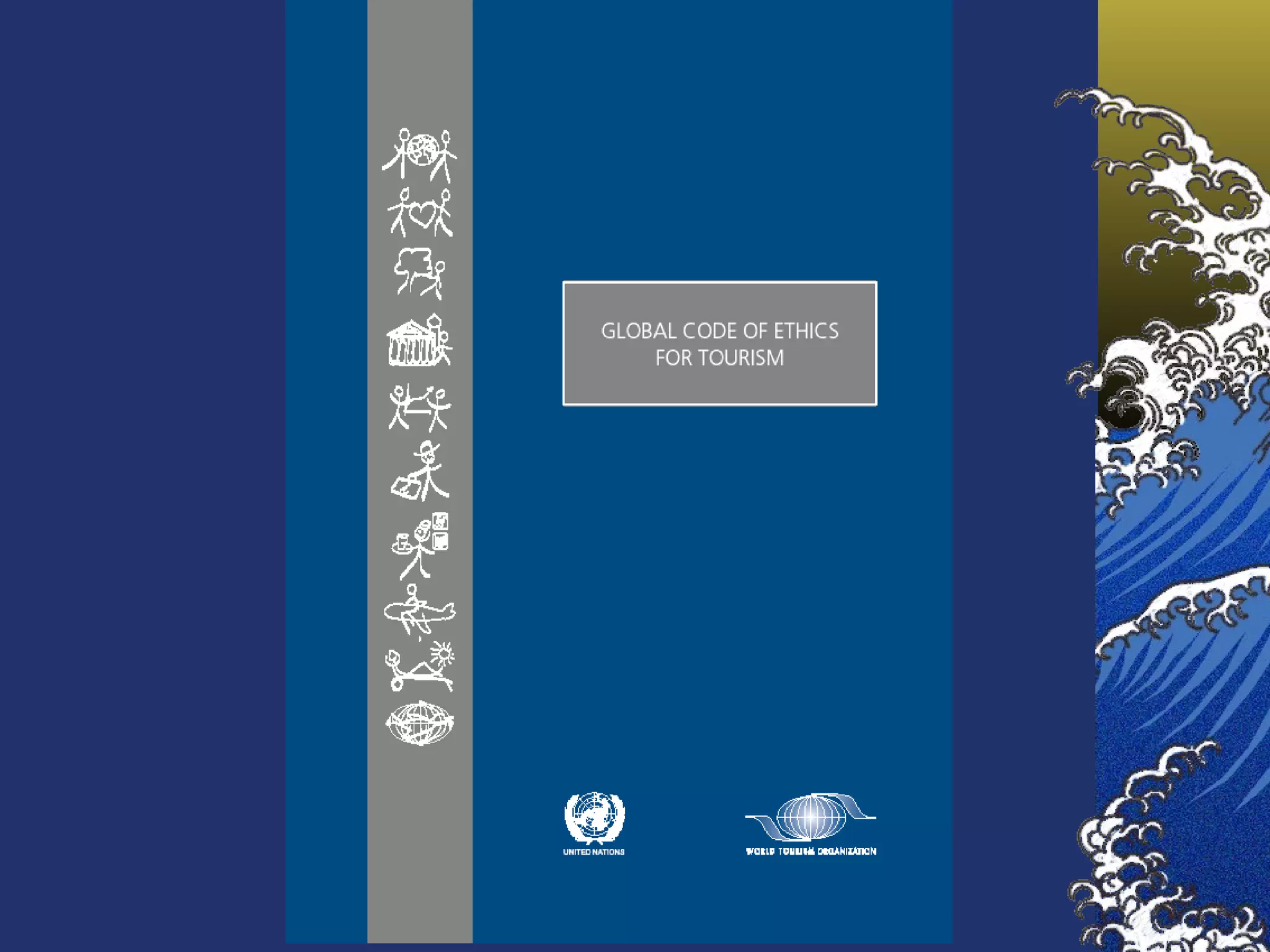
United Nations, Tourism and  Blue Washing
 
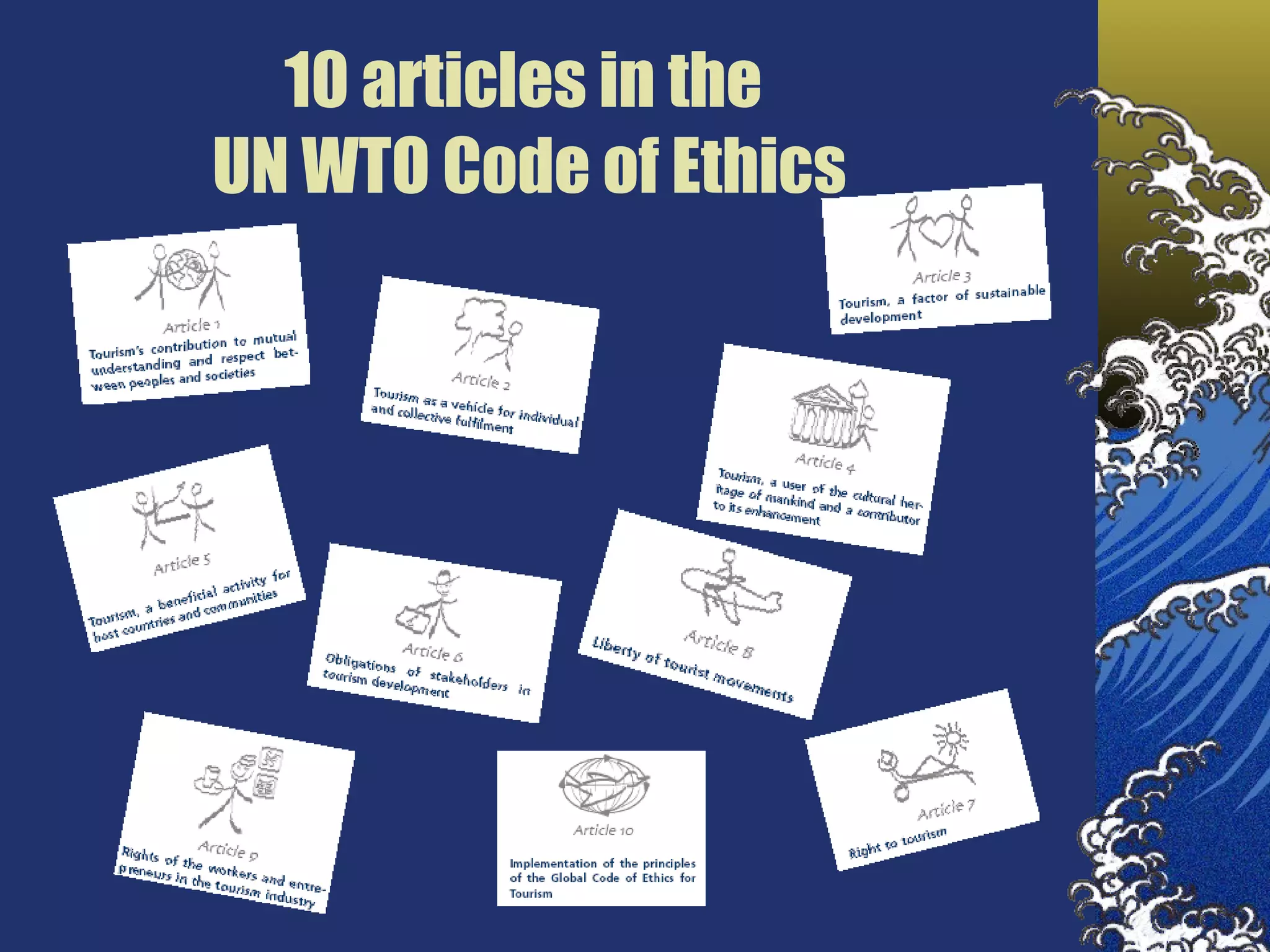
10 articles in the  UN WTO Code of Ethics
Take a break
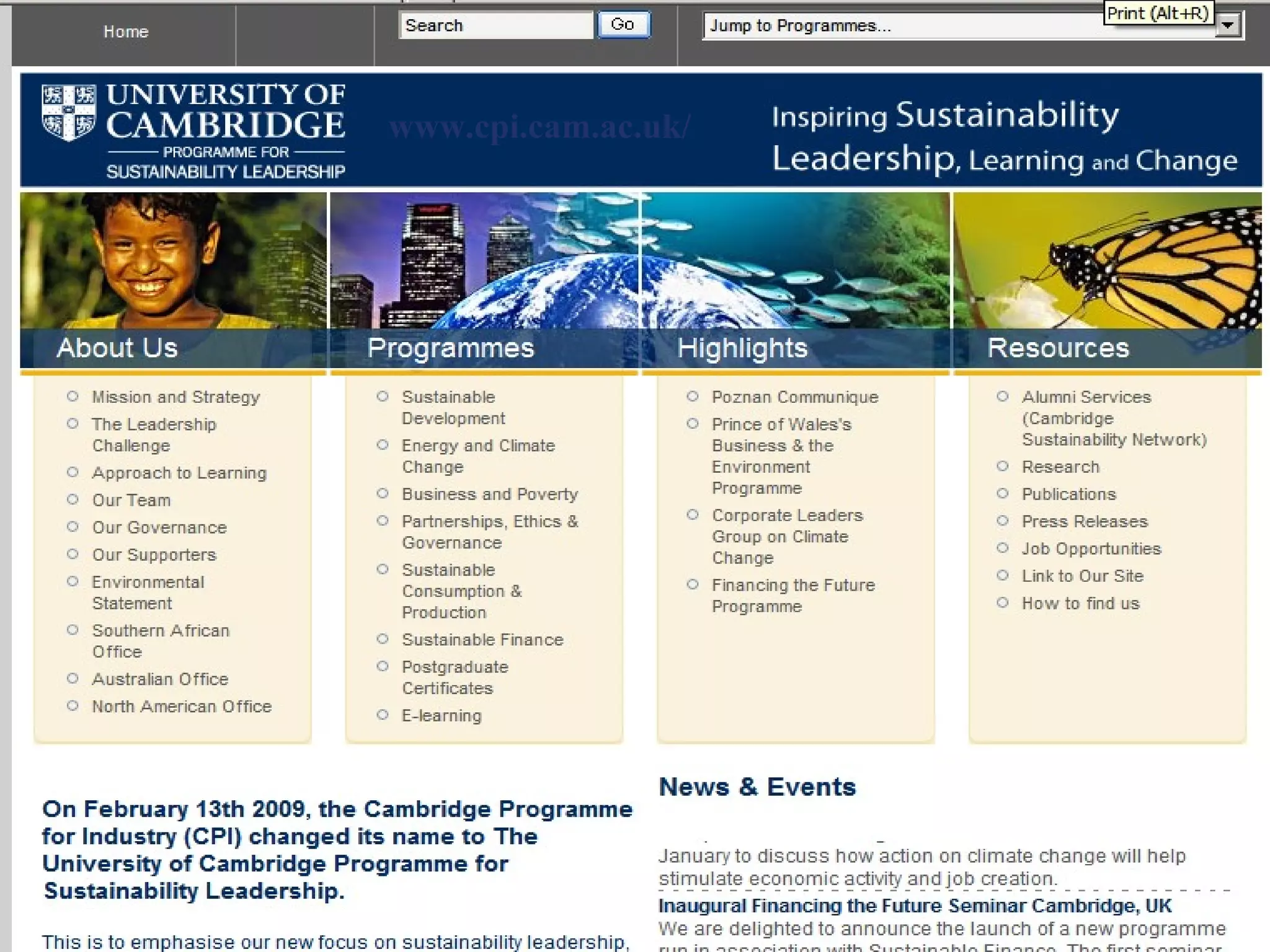
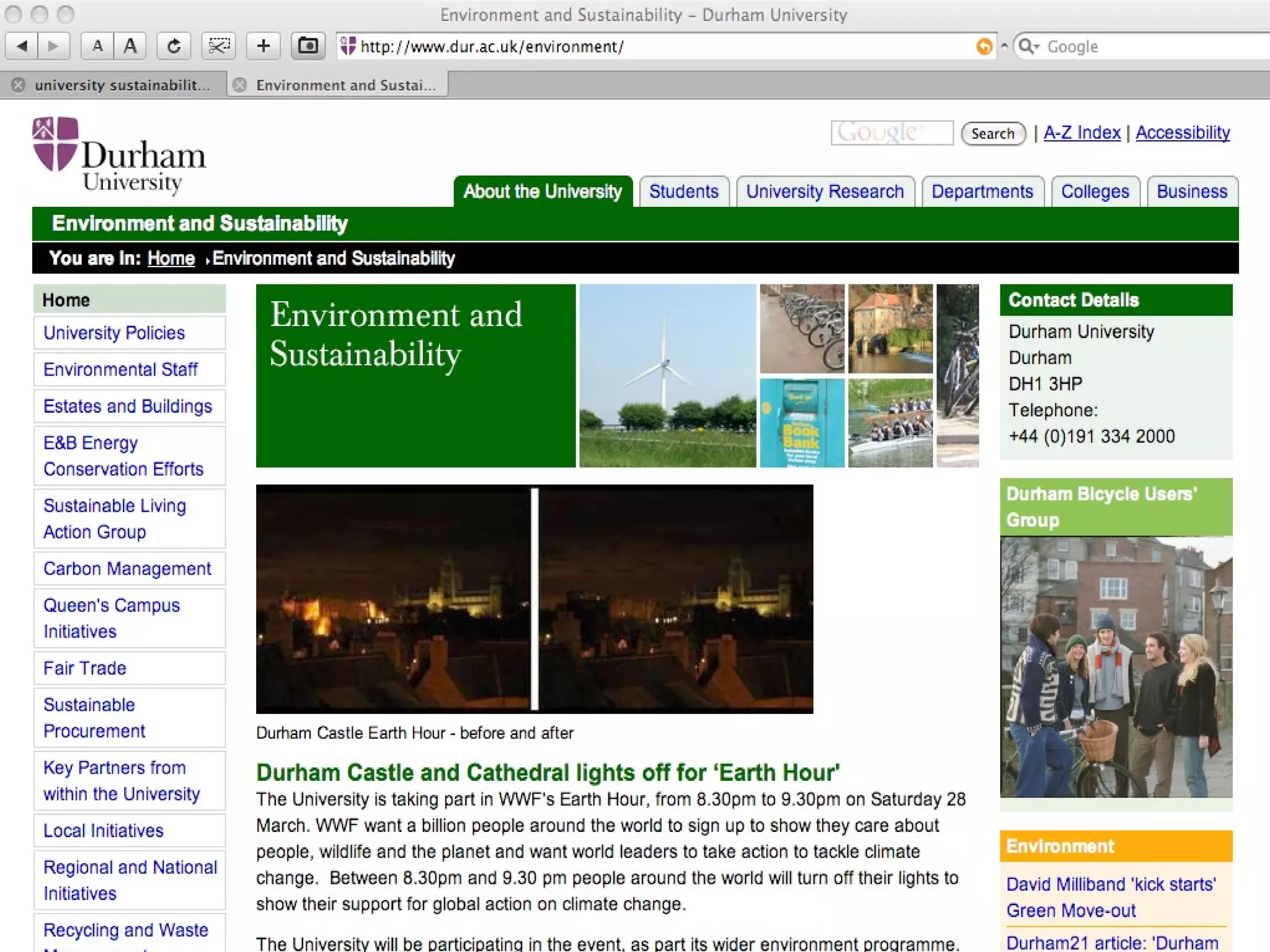
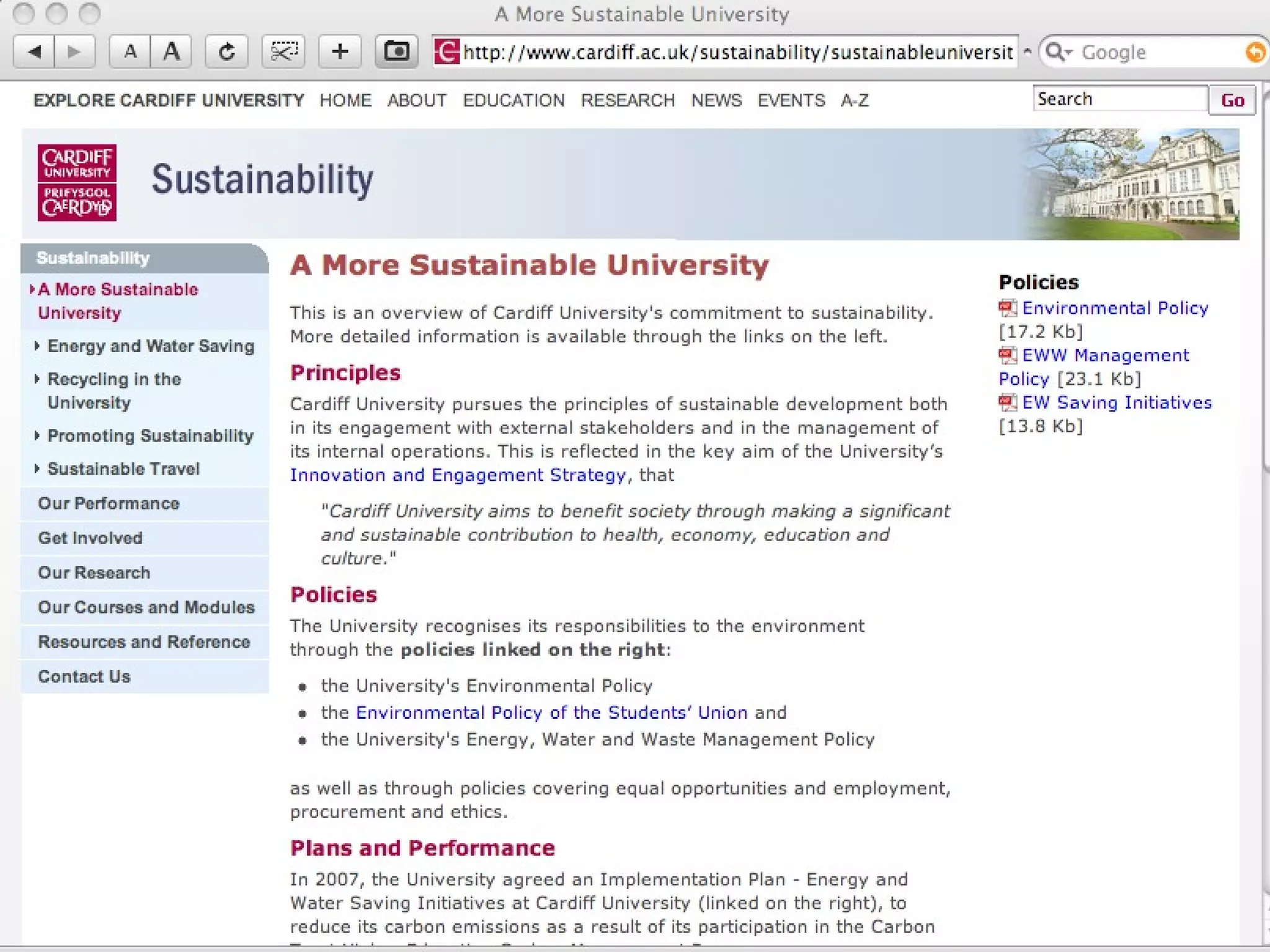
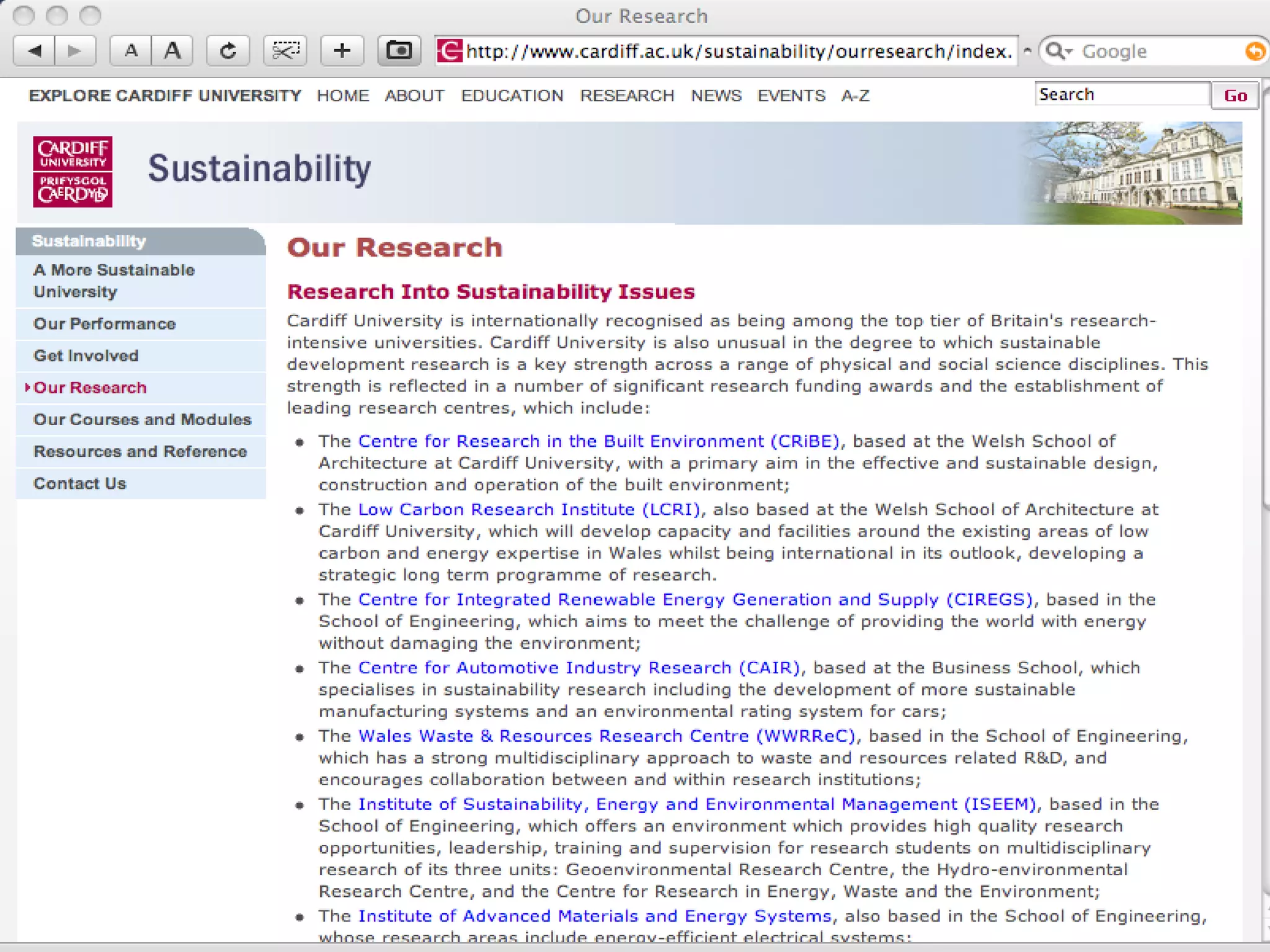
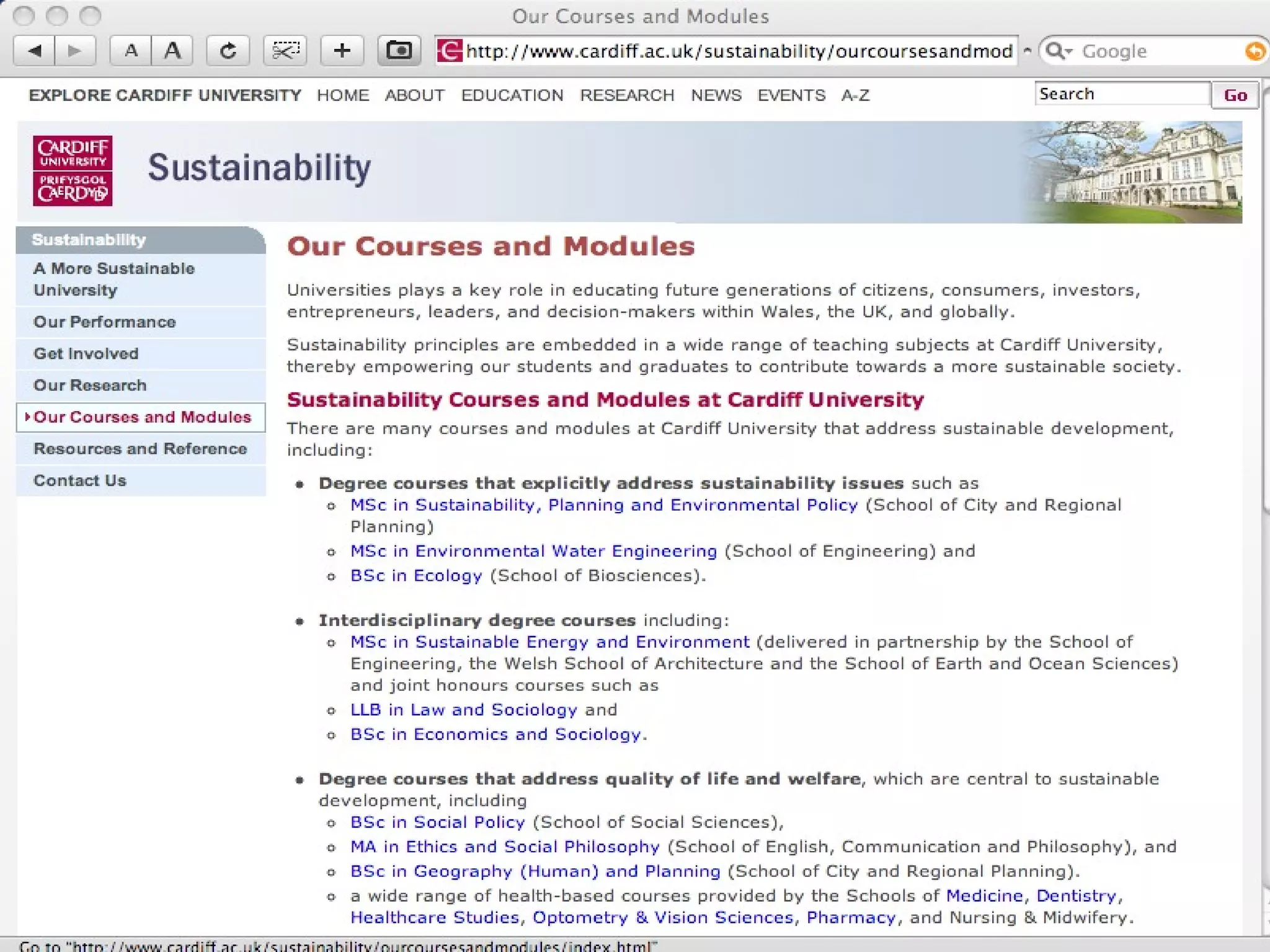
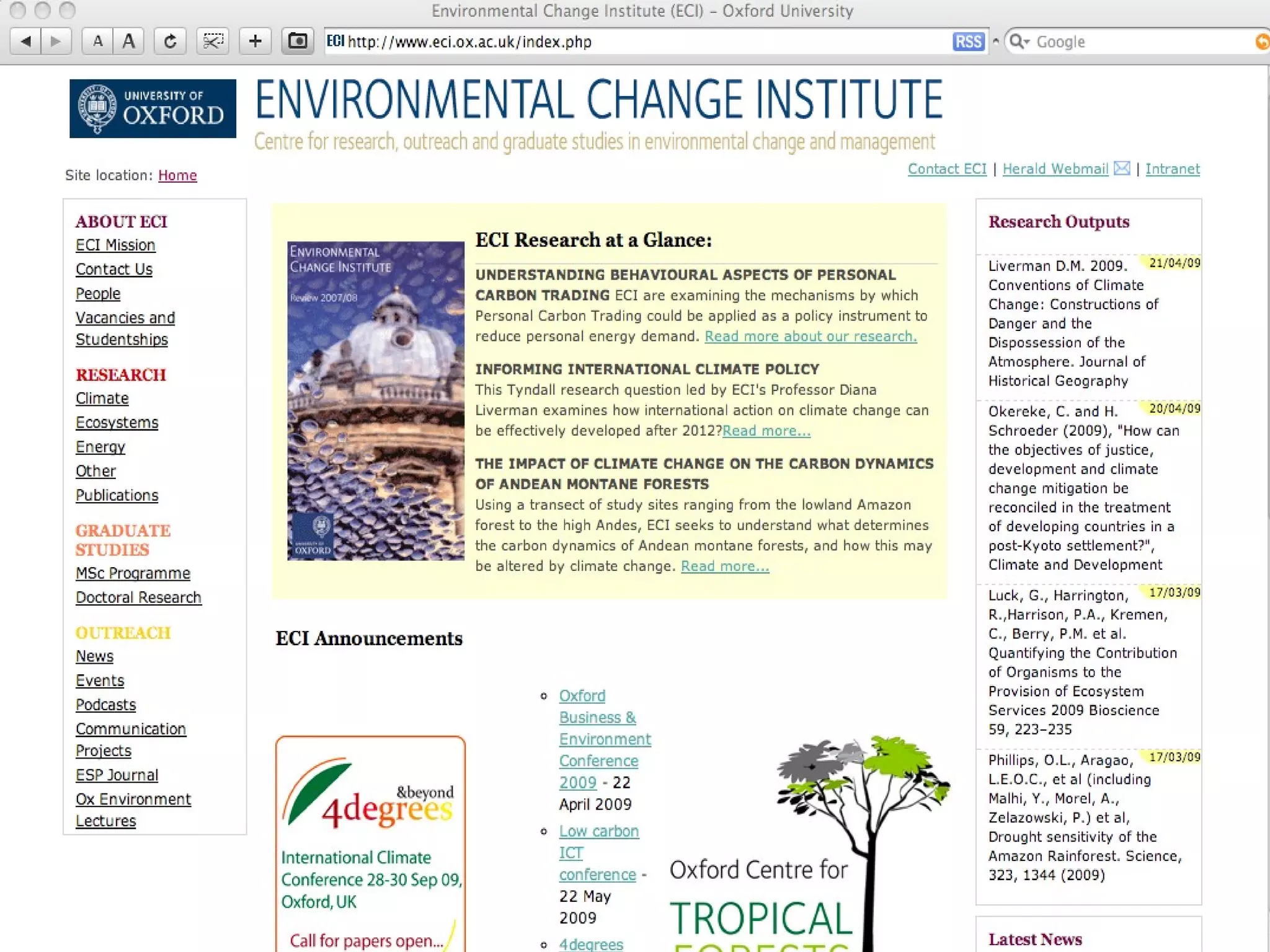
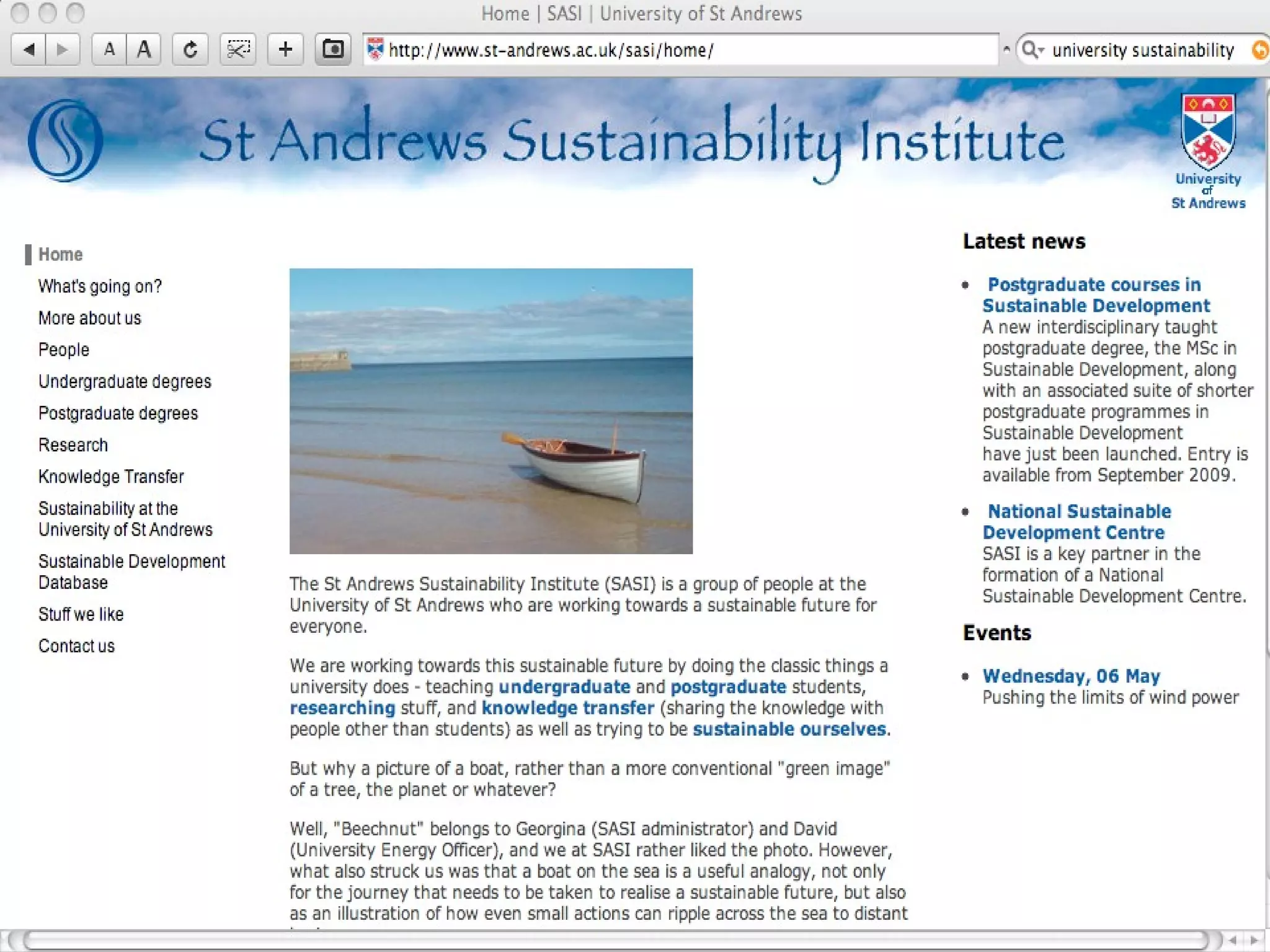
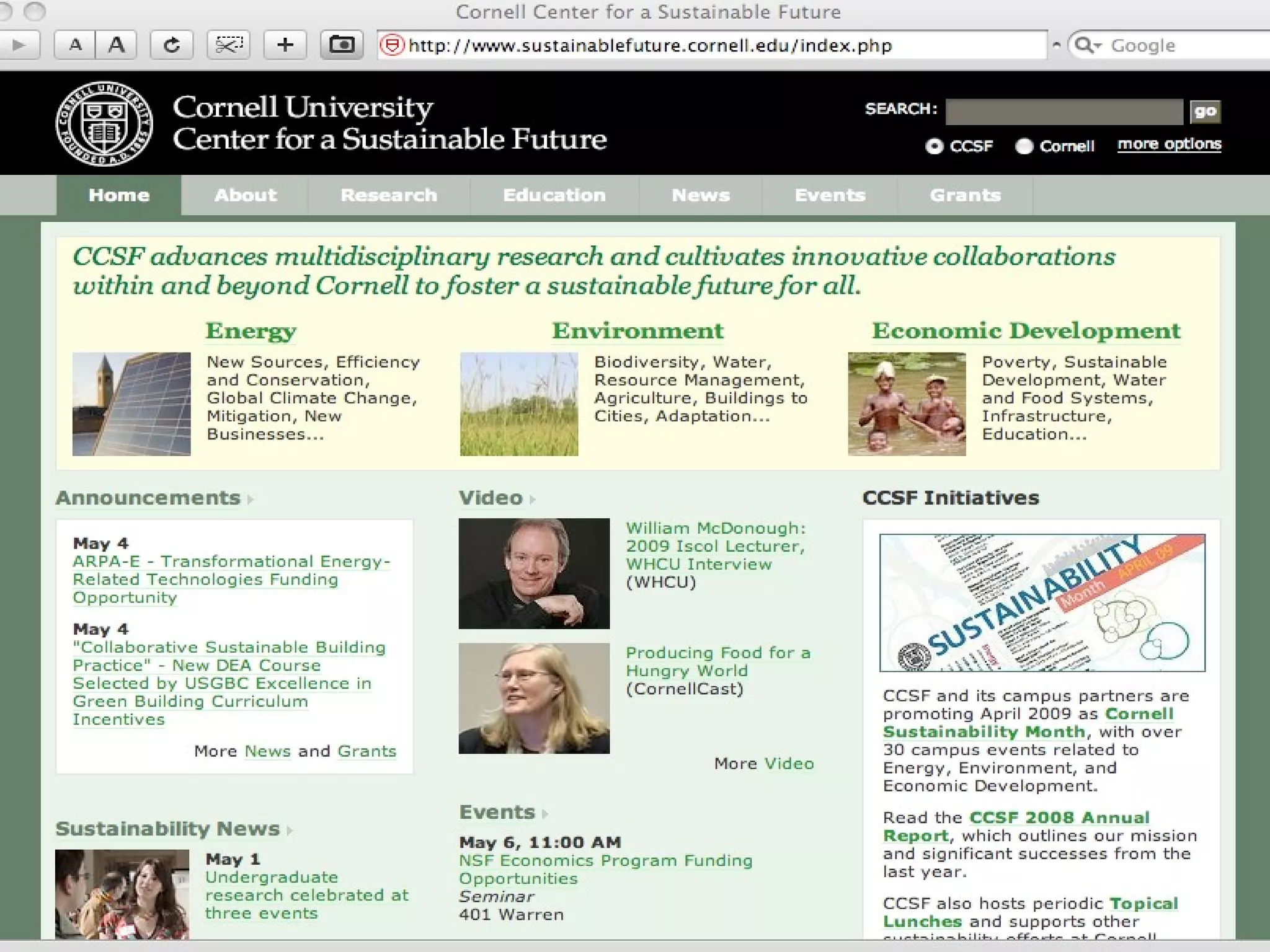
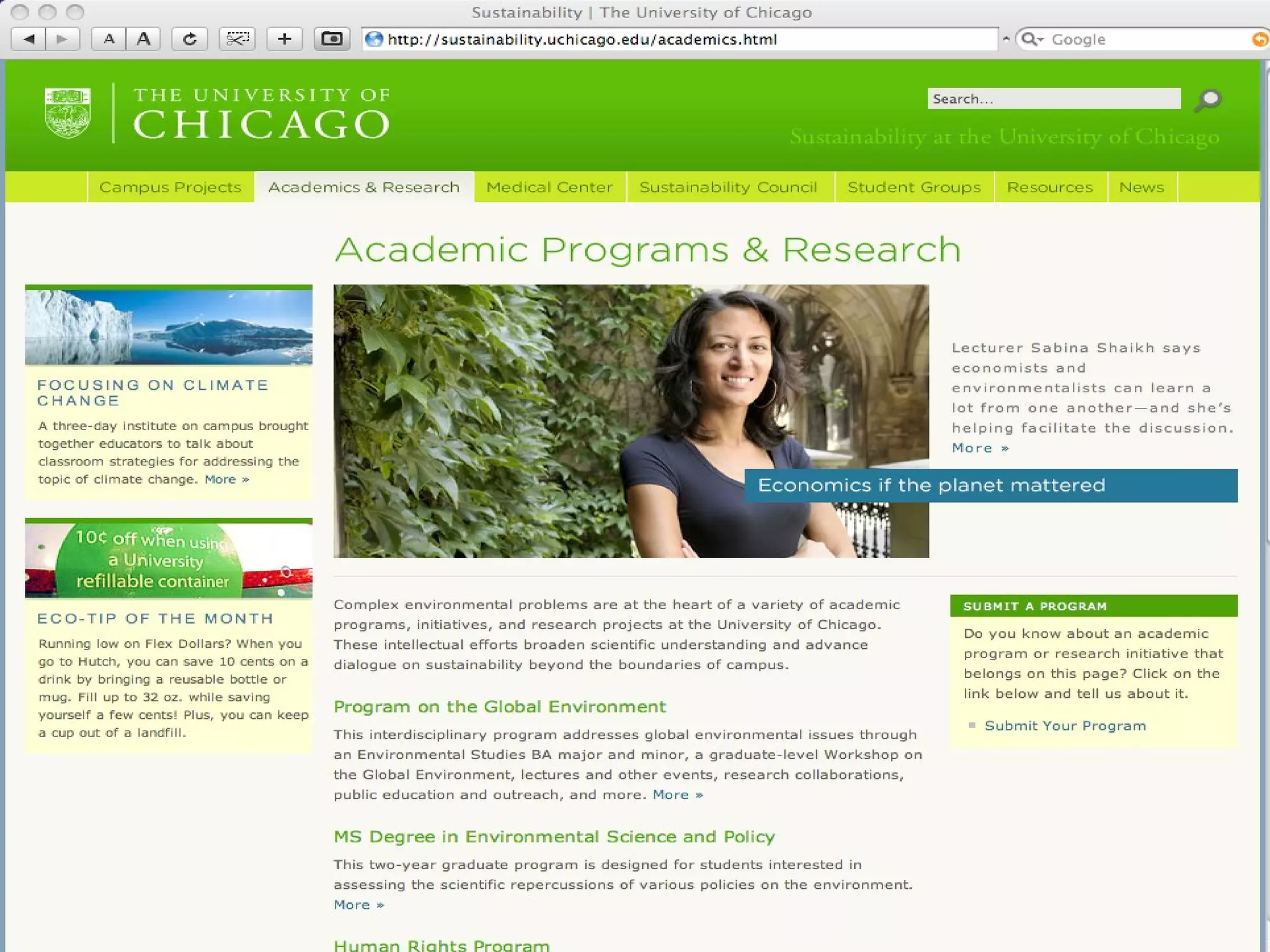
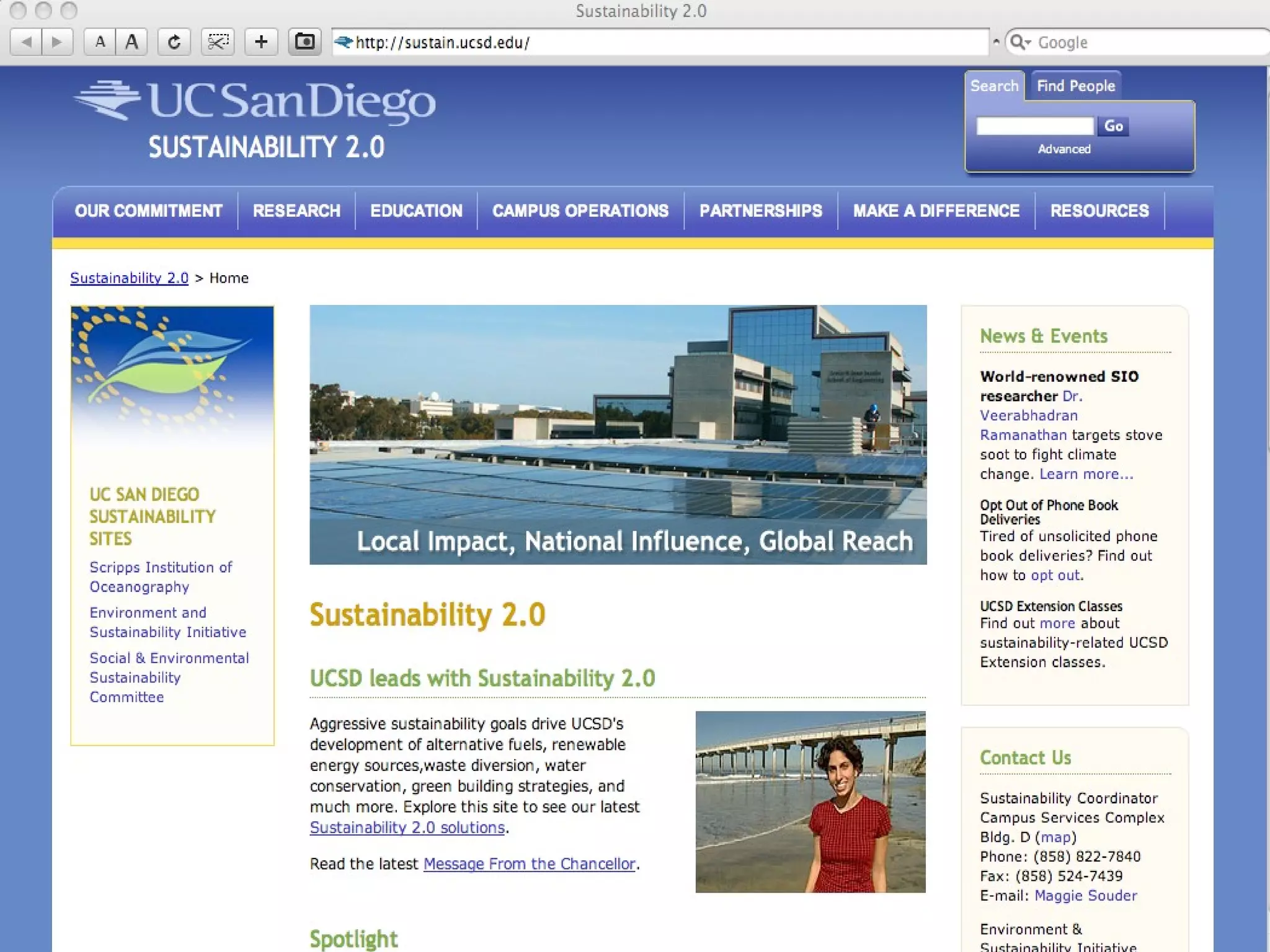
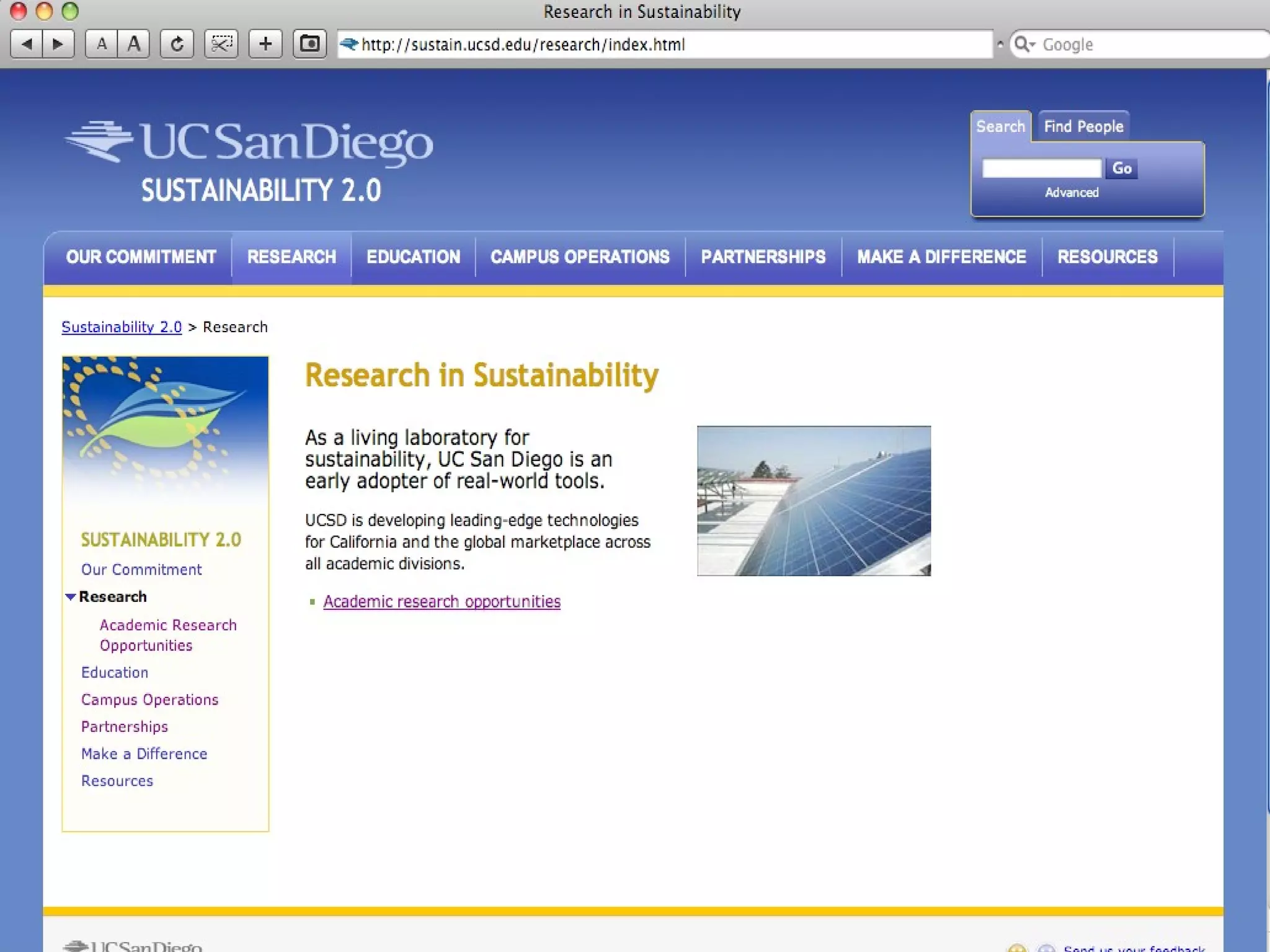
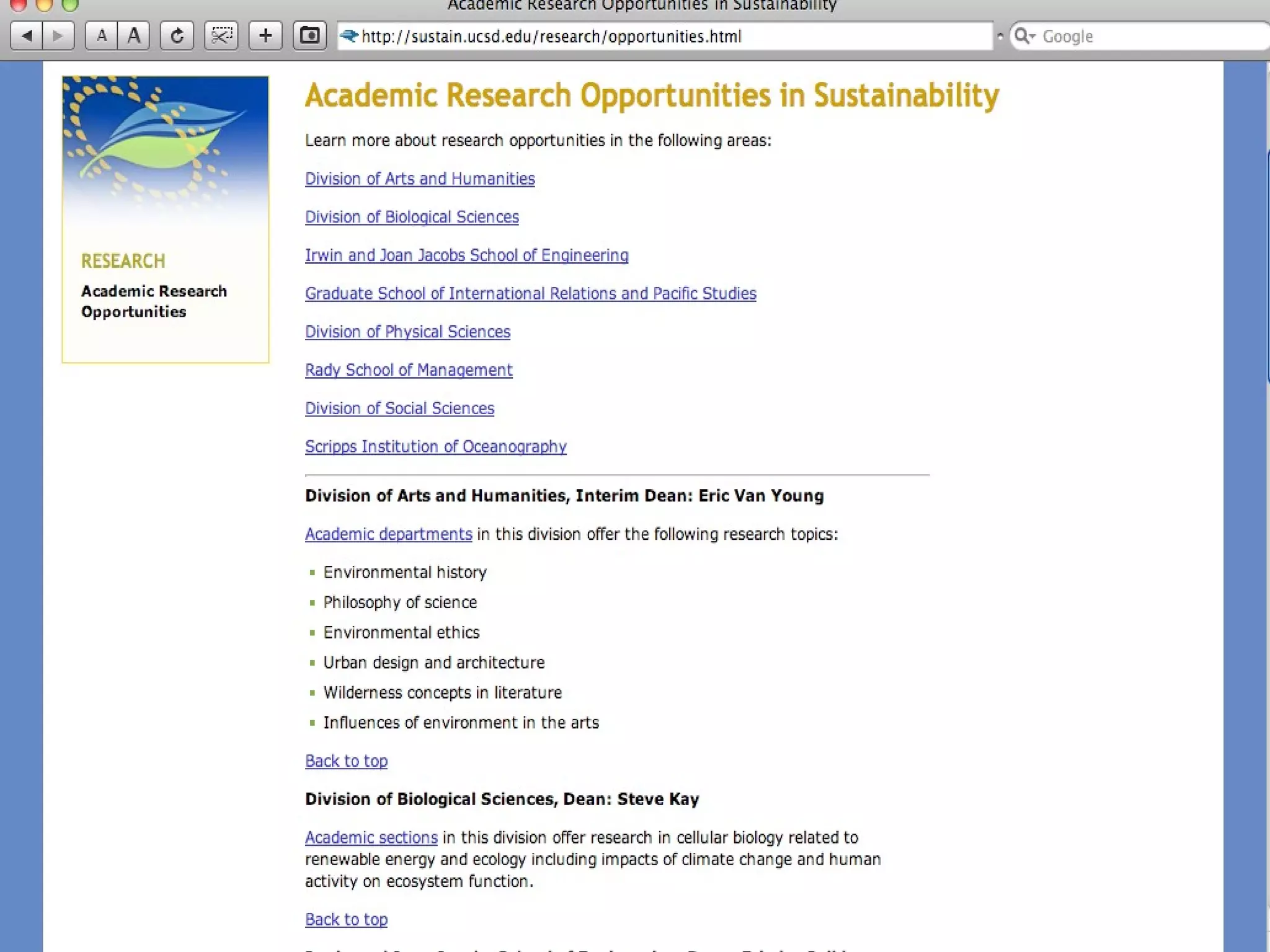
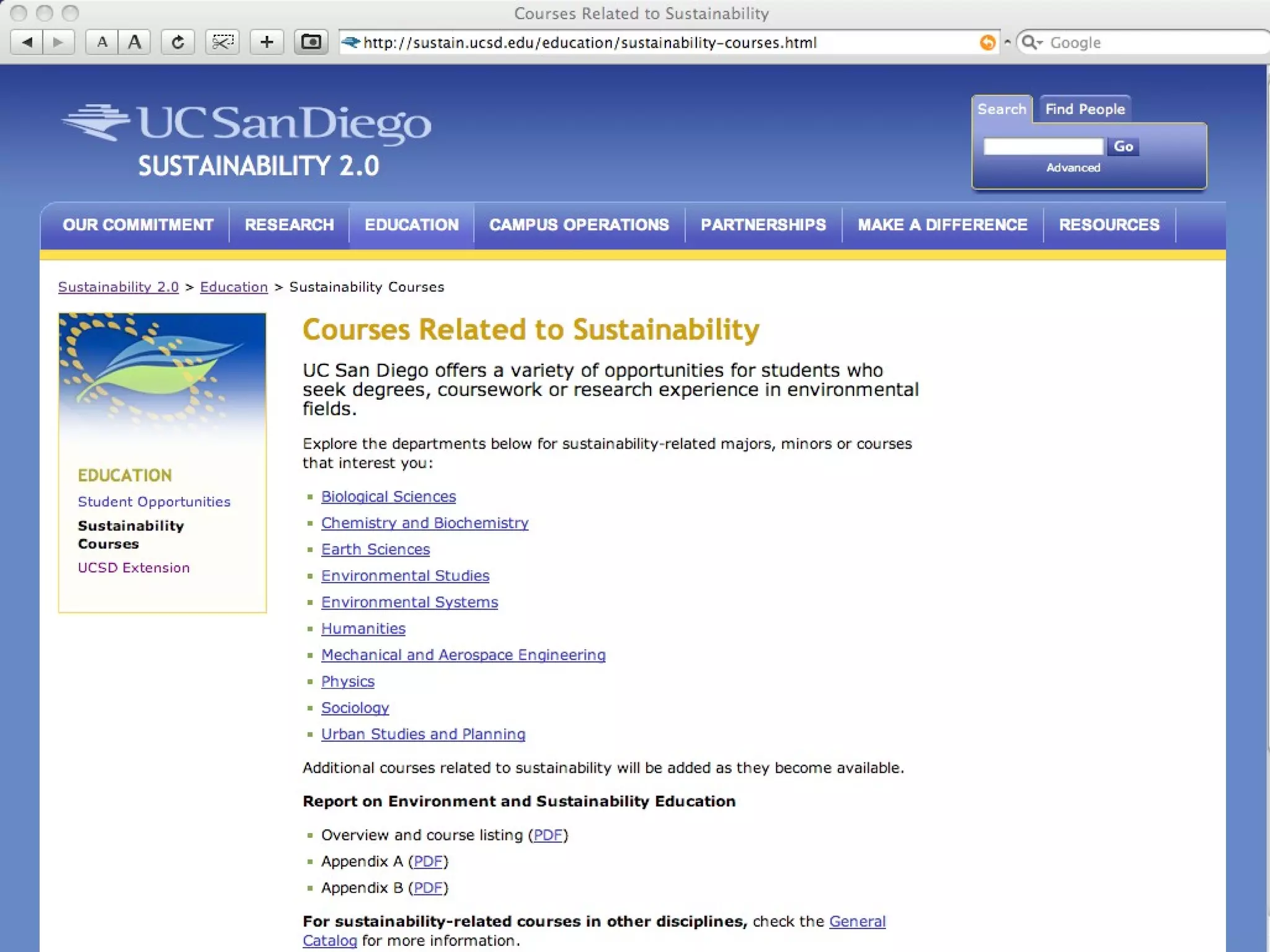
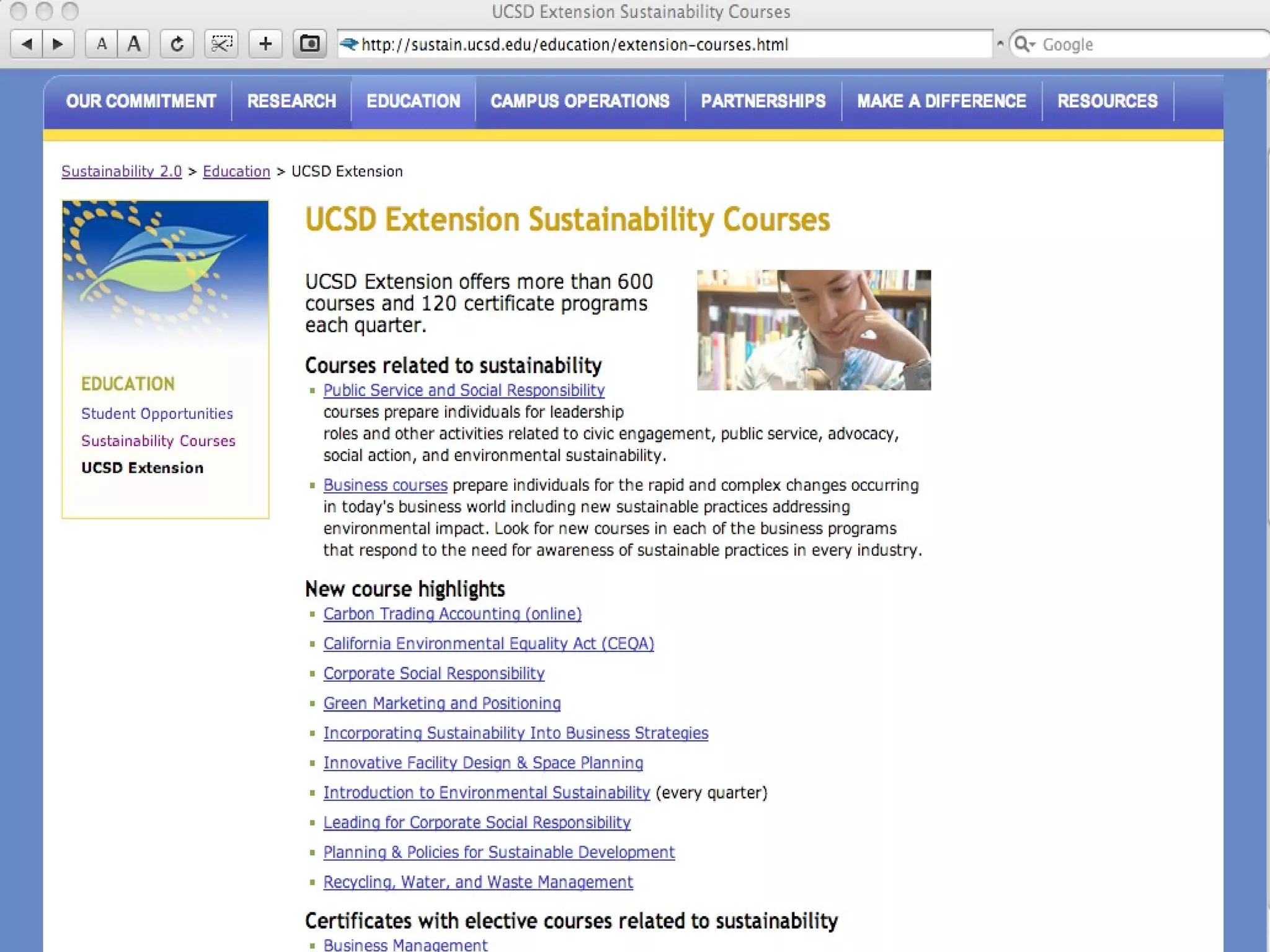
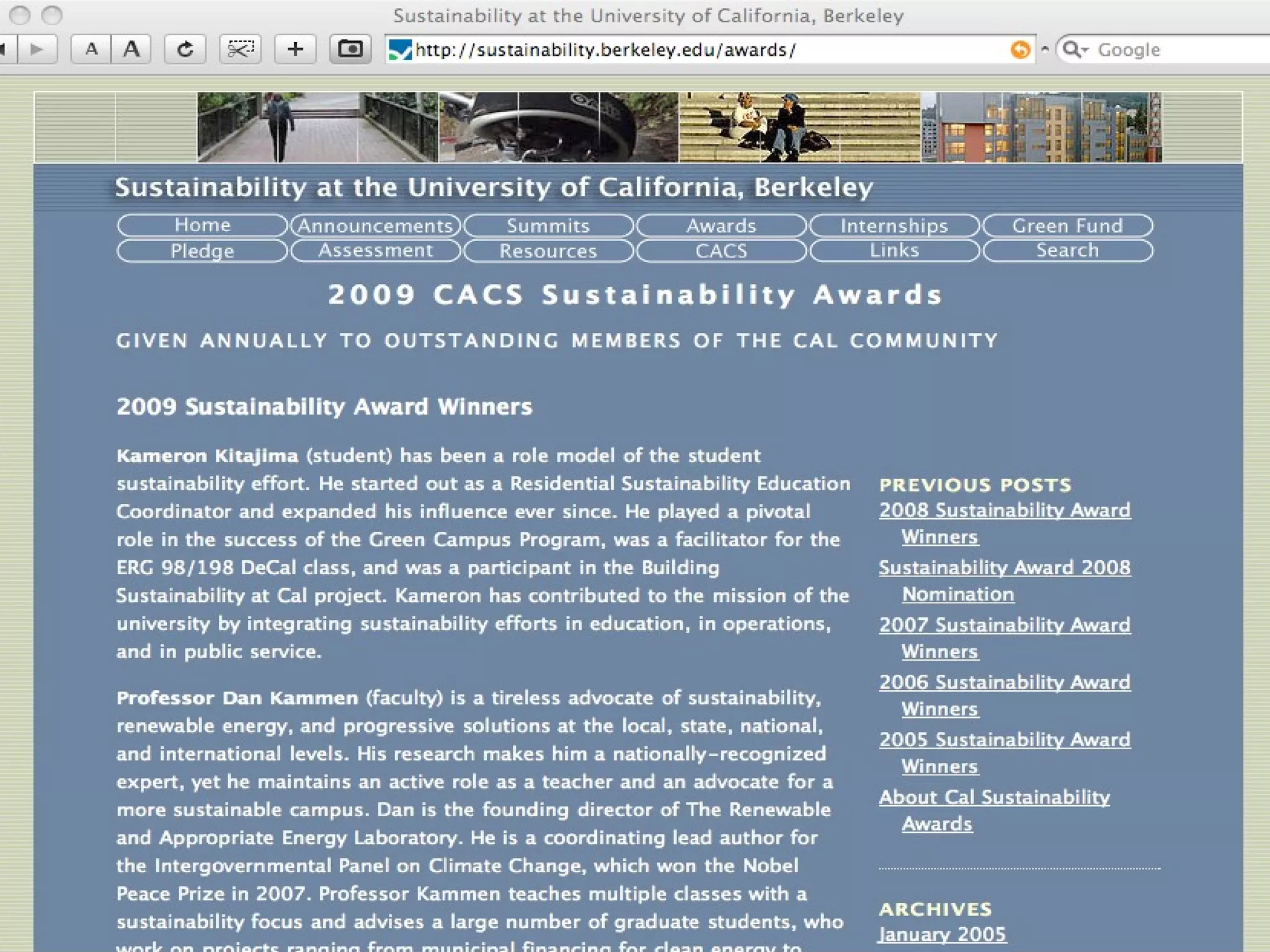
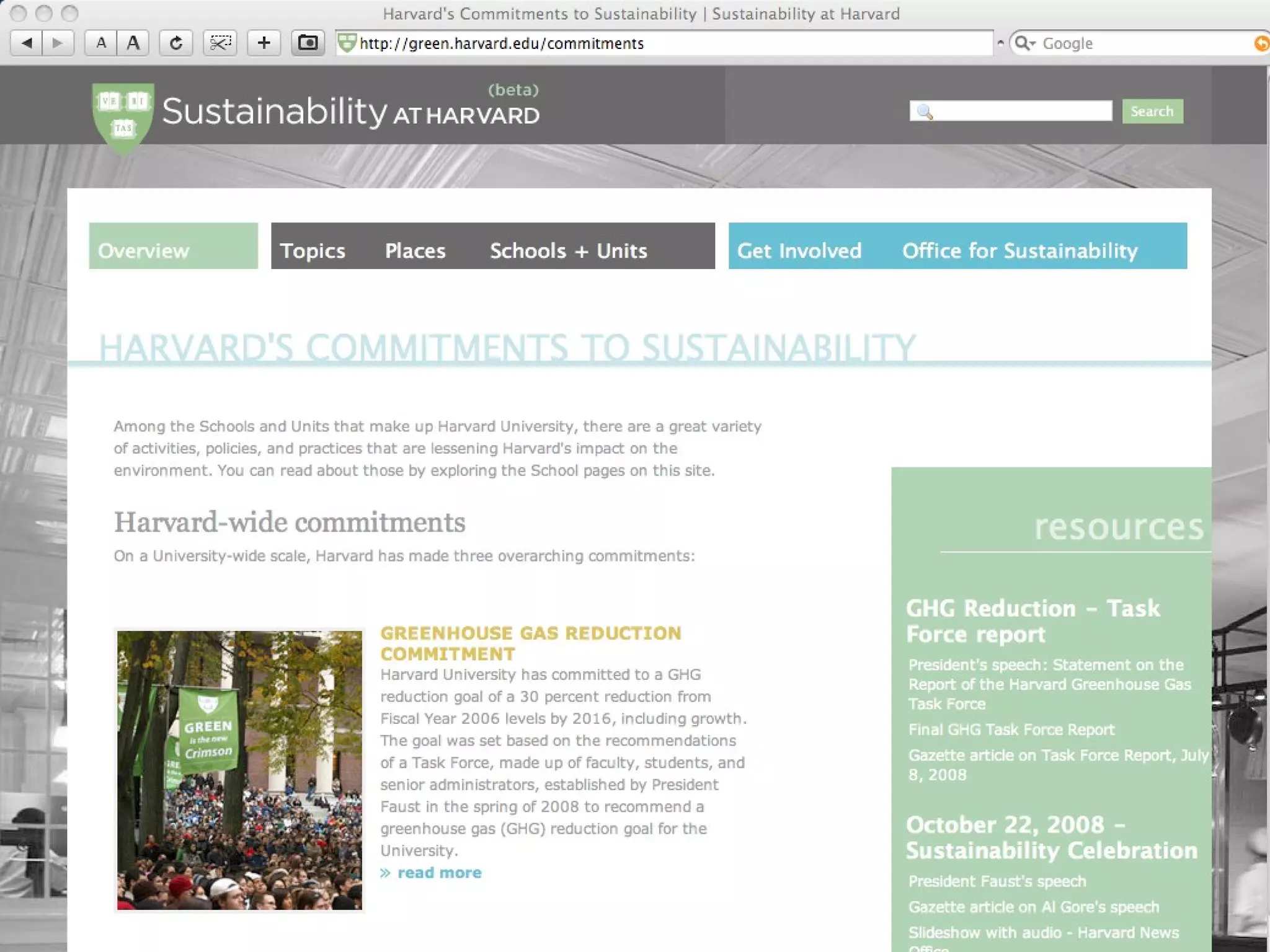
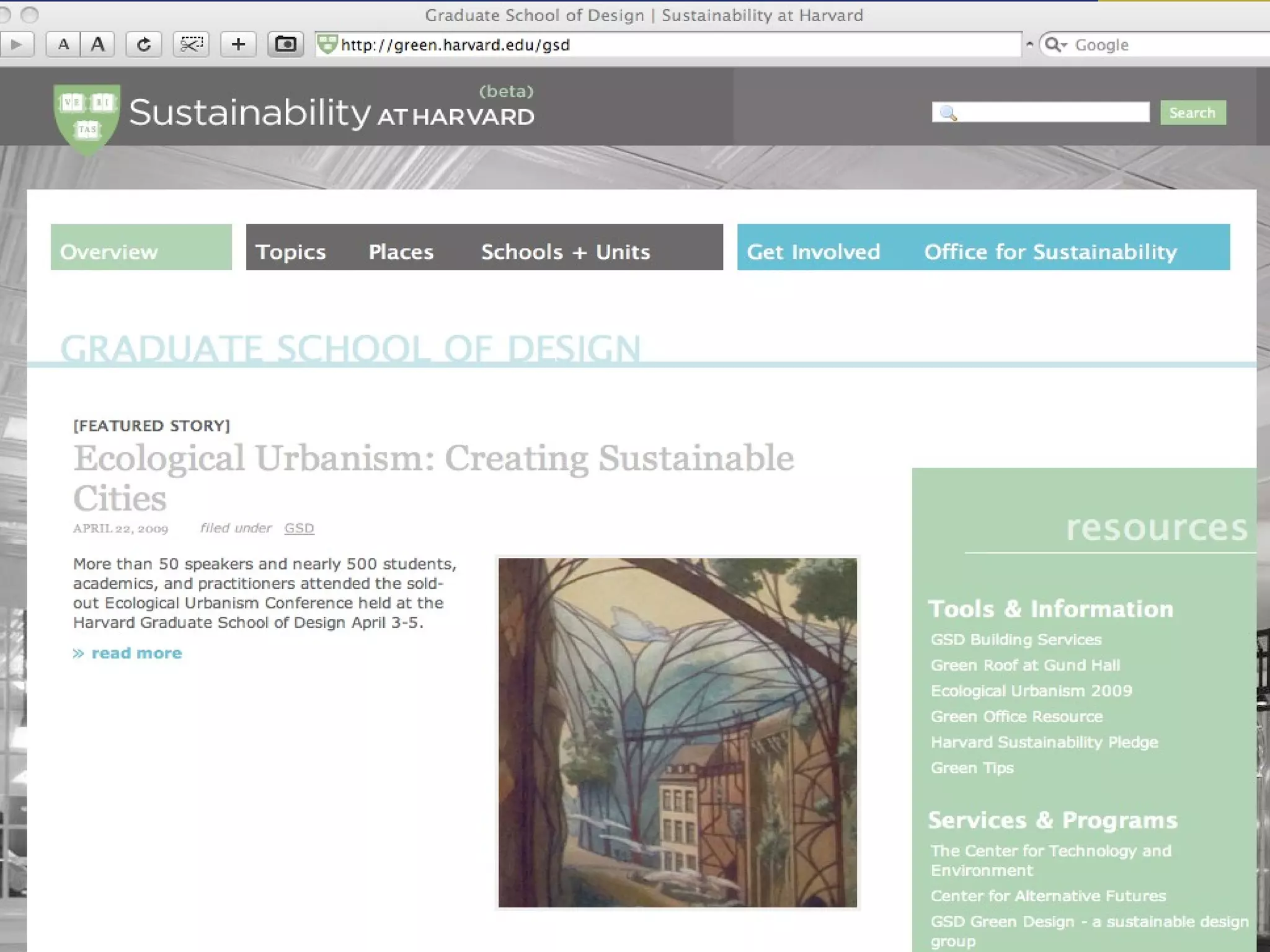
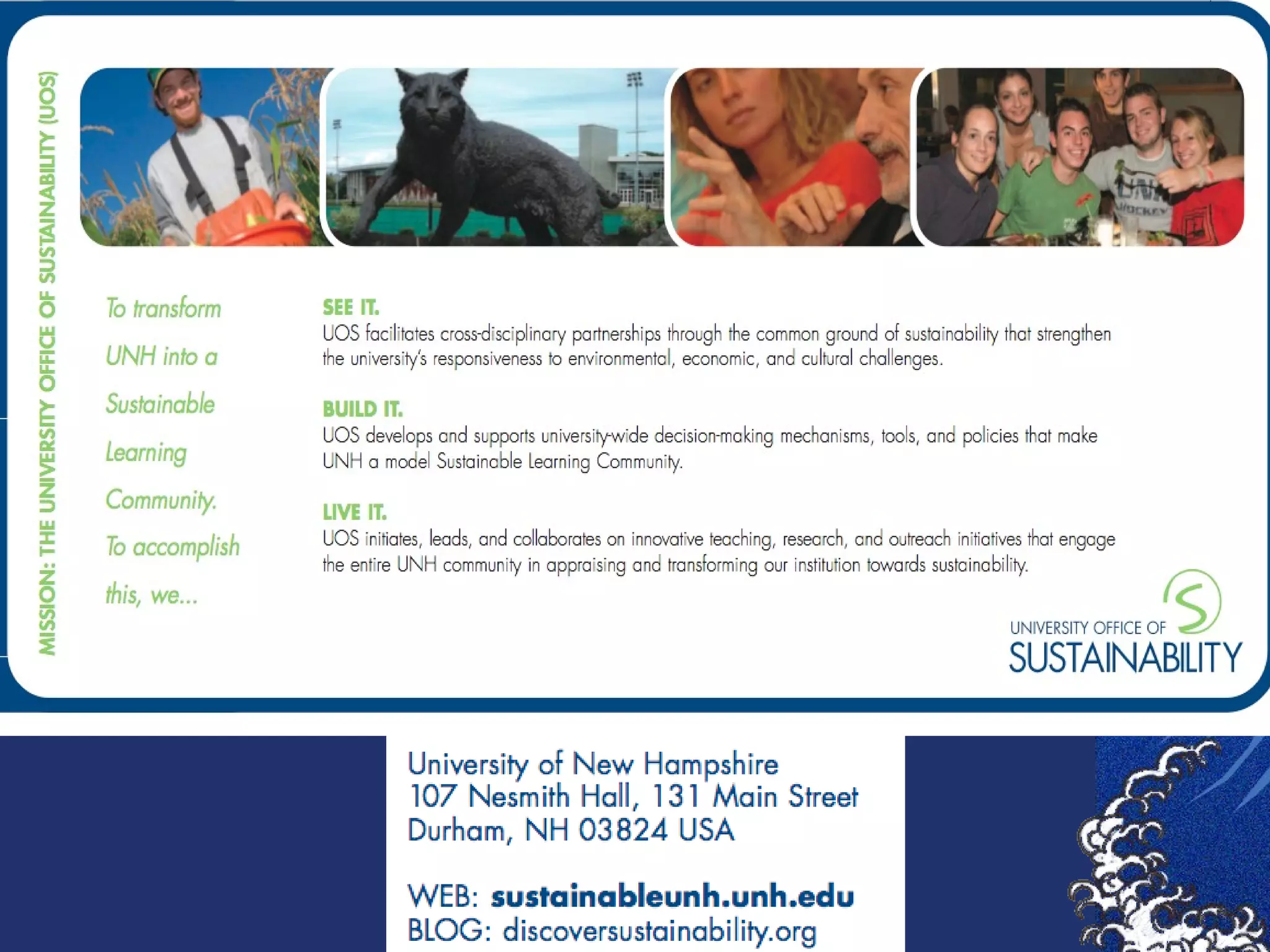
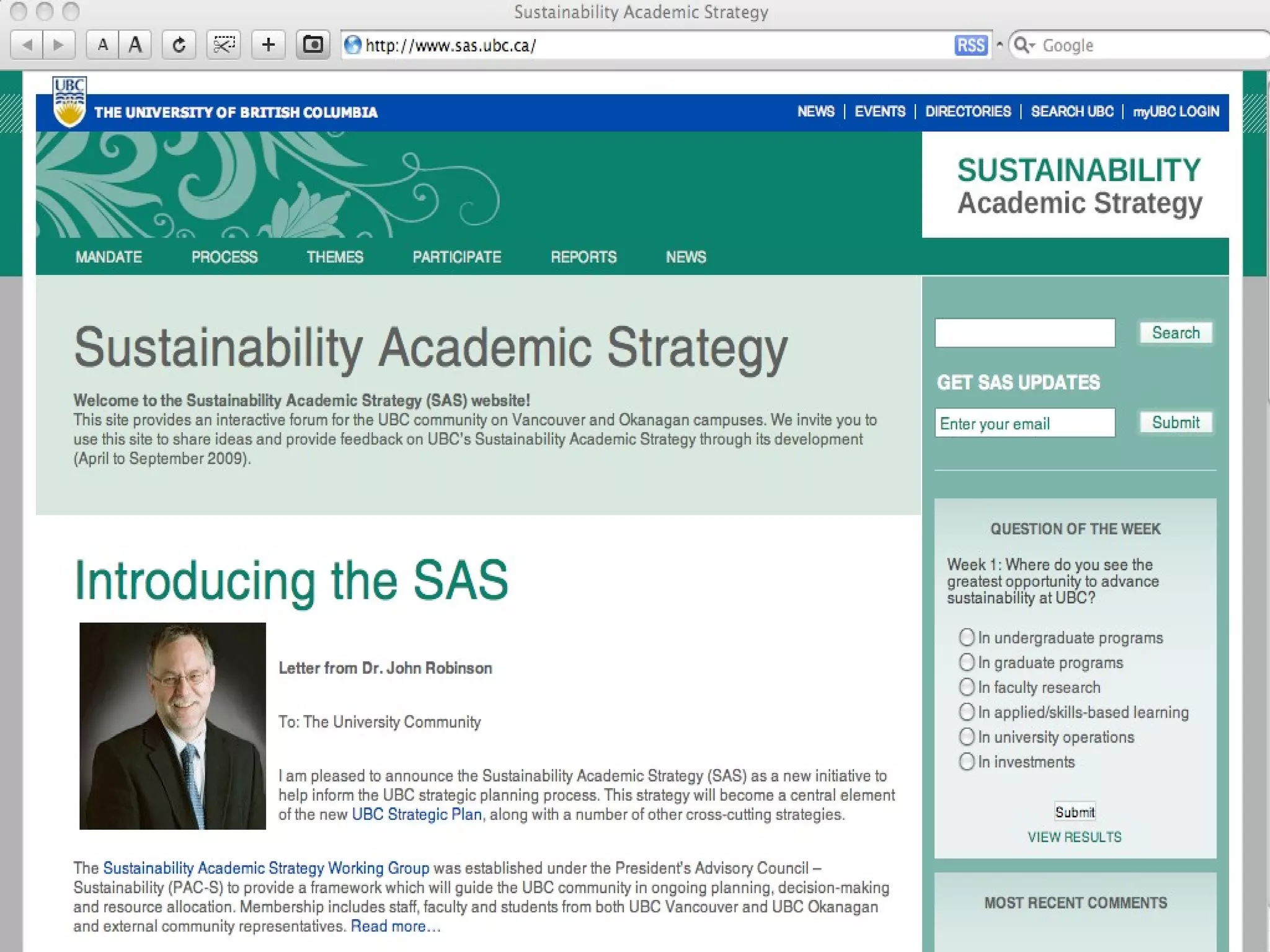
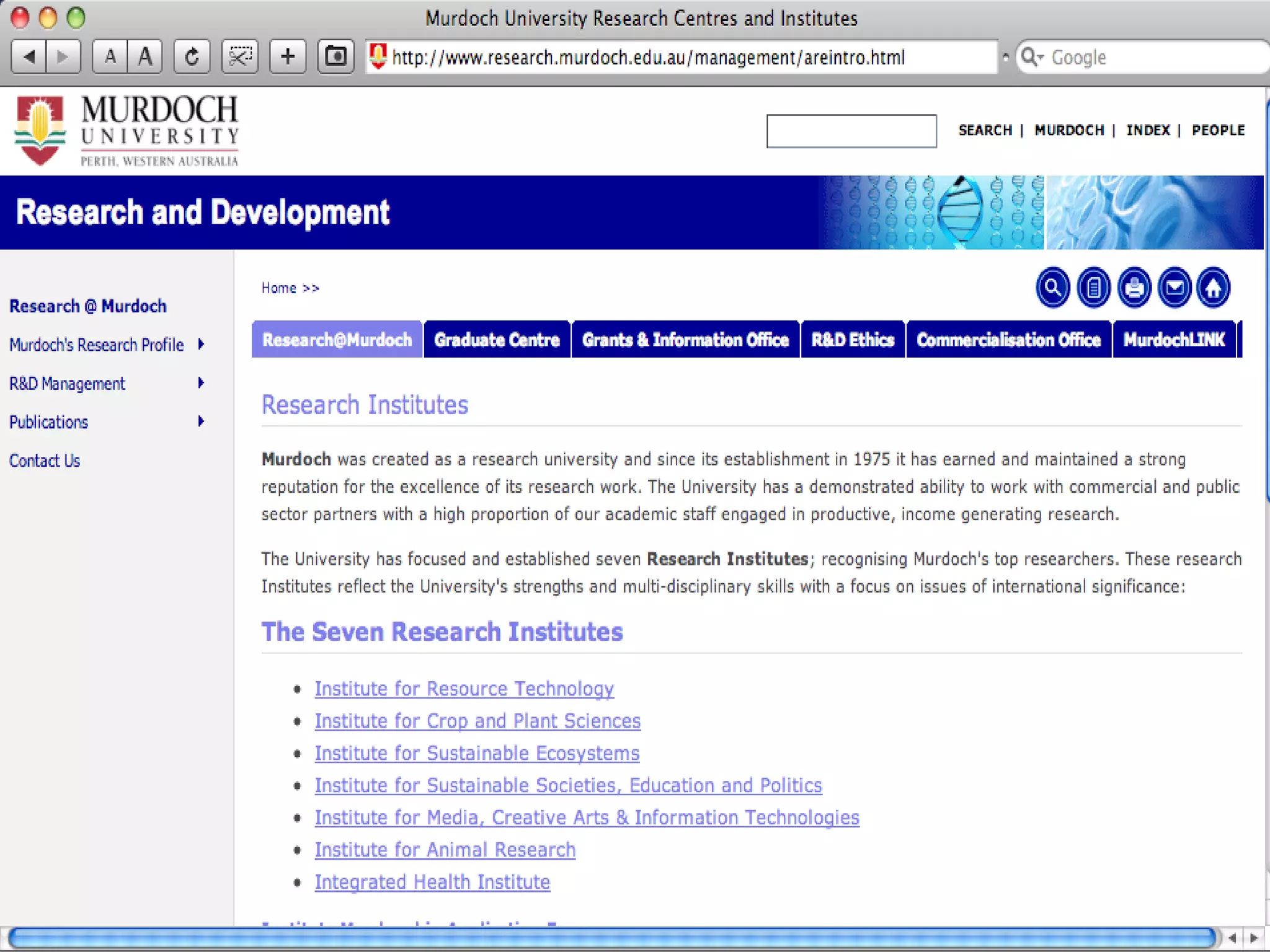
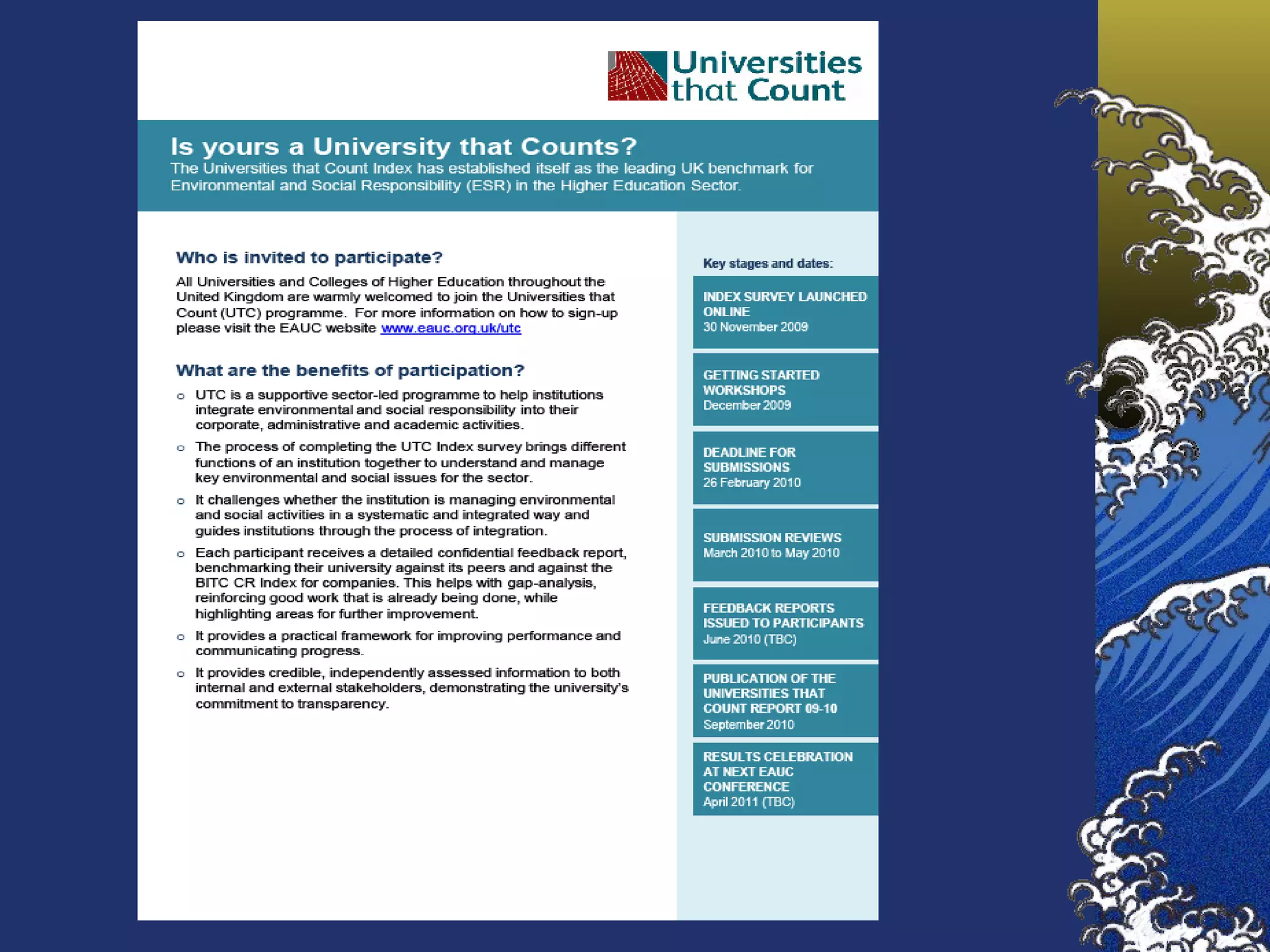
What are Uni’s doing?
CSR and/or sustainability
www.cpi.cam.ac.uk/


Brainstorm with a partner for 10 minutes Org name Mission, Vision, Objective Ideas for CSR projects  Ideas for Resources
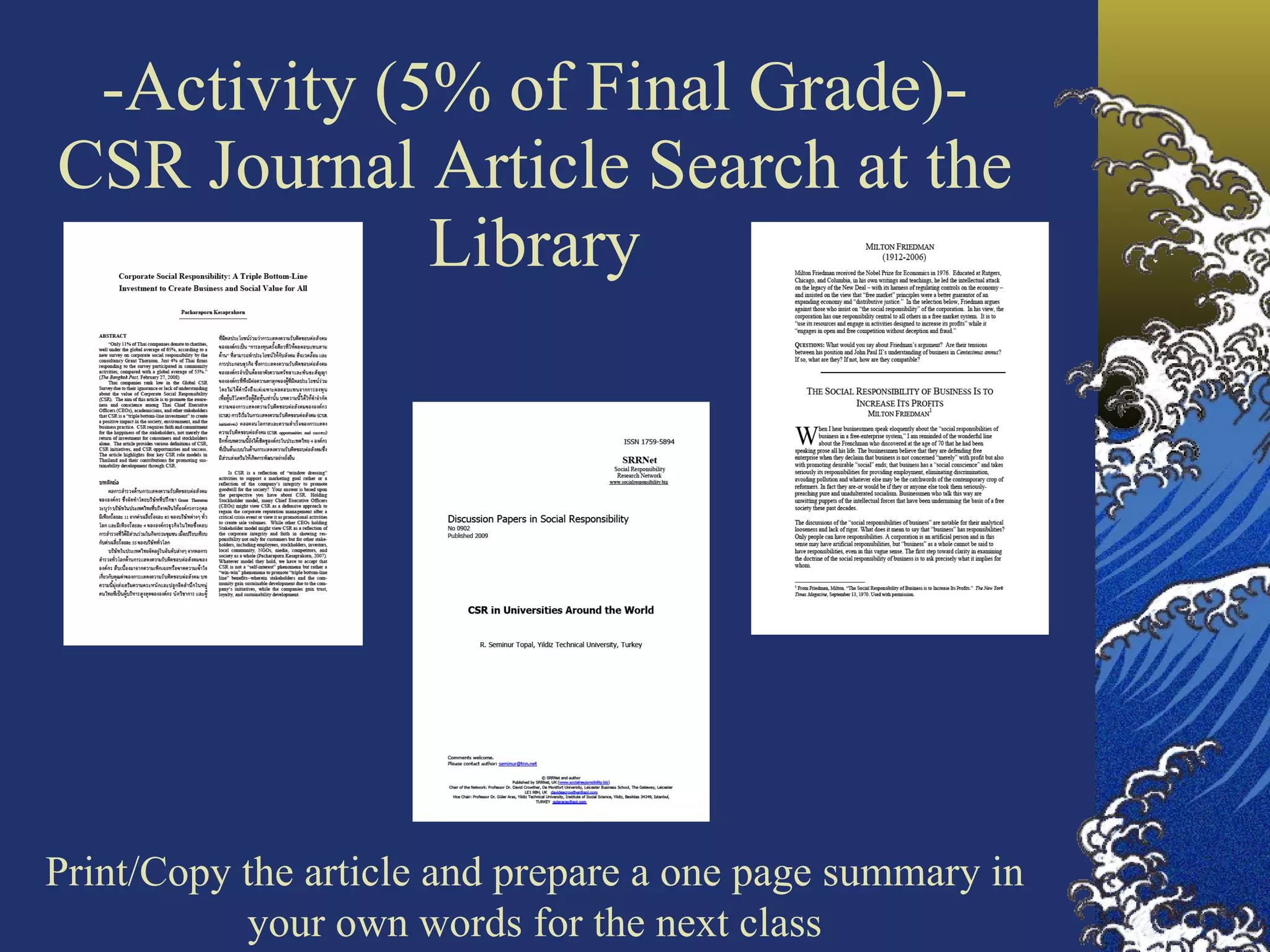
-Activity (5% of Final Grade)- CSR Journal Article Search at the Library Print/Copy the article and prepare a one page summary in your own words for the next class

CSR

  • 1.
  • 2.
    Source (pic) -http://www.flickr.com/photos/metatron1050/1400813198/sizes/o//
  • 3.
    Put the cardsin order… Most like you is the first card and least like you is the bottom card
  • 4.
  • 5.
  • 6.
  • 7.
  • 8.
    Move to theside of the room that most represents you Discuss with your friends and provide examples that prove that your top card is correct
  • 9.
    Your bottom twocards represent your biggest opportunity for growth The perfect team would have a member who has a top card that is different from yours
  • 10.
    Do you havethe resources?
  • 11.
    1st presentation (January24) The 10-15 minute presentation should be followed by a lively discussion. The PPT should summarize the assigned social initiatives and prepare a short presentation that includes the following; Introduction Examples of initiatives Benefits &Concerns Keys to Success When to consider Ideas for Assumption University Conclusion and Discussion Pair work OK for next week?
  • 12.
  • 13.
    The “Six Optionsfor Doing Good” (Corporate Social Initiatives) Marketing Related Cause Promotions Cause-Related Marketing Corporate Social Marketing Not typically Marketing Related Corporate Philanthropy Community Volunteering Socially Responsible Practices
  • 14.
    Business Ethics MagazineList of 100 Best Corporate Citizens (only publicly traded companies) No Lodging Companies On This List 3 Restaurant Companies Listed 1 Airline Listed *No Other Firm From T&T Listed
  • 15.
  • 16.
  • 17.
    What is “good”?Sustainability Corporate Citizenship Community Relations Community Development Global Citizenship
  • 18.
    Corporate Social ResponsibilityCSR is a commitment to improve community well-being through discretionary business practices and contributions of corporate resources -Kotler,Lee
  • 19.
    Corporate Social InitiativesActivities undertaken by a corporation to support social causes and to fulfill commitments to CSR. -Kotler, Lee
  • 20.
    If we can’tdefine “tourism” by now a definitive CSR definition is a long way off. WTO World Business Council Defining CSR, Redefining CSR, The evolving definition of CSR
  • 21.
    What are thetrends? Increased Giving Increased Reporting Establishment of a Corporate Norm to Do Good A shift from Obligation to Strategy
  • 22.
    The Traditional ApproachFulfilling an Obligation The New Approach Supporting Corporate Objectives
  • 23.
    Why Do GoodIncreased Sales and Market Share Strengthened Brand Position Improved Corporate Image and Clout Increased Ability to Attract, Motivate and Retain Employees Decreased Operating Costs Increased Appeal to Investors and Financial Analysts
  • 24.
    Challenges to DoingGood Choosing a Social Issue Selecting an Initiative to Address the Issue Developing and Implementing Program Plans Evaluation and Measurement
  • 25.
    And that’s Chapter1 any Questions?
  • 26.
  • 27.
    Social Responsibility: …..moredefinitions Corporate Social Responsibility The idea that business has social obligations above and beyond making a profit. Business has an obligation to groups in society other than stockholders and beyond that prescribed by law.
  • 28.
    A Continuum ofSocial Responsibility Strategies (extra)
  • 29.
    Social Responsibility StrategiesReactive Strategy Denying responsibility while striving to maintain the status quo by resisting change. Defensive Strategy Resisting additional social responsibilities with legal and public relations tactics.
  • 30.
    Social Responsibility Strategies (cont’d) Accommodation Strategy Assuming social responsibility only in response to pressure from interest groups or the government. Proactive Strategy Taking the initiative in formulating and putting in place new programs that serve as role models for industry.
  • 31.
    Who Benefits fromCorporate Social Responsibility? Altruism “ Are you being altruistic ?” The unselfish devotion to the interests of others. Research Findings There is a positive correlation between industry leadership on a socially responsible issue (pollution control) and profitability. Corporate social responsibility is a competitive advantage in recruiting talented people.
  • 32.
    Who Benefits fromCorporate Social Responsibility? (cont’d) Enlightened Self-Interest A business ultimately helps itself by helping solve social problems. An Array of Benefits for the Organization Retention of talented employees. Help in recruiting the talented and socially conscious. Help in swaying public opinion. Improved community living standards. … Others.
  • 33.
    The Social Responsibilityof Business Is to Increase Its Profits Please read
  • 34.
  • 35.
    Economist, Milton Friedmansays: “ The social responsibility of business is to increase its profits.” “ What does it mean to say that "business" has responsibilities? Only people can have responsibilities.” “… in a free society there is one and only one social responsibility of business – to use its resources and engage in activities designed to increase its profits so long as it stays within the rules of the game, which is to say, engages in open and free competition without deception or fraud."
  • 36.
    Milton Friedman 1976 Nobel Prize Winner in Economics One of the most effective advocates of economic freedoms and free enterprise An advocate of limited government His theory asserts a corporation's primary and perhaps sole purpose is to maximize profits for the stockholder .
  • 37.
    Milton Friedman Twomain supporting arguments: Stockholders are the owners of the corporation, and hence corporate profits belong to them. Corporate executives are the stockholder's agents and must operate in the interests of their principle (stockholders). This does not allow donations to charity by the corporation (corporate executives) because the income belongs to the stockholders, not the corporate executives. Individual proprietors are different in that if they choose to spend the income generated by their business they are spending their own money, not the money of other people.
  • 38.
    Milton Friedman Stockholders/StakeholdersStockholders are entitled to their profits as a result of a contract among the corporate stakeholders. A stakeholder in this context refers to employees, managers, customers, suppliers, the local community, and the stockholders. Each stakeholder group has a contractual relationship with the firm, since they receive the remuneration they freely agreed to in a pre-established agreement (contract).
  • 39.
    Encouraging Ethical ConductCode of Ethics Published statement of moral expectations for employee conduct Requirements for an effective ethics code Must describe specific practices as unethical (e.g., kickbacks, payoffs, gifts, falsification of records, and misleading product claims). Must be firmly supported and fairly enforced by top management.
  • 40.
  • 41.
  • 42.
    Introduction Agreed duringthe 2000 session of the United Nations General Assembly Every UN Member State made the same commitment to meet the Goals by 2015 7th July 2007 marked the official “half-way” point
  • 43.
    Goal 1 Eradicateextreme poverty and hunger Reduce by half the proportion of people living on less than a dollar a day Reduce by half the proportion of people who suffer from hunger
  • 44.
    Goal 2 Achieveuniversal primary education Ensure that all boys and girls complete a full course of primary schooling
  • 45.
    Goal 3 Promotegender equality and empower women Eliminate gender disparity in primary and secondary education preferably by 2005, and at all levels by 2015
  • 46.
    Goal 4 Reducechild mortality Reduce by two thirds (2/3) the mortality rate among children under five
  • 47.
    Goal 5 Improvematernal health Reduce by three quarters the maternal mortality ratio
  • 48.
    Goal 6 CombatHIV/AIDS, malaria and other diseases Halt and begin to reverse the spread of HIV/AIDS Halt and begin to reverse the incidence of malaria and other major diseases
  • 49.
    Goal 7 Ensureenvironmental sustainability Integrate the principles of sustainable development into country policies and programmes; reverse loss of environmental resources Reduce by half the proportion of people without sustainable access to safe drinking water Achieve significant improvement in lives of at least 100 million slum dwellers, by 2020
  • 50.
    Goal 8 Developa global partnership for development Address the least developed countries' special needs Develop further an open trading and financial system that is rule-based, predictable and non-discriminatory, includes a commitment to good governance, development and poverty reduction - nationally and internationally
  • 51.
    United Nations, Tourismand Blue Washing
  • 52.
  • 53.
    10 articles inthe UN WTO Code of Ethics
  • 54.
  • 55.
  • 56.
  • 57.
  • 58.
  • 59.
  • 60.
  • 61.
  • 62.
  • 63.
  • 64.
  • 65.
  • 66.
  • 67.
  • 68.
  • 69.
  • 70.
  • 71.
  • 72.
  • 73.
  • 74.
  • 75.
  • 76.
  • 77.
  • 78.
  • 79.
    Brainstorm with apartner for 10 minutes Org name Mission, Vision, Objective Ideas for CSR projects Ideas for Resources
  • 80.
    -Activity (5% ofFinal Grade)- CSR Journal Article Search at the Library Print/Copy the article and prepare a one page summary in your own words for the next class

Editor's Notes

  • #26 Connecting Sharing Knowledge