The environmentalThe environmental
problems in the worldproblems in the world
СontentСontent::
• Global deforestation
• Acid rains
• Extinction of species
• Ozone depletion
Global deforestationGlobal deforestation
Deforestation is clearing
Earth's forests on a
massive scale, often
resulting in damage to the
quality of the land. Forests
still cover about 30
percent of the world's land
area. The world’s rain
forests could completely
vanish in a hundred years
at the current rate of
deforestation.
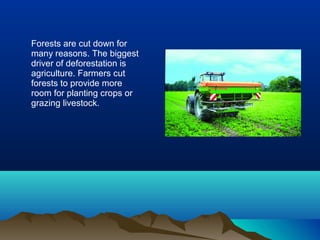
Forests are cut down for
many reasons. The biggest
driver of deforestation is
agriculture. Farmers cut
forests to provide more
room for planting crops or
grazing livestock.
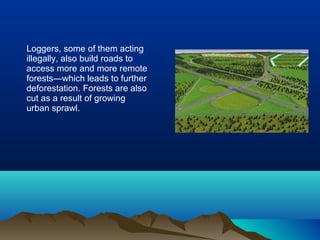
Loggers, some of them acting
illegally, also build roads to
access more and more remote
forests—which leads to further
deforestation. Forests are also
cut as a result of growing
urban sprawl.
Deforestation has
many negative effects
on the environment.
Seventy percent of
Earth's land animals
and plants live in
forests, and many
cannot survive the
deforestation that
destroys their homes.
Deforestation also drives climate change. Forest soils are moist,
but without protection from sun-blocking tree cover they quickly
dry out.
Trees also play a critical role in absorbing the greenhouse gases
that fuel global warming.
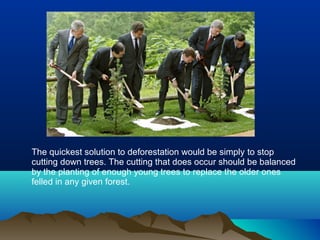
The quickest solution to deforestation would be simply to stop
cutting down trees. The cutting that does occur should be balanced
by the planting of enough young trees to replace the older ones
felled in any given forest.
Acid rainAcid rain
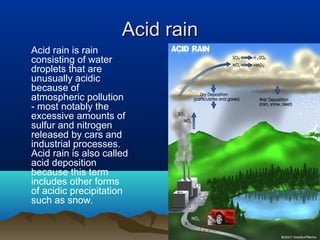
Acid rain is rain
consisting of water
droplets that are
unusually acidic
because of
atmospheric pollution
- most notably the
excessive amounts of
sulfur and nitrogen
released by cars and
industrial processes.
Acid rain is also called
acid deposition
because this term
includes other forms
of acidic precipitation
such as snow.
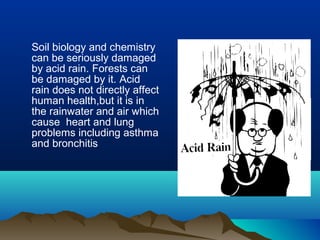
Soil biology and chemistry
can be seriously damaged
by acid rain. Forests can
be damaged by it. Acid
rain does not directly affect
human health,but it is in
the rainwater and air which
cause heart and lung
problems including asthma
and bronchitis
Acid rain can also damage
buildings and historic
monuments and statues,
especially those made of
rocks, such
as limestone and marble.
Acid rain also increases
the corrosion rate of metals,
in
particular iron, steel, copper
and bronze.
Scientists are working to
prevent industries from
making acid rains. They used
technical solutions and
control emissions of oxides
from motor vehicles. Special
internation programmes had
been carried out to control air
pollution.
Extinction of speciesExtinction of species
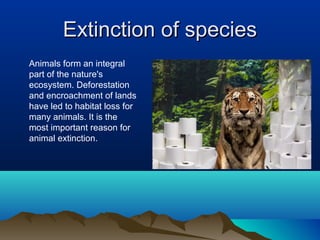
Animals form an integral
part of the nature's
ecosystem. Deforestation
and encroachment of lands
have led to habitat loss for
many animals. It is the
most important reason for
animal extinction.
Poaching and wildlife trade in
animals and their body-parts have
become a reason for extinction of
many animals. Tiger bones and
horns of rhinoceros are believed to
possess healing properties.
Elephants across the world are
hunted for their ivory-tusks.
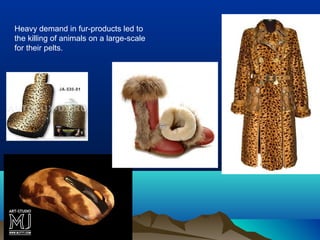
Heavy demand in fur-products led to
the killing of animals on a large-scale
for their pelts.
10 Species Near Extinction
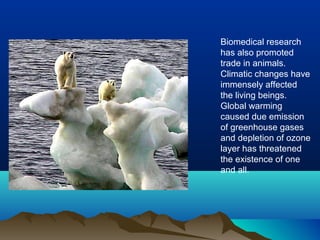
Biomedical research
has also promoted
trade in animals.
Climatic changes have
immensely affected
the living beings.
Global warming
caused due emission
of greenhouse gases
and depletion of ozone
layer has threatened
the existence of one
and all.
Therefore, the endemic
species of animals
have become
vulnerable to habitat
loss caused by human
factors.
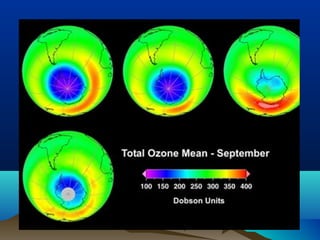
Ozone depletionOzone depletion
The ozone layer is a layer
in Earth's atmosphere containing
relatively high concentrations
of ozone. However, "relatively
high," in the case of ozone, is still
very small with regard to ordinary
oxygen, and is less than ten
parts per million. The ozone layer
is mainly found in the lower
portion of the stratosphere from
approximately 20 to 30
kilometres (12 to 19 mi) above
Earth, though the thickness
varies seasonally and
geographically. The ozone layer
was discovered in 1913 by the
French physicists Charles
Fabry and Henri Buisson.
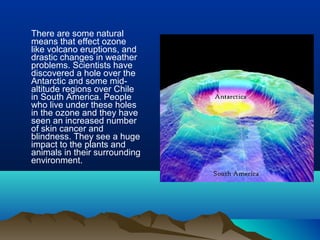
There are some natural
means that effect ozone
like volcano eruptions, and
drastic changes in weather
problems. Scientists have
discovered a hole over the
Antarctic and some mid-
altitude regions over Chile
in South America. People
who live under these holes
in the ozone and they have
seen an increased number
of skin cancer and
blindness. They see a huge
impact to the plants and
animals in their surrounding
environment.
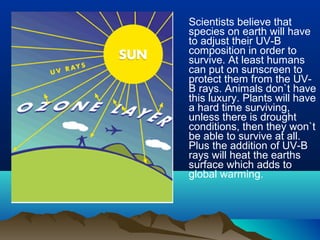
Scientists believe that
species on earth will have
to adjust their UV-B
composition in order to
survive. At least humans
can put on sunscreen to
protect them from the UV-
B rays. Animals don`t have
this luxury. Plants will have
a hard time surviving,
unless there is drought
conditions, then they won`t
be able to survive at all.
Plus the addition of UV-B
rays will heat the earths
surface which adds to
global warming.
Made by:
Marta Yanishevska
and
Christina Stasyuk

The environmental problems in the world

  • 1.
    The environmentalThe environmental problemsin the worldproblems in the world
  • 2.
    СontentСontent:: • Global deforestation •Acid rains • Extinction of species • Ozone depletion
  • 3.
    Global deforestationGlobal deforestation Deforestationis clearing Earth's forests on a massive scale, often resulting in damage to the quality of the land. Forests still cover about 30 percent of the world's land area. The world’s rain forests could completely vanish in a hundred years at the current rate of deforestation.
  • 4.
    Forests are cutdown for many reasons. The biggest driver of deforestation is agriculture. Farmers cut forests to provide more room for planting crops or grazing livestock.
  • 5.
    Loggers, some ofthem acting illegally, also build roads to access more and more remote forests—which leads to further deforestation. Forests are also cut as a result of growing urban sprawl.
  • 6.
    Deforestation has many negativeeffects on the environment. Seventy percent of Earth's land animals and plants live in forests, and many cannot survive the deforestation that destroys their homes.
  • 7.
    Deforestation also drivesclimate change. Forest soils are moist, but without protection from sun-blocking tree cover they quickly dry out.
  • 8.
    Trees also playa critical role in absorbing the greenhouse gases that fuel global warming.
  • 9.
    The quickest solutionto deforestation would be simply to stop cutting down trees. The cutting that does occur should be balanced by the planting of enough young trees to replace the older ones felled in any given forest.
  • 10.
    Acid rainAcid rain Acidrain is rain consisting of water droplets that are unusually acidic because of atmospheric pollution - most notably the excessive amounts of sulfur and nitrogen released by cars and industrial processes. Acid rain is also called acid deposition because this term includes other forms of acidic precipitation such as snow.
  • 11.
    Soil biology andchemistry can be seriously damaged by acid rain. Forests can be damaged by it. Acid rain does not directly affect human health,but it is in the rainwater and air which cause heart and lung problems including asthma and bronchitis
  • 12.
    Acid rain canalso damage buildings and historic monuments and statues, especially those made of rocks, such as limestone and marble. Acid rain also increases the corrosion rate of metals, in particular iron, steel, copper and bronze. Scientists are working to prevent industries from making acid rains. They used technical solutions and control emissions of oxides from motor vehicles. Special internation programmes had been carried out to control air pollution.
  • 14.
    Extinction of speciesExtinctionof species Animals form an integral part of the nature's ecosystem. Deforestation and encroachment of lands have led to habitat loss for many animals. It is the most important reason for animal extinction.
  • 15.
    Poaching and wildlifetrade in animals and their body-parts have become a reason for extinction of many animals. Tiger bones and horns of rhinoceros are believed to possess healing properties. Elephants across the world are hunted for their ivory-tusks.
  • 16.
    Heavy demand infur-products led to the killing of animals on a large-scale for their pelts.
  • 17.
    10 Species NearExtinction
  • 18.
    Biomedical research has alsopromoted trade in animals. Climatic changes have immensely affected the living beings. Global warming caused due emission of greenhouse gases and depletion of ozone layer has threatened the existence of one and all.
  • 19.
    Therefore, the endemic speciesof animals have become vulnerable to habitat loss caused by human factors.
  • 20.
    Ozone depletionOzone depletion Theozone layer is a layer in Earth's atmosphere containing relatively high concentrations of ozone. However, "relatively high," in the case of ozone, is still very small with regard to ordinary oxygen, and is less than ten parts per million. The ozone layer is mainly found in the lower portion of the stratosphere from approximately 20 to 30 kilometres (12 to 19 mi) above Earth, though the thickness varies seasonally and geographically. The ozone layer was discovered in 1913 by the French physicists Charles Fabry and Henri Buisson.
  • 21.
    There are somenatural means that effect ozone like volcano eruptions, and drastic changes in weather problems. Scientists have discovered a hole over the Antarctic and some mid- altitude regions over Chile in South America. People who live under these holes in the ozone and they have seen an increased number of skin cancer and blindness. They see a huge impact to the plants and animals in their surrounding environment.
  • 22.
    Scientists believe that specieson earth will have to adjust their UV-B composition in order to survive. At least humans can put on sunscreen to protect them from the UV- B rays. Animals don`t have this luxury. Plants will have a hard time surviving, unless there is drought conditions, then they won`t be able to survive at all. Plus the addition of UV-B rays will heat the earths surface which adds to global warming.
  • 24.