The document discusses the role of echocardiography (echo) in assessing hemodynamics and the complexities of using echocardiographic measurements in critically ill patients. It highlights the assumptions and limitations of different echocardiographic methods, emphasizing the importance of accurate measurement techniques to avoid errors in cardiac function assessments. Additionally, it covers various parameters used to evaluate fluid responsiveness and the impact of interventions in specific clinical scenarios.
Introduction to Deirdre Murphy Alfred ICU, discussing the truth and assumptions regarding echocardiography.
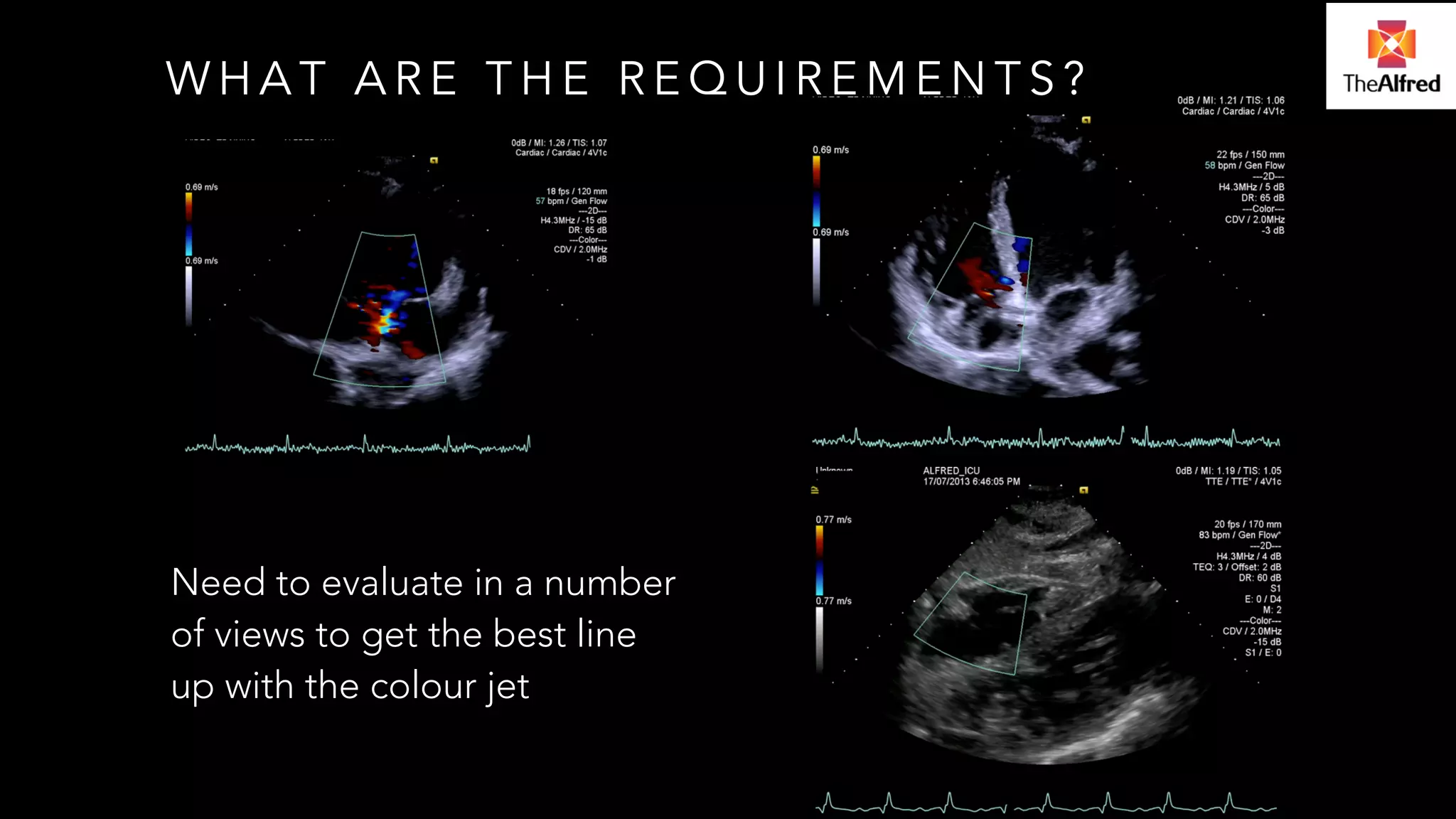
Emphasizes understanding limitations and methodologies in echographic assessments, including common hemodynamic information. Discusses achieving good Doppler traces, understanding flow patterns, and maintaining accurate measurements through various views.
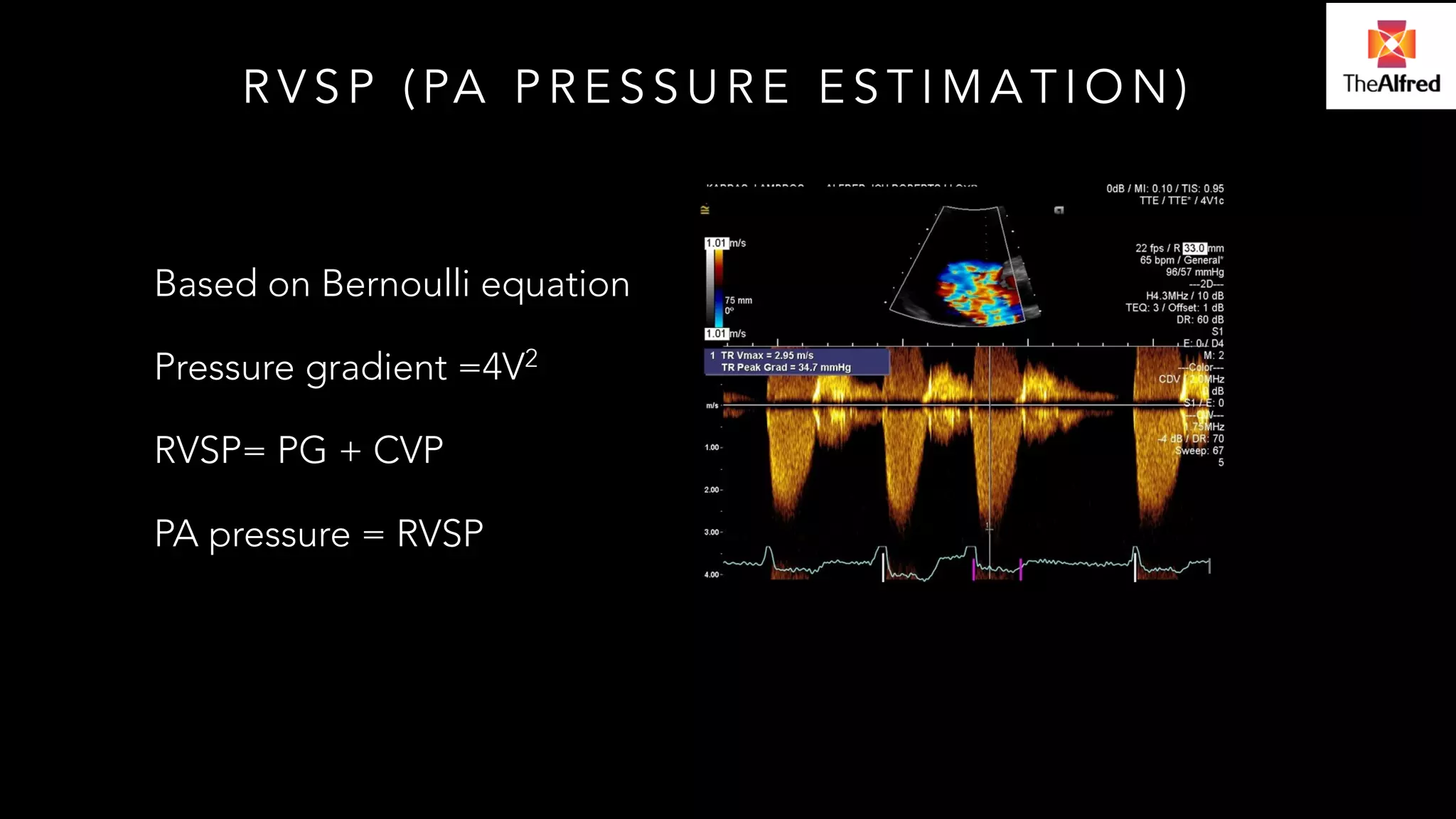
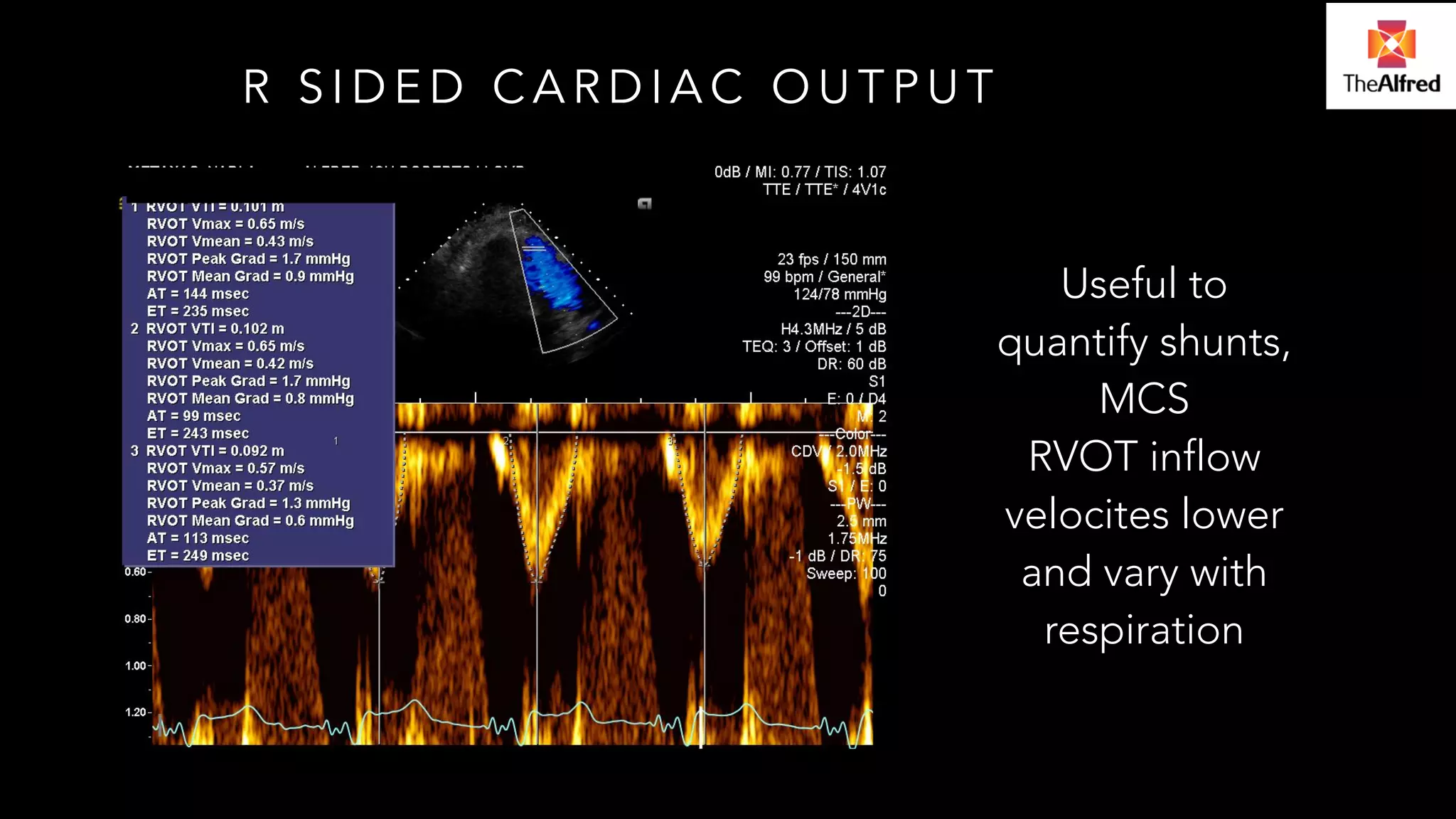
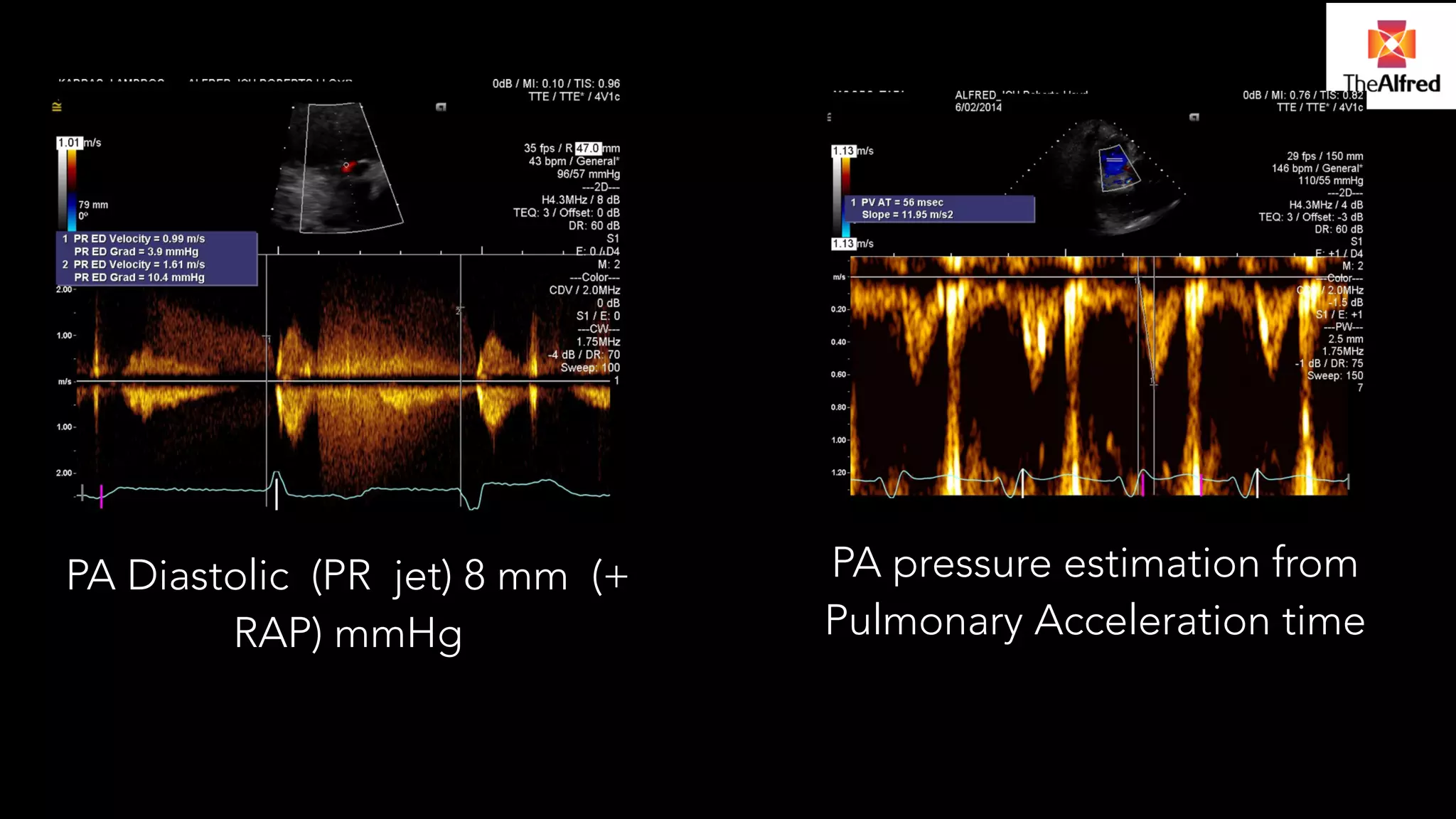
Explores the evaluation of right-sided cardiac output and pulmonary acceleration time for PA pressure estimation.
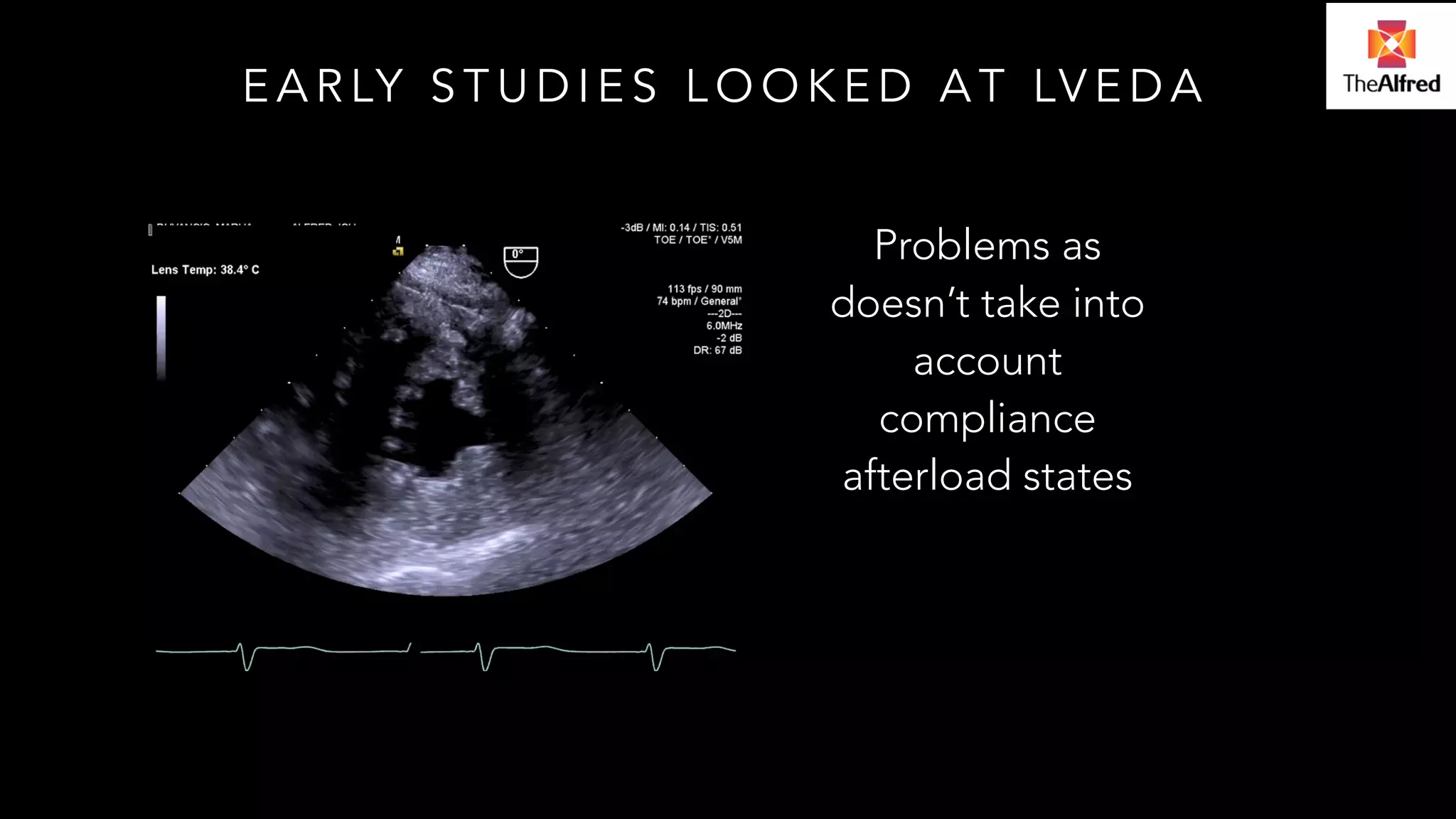
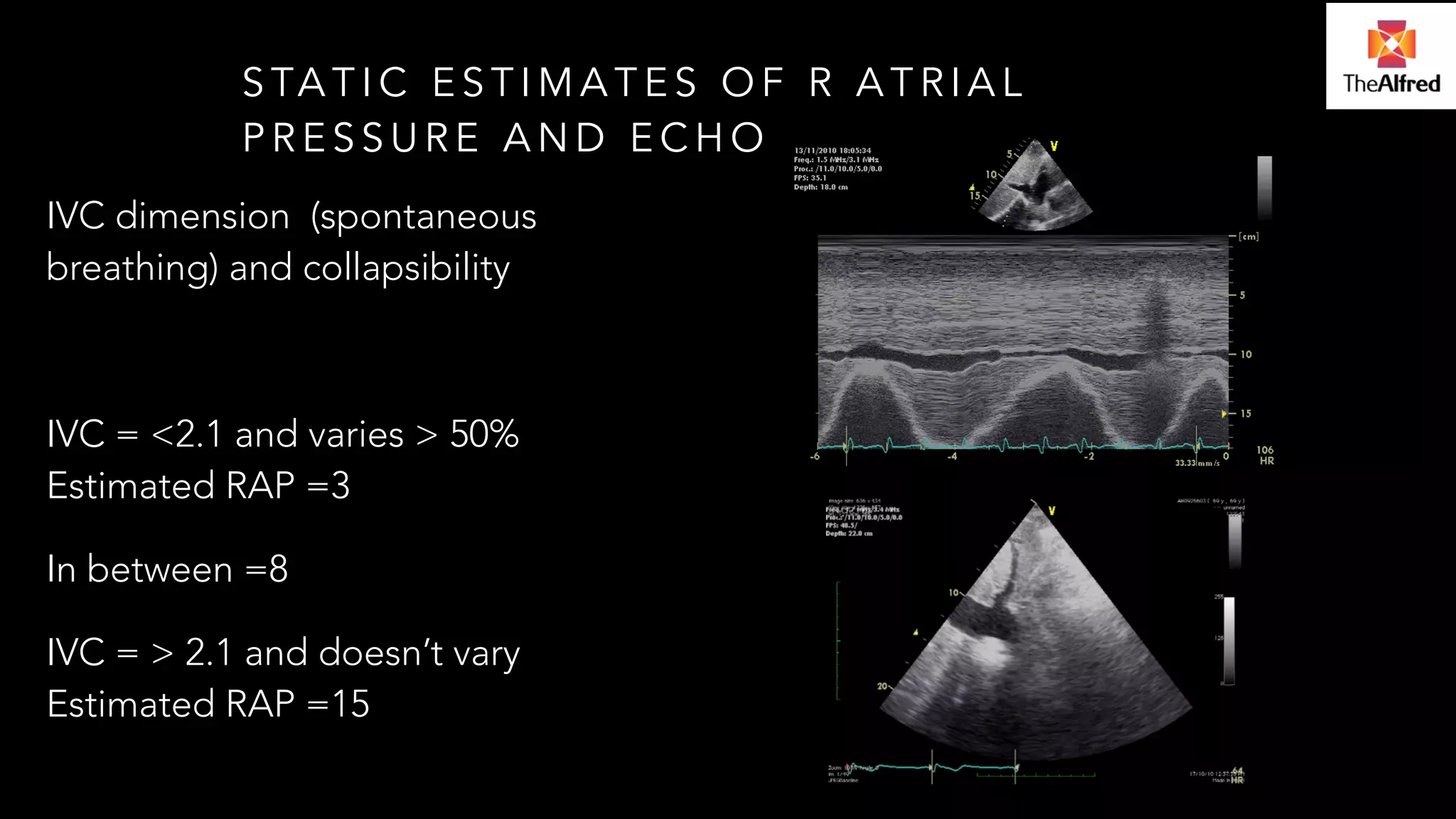
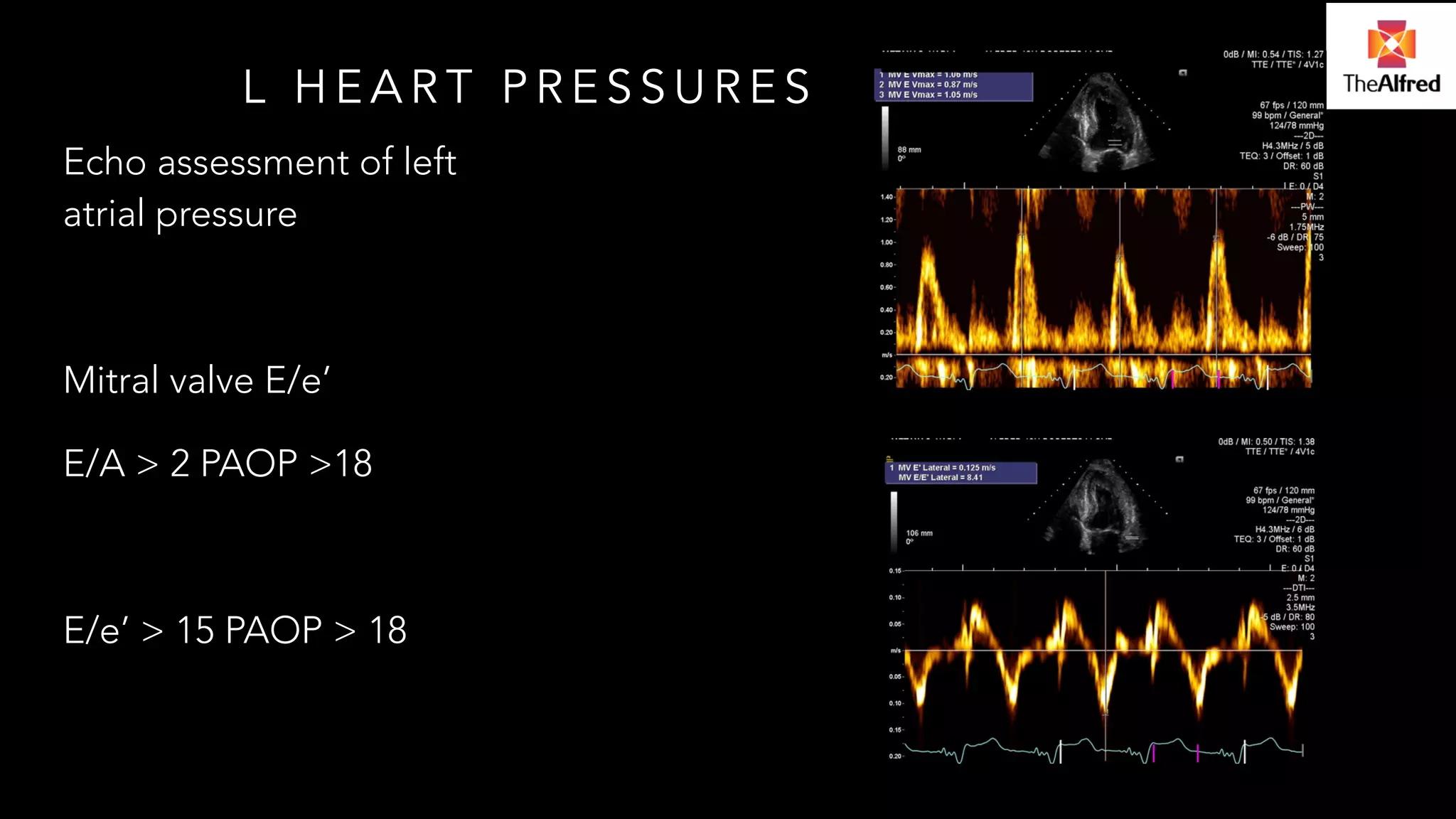
Investigates early studies on left atrial pressure estimates from IVC dimensions, important for assessing volume states.
Functional evaluation of hemodyanamics, including IVC distensibility index and the predictive value of passive leg raises.
Assessment of fluid responsiveness in patients using echo to determine ventricular stroke volumes and intrathoracic pressure effects.

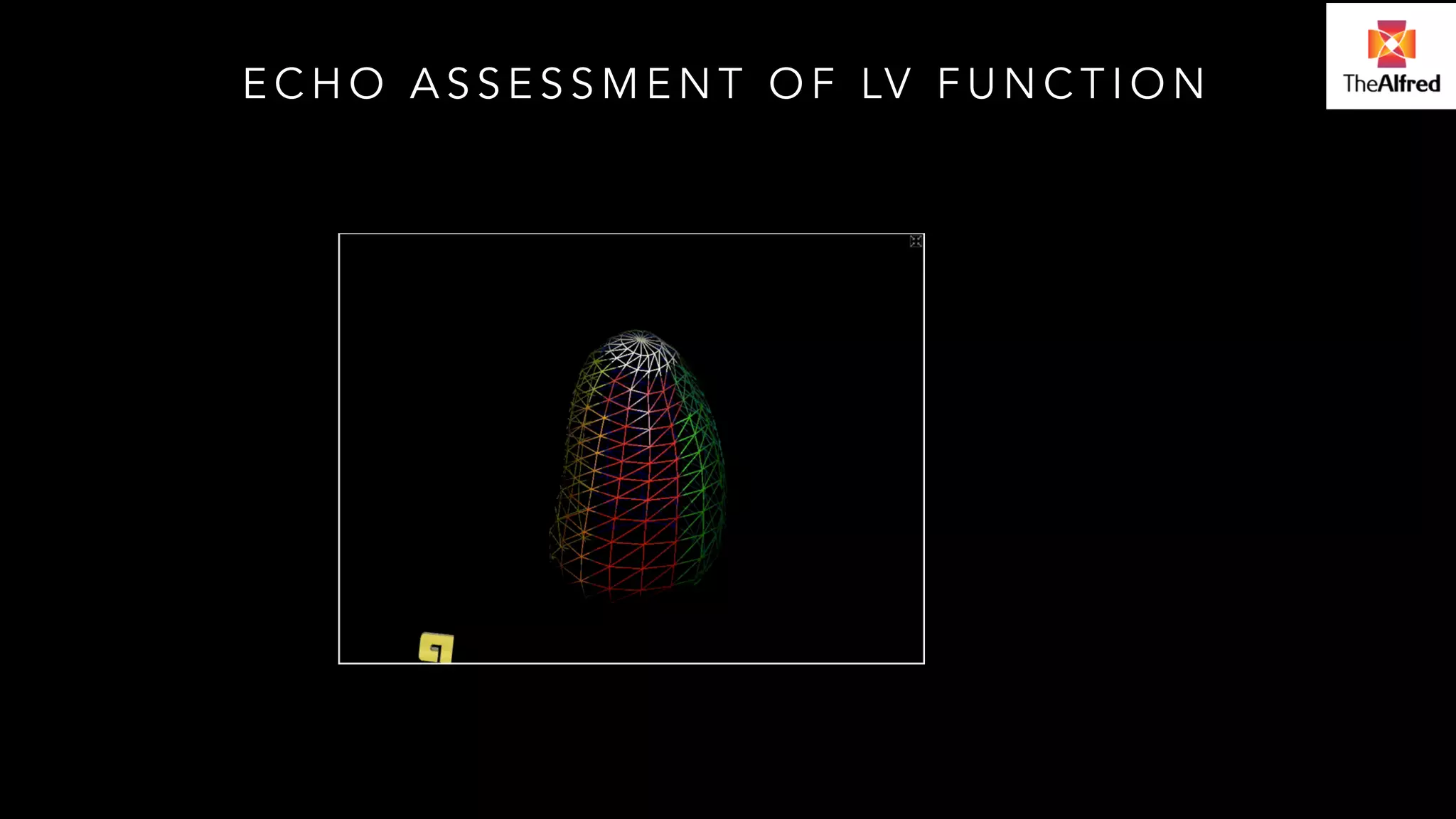
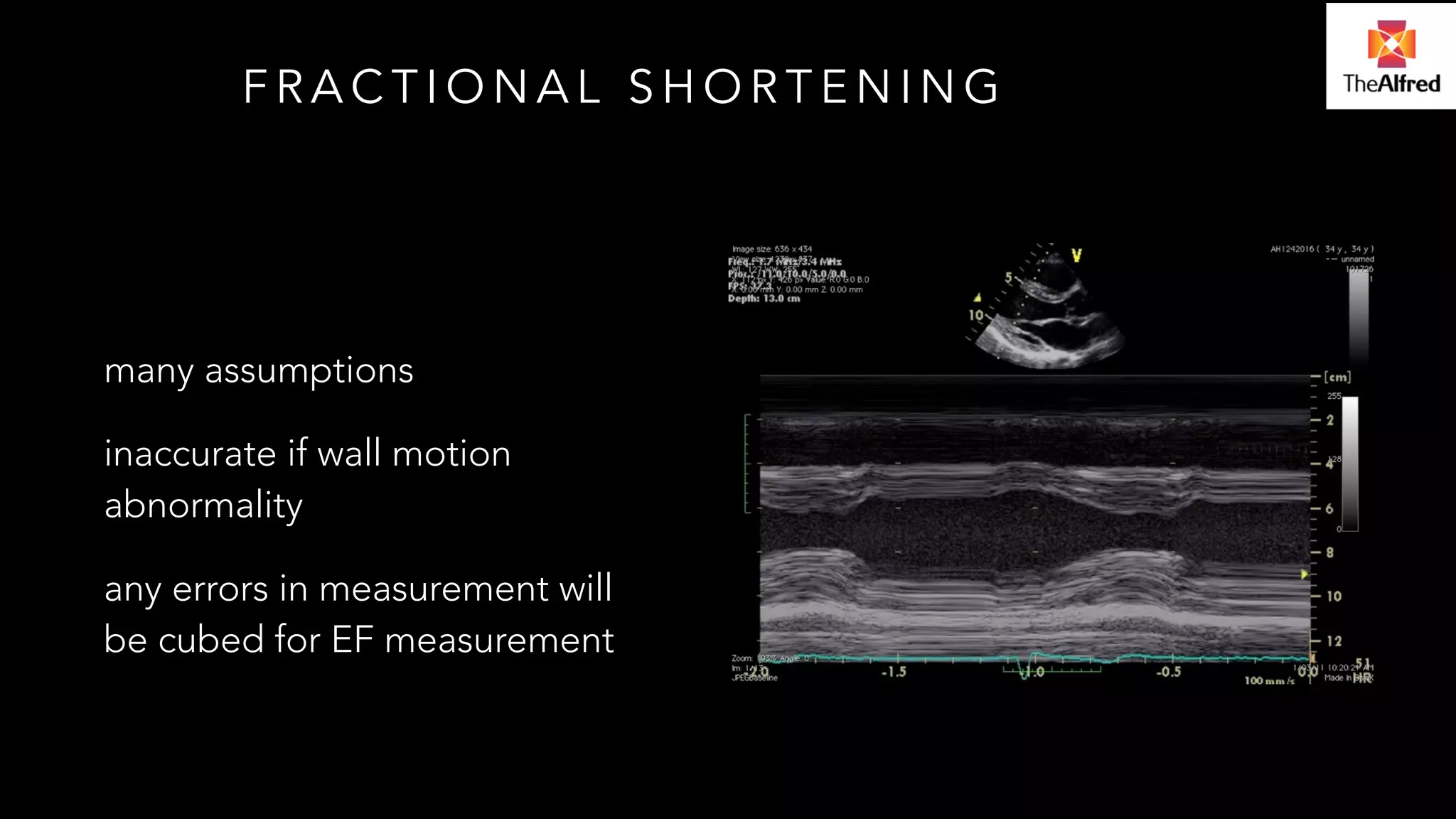
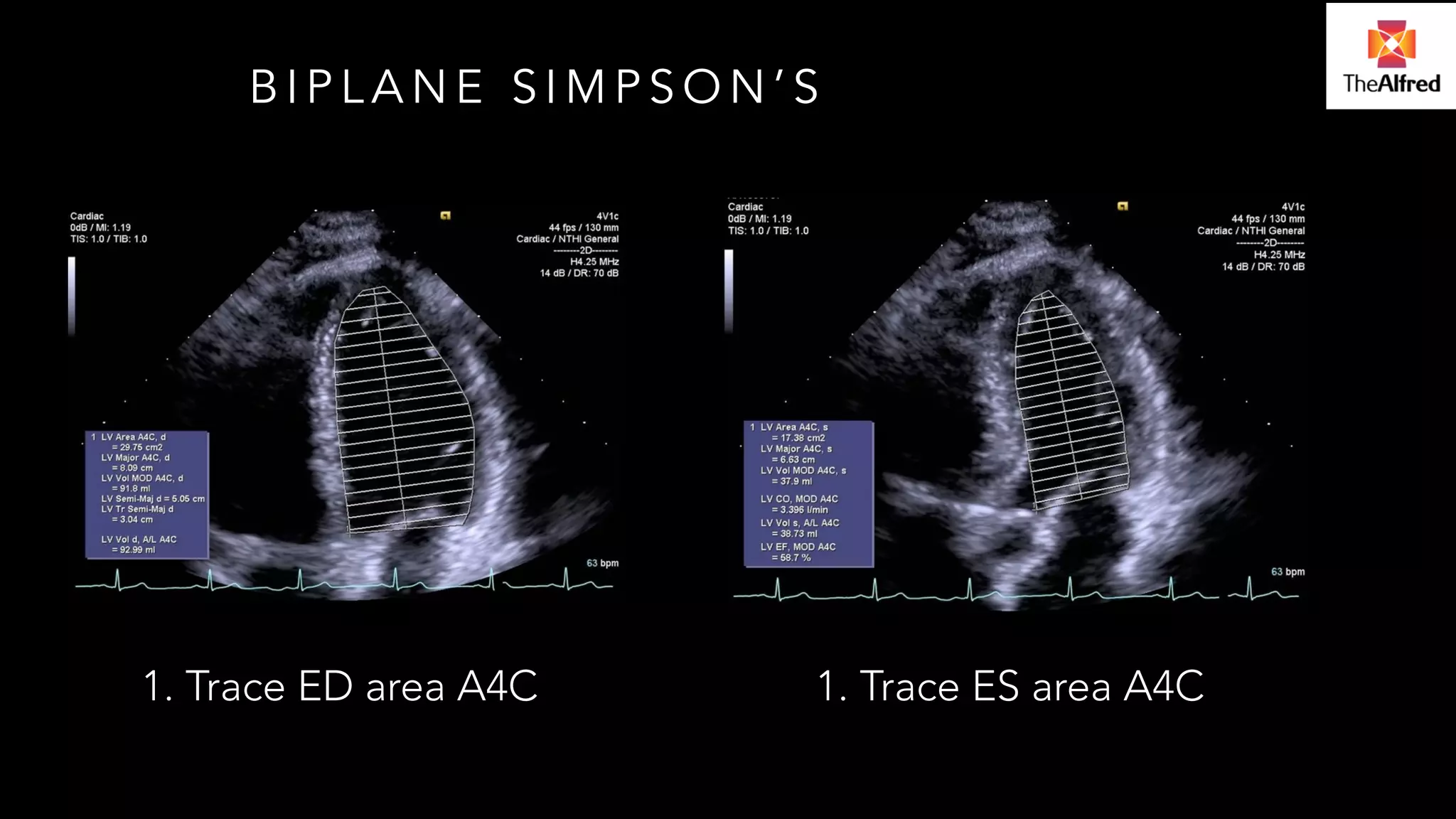
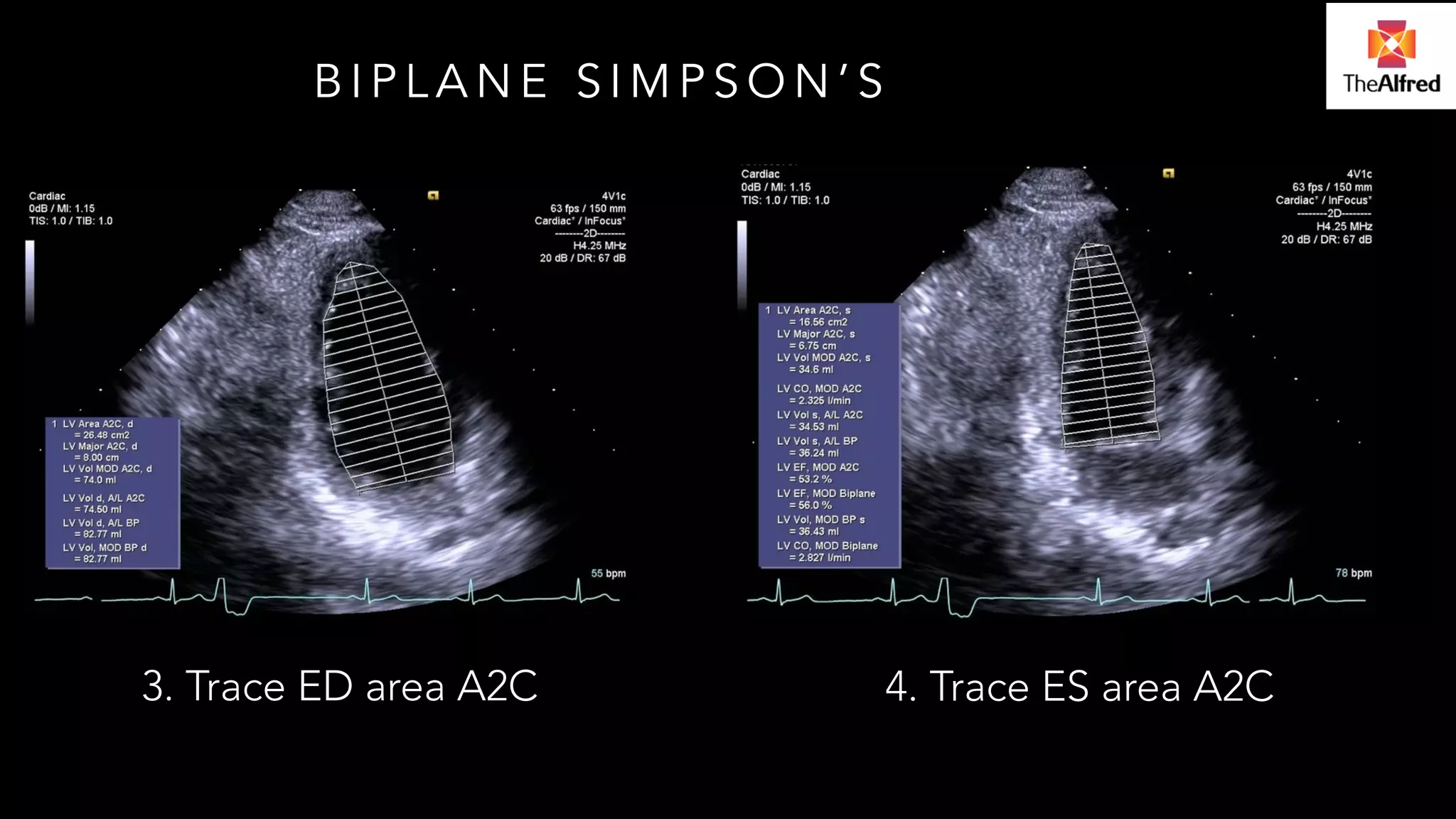
Analysis of LV function, including methods, complexities of measurements, and echocardiography as a dynamic hemodynamic tool.
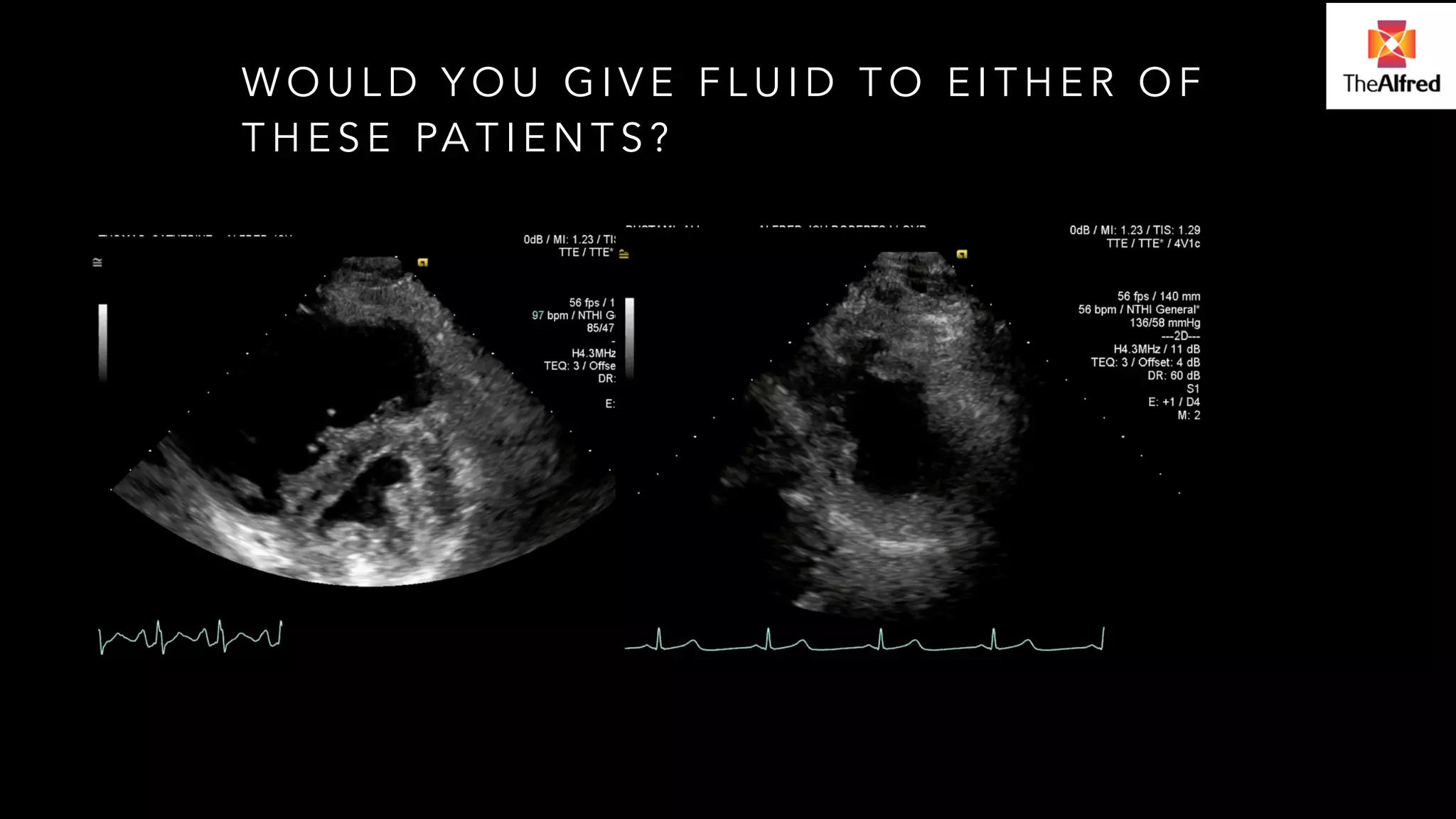

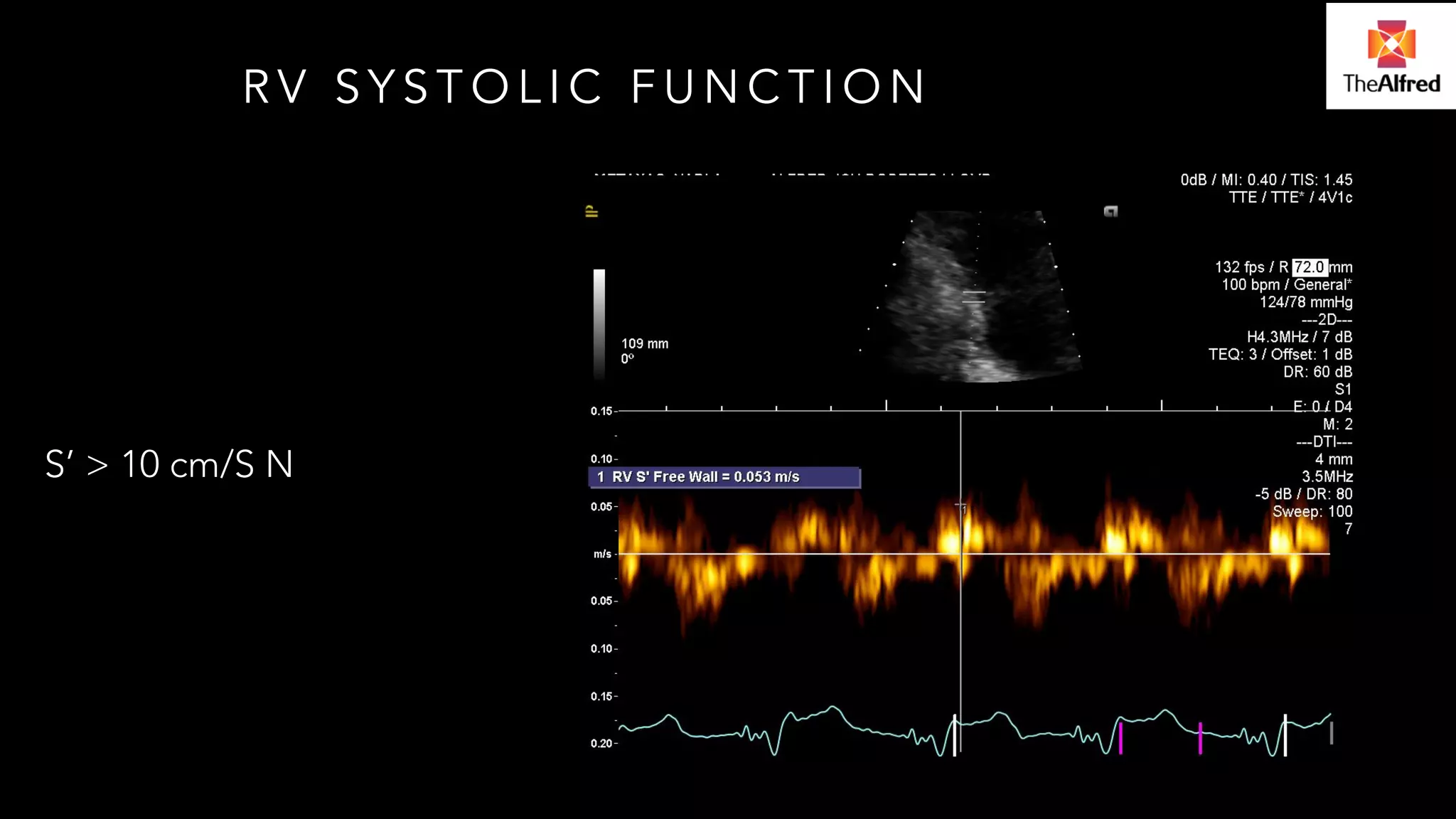
Presents a case study of a patient post-surgery, discussing differential diagnosis and the role of echo in hemodynamic management.
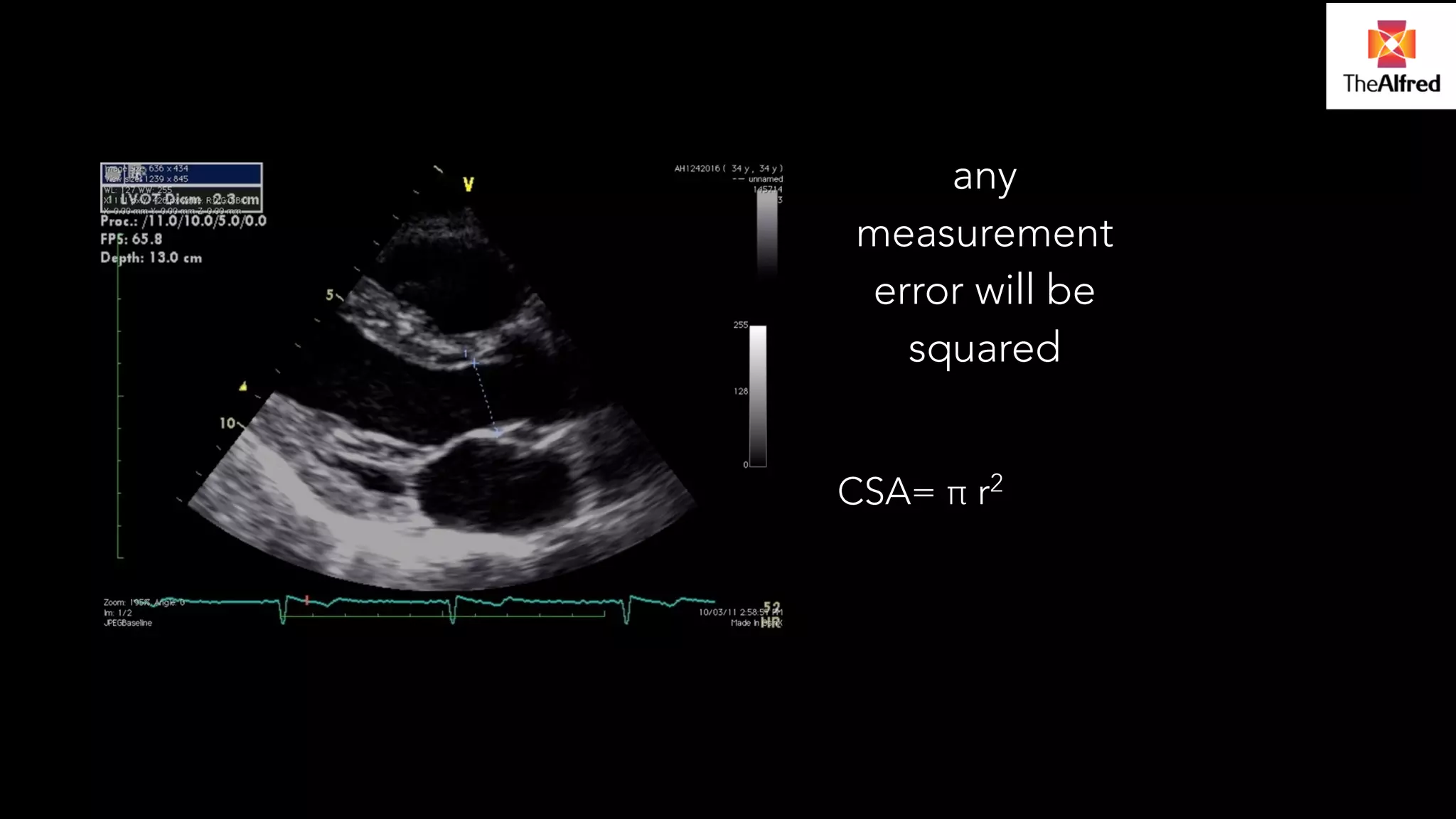
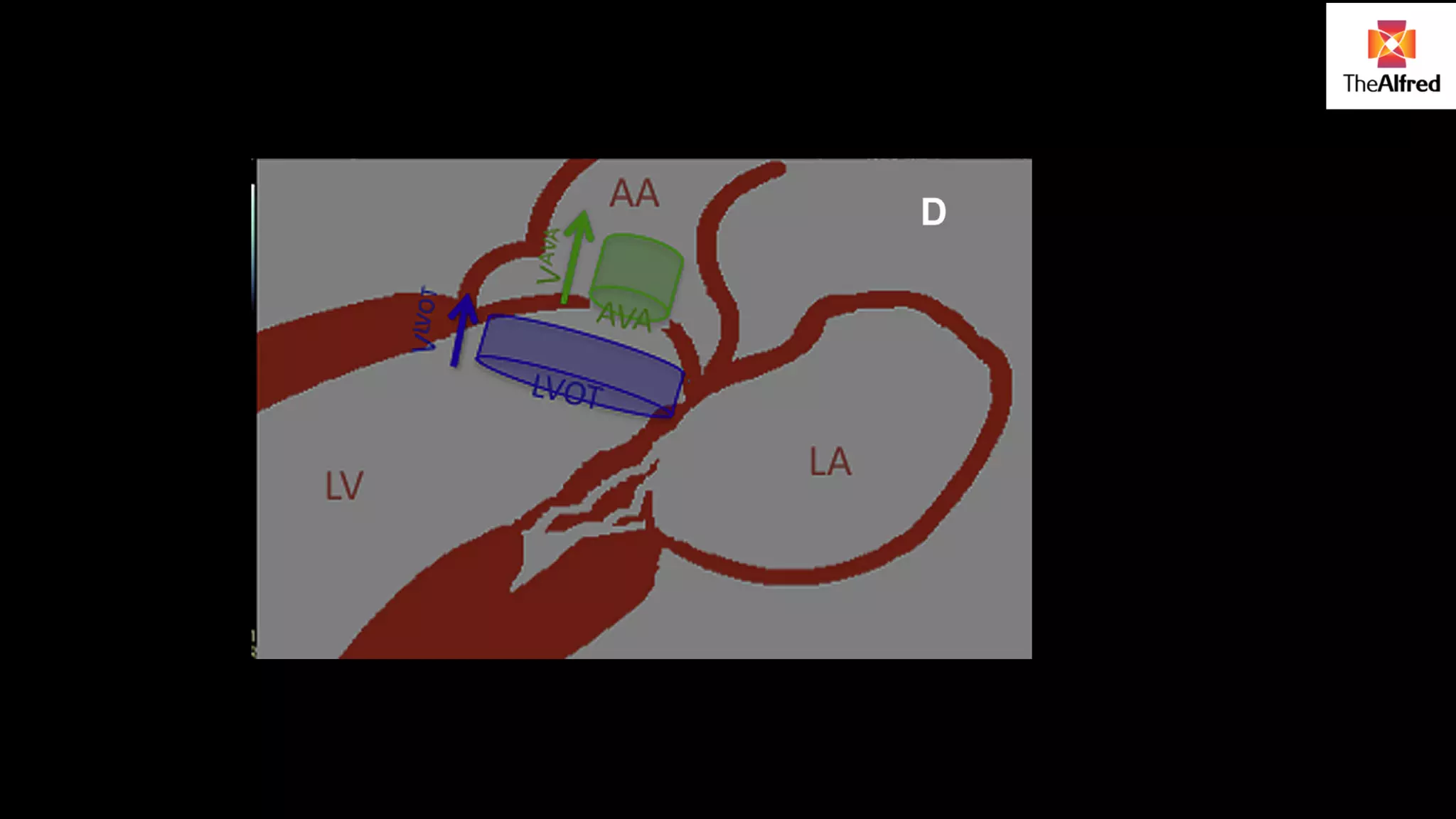
LVOT method
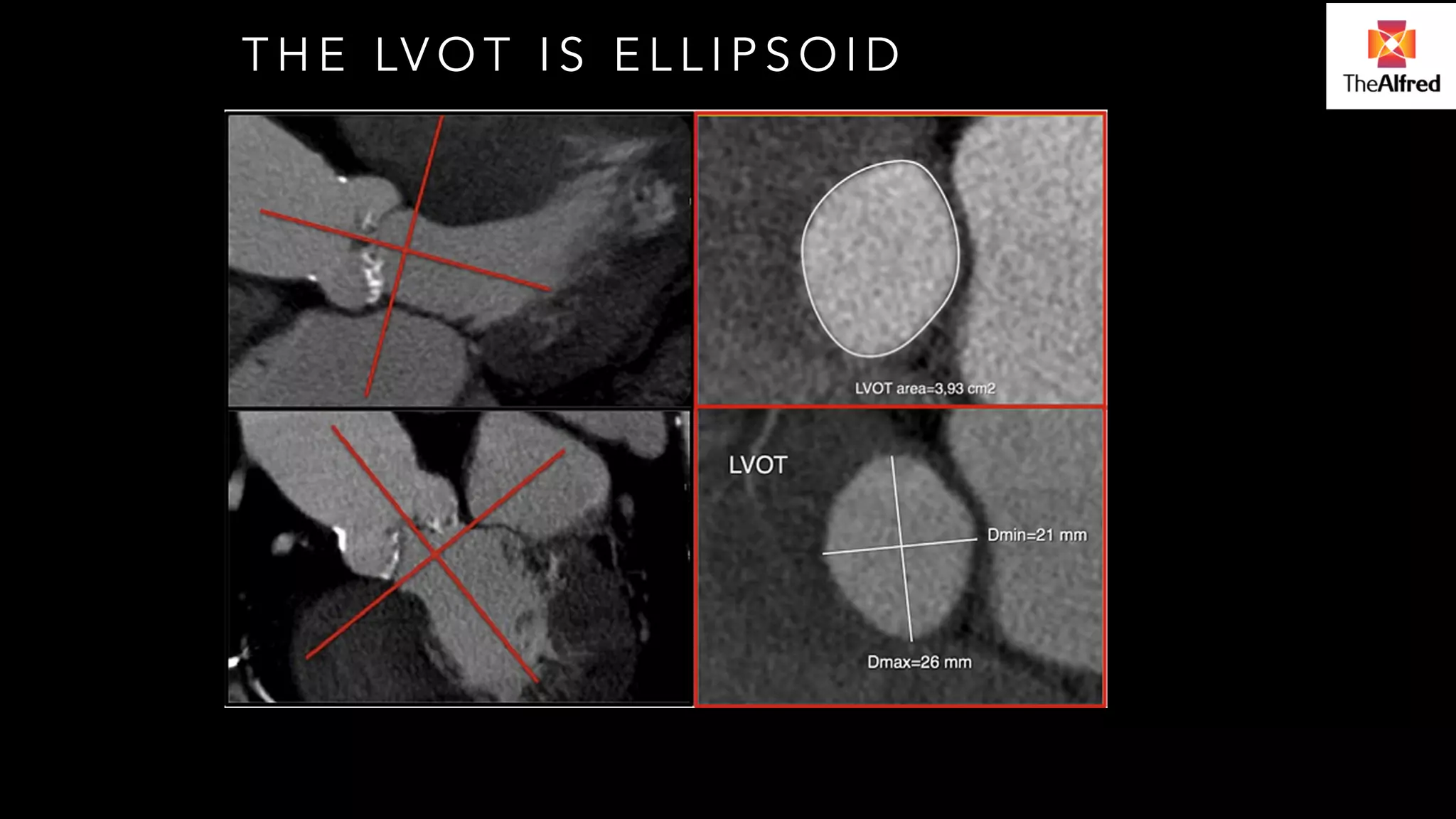
Assumesthe LVOT is a cylinder
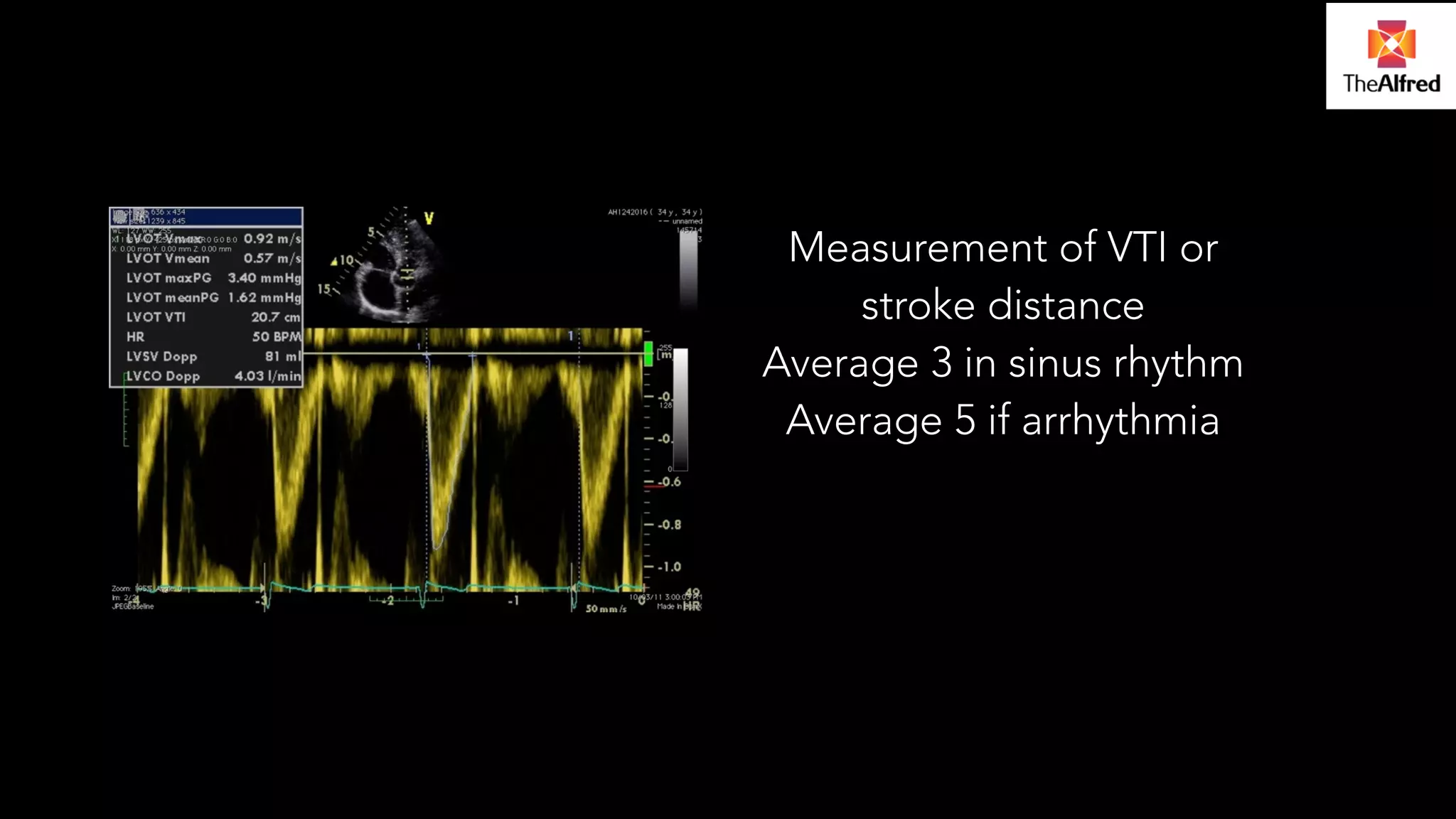
We can measure the VTI of blood flow in the LVOT by
placing a pulse wave doppler gate in LVOT
This gives us the LVOT VTI
10.
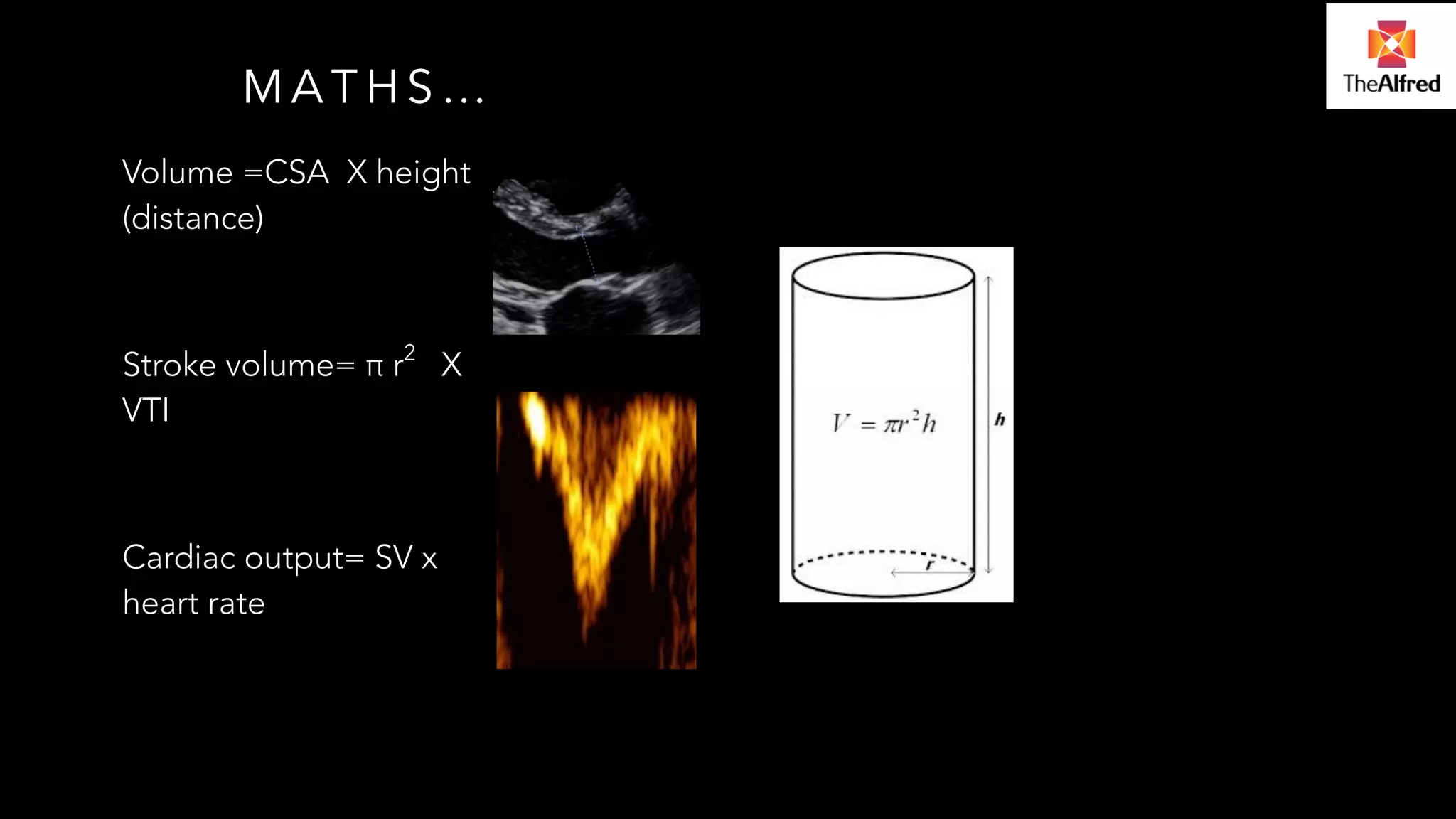
MATHS…
Volume =CSAX height
(distance)
!
Stroke volume= π r2 X
VTI
!
Cardiac output= SV x
heart rate
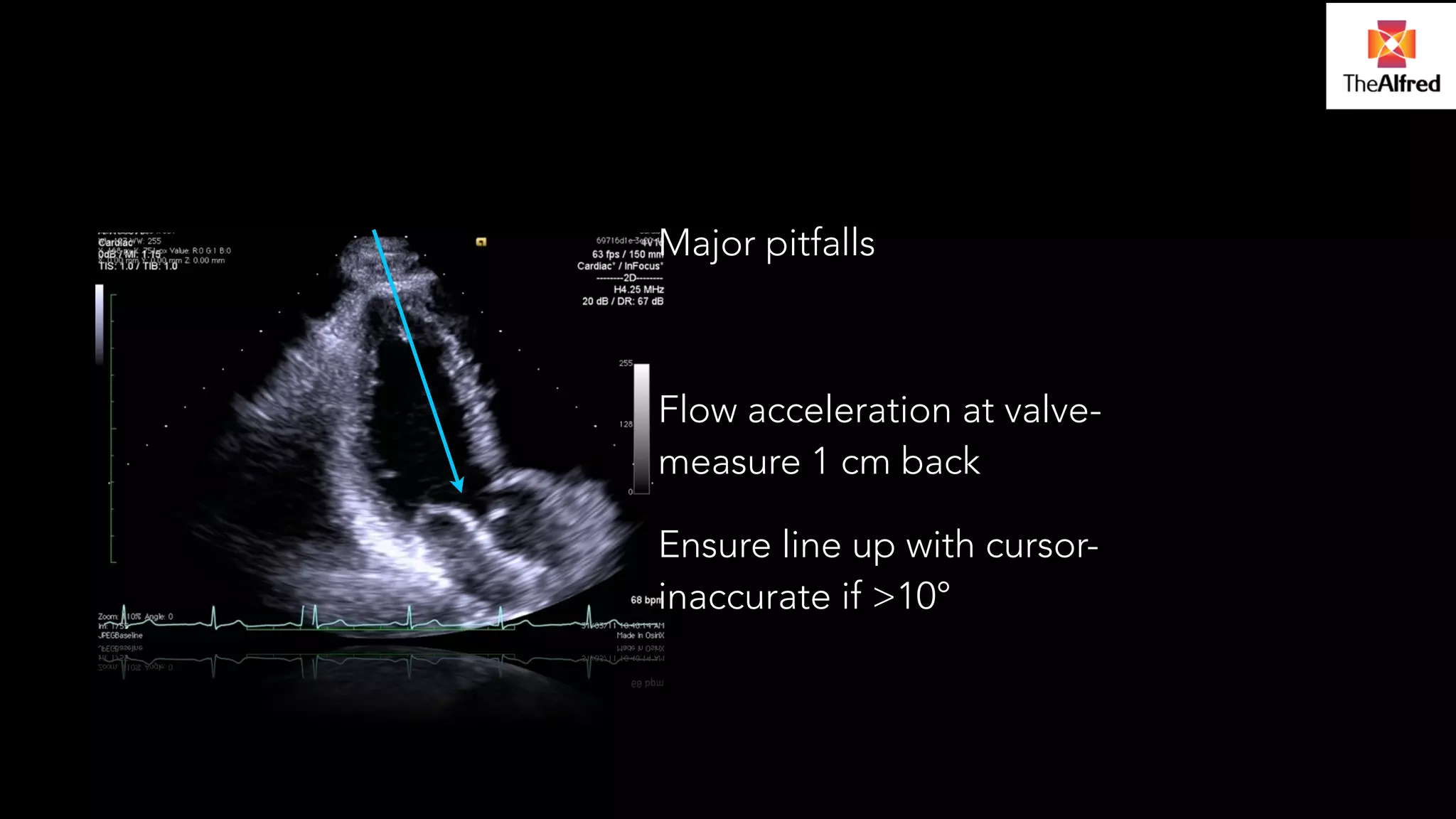
Major pitfalls
!
Flow acceleration at valve-measure
1 cm back
Ensure line up with cursor-inaccurate
if >10°
13.
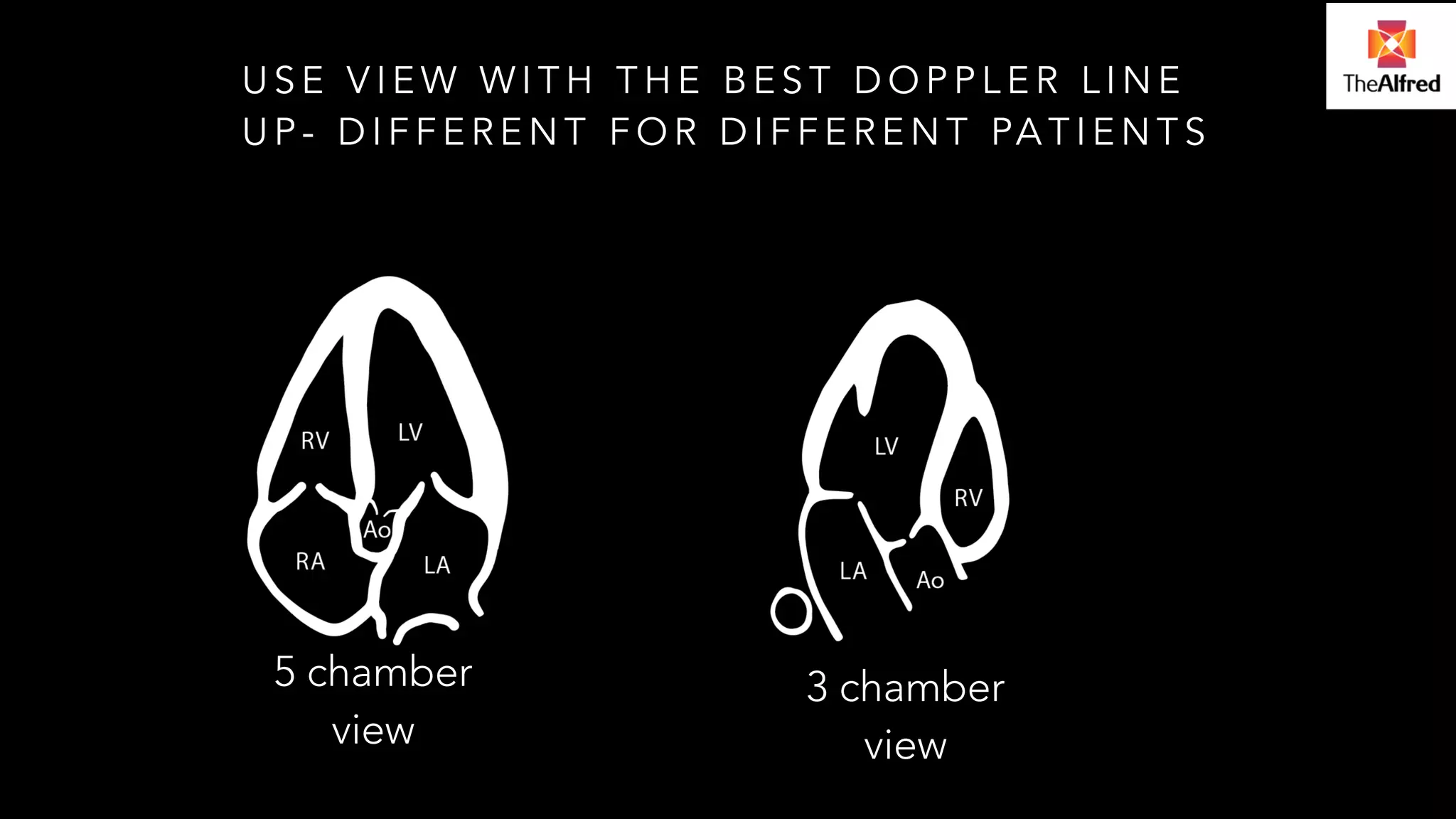
USE VIEW WITHTHE BEST DOPPLER LINE
UP- DIFFERENT FOR DIFFERENT PATIENTS
5 chamber
view
3 chamber
view
14.
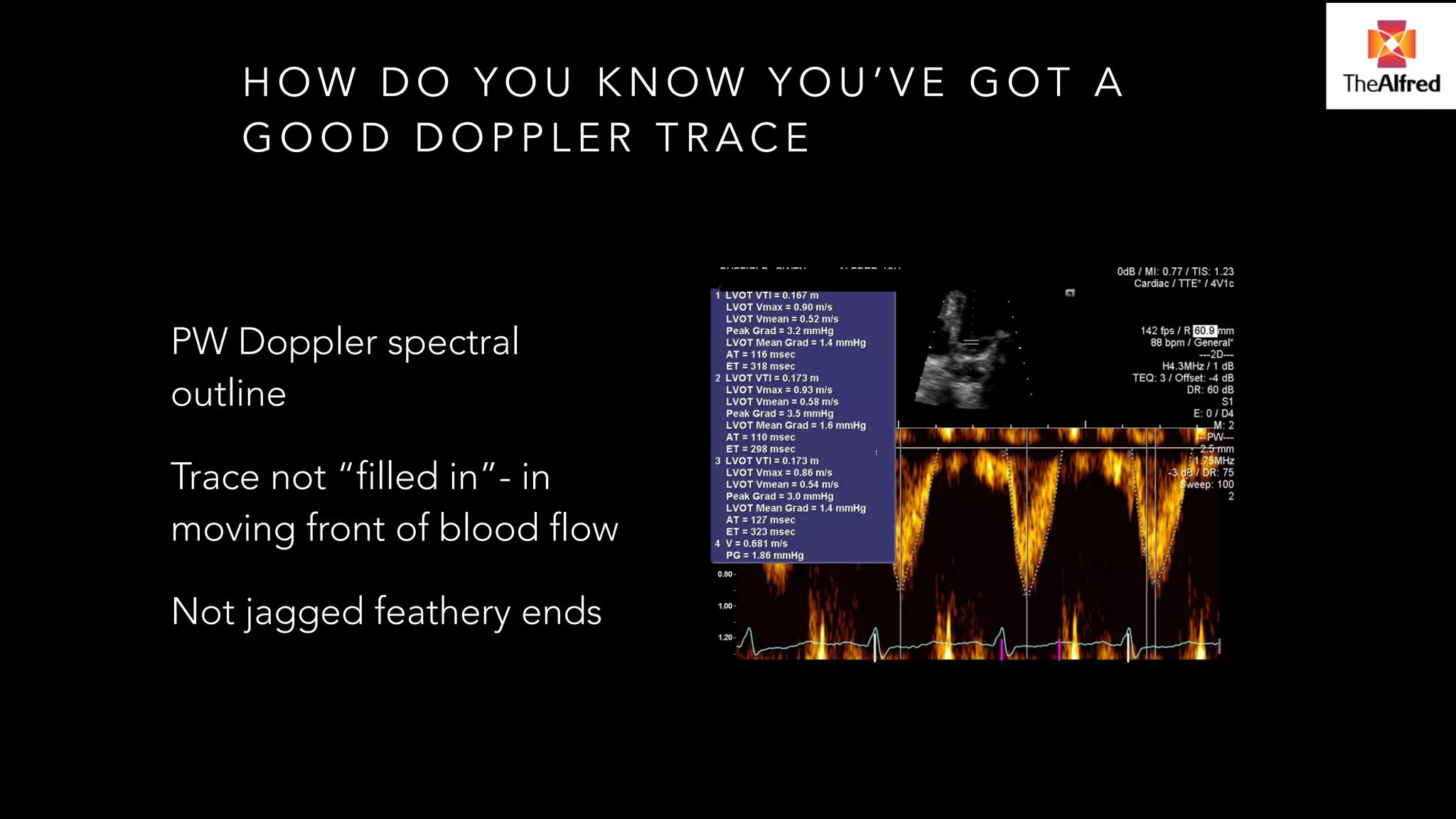
HOW DO YOUKNOW YOU’VE GOT A
GOOD DOPPLER TRACE
PW Doppler spectral
outline
Trace not “filled in”- in
moving front of blood flow
Not jagged feathery ends
15.
Measurement of VTIor
stroke distance
Average 3 in sinus rhythm
Average 5 if arrhythmia
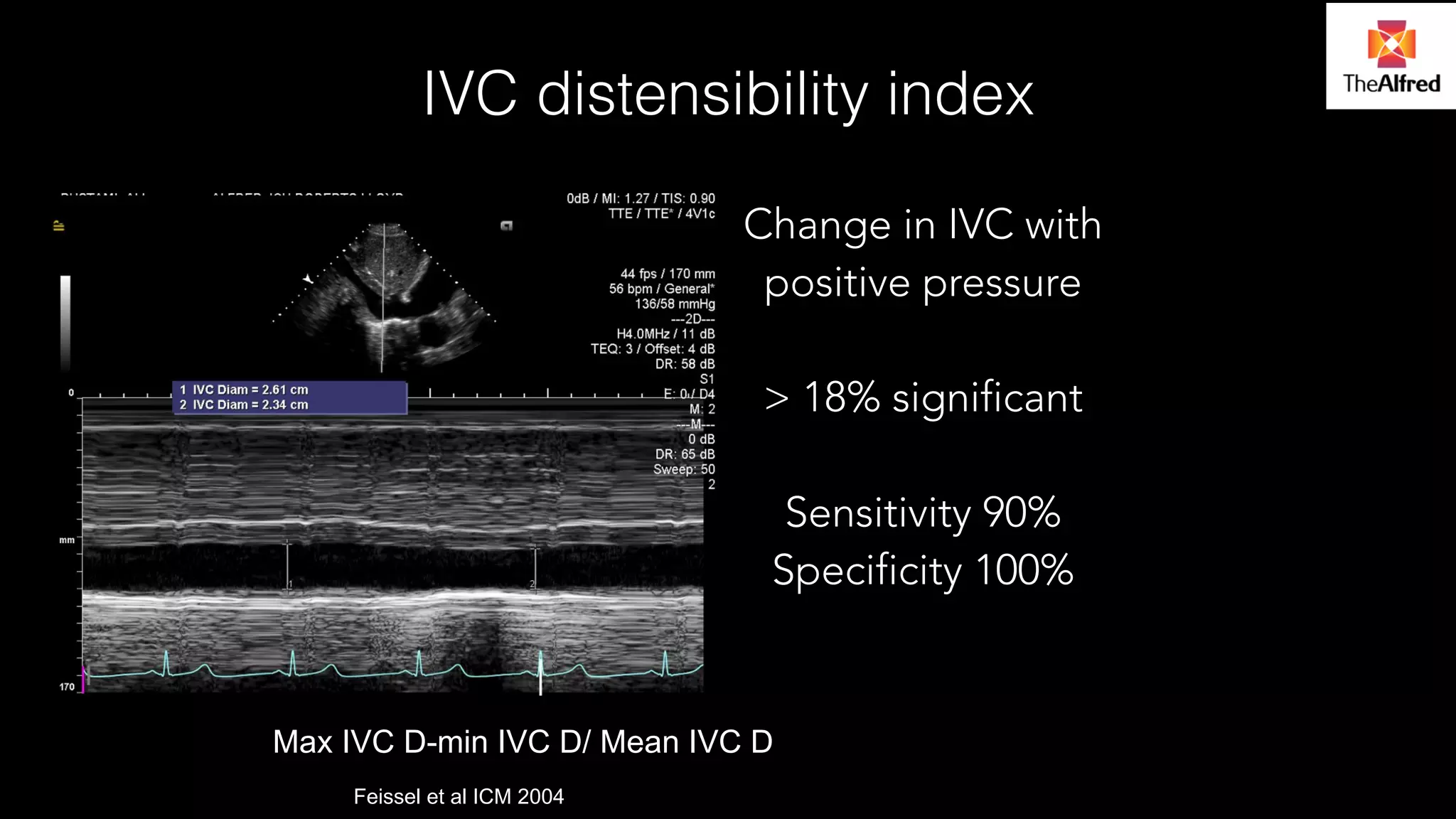
IVC distensibility index
Change in IVC with
positive pressure
!
> 18% significant
!
Sensitivity 90%
Specificity 100%
– Cut off of 18%
–Max IVC D-min IVC D/ Mean IVC D
Max IVC diameter-min IVC diameter/ mean IVC
diameterFeissel et al ICM 2004
31.
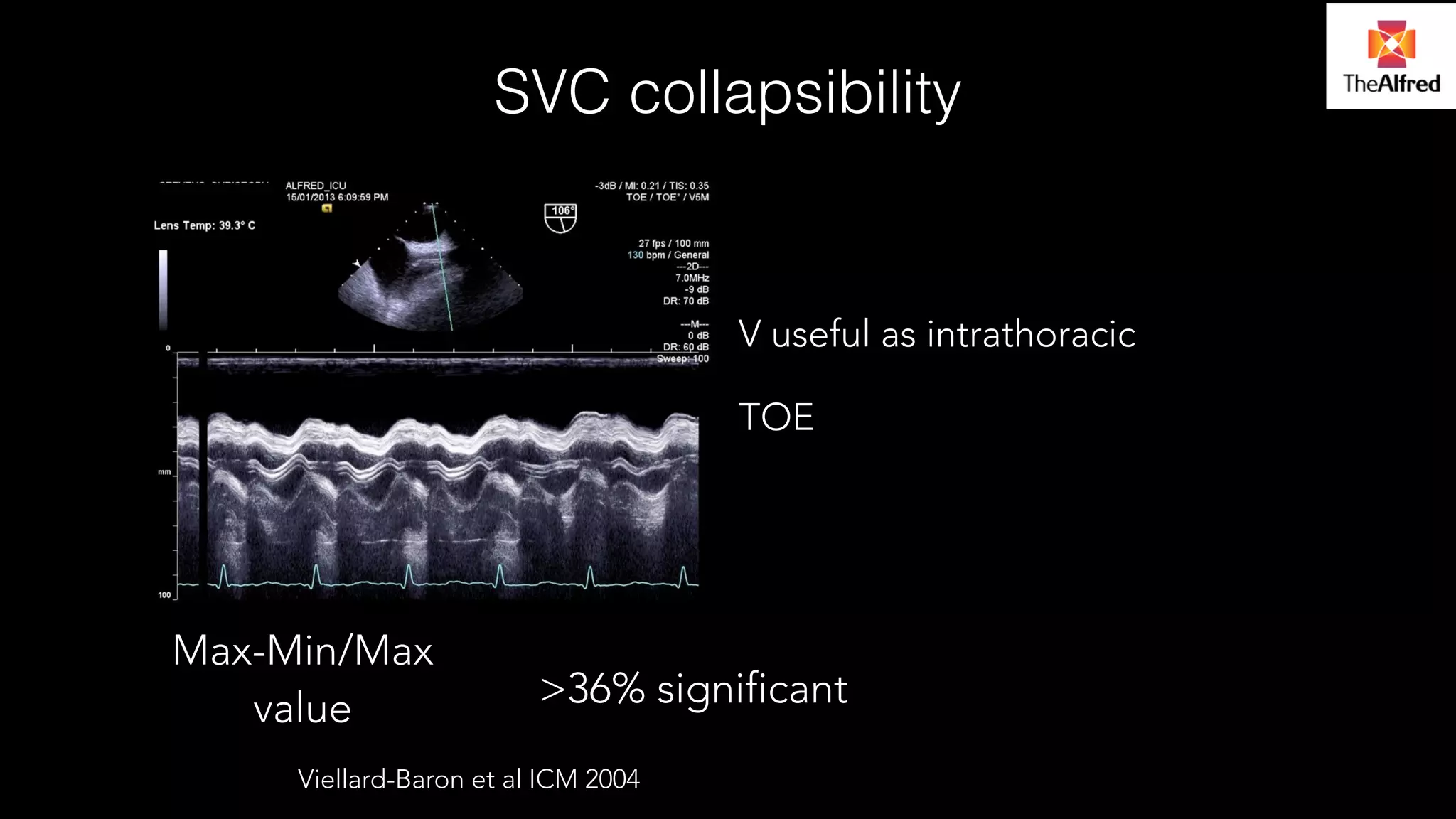
SVC collapsibility
Vuseful as intrathoracic
TOE
>36% significant
Max-Min/Max
value
Viellard-Baron et al ICM 2004
32.
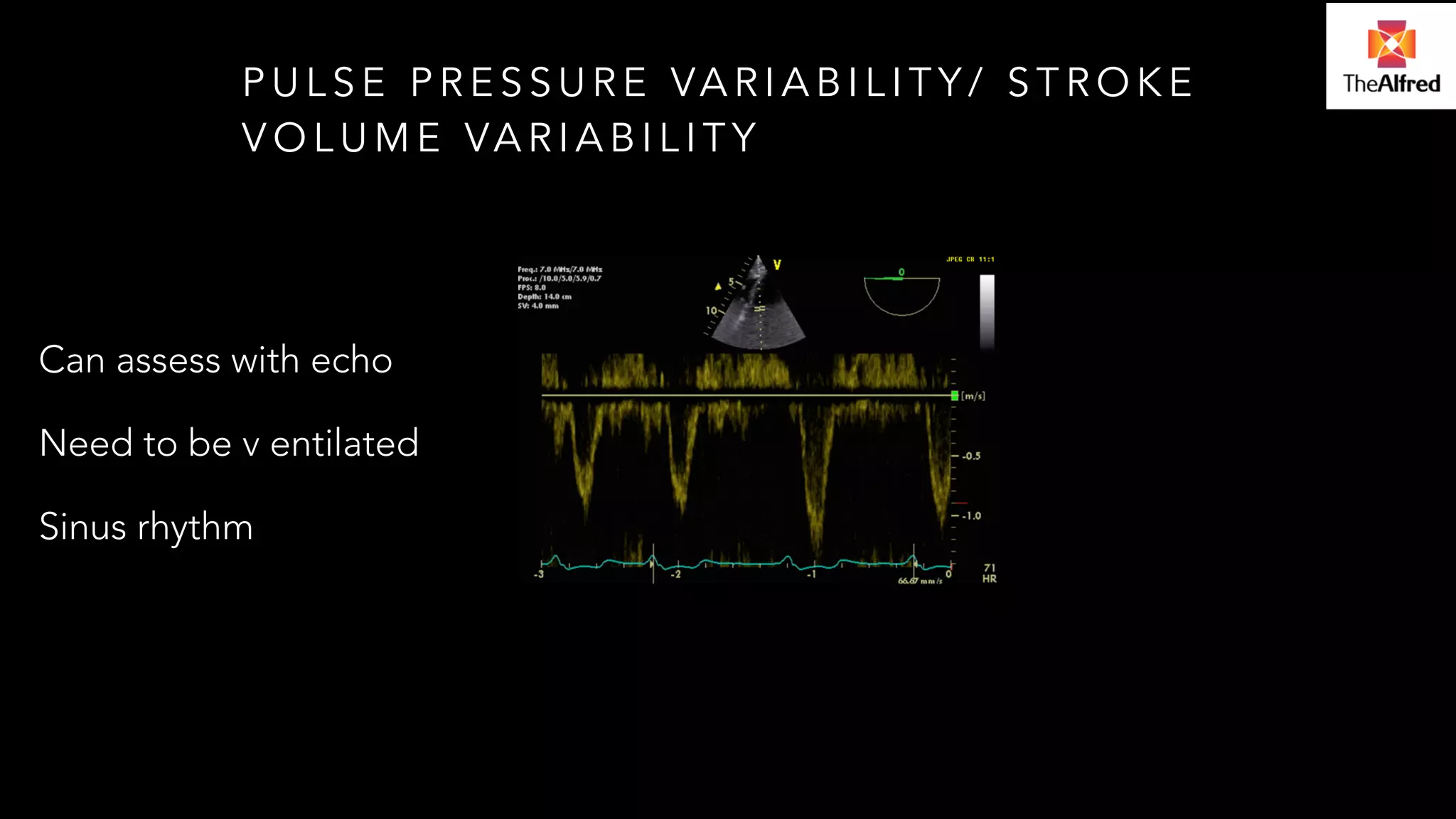
PULSE PRESSURE VARIABILITY/STROKE
VOLUME VARIABILITY
Can assess with echo
Need to be v entilated
Sinus rhythm
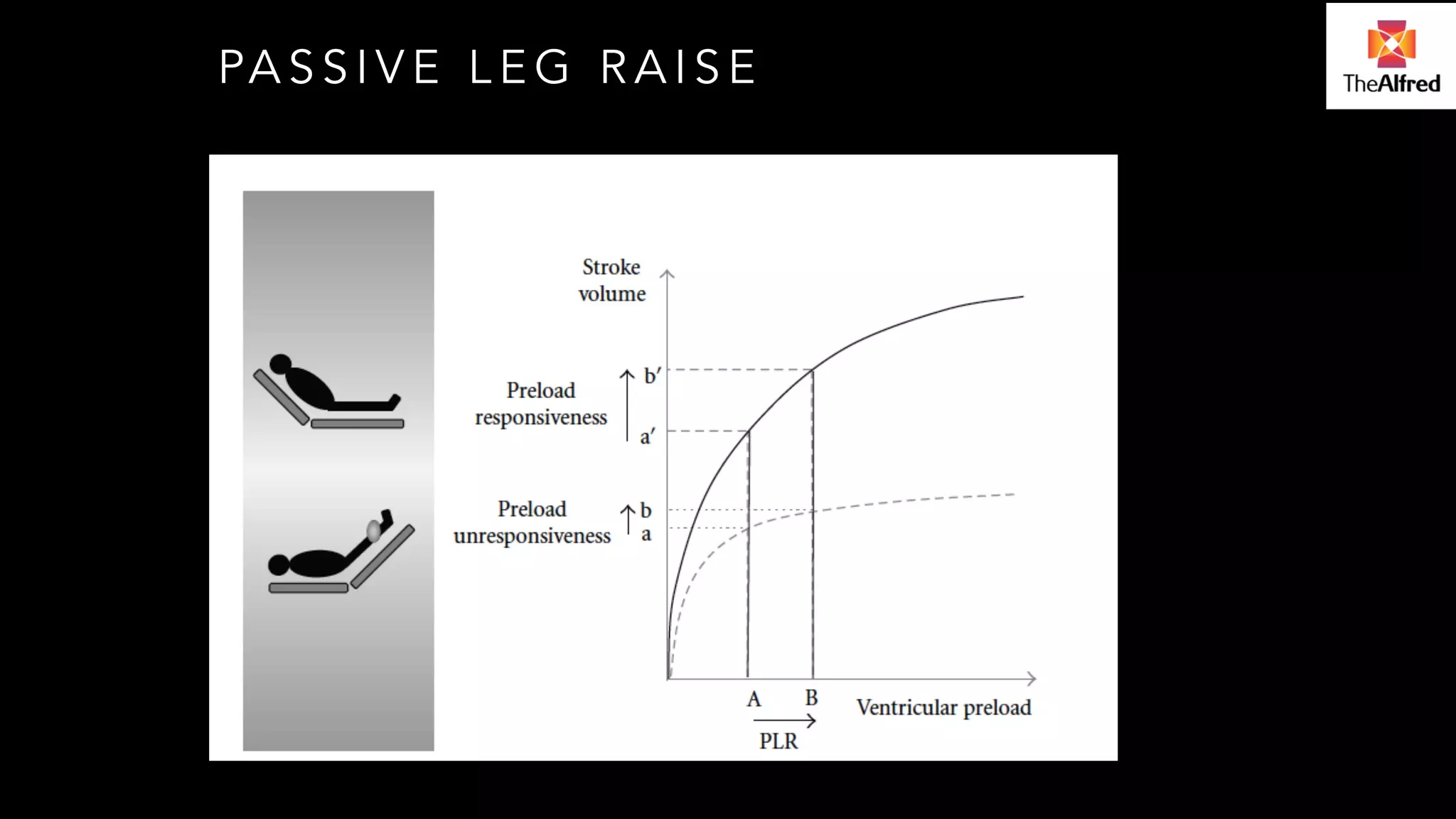
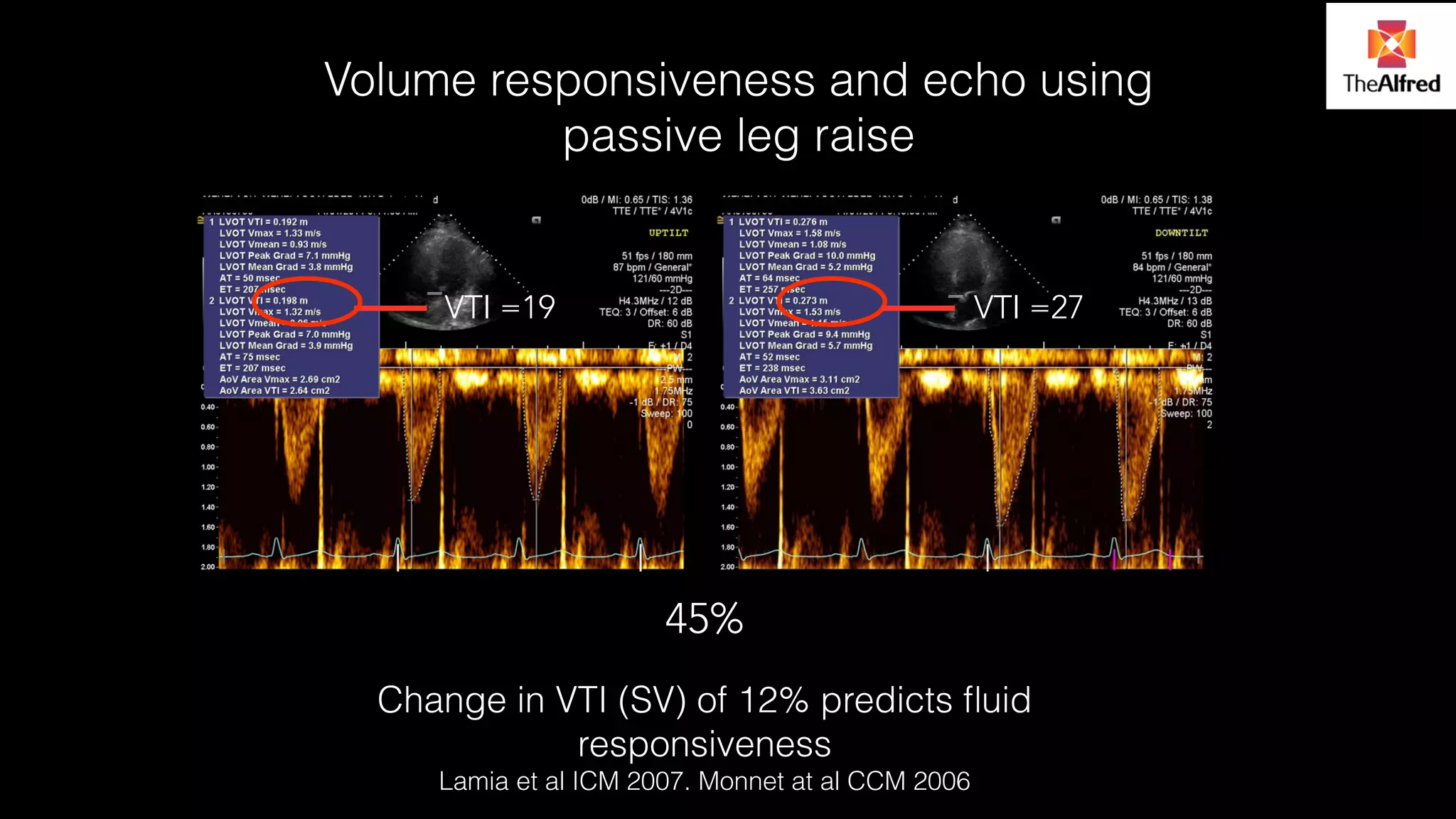
Volume responsiveness andecho using
passive leg raise
VTI =19 VTI =27
45%
Change in VTI (SV) of 12% predicts fluid
responsiveness
Lamia et al ICM 2007. Monnet at al CCM 2006
35.
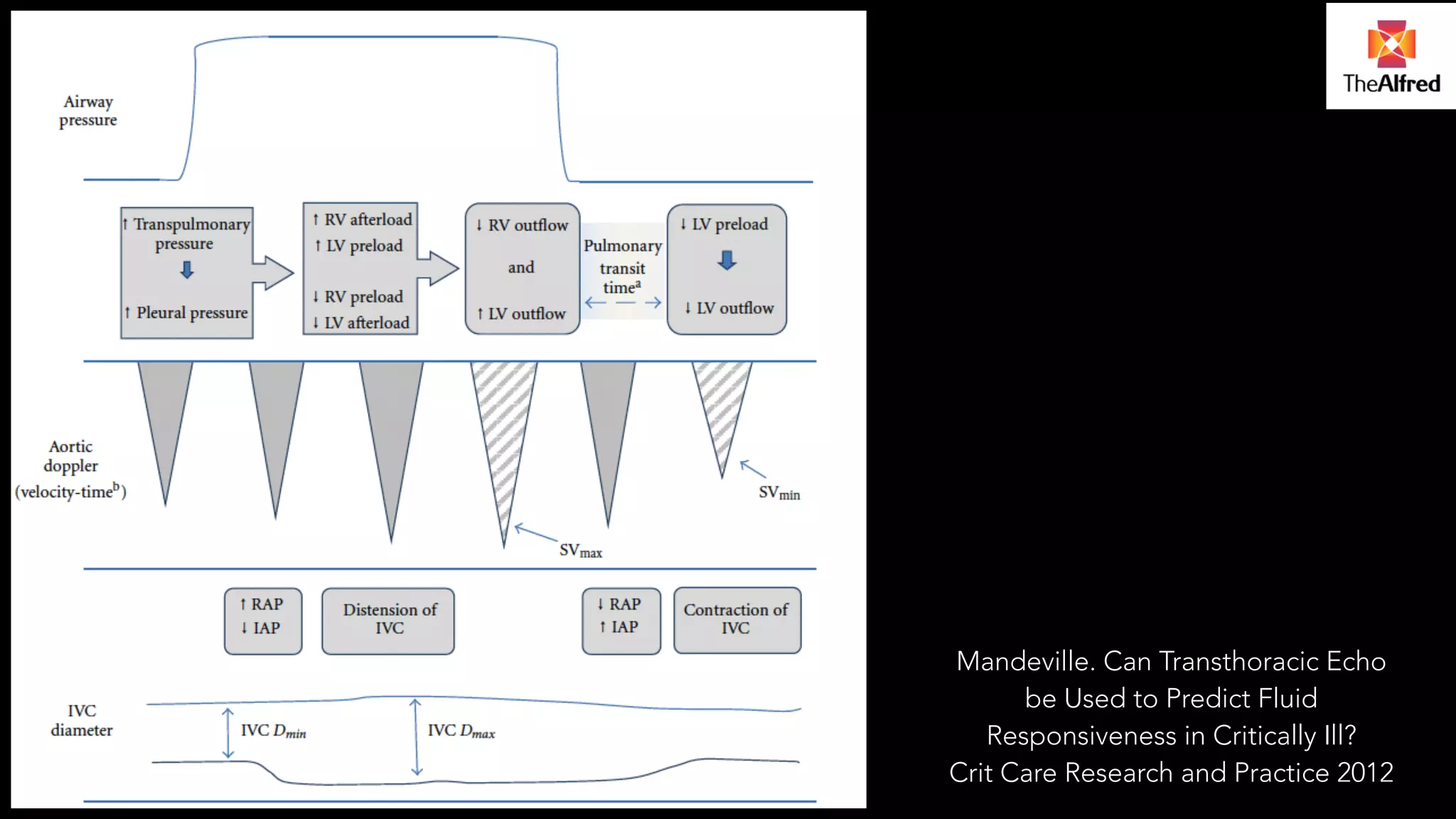
Mandeville. Can TransthoracicEcho
be Used to Predict Fluid
Responsiveness in Critically Ill?
Crit Care Research and Practice 2012
36.
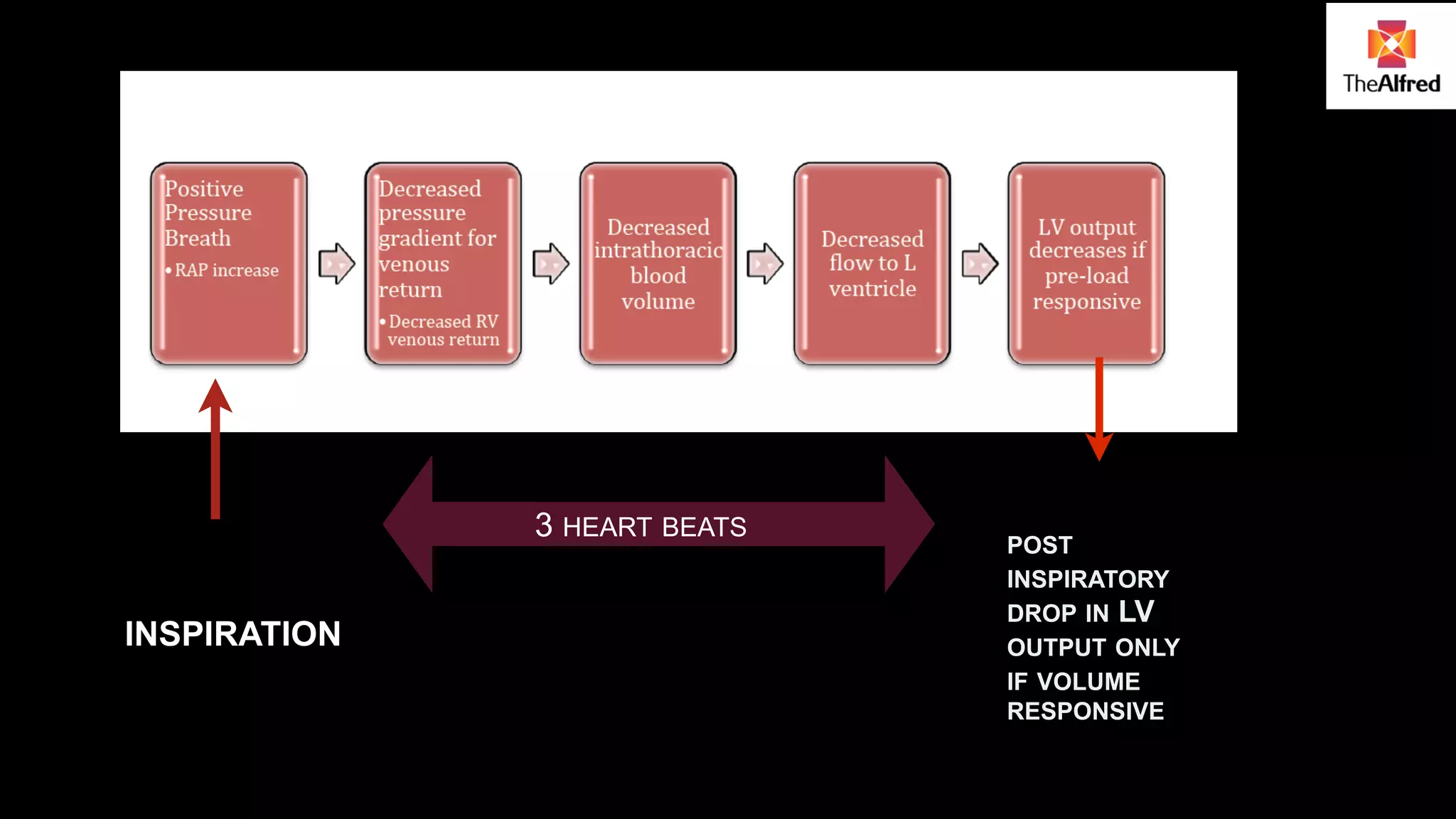
3 HEART BEATS
INSPIRATION
POST
INSPIRATORY
DROP IN LV
OUTPUT ONLY
IF VOLUME
RESPONSIVE
SO WHY USEECHO AS A
HAEMODYNAMIC TOOL??
Tells you what the problem is currently (not just the
haemodynamic effects of the problem)
!
What’s causing it
!
If what you are doing about it helps
52.
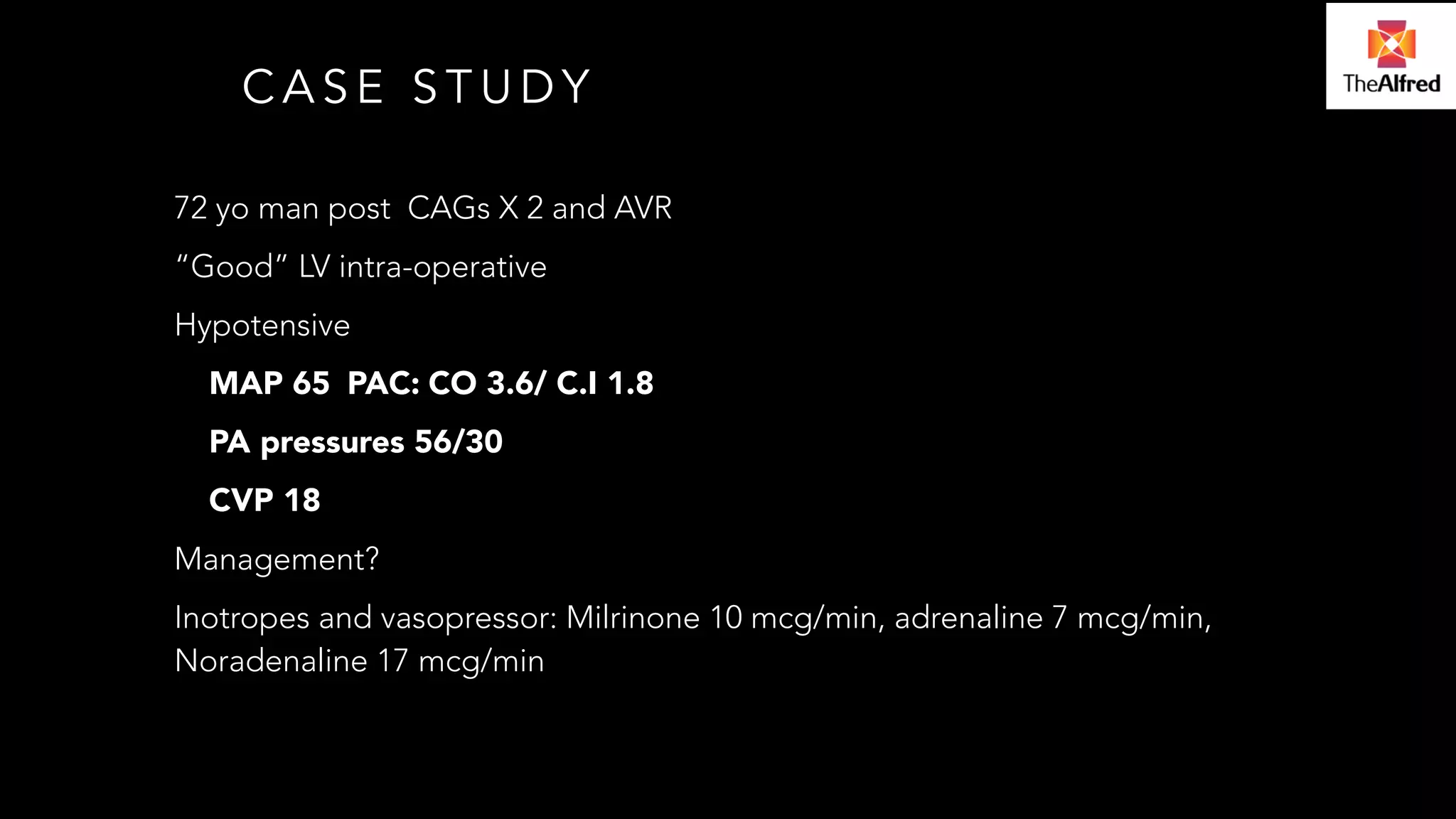
CASE STUDY
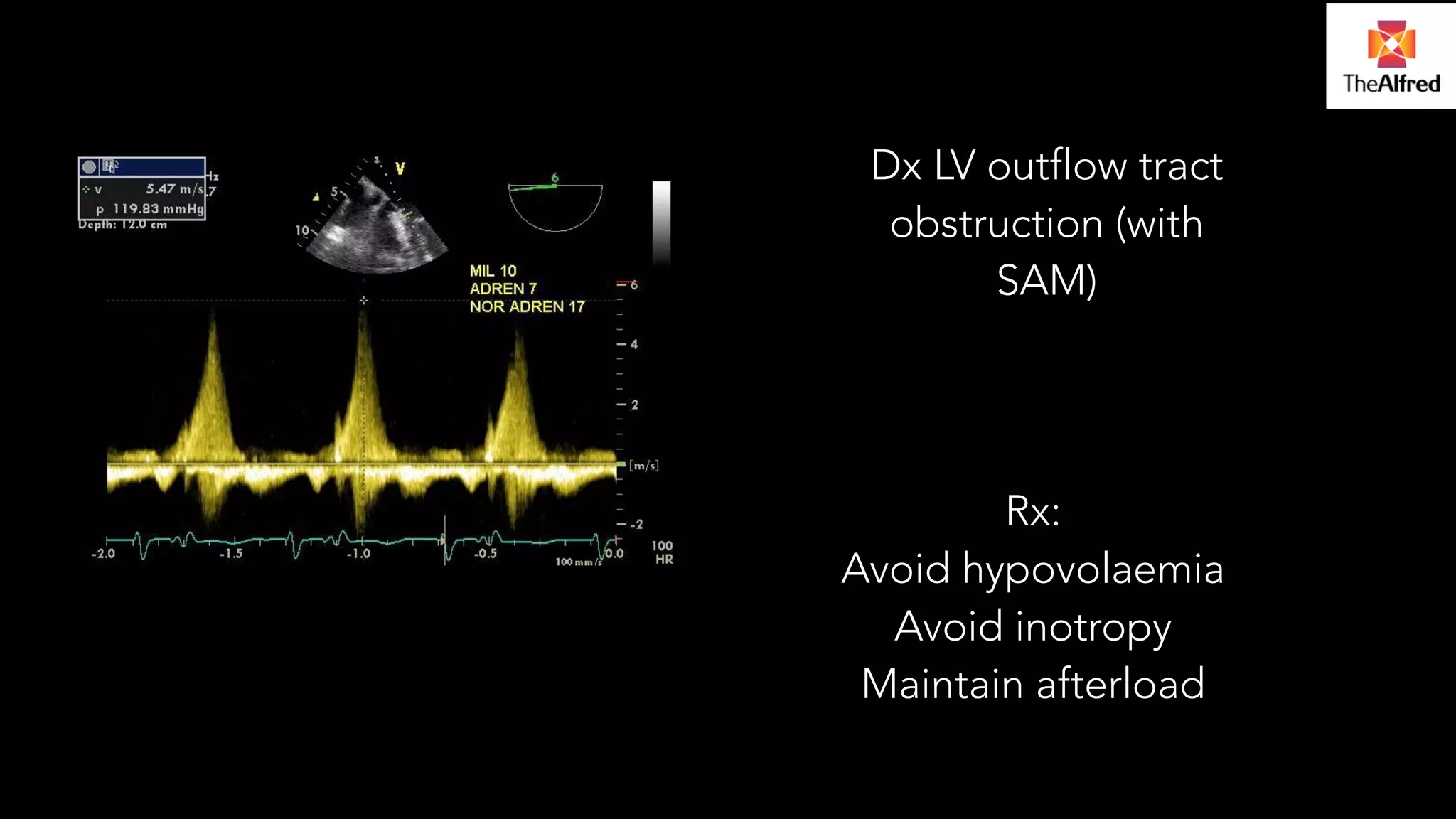
72yo man post CAGs X 2 and AVR
“Good” LV intra-operative
Hypotensive
MAP 65 PAC: CO 3.6/ C.I 1.8
PA pressures 56/30
CVP 18
Management?
Inotropes and vasopressor: Milrinone 10 mcg/min, adrenaline 7 mcg/min,
Noradenaline 17 mcg/min
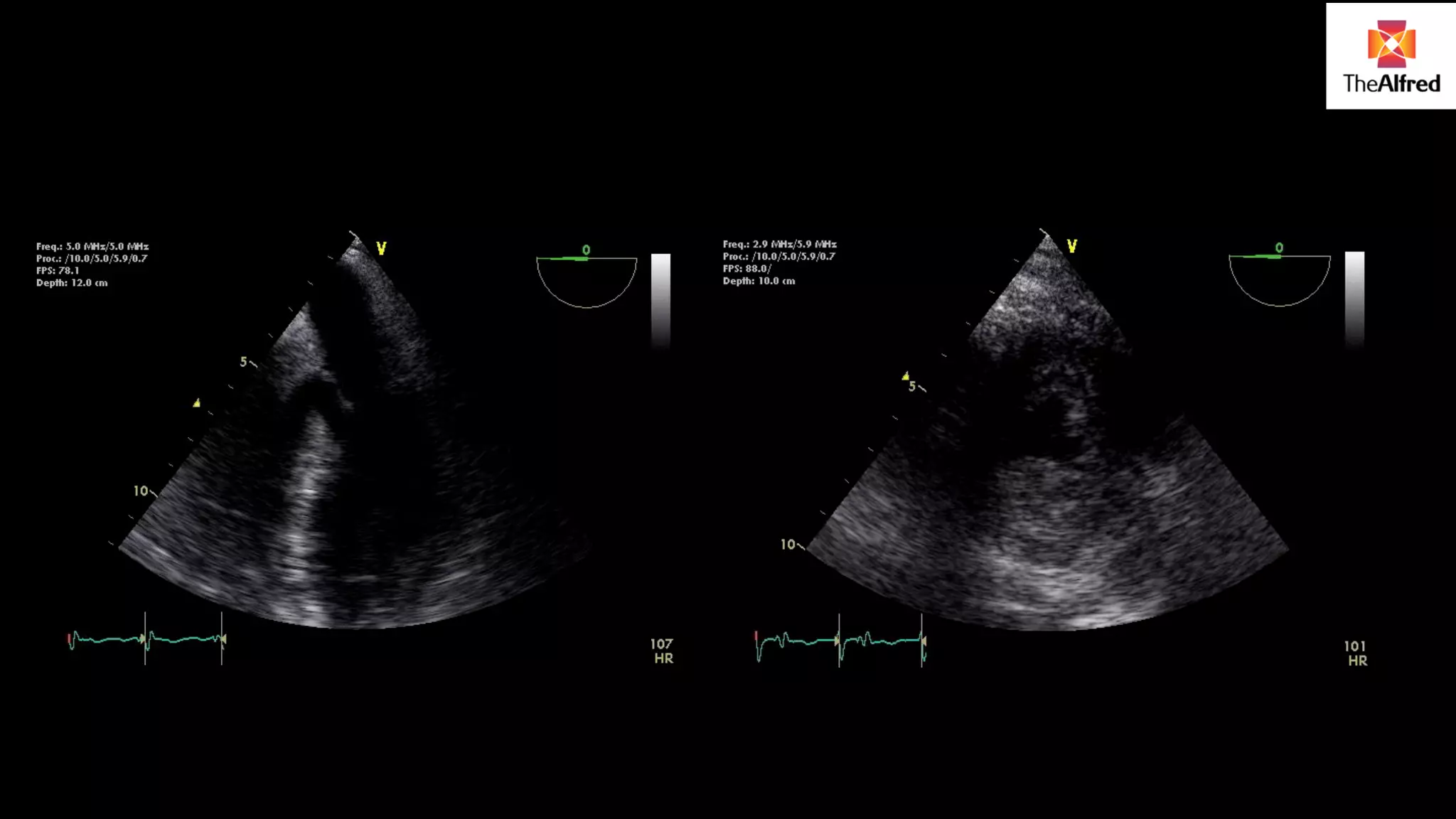
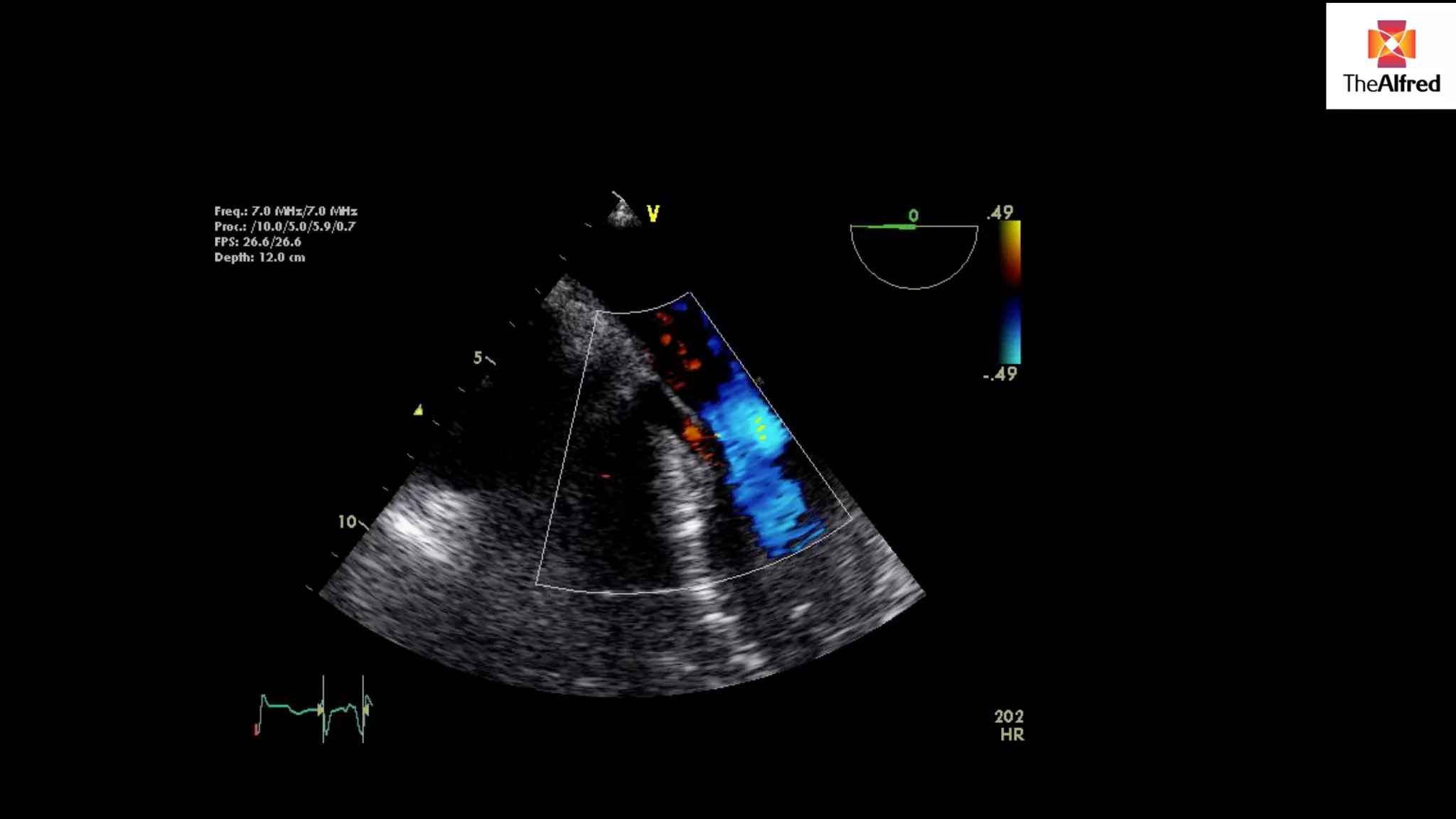
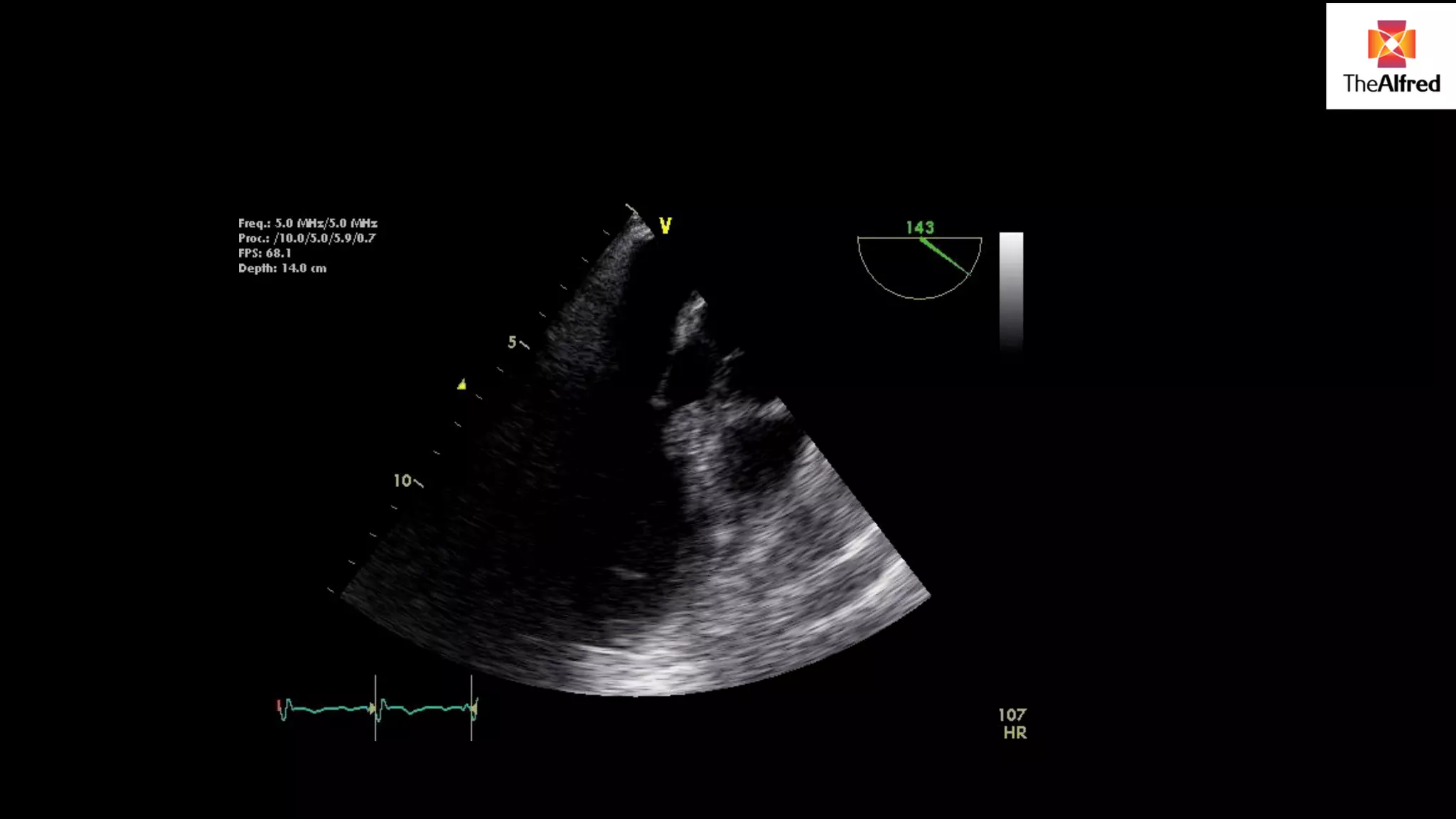
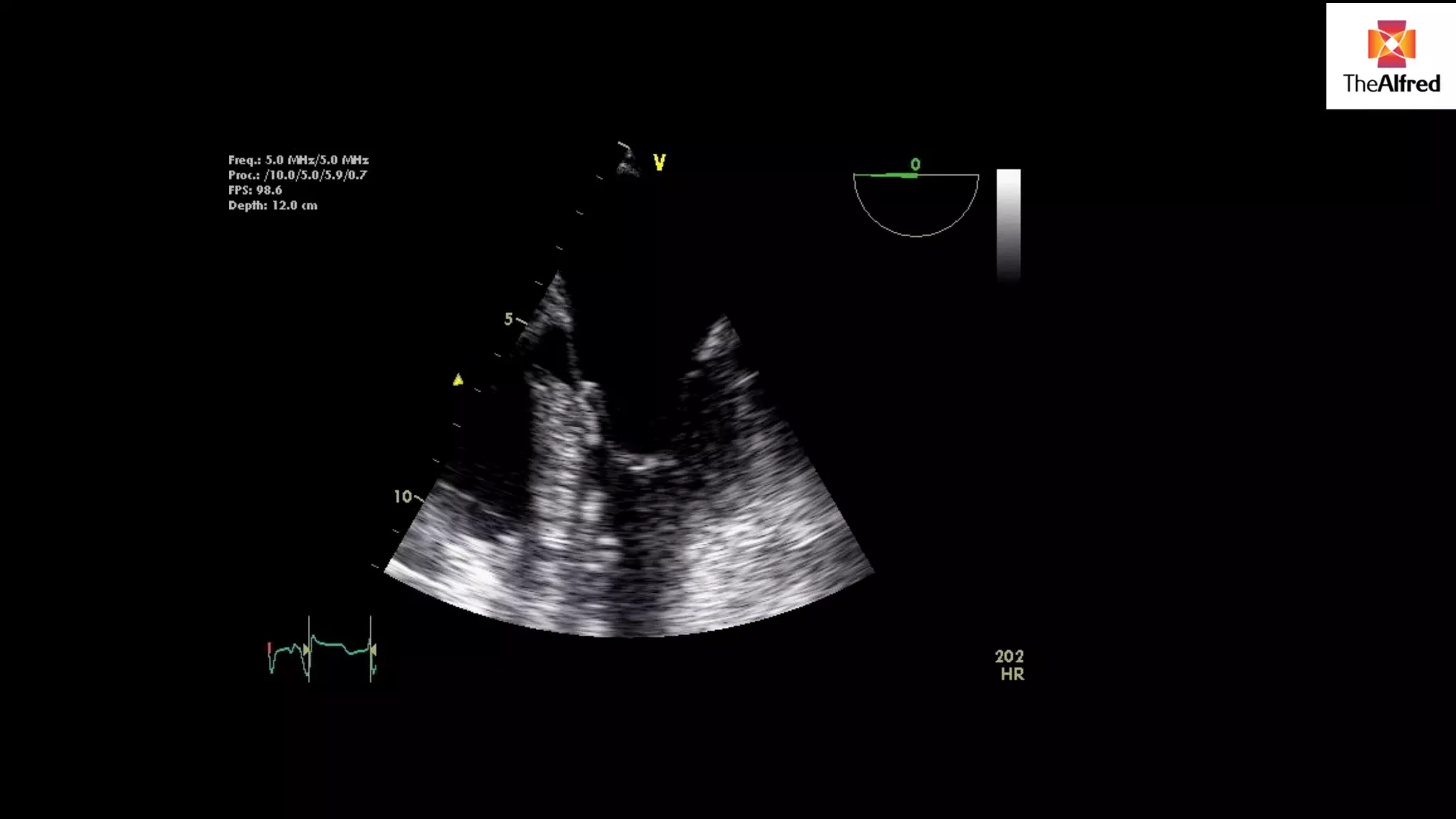
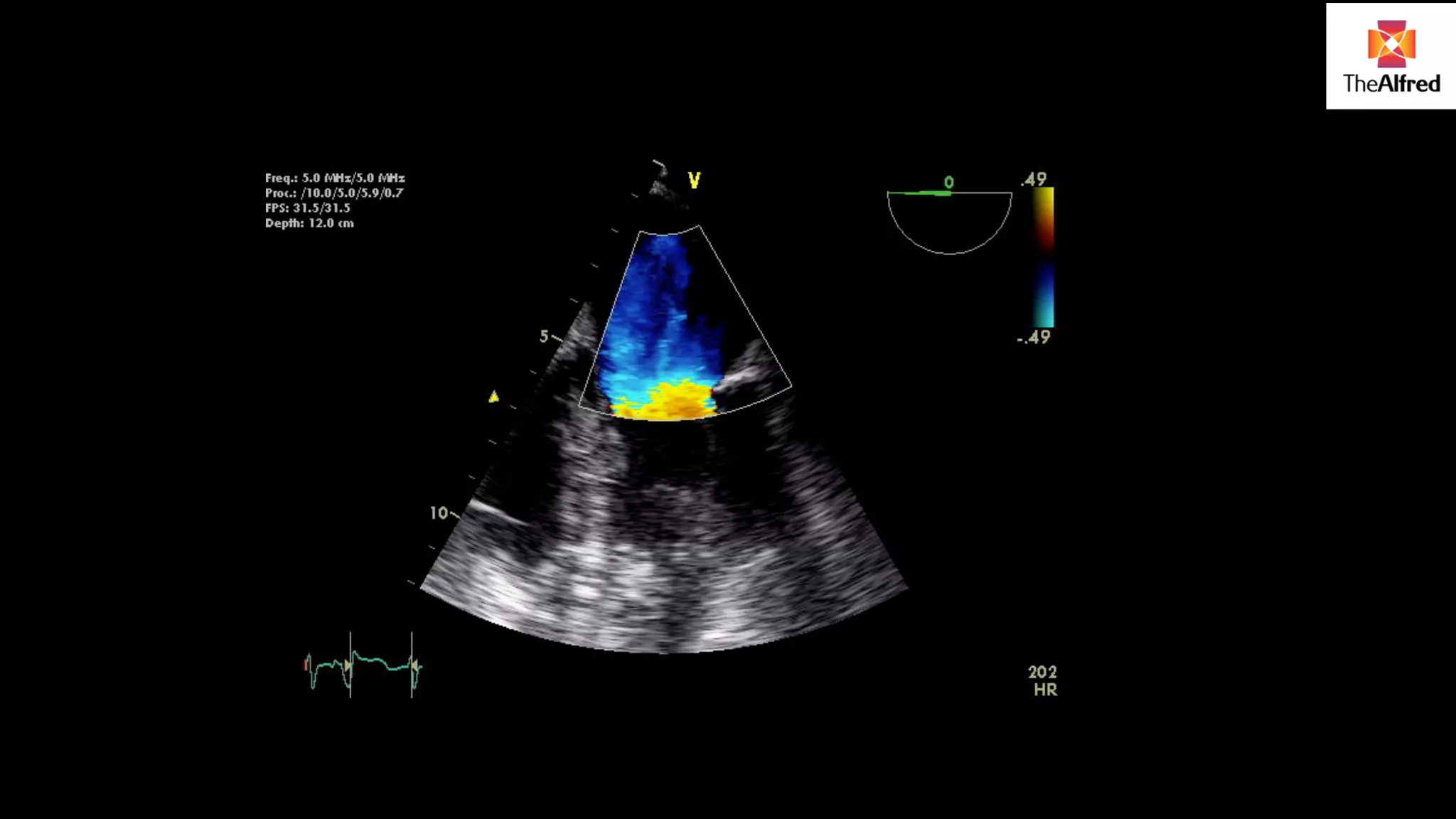
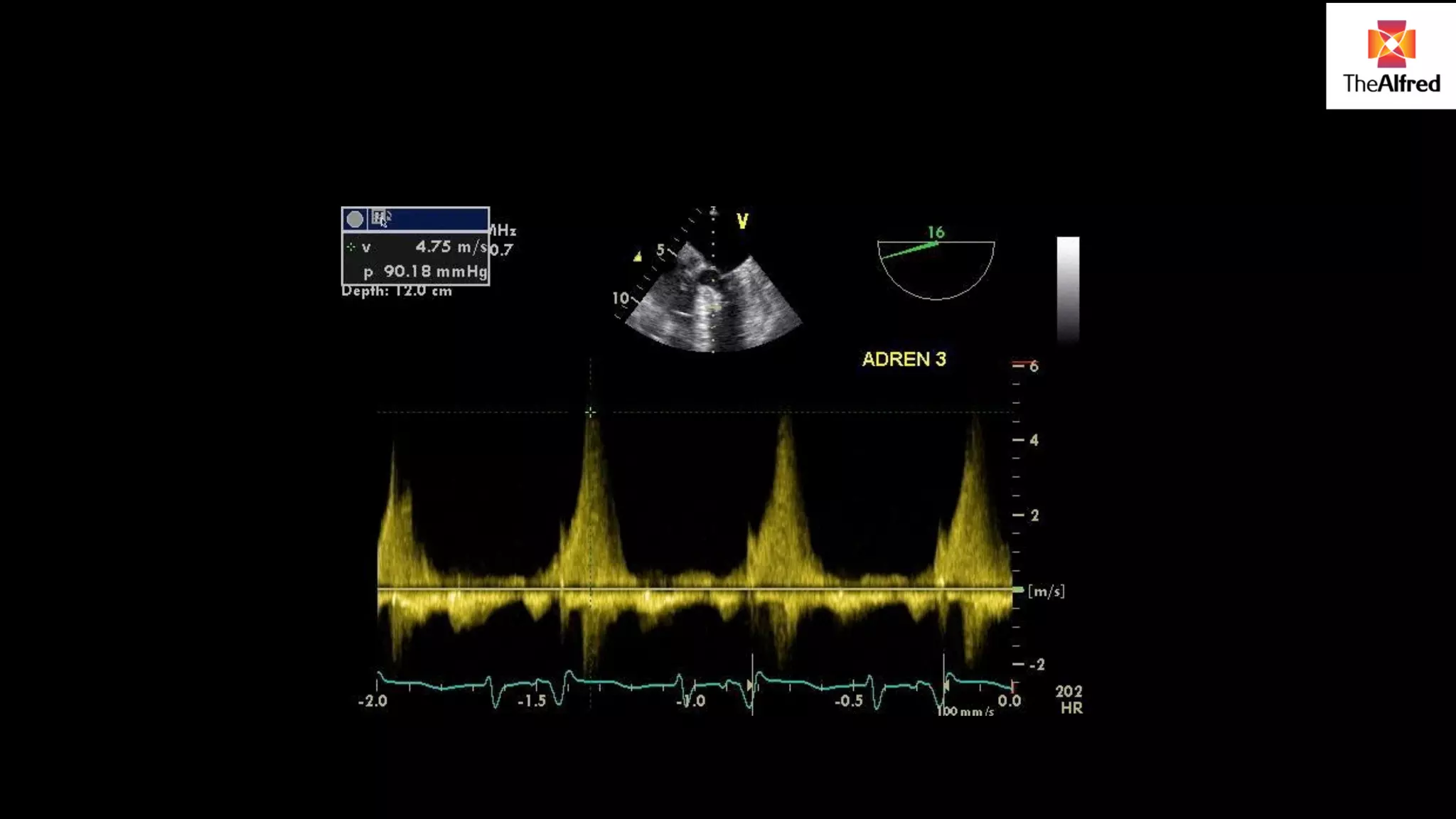
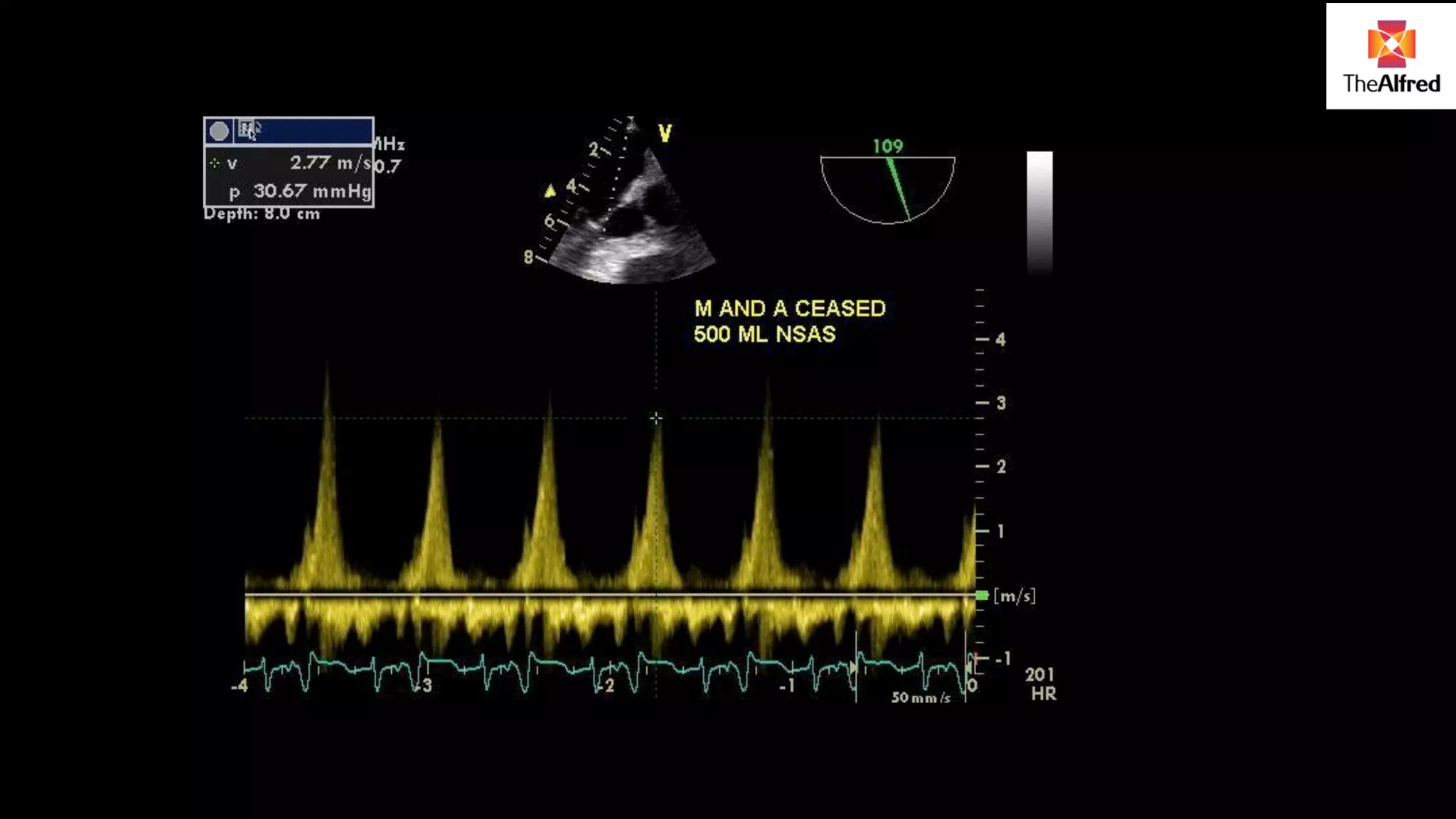
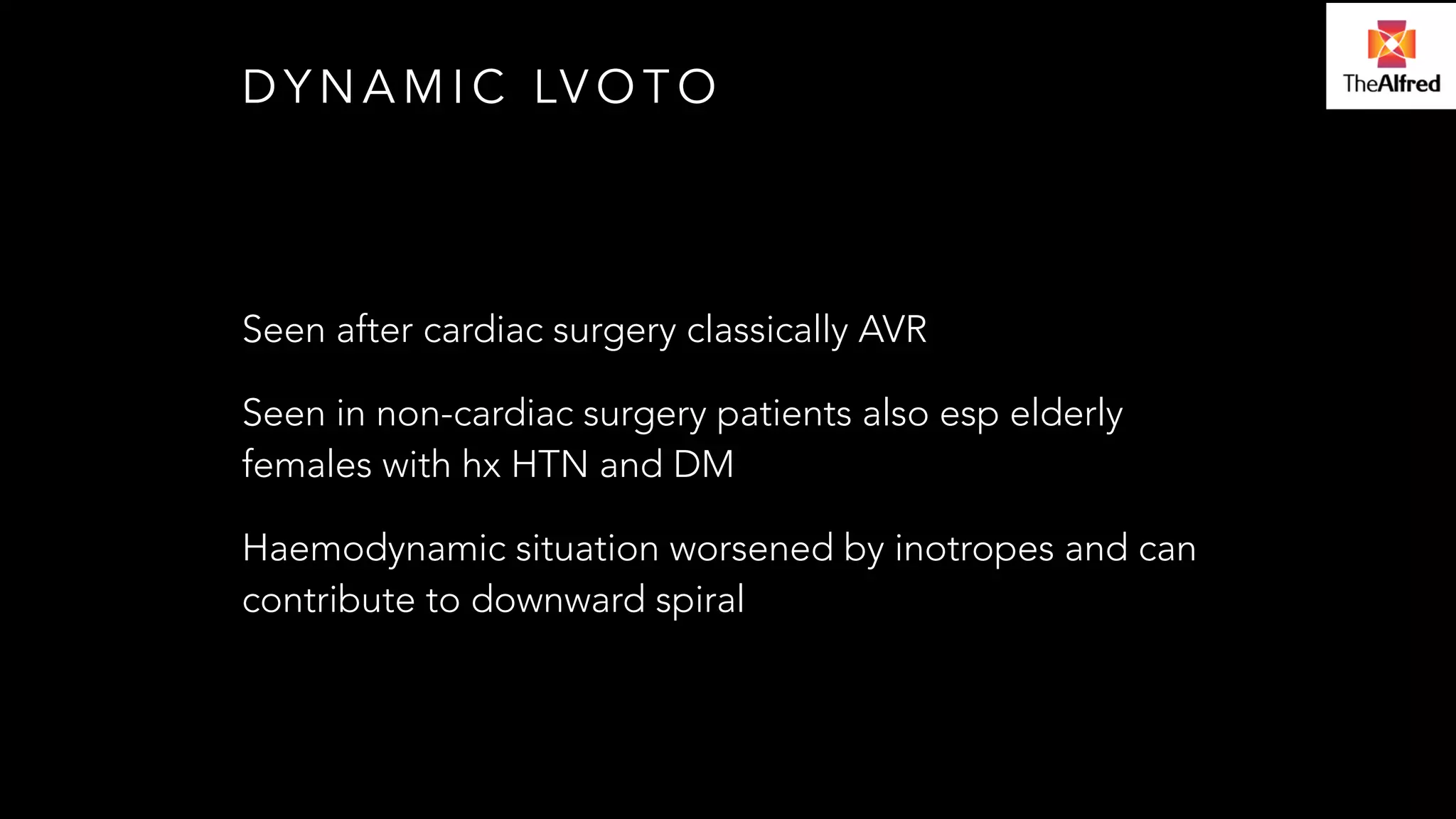
DYNAMIC LVOTO
Seenafter cardiac surgery classically AVR
Seen in non-cardiac surgery patients also esp elderly
females with hx HTN and DM
Haemodynamic situation worsened by inotropes and can
contribute to downward spiral
63.
SUMMARY
Echo playskey role in assessment of haemodynamics
Helps identify false positives in terms of volume
responsiveness
Adds a subtlety to the haemodynamic assessment
Is user dependant and like any tool is more powerful
when used optimally