




The Discussion Section
PRPPG7000 - Academic Writing in English
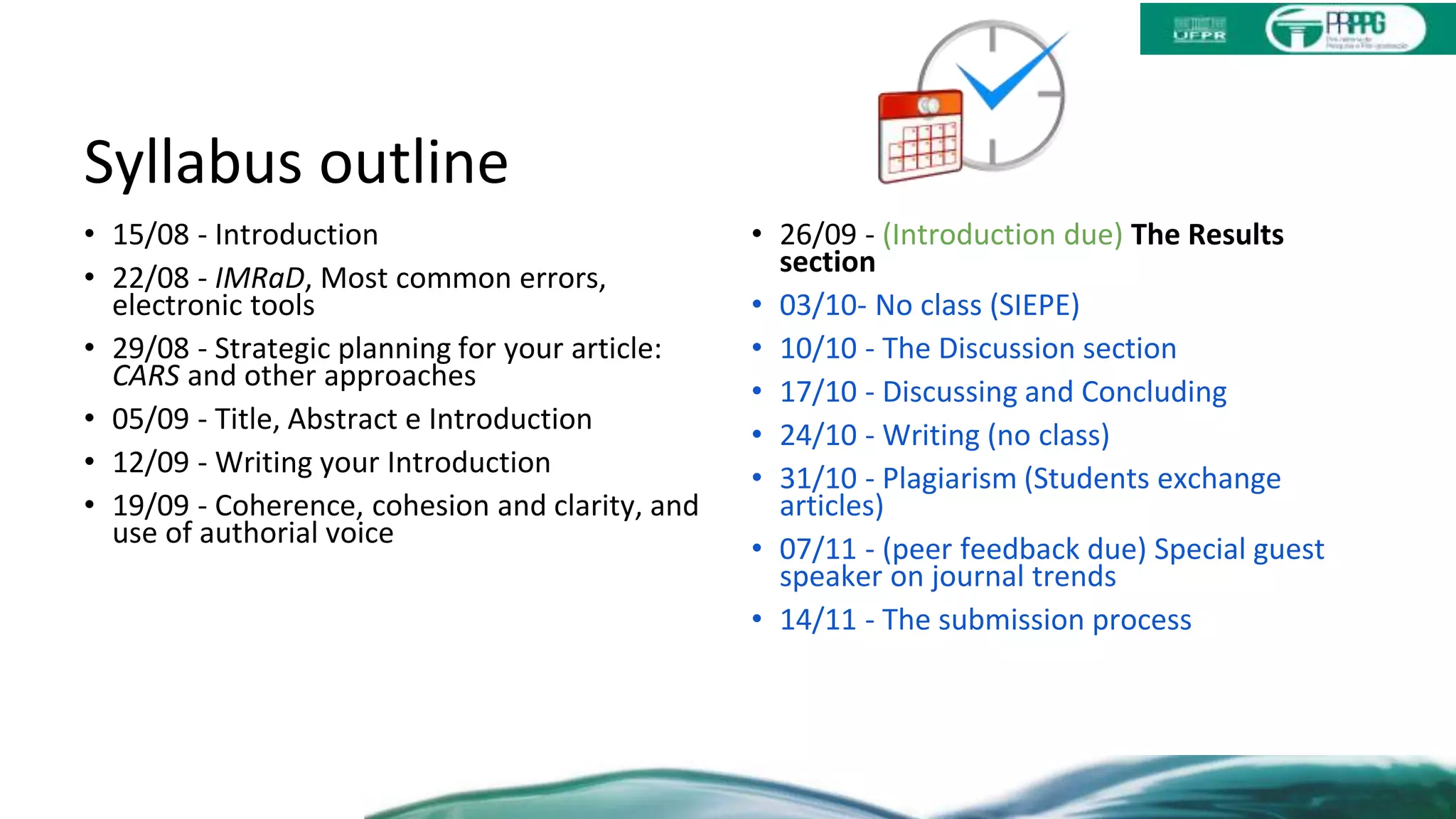
Syllabus outline
• 15/08 - Introduction
• 22/08 - IMRaD, Most common errors,
electronic tools
• 29/08 - Strategic planning for your article:
CARS and other approaches
• 05/09 - Title, Abstract e Introduction
• 12/09 - Writing your Introduction
• 19/09 - Coherence, cohesion and clarity, and
use of authorial voice
• 26/09 - (Introduction due) The Results
section
• 03/10- No class (SIEPE)
• 10/10 - The Discussion section
• 17/10 - Discussing and Concluding
• 24/10 - Writing (no class)
• 31/10 - Plagiarism (Students exchange
articles)
• 07/11 - (peer feedback due) Special guest
speaker on journal trends
• 14/11 - The submission process
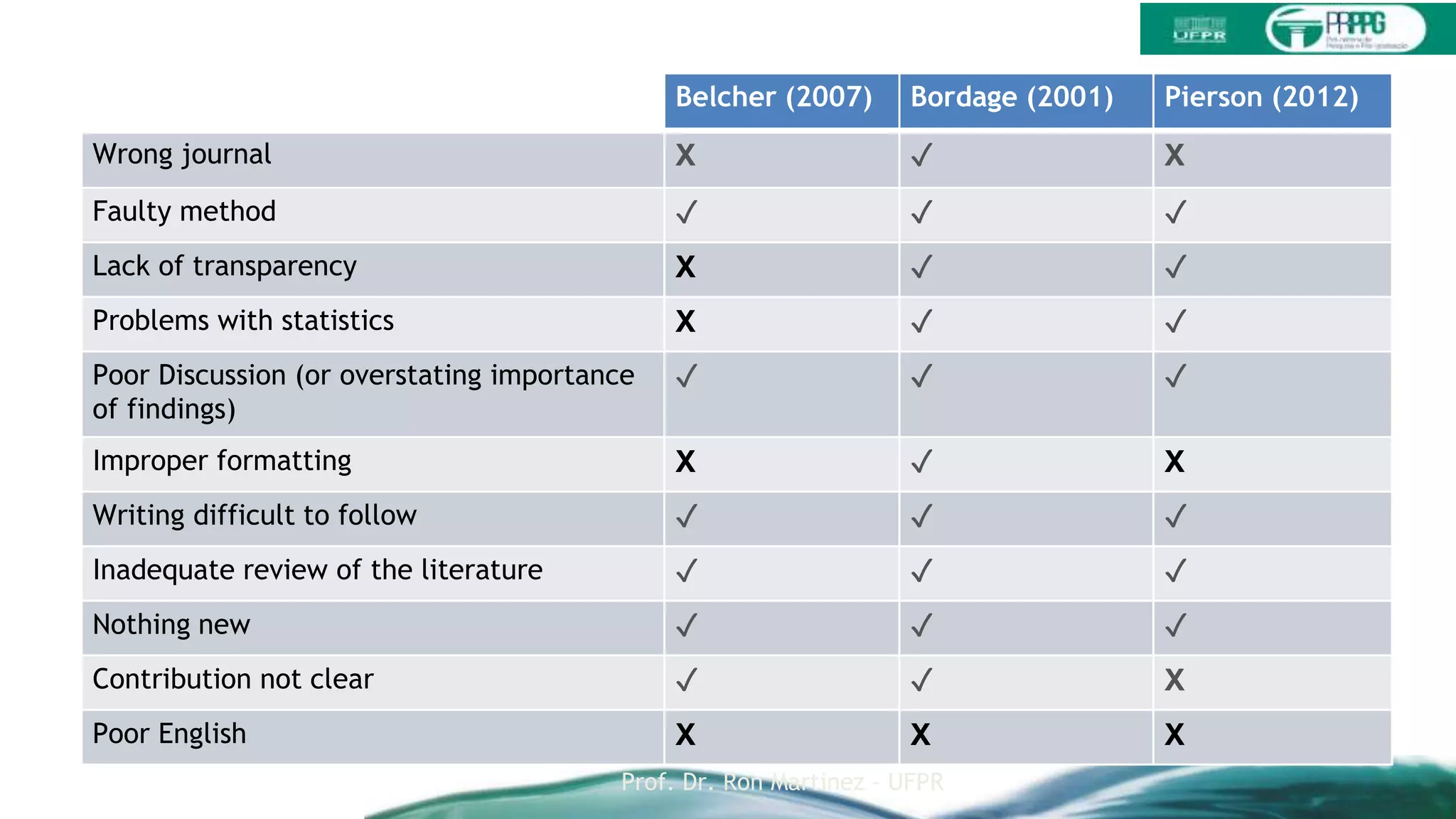
Motivos mais comuns para rejeição:
Belcher (2007) Bordage (2001) Pierson (2012)
Wrong journal X ✓ X
Faulty method ✓ ✓ ✓
Lack of transparency X ✓ ✓
Problems with statistics X ✓ ✓
Poor Discussion (or overstating importance
of findings)
✓ ✓ ✓
Improper formatting X ✓ X
Writing difficult to follow ✓ ✓ ✓
Inadequate review of the literature ✓ ✓ ✓
Nothing new ✓ ✓ ✓
Contribution not clear ✓ ✓ X
Poor English X X X
Prof. Dr. Ron Martinez - UFPR
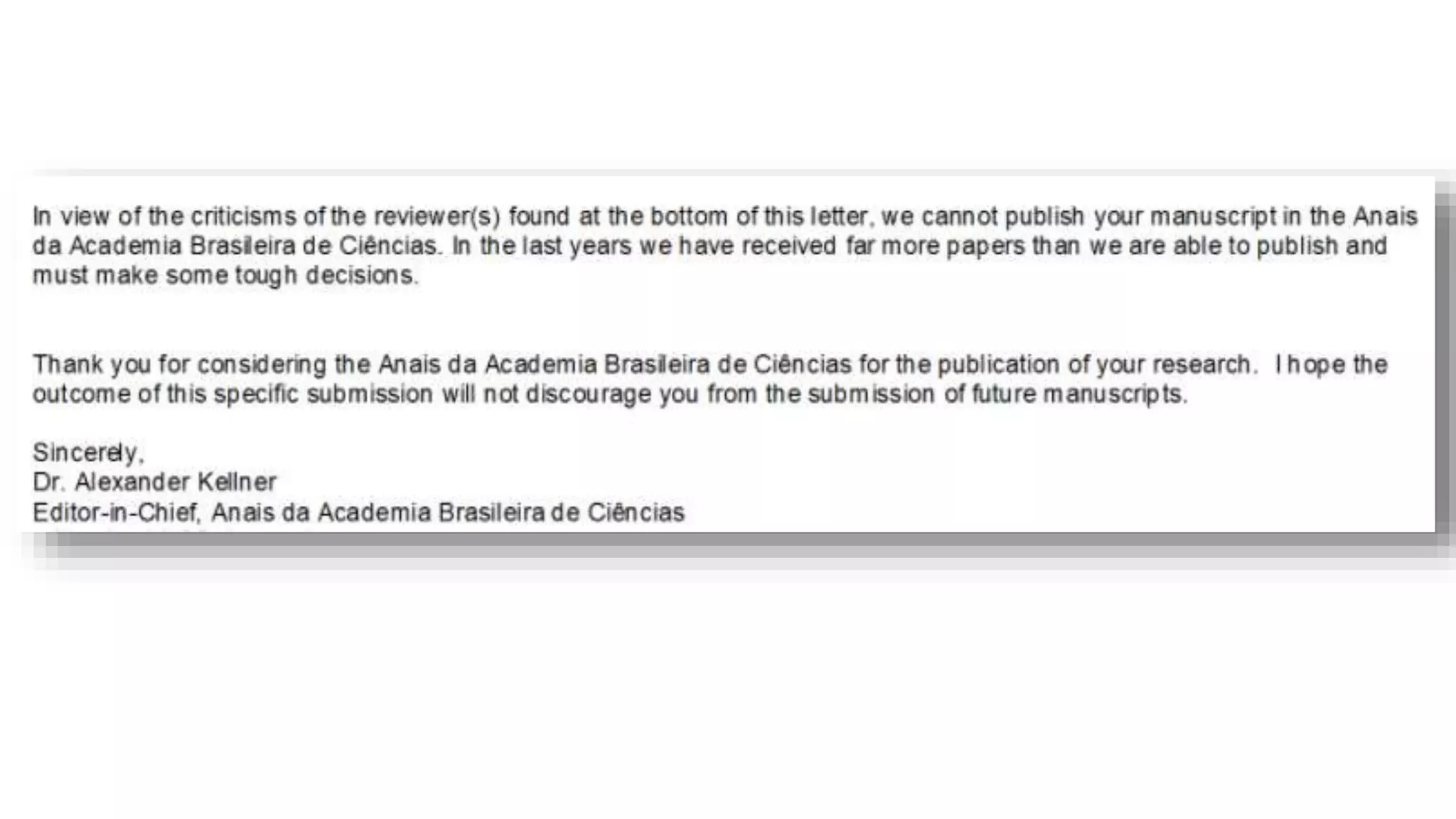
A rejection....
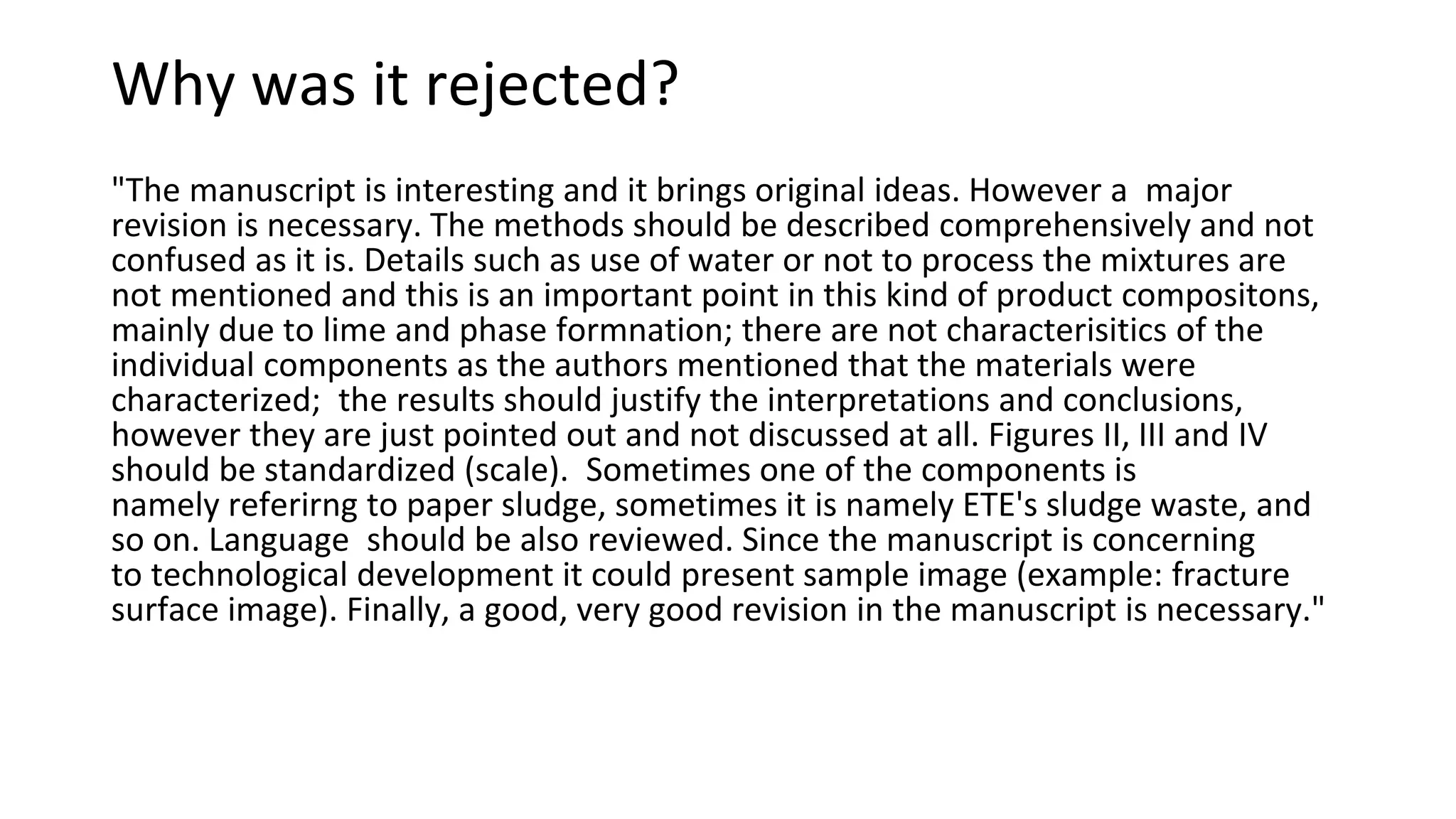
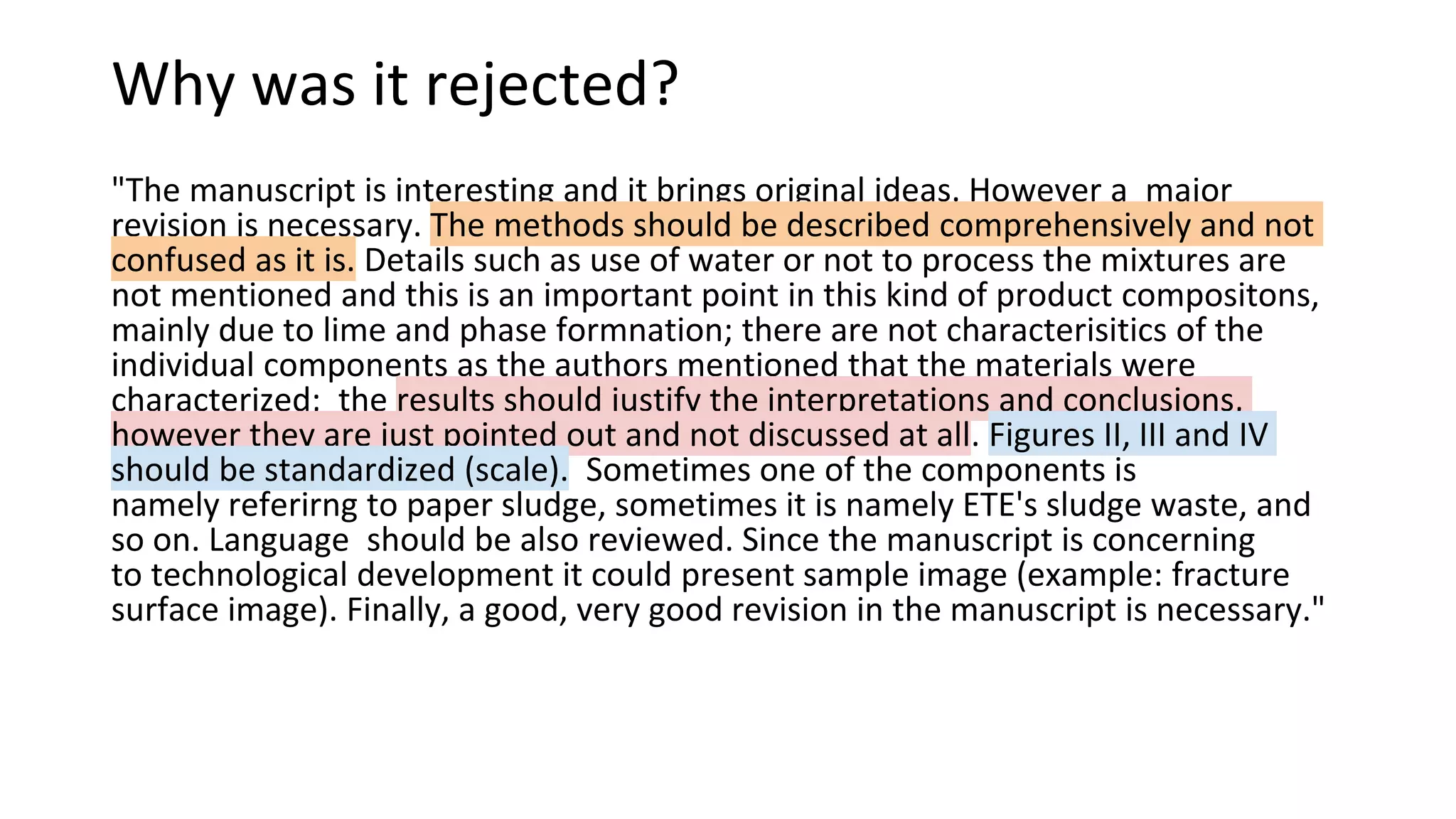
Why was it rejected?
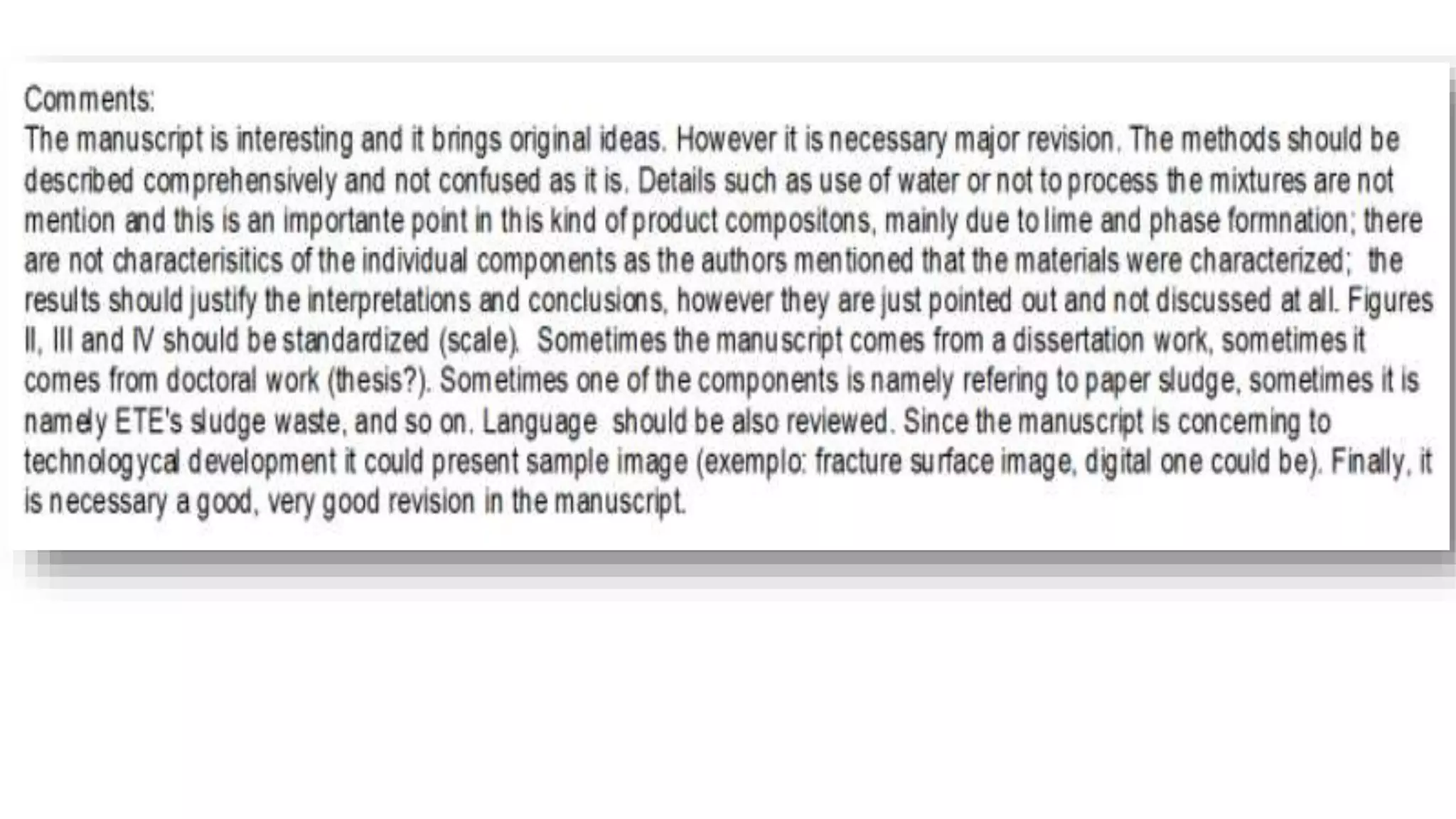
"The manuscript is interesting and it brings original ideas. However a major
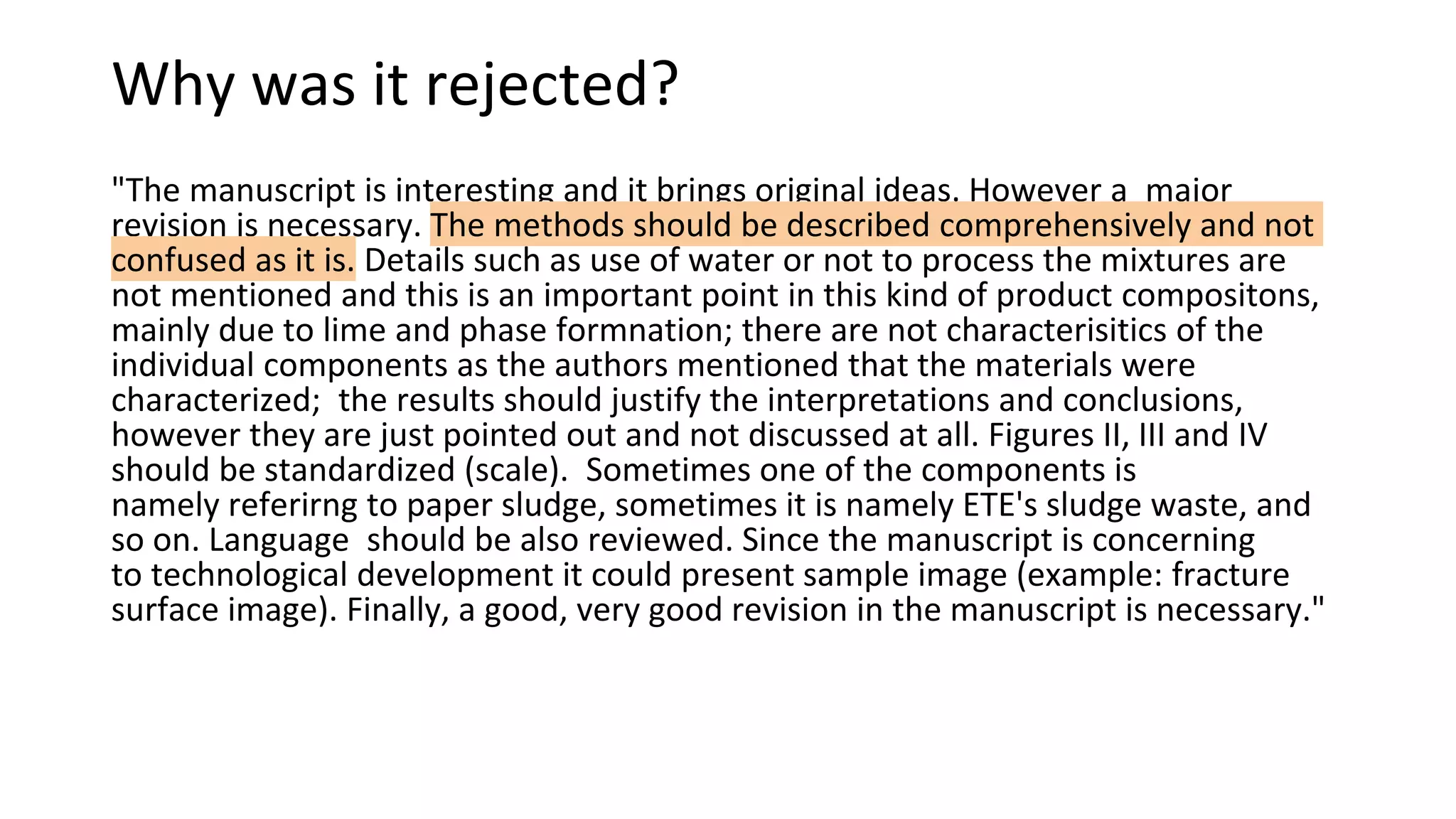
revision is necessary. The methods should be described comprehensively and not
confused as it is. Details such as use of water or not to process the mixtures are
not mentioned and this is an important point in this kind of product compositons,
mainly due to lime and phase formnation; there are not characterisitics of the
individual components as the authors mentioned that the materials were
characterized; the results should justify the interpretations and conclusions,
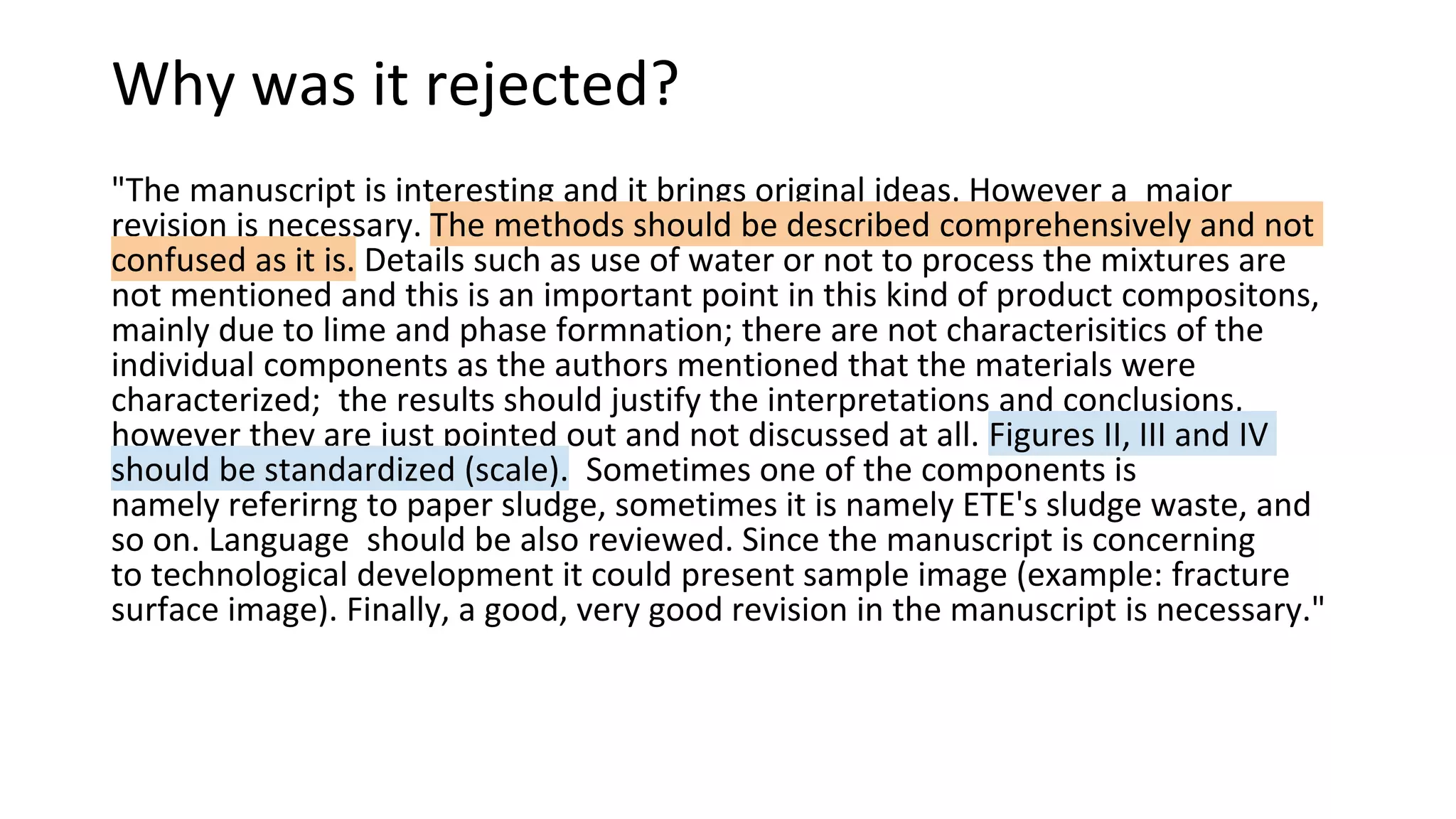
however they are just pointed out and not discussed at all. Figures II, III and IV
should be standardized (scale). Sometimes one of the components is
namely referirng to paper sludge, sometimes it is namely ETE's sludge waste, and
so on. Language should be also reviewed. Since the manuscript is concerning
to technological development it could present sample image (example: fracture
surface image). Finally, a good, very good revision in the manuscript is necessary."
Kahoot!
Why was it rejected?
"The manuscript is interesting and it brings original ideas. However a major
revision is necessary. The methods should be described comprehensively and not
confused as it is. Details such as use of water or not to process the mixtures are
not mentioned and this is an important point in this kind of product compositons,
mainly due to lime and phase formnation; there are not characterisitics of the
individual components as the authors mentioned that the materials were
characterized; the results should justify the interpretations and conclusions,
however they are just pointed out and not discussed at all. Figures II, III and IV
should be standardized (scale). Sometimes one of the components is
namely referirng to paper sludge, sometimes it is namely ETE's sludge waste, and
so on. Language should be also reviewed. Since the manuscript is concerning
to technological development it could present sample image (example: fracture
surface image). Finally, a good, very good revision in the manuscript is necessary."
Why was it rejected?
"The manuscript is interesting and it brings original ideas. However a major
revision is necessary. The methods should be described comprehensively and not
confused as it is. Details such as use of water or not to process the mixtures are
not mentioned and this is an important point in this kind of product compositons,
mainly due to lime and phase formnation; there are not characterisitics of the
individual components as the authors mentioned that the materials were
characterized; the results should justify the interpretations and conclusions,
however they are just pointed out and not discussed at all. Figures II, III and IV
should be standardized (scale). Sometimes one of the components is
namely referirng to paper sludge, sometimes it is namely ETE's sludge waste, and
so on. Language should be also reviewed. Since the manuscript is concerning
to technological development it could present sample image (example: fracture
surface image). Finally, a good, very good revision in the manuscript is necessary."
Why was it rejected?
"The manuscript is interesting and it brings original ideas. However a major
revision is necessary. The methods should be described comprehensively and not
confused as it is. Details such as use of water or not to process the mixtures are
not mentioned and this is an important point in this kind of product compositons,
mainly due to lime and phase formnation; there are not characterisitics of the
individual components as the authors mentioned that the materials were
characterized; the results should justify the interpretations and conclusions,
however they are just pointed out and not discussed at all. Figures II, III and IV
should be standardized (scale). Sometimes one of the components is
namely referirng to paper sludge, sometimes it is namely ETE's sludge waste, and
so on. Language should be also reviewed. Since the manuscript is concerning
to technological development it could present sample image (example: fracture
surface image). Finally, a good, very good revision in the manuscript is necessary."
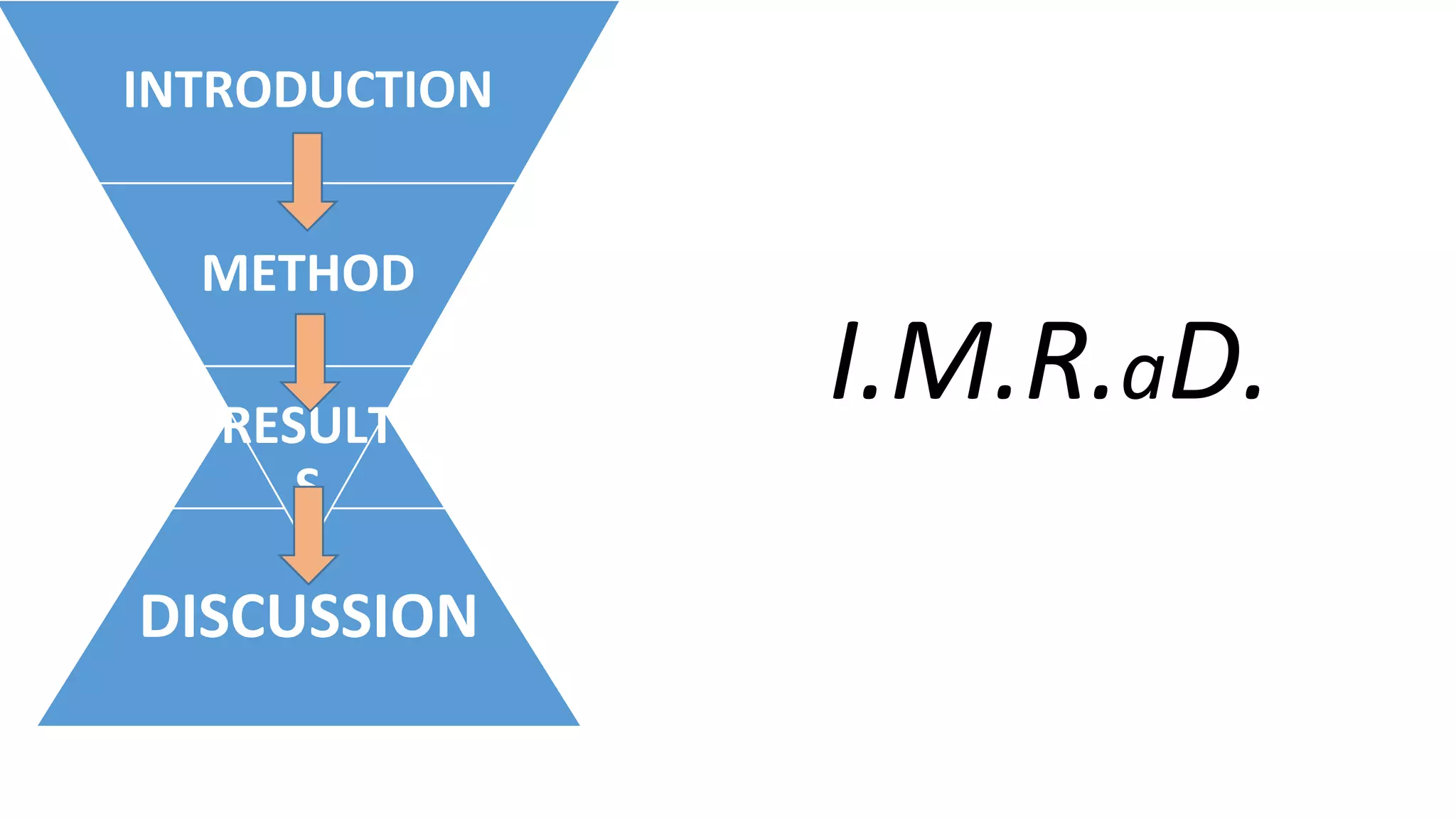
DISCUSSION
INTRODUCTION
METHOD
RESULT
S
I.M.R.aD.
DISCUSS...
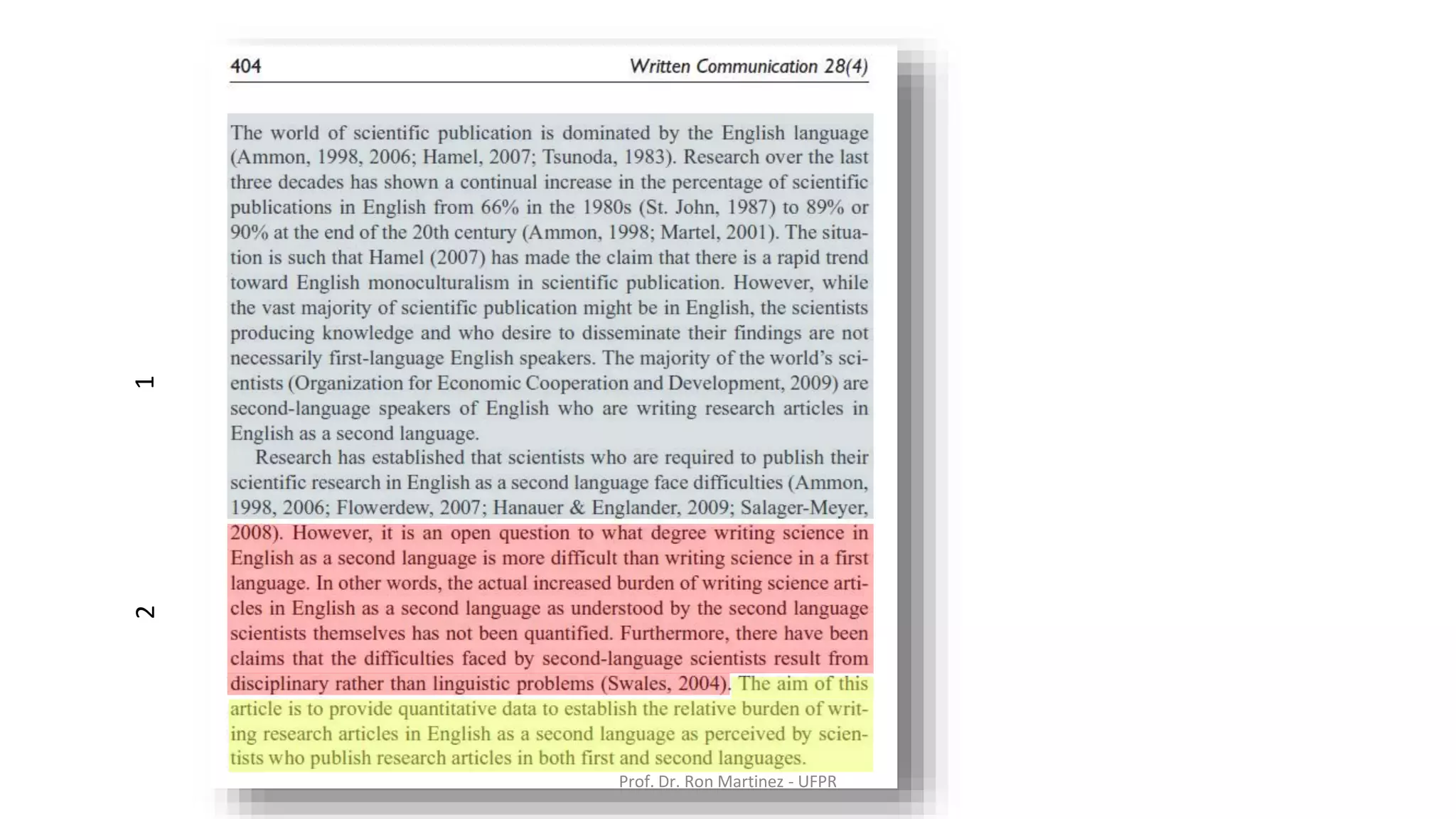
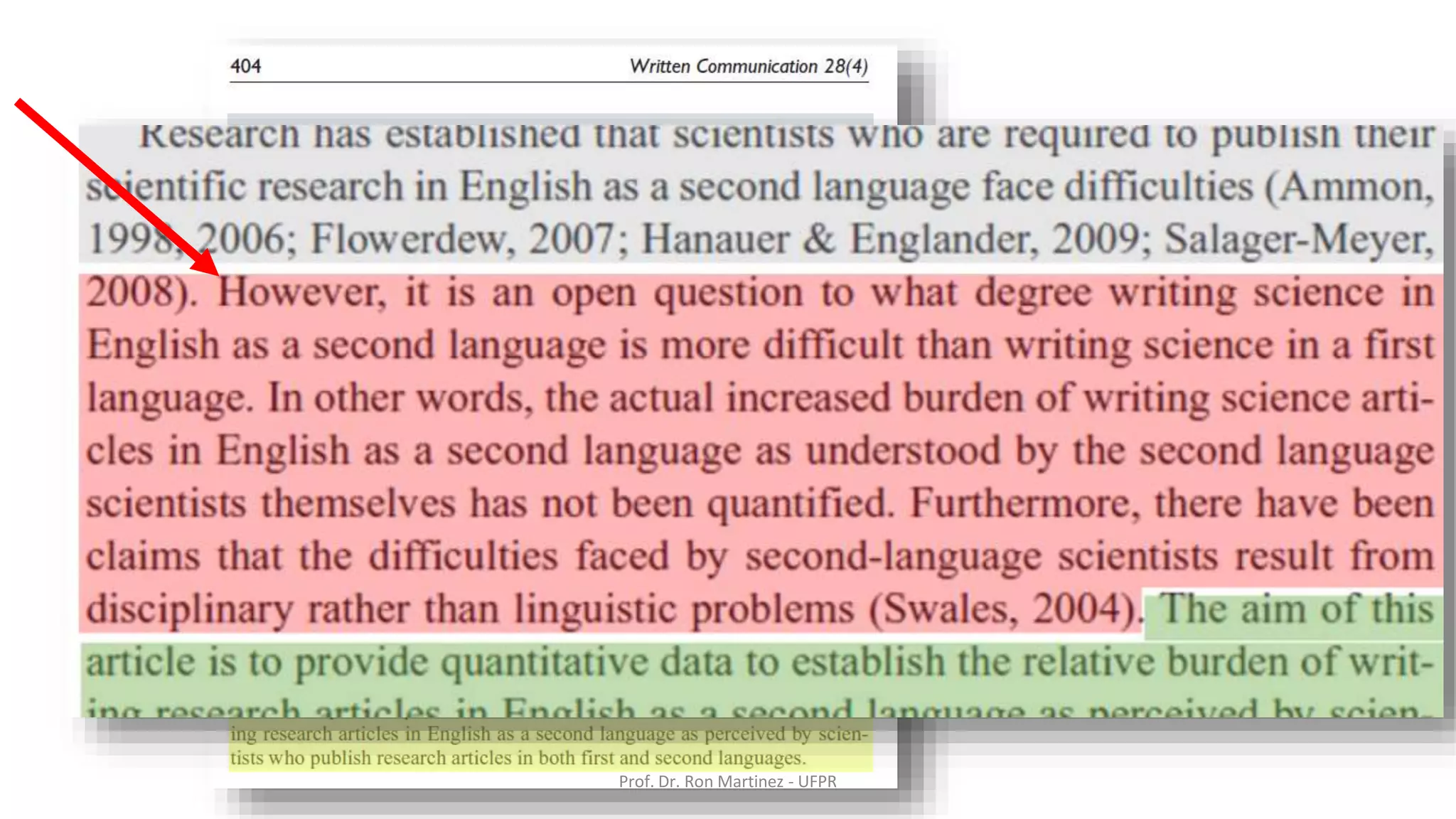
1. Why is the Discussion section so challenging?
2. What should the Discussion section “do”? What
are the most common “ingredients”?
Prof. Dr. Ron Martinez - UFPR
12
Prof. Dr. Ron Martinez - UFPR
12
Prof. Dr. Ron Martinez - UFPR
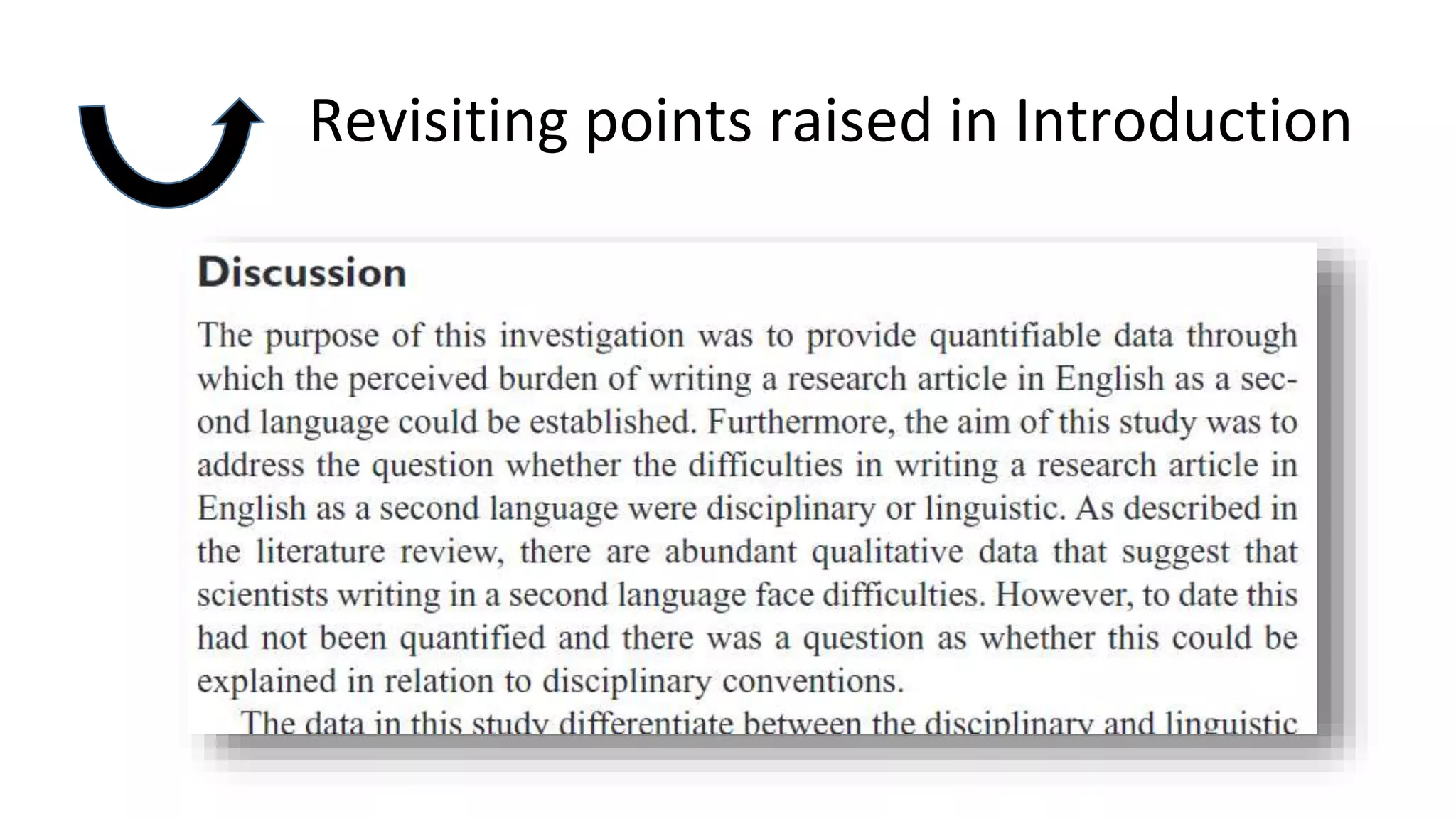
Revisiting points raised in Introduction
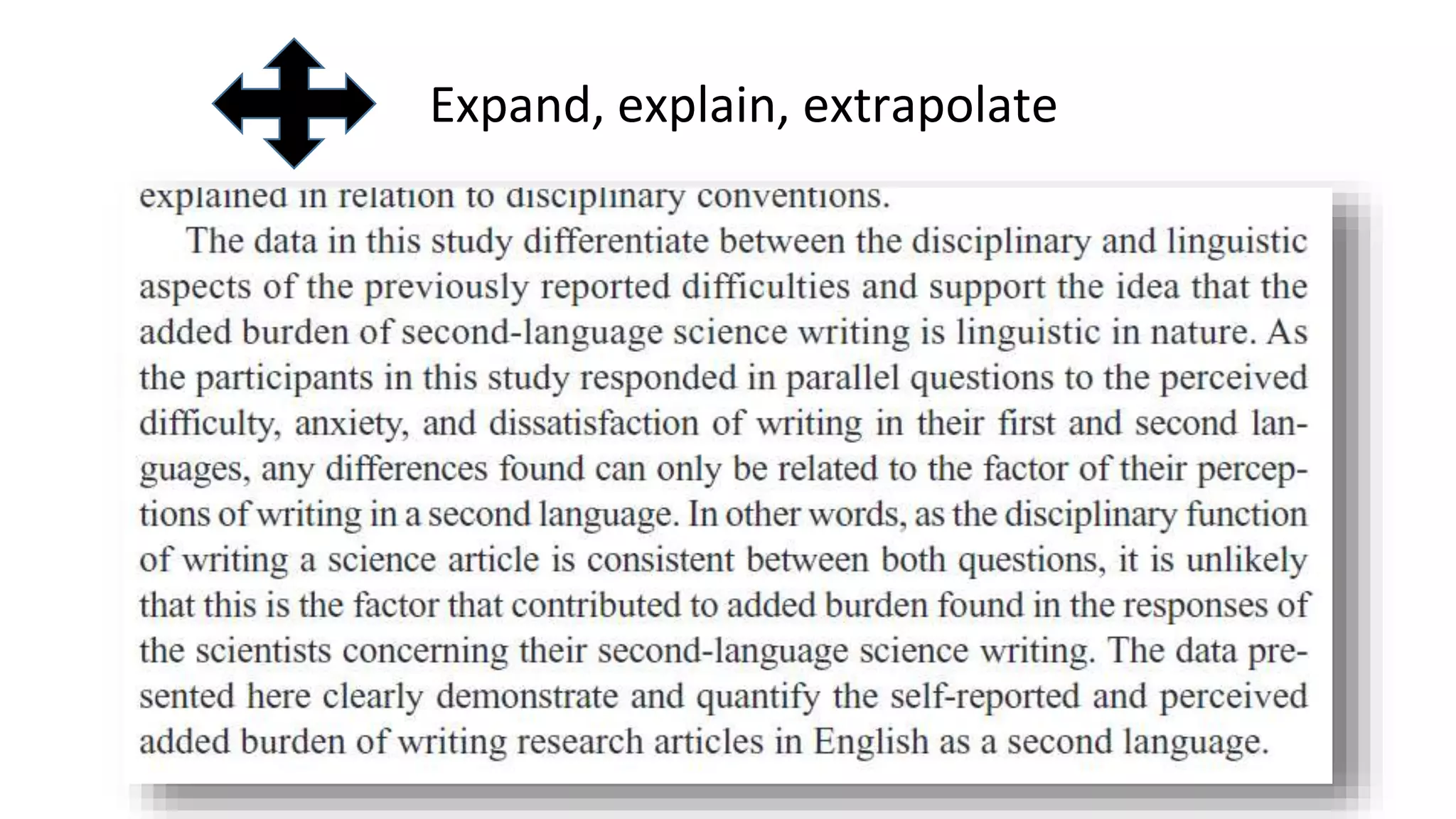
Expand, explain, extrapolate
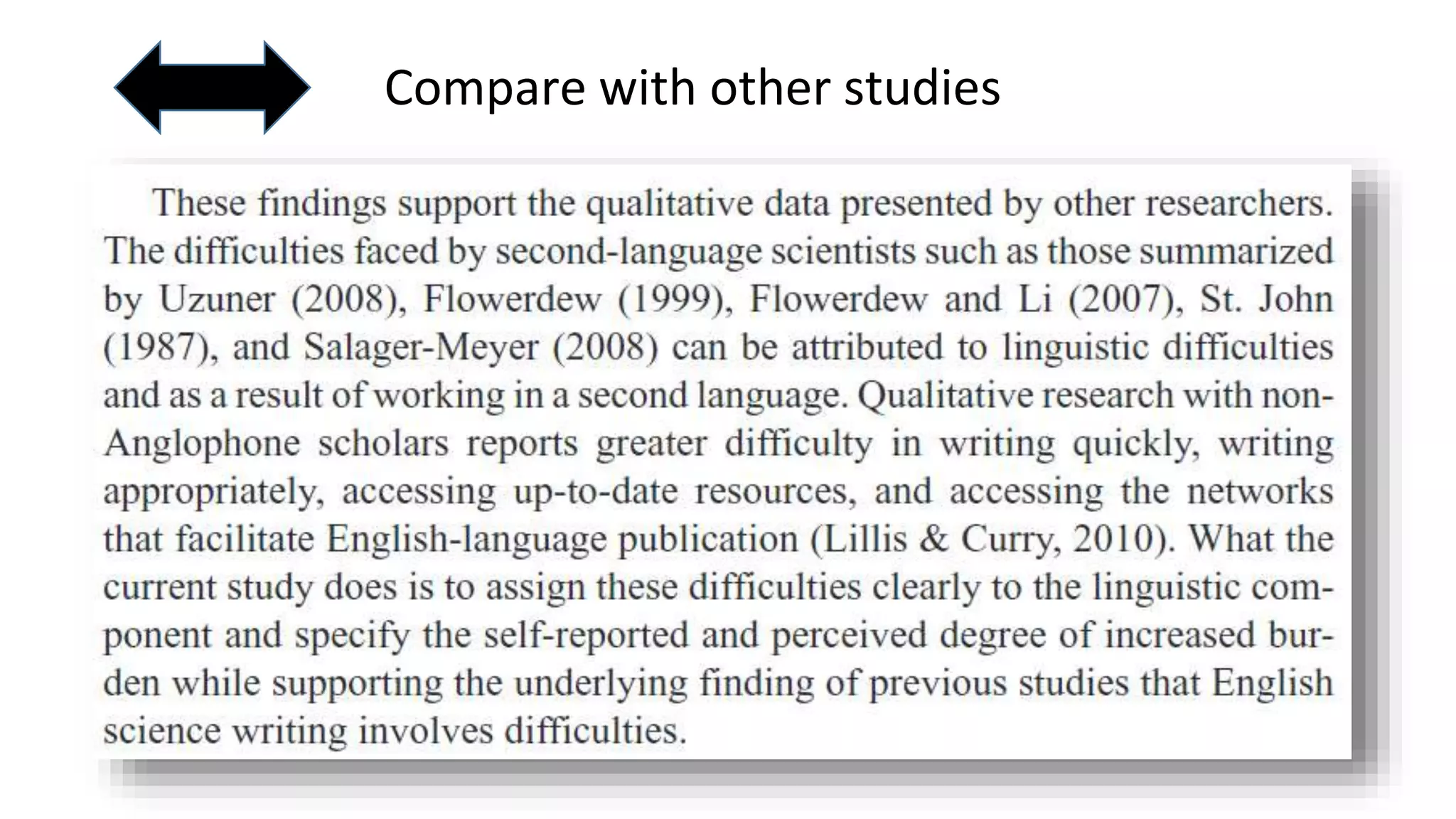
Compare with other studies
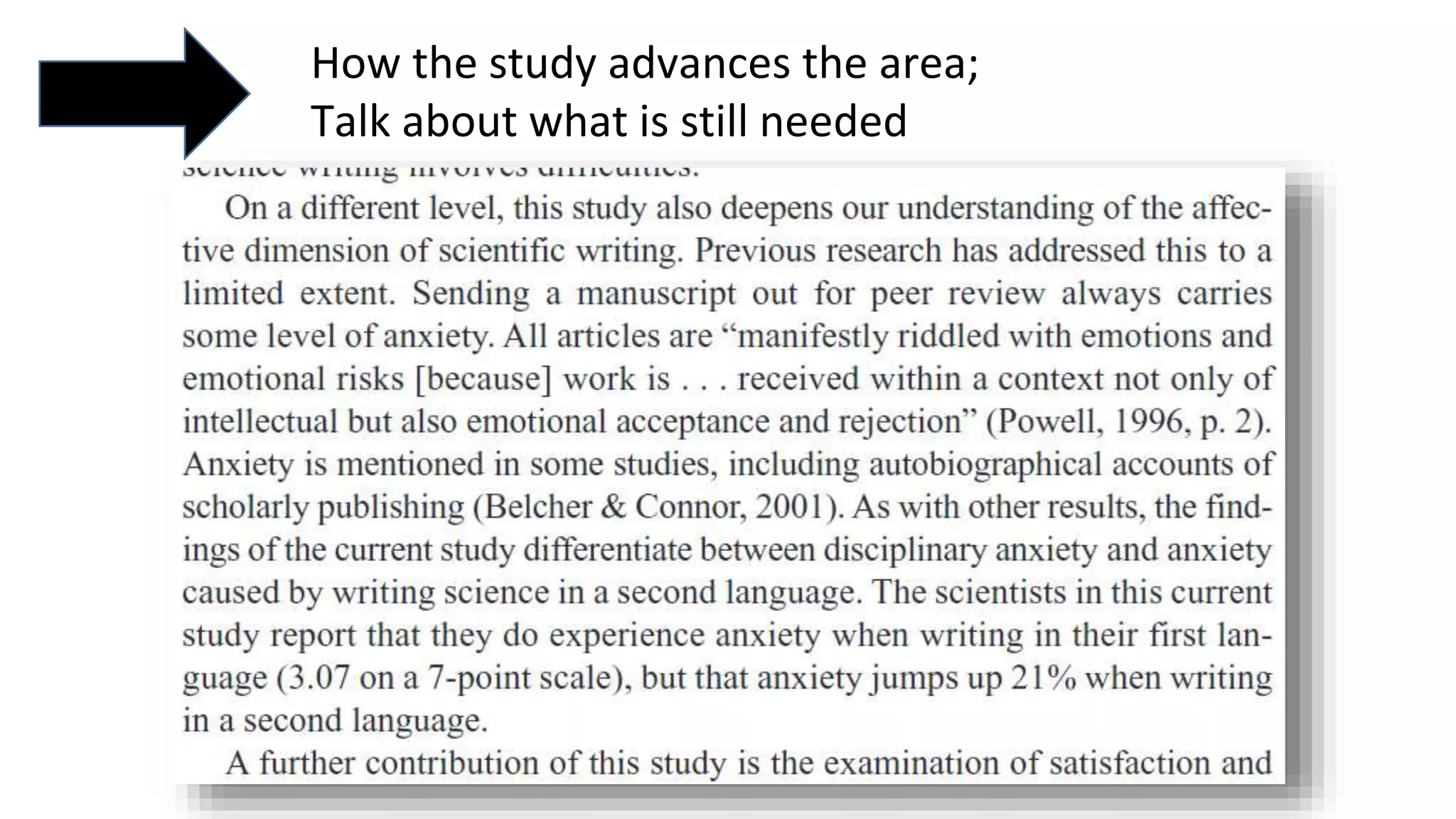
How the study advances the area;
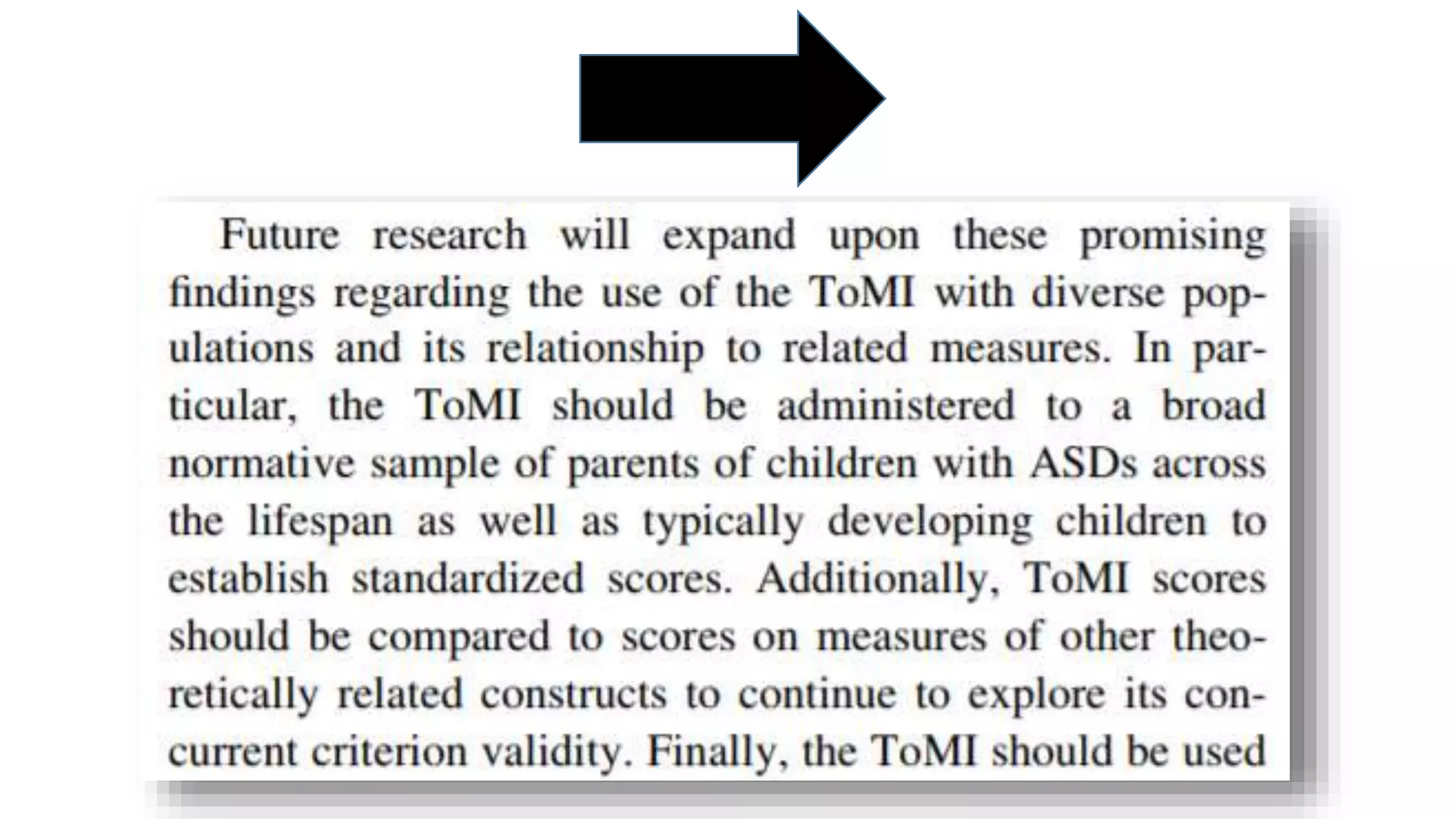
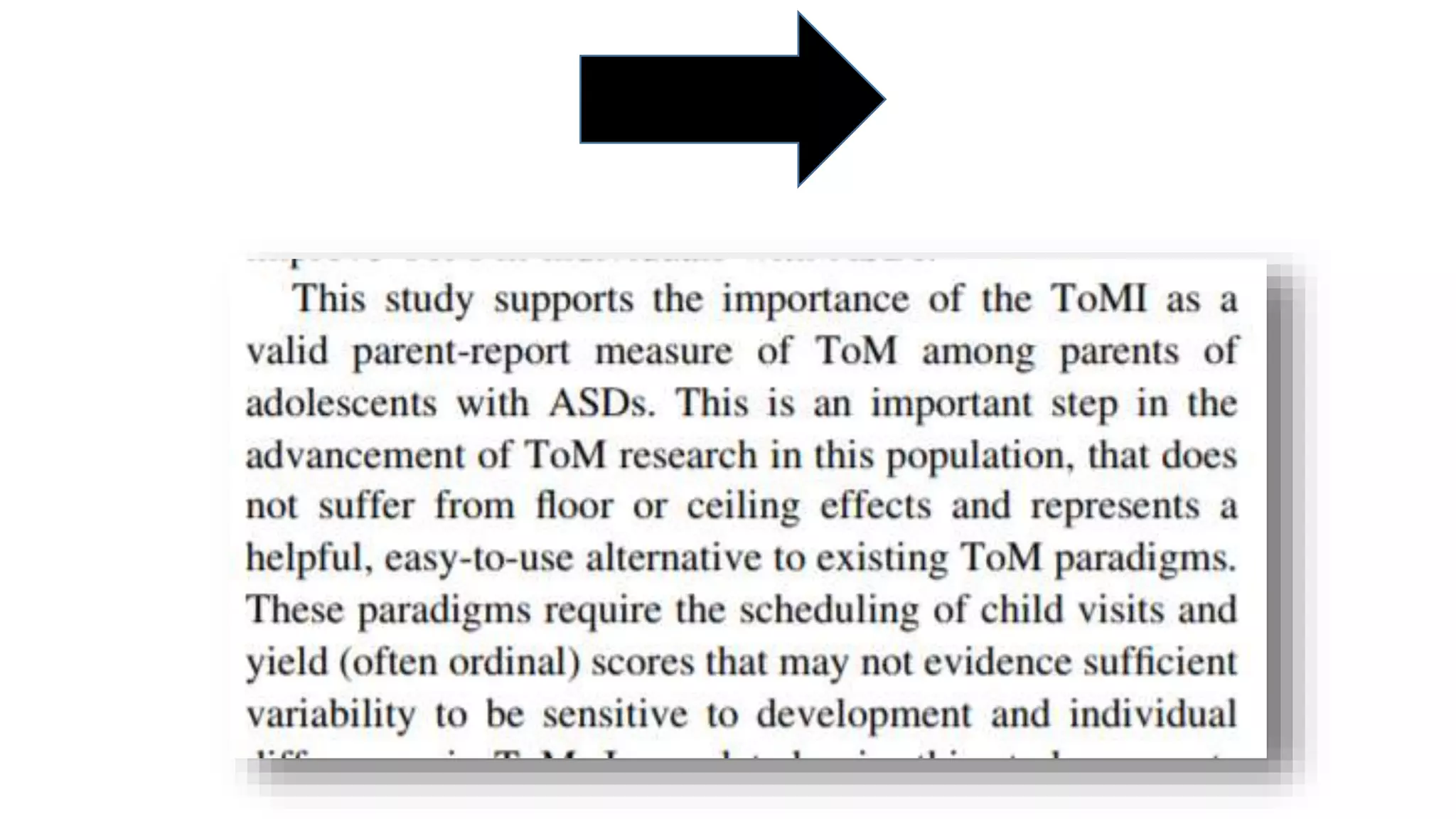
Talk about what is still needed
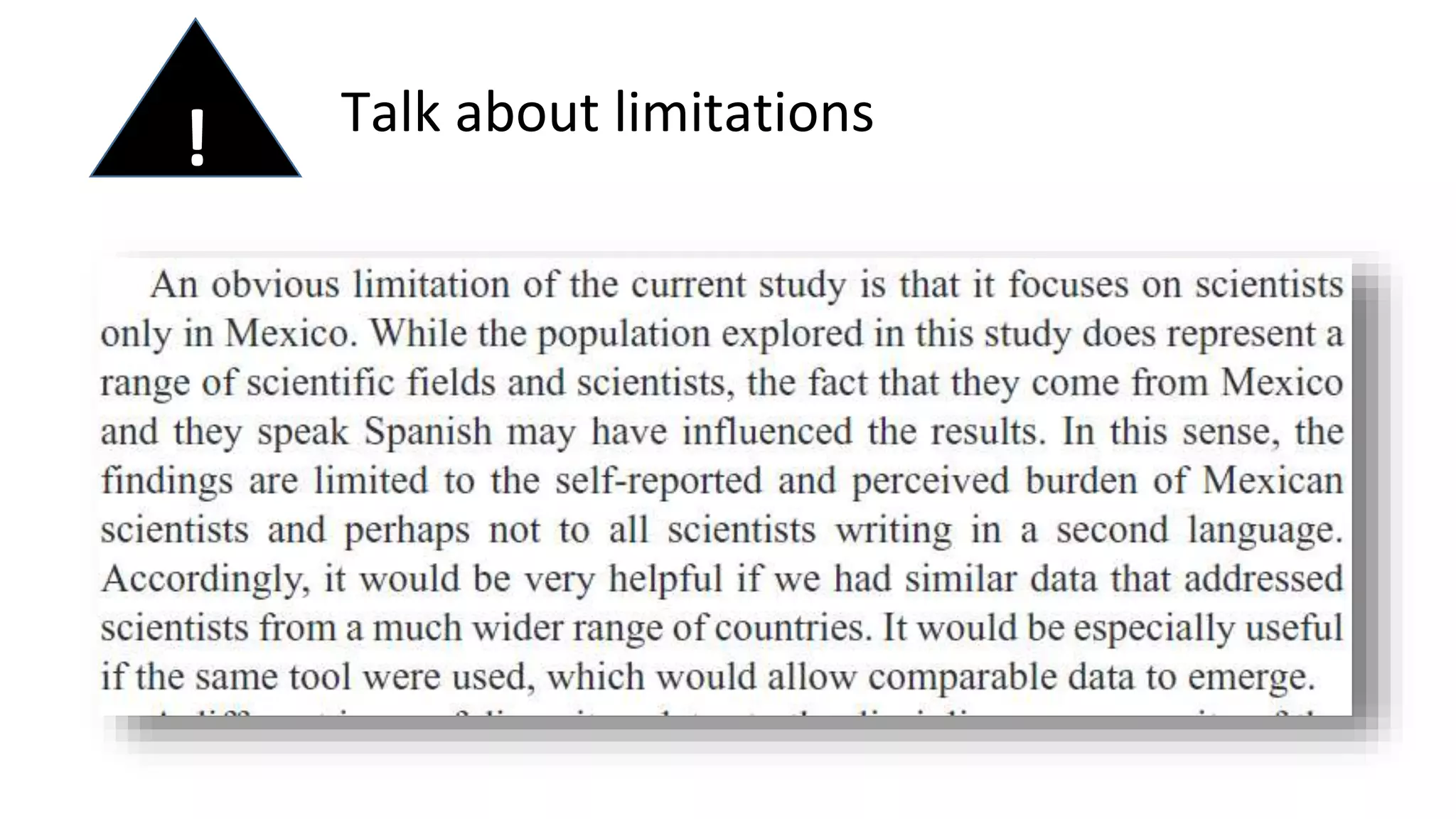
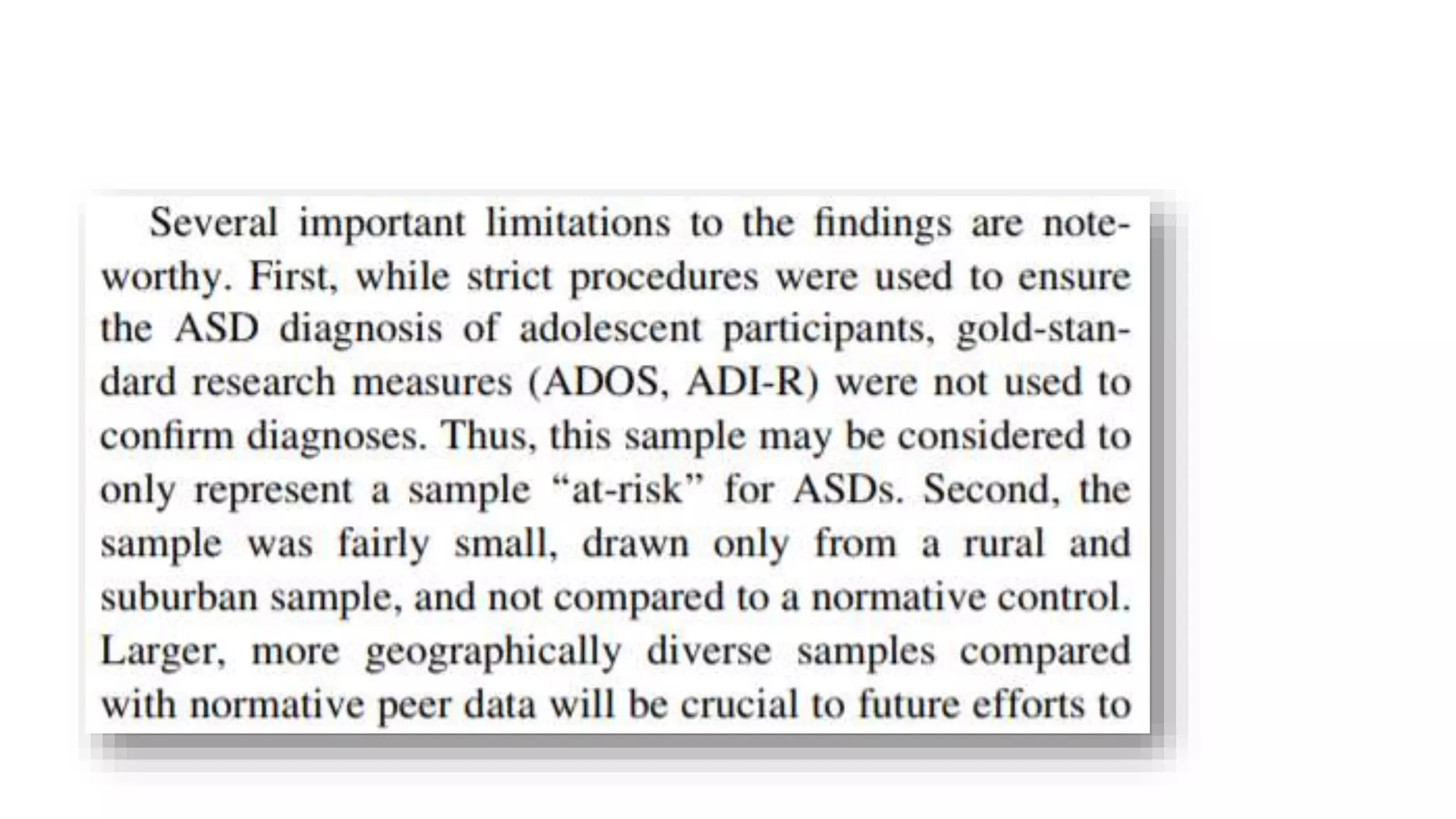
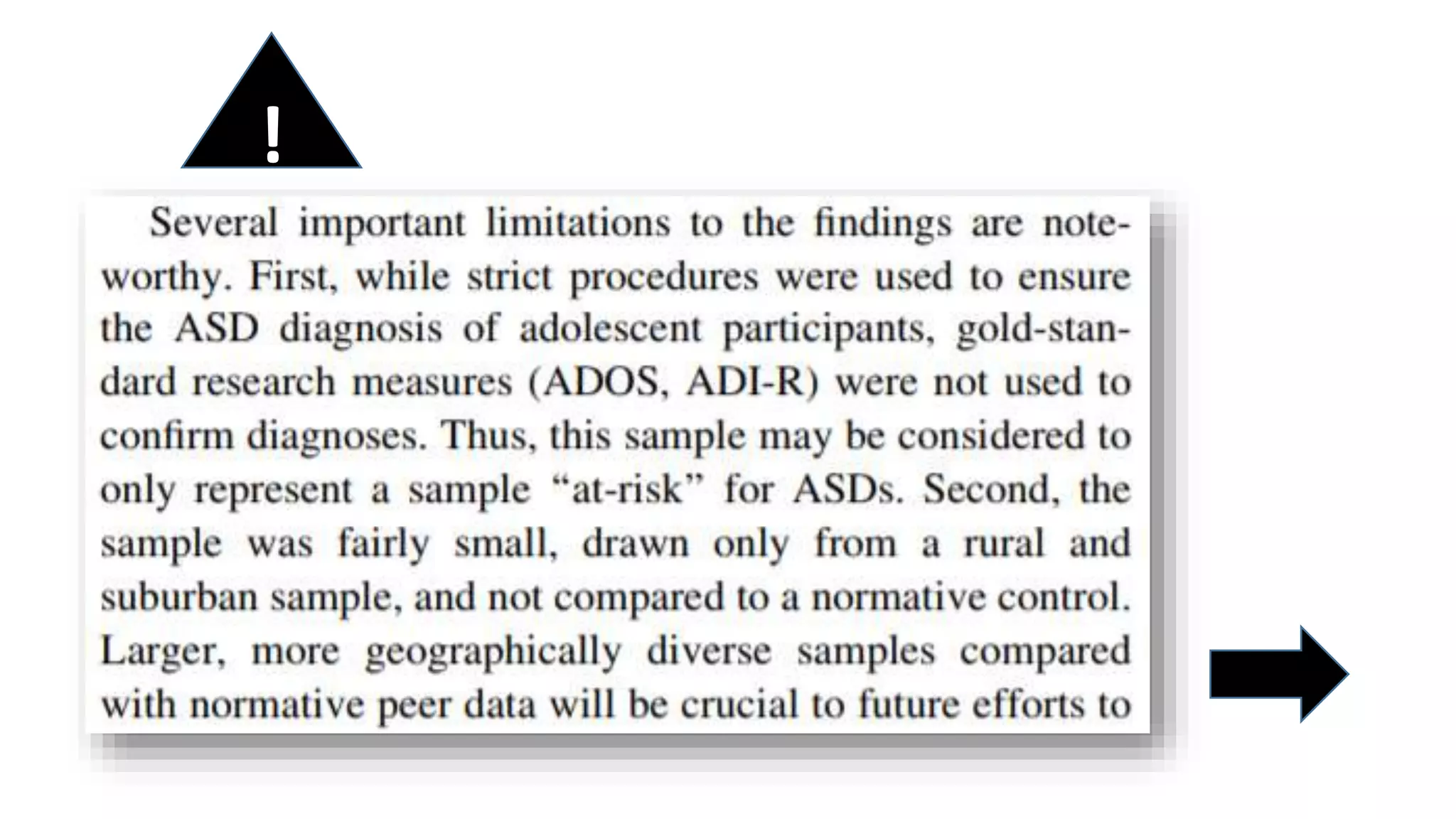
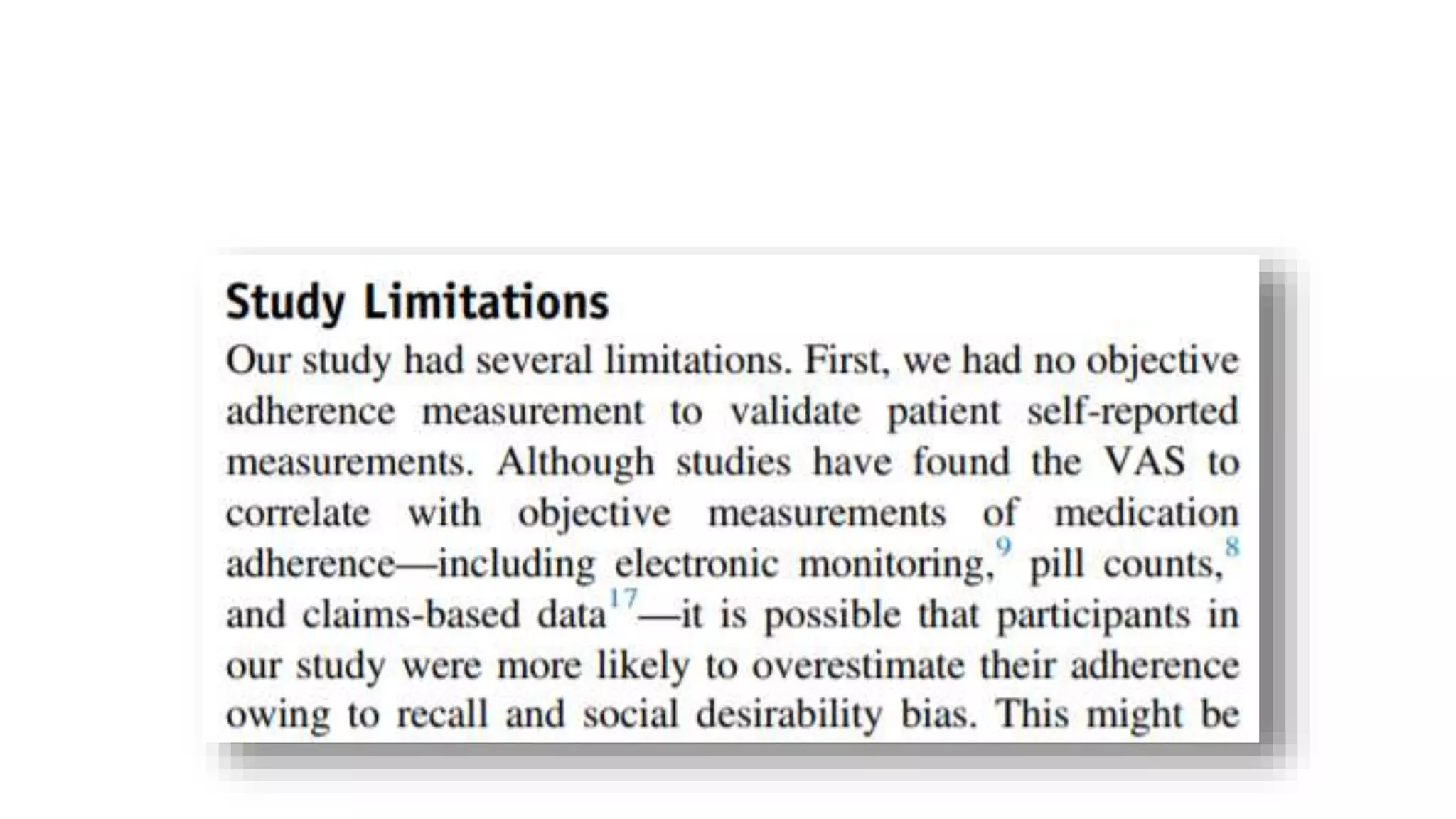
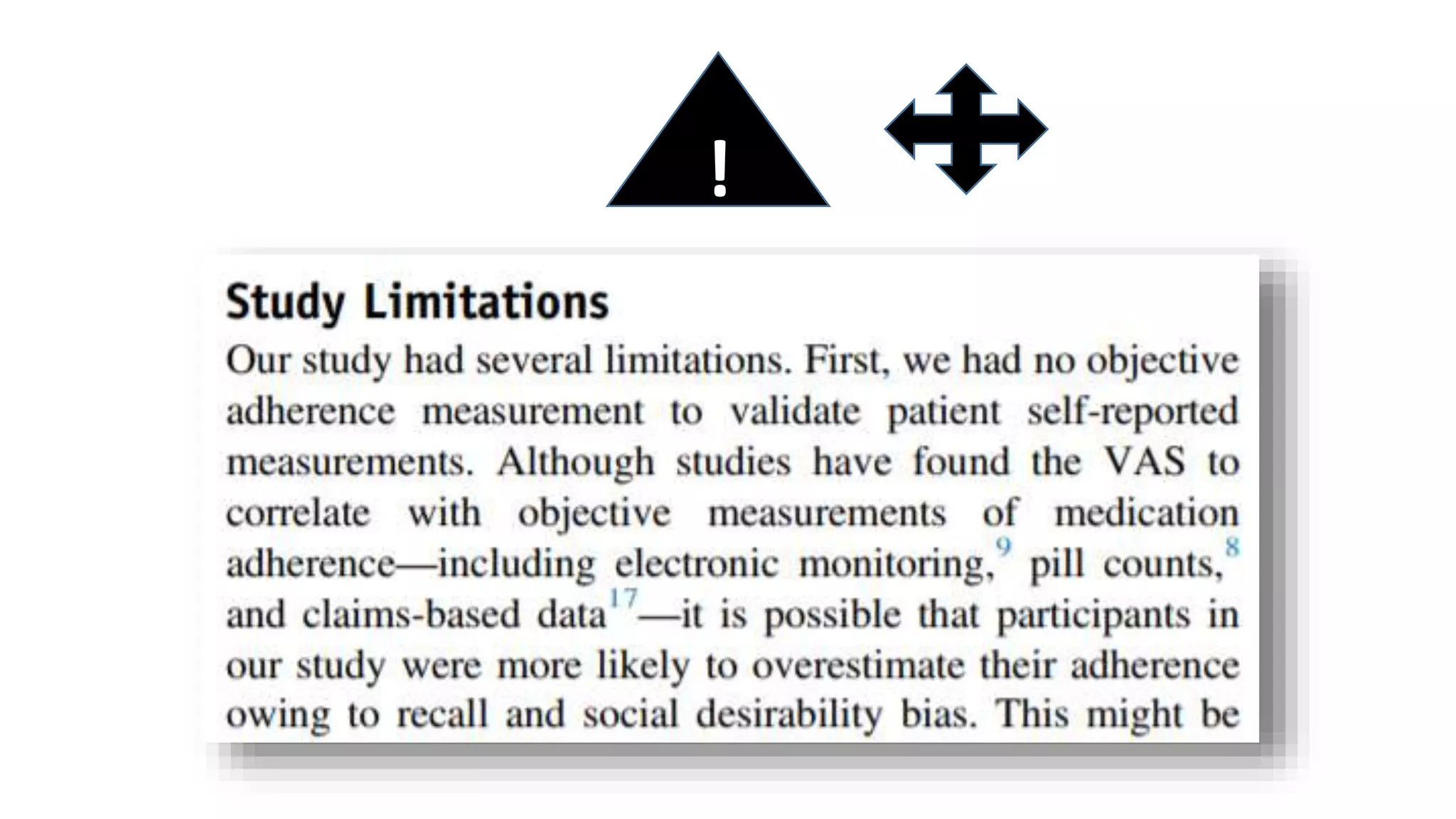
! Talk about limitations
Kahoot!
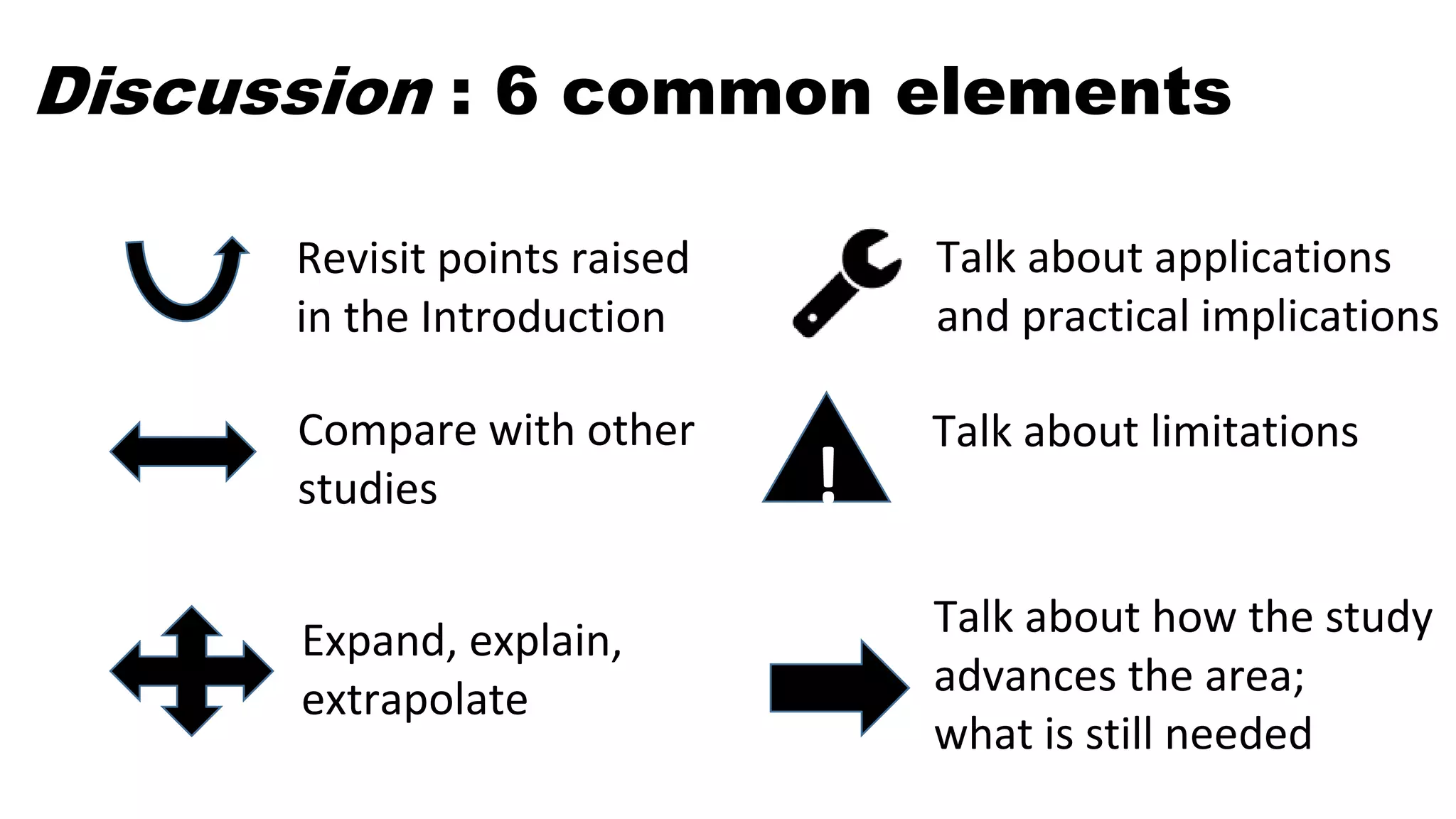
Discussion : 6 common elements
!
Revisit points raised
in the Introduction
Compare with other
studies
Expand, explain,
extrapolate
Talk about applications
and practical implications
Talk about limitations
Talk about how the study
advances the area;
what is still needed
!
!
!
!
!
!
!
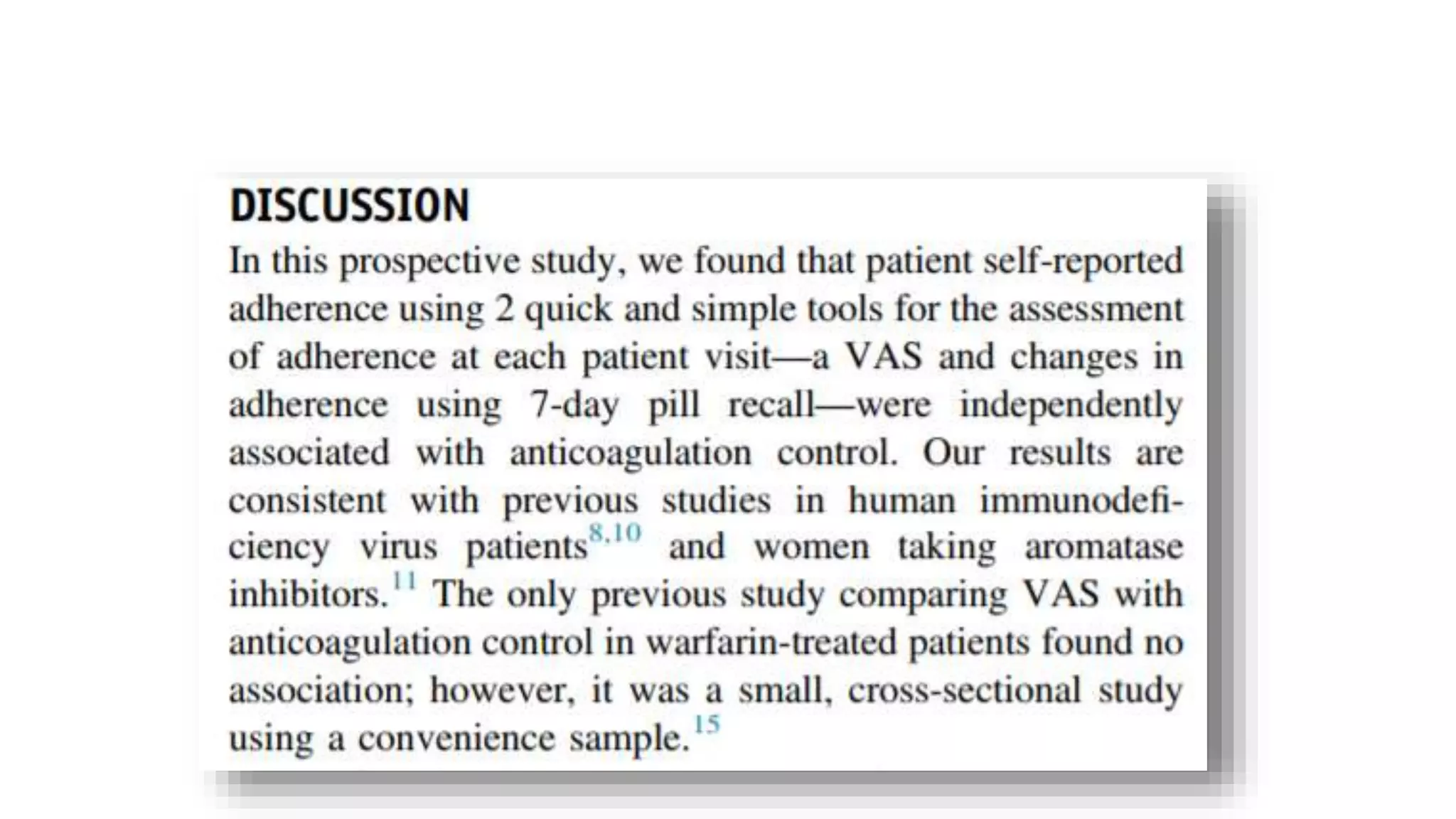
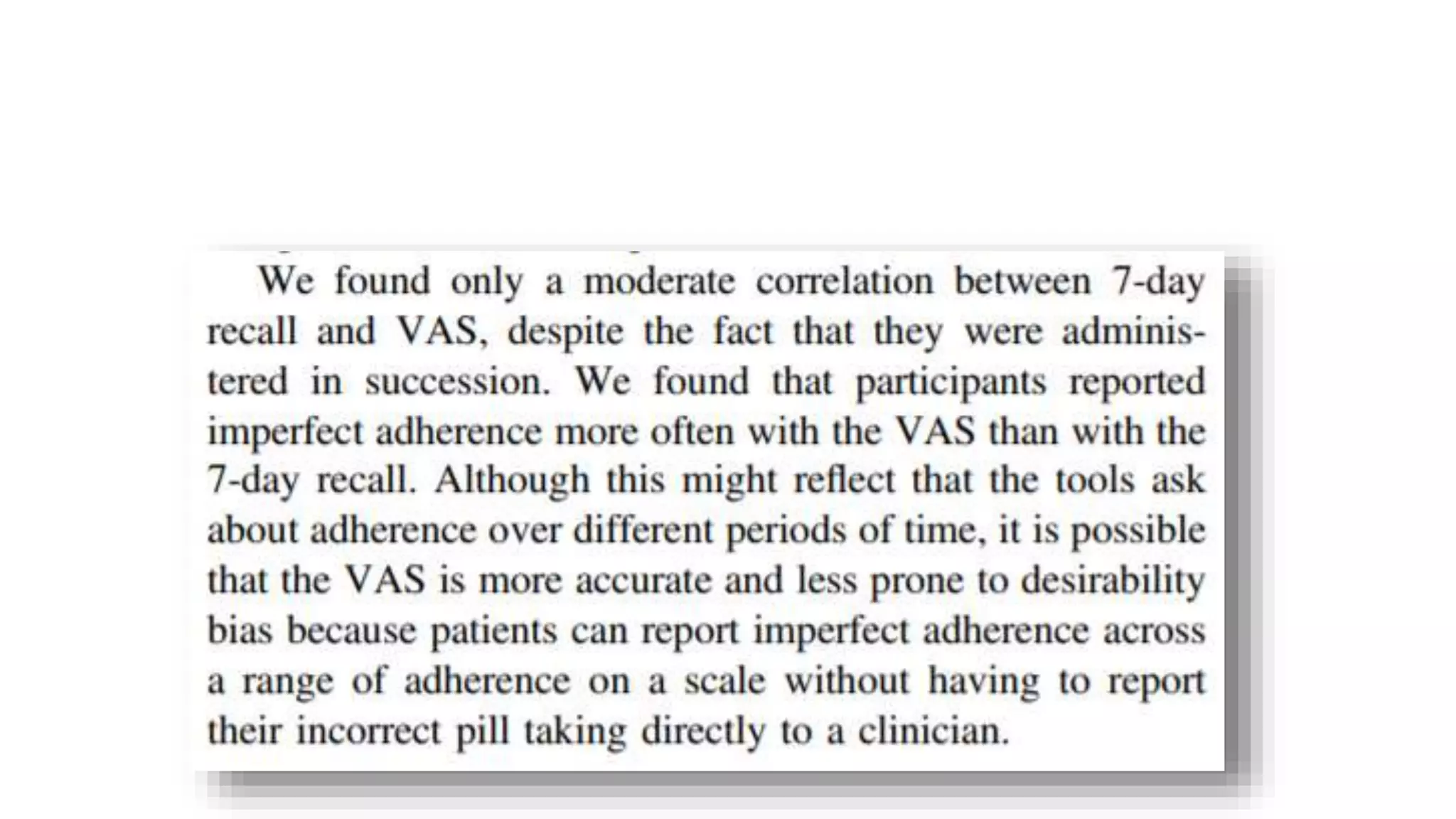
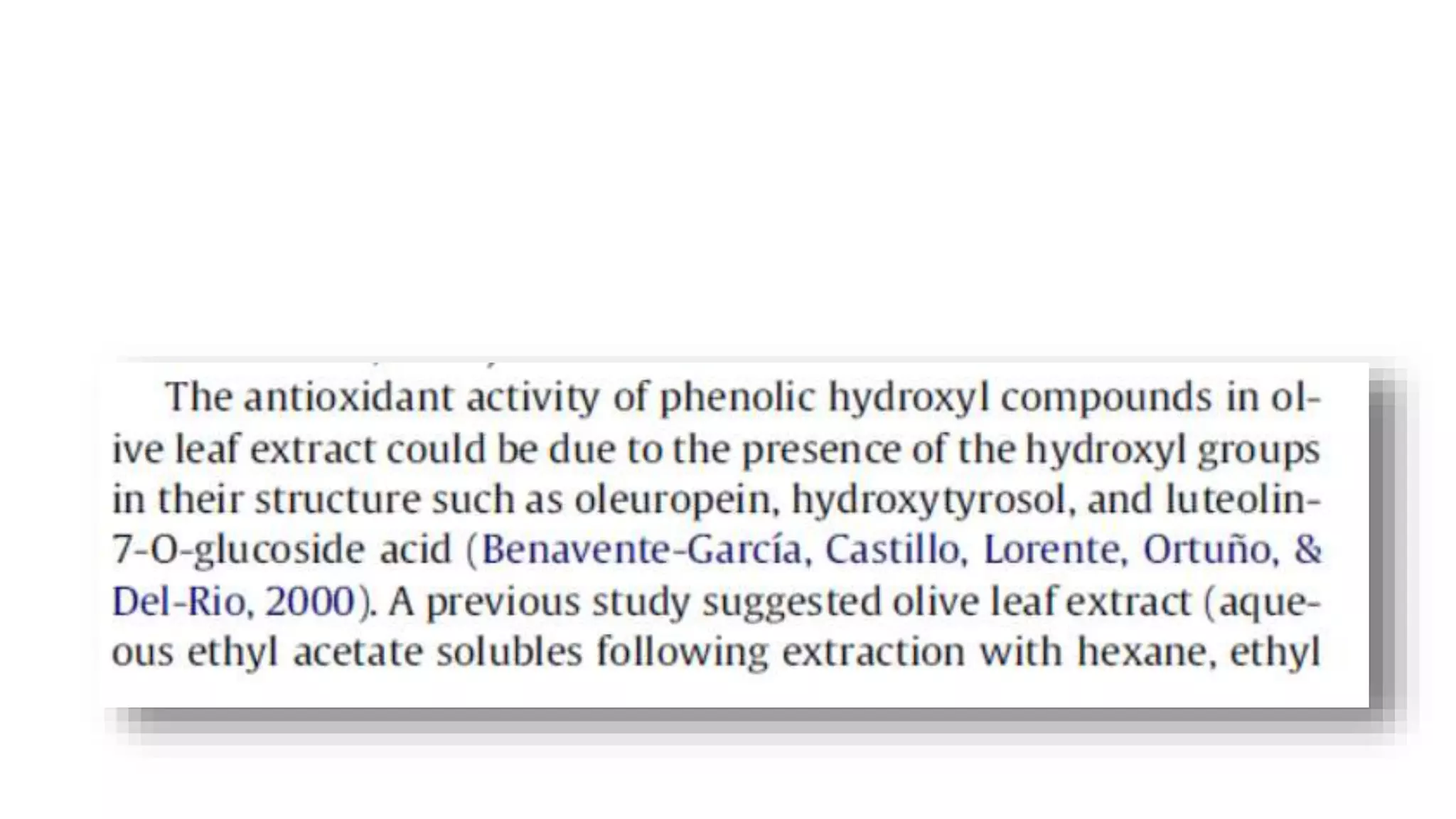
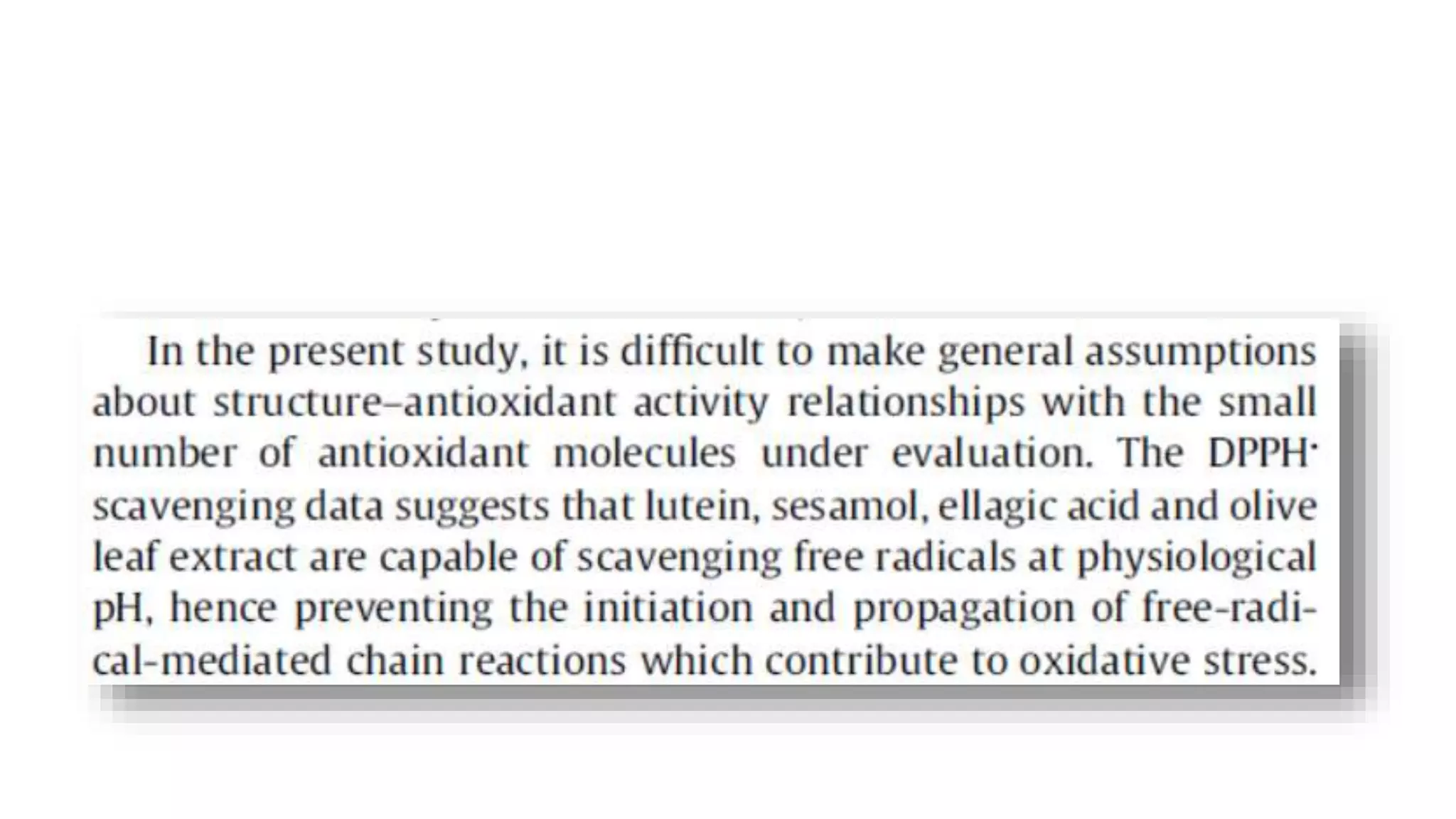
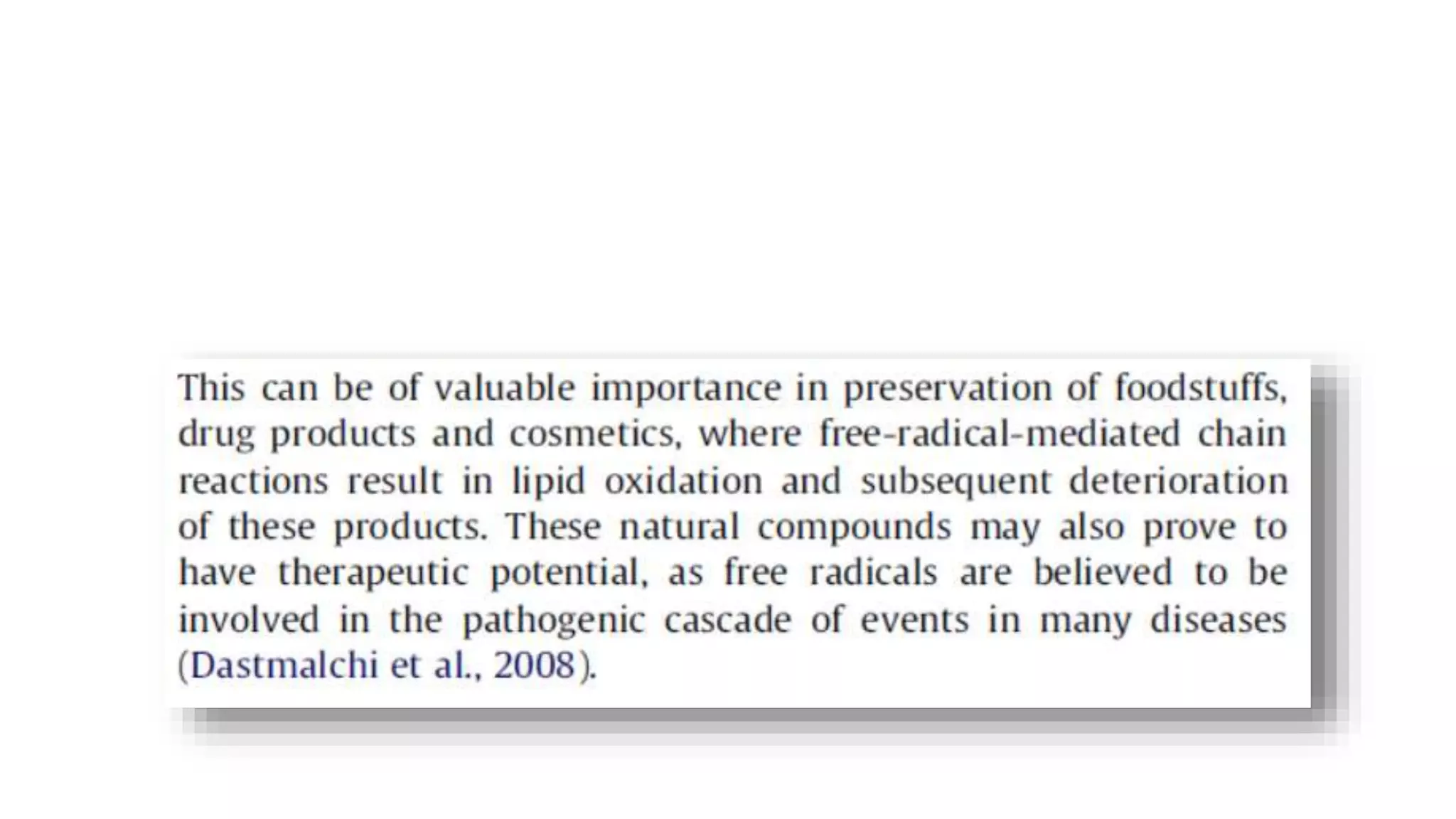
Back to that rejection....
(A comparison)
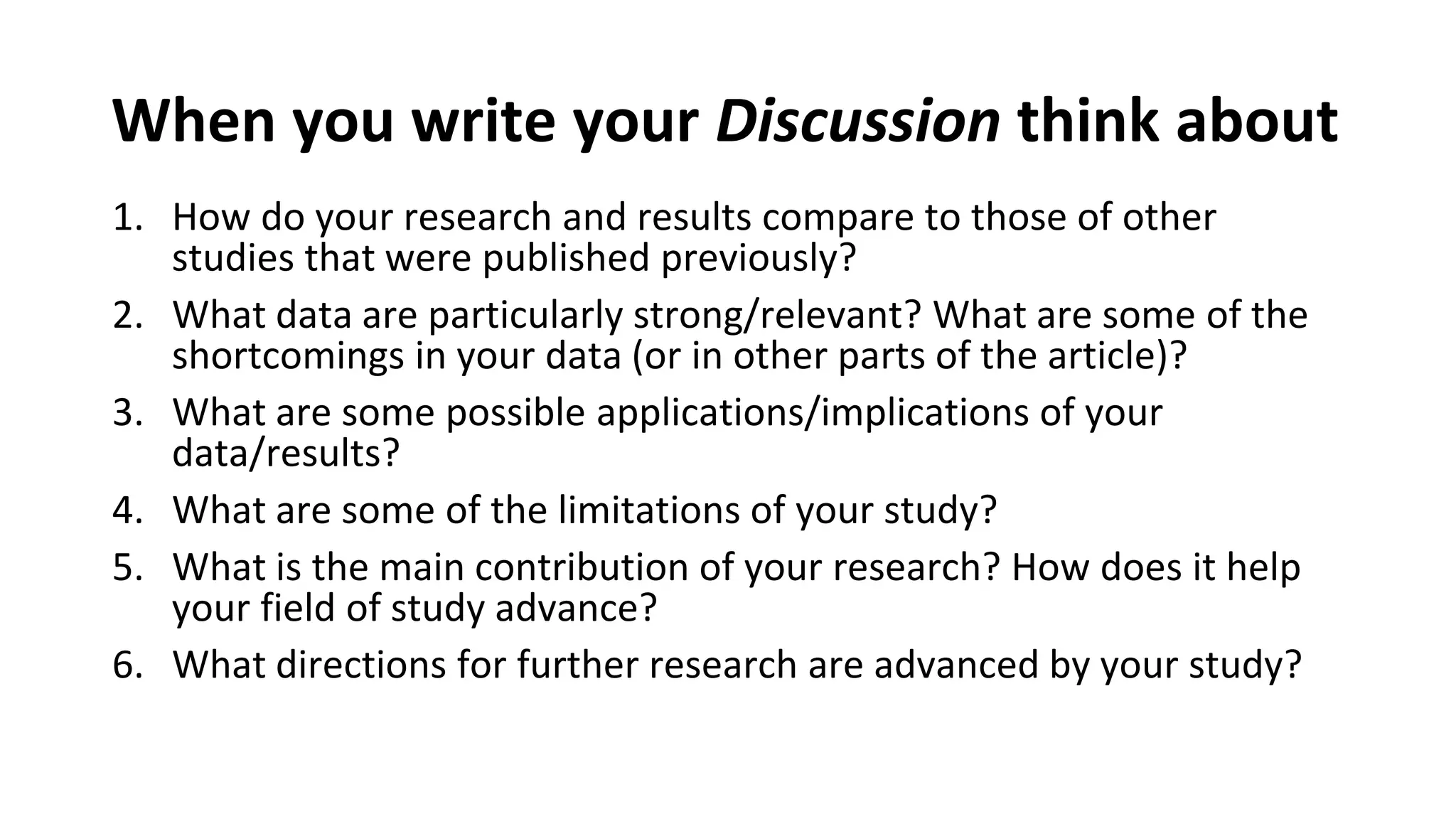
When you write your Discussion think about
1. How do your research and results compare to those of other
studies that were published previously?
2. What data are particularly strong/relevant? What are some of the
shortcomings in your data (or in other parts of the article)?
3. What are some possible applications/implications of your
data/results?
4. What are some of the limitations of your study?
5. What is the main contribution of your research? How does it help
your field of study advance?
6. What directions for further research are advanced by your study?
Homework
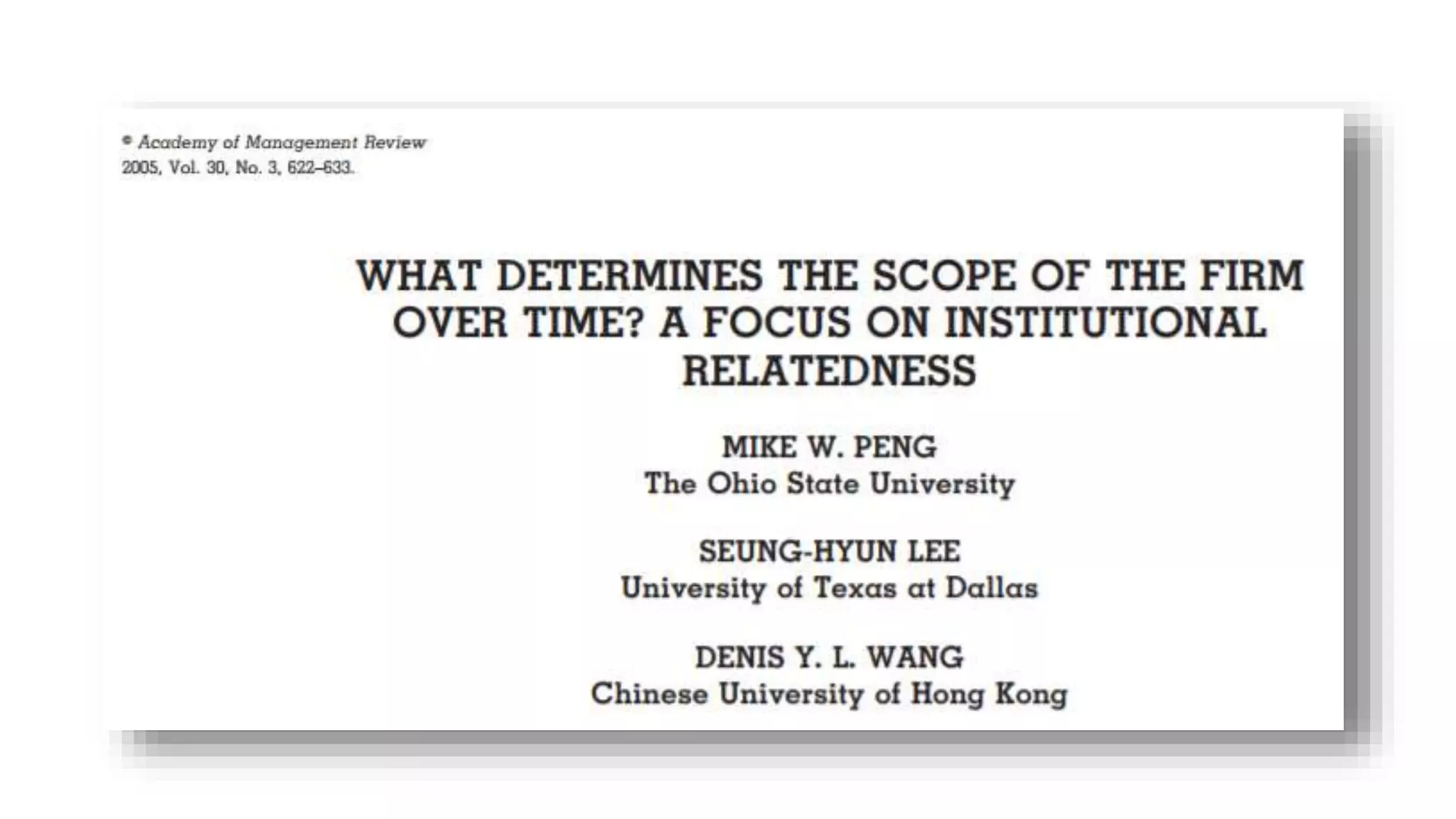
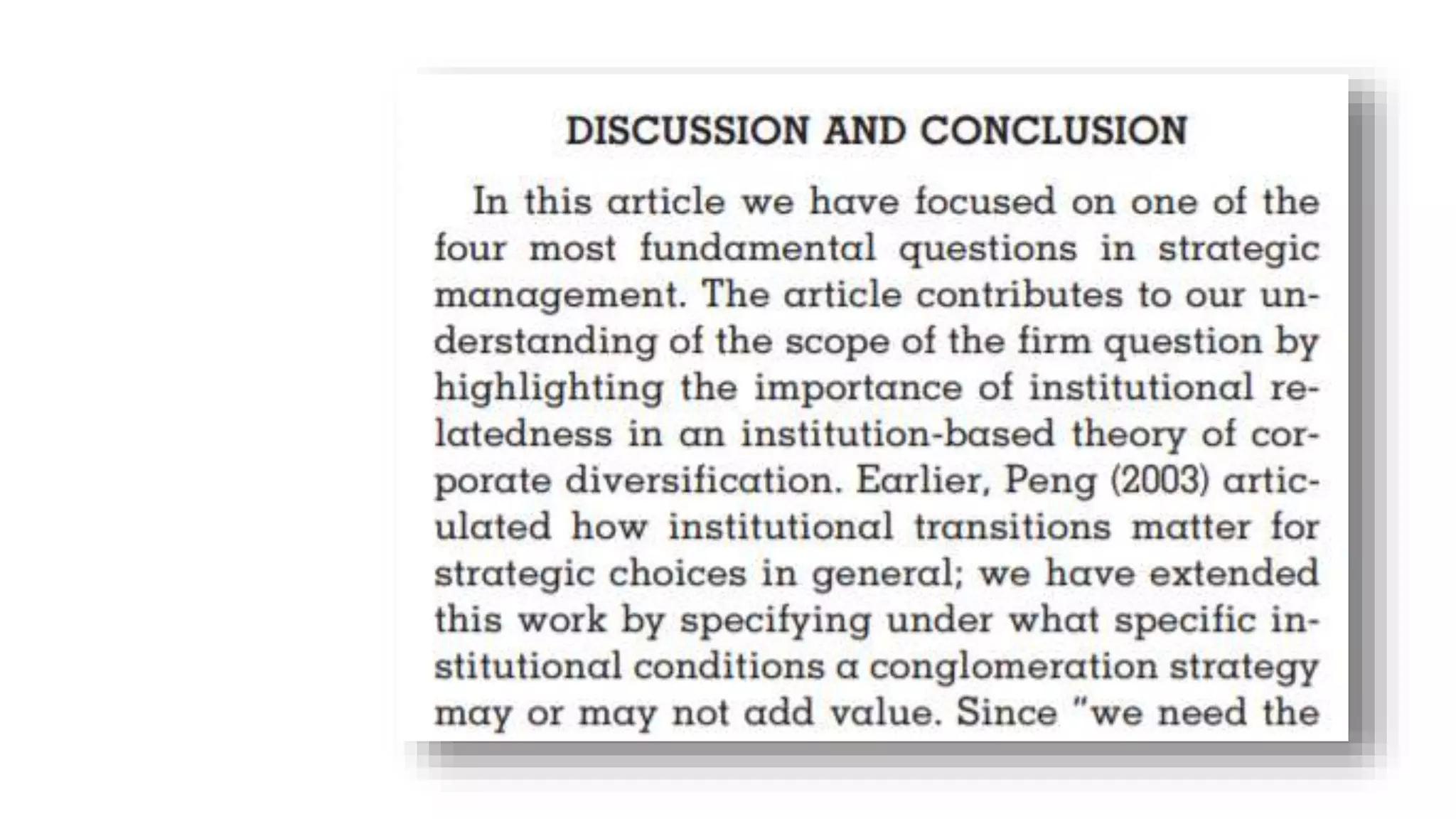
Download and read the article on our class webpage. What elements
discussed in today’s class are present? Which are missing? (Respond
on Formative.)
The Discussion Section

The Discussion Section

  • 1.
    The Discussion Section PRPPG7000- Academic Writing in English
  • 2.
    Syllabus outline • 15/08- Introduction • 22/08 - IMRaD, Most common errors, electronic tools • 29/08 - Strategic planning for your article: CARS and other approaches • 05/09 - Title, Abstract e Introduction • 12/09 - Writing your Introduction • 19/09 - Coherence, cohesion and clarity, and use of authorial voice • 26/09 - (Introduction due) The Results section • 03/10- No class (SIEPE) • 10/10 - The Discussion section • 17/10 - Discussing and Concluding • 24/10 - Writing (no class) • 31/10 - Plagiarism (Students exchange articles) • 07/11 - (peer feedback due) Special guest speaker on journal trends • 14/11 - The submission process
  • 3.
    Motivos mais comunspara rejeição: Belcher (2007) Bordage (2001) Pierson (2012) Wrong journal X ✓ X Faulty method ✓ ✓ ✓ Lack of transparency X ✓ ✓ Problems with statistics X ✓ ✓ Poor Discussion (or overstating importance of findings) ✓ ✓ ✓ Improper formatting X ✓ X Writing difficult to follow ✓ ✓ ✓ Inadequate review of the literature ✓ ✓ ✓ Nothing new ✓ ✓ ✓ Contribution not clear ✓ ✓ X Poor English X X X Prof. Dr. Ron Martinez - UFPR
  • 4.
  • 6.
    Why was itrejected? "The manuscript is interesting and it brings original ideas. However a major revision is necessary. The methods should be described comprehensively and not confused as it is. Details such as use of water or not to process the mixtures are not mentioned and this is an important point in this kind of product compositons, mainly due to lime and phase formnation; there are not characterisitics of the individual components as the authors mentioned that the materials were characterized; the results should justify the interpretations and conclusions, however they are just pointed out and not discussed at all. Figures II, III and IV should be standardized (scale). Sometimes one of the components is namely referirng to paper sludge, sometimes it is namely ETE's sludge waste, and so on. Language should be also reviewed. Since the manuscript is concerning to technological development it could present sample image (example: fracture surface image). Finally, a good, very good revision in the manuscript is necessary."
  • 7.
  • 8.
    Why was itrejected? "The manuscript is interesting and it brings original ideas. However a major revision is necessary. The methods should be described comprehensively and not confused as it is. Details such as use of water or not to process the mixtures are not mentioned and this is an important point in this kind of product compositons, mainly due to lime and phase formnation; there are not characterisitics of the individual components as the authors mentioned that the materials were characterized; the results should justify the interpretations and conclusions, however they are just pointed out and not discussed at all. Figures II, III and IV should be standardized (scale). Sometimes one of the components is namely referirng to paper sludge, sometimes it is namely ETE's sludge waste, and so on. Language should be also reviewed. Since the manuscript is concerning to technological development it could present sample image (example: fracture surface image). Finally, a good, very good revision in the manuscript is necessary."
  • 9.
    Why was itrejected? "The manuscript is interesting and it brings original ideas. However a major revision is necessary. The methods should be described comprehensively and not confused as it is. Details such as use of water or not to process the mixtures are not mentioned and this is an important point in this kind of product compositons, mainly due to lime and phase formnation; there are not characterisitics of the individual components as the authors mentioned that the materials were characterized; the results should justify the interpretations and conclusions, however they are just pointed out and not discussed at all. Figures II, III and IV should be standardized (scale). Sometimes one of the components is namely referirng to paper sludge, sometimes it is namely ETE's sludge waste, and so on. Language should be also reviewed. Since the manuscript is concerning to technological development it could present sample image (example: fracture surface image). Finally, a good, very good revision in the manuscript is necessary."
  • 10.
    Why was itrejected? "The manuscript is interesting and it brings original ideas. However a major revision is necessary. The methods should be described comprehensively and not confused as it is. Details such as use of water or not to process the mixtures are not mentioned and this is an important point in this kind of product compositons, mainly due to lime and phase formnation; there are not characterisitics of the individual components as the authors mentioned that the materials were characterized; the results should justify the interpretations and conclusions, however they are just pointed out and not discussed at all. Figures II, III and IV should be standardized (scale). Sometimes one of the components is namely referirng to paper sludge, sometimes it is namely ETE's sludge waste, and so on. Language should be also reviewed. Since the manuscript is concerning to technological development it could present sample image (example: fracture surface image). Finally, a good, very good revision in the manuscript is necessary."
  • 11.
  • 14.
    DISCUSS... 1. Why isthe Discussion section so challenging? 2. What should the Discussion section “do”? What are the most common “ingredients”?
  • 17.
    Prof. Dr. RonMartinez - UFPR
  • 18.
    12 Prof. Dr. RonMartinez - UFPR
  • 19.
    12 Prof. Dr. RonMartinez - UFPR
  • 20.
    Revisiting points raisedin Introduction
  • 21.
  • 22.
  • 23.
    How the studyadvances the area; Talk about what is still needed
  • 24.
    ! Talk aboutlimitations
  • 25.
  • 26.
    Discussion : 6common elements ! Revisit points raised in the Introduction Compare with other studies Expand, explain, extrapolate Talk about applications and practical implications Talk about limitations Talk about how the study advances the area; what is still needed
  • 35.
  • 36.
  • 41.
  • 53.
  • 56.
  • 65.
  • 70.
  • 71.
    Back to thatrejection.... (A comparison)
  • 73.
    When you writeyour Discussion think about 1. How do your research and results compare to those of other studies that were published previously? 2. What data are particularly strong/relevant? What are some of the shortcomings in your data (or in other parts of the article)? 3. What are some possible applications/implications of your data/results? 4. What are some of the limitations of your study? 5. What is the main contribution of your research? How does it help your field of study advance? 6. What directions for further research are advanced by your study?
  • 74.
    Homework Download and readthe article on our class webpage. What elements discussed in today’s class are present? Which are missing? (Respond on Formative.)