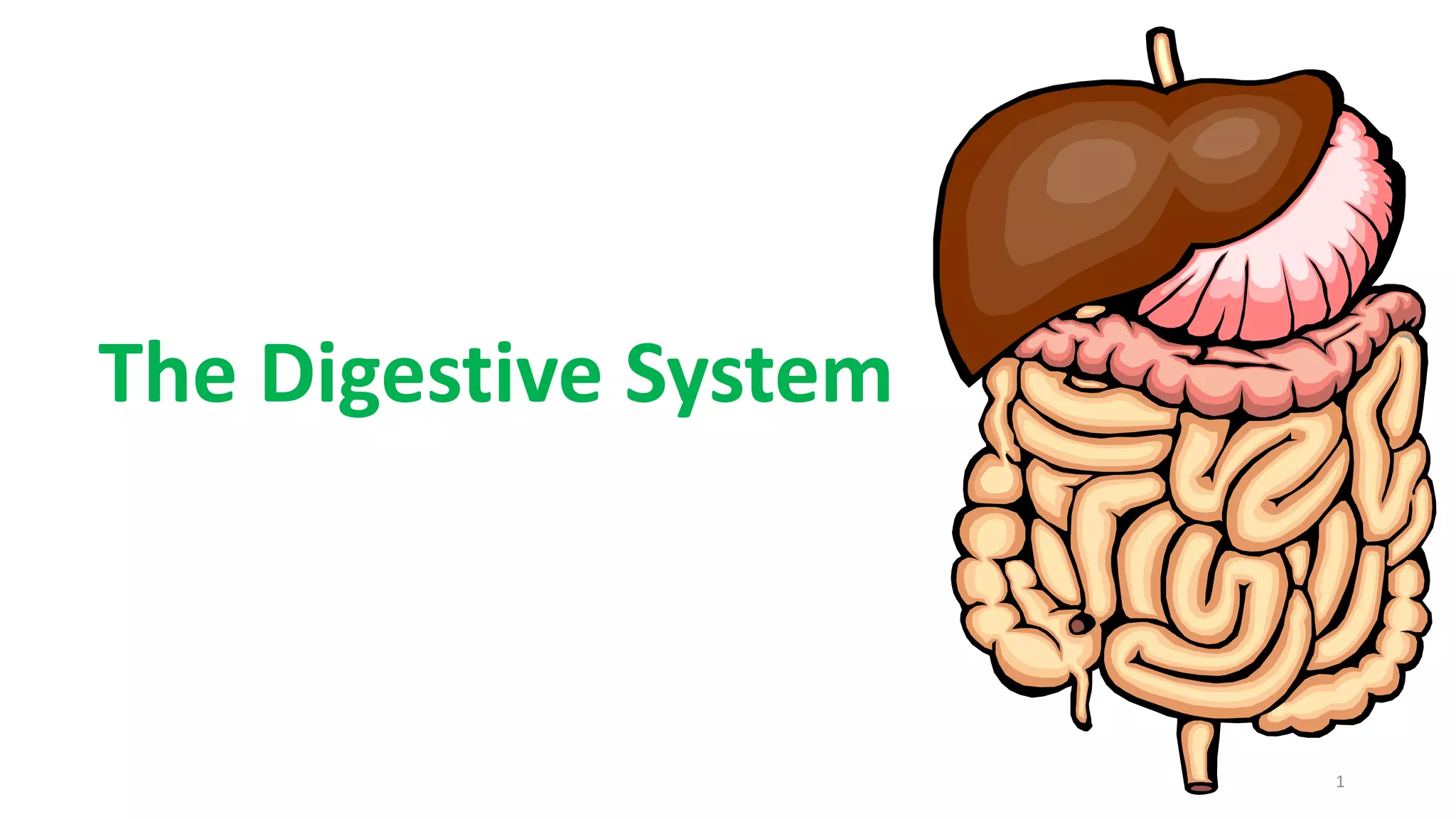

The Digestive System
1
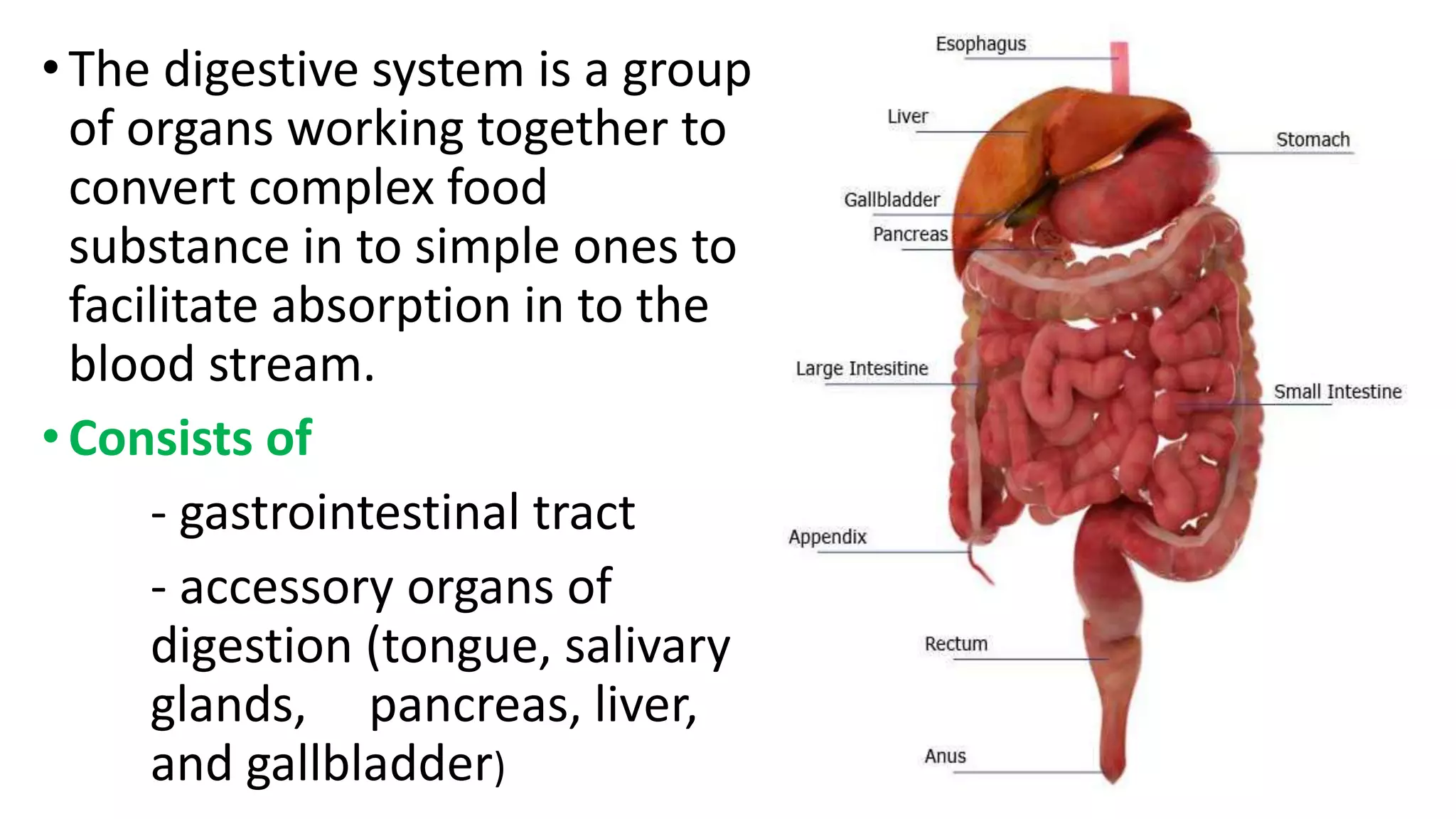
• The digestive system is a group
of organs working together to
convert complex food
substance in to simple ones to
facilitate absorption in to the
blood stream.
• Consists of
- gastrointestinal tract
- accessory organs of
digestion (tongue, salivary
glands, pancreas, liver,
and gallbladder) 2
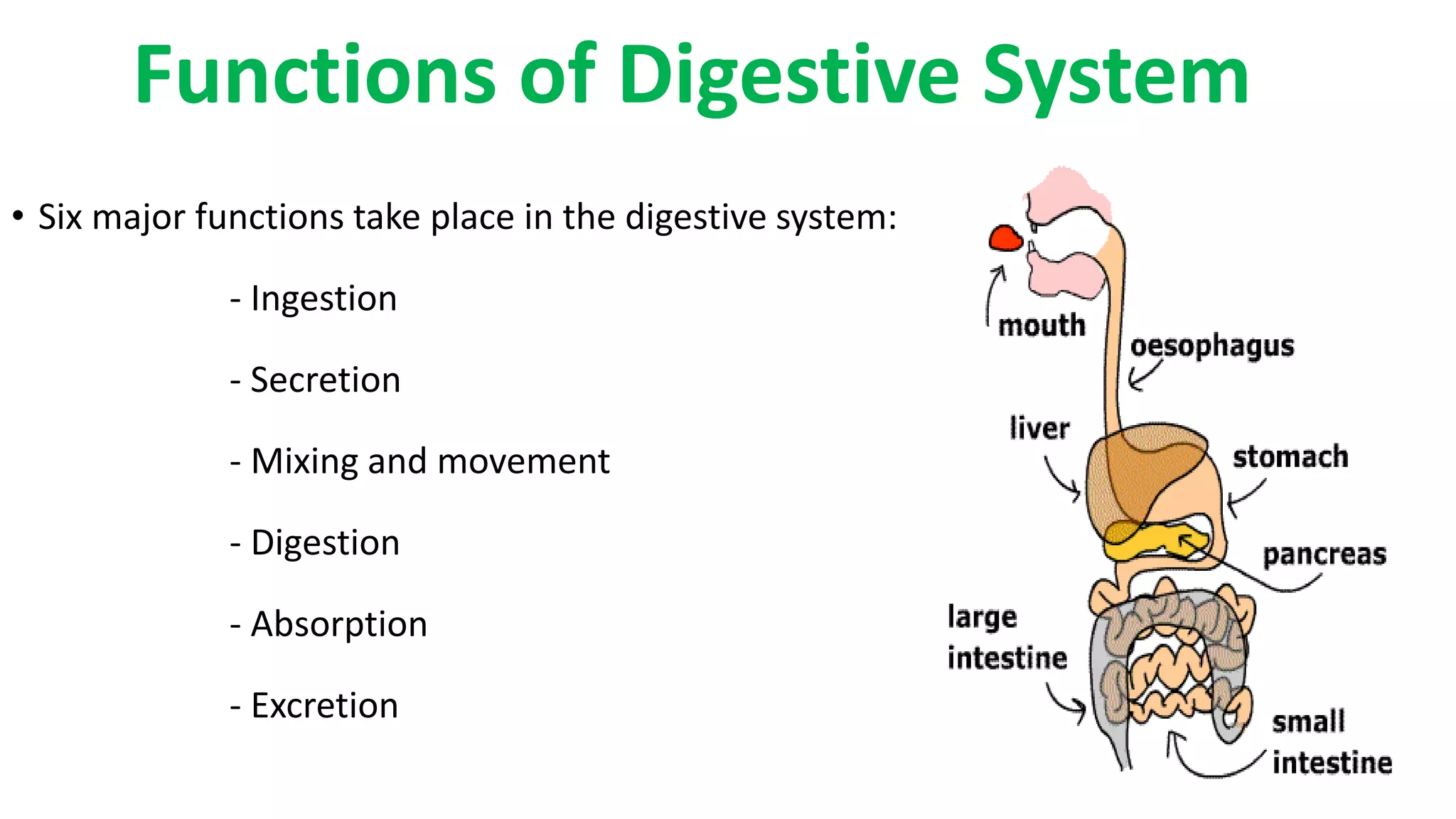
• Six major functions take place in the digestive system:
- Ingestion
- Secretion
- Mixing and movement
- Digestion
- Absorption
- Excretion
Functions of Digestive System
3
4
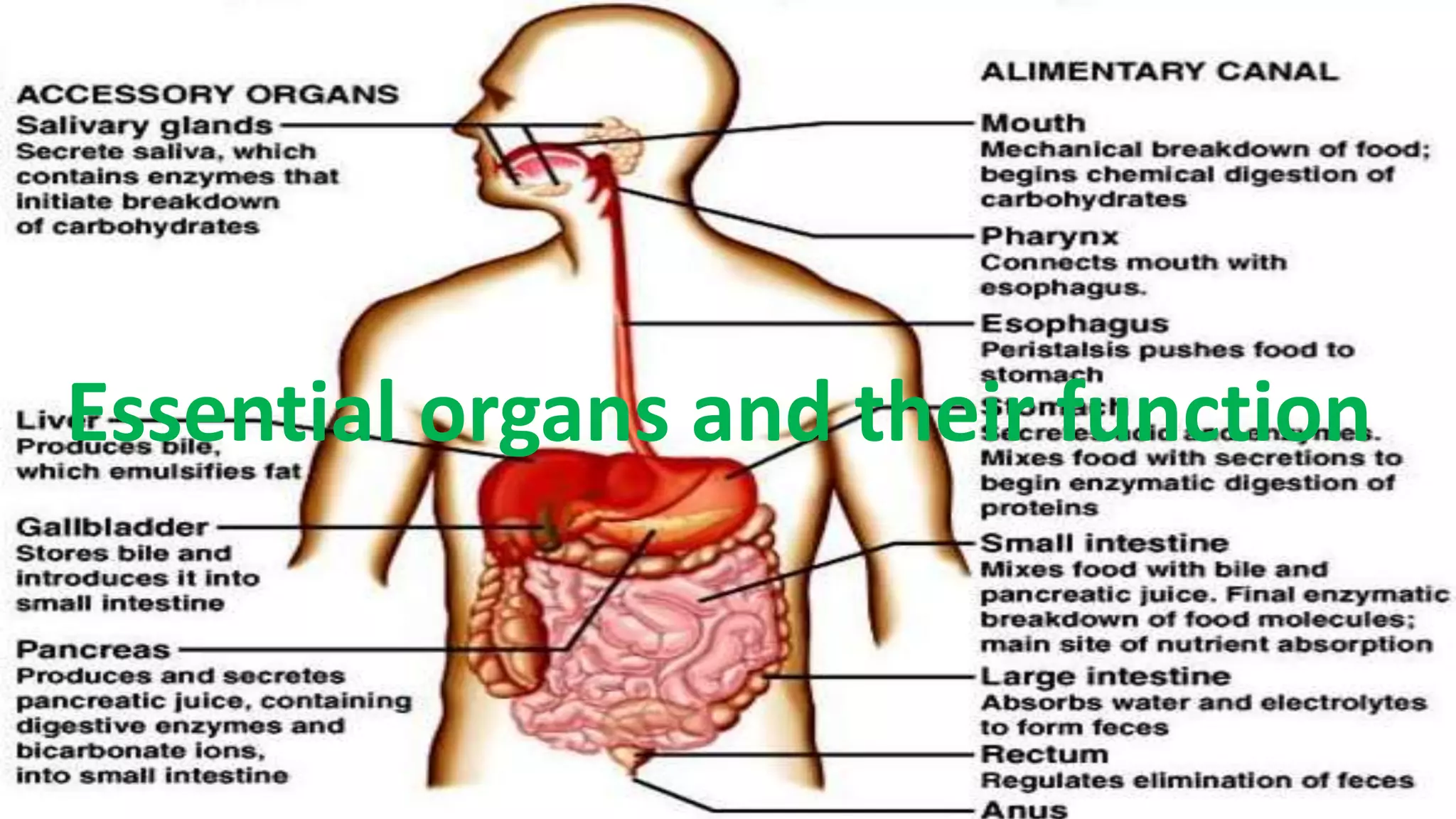
Essential organs and their function
5
Digestion
•A process of altering complex foodstuff and converting them
into simple constituents in order to be absorbed in the blood.
•Two processes of digestion:
• Mechanical
• Chemical
6
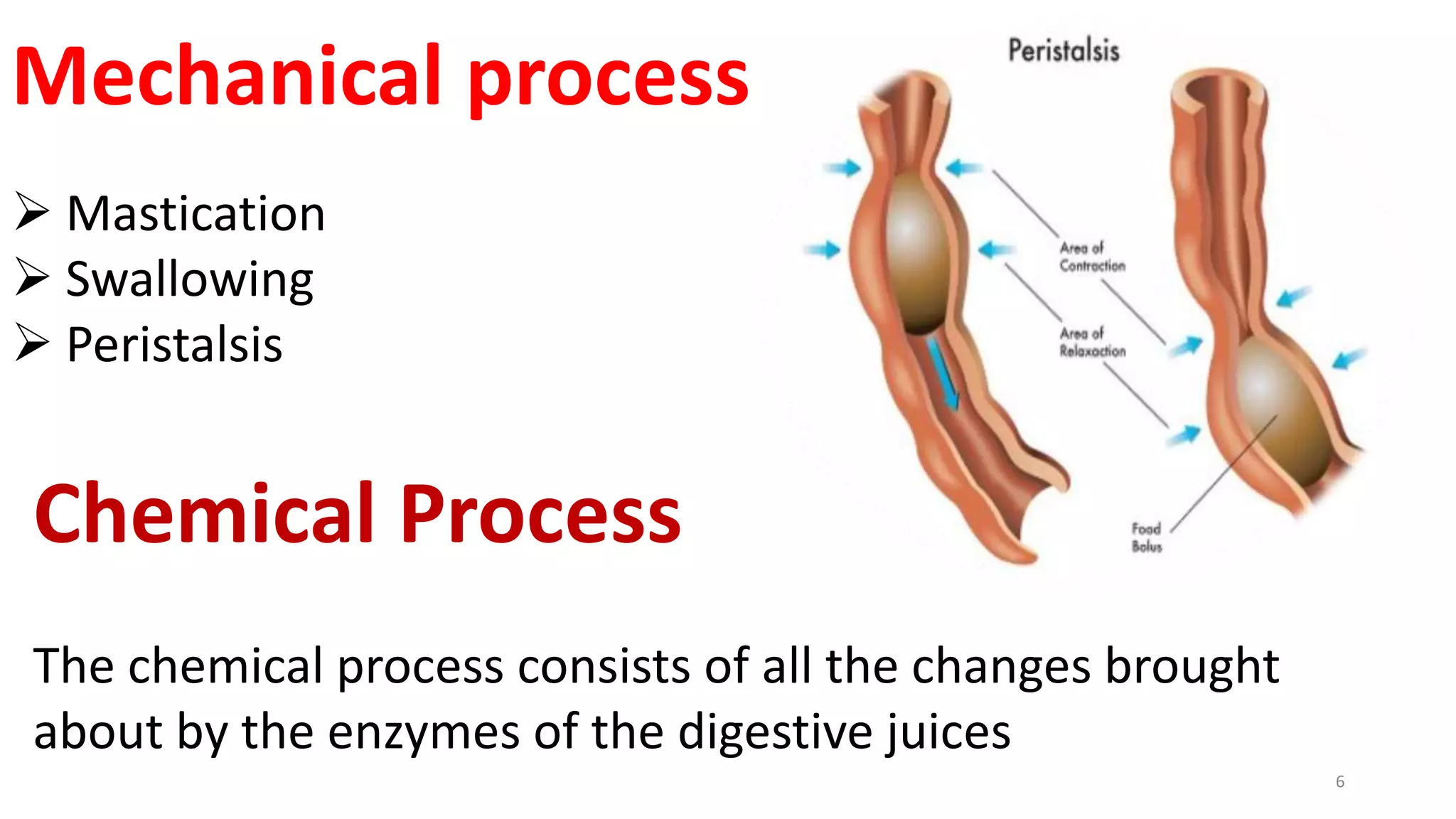
Mechanical process
 Mastication
 Swallowing
 Peristalsis
Chemical Process
The chemical process consists of all the changes brought
about by the enzymes of the digestive juices
7
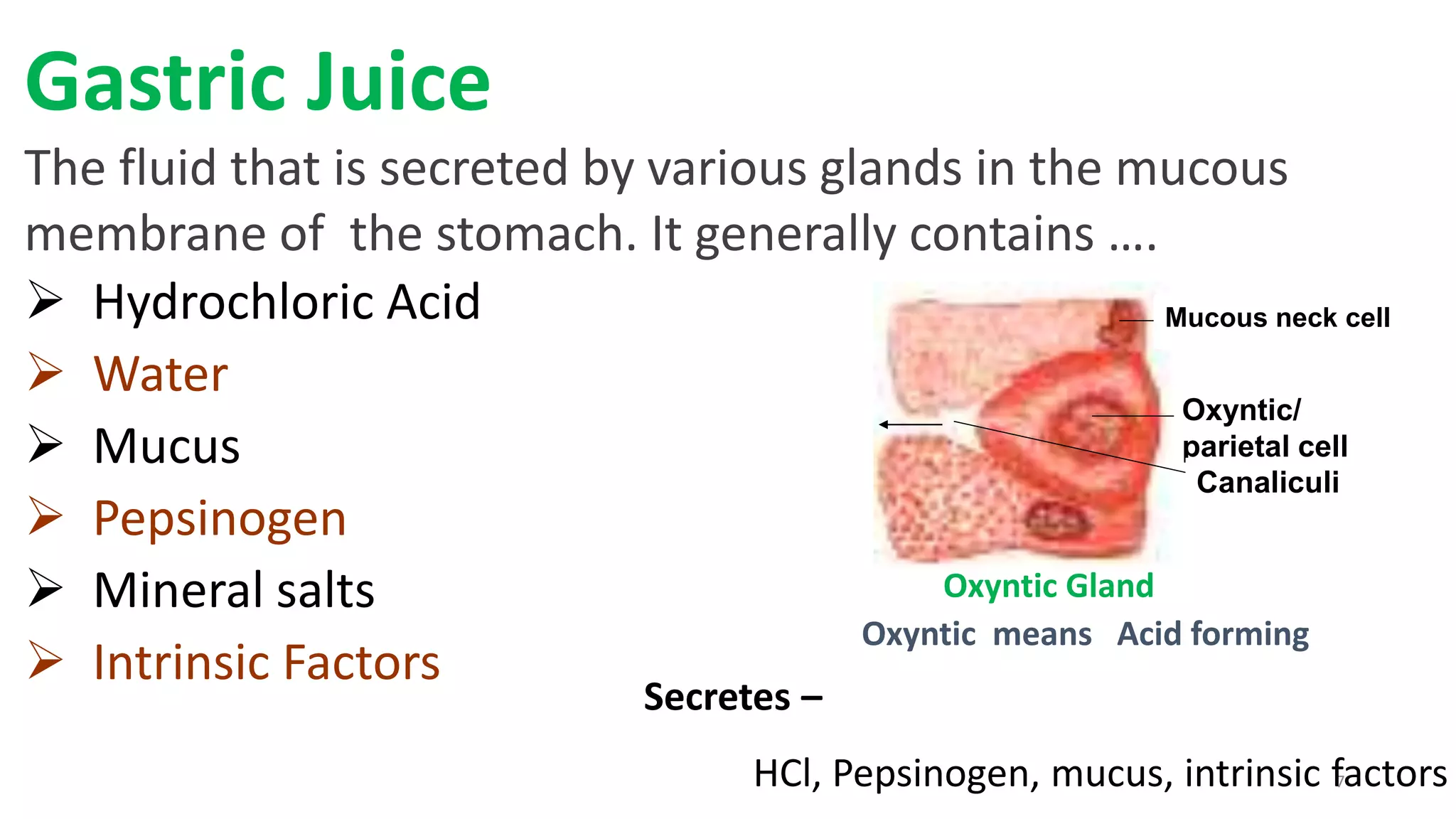
Gastric Juice
The fluid that is secreted by various glands in the mucous
membrane of the stomach. It generally contains ….
 Hydrochloric Acid
 Water
 Mucus
 Pepsinogen
 Mineral salts
 Intrinsic Factors
Fig. Oxyntic gland
Oxyntic/
parietal cell
Canaliculi
Mucous neck cell
Oxyntic Gland
Oxyntic means Acid forming
Secretes –
HCl, Pepsinogen, mucus, intrinsic factors
8
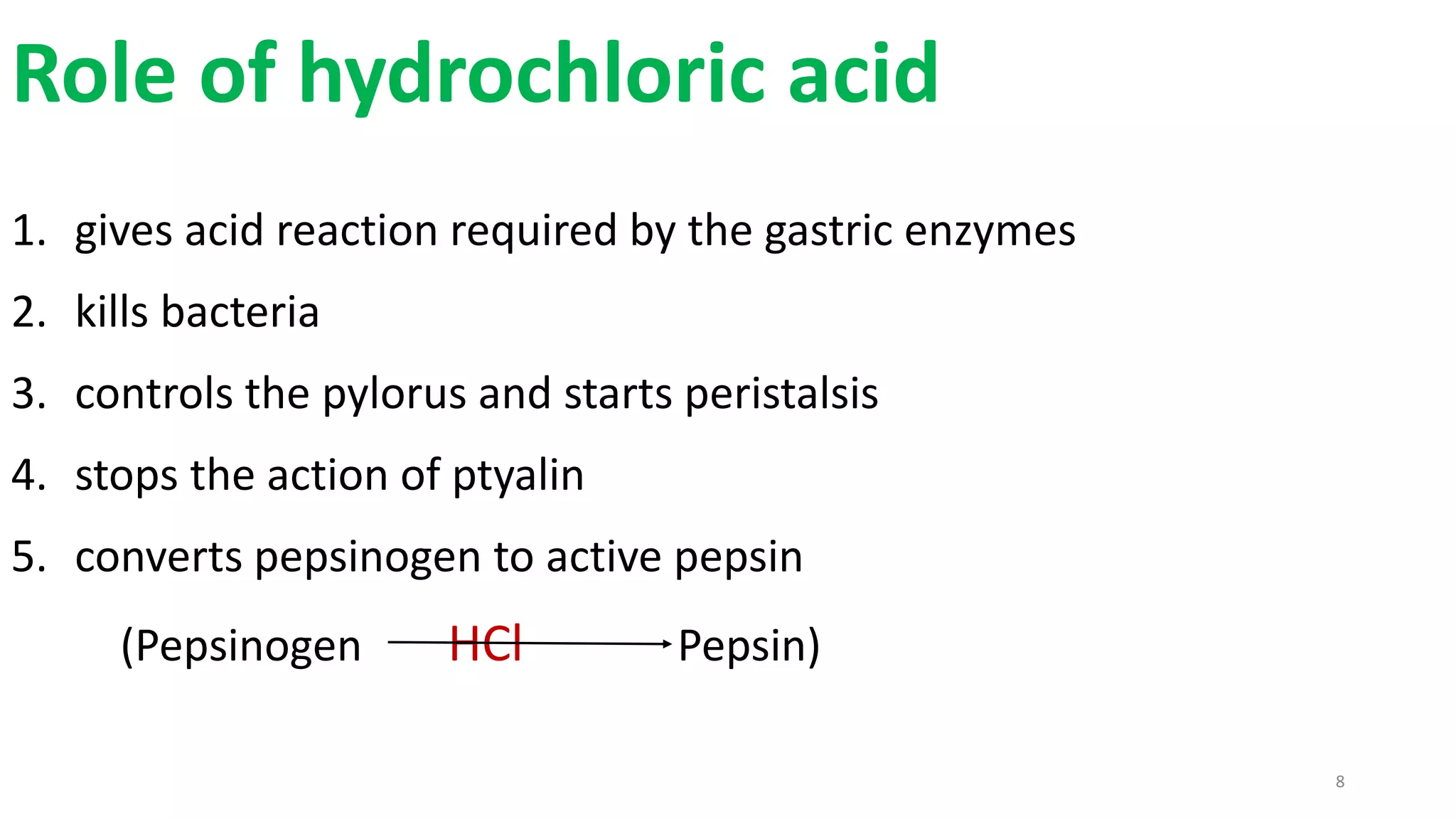
Role of hydrochloric acid
1. gives acid reaction required by the gastric enzymes
2. kills bacteria
3. controls the pylorus and starts peristalsis
4. stops the action of ptyalin
5. converts pepsinogen to active pepsin
(Pepsinogen HCl Pepsin)
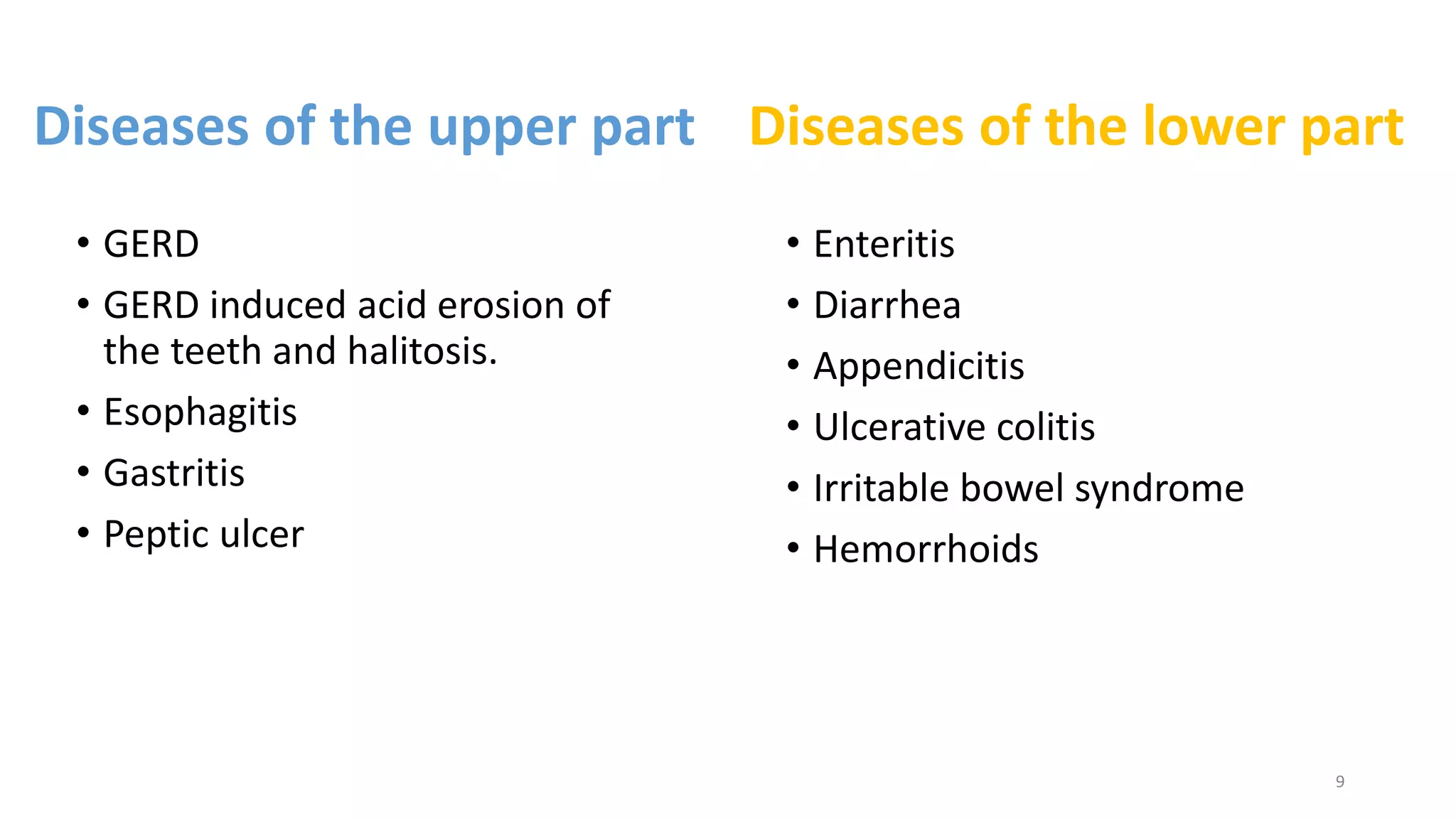
Diseases of the upper part
• GERD
• GERD induced acid erosion of
the teeth and halitosis.
• Esophagitis
• Gastritis
• Peptic ulcer
Diseases of the lower part
• Enteritis
• Diarrhea
• Appendicitis
• Ulcerative colitis
• Irritable bowel syndrome
• Hemorrhoids
9
10
Adnan-Ul-islam
B.Pharm.(Hon’s)
adnan.ru.bd@gmail.com

The digestive system

  • 1.
  • 2.
    • The digestivesystem is a group of organs working together to convert complex food substance in to simple ones to facilitate absorption in to the blood stream. • Consists of - gastrointestinal tract - accessory organs of digestion (tongue, salivary glands, pancreas, liver, and gallbladder) 2
  • 3.
    • Six majorfunctions take place in the digestive system: - Ingestion - Secretion - Mixing and movement - Digestion - Absorption - Excretion Functions of Digestive System 3
  • 4.
    4 Essential organs andtheir function
  • 5.
    5 Digestion •A process ofaltering complex foodstuff and converting them into simple constituents in order to be absorbed in the blood. •Two processes of digestion: • Mechanical • Chemical
  • 6.
    6 Mechanical process  Mastication Swallowing  Peristalsis Chemical Process The chemical process consists of all the changes brought about by the enzymes of the digestive juices
  • 7.
    7 Gastric Juice The fluidthat is secreted by various glands in the mucous membrane of the stomach. It generally contains ….  Hydrochloric Acid  Water  Mucus  Pepsinogen  Mineral salts  Intrinsic Factors Fig. Oxyntic gland Oxyntic/ parietal cell Canaliculi Mucous neck cell Oxyntic Gland Oxyntic means Acid forming Secretes – HCl, Pepsinogen, mucus, intrinsic factors
  • 8.
    8 Role of hydrochloricacid 1. gives acid reaction required by the gastric enzymes 2. kills bacteria 3. controls the pylorus and starts peristalsis 4. stops the action of ptyalin 5. converts pepsinogen to active pepsin (Pepsinogen HCl Pepsin)
  • 9.
    Diseases of theupper part • GERD • GERD induced acid erosion of the teeth and halitosis. • Esophagitis • Gastritis • Peptic ulcer Diseases of the lower part • Enteritis • Diarrhea • Appendicitis • Ulcerative colitis • Irritable bowel syndrome • Hemorrhoids 9
  • 10.