The Dementia Project:
Innovation Driven by Social Challenges
https://twitter.com/okadamkt
http://www.facebook.com/okadamkt
2019.9.19 @ Chuo University.
Fujitsu-JAIMS Foundation: Global Leaders for Innovation and Knowledge Program (GLIK)
GLIK2019S JF-505 [Sponsored by Fujitsu] Shaping tomorrow with you
Dementia Friendly Japan Initiative / Fujitsu Ltd.
Makoto Okada
Makoto Okada
Deputy Field Innovator,
Field Innovation Unit, Fujitsu Ltd.
Visiting Research Fellow in the
Center for Global Communications,
International University of Japan,
Senior Researcher
Board of directors at Dementia
Friendly Japan Initiative
Advisory board of Dementia
Friendship Club.
Outline
Introduction
Background
Finding seeds (1st step)
Concept prototyping (2nd step)
Developing relations (3rd step)
Connecting dots (4th step)
Utilizing connections (5th step)
Challenges of the GLIK capstone program:
You work on a project in which you formulate a
plan for innovation to create new value for the
community to which you belong such as a
company, an institute, an NPO, a local community,
or a country, utilizing the knowledge you
acquired through the program.
The project could be based on what you have
been working on, but it has to be your own
project.
Outline
Introduction
Background
Finding seeds (1st step)
Concept prototyping (2nd step)
Developing relations (3rd step)
Connecting dots (4th step)
Utilizing connections (5th step)
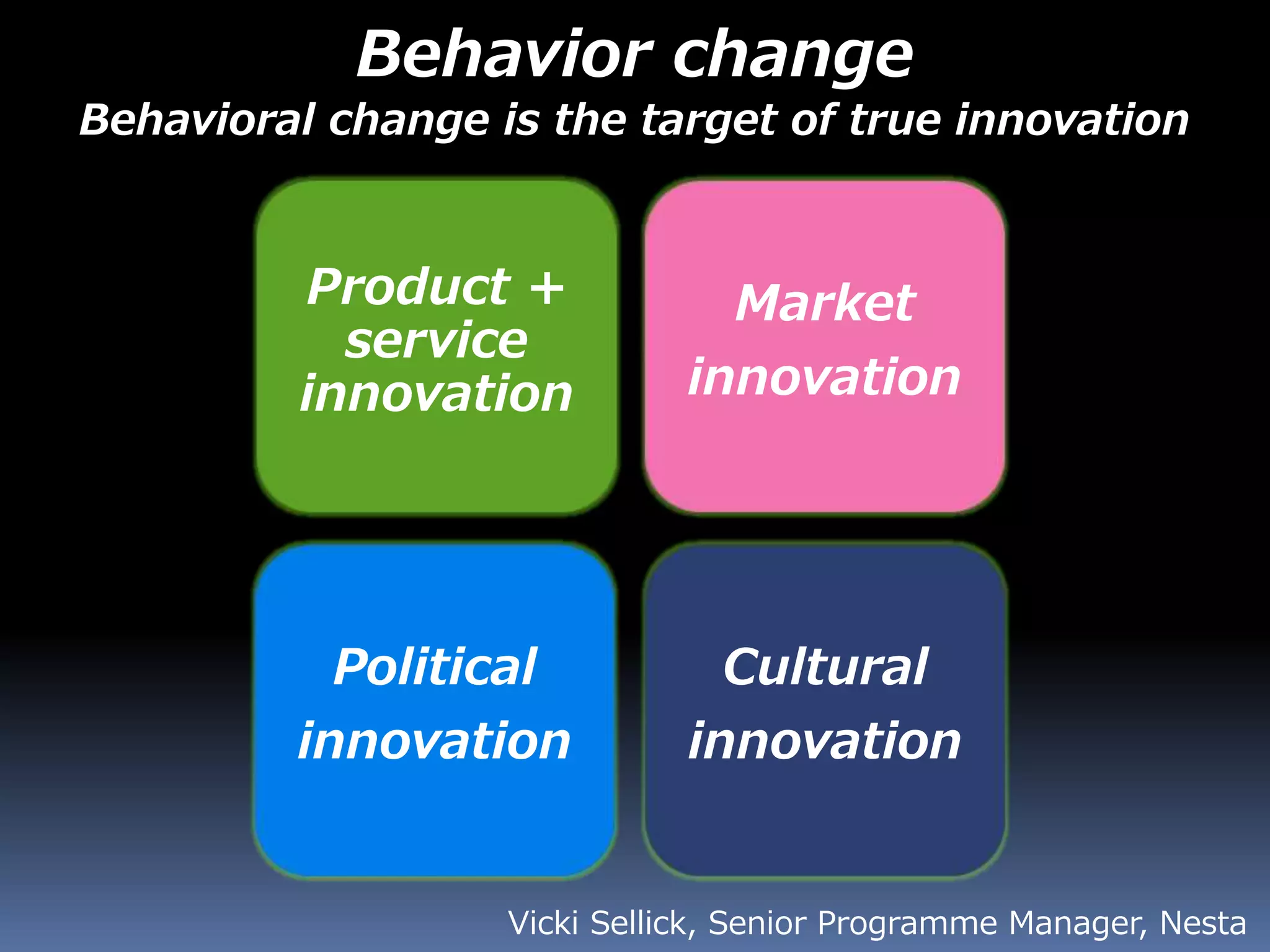
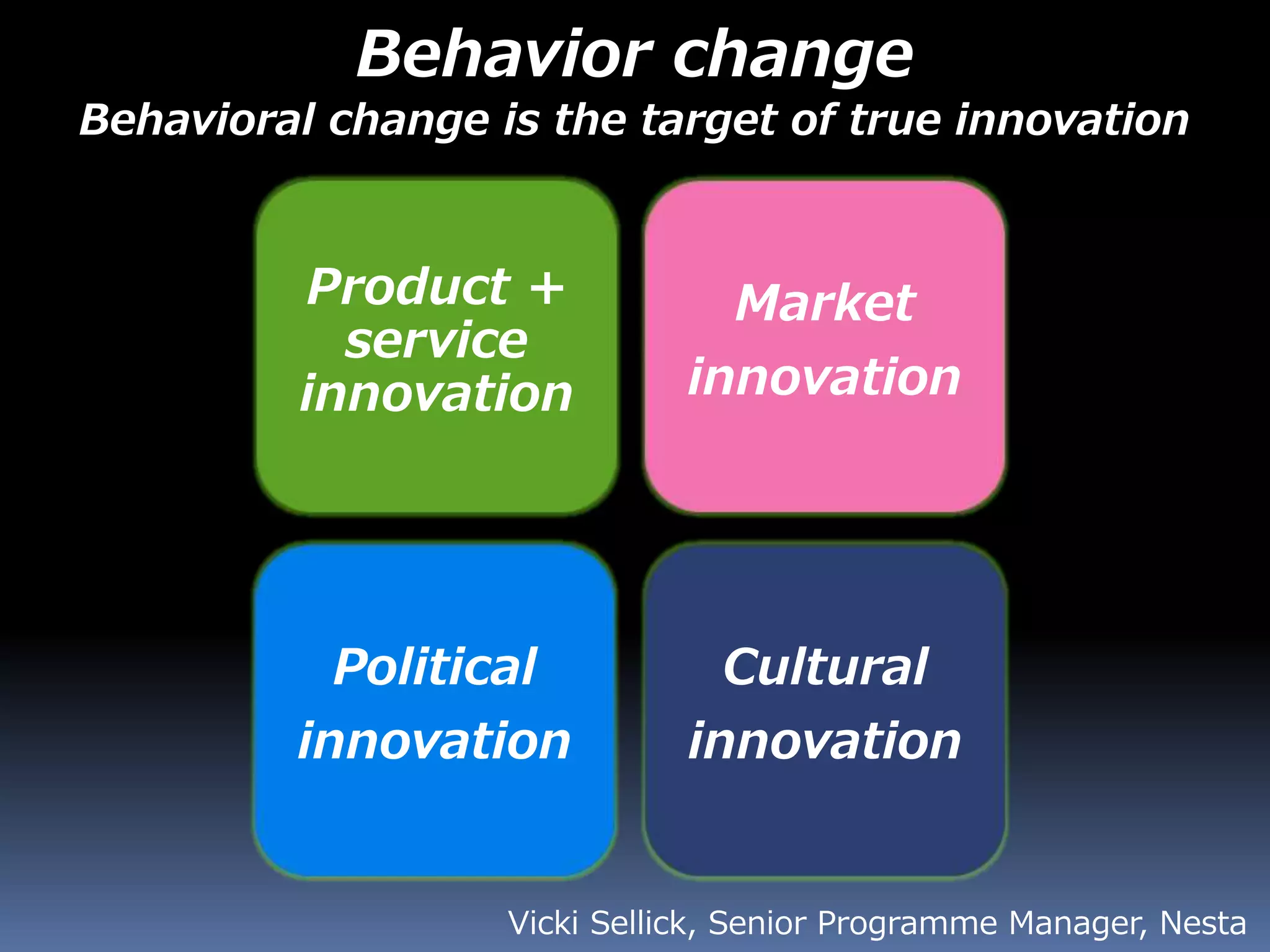
Product +
service
innovation
Market
innovation
Political
innovation
Cultural
innovation
Vicki Sellick, Senior Programme Manager, Nesta
Behavior change
Behavioral change is the target of true innovation
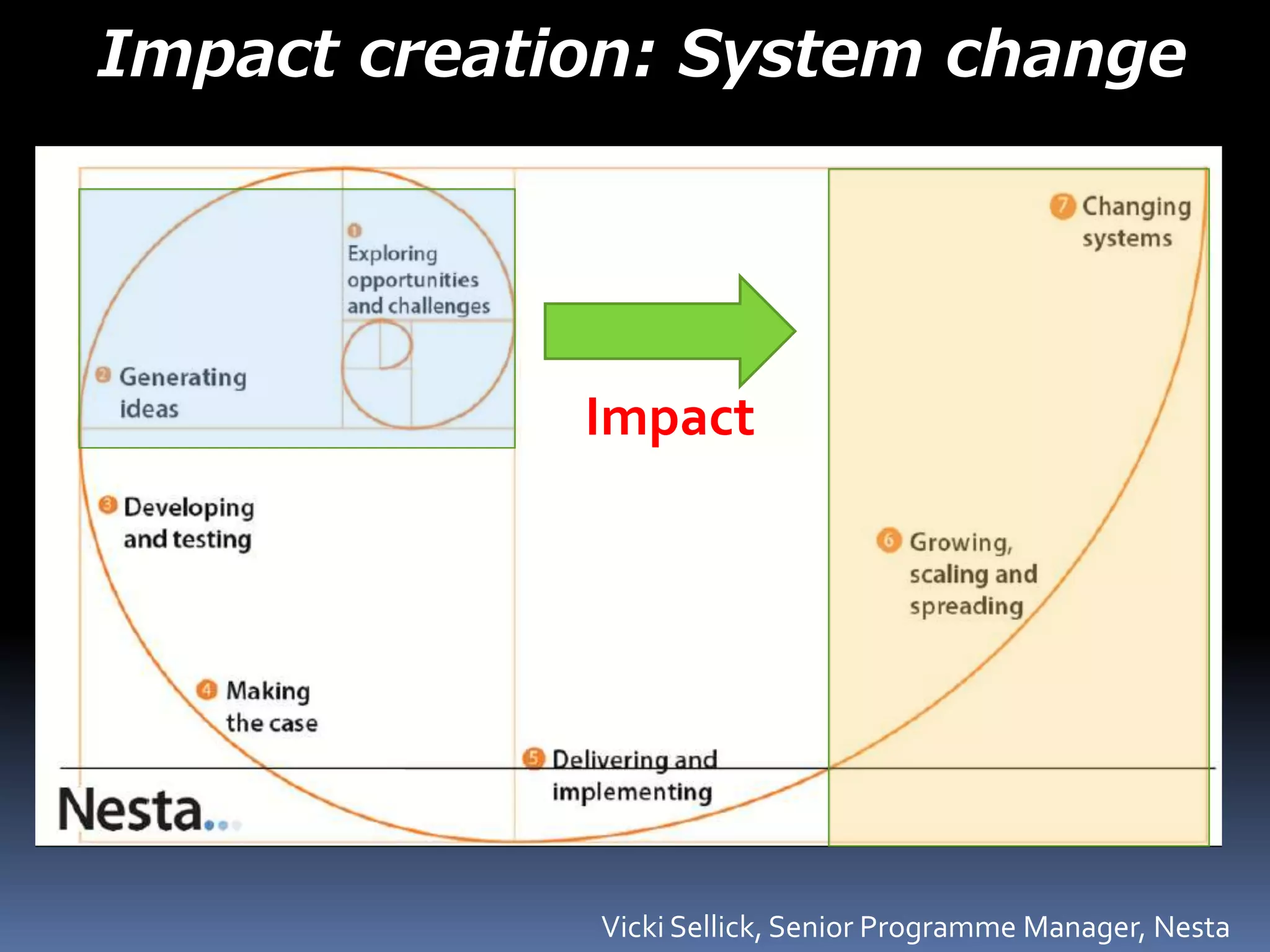
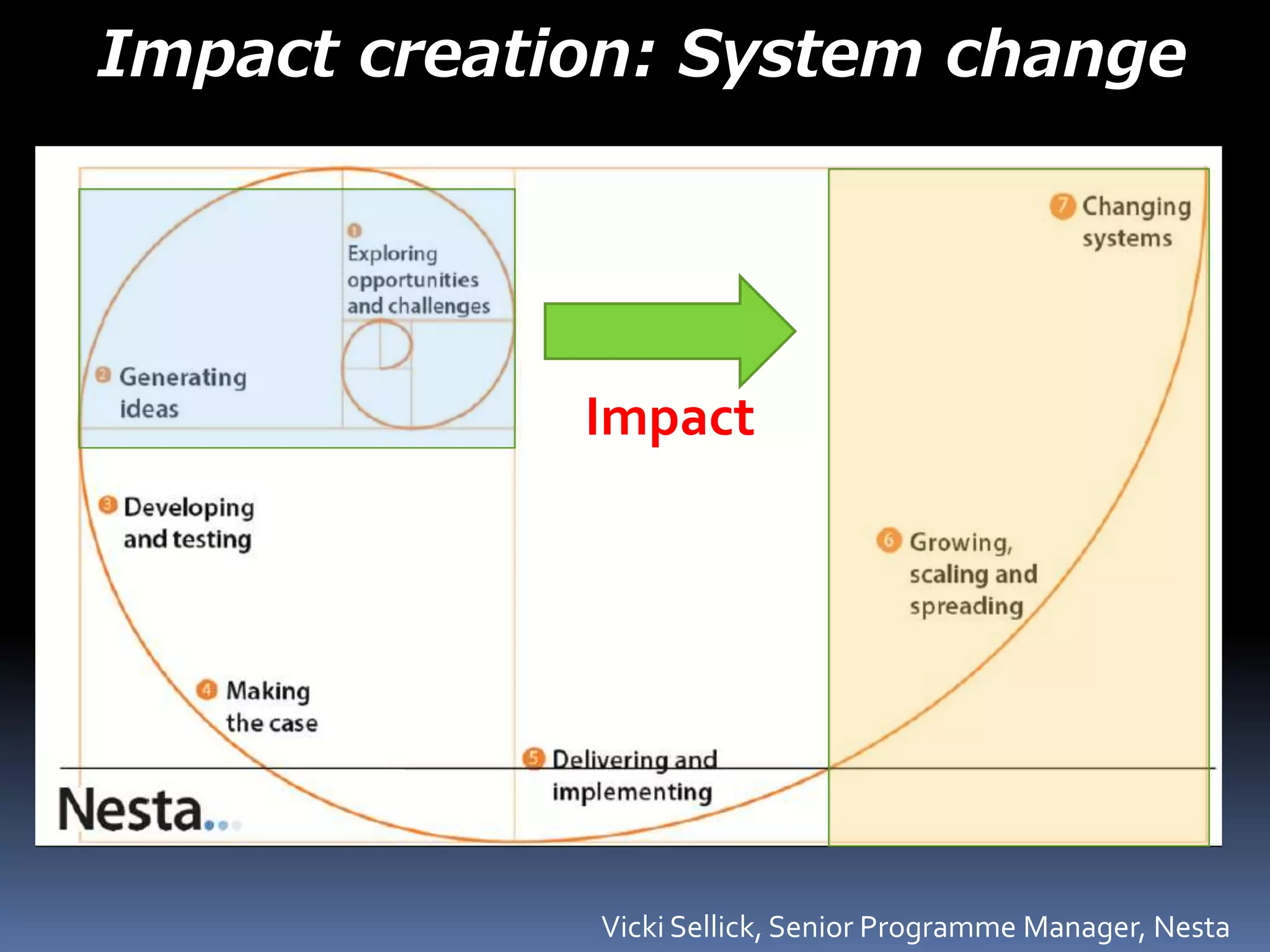
Impact
Vicki Sellick, Senior Programme Manager, Nesta
Impact creation: System change
Outline
Introduction
Background
Finding seeds (1st step)
Concept prototyping (2nd step)
Developing relations (3rd step)
Connecting dots (4th step)
Utilizing connections (5th step)
Background
- Dementia as a social Issue -
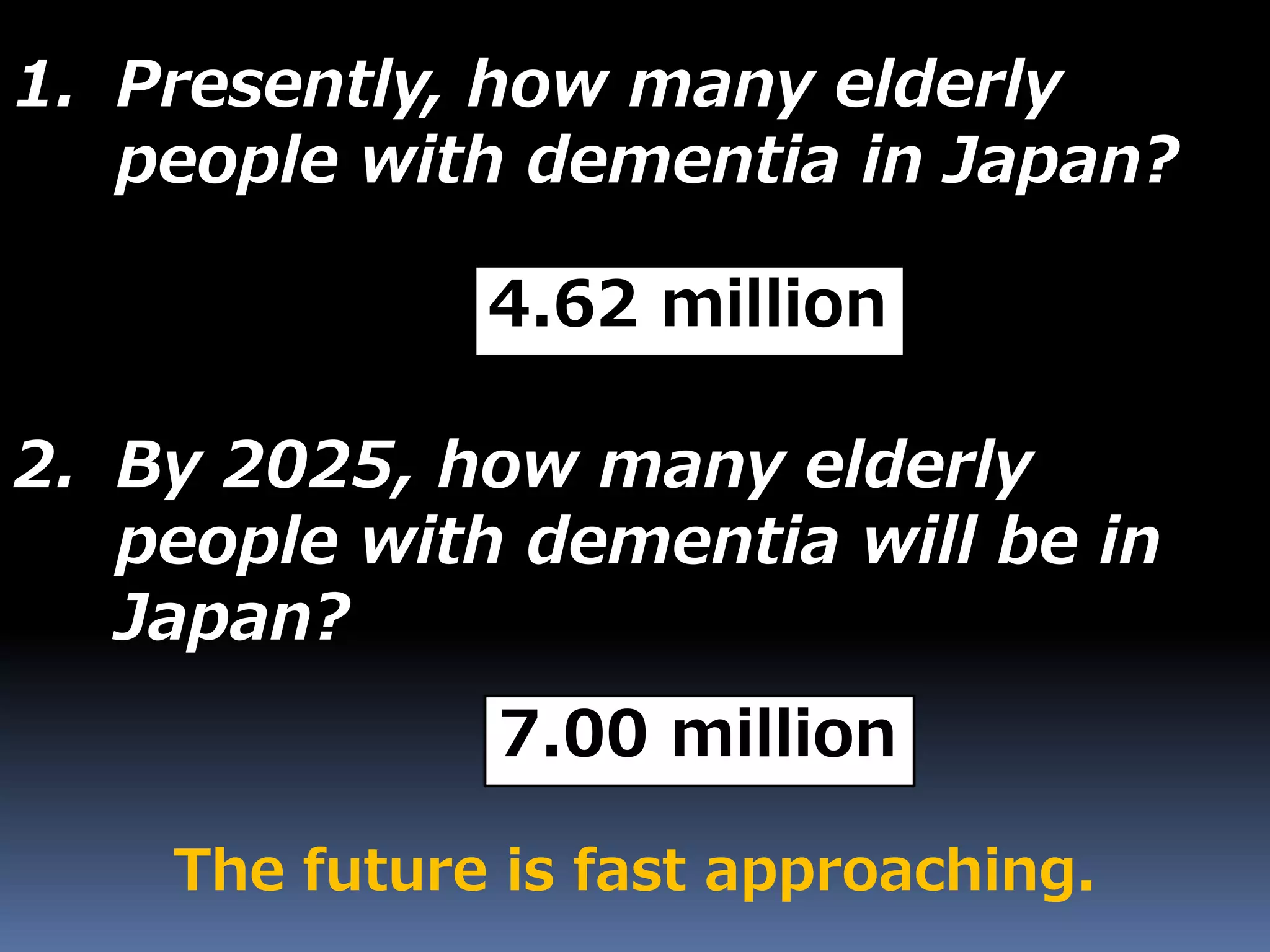
1. Presently, how many elderly
people with dementia in Japan?
2. By 2025, how many elderly
people with dementia will be in
Japan?
4.62 million
7.00 million
The future is fast approaching.
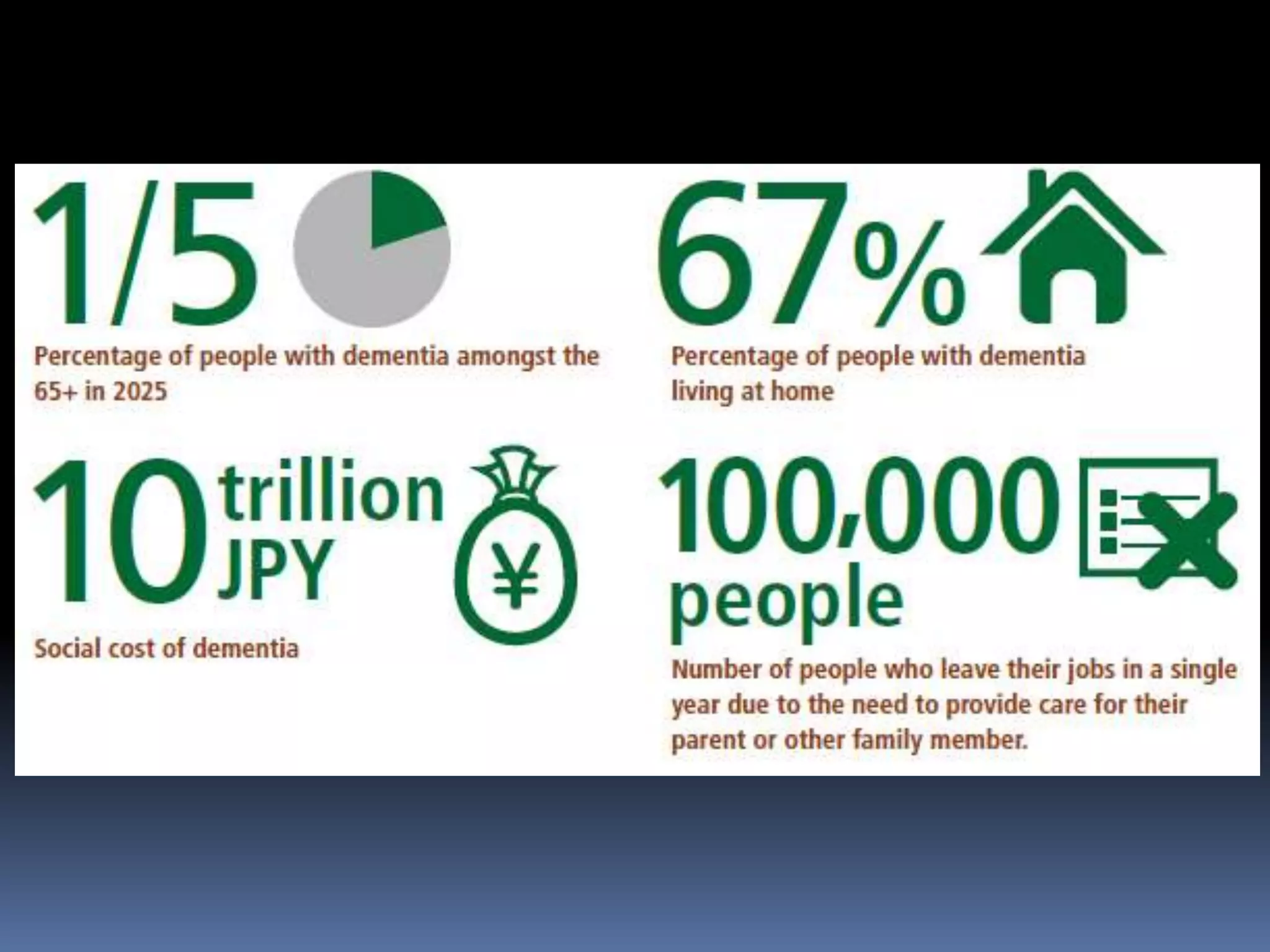
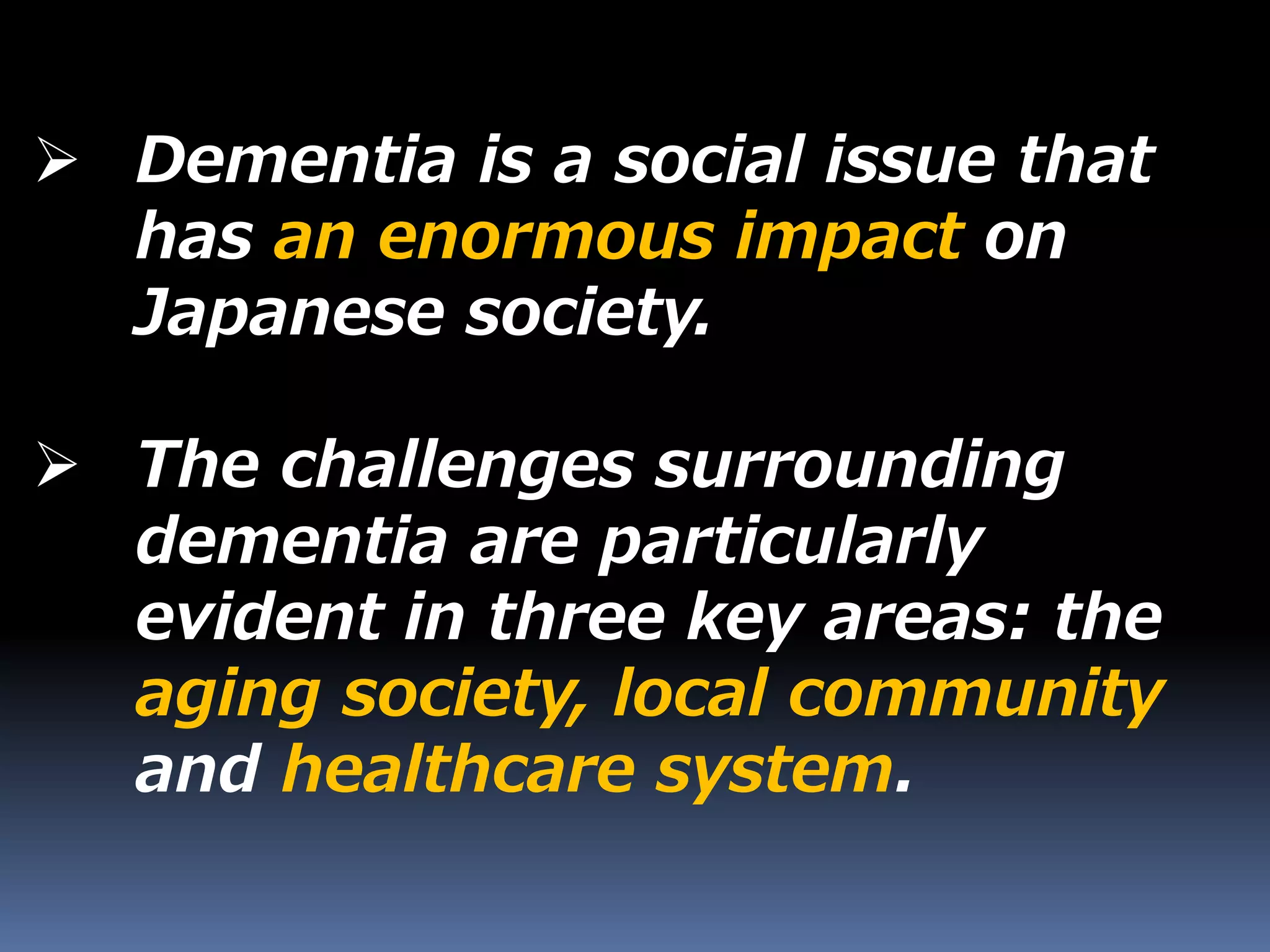
 Dementia is a social issue that
has an enormous impact on
Japanese society.
 The challenges surrounding
dementia are particularly
evident in three key areas: the
aging society, local community
and healthcare system.
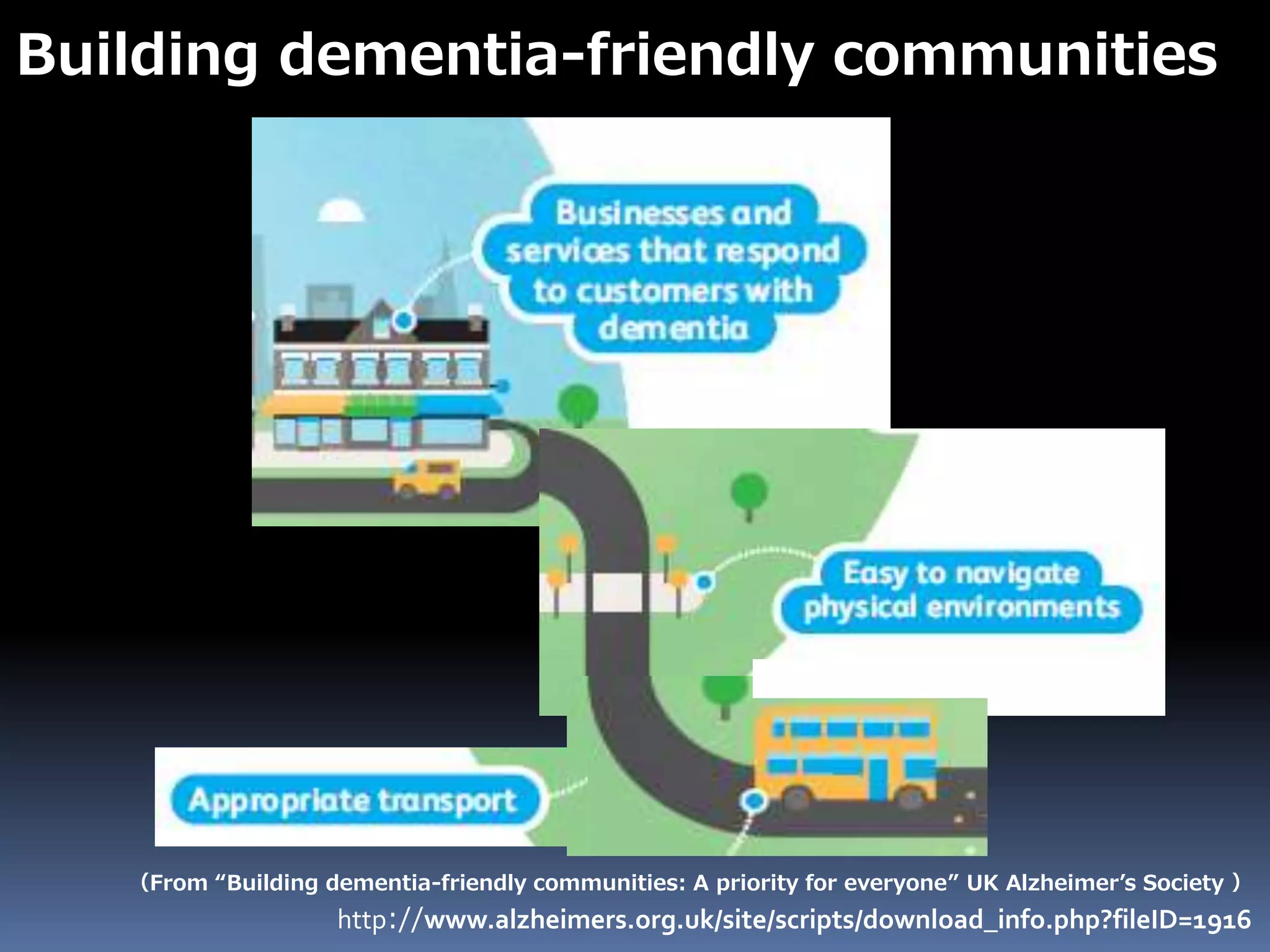
Building dementia-friendly communities
http://www.alzheimers.org.uk/site/scripts/download_info.php?fileID=1916
(From “Building dementia-friendly communities: A priority for everyone” UK Alzheimer’s Society )
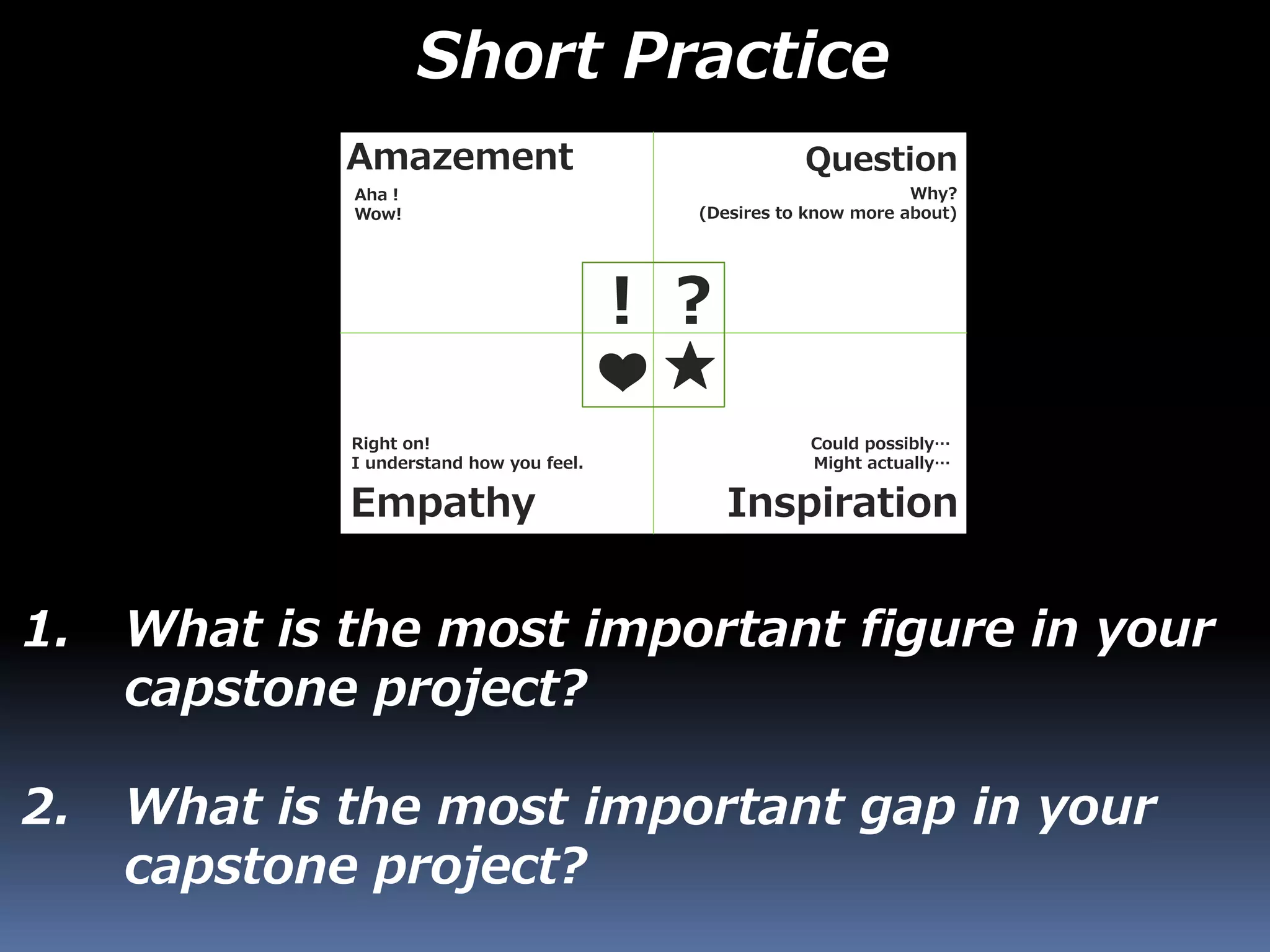
1. What is the most important figure in your
capstone project?
2. What is the most important gap in your
capstone project?
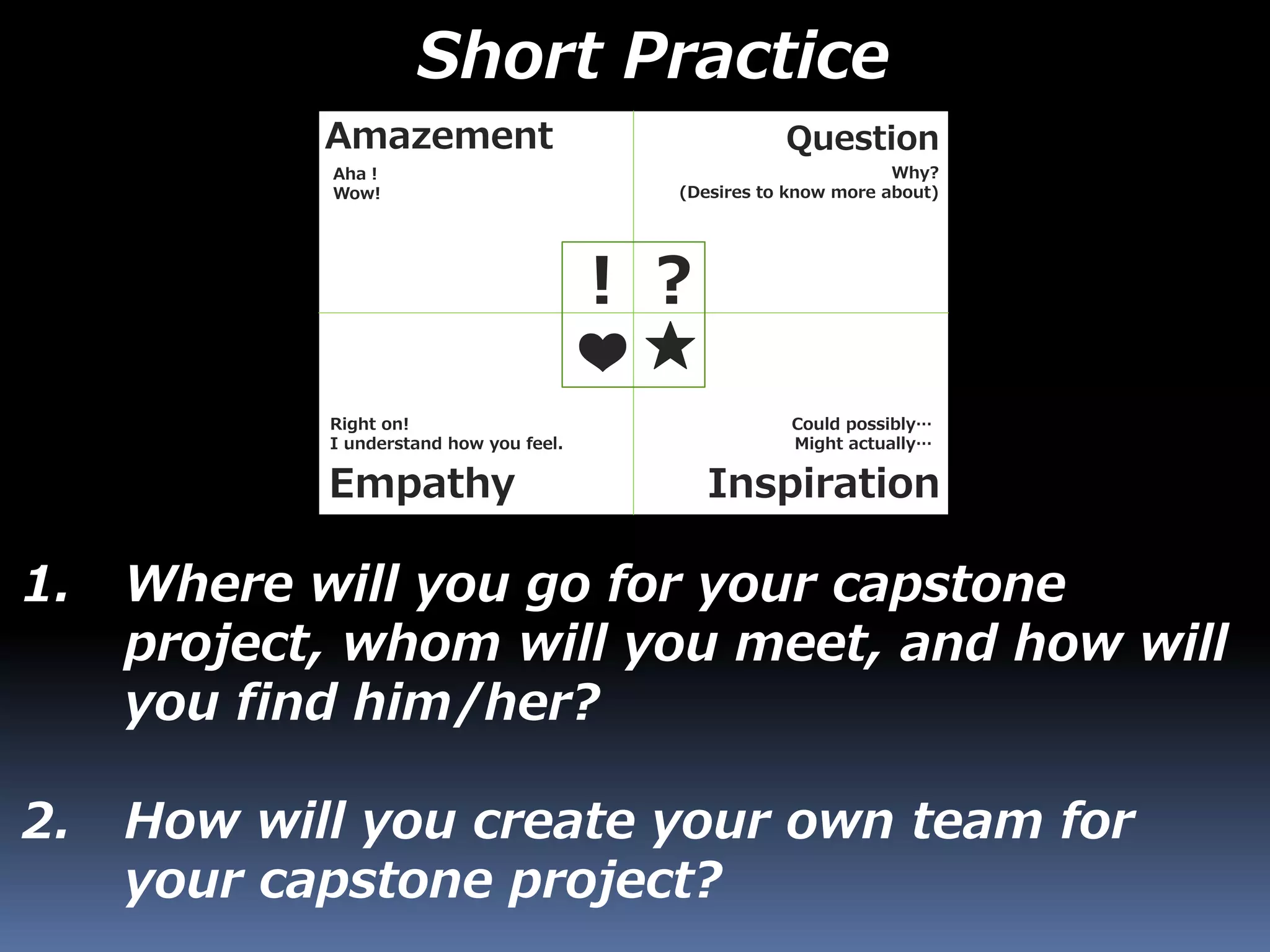
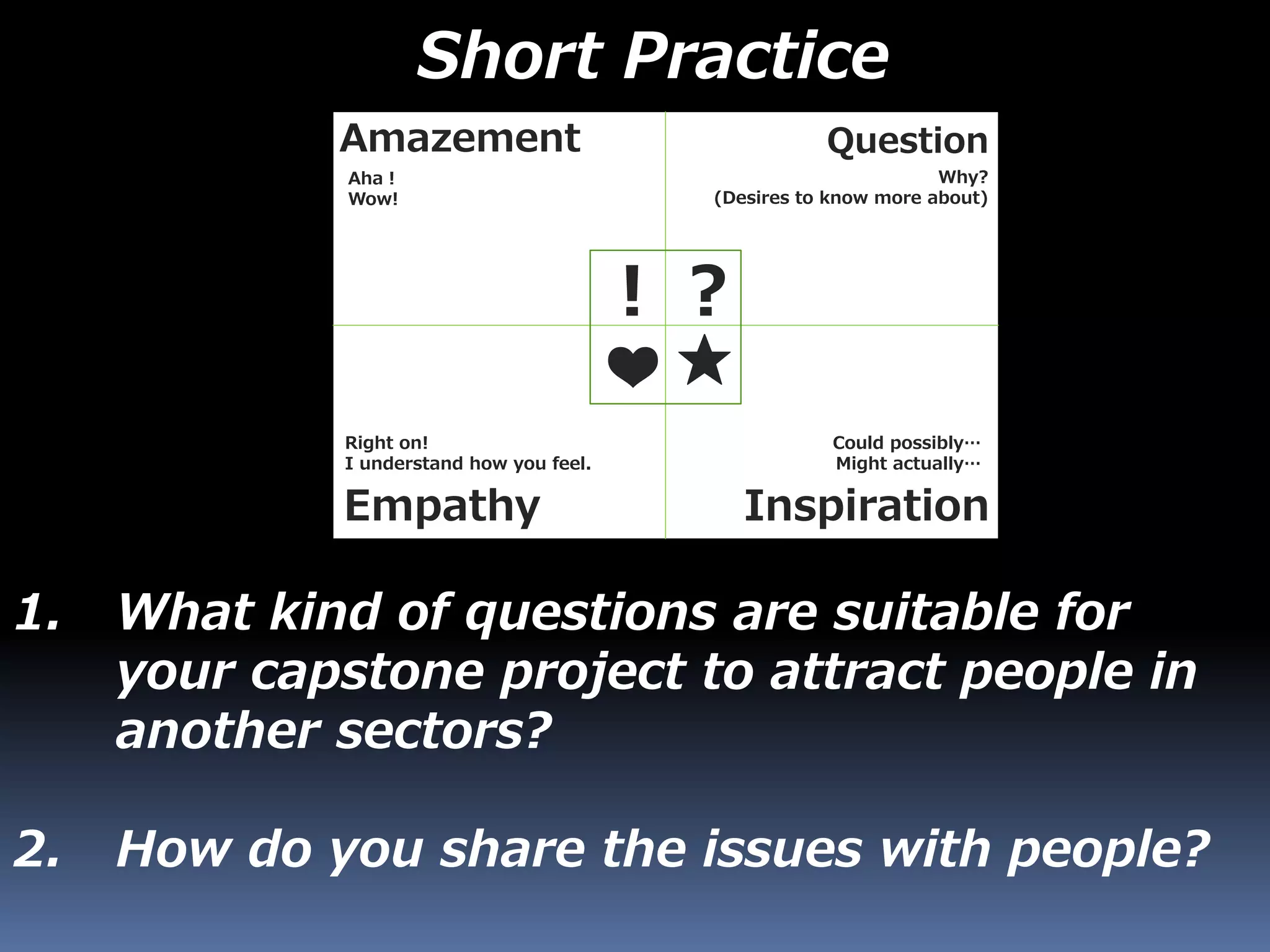
Amazement Question
InspirationEmpathy
Aha!
Wow!
Why?
(Desires to know more about)
Could possibly…
Might actually…
Right on!
I understand how you feel.
!?
★❤
Short Practice
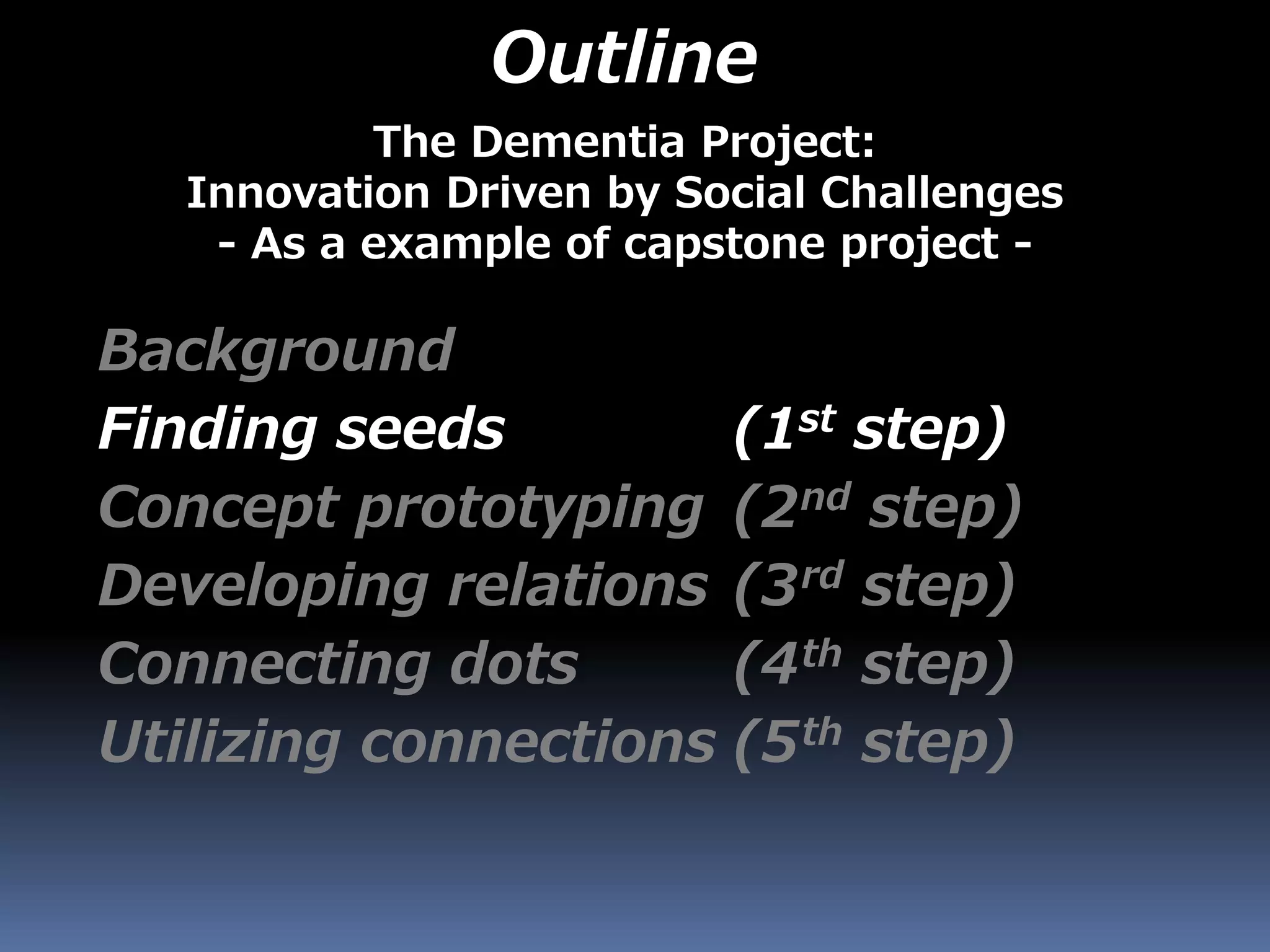
Outline
Background
Finding seeds (1st step)
Concept prototyping (2nd step)
Developing relations (3rd step)
Connecting dots (4th step)
Utilizing connections (5th step)
The Dementia Project:
Innovation Driven by Social Challenges
- As a example of capstone project -
First step:
Finding seeds of insights
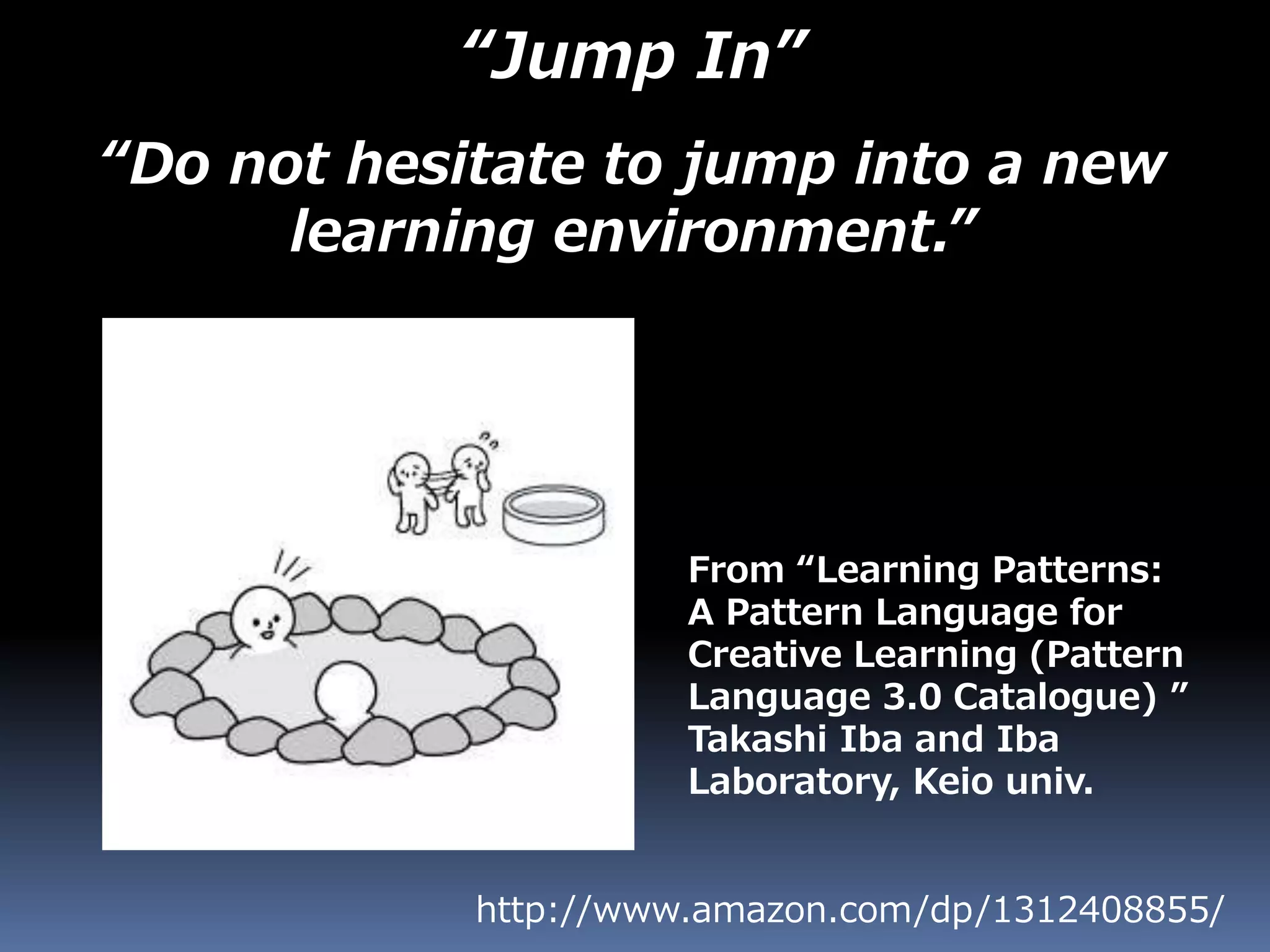
“Jump in”
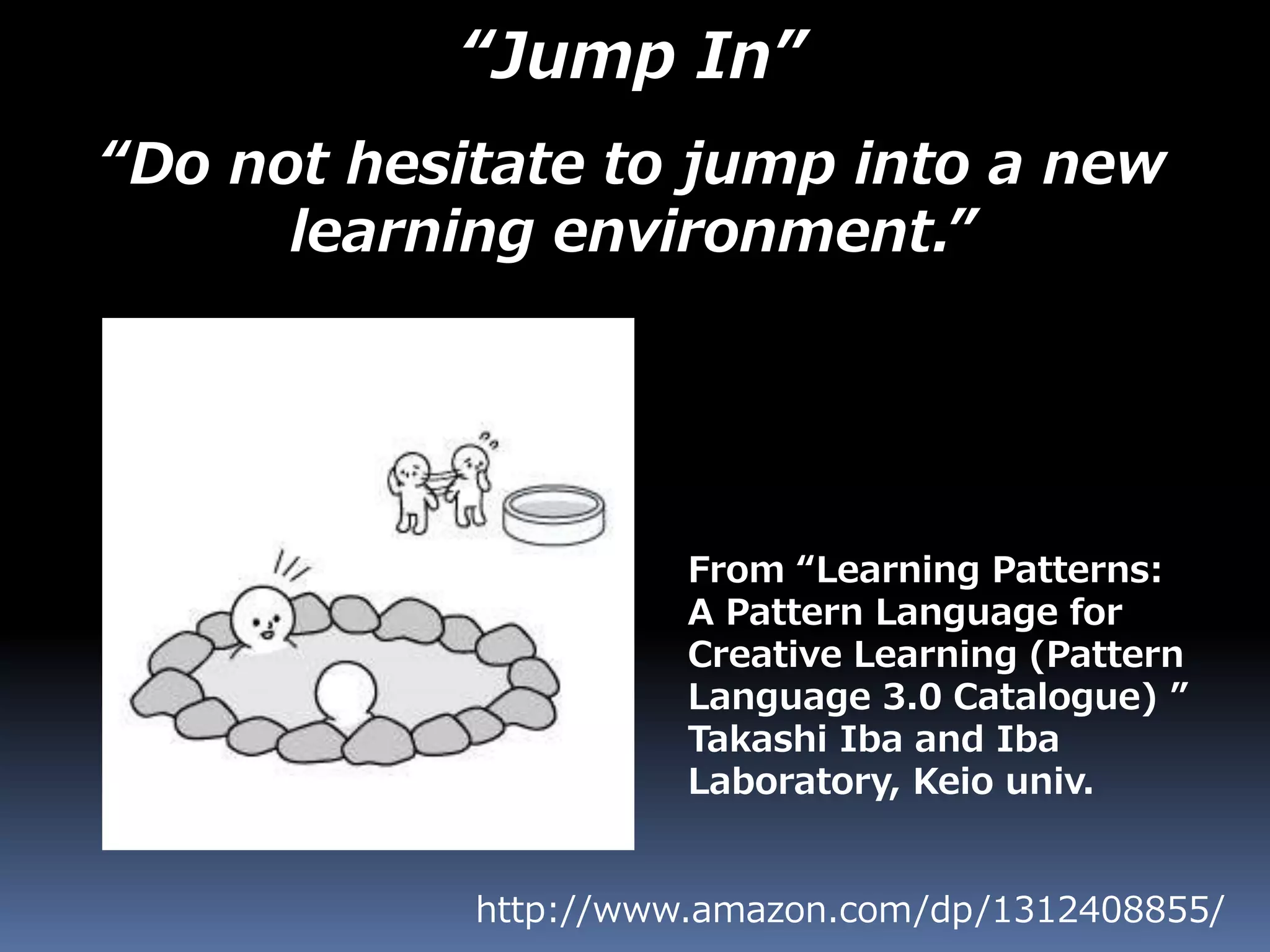
“Jump In”
“Do not hesitate to jump into a new
learning environment.”
http://www.amazon.com/dp/1312408855/
From “Learning Patterns:
A Pattern Language for
Creative Learning (Pattern
Language 3.0 Catalogue) ”
Takashi Iba and Iba
Laboratory, Keio univ.
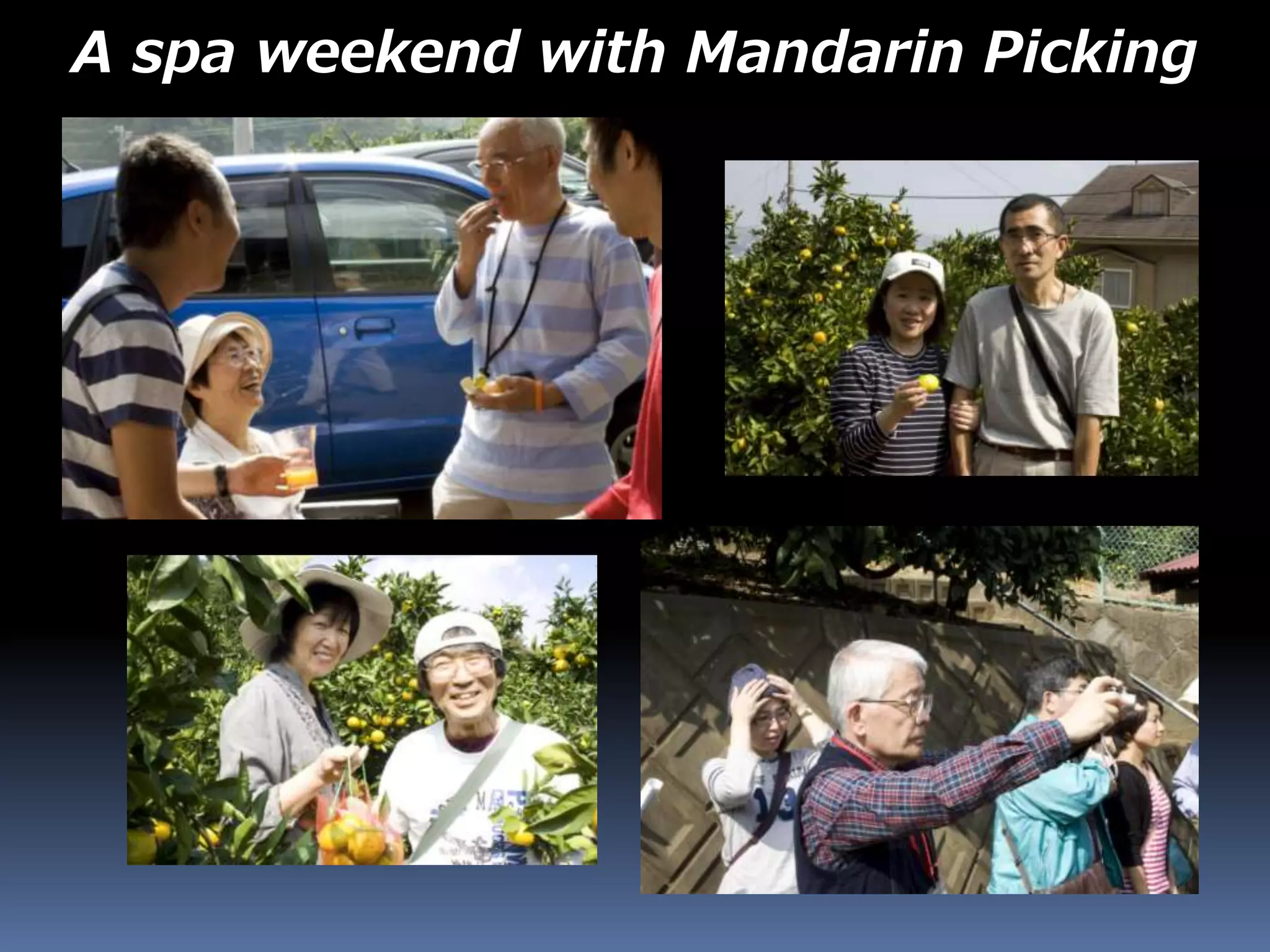
A spa weekend with Mandarin Picking
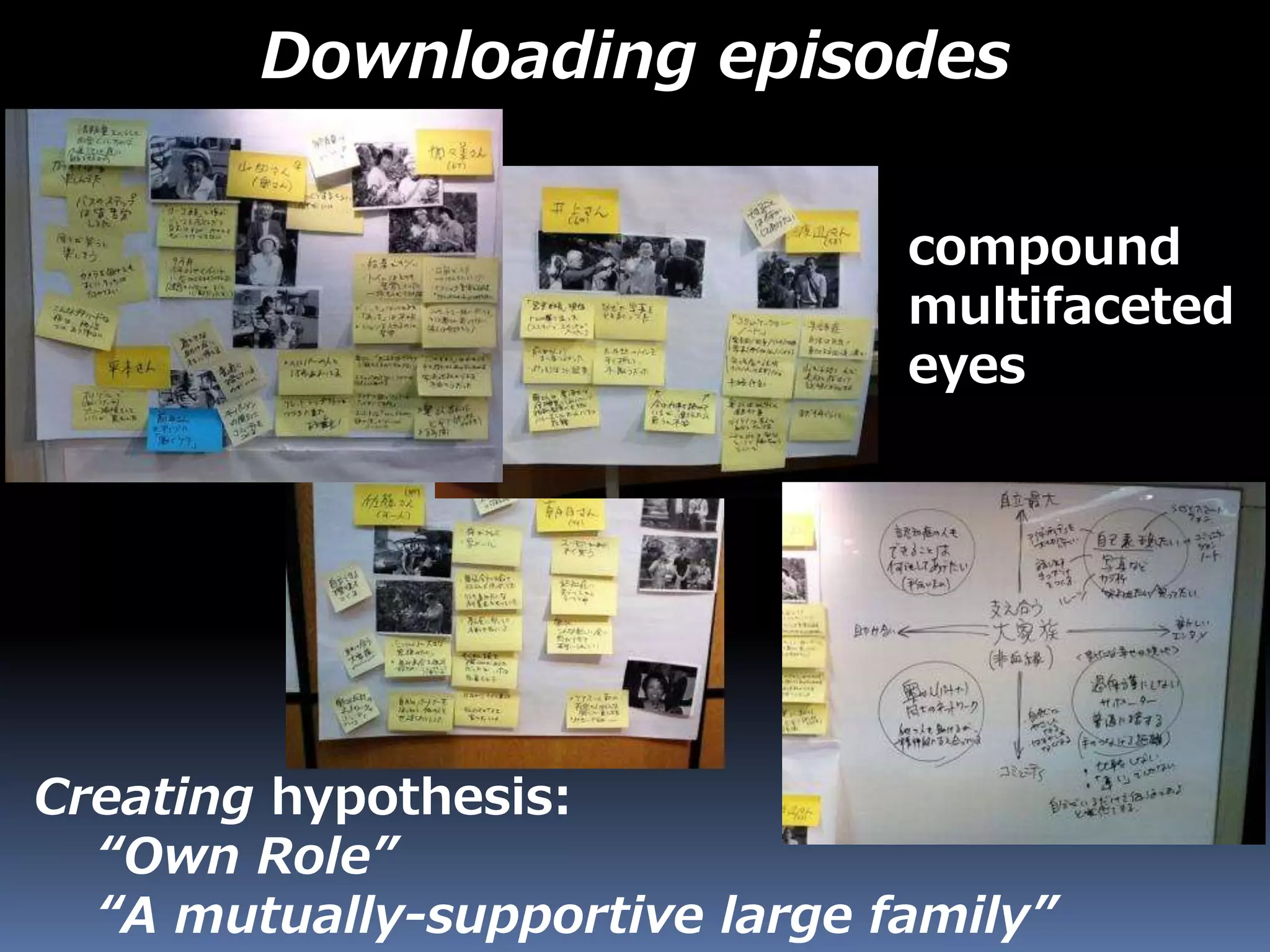
Creating hypothesis:
“Own Role”
“A mutually-supportive large family”
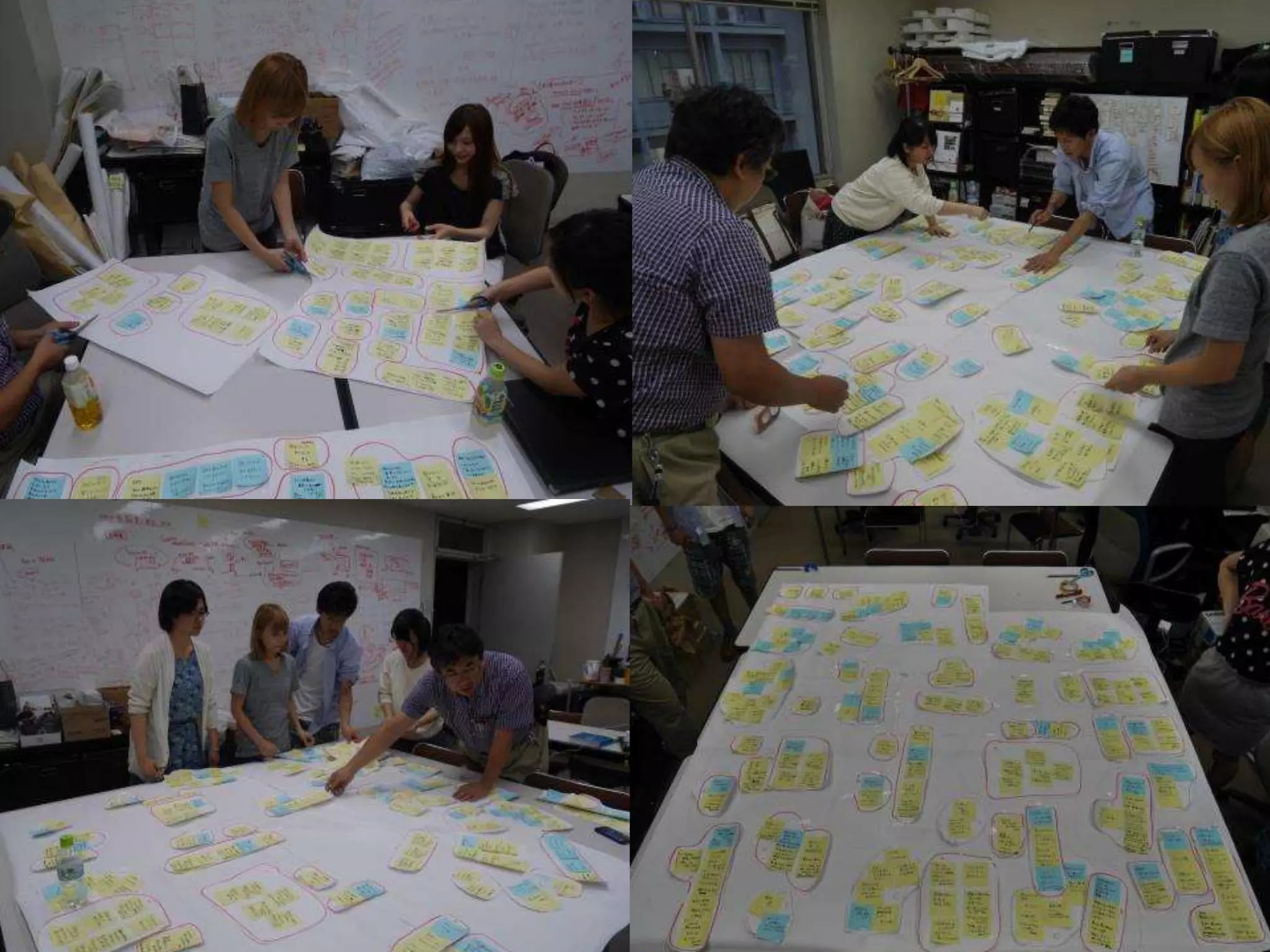
Downloading episodes
compound
multifaceted
eyes
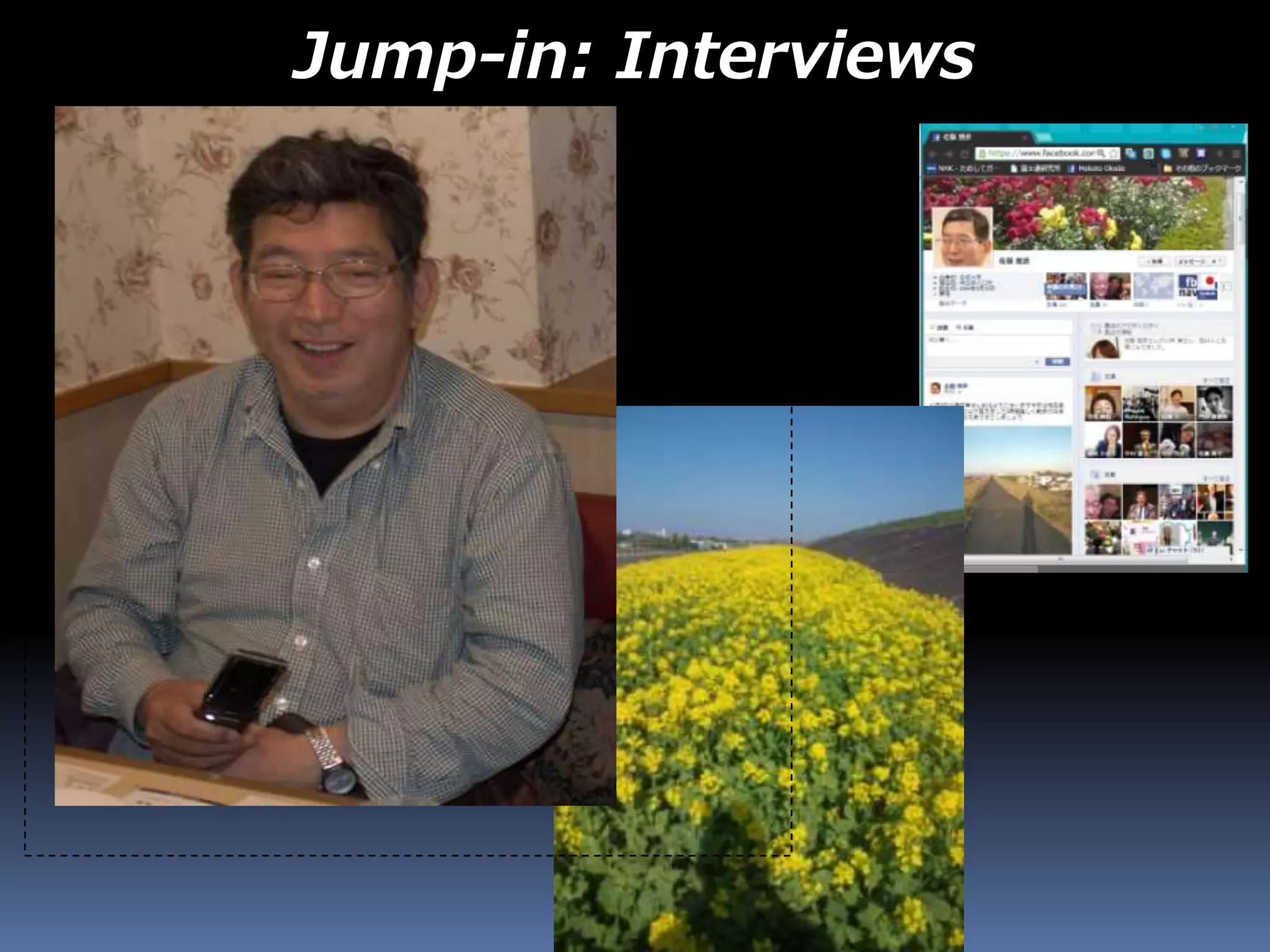
Jump-in: Interviews
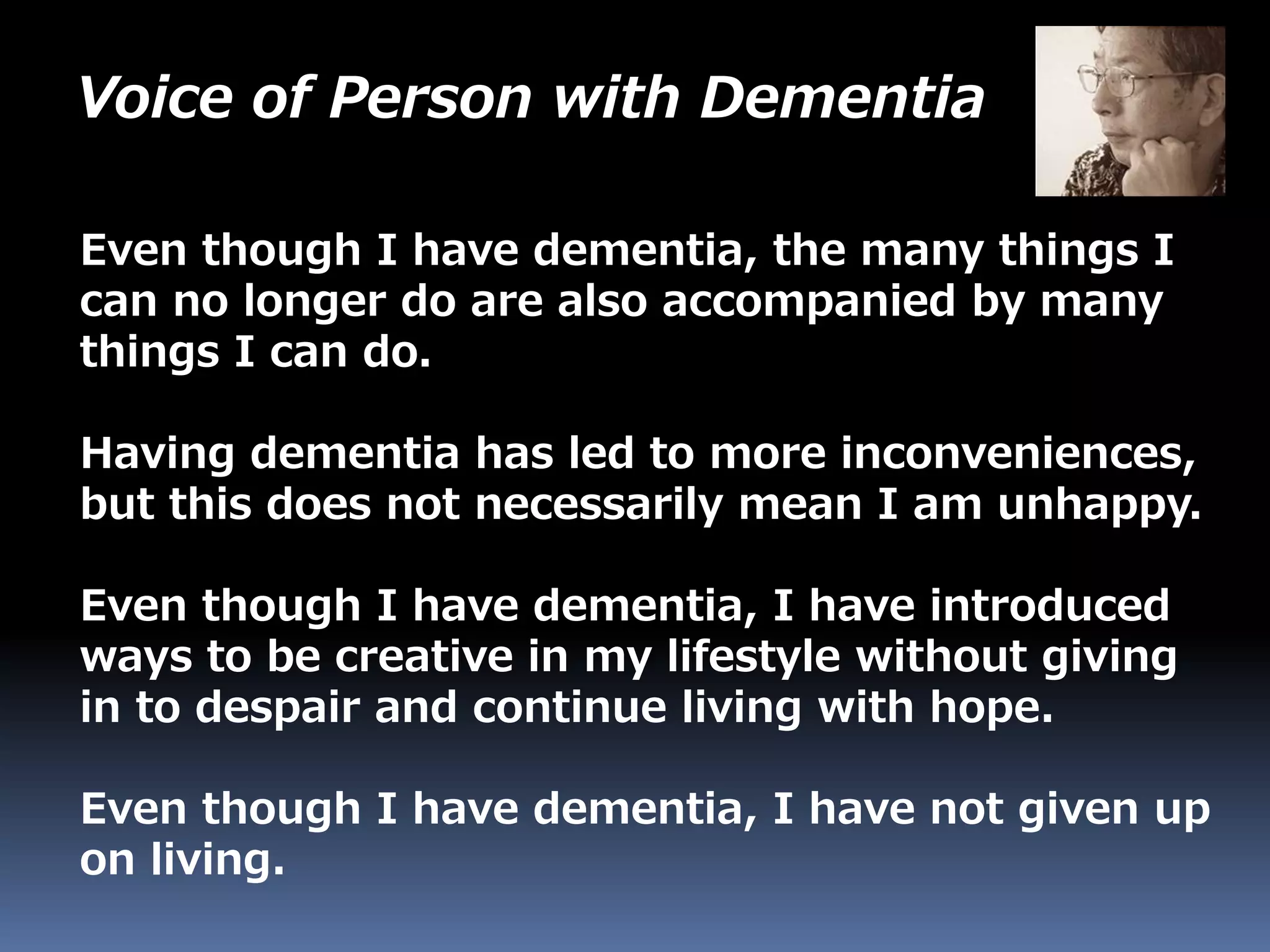
Voice of Person with Dementia
Even though I have dementia, the many things I
can no longer do are also accompanied by many
things I can do.
Having dementia has led to more inconveniences,
but this does not necessarily mean I am unhappy.
Even though I have dementia, I have introduced
ways to be creative in my lifestyle without giving
in to despair and continue living with hope.
Even though I have dementia, I have not given up
on living.
1. Where will you go for your capstone
project, whom will you meet, and how will
you find him/her?
2. How will you create your own team for
your capstone project?
Short Practice
Amazement Question
InspirationEmpathy
Aha!
Wow!
Why?
(Desires to know more about)
Could possibly…
Might actually…
Right on!
I understand how you feel.
!?
★❤
Outline
Background
Finding seeds (1st step)
Concept prototyping (2nd step)
Developing relations (3rd step)
Connecting dots (4th step)
Utilizing connections (5th step)
The Dementia Project:
Innovation Driven by Social Challenges
- As a example of capstone project -
Second step:
Concept prototyping
- Across Sectors -
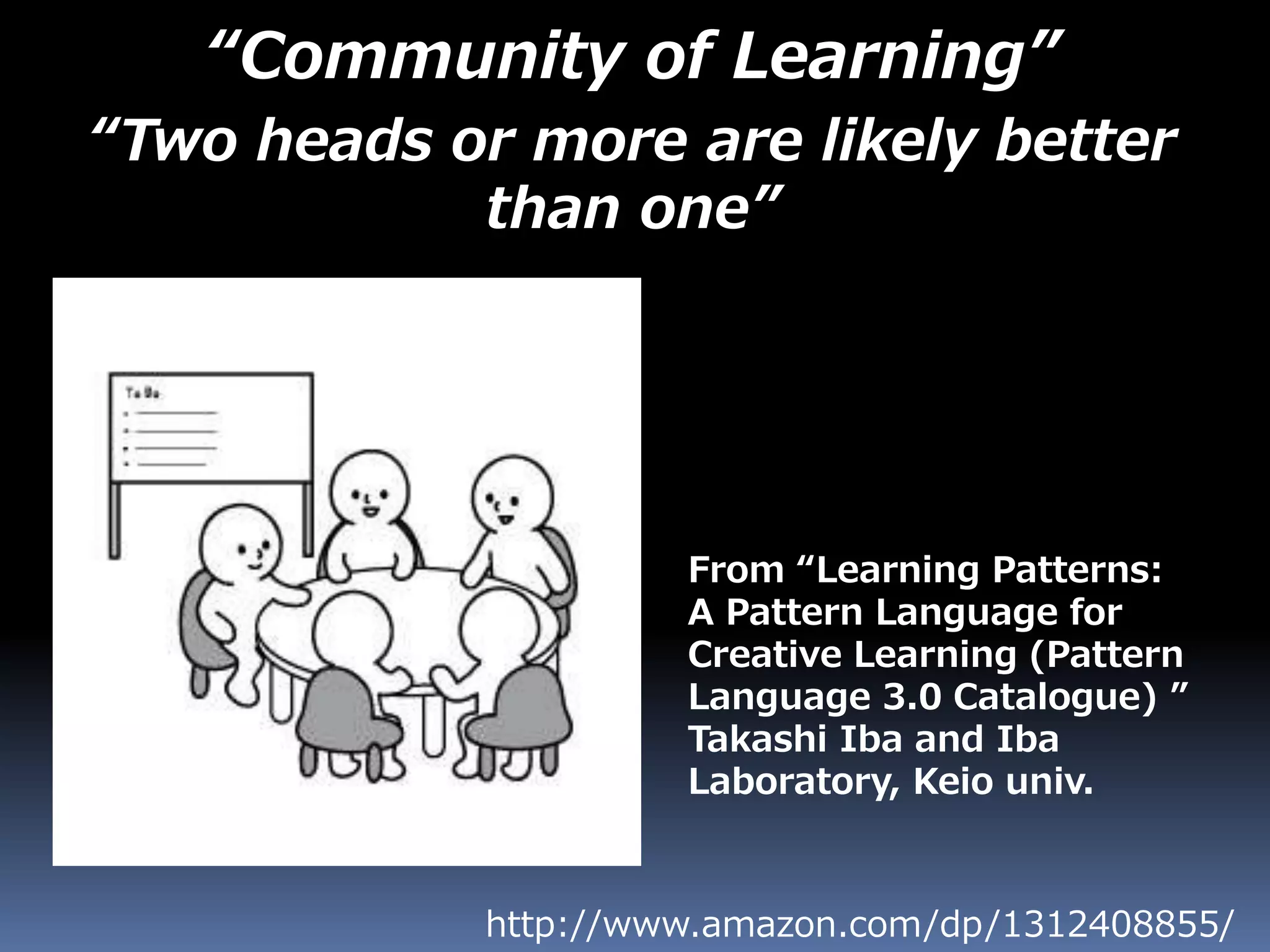
“Community of Learning”
“Two heads or more are likely better
than one”
http://www.amazon.com/dp/1312408855/
From “Learning Patterns:
A Pattern Language for
Creative Learning (Pattern
Language 3.0 Catalogue) ”
Takashi Iba and Iba
Laboratory, Keio univ.
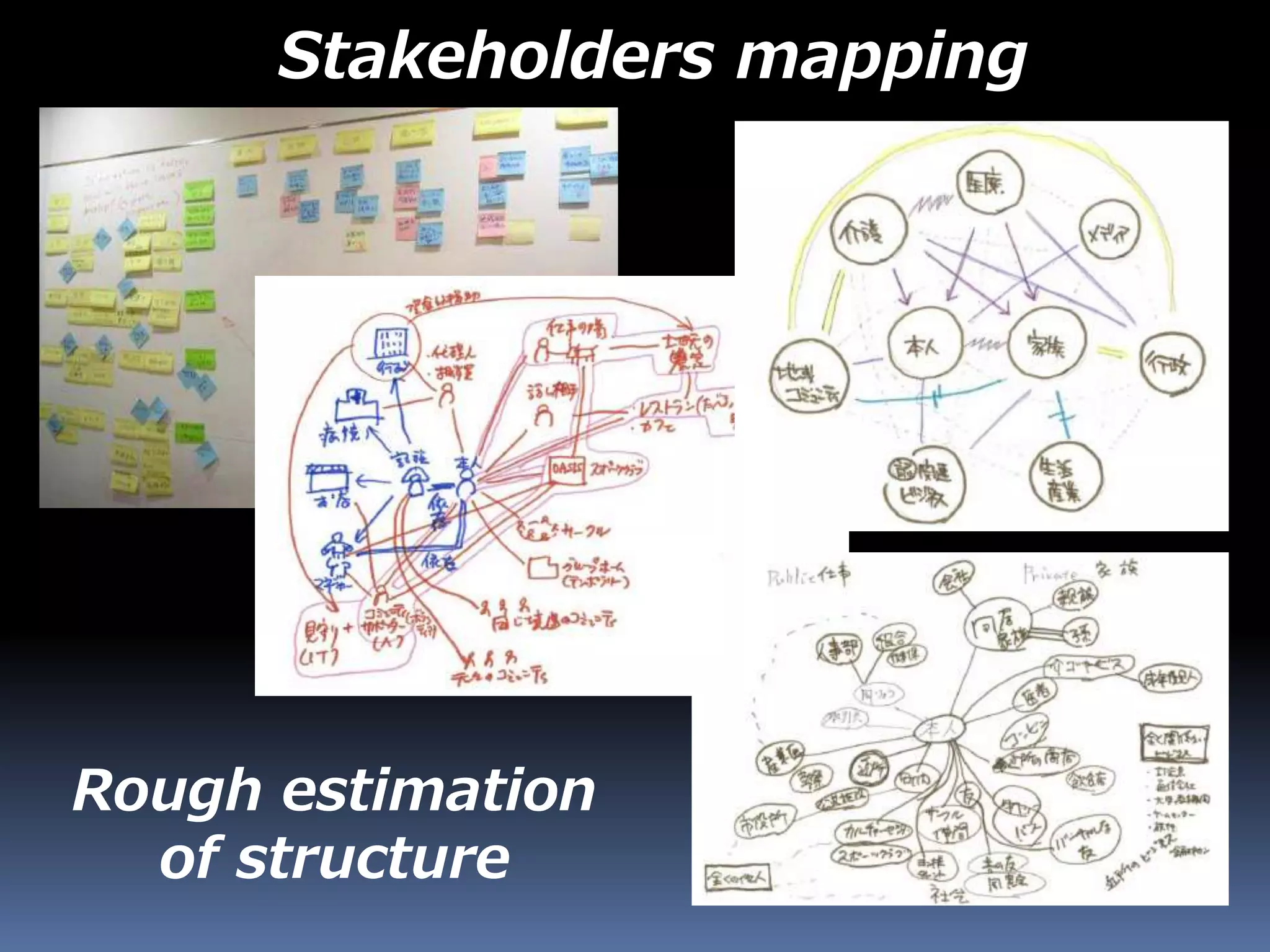
Stakeholders mapping
Rough estimation
of structure
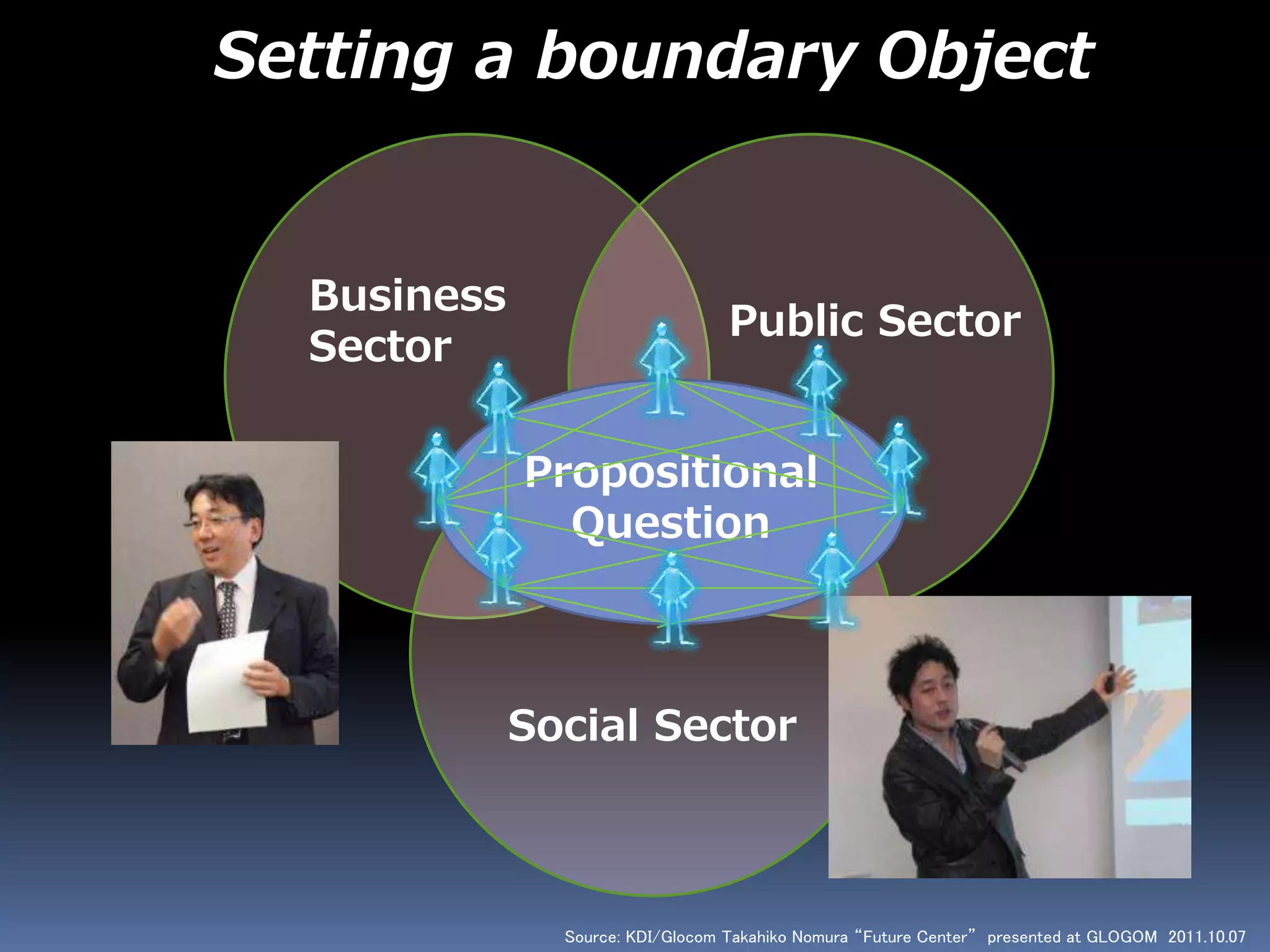
Business
Sector
Public Sector
Social Sector
Source: KDI/Glocom Takahiko Nomura “Future Center” presented at GLOGOM 2011.10.07
Propositional
Question
Setting a boundary Object
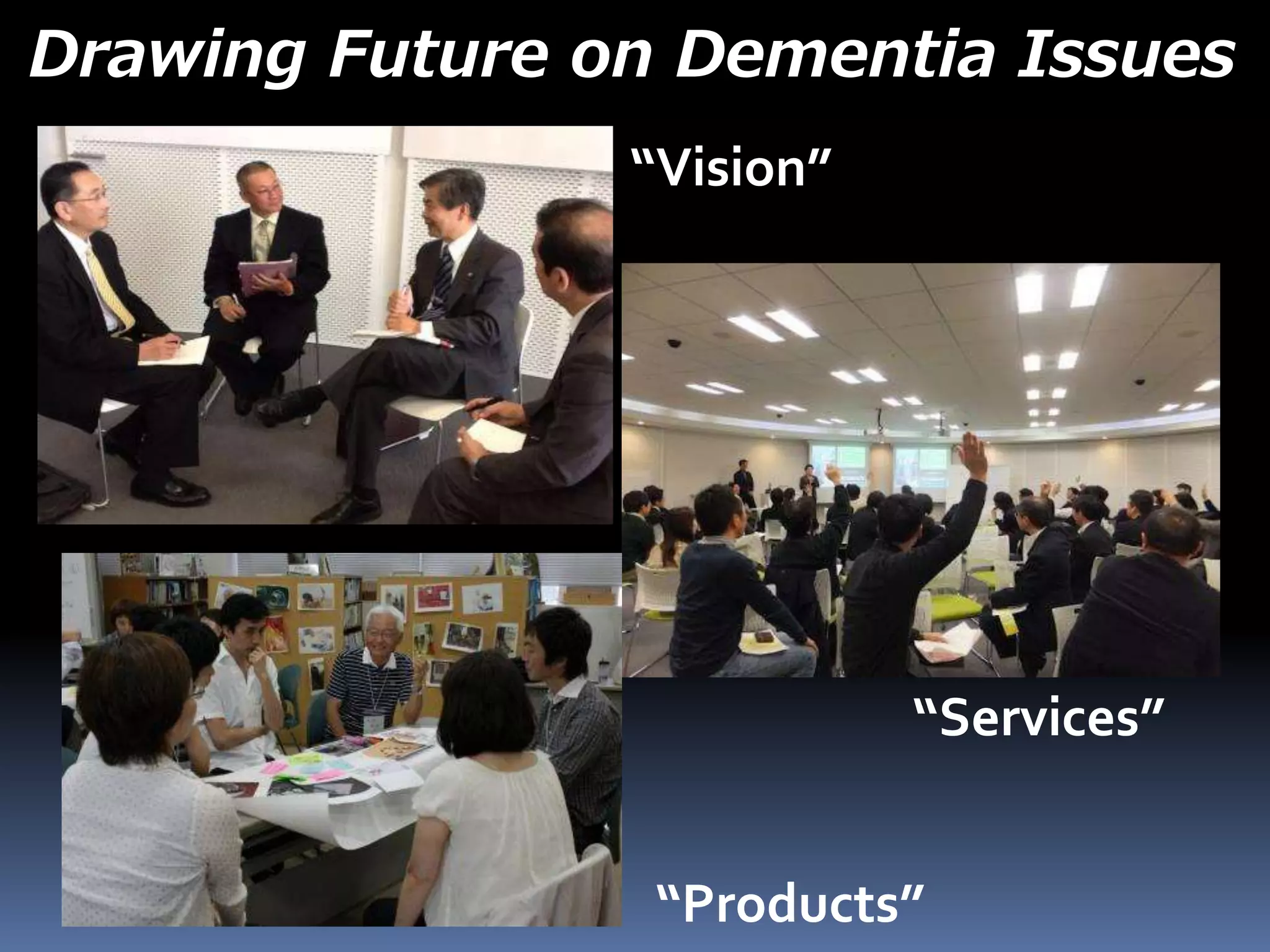
“Vision”
“Services”
Drawing Future on Dementia Issues
“Products”
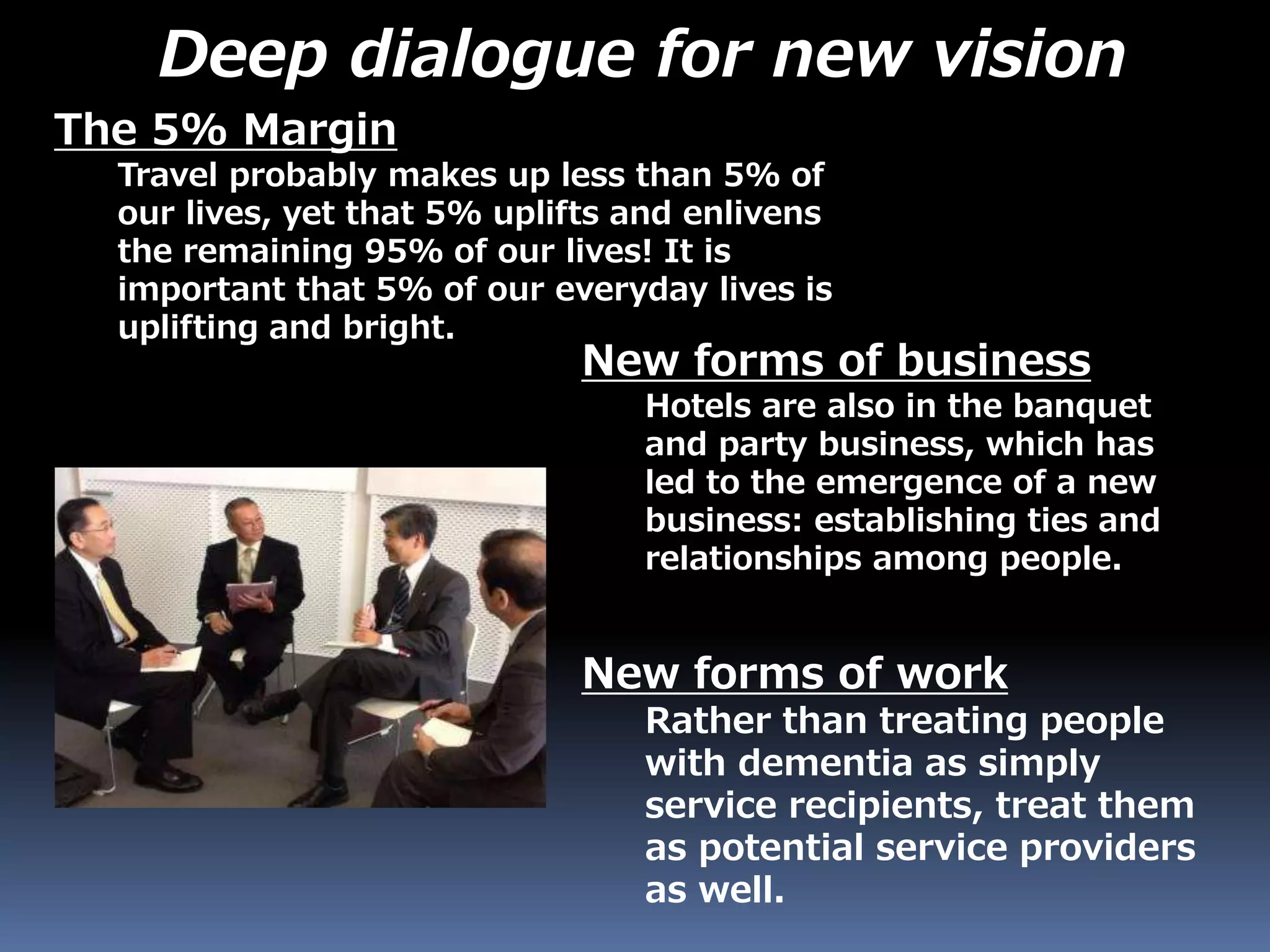
The 5% Margin
Travel probably makes up less than 5% of
our lives, yet that 5% uplifts and enlivens
the remaining 95% of our lives! It is
important that 5% of our everyday lives is
uplifting and bright.
New forms of business
Hotels are also in the banquet
and party business, which has
led to the emergence of a new
business: establishing ties and
relationships among people.
New forms of work
Rather than treating people
with dementia as simply
service recipients, treat them
as potential service providers
as well.
Deep dialogue for new vision
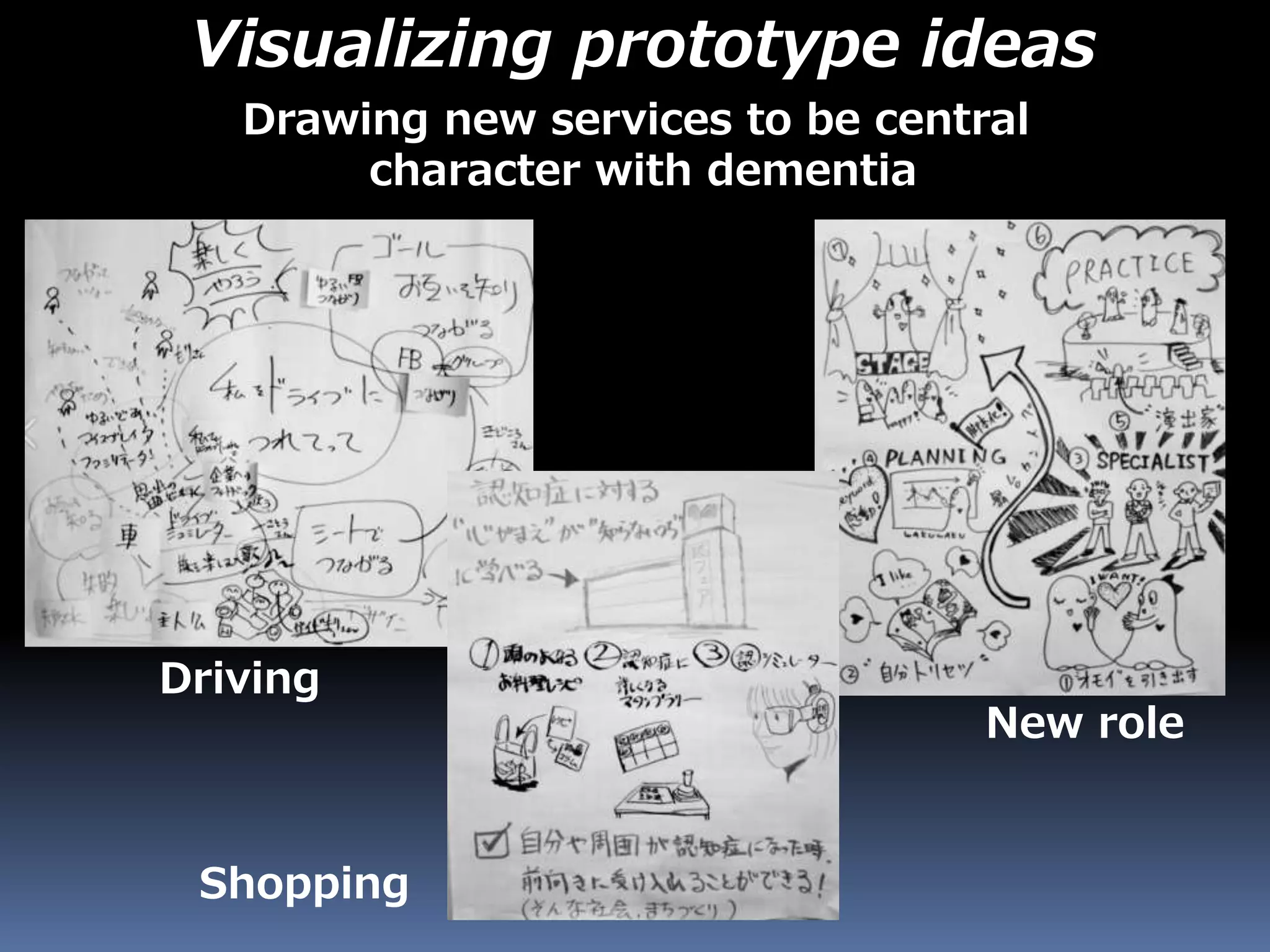
Visualizing prototype ideas
Drawing new services to be central
character with dementia
Driving
Shopping
New role
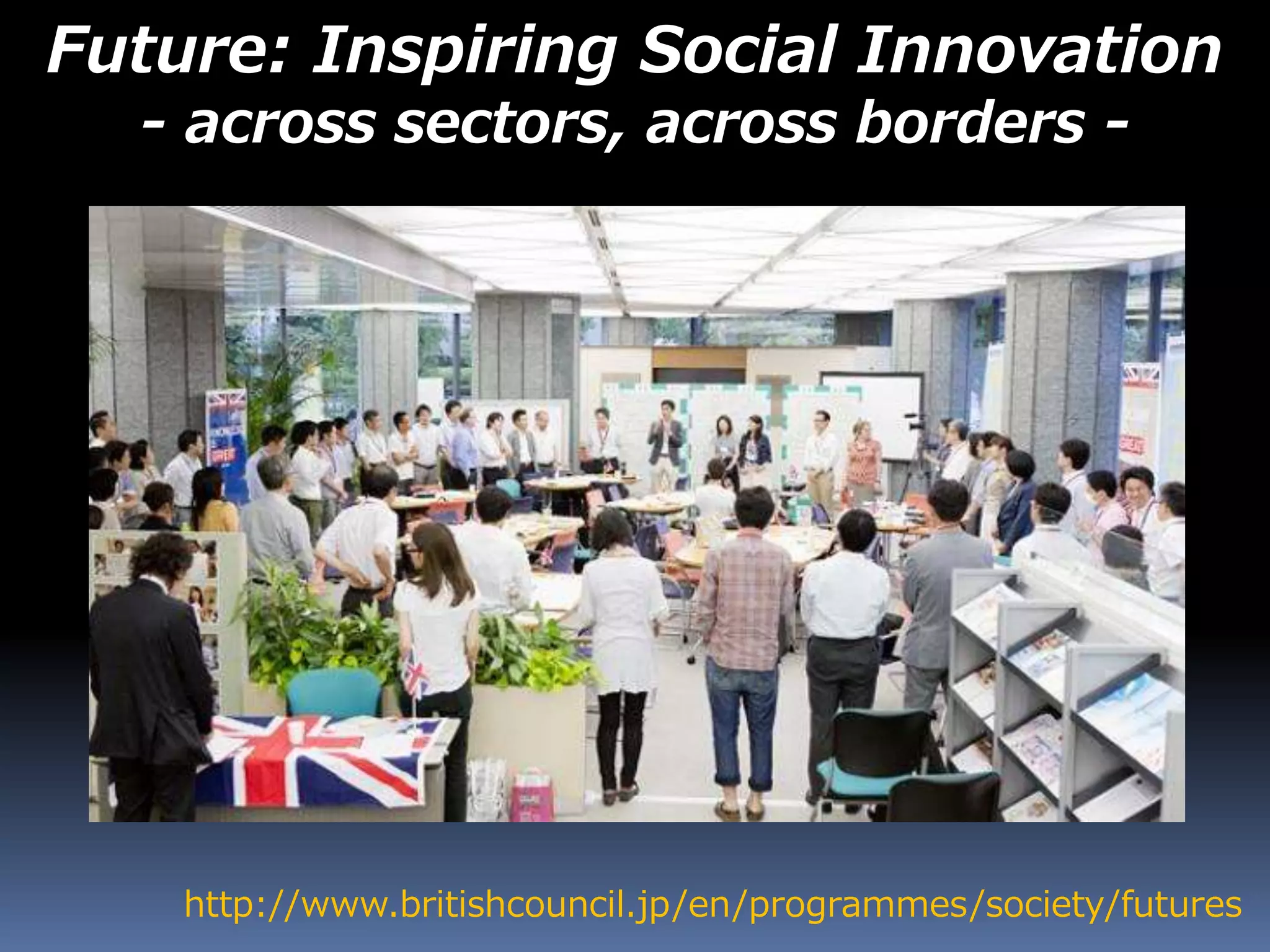
Future: Inspiring Social Innovation
- across sectors, across borders -
http://www.britishcouncil.jp/en/programmes/society/futures
Future: Inspiring Social Innovation
- across sectors, across borders –
https://vimeo.com/52979128
1st Futures Session on 9th July 2012
【Social Innovation x Successful Aging】
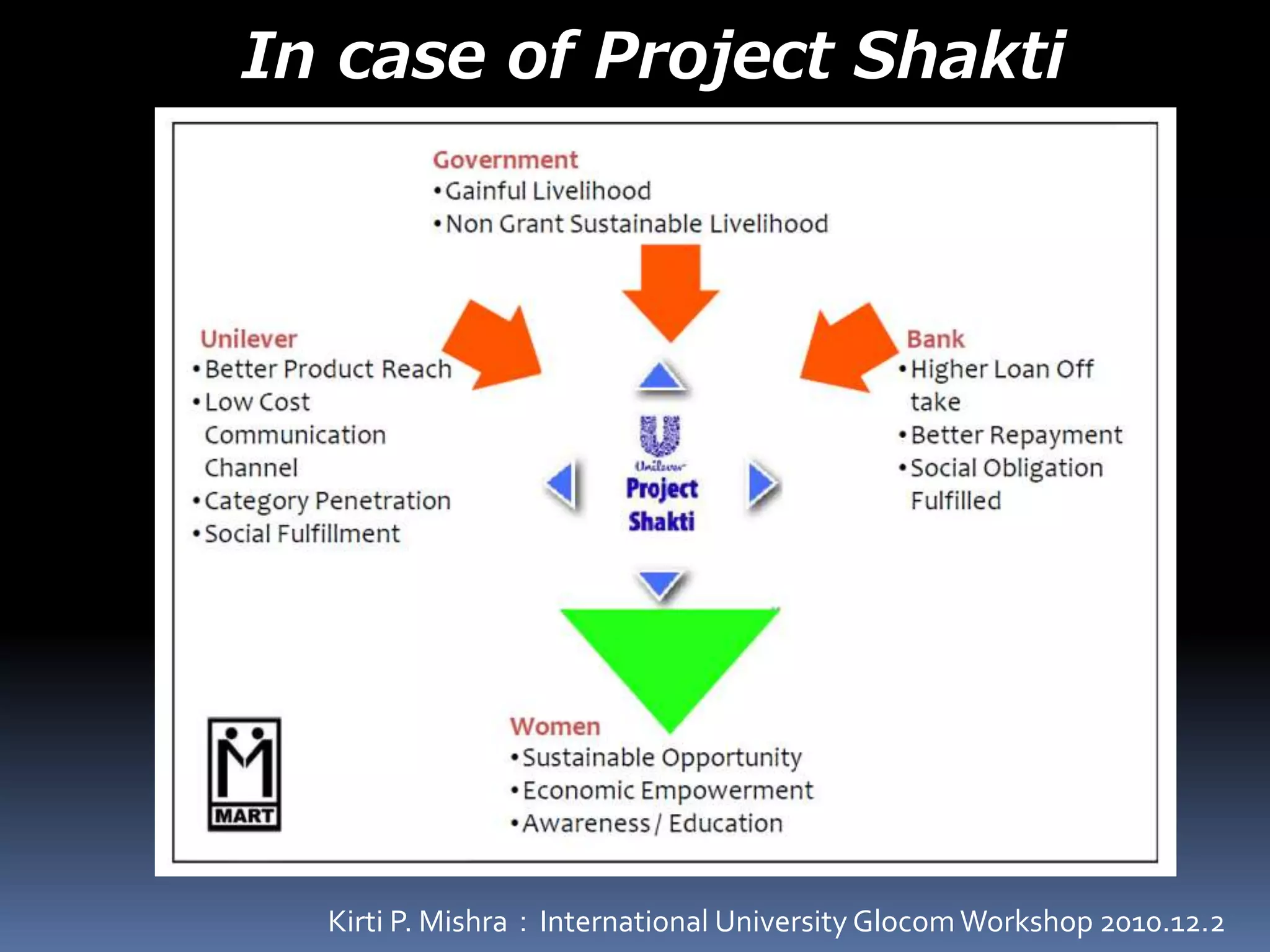
In case of Project Shakti
Kirti P. Mishra:International University GlocomWorkshop 2010.12.2
1. What kind of questions are suitable for
your capstone project to attract people in
another sectors?
2. How do you share the issues with people?
Short Practice
Amazement Question
InspirationEmpathy
Aha!
Wow!
Why?
(Desires to know more about)
Could possibly…
Might actually…
Right on!
I understand how you feel.
!?
★❤
Outline
Background
Finding seeds (1st step)
Concept prototyping (2nd step)
Developing relations (3rd step)
Connecting dots (4th step)
Utilizing connections (5th step)
The Dementia Project:
Innovation Driven by Social Challenges
- As a example of capstone project -
Third step:
Developing and enlarging
relations
Prototype -> Relations
Future: Inspiring Social Innovation
- across sectors, across borders –
https://vimeo.com/76936405
UK Social Innovation Journey
December 2012
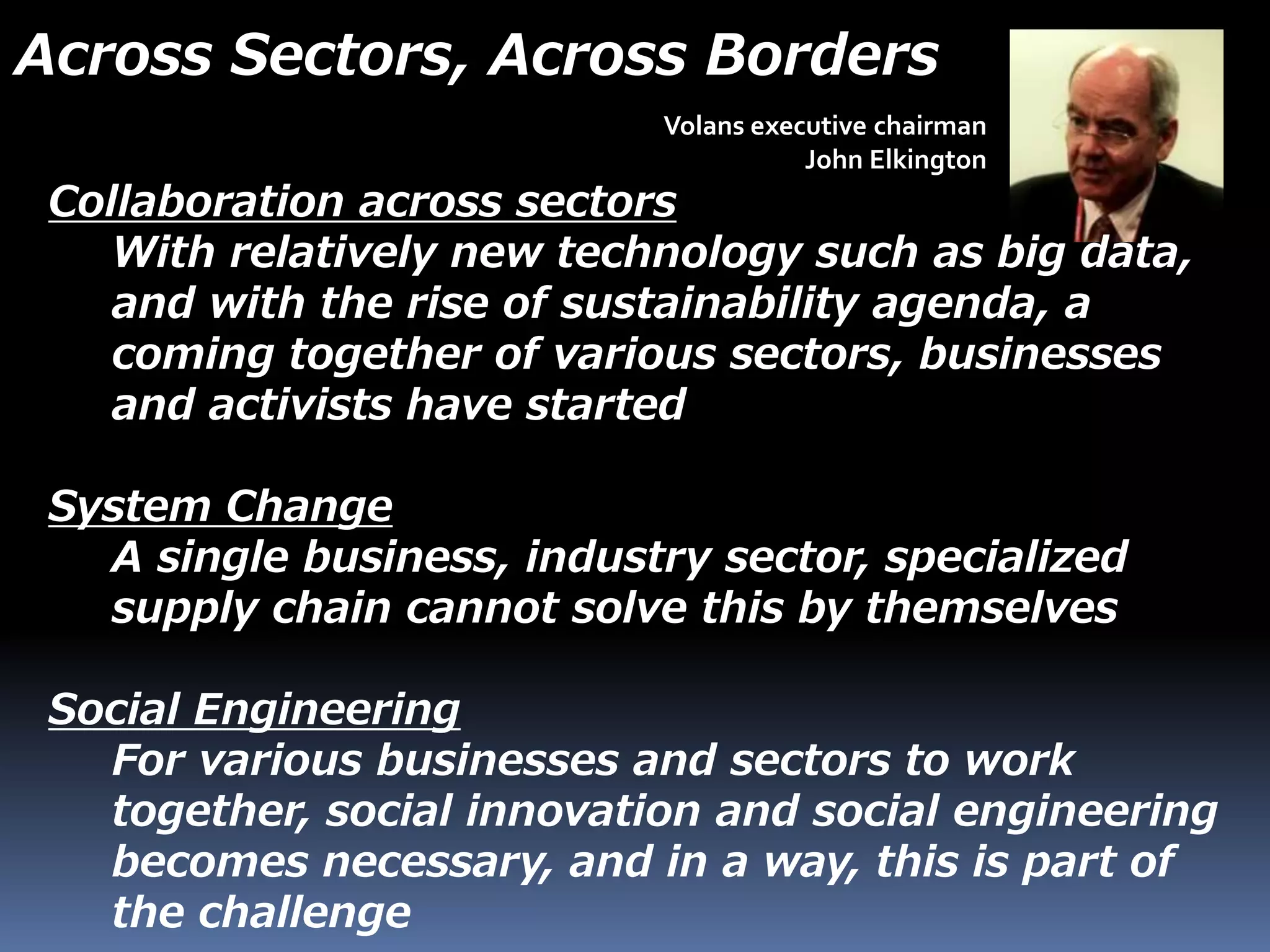
Volans executive chairman
John Elkington
Collaboration across sectors
With relatively new technology such as big data,
and with the rise of sustainability agenda, a
coming together of various sectors, businesses
and activists have started
System Change
A single business, industry sector, specialized
supply chain cannot solve this by themselves
Social Engineering
For various businesses and sectors to work
together, social innovation and social engineering
becomes necessary, and in a way, this is part of
the challenge
Across Sectors, Across Borders
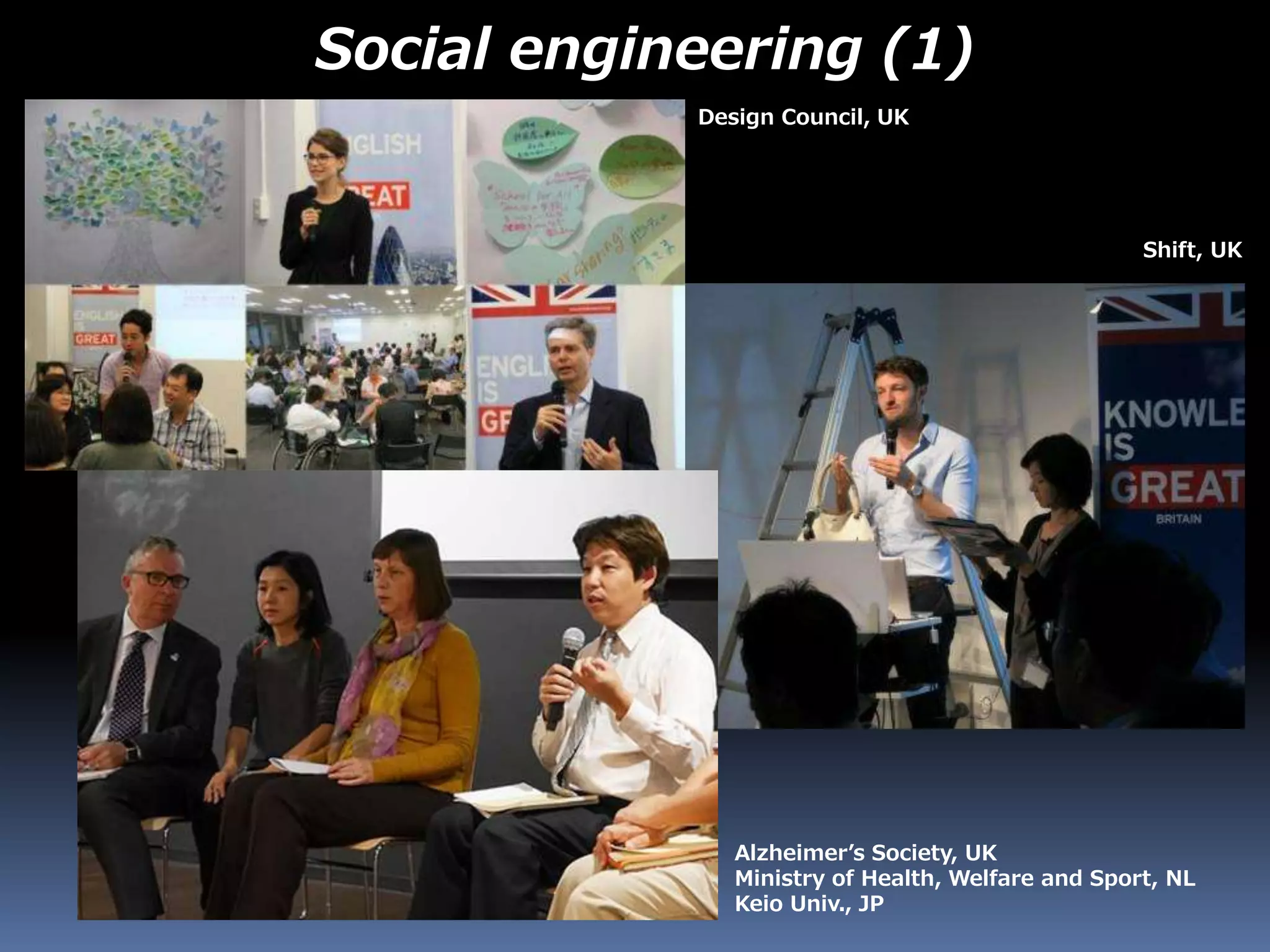
Social engineering (1)
Design Council, UK
Shift, UK
Alzheimer’s Society, UK
Ministry of Health, Welfare and Sport, NL
Keio Univ., JP
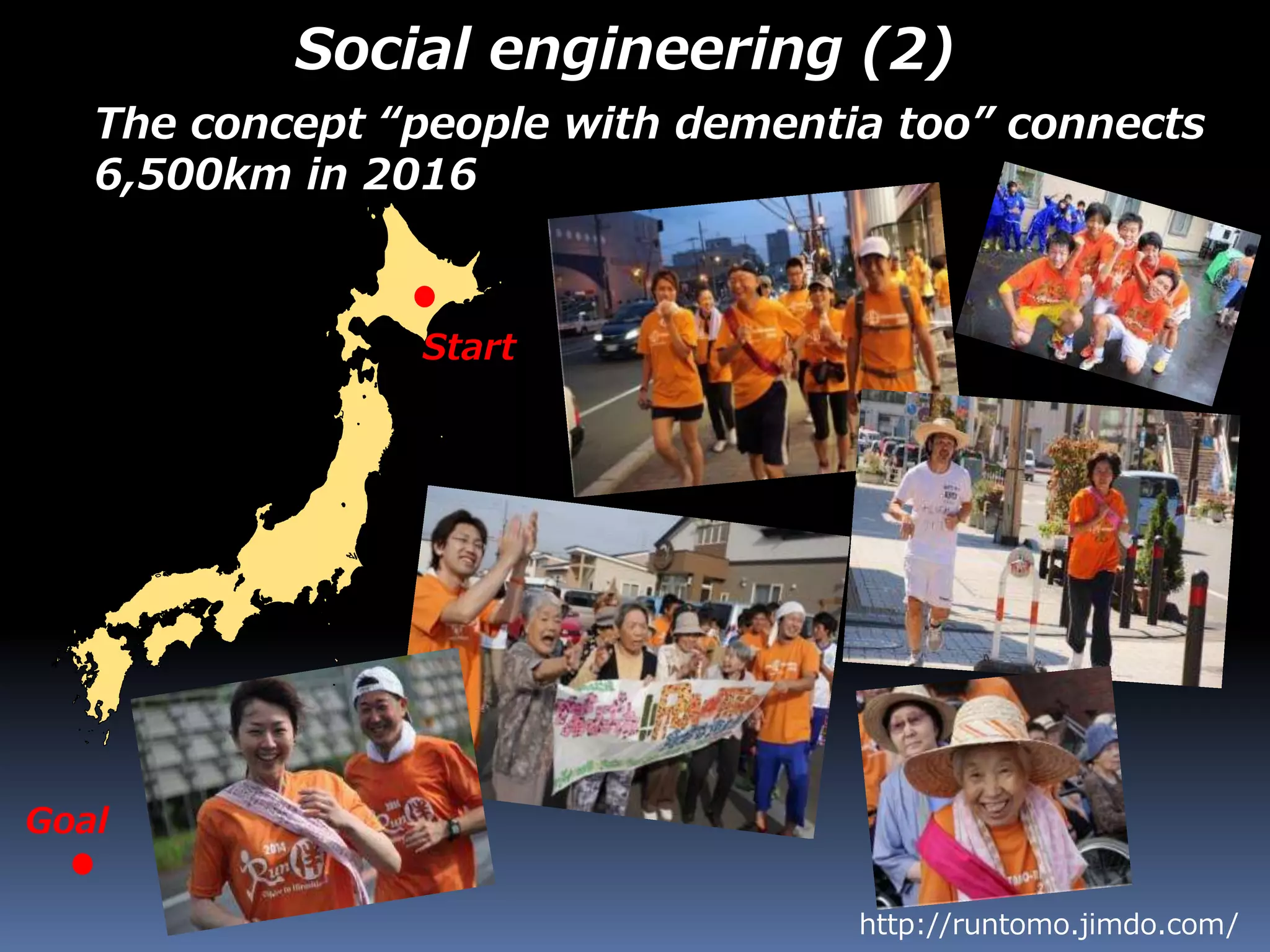
The concept “people with dementia too” connects
6,500km in 2016
http://runtomo.jimdo.com/
Social engineering (2)
Start
Goal
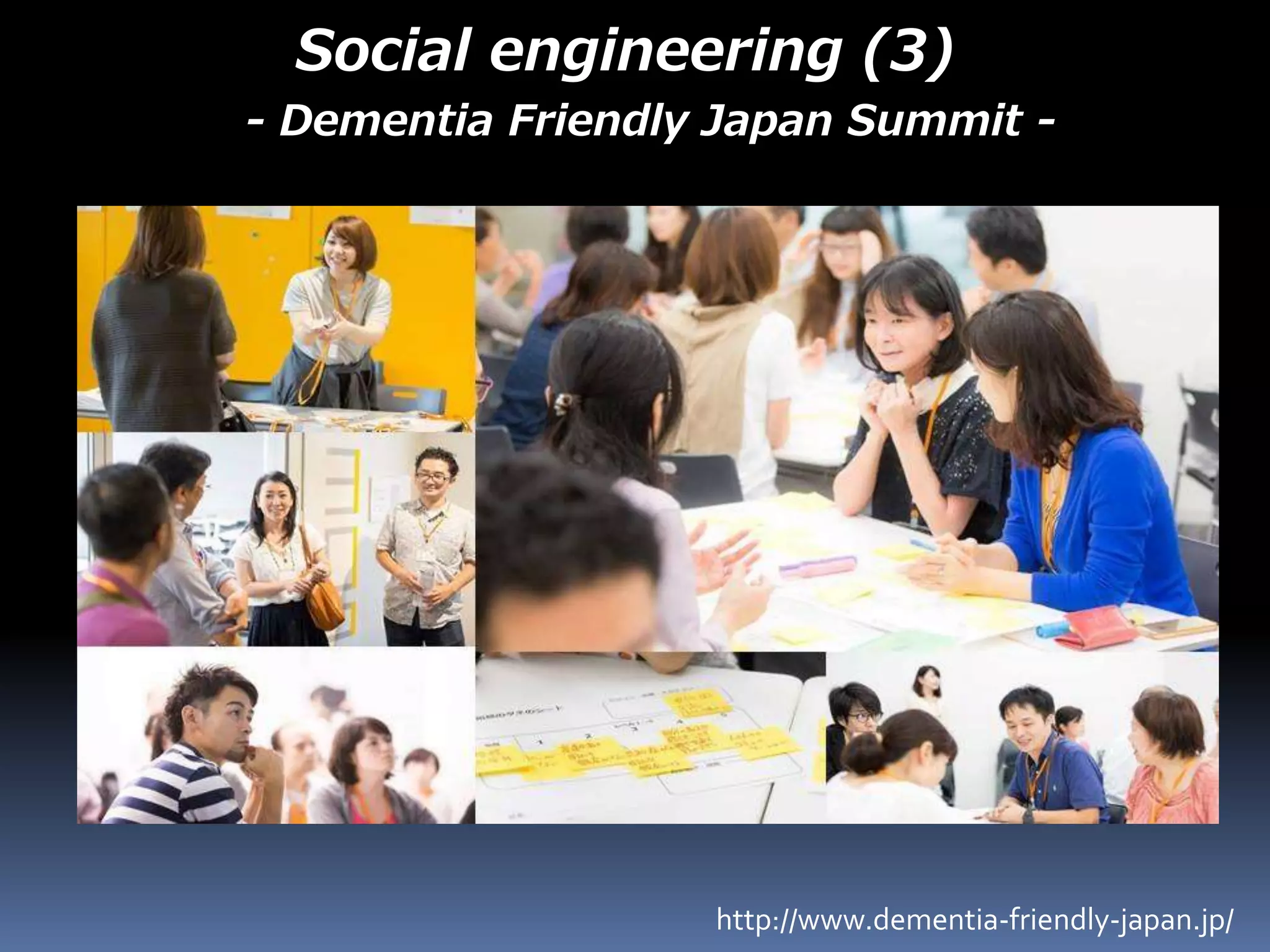
Social engineering (3)
- Dementia Friendly Japan Summit -
http://www.dementia-friendly-japan.jp/
1. What kind of marketing process do you
use for your capstone project?
2. What meaning does it create in the
marketing process for your team
members?
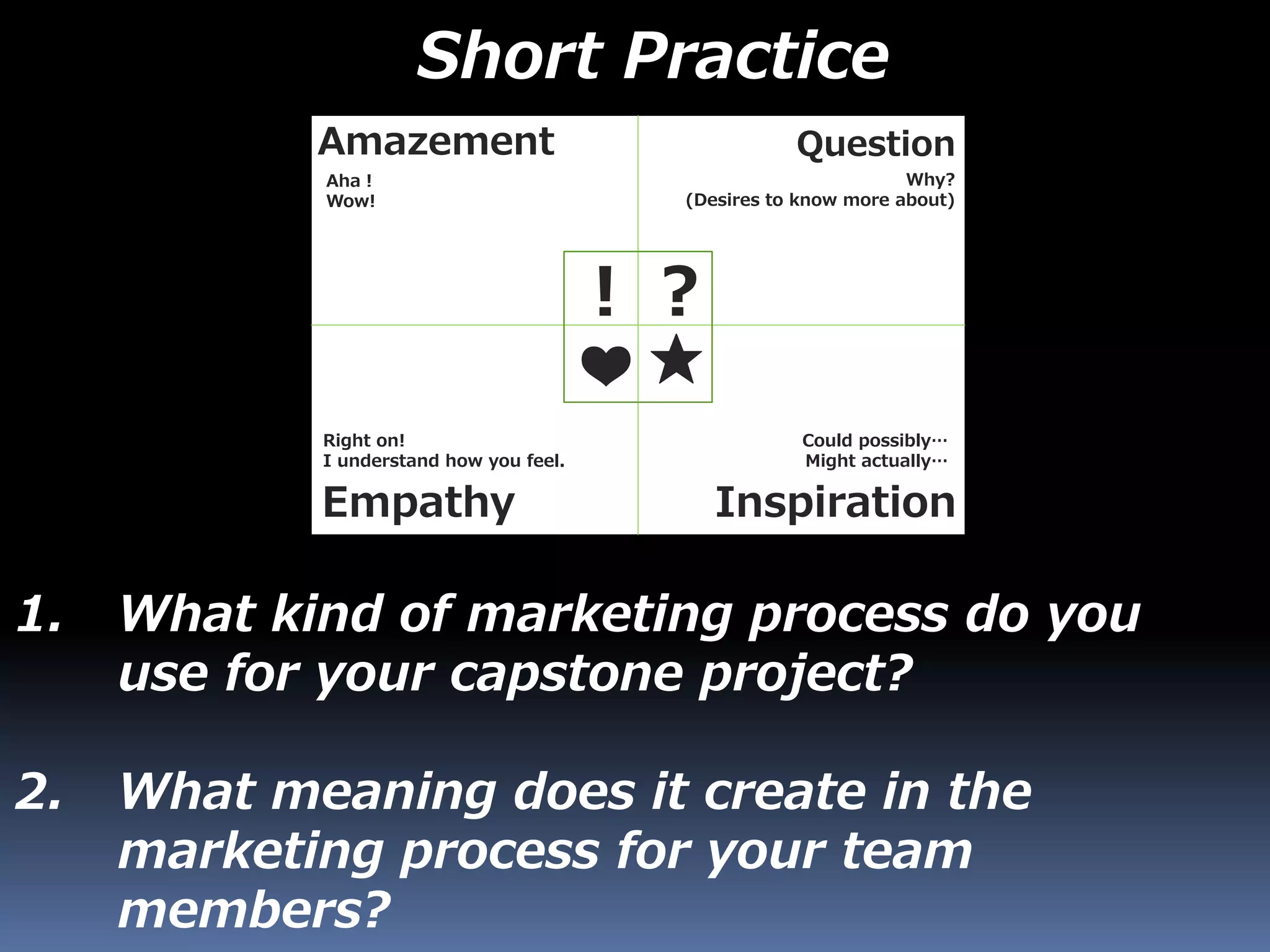
Short Practice
Amazement Question
InspirationEmpathy
Aha!
Wow!
Why?
(Desires to know more about)
Could possibly…
Might actually…
Right on!
I understand how you feel.
!?
★❤
Outline
Background
Finding seeds (1st step)
Concept prototyping (2nd step)
Developing relations (3rd step)
Connecting dots (4th step)
Utilizing connections (5th step)
The Dementia Project:
Innovation Driven by Social Challenges
- As a example of capstone project -
4th step:
Connecting dots
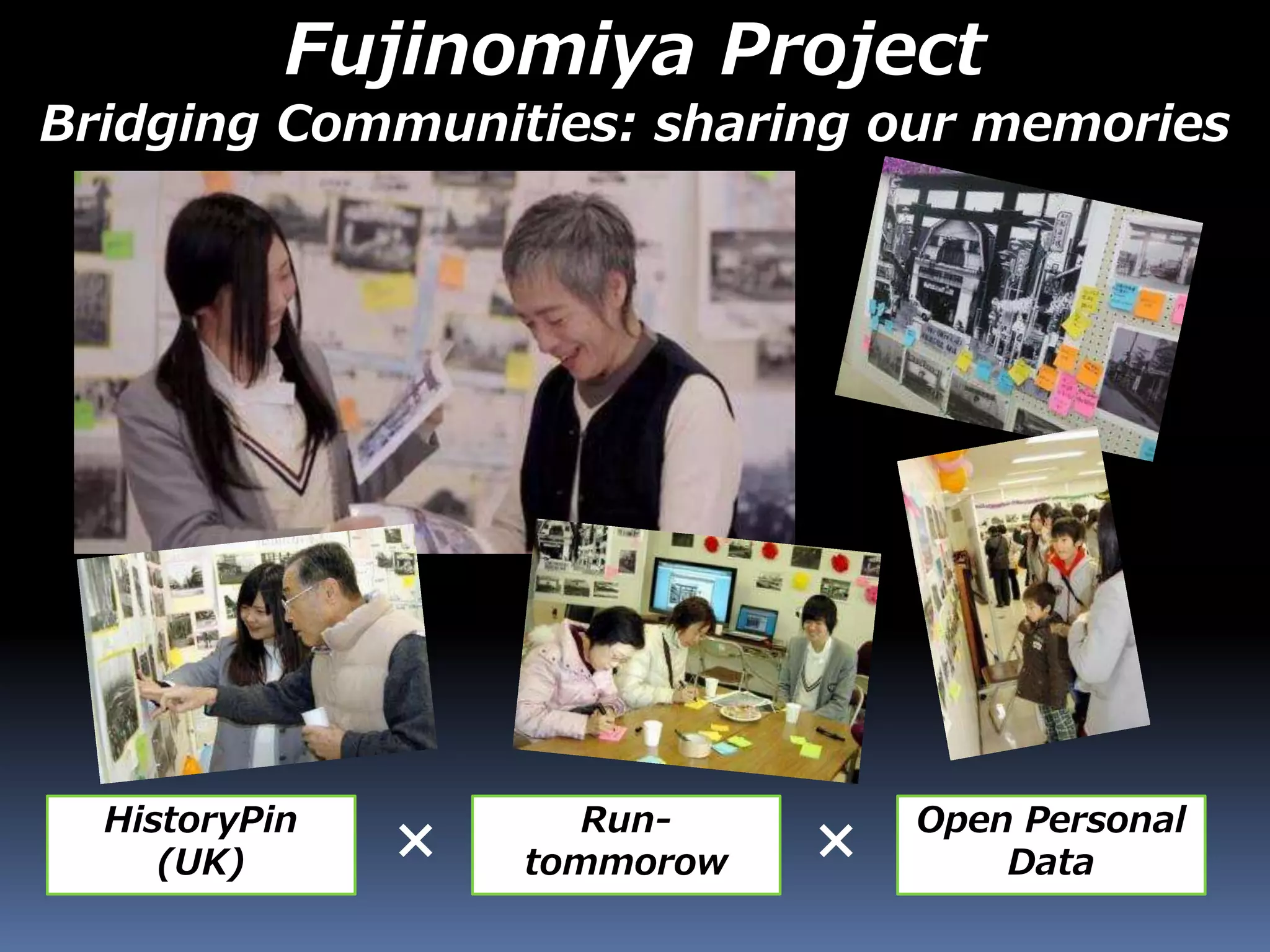
Fujinomiya Project
Bridging Communities: sharing our memories
HistoryPin
(UK)
Run-
tommorow
Open Personal
Data× ×
https://vimeo.com/110885509
Bridging Communities :
Sharing Our Memories
- Fujinomiya Project -
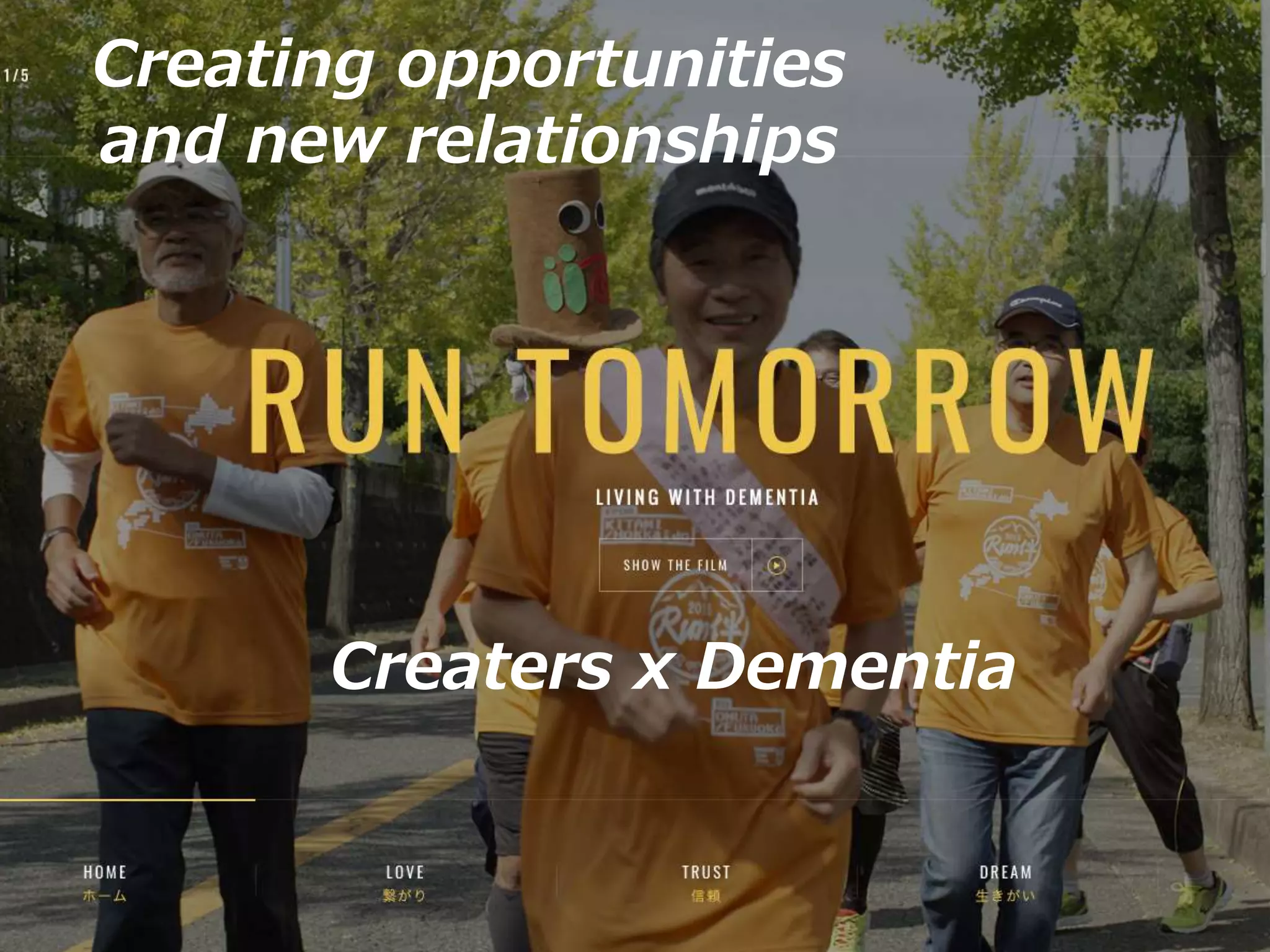
Creaters x Dementia
Creating opportunities
and new relationships
http://runtomorrow.jp/
https://youtu.be/hB-WCme25Ag
https://youtu.be/yf8by70YlxQ
RUN TOMORROW
- LIVING WITH DEMENTIA -
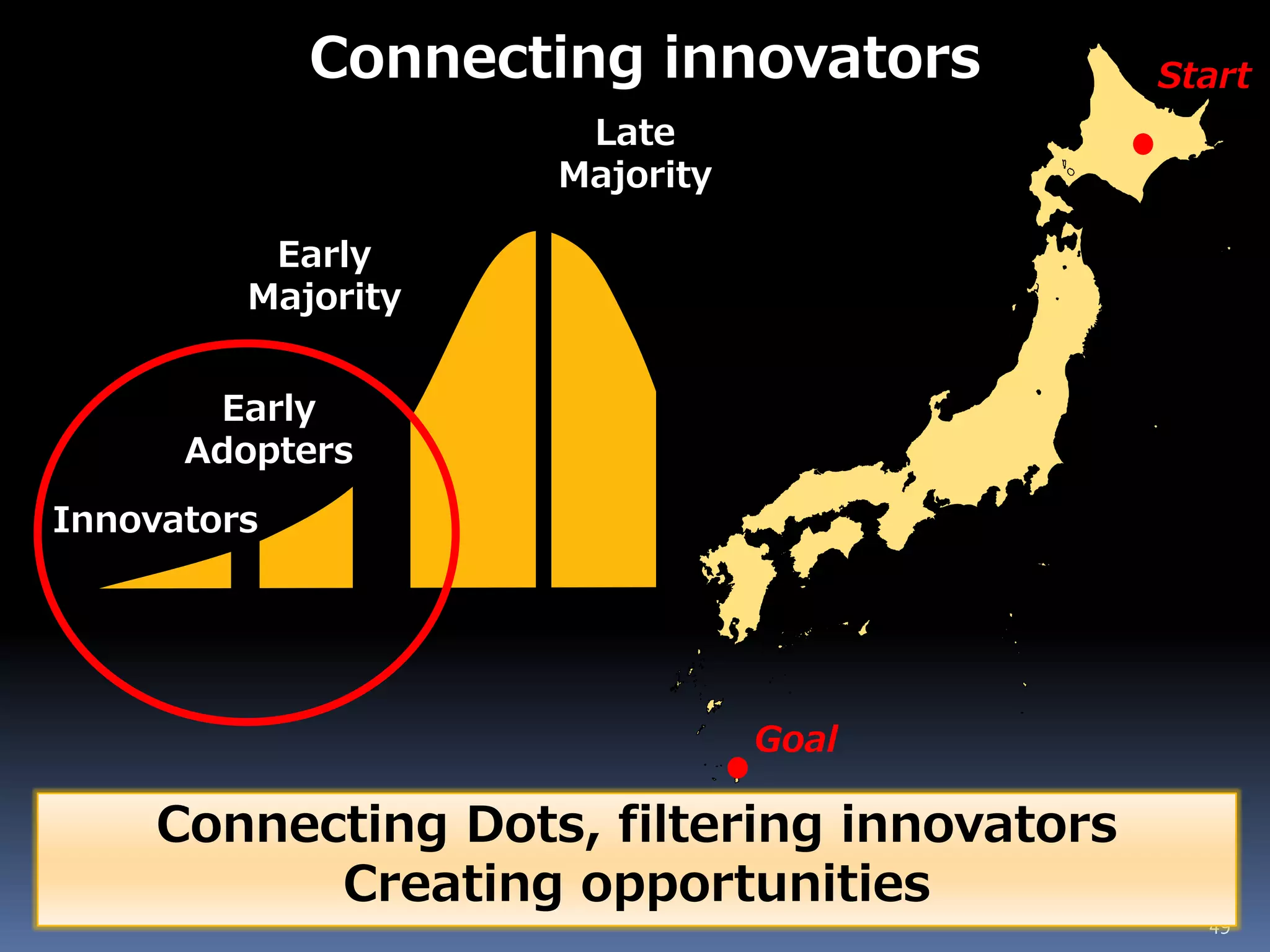
Early
Adopters
Innovators
Early
Majority
Late
Majority
Start
Goal
Connecting innovators
49
Connecting Dots, filtering innovators
Creating opportunities
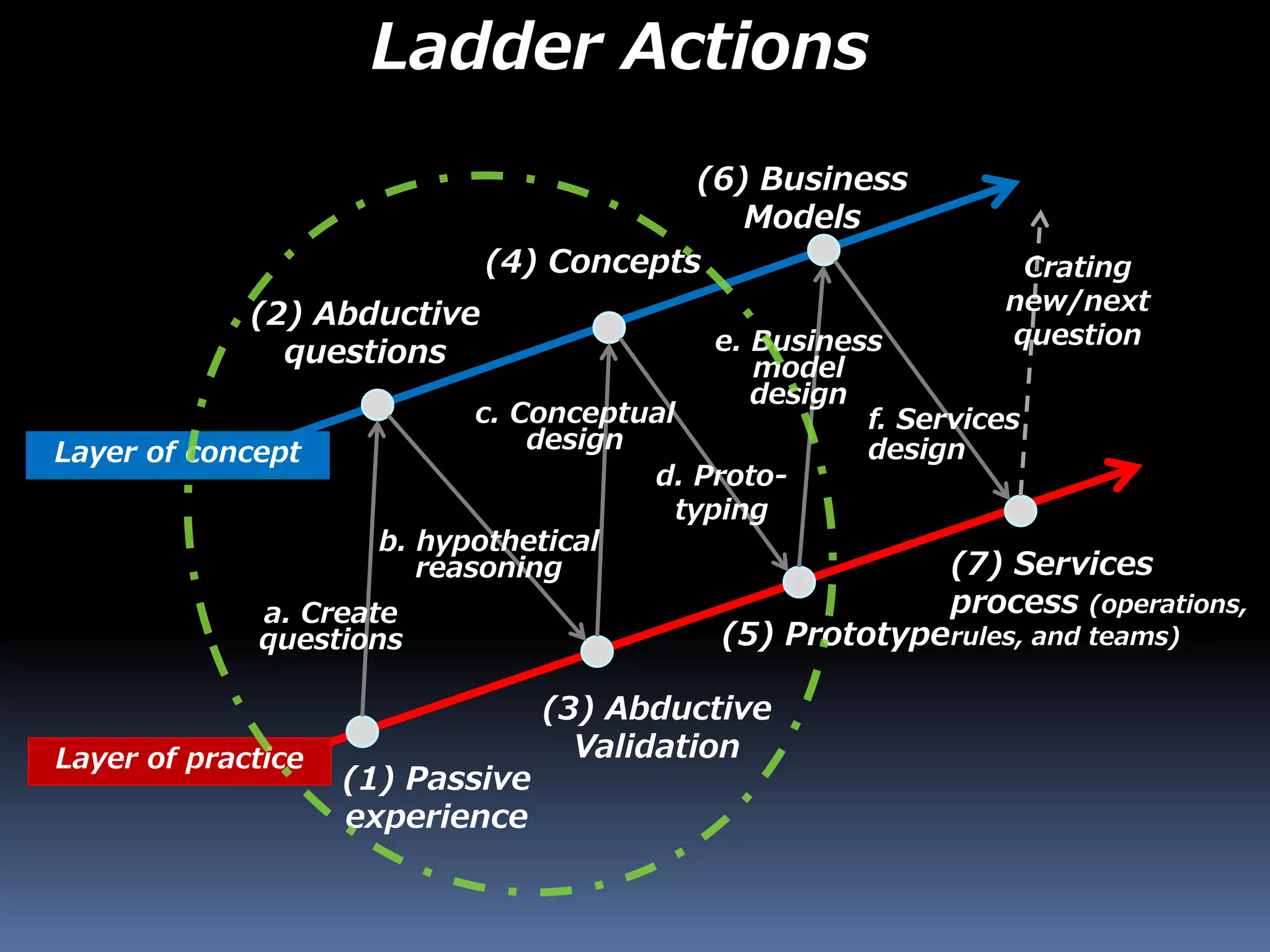
(1) Passive
experience
(2) Abductive
questions
(4) Concepts
(5) Prototype
(6) Business
Models
Ladder Actions
Layer of practice
(3) Abductive
Validation
(7) Services
process (operations,
rules, and teams)
Layer of concept
a. Create
questions
b. hypothetical
reasoning
c. Conceptual
design
d. Proto-
typing
e. Business
model
design
f. Services
design
Crating
new/next
question
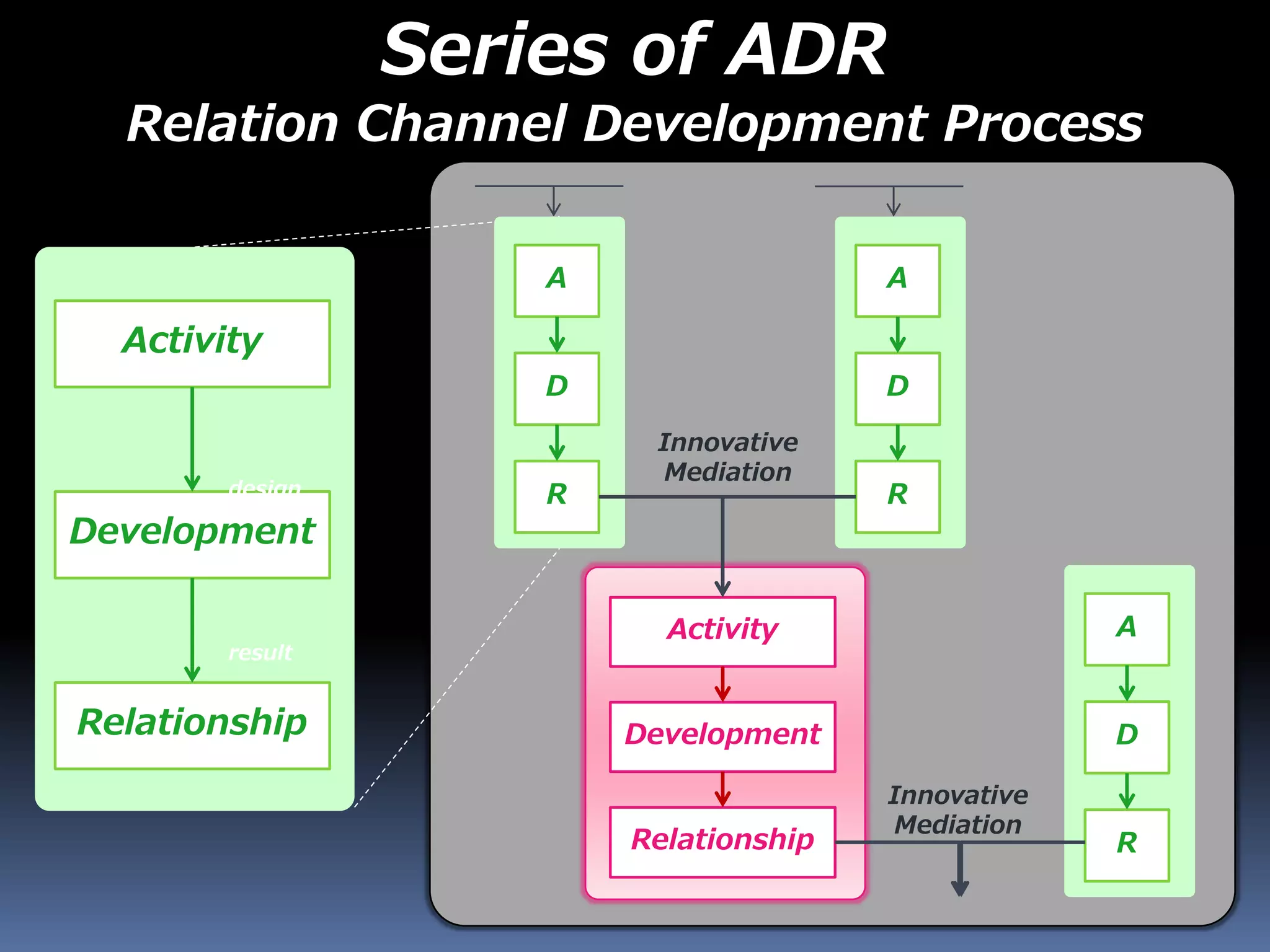
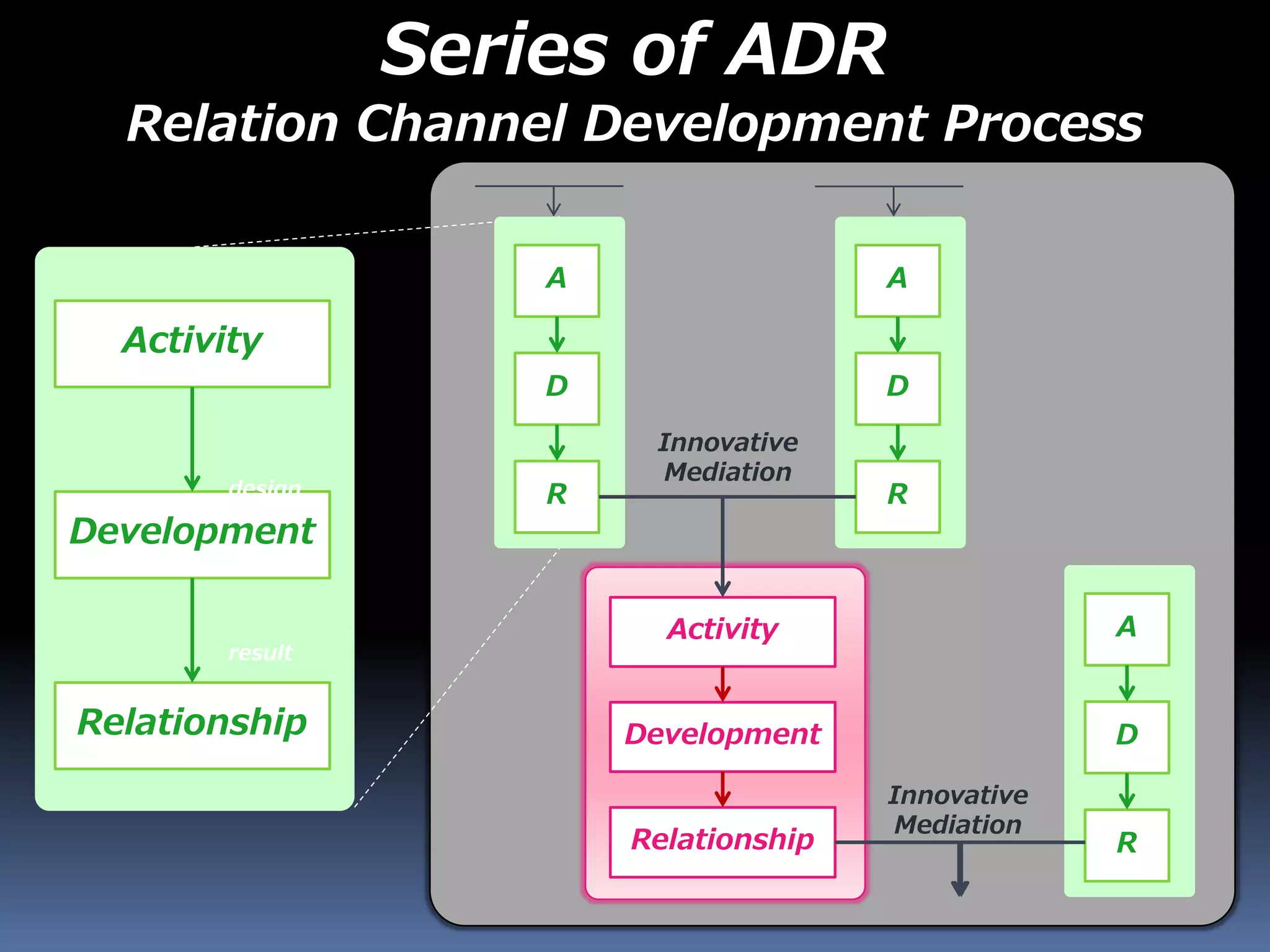
Activity
Development
Relationship
result
design
Activity
Development
Relationship
Innovative
Mediation
A
D
R
A
D
R
A
D
R
Innovative
Mediation
Series of ADR
Relation Channel Development Process
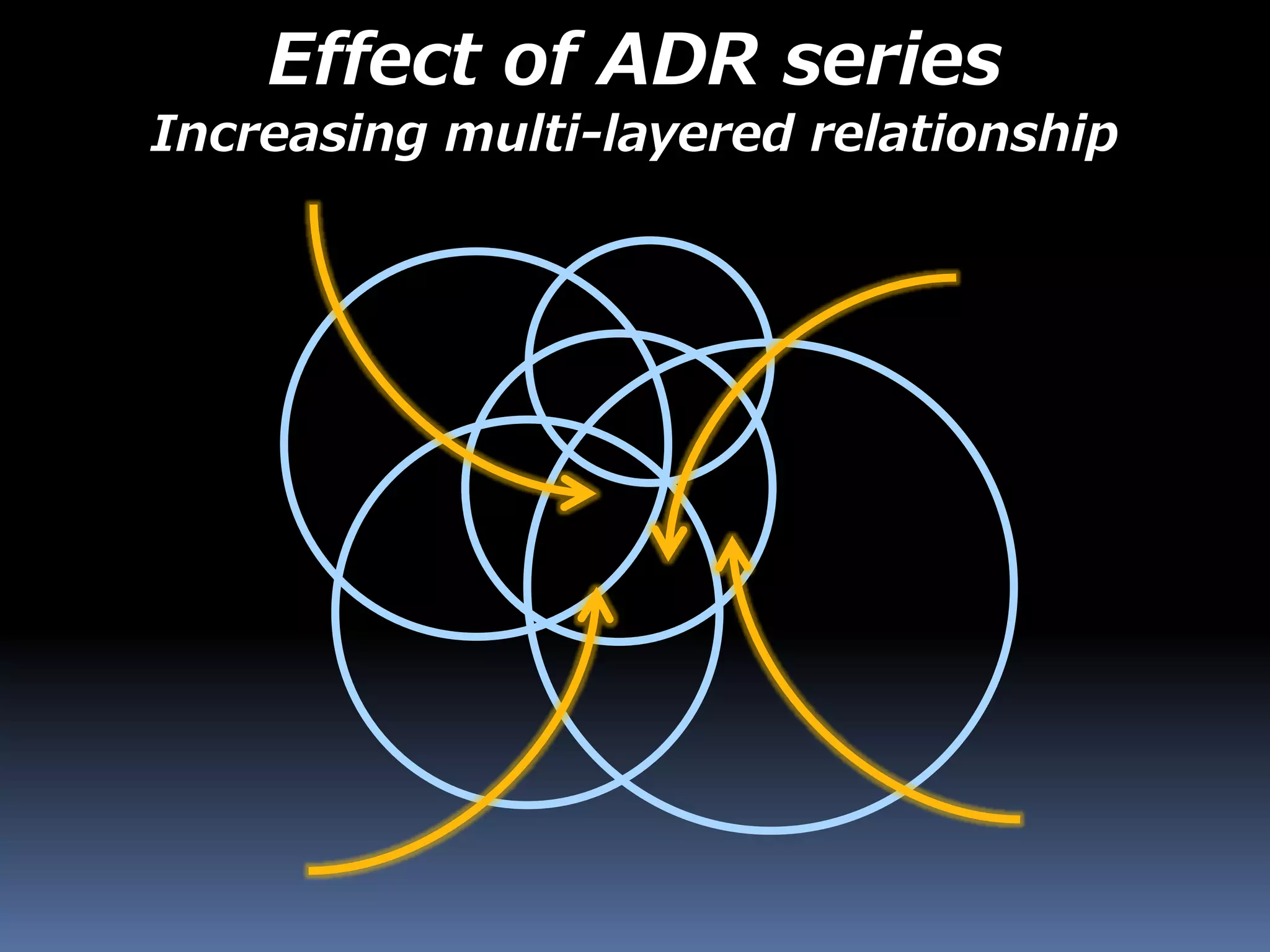
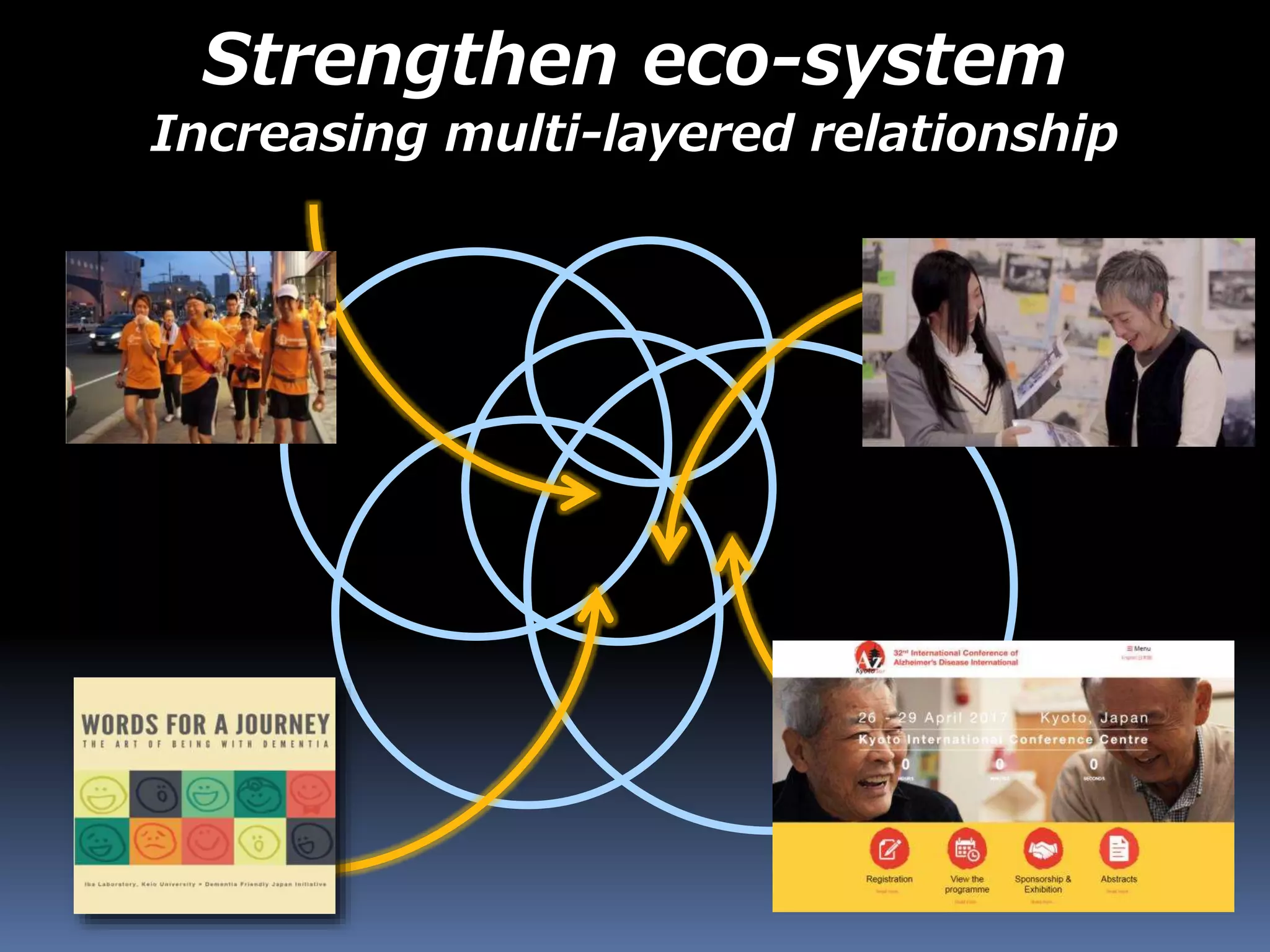
Effect of ADR series
Increasing multi-layered relationship
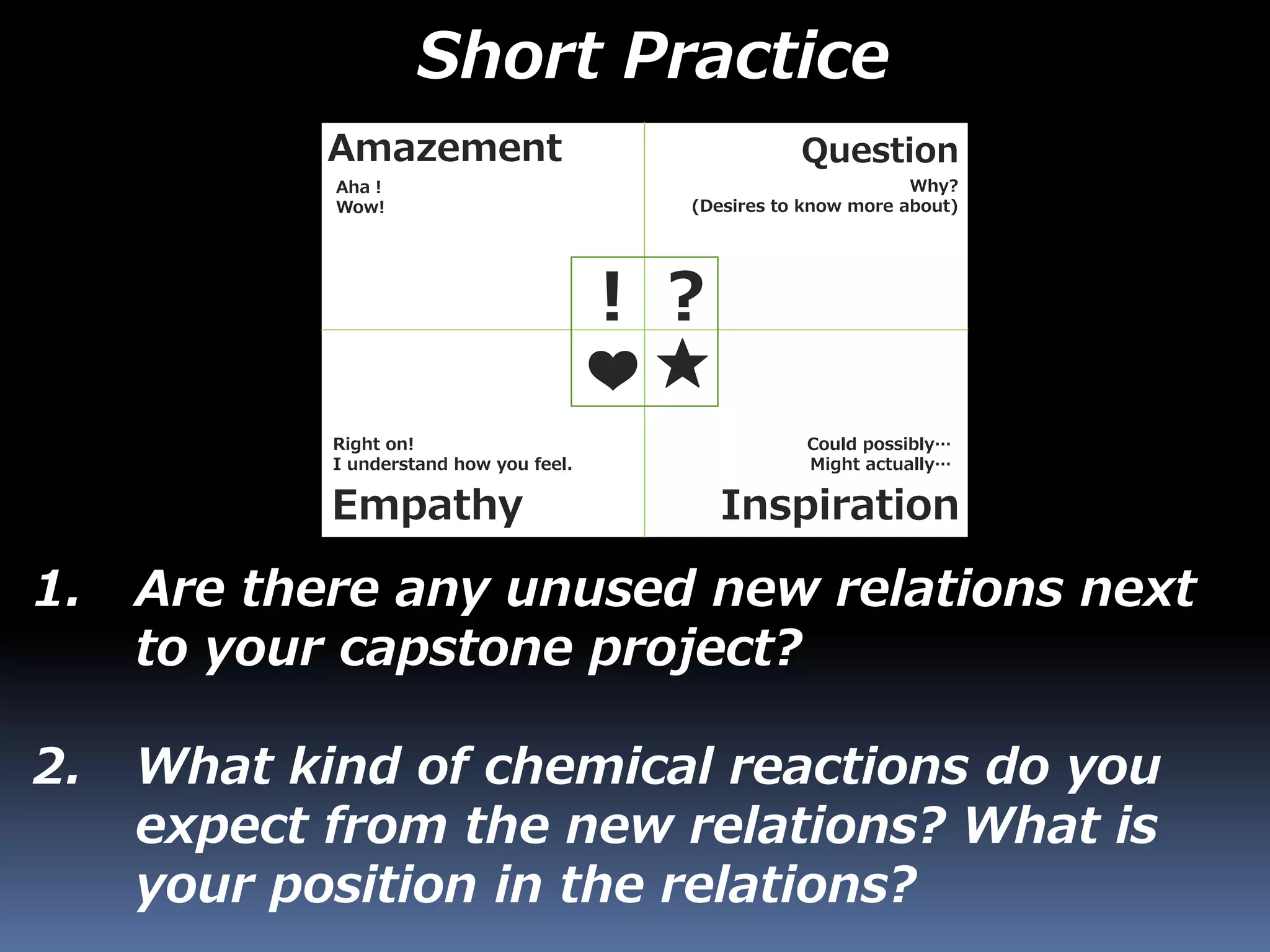
1. Are there any unused new relations next
to your capstone project?
2. What kind of chemical reactions do you
expect from the new relations? What is
your position in the relations?
Short Practice
Amazement Question
InspirationEmpathy
Aha!
Wow!
Why?
(Desires to know more about)
Could possibly…
Might actually…
Right on!
I understand how you feel.
!?
★❤
Outline
Background
Finding seeds (1st step)
Concept prototyping (2nd step)
Developing relations (3rd step)
Connecting dots (4th step)
Utilizing connections (5th step)
The Dementia Project:
Innovation Driven by Social Challenges
- As a example of capstone project -
5th step:
Utilizing connections
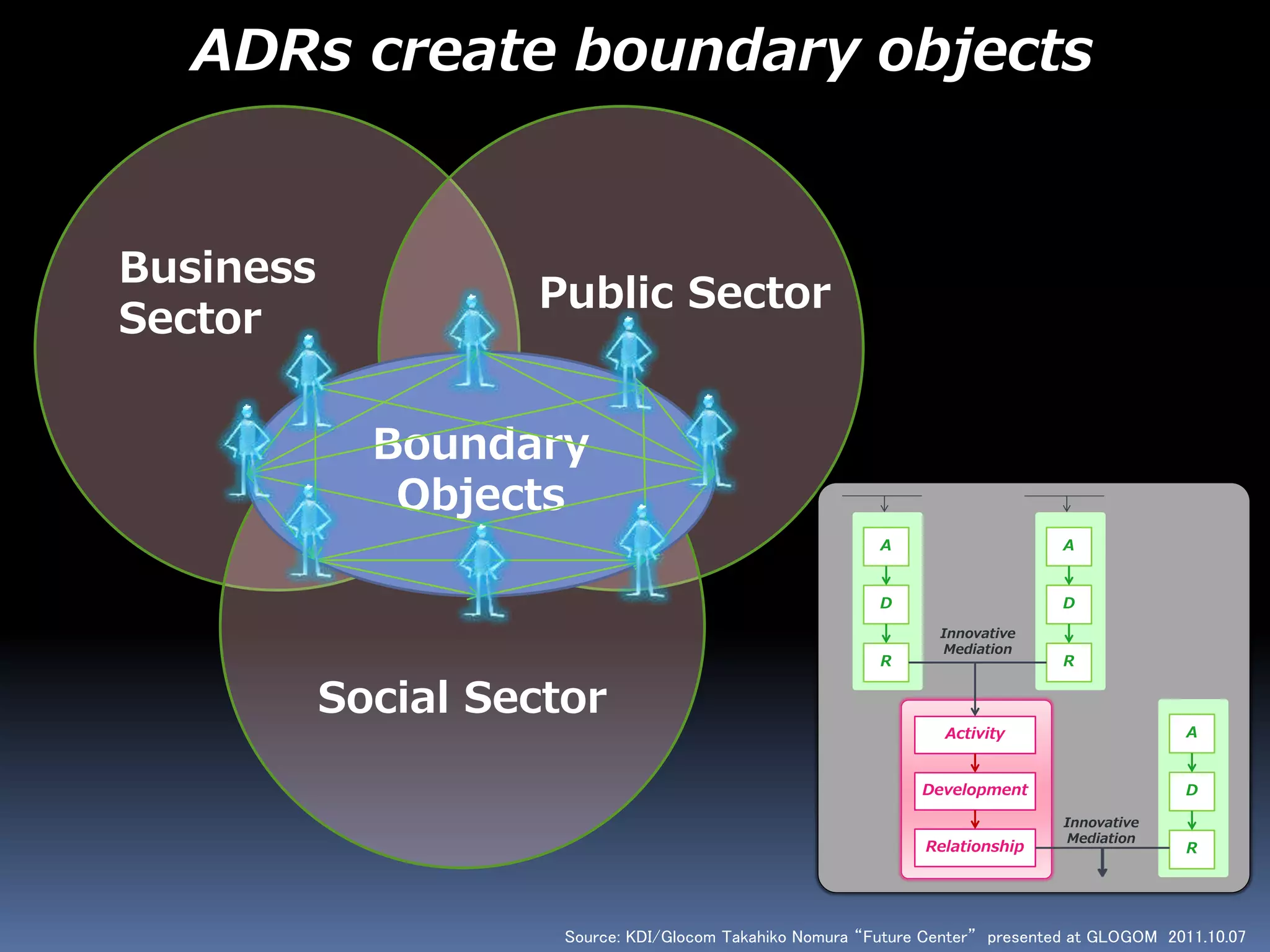
ADRs create boundary objects
Business
Sector
Public Sector
Social Sector
Source: KDI/Glocom Takahiko Nomura “Future Center” presented at GLOGOM 2011.10.07
Boundary
Objects
ADRs create boundary objects
Activity
Development
Relationship
Innovative
Mediation
A
D
R
A
D
R
A
D
R
Innovative
Mediation
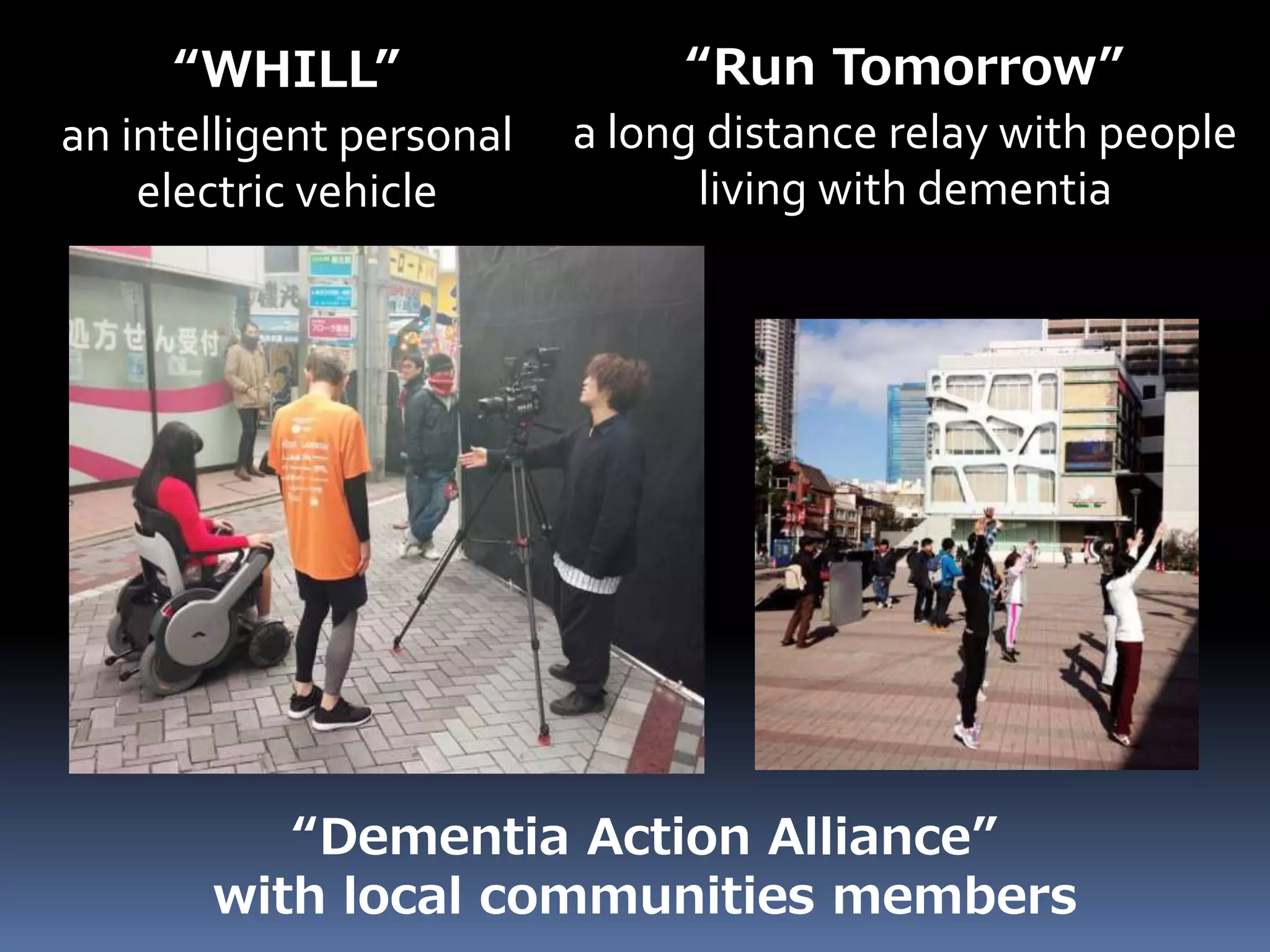
“Dementia Action Alliance”
with local communities members
“Run Tomorrow”
a long distance relay with people
living with dementia
“WHILL”
an intelligent personal
electric vehicle
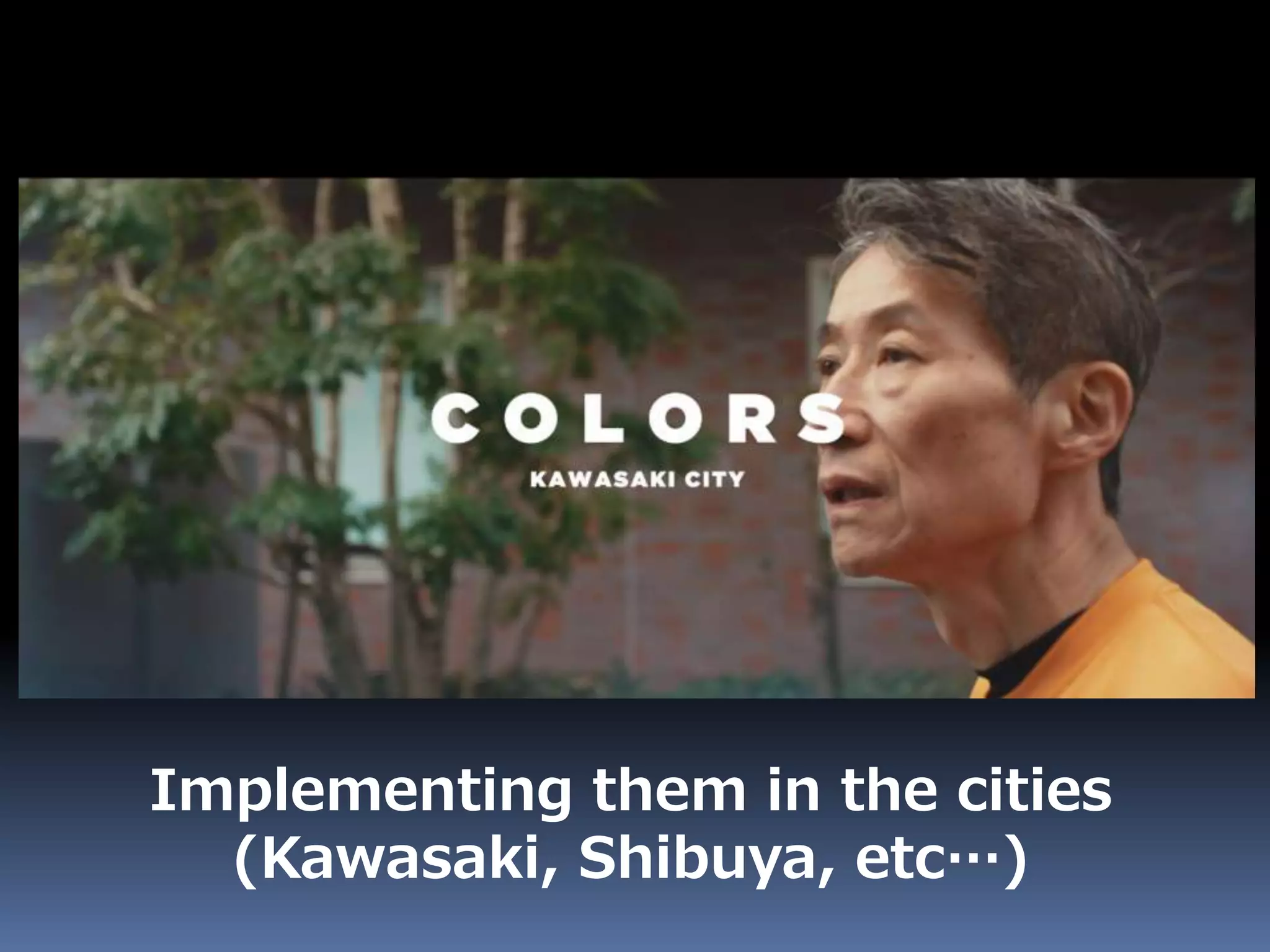
Implementing them in the cities
(Kawasaki, Shibuya, etc…)
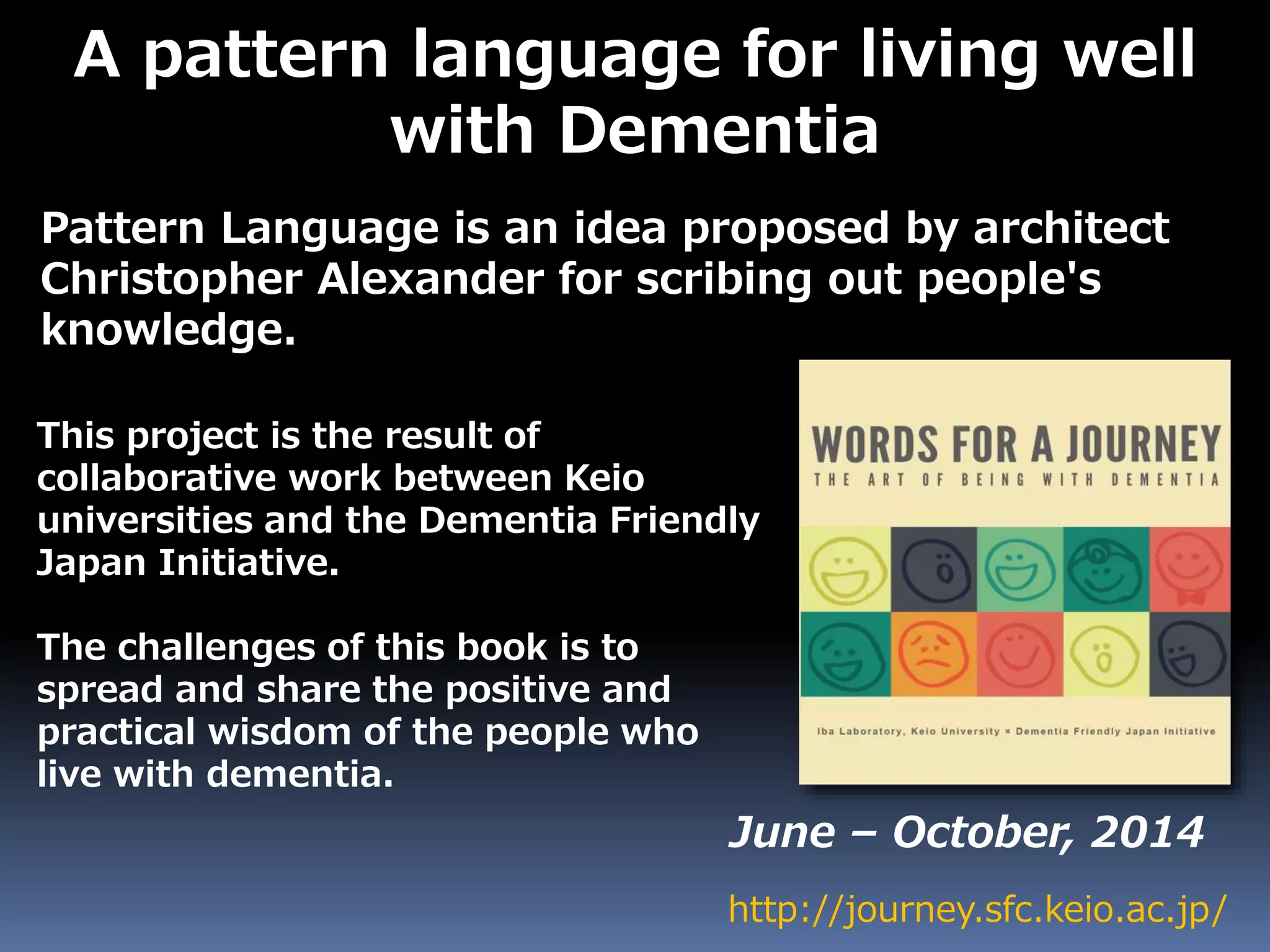
A pattern language for living well
with Dementia
Pattern Language is an idea proposed by architect
Christopher Alexander for scribing out people's
knowledge.
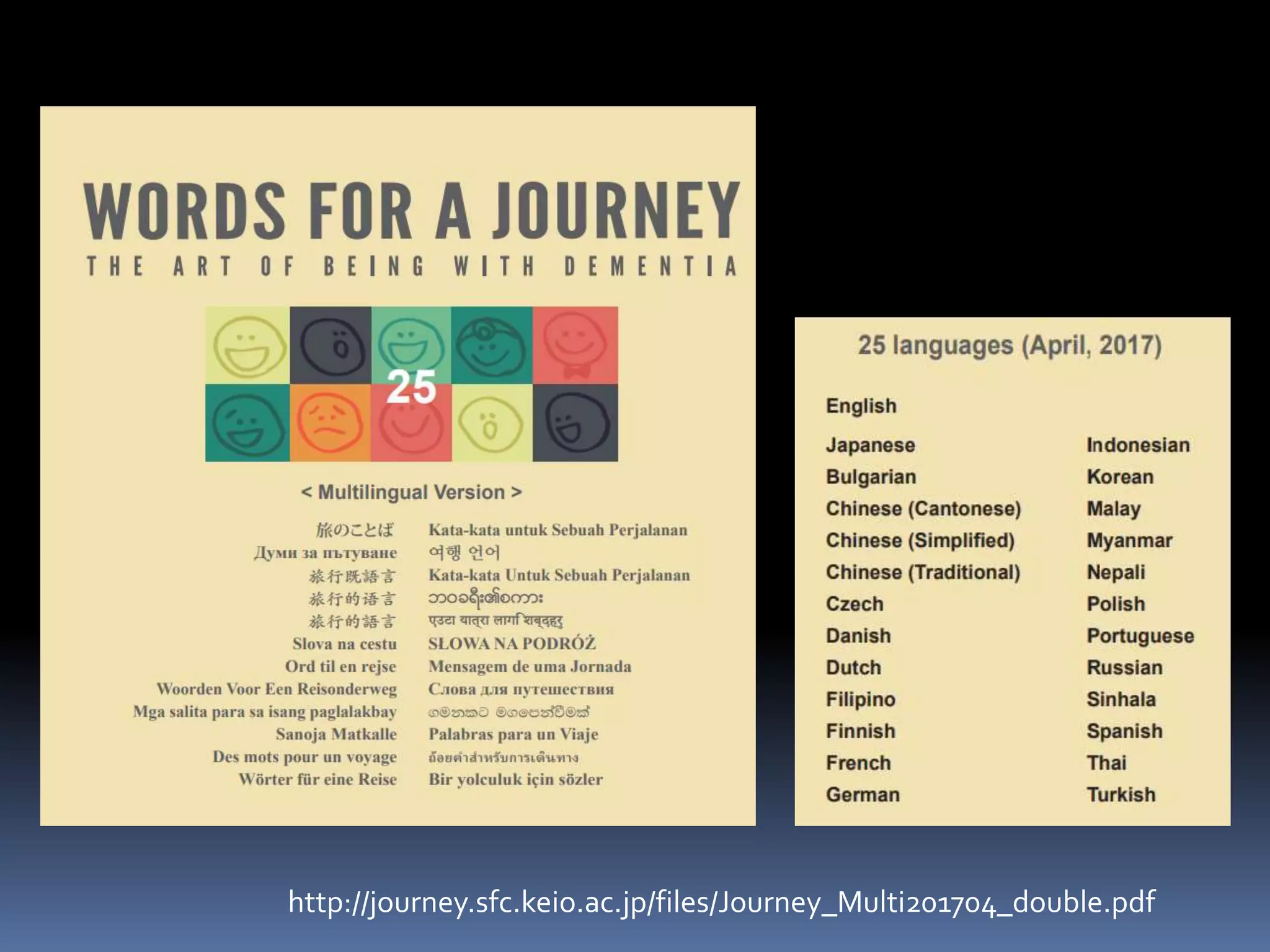
http://journey.sfc.keio.ac.jp/
June – October, 2014
This project is the result of
collaborative work between Keio
universities and the Dementia Friendly
Japan Initiative.
The challenges of this book is to
spread and share the positive and
practical wisdom of the people who
live with dementia.
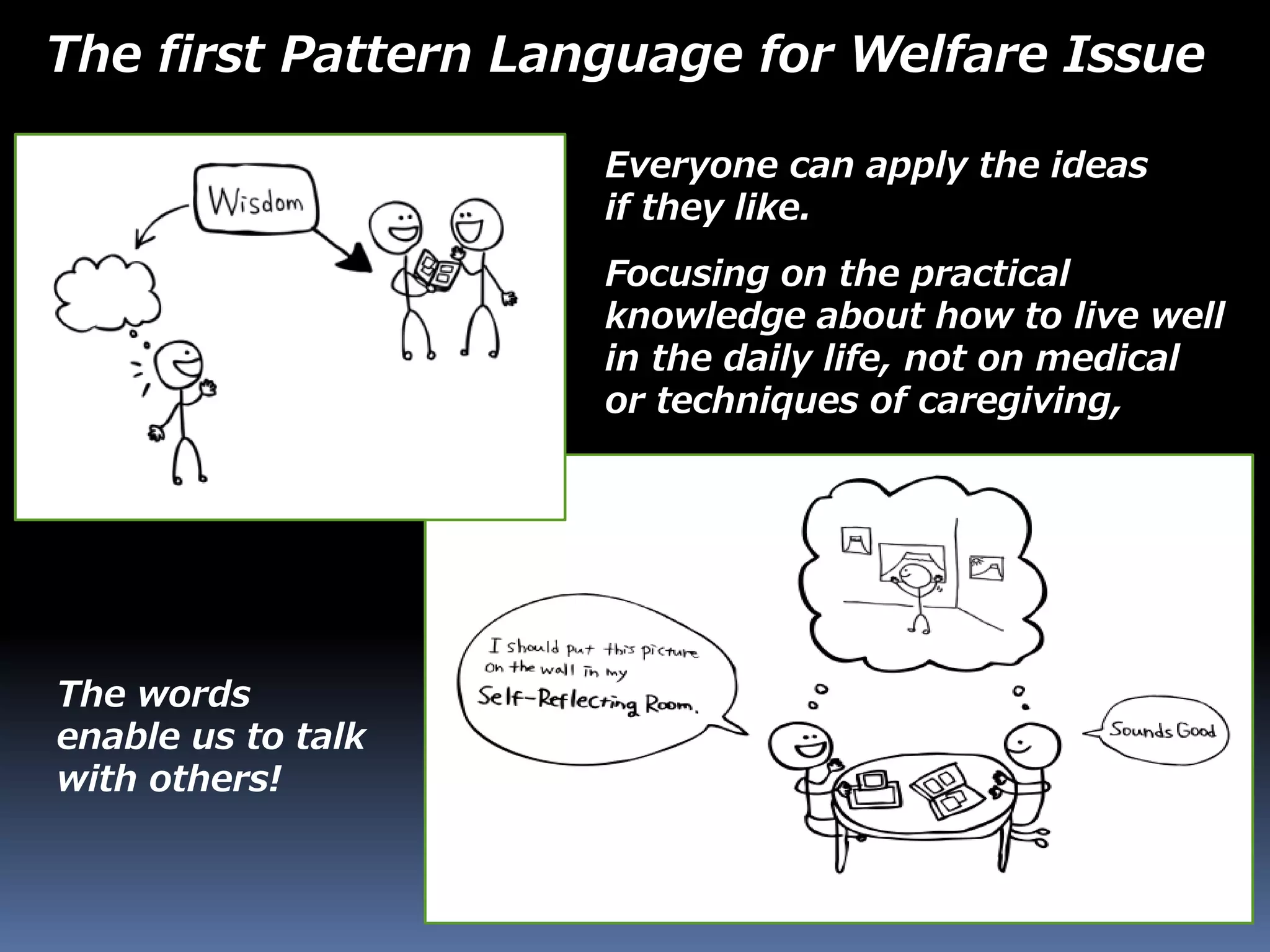
The first Pattern Language for Welfare Issue
Everyone can apply the ideas
if they like.
Focusing on the practical
knowledge about how to live well
in the daily life, not on medical
or techniques of caregiving,
The words
enable us to talk
with others!
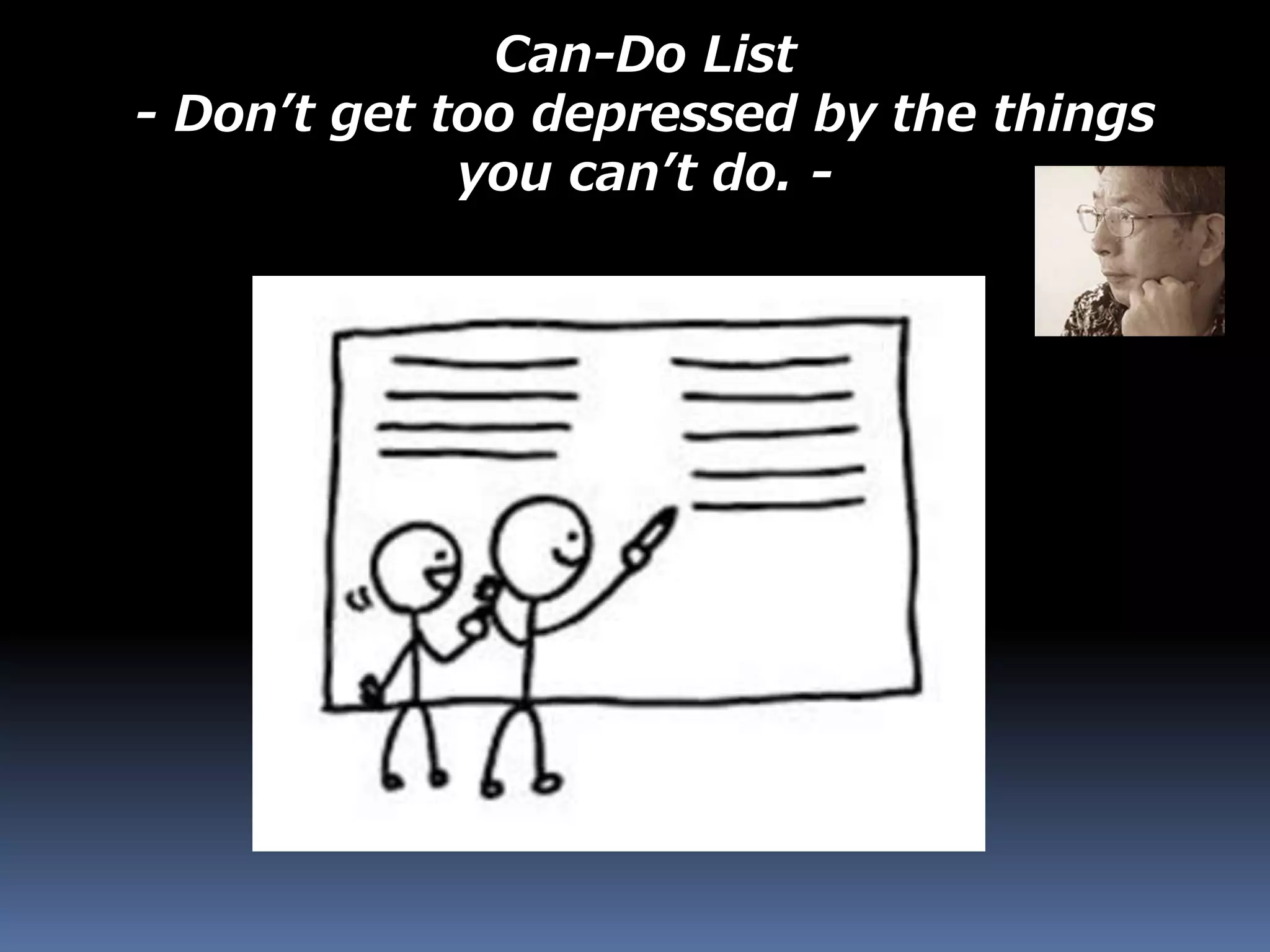
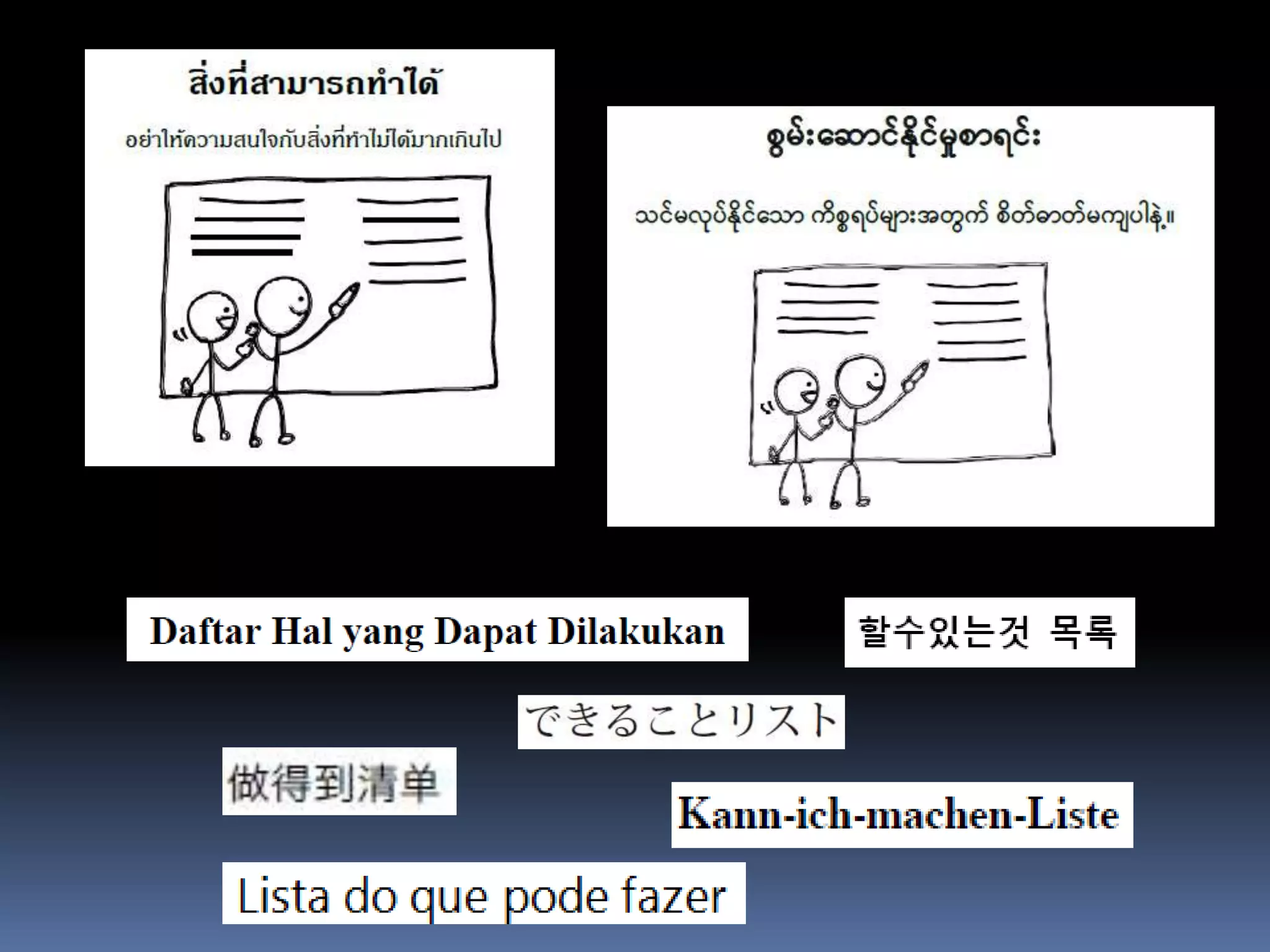
Can-Do List
- Don’t get too depressed by the things
you can’t do. -
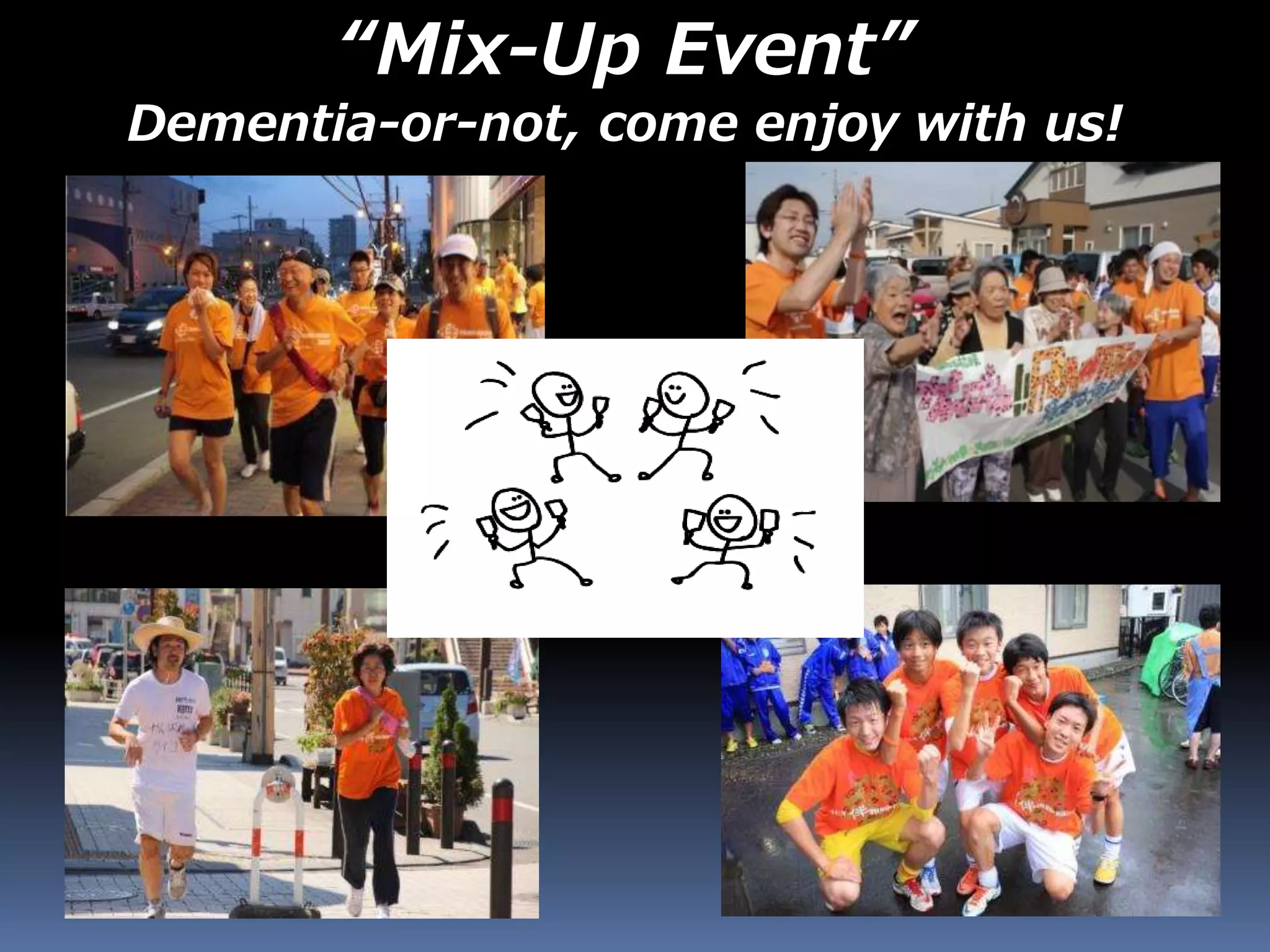
“Mix-Up Event”
Dementia-or-not, come enjoy with us!
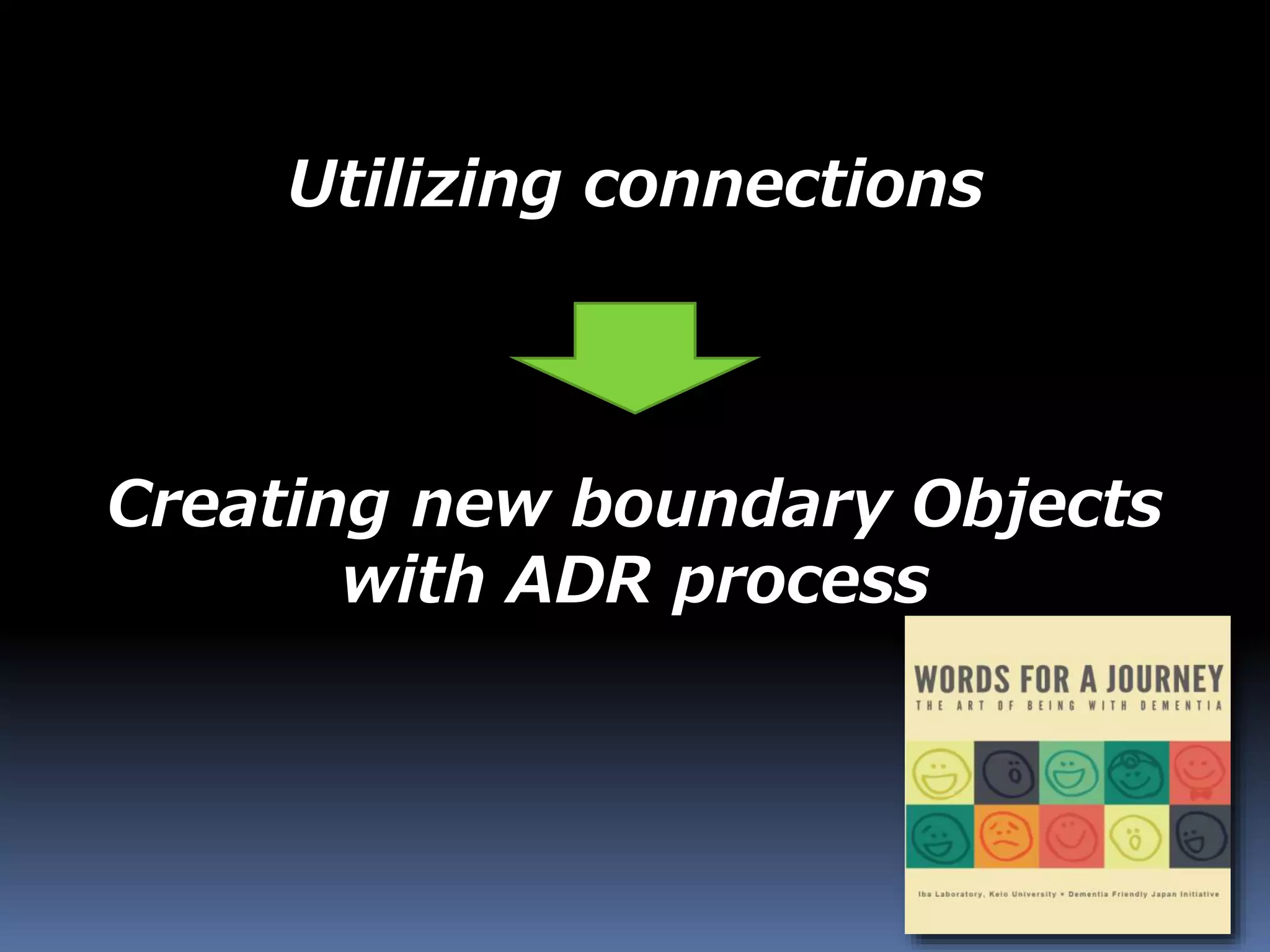
Utilizing connections
Creating new boundary Objects
with ADR process
http://journey.sfc.keio.ac.jp/files/Journey_Multi201704_double.pdf
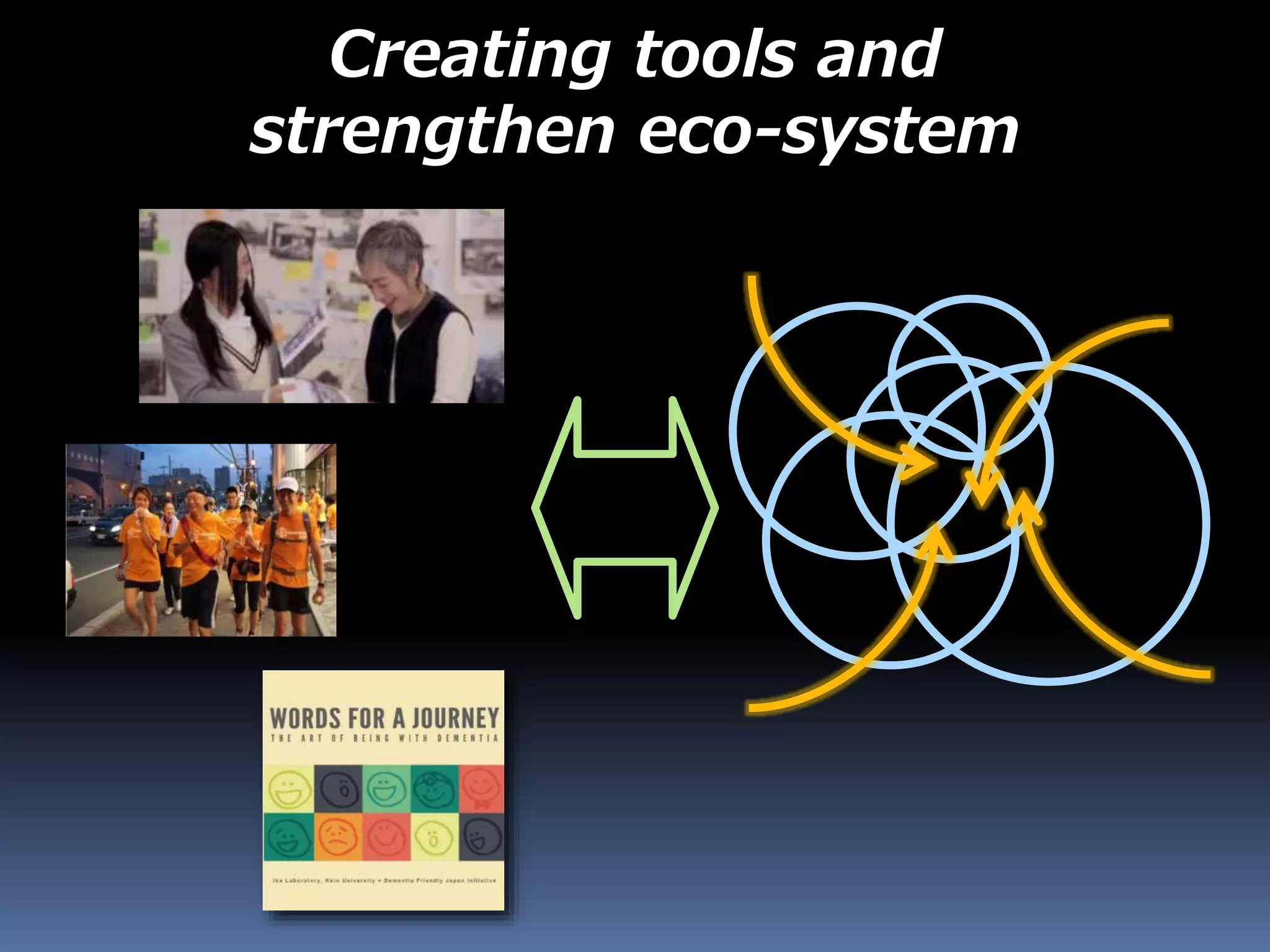
Creating tools and
strengthen eco-system
Summary
Outline
Introduction
Background
Finding seeds (1st step)
Concept prototyping (2nd step)
Developing relations (3rd step)
Connecting dots (4th step)
Utilizing connections (5th step)
Product +
service
innovation
Market
innovation
Political
innovation
Cultural
innovation
Vicki Sellick, Senior Programme Manager, Nesta
Behavior change
Behavioral change is the target of true innovation
Impact
Vicki Sellick, Senior Programme Manager, Nesta
Impact creation: System change
“Jump In”
“Do not hesitate to jump into a new
learning environment.”
http://www.amazon.com/dp/1312408855/
From “Learning Patterns:
A Pattern Language for
Creative Learning (Pattern
Language 3.0 Catalogue) ”
Takashi Iba and Iba
Laboratory, Keio univ.
Activity
Development
Relationship
result
design
Activity
Development
Relationship
Innovative
Mediation
A
D
R
A
D
R
A
D
R
Innovative
Mediation
Series of ADR
Relation Channel Development Process
Strengthen eco-system
Increasing multi-layered relationship
https://www.amazon.com/dp/1433822393/
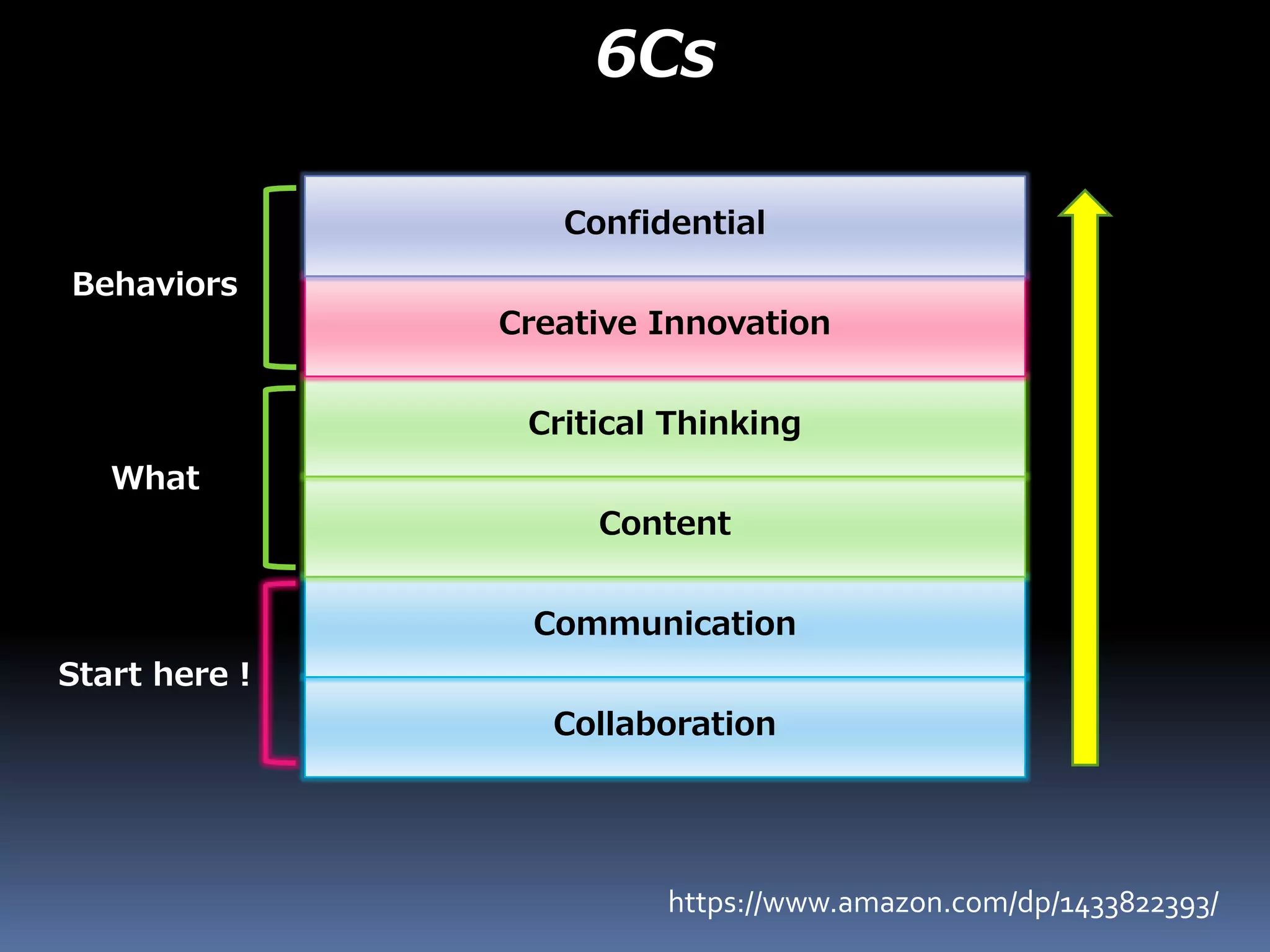
Collaboration
Communication
Content
Critical Thinking
Creative Innovation
Confidential
6Cs
What
Behaviors
Start here !
通 信
“Reach out” “Trust”
情 報“Compassionate”
“Information”
“Telecommunication”
“Message”
Dementia
Friendly
Japan
Initiative

The Dementia Project: Innovation Driven by Social Challenges

Editor's Notes

  • #21 ◎認知症に対する理解 認知症についての理解が浅く、佐藤さんは一人で出来ることも多いので、「あなたは認知症ではない」という人がいるのが辛い。自分の言うことをそのまま受け入れてくれることが、自分にとっては重要なことだ。 ◎自分で考えること 大きい金額の買い物をしたときはレシートを取って置くなど、認知症の人でも、生活のためのノウハウを自分の頭で考えることがとても大切だ。「認知症の人は自分で考えられない」と言われるのはとても辛い。 ◎ 旅 旅は楽しい。自分も生活にハリが出る。認知症の人が家や同じ環境に閉じこもらずに地域に出て行くことは、大切だと思う。その機会作りにも、前田さんのような 社会を変えようという情熱を持ったキーパーソンがいることが大切になってくる。個人的には、 今一番行きたいのは小笠原諸島だ。世界遺産を歩き、写真を取ることが自分の夢だ。 ◎自分のブログ 認知症本人の交流ウェブサイト「だいじょうぶネット」というページ上に 自分のブログを持っている。そこには、写真や自分の認知症に関して「困っていること、こうしてもらいたいこと」を記している。