The cognitive advantage
for developers
Leading the charge on innovation with artificial intelligence
https://www.ibm.com/watson/advantage-reports/market-report.html
The AI renaissance is here. Organizations are using artificial intelligence to stay
ahead of the market--unlocking new digital intelligence from large volumes of
data.
The AI market is now on an exponential growth curve, expected to grow from $2.5
billion in 2014 to more than $12.5 billion by 2019.1 By 2018, over 50% of developer
teams will embed AI services in their apps,2 and it is expected that half of all
consumers will interact with the technology on a regular basis.
To understand how early adopters are taking advantage of AI, we garnered
insights from more than 600 decision makers worldwide, cross-industry, from IT
to line of business, at various stages of cognitive adoption.
We learned that organizations already gain major competitive advantage from
their use of AI. They achieve a range of business outcomes–from customer
engagement to productivity and efficiency and business growth. And a key
strategy for many of these organizations making inroads with AI initiatives is to let
their developers lead the charge.
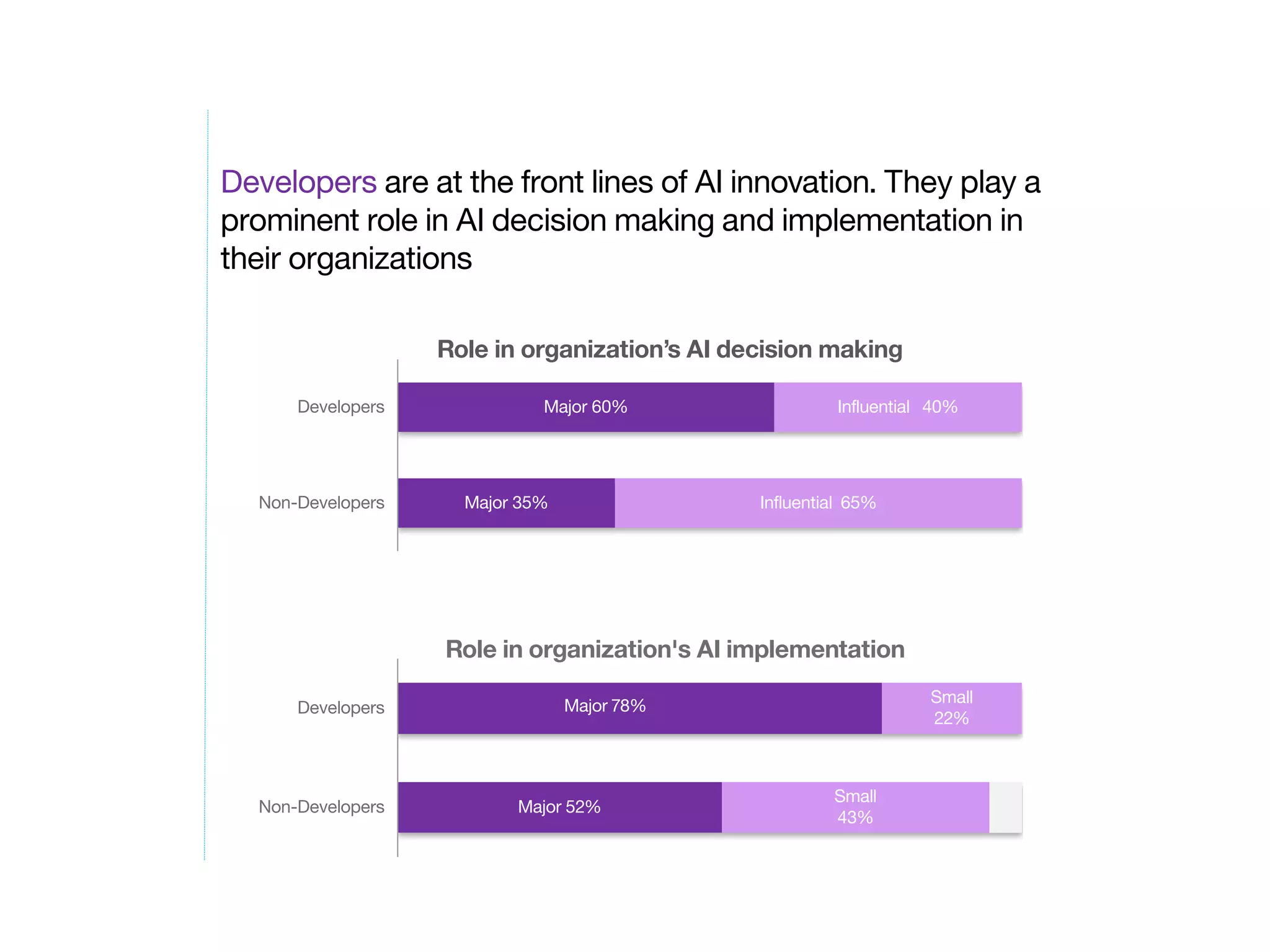
Developers are at the front lines of AI innovation. They play a
prominent role in AI decision making and implementation in
their organizations
Major 35%
Major 60%
Influential 65%
Influential 40%
Non-Developers
Developers
Major 52%
Major 78%
Small
43%
Small
22%
Non-Developers
Developers
Role in organization's AI implementation
Role in organization’s AI decision making
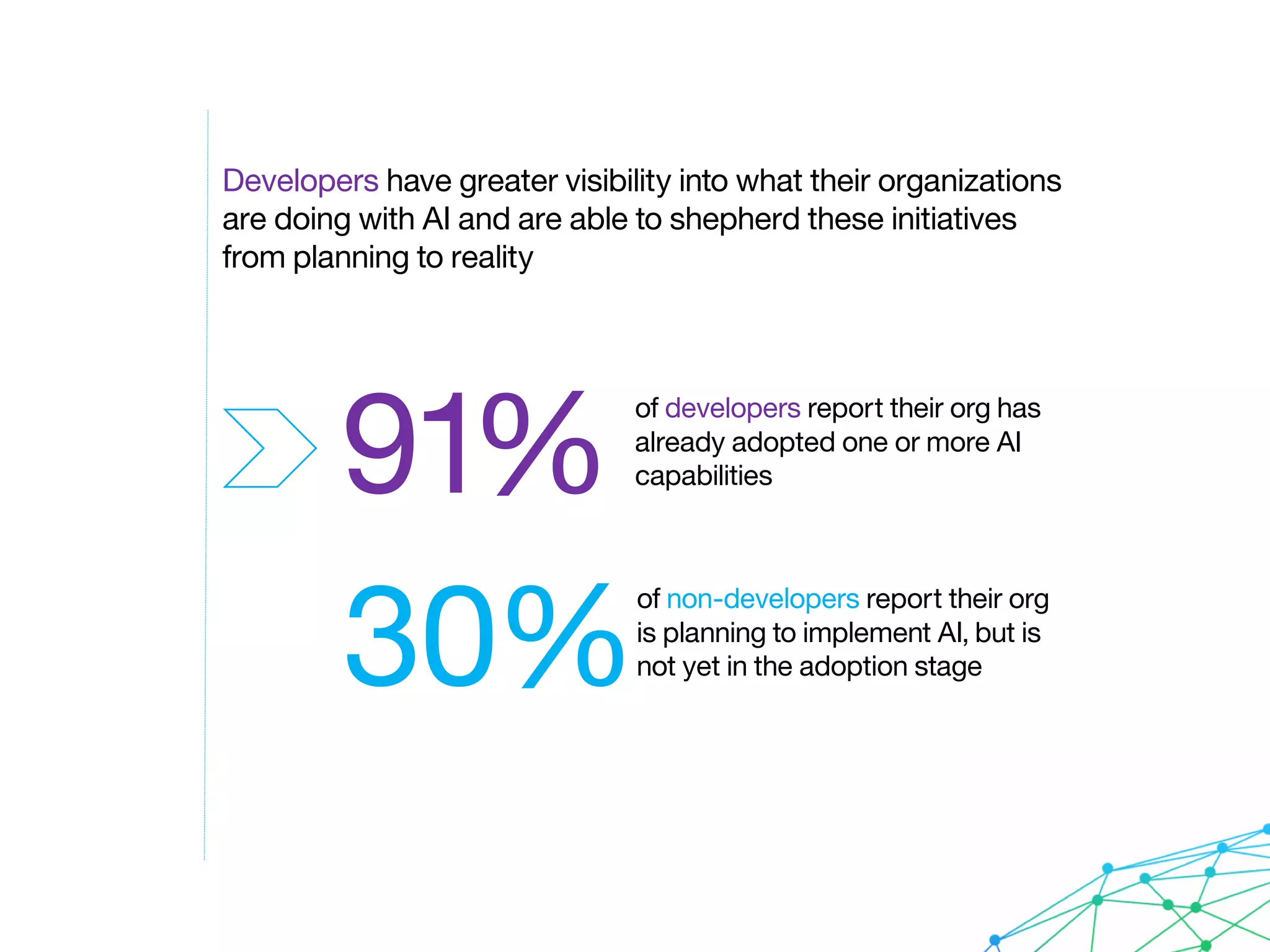
Developers have greater visibility into what their organizations
are doing with AI and are able to shepherd these initiatives
from planning to reality
91%
of developers report their org has
already adopted one or more AI
capabilities
30%
of non-developers report their org
is planning to implement AI, but is
not yet in the adoption stage
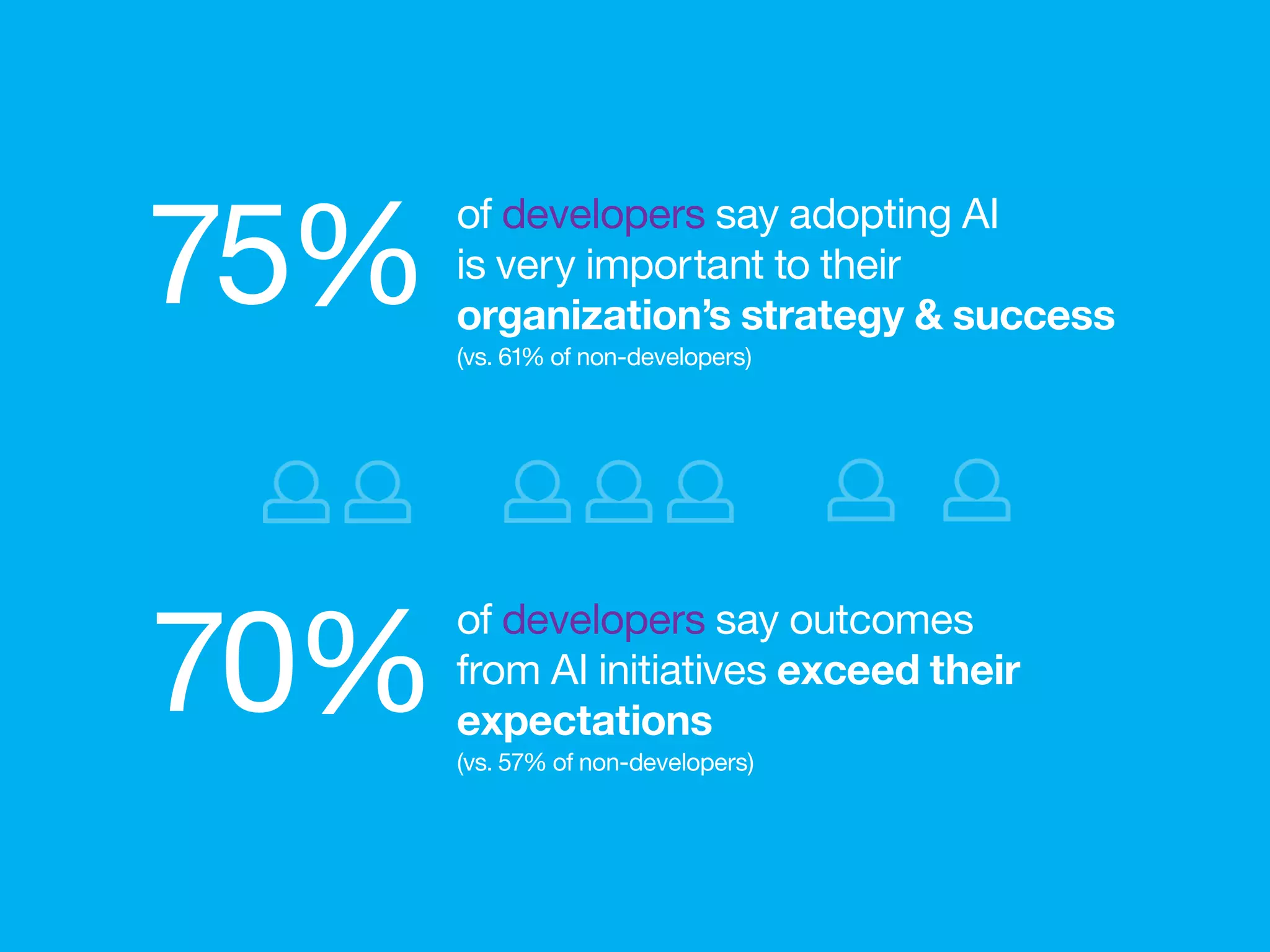
of developers say adopting AI
is very important to their
organization’s strategy & success
(vs. 61% of non-developers)
75%
70%
of developers say outcomes
from AI initiatives exceed their
expectations
(vs. 57% of non-developers)
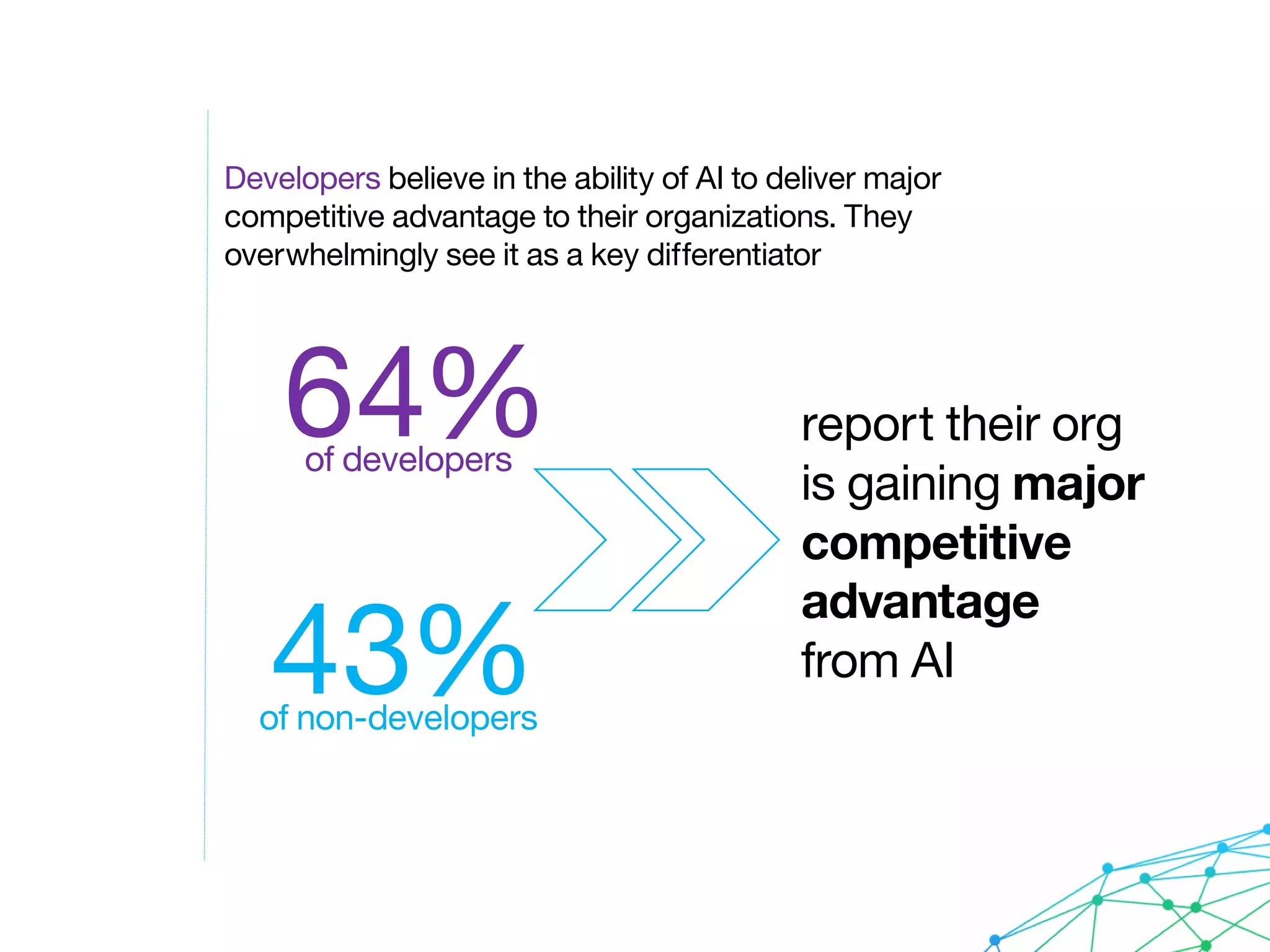
Developers believe in the ability of AI to deliver major
competitive advantage to their organizations. They
overwhelmingly see it as a key differentiator
64%of developers
43%of non-developers
report their org
is gaining major
competitive
advantage
from AI
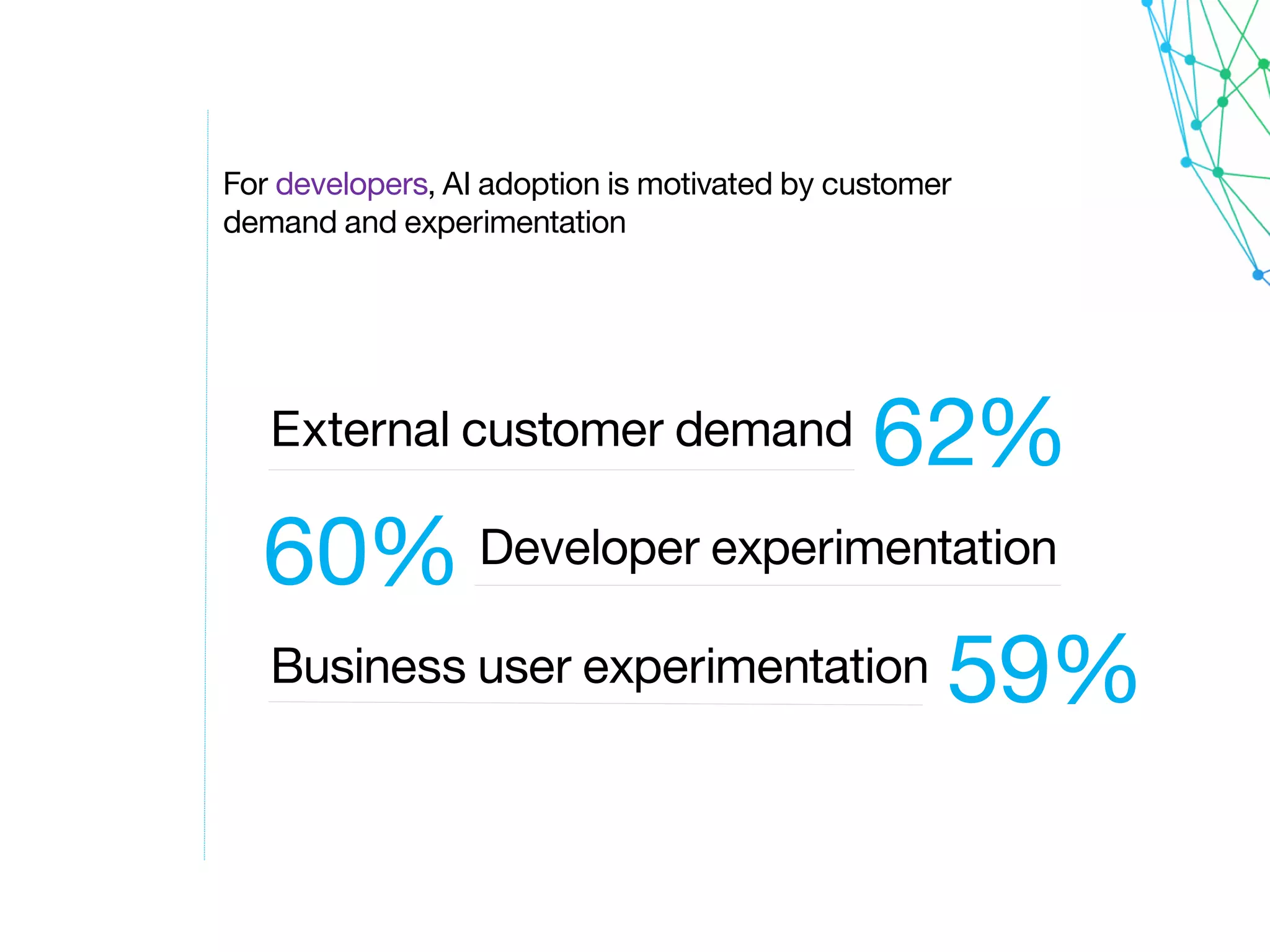
External customer demand
Developer experimentation
Business user experimentation
62%
60%
59%
For developers, AI adoption is motivated by customer
demand and experimentation
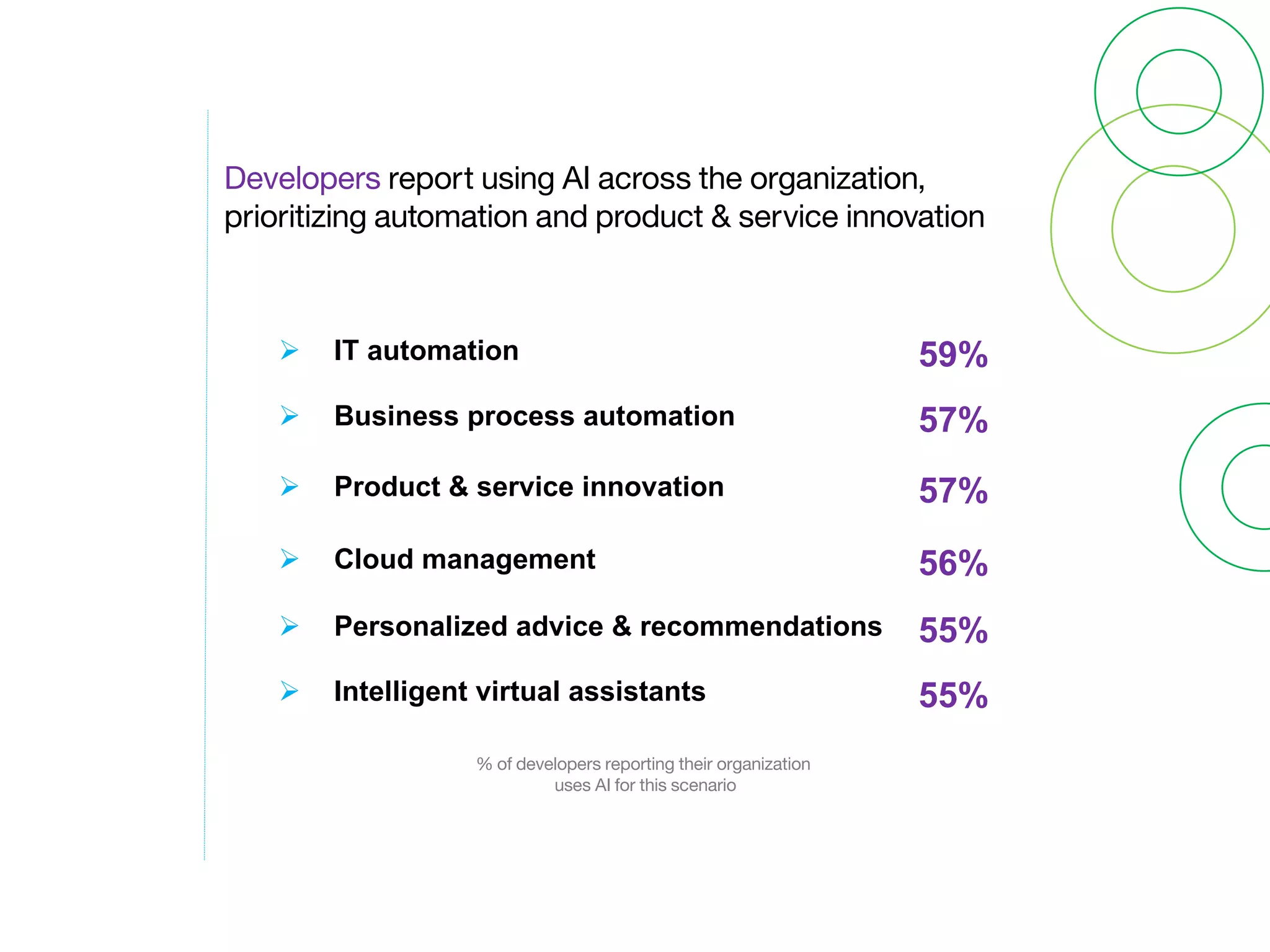
Ø IT automation 59%
Ø Business process automation 57%
Ø Product & service innovation 57%
Ø Cloud management 56%
Ø Personalized advice & recommendations 55%
Ø Intelligent virtual assistants 55%
% of developers reporting their organization
uses AI for this scenario
Developers report using AI across the organization,
prioritizing automation and product & service innovation
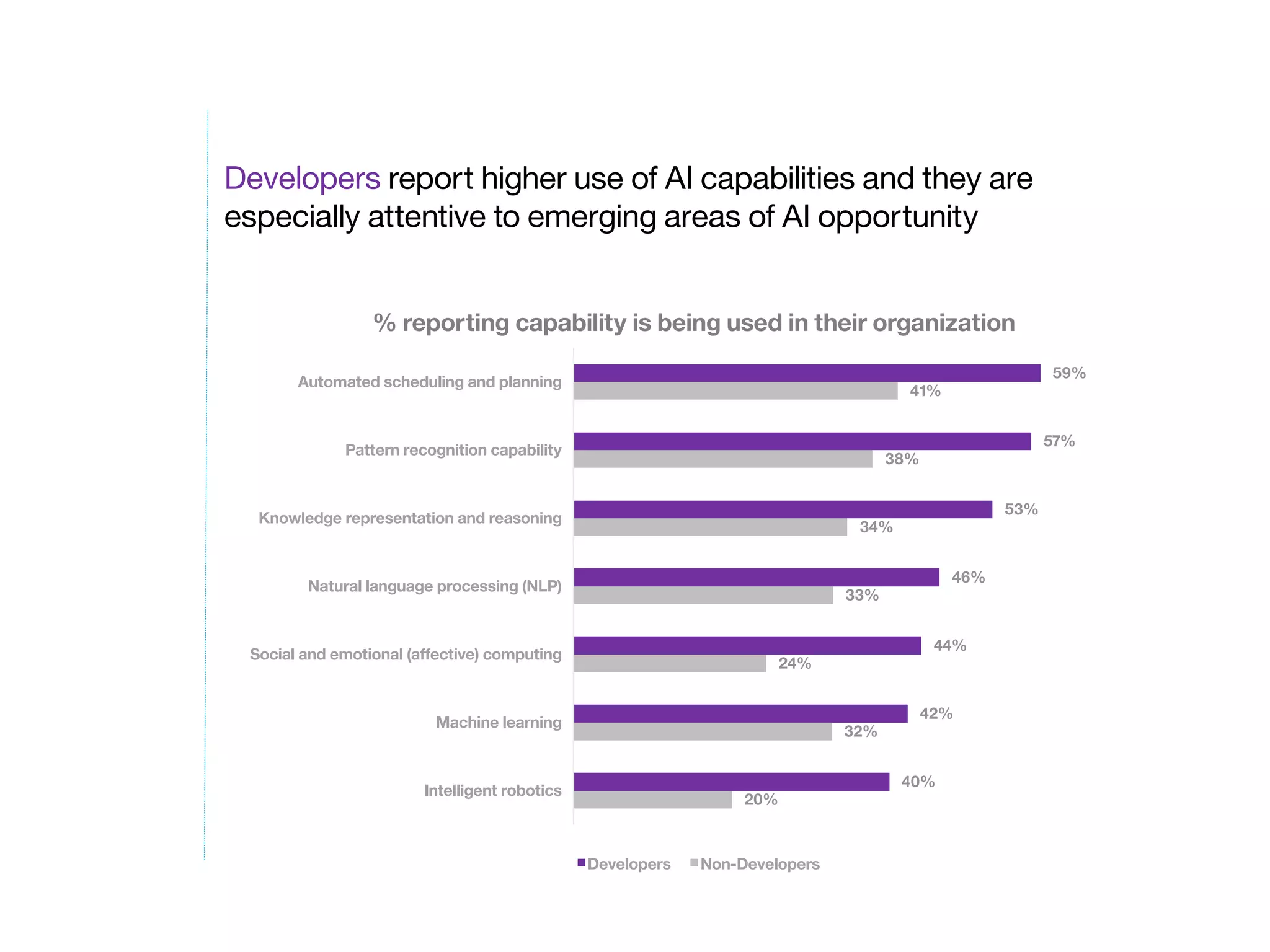
Developers report higher use of AI capabilities and they are
especially attentive to emerging areas of AI opportunity
20%
32%
24%
33%
34%
38%
41%
40%
42%
44%
46%
53%
57%
59%
Intelligent robotics
Machine learning
Social and emotional (affective) computing
Natural language processing (NLP)
Knowledge representation and reasoning
Pattern recognition capability
Automated scheduling and planning
% reporting capability is being used in their organization
Developers Non-Developers
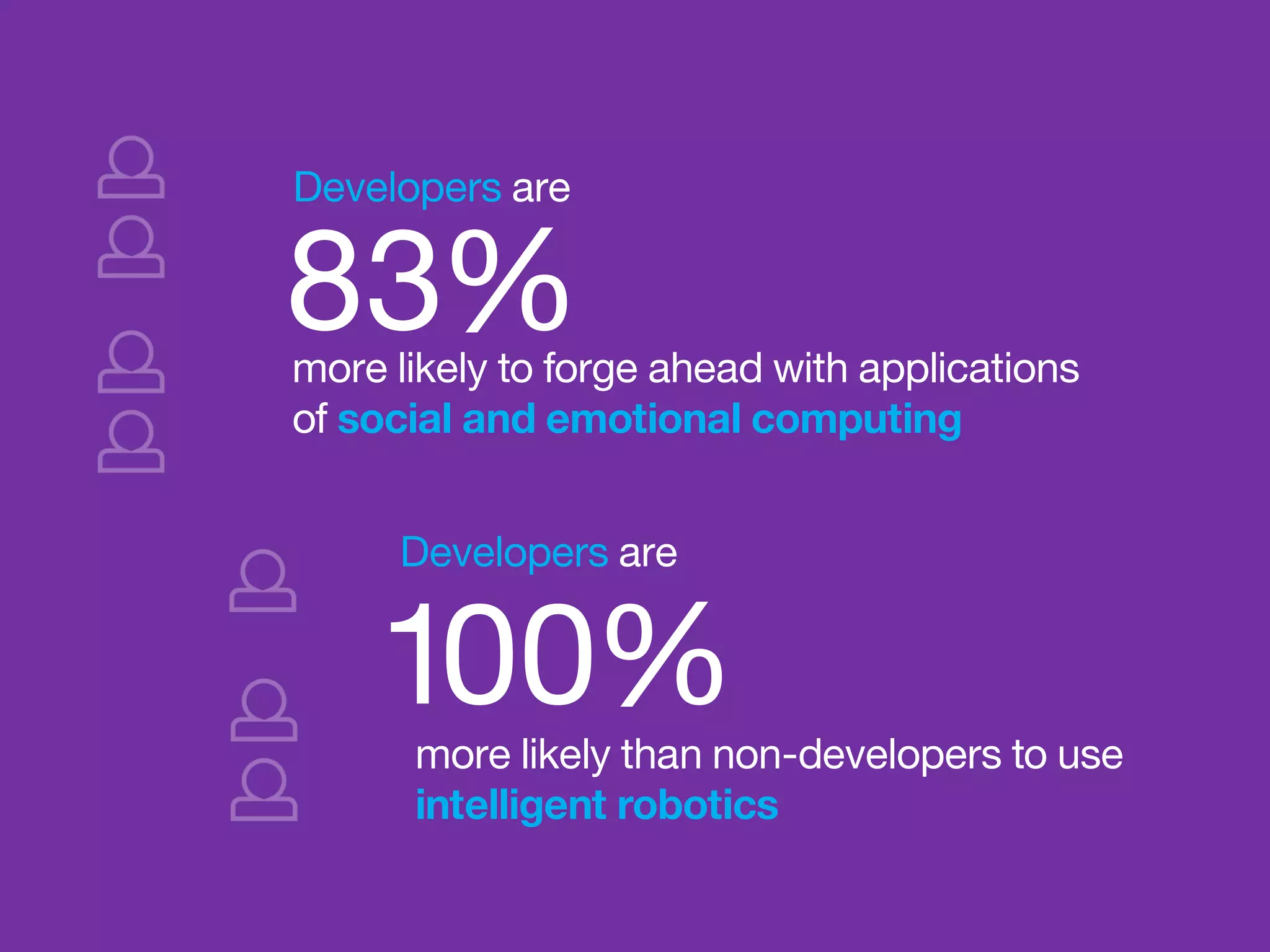
Developers are
more likely than non-developers to use
intelligent robotics
83%
100%
more likely to forge ahead with applications
of social and emotional computing
Developers are
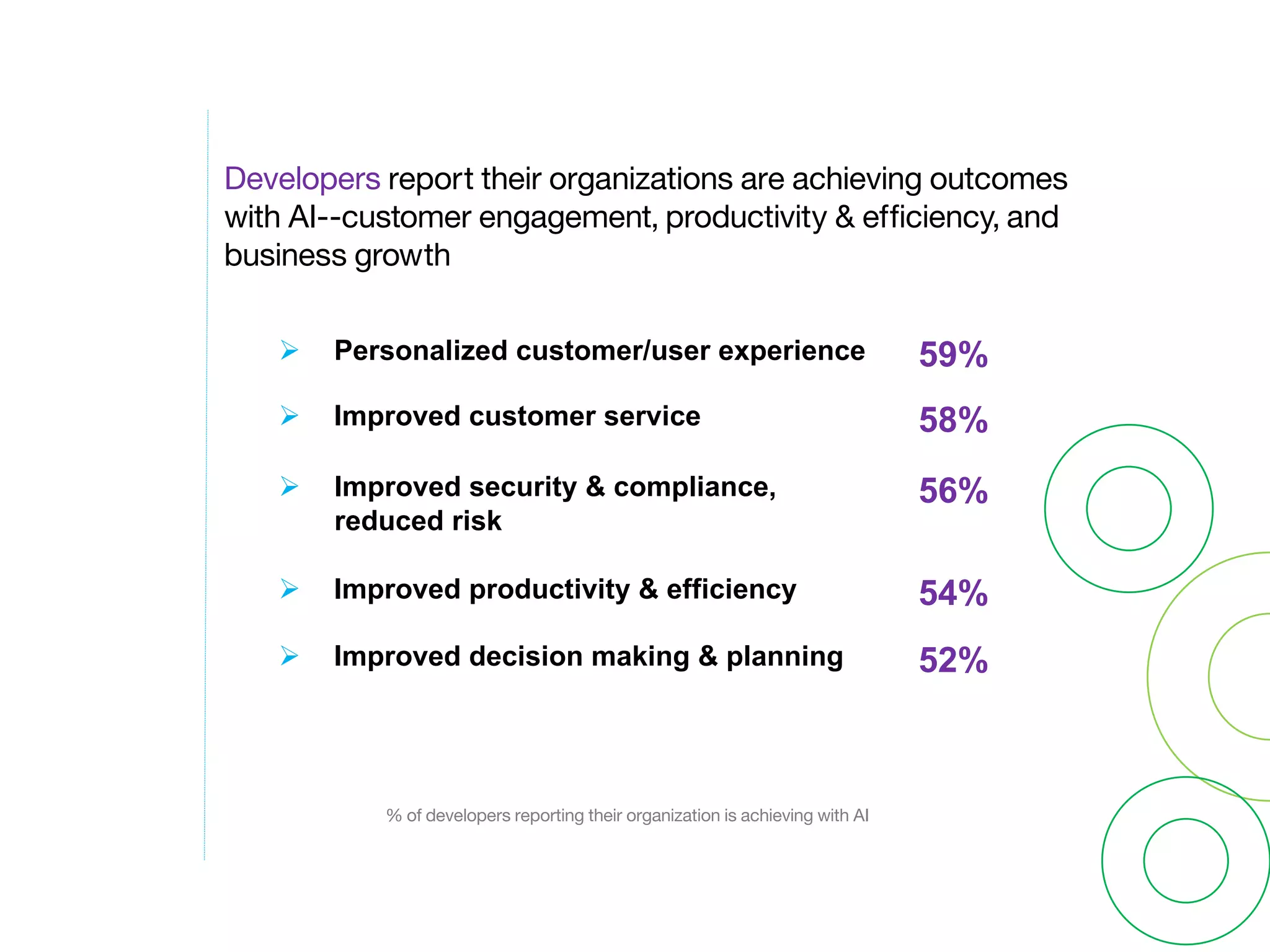
Developers report their organizations are achieving outcomes
with AI--customer engagement, productivity & efficiency, and
business growth
Ø Personalized customer/user experience 59%
Ø Improved customer service 58%
Ø Improved security & compliance,
reduced risk
56%
Ø Improved productivity & efficiency 54%
Ø Improved decision making & planning 52%
% of developers reporting their organization is achieving with AI
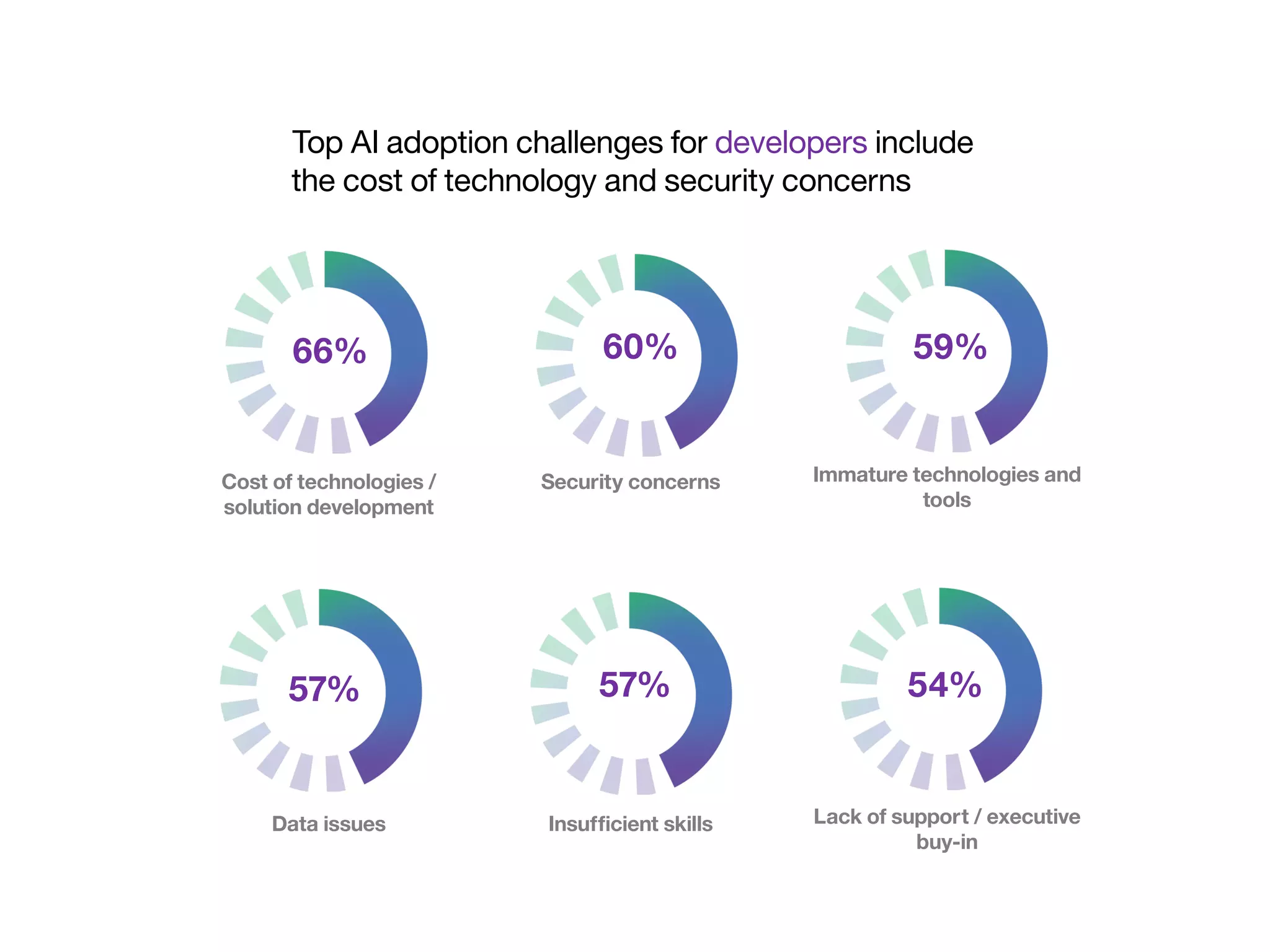
Top AI adoption challenges for developers include
the cost of technology and security concerns
66% 60%
Security concerns
59%
Immature technologies and
tools
Cost of technologies /
solution development
57% 57% 54%
Insufficient skills Lack of support / executive
buy-in
Data issues
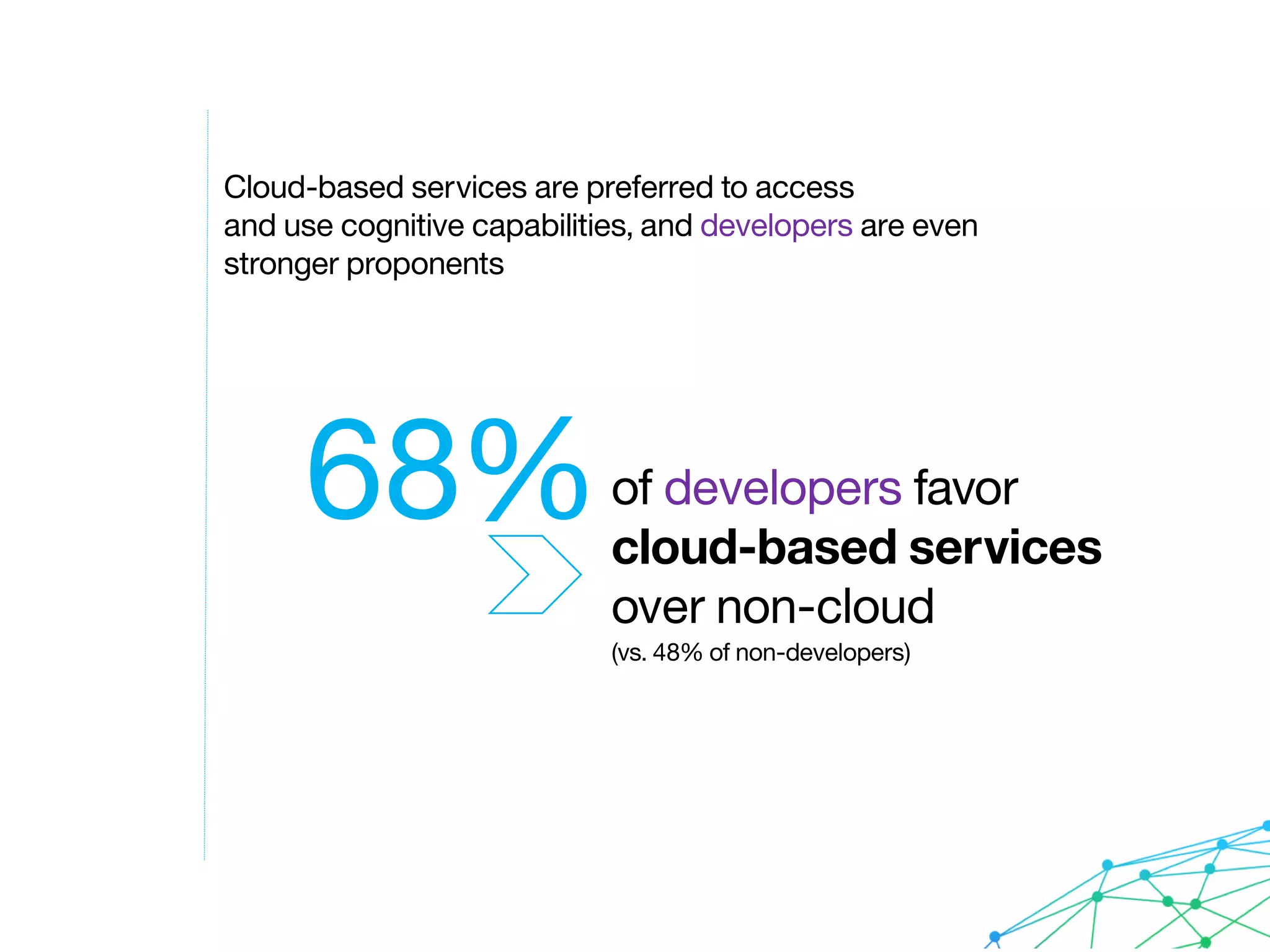
Cloud-based services are preferred to access
and use cognitive capabilities, and developers are even
stronger proponents
68%of developers favor
cloud-based services
over non-cloud
(vs. 48% of non-developers)
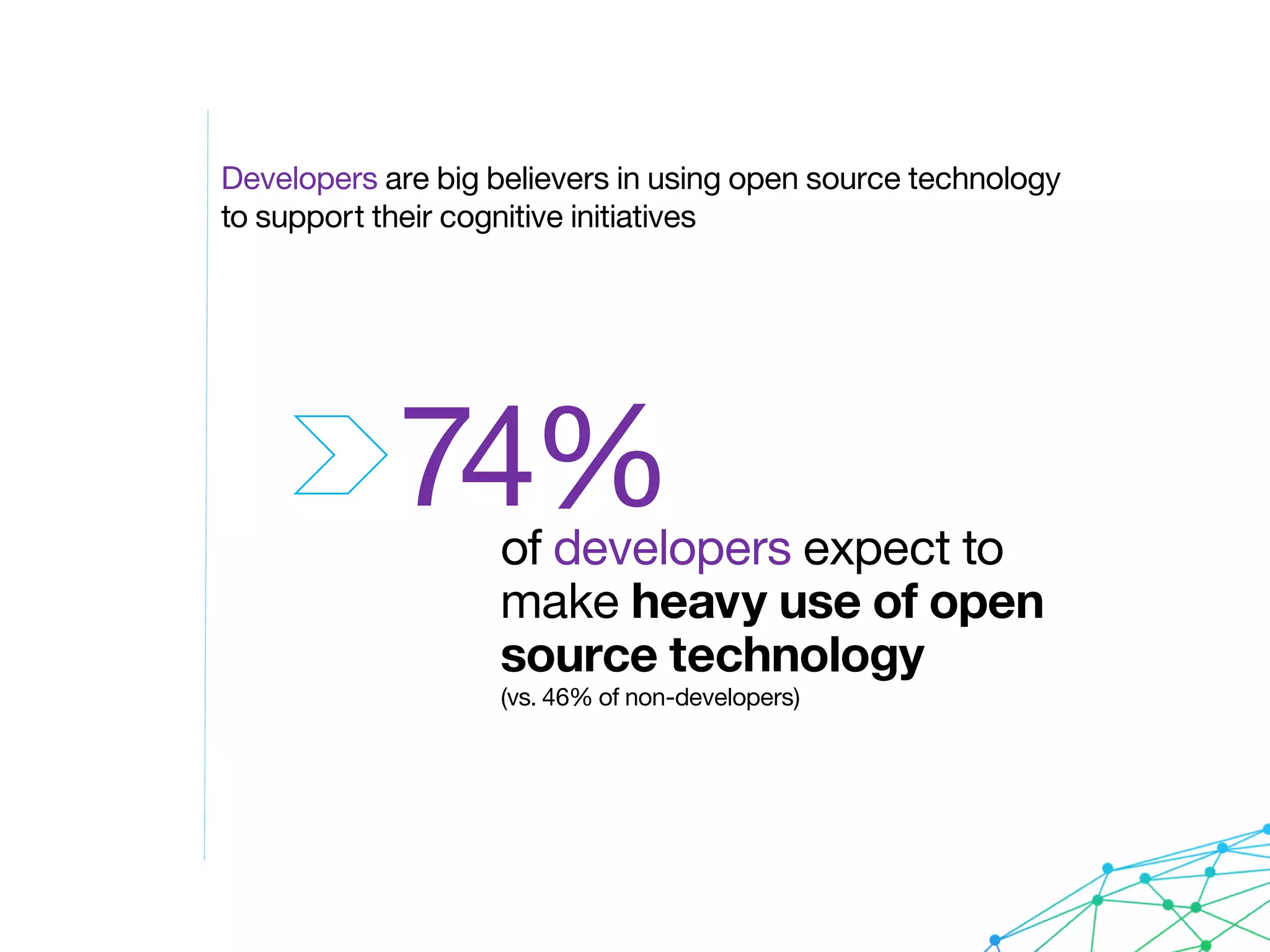
Developers are big believers in using open source technology
to support their cognitive initiatives
74%of developers expect to
make heavy use of open
source technology
(vs. 46% of non-developers)
An ecosystem of experts, including technology and consulting companies,
helps organizations with AI initiatives
15
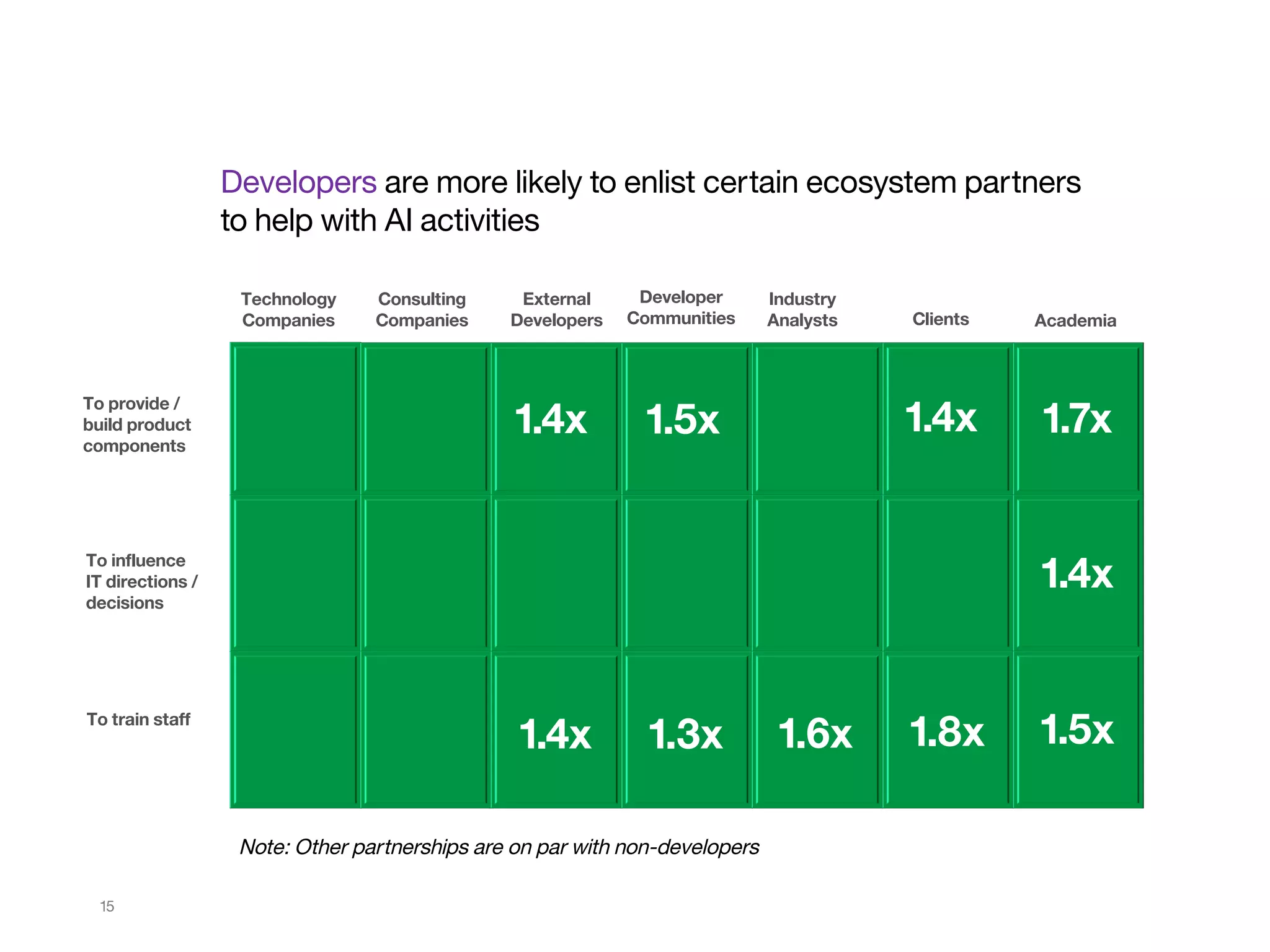
Developers are more likely to enlist certain ecosystem partners
to help with AI activities
To provide /
build product
components
To influence
IT directions /
decisions
To train staff
Consulting
Companies
External
Developers
Developer
Communities
Industry
Analysts Clients Academia
Technology
Companies
1.4x
1.4x
1.5x
1.3x 1.6x
1.4x
1.8x
1.7x
1.4x
1.5x
Note: Other partnerships are on par with non-developers
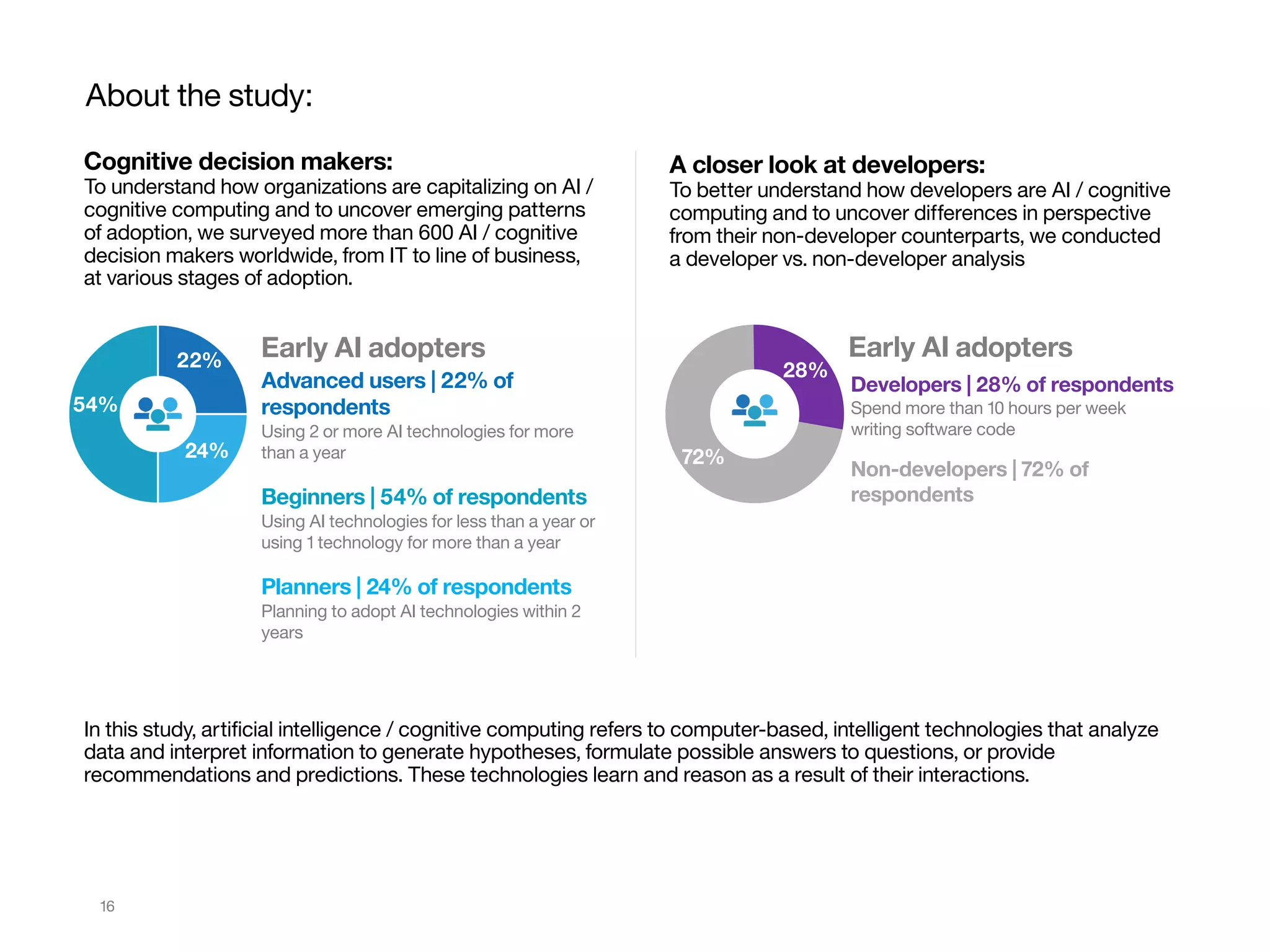
72%
28%
Respondents
16
In this study, artificial intelligence / cognitive computing refers to computer-based, intelligent technologies that analyze
data and interpret information to generate hypotheses, formulate possible answers to questions, or provide
recommendations and predictions. These technologies learn and reason as a result of their interactions.
A closer look at developers:
To better understand how developers are AI / cognitive
computing and to uncover differences in perspective
from their non-developer counterparts, we conducted
a developer vs. non-developer analysis
Early AI adopters
Developers | 28% of respondents
Spend more than 10 hours per week
writing software code
Non-developers | 72% of
respondents
Cognitive decision makers:
To understand how organizations are capitalizing on AI /
cognitive computing and to uncover emerging patterns
of adoption, we surveyed more than 600 AI / cognitive
decision makers worldwide, from IT to line of business,
at various stages of adoption.
About the study:
Early AI adopters
Advanced users | 22% of
respondents
Using 2 or more AI technologies for more
than a year
Beginners | 54% of respondents
Using AI technologies for less than a year or
using 1 technology for more than a year
Planners | 24% of respondents
Planning to adopt AI technologies within 2
years
54%
24%
22%
Principal Analysts:
Susanne Hupfer: Susanne_Hupfer@us.ibm.com | Cynthya Peranandam: cynthya@us.ibm.com
Endnotes:
1) http://www.researchandmarkets.com/research/q5jbvw/cognitive
2) http://www.forbes.com/sites/ibm/2015/09/28/watson-uses-cognitive-computing-to-improve-peoples-lives/
ibm.com/cognitive/advantage-reports
© Copyright IBM Corporation 2017
IBM Corporation
New Orchard Road
Armonk, NY 10504
Produced in the United States of America
2017
IBM, the IBM logo and ibm.com are trademarks of International Business Machines Corporation in the United States, other countries or both. If
these and other IBM trademarked terms are marked on their first occurrence in this information with a trademark symbol (® or TM), these
symbols indicate U.S. registered or common law trademarks owned by IBM at the time this information was published. Such trademarks may
also be registered or common law trademarks in other countries. Other product, company or service names may be trademarks or service marks
of others. A current list of IBM trademarks is available on the web at “Copyright and trademark information” at ibm.com/legal/copytrade.shtml
This document is current as of the initial date of publication and may be changed by IBM at any time. Not all offerings are available in every
country in which IBM operates.
THE INFORMATION IN THIS DOCUMENT IS PROVIDED “AS IS” WITHOUT ANY WARRANTY, EXPRESS OR IMPLIED,INCLUDING WITHOUT
ANY WARRANTIES OF MERCHANTABILITY, FITNESS FOR A PARTICULAR PURPOSE AND ANY WARRANTYOR CONDITION OF NON-
INFRINGEMENT. IBM products are warranted according to the terms and conditions of the agreements under which they are provided

The cognitive advantage for developers

  • 1.
    The cognitive advantage fordevelopers Leading the charge on innovation with artificial intelligence https://www.ibm.com/watson/advantage-reports/market-report.html
  • 2.
    The AI renaissanceis here. Organizations are using artificial intelligence to stay ahead of the market--unlocking new digital intelligence from large volumes of data. The AI market is now on an exponential growth curve, expected to grow from $2.5 billion in 2014 to more than $12.5 billion by 2019.1 By 2018, over 50% of developer teams will embed AI services in their apps,2 and it is expected that half of all consumers will interact with the technology on a regular basis. To understand how early adopters are taking advantage of AI, we garnered insights from more than 600 decision makers worldwide, cross-industry, from IT to line of business, at various stages of cognitive adoption. We learned that organizations already gain major competitive advantage from their use of AI. They achieve a range of business outcomes–from customer engagement to productivity and efficiency and business growth. And a key strategy for many of these organizations making inroads with AI initiatives is to let their developers lead the charge.
  • 3.
    Developers are atthe front lines of AI innovation. They play a prominent role in AI decision making and implementation in their organizations Major 35% Major 60% Influential 65% Influential 40% Non-Developers Developers Major 52% Major 78% Small 43% Small 22% Non-Developers Developers Role in organization's AI implementation Role in organization’s AI decision making
  • 4.
    Developers have greatervisibility into what their organizations are doing with AI and are able to shepherd these initiatives from planning to reality 91% of developers report their org has already adopted one or more AI capabilities 30% of non-developers report their org is planning to implement AI, but is not yet in the adoption stage
  • 5.
    of developers sayadopting AI is very important to their organization’s strategy & success (vs. 61% of non-developers) 75% 70% of developers say outcomes from AI initiatives exceed their expectations (vs. 57% of non-developers)
  • 6.
    Developers believe inthe ability of AI to deliver major competitive advantage to their organizations. They overwhelmingly see it as a key differentiator 64%of developers 43%of non-developers report their org is gaining major competitive advantage from AI
  • 7.
    External customer demand Developerexperimentation Business user experimentation 62% 60% 59% For developers, AI adoption is motivated by customer demand and experimentation
  • 8.
    Ø IT automation59% Ø Business process automation 57% Ø Product & service innovation 57% Ø Cloud management 56% Ø Personalized advice & recommendations 55% Ø Intelligent virtual assistants 55% % of developers reporting their organization uses AI for this scenario Developers report using AI across the organization, prioritizing automation and product & service innovation
  • 9.
    Developers report higheruse of AI capabilities and they are especially attentive to emerging areas of AI opportunity 20% 32% 24% 33% 34% 38% 41% 40% 42% 44% 46% 53% 57% 59% Intelligent robotics Machine learning Social and emotional (affective) computing Natural language processing (NLP) Knowledge representation and reasoning Pattern recognition capability Automated scheduling and planning % reporting capability is being used in their organization Developers Non-Developers
  • 10.
    Developers are more likelythan non-developers to use intelligent robotics 83% 100% more likely to forge ahead with applications of social and emotional computing Developers are
  • 11.
    Developers report theirorganizations are achieving outcomes with AI--customer engagement, productivity & efficiency, and business growth Ø Personalized customer/user experience 59% Ø Improved customer service 58% Ø Improved security & compliance, reduced risk 56% Ø Improved productivity & efficiency 54% Ø Improved decision making & planning 52% % of developers reporting their organization is achieving with AI
  • 12.
    Top AI adoptionchallenges for developers include the cost of technology and security concerns 66% 60% Security concerns 59% Immature technologies and tools Cost of technologies / solution development 57% 57% 54% Insufficient skills Lack of support / executive buy-in Data issues
  • 13.
    Cloud-based services arepreferred to access and use cognitive capabilities, and developers are even stronger proponents 68%of developers favor cloud-based services over non-cloud (vs. 48% of non-developers)
  • 14.
    Developers are bigbelievers in using open source technology to support their cognitive initiatives 74%of developers expect to make heavy use of open source technology (vs. 46% of non-developers)
  • 15.
    An ecosystem ofexperts, including technology and consulting companies, helps organizations with AI initiatives 15 Developers are more likely to enlist certain ecosystem partners to help with AI activities To provide / build product components To influence IT directions / decisions To train staff Consulting Companies External Developers Developer Communities Industry Analysts Clients Academia Technology Companies 1.4x 1.4x 1.5x 1.3x 1.6x 1.4x 1.8x 1.7x 1.4x 1.5x Note: Other partnerships are on par with non-developers
  • 16.
    72% 28% Respondents 16 In this study,artificial intelligence / cognitive computing refers to computer-based, intelligent technologies that analyze data and interpret information to generate hypotheses, formulate possible answers to questions, or provide recommendations and predictions. These technologies learn and reason as a result of their interactions. A closer look at developers: To better understand how developers are AI / cognitive computing and to uncover differences in perspective from their non-developer counterparts, we conducted a developer vs. non-developer analysis Early AI adopters Developers | 28% of respondents Spend more than 10 hours per week writing software code Non-developers | 72% of respondents Cognitive decision makers: To understand how organizations are capitalizing on AI / cognitive computing and to uncover emerging patterns of adoption, we surveyed more than 600 AI / cognitive decision makers worldwide, from IT to line of business, at various stages of adoption. About the study: Early AI adopters Advanced users | 22% of respondents Using 2 or more AI technologies for more than a year Beginners | 54% of respondents Using AI technologies for less than a year or using 1 technology for more than a year Planners | 24% of respondents Planning to adopt AI technologies within 2 years 54% 24% 22%
  • 17.
    Principal Analysts: Susanne Hupfer:Susanne_Hupfer@us.ibm.com | Cynthya Peranandam: cynthya@us.ibm.com Endnotes: 1) http://www.researchandmarkets.com/research/q5jbvw/cognitive 2) http://www.forbes.com/sites/ibm/2015/09/28/watson-uses-cognitive-computing-to-improve-peoples-lives/ ibm.com/cognitive/advantage-reports © Copyright IBM Corporation 2017 IBM Corporation New Orchard Road Armonk, NY 10504 Produced in the United States of America 2017 IBM, the IBM logo and ibm.com are trademarks of International Business Machines Corporation in the United States, other countries or both. If these and other IBM trademarked terms are marked on their first occurrence in this information with a trademark symbol (® or TM), these symbols indicate U.S. registered or common law trademarks owned by IBM at the time this information was published. Such trademarks may also be registered or common law trademarks in other countries. Other product, company or service names may be trademarks or service marks of others. A current list of IBM trademarks is available on the web at “Copyright and trademark information” at ibm.com/legal/copytrade.shtml This document is current as of the initial date of publication and may be changed by IBM at any time. Not all offerings are available in every country in which IBM operates. THE INFORMATION IN THIS DOCUMENT IS PROVIDED “AS IS” WITHOUT ANY WARRANTY, EXPRESS OR IMPLIED,INCLUDING WITHOUT ANY WARRANTIES OF MERCHANTABILITY, FITNESS FOR A PARTICULAR PURPOSE AND ANY WARRANTYOR CONDITION OF NON- INFRINGEMENT. IBM products are warranted according to the terms and conditions of the agreements under which they are provided