The Central Dogma of Biology
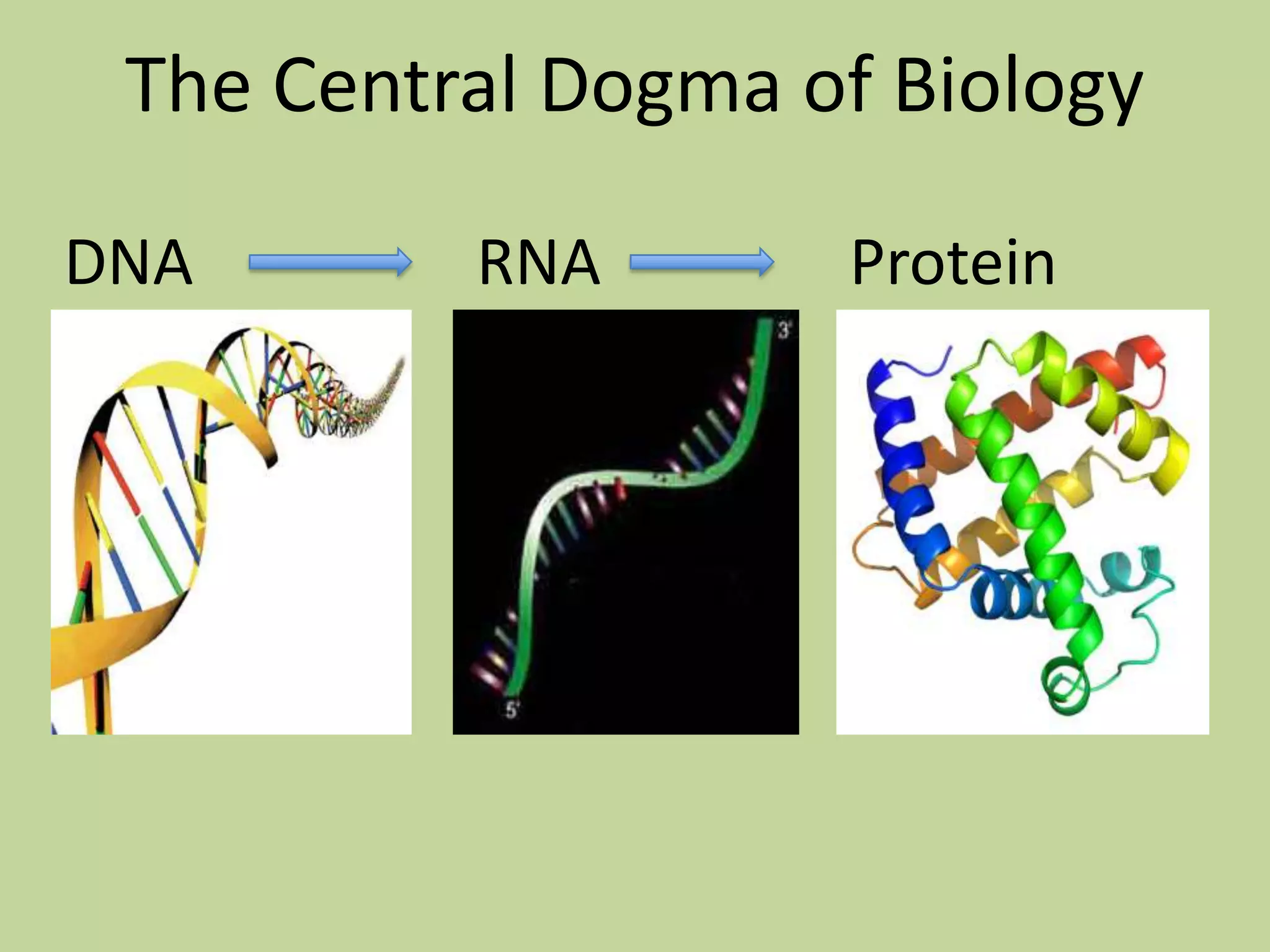
DNA RNA Protein
The Central Dogma of Biology
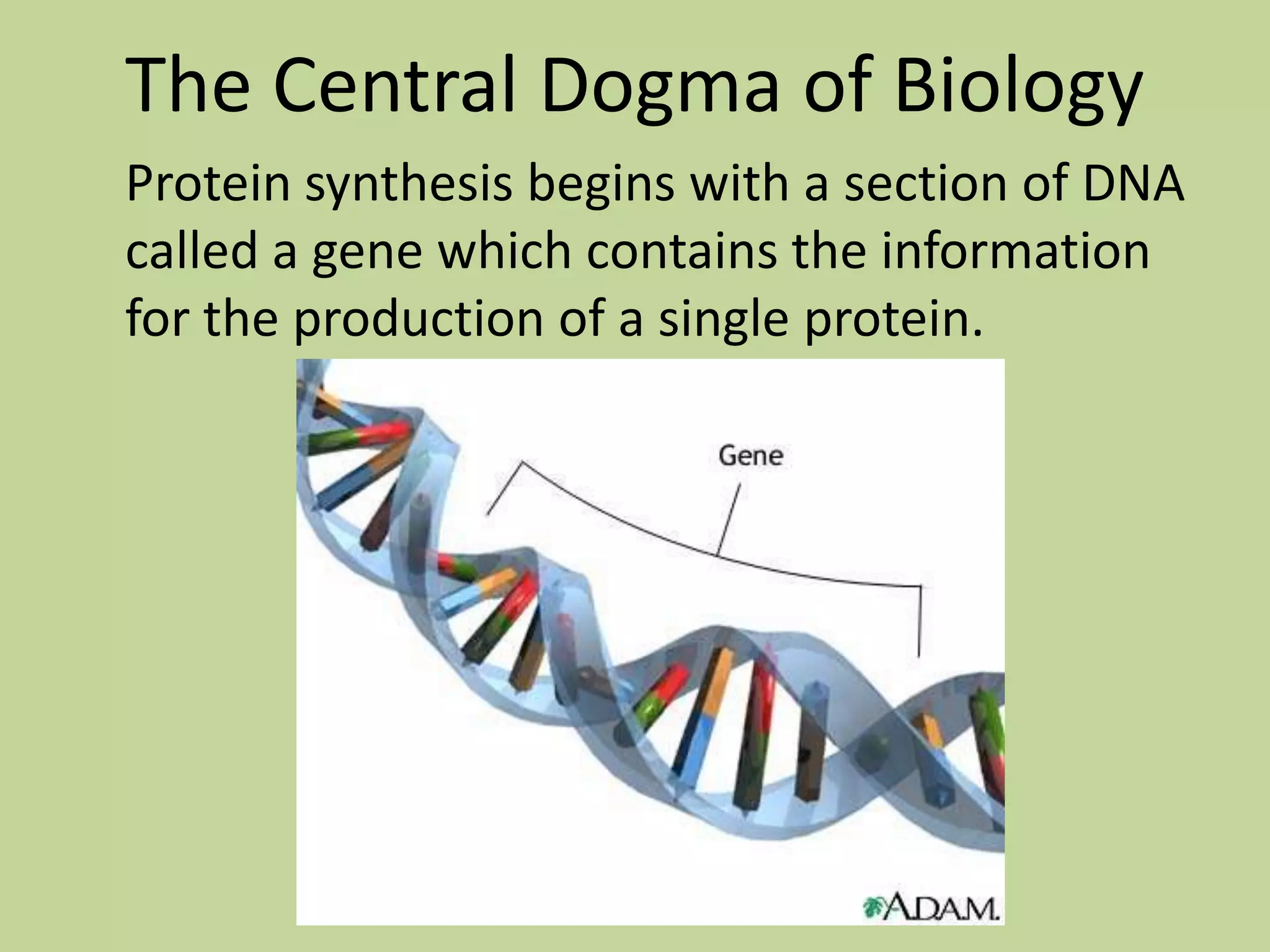
Protein synthesis begins with a section of DNA
called a gene which contains the information
for the production of a single protein.
The Central Dogma of Biology
DNA

RNA

Protein
Transcription
Translation
There are three important differences between the
structure of DNA and the structure of RNA.
1. The pentose sugar found
in RNA is ribose instead of
deoxyribose.
2. The nucleotide thymine
found in DNA is replaced
with uracil in RNA.
3. DNA is a double-helix,
and RNA is a single strand.
Transcription
RNA Polymerase breaks the hydrogen bonds
between the two strands of DNA.
Transcription
One of the DNA strands serves as a template
for the construction of a new messenger RNA.
Transcription
Complementary nucleotides align themselves
along the exposed nitrogen bases of the DNA.
Transcription
The newly constructed mRNA molecule is
released into the nucleus and the DNA
reforms.
mRNA
DNA
RNA Polymerase
Transcription
The transcription phase of protein synthesis is
over when mRNA exits the nucleus through a
nuclear pore and enters the cytoplasm.
http://www.youtube.com/watch?v=41_Ne5mS2ls
Protein Synthesis: Part Two
Translation
Translation takes place in the cellular cytoplasm. The
process is mediated by large molecular machines called
Ribosomes.
Vocabulary:
Ribosomes: the molecular structure responsible for
translating mRNA into protein.
Translation
Most ribosomes are found on the outside membrane
of the rough endoplasmic reticulum.
Rough Endoplasmic Reticulum: A membranous structure in
the cytoplasm of a cell where proteins destined for export are
assembled.
Vocabulary:
Translation starts when a ribosome attaches to a
messenger RNA molecule and begins to assemble
amino acids based on the sequence of codons in the
mRNA molecule.
Translation
DNA and RNA use only four
bases to create a code that
determines the sequence of
20 different amino acids in
the final protein.
In order to do this nucleic
acids use three letter
“words” called codons to
indicate each of the amino
acids in the sequence.
What are codons?
Codons
The Genetic Code
A third form of RNA called transfer RNA, tRNA, is found in
the cytoplasm.
Translation
Translation
The tRNA molecule has a sequence of three nucleotides called
an “anticodon” at one end and a corresponding amino acid at
its opposite end.
Anticodon
Amino Acid
Transfer RNA
Translation
During translation the anticodon on the tRNA aligns with the
codon on the mRNA
The ribosome provides a site where tRNA molecules
align with the codons on the mRNA molecule.
Translation
Translation
The amino acid on the tRNA is then “transferred” to the
growing protein chain and the tRNA is released back into
the cytoplasm to pick up another amino acid.
http://highered.mcgraw-
hill.com/olcweb/cgi/pluginpop.cgi?it=swf::535::535::/sites/dl/free/0072437316/120077/
micro06.swf::Protein%20Synthesis
Eventually the ribosome reaches the end of the mRNA and
protein sequence is complete.
Translation
http://www.youtube.com/watch?v=41_Ne5mS2ls
http://www.youtube.com/watch?v=Jml8CFBWcDs&feature=related
“This is too hard.”
What happens when DNA makes a typo?
Myostatin is a protein which inhibits the growth of
muscle tissue.
Defect in myostatin gene results in extraordinary
muscle growth
Albinism is a genetic defect of an enzyme involved in the production of melanin.

The central dogma

  • 1.
    The Central Dogmaof Biology DNA RNA Protein
  • 2.
    The Central Dogmaof Biology Protein synthesis begins with a section of DNA called a gene which contains the information for the production of a single protein.
  • 3.
    The Central Dogmaof Biology DNA  RNA  Protein Transcription Translation
  • 5.
    There are threeimportant differences between the structure of DNA and the structure of RNA. 1. The pentose sugar found in RNA is ribose instead of deoxyribose. 2. The nucleotide thymine found in DNA is replaced with uracil in RNA. 3. DNA is a double-helix, and RNA is a single strand.
  • 6.
    Transcription RNA Polymerase breaksthe hydrogen bonds between the two strands of DNA.
  • 7.
    Transcription One of theDNA strands serves as a template for the construction of a new messenger RNA.
  • 8.
    Transcription Complementary nucleotides alignthemselves along the exposed nitrogen bases of the DNA.
  • 9.
    Transcription The newly constructedmRNA molecule is released into the nucleus and the DNA reforms. mRNA DNA RNA Polymerase
  • 10.
    Transcription The transcription phaseof protein synthesis is over when mRNA exits the nucleus through a nuclear pore and enters the cytoplasm. http://www.youtube.com/watch?v=41_Ne5mS2ls
  • 11.
    Protein Synthesis: PartTwo Translation Translation takes place in the cellular cytoplasm. The process is mediated by large molecular machines called Ribosomes.
  • 12.
    Vocabulary: Ribosomes: the molecularstructure responsible for translating mRNA into protein.
  • 13.
    Translation Most ribosomes arefound on the outside membrane of the rough endoplasmic reticulum.
  • 14.
    Rough Endoplasmic Reticulum:A membranous structure in the cytoplasm of a cell where proteins destined for export are assembled. Vocabulary:
  • 15.
    Translation starts whena ribosome attaches to a messenger RNA molecule and begins to assemble amino acids based on the sequence of codons in the mRNA molecule. Translation
  • 16.
    DNA and RNAuse only four bases to create a code that determines the sequence of 20 different amino acids in the final protein. In order to do this nucleic acids use three letter “words” called codons to indicate each of the amino acids in the sequence. What are codons?
  • 17.
  • 18.
  • 19.
    A third formof RNA called transfer RNA, tRNA, is found in the cytoplasm. Translation
  • 20.
    Translation The tRNA moleculehas a sequence of three nucleotides called an “anticodon” at one end and a corresponding amino acid at its opposite end. Anticodon Amino Acid Transfer RNA
  • 21.
    Translation During translation theanticodon on the tRNA aligns with the codon on the mRNA
  • 22.
    The ribosome providesa site where tRNA molecules align with the codons on the mRNA molecule. Translation
  • 23.
    Translation The amino acidon the tRNA is then “transferred” to the growing protein chain and the tRNA is released back into the cytoplasm to pick up another amino acid. http://highered.mcgraw- hill.com/olcweb/cgi/pluginpop.cgi?it=swf::535::535::/sites/dl/free/0072437316/120077/ micro06.swf::Protein%20Synthesis
  • 24.
    Eventually the ribosomereaches the end of the mRNA and protein sequence is complete. Translation http://www.youtube.com/watch?v=41_Ne5mS2ls http://www.youtube.com/watch?v=Jml8CFBWcDs&feature=related
  • 26.
  • 27.
    What happens whenDNA makes a typo?
  • 29.
    Myostatin is aprotein which inhibits the growth of muscle tissue. Defect in myostatin gene results in extraordinary muscle growth
  • 30.
    Albinism is agenetic defect of an enzyme involved in the production of melanin.