Presented By
Anbarasu.A – III Year EEE
Arul Prakash.P – III Year EEE
Excel College Of Engineering and
Technology
Komarapalayam-637303.
THE BLOOM BOX
STRUCTURE OF THE PRESENTATION
ABSTRACT
INTRODUCTION
A BRIEF HISTORY OF ALTERNATIVE ENERGY
A TIMELINE OF BLOOM ENERGY
TECHNICAL CONCLUSIONS
ECONOMIC COMPARISON
CONCLUSIONS
ABSTRACT
 The primary purpose of this report
is to examine the technical
implications of the Bloom Box fuel
cell.
 Secondly the report evaluates the
Bloom Box as a potential electricity
source for homes and private
businesses based on the economic
advantage that it may provide.
INTRODUTION
 In today’s expanding global economy, the
need for sustainable energy is more
pressing than ever. In 2009 over 75% of the
electricity used in the United States came
from non-renewable fossil fuels.
 First, the use of fossil fuels in electricity
production releases a lot of potentially
harmful emissions such as CO2 and other
greenhouse gases into the air. Sustainability
is the next major problem with using fossil
fuels to produce electricity.
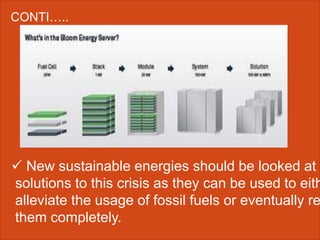
CONTI…..
 New sustainable energies should be looked at a
solutions to this crisis as they can be used to eith
alleviate the usage of fossil fuels or eventually re
them completely.
A BRIEF HISTORY OF ALTERNATIVE
ENERGY
Green Technology has been around for hundreds of
years. Wind has been used since 5000 B.C. to power
small boats. Later, around 200 B.C. humans started
using wind mills to help with a multitude of tasks, such
as pumping water and grinding grains.
Solar energy was discovered in the 1800’s by
Edmund Becquerel as he studied the ability of plants
to turn sunlight into energy.
Geothermal energy is the use of heat from the earth as
source. The first known use of geothermal energy was o
years ago by the Paleo-Indians of America.
A TIMELINE OF BLOOM ENERGY
 Bloom Energy, located in Sunnyvale, California,
was founded in 2001 by Dr. KR Sridhar. At the time,
Dr. Sridhar was the Director of the Space
Technologies Laboratory at the University of Arizona.
 Dr. Sridhar was leading a group that was
supposed to design a device that could take
gases found on Mars and creates oxygen, making
life on Mars sustainable. When the project was
discontinued in 2001, Dr. Sridhar decided that the
device could potentially be useful on Earth as a
clean energy source.
CONTI…..
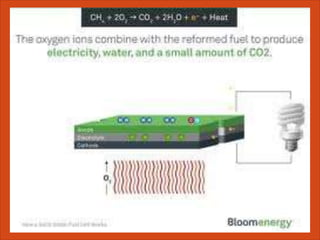
The machine was designed to take fuel and
electricity to produce oxygen, but by reversing the
process, it could be provided with fuel and oxygen
to make electricity.
Thus Dr. Sridhar started a company, originally
called
Ion America but later renamed it Bloom Energy in
2006,
a company focused on solid oxide fuel cell
development.
In 2008, Bloom Energy produced their first
100kW commercial sized fuel cell which was
purchased by Google in July to help reduce
Google’s carbon footprint.
TECHNICAL CONCLUSIONS
When comparing fuel cells, wind, and solar
power, there are several important factors to note.
First, a Bloom Box still requires some sort of fuel to
be operated.
This fuel is some type of hydrocarbon so unless
said hydrocarbon is biogas, the system still adds
net CO2 to the atmosphere. Second, wind and
solar power are not able to produce constant
levels of electricity.
Lastly, due to their variable nature, wind and solar sy
100kW do not provide the same amount of power as a
Bloom Box.
 A Bloom Box must be located someplace where
it can receive some type of hydrocarbon fuel. This
can be limited by natural gas lines or local laws if it
were to be hooked up to a hydrocarbon holding
tank.
This means that although each system can be
located in any part of the country, different areas
are better suited to each system than another. For
example, wind turbines do not generally work well
in cities due to legislature where both Bloom
Boxes and solar panels can be used.
Another important point to make is that due to the
variable nature of solar and wind power, a Bloom
Box will generally displace more CO2 than a solar
system or wind system of the same size.
CONTI…..
Larger solar and wind systems could produce the
same amount of energy without producing any CO2,
but this would cost more money. Since the Bloom
Box does produce CO2 when run off of anything but
biogas, it cannot be considered completely green
after production.
CONTI…..
Overall, at least technically speaking, which system
is the best is greatly dependent on where a company
is located. It is also dependent on what the exact
electrical needs of a consumer are.
If said system were powering someone’s home though
where they are not always using electricity,these system
potentially be a more suitable choice for electricity prod
than a Bloom Box.
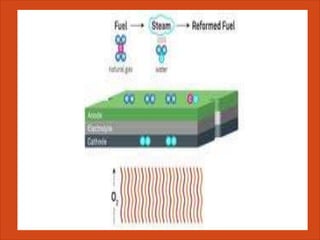
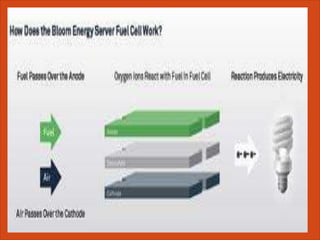
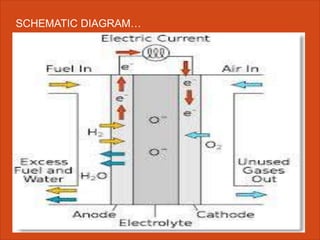
SCHEMATIC DIAGRAM…
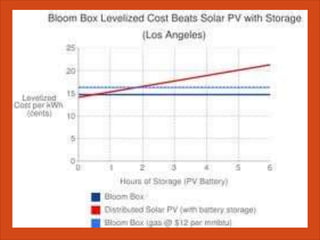
AN ECONOMIC COMPARISON
The technology could be sound but if the product
is unmarketable due to expense, marketing trouble,
or other logistical factors, than the product will not
be a success.
In order for a new product to be successful it
needs to be both technically and economically
viable. One without the other is useless.
Bloom Energy, and the governments supporting the
technology, as well as compare some of Bloom’s
return on investment with other common alternative
energy sources such as wind and solar power.
Government subsidies are an important aspect of
all energy producing technologies. In the United
States most, if not all, energy producers are
subsidized in some manner as seen below. U.S.
subsidies are provided by both the federal
government and each individual state government.
CONTI…..
Subsidies can affect prices in several different
manners including a reduction of price paid, an
increase in the price received, or a reduction in the
cost of production.
From 1999 to 2007 subsidies allowed wind
energy to increase at a rate of 32% a year on
average, whereas other subsidized technologies
such as coal and natural gas stayed fairly steady
CONCLUSION
To determine the implications of the Bloom
Energy Server as a whole, the individual
aspects of the technical, economic, and
social implications must be considered
together. Additionally it needs to be
comparedto other equivalent renewable
technologies.
The bloom box

The bloom box

  • 1.
    Presented By Anbarasu.A –III Year EEE Arul Prakash.P – III Year EEE Excel College Of Engineering and Technology Komarapalayam-637303. THE BLOOM BOX
  • 2.
    STRUCTURE OF THEPRESENTATION ABSTRACT INTRODUCTION A BRIEF HISTORY OF ALTERNATIVE ENERGY A TIMELINE OF BLOOM ENERGY TECHNICAL CONCLUSIONS ECONOMIC COMPARISON CONCLUSIONS
  • 3.
    ABSTRACT  The primarypurpose of this report is to examine the technical implications of the Bloom Box fuel cell.  Secondly the report evaluates the Bloom Box as a potential electricity source for homes and private businesses based on the economic advantage that it may provide.
  • 4.
    INTRODUTION  In today’sexpanding global economy, the need for sustainable energy is more pressing than ever. In 2009 over 75% of the electricity used in the United States came from non-renewable fossil fuels.  First, the use of fossil fuels in electricity production releases a lot of potentially harmful emissions such as CO2 and other greenhouse gases into the air. Sustainability is the next major problem with using fossil fuels to produce electricity.
  • 5.
    CONTI…..  New sustainableenergies should be looked at a solutions to this crisis as they can be used to eith alleviate the usage of fossil fuels or eventually re them completely.
  • 6.
    A BRIEF HISTORYOF ALTERNATIVE ENERGY Green Technology has been around for hundreds of years. Wind has been used since 5000 B.C. to power small boats. Later, around 200 B.C. humans started using wind mills to help with a multitude of tasks, such as pumping water and grinding grains. Solar energy was discovered in the 1800’s by Edmund Becquerel as he studied the ability of plants to turn sunlight into energy. Geothermal energy is the use of heat from the earth as source. The first known use of geothermal energy was o years ago by the Paleo-Indians of America.
  • 7.
    A TIMELINE OFBLOOM ENERGY  Bloom Energy, located in Sunnyvale, California, was founded in 2001 by Dr. KR Sridhar. At the time, Dr. Sridhar was the Director of the Space Technologies Laboratory at the University of Arizona.  Dr. Sridhar was leading a group that was supposed to design a device that could take gases found on Mars and creates oxygen, making life on Mars sustainable. When the project was discontinued in 2001, Dr. Sridhar decided that the device could potentially be useful on Earth as a clean energy source.
  • 9.
    CONTI….. The machine wasdesigned to take fuel and electricity to produce oxygen, but by reversing the process, it could be provided with fuel and oxygen to make electricity. Thus Dr. Sridhar started a company, originally called Ion America but later renamed it Bloom Energy in 2006, a company focused on solid oxide fuel cell development. In 2008, Bloom Energy produced their first 100kW commercial sized fuel cell which was purchased by Google in July to help reduce Google’s carbon footprint.
  • 10.
    TECHNICAL CONCLUSIONS When comparingfuel cells, wind, and solar power, there are several important factors to note. First, a Bloom Box still requires some sort of fuel to be operated. This fuel is some type of hydrocarbon so unless said hydrocarbon is biogas, the system still adds net CO2 to the atmosphere. Second, wind and solar power are not able to produce constant levels of electricity. Lastly, due to their variable nature, wind and solar sy 100kW do not provide the same amount of power as a Bloom Box.
  • 12.
     A BloomBox must be located someplace where it can receive some type of hydrocarbon fuel. This can be limited by natural gas lines or local laws if it were to be hooked up to a hydrocarbon holding tank. This means that although each system can be located in any part of the country, different areas are better suited to each system than another. For example, wind turbines do not generally work well in cities due to legislature where both Bloom Boxes and solar panels can be used. Another important point to make is that due to the variable nature of solar and wind power, a Bloom Box will generally displace more CO2 than a solar system or wind system of the same size. CONTI…..
  • 14.
    Larger solar andwind systems could produce the same amount of energy without producing any CO2, but this would cost more money. Since the Bloom Box does produce CO2 when run off of anything but biogas, it cannot be considered completely green after production. CONTI….. Overall, at least technically speaking, which system is the best is greatly dependent on where a company is located. It is also dependent on what the exact electrical needs of a consumer are. If said system were powering someone’s home though where they are not always using electricity,these system potentially be a more suitable choice for electricity prod than a Bloom Box.
  • 15.
  • 16.
    AN ECONOMIC COMPARISON Thetechnology could be sound but if the product is unmarketable due to expense, marketing trouble, or other logistical factors, than the product will not be a success. In order for a new product to be successful it needs to be both technically and economically viable. One without the other is useless. Bloom Energy, and the governments supporting the technology, as well as compare some of Bloom’s return on investment with other common alternative energy sources such as wind and solar power.
  • 18.
    Government subsidies arean important aspect of all energy producing technologies. In the United States most, if not all, energy producers are subsidized in some manner as seen below. U.S. subsidies are provided by both the federal government and each individual state government. CONTI….. Subsidies can affect prices in several different manners including a reduction of price paid, an increase in the price received, or a reduction in the cost of production. From 1999 to 2007 subsidies allowed wind energy to increase at a rate of 32% a year on average, whereas other subsidized technologies such as coal and natural gas stayed fairly steady
  • 19.
    CONCLUSION To determine theimplications of the Bloom Energy Server as a whole, the individual aspects of the technical, economic, and social implications must be considered together. Additionally it needs to be comparedto other equivalent renewable technologies.