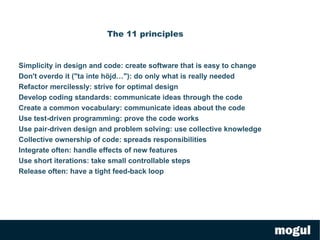
Bespoke Software Product Factory   Peter Antman Niklas Hagen Björn Hällström
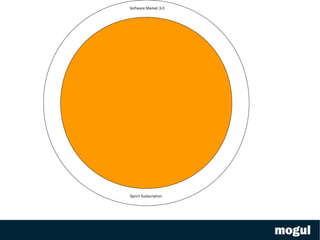
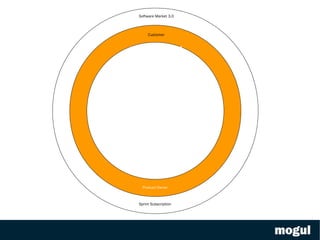
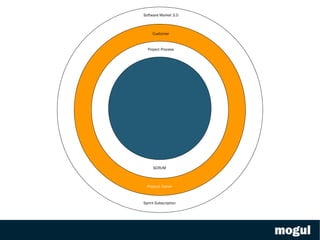
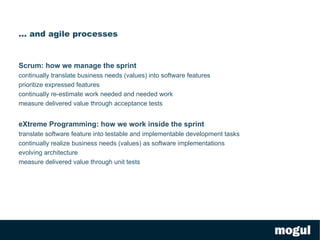
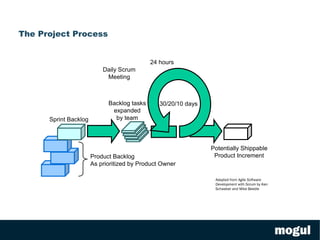
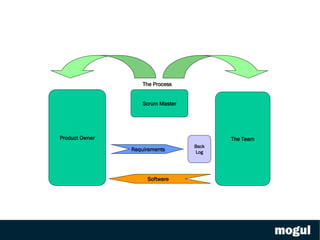
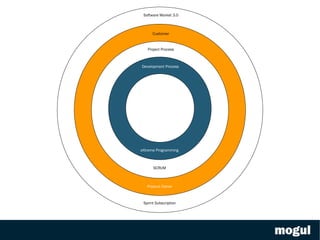
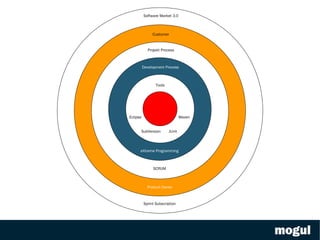
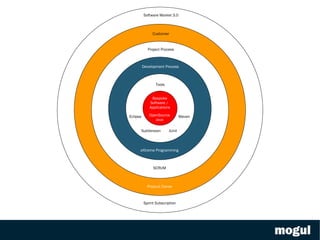
SubVersion Maven Eclipse JUnit eXtreme Programming SCRUM Product Owner Sprint Subscription Software Market 3.0
Software Markets Software Market 1.0 Pay for the machine
get bundled software free or roll your own
IBM Software Market 2.0 Pay for right to use software
Adapt to wrapped box
Microsoft and Oracle Software Market 3.0 Pay for the value software delivers
Assemble freely available parts
Linux
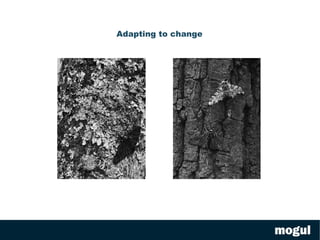
Adapting to change
The Zero effect The connected net ->  the connected economy -> the connected people The distance between any point is functionally zero
Cost of transaction almost zero
Information is free
The looking glass Open Source
The Long Tail
Karaoke economy
Open Source is the key Open Source is born with the net and is the engine behind the net
Open Source is a way to handle the “net-effect” We can learn from open source
We can use open source
We can contribute to open source
 
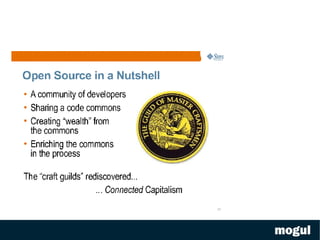
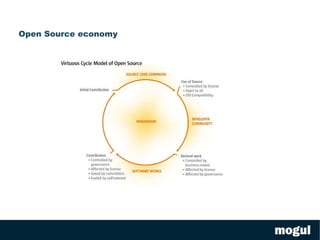
Open Source economy
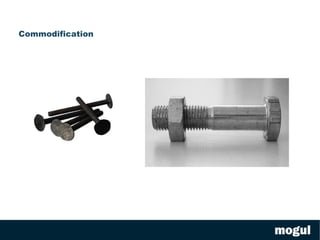
Commodification
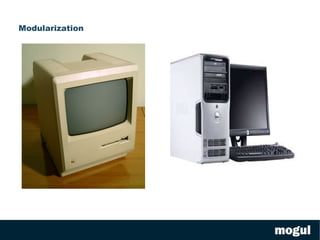
Modularization
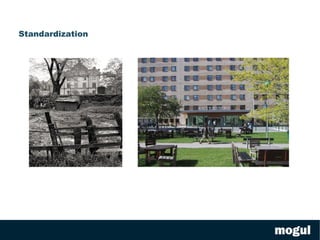
Standardization
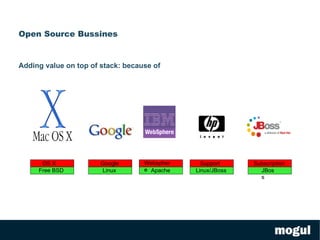
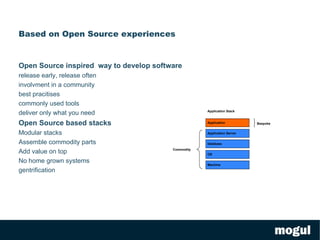
Open Source Bussines Adding value on top of stack: because of Free BSD Linux Apache Linux/JBoss JBoss OS X Google Websphere Support Subscription
Tom O'Reilly ”Software is no longer the primary locus of value in the computer  industry. The commoditization of software drives value to services  enabled by that software.”
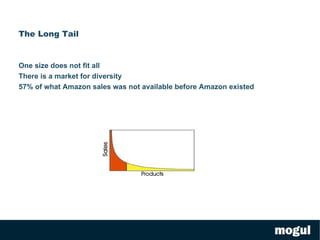
The Long Tail One size does not fit all
There is a market for diversity
57% of what Amazon sales was not available before Amazon existed
Where does Mogul fit in?
SubVersion Maven Eclipse JUnit eXtreme Programming SCRUM Product Owner Sprint Subscription Software Market 3.0 Customer
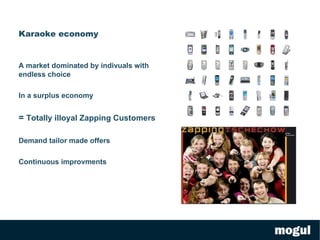
Karaoke economy A market dominated by indivuals with endless choice In a surplus economy =  Totally illoyal Zapping Customers Demand tailor made offers Continuous improvments
...Karaoke economy Means hypercompetition for businesses Copy-cats abound  Shorter product life cycles Companies need to focus on their core businesses,  developing their products and services
No time …for doing things they are not (supposed to be) best at
Typical IT department spend 50%-80% of time on support and maintenance
Slows down time-to-market
Loosing customers and sales
Less profits
Smaller budget for development
…etc.
They need an agile appDevPartner A highly specialised partner in developing bespoke applications Applications that allow for swift business development and doesn’t become maintenance burdens A partner that helps them to continuously develop new features
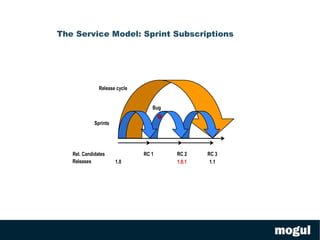
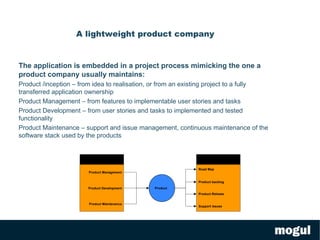
A Bespoke Software Product Company Based on a service model: Subscription to a production model that is able to deliver new business features in an ongoing cycle WYNIWYG: What You Need Is What You Get For each project we create: A lightweight product company

The Bespoke Software Product Factory (2007)

Editor's Notes

  • #18 För att bäst förstå hur Mogul ska bygga sitt erbjudande måste vi titta på vilken verklighet våra kunder lever i och fråga oss: -Hur hjälper vi bäst våra kunder att lyckas med sina affärer?
  • #19 Individanpassade produkter och tjänster Vi kunder vill ha allt mer individanpassade produkter och tjänster. Och eftersom teknologin gör det möjligt att leverera och vi kunder är kungar i överflödssamhället, vinner det företag som bäst matchar sina varor och tjänster med våra individuella behov.
  • #20 Eftersom informationen vill vara fri och informationsinnehållet i varor och tjänster ökar hela tiden, blir allting allt lättare att kopiera. Livscykeln för en vara eller en tjänst blir därför allt kortare, vilket i sin tur tvingar företag att allt oftare lansera produkter och nya tjänster och nya features. Företag måste fokusera på att kontinuerligt göra det de är bäst på, nämligen att utveckla sina produkter och tjänster
  • #21 Då har de inte tid att ägna sig åt sådant som inte är deras kärnverksamhet. T ex att utveckla applikationer och webtjänster. Undersökningar visar att en typisk intern IT-avdelning lägger mellan 50% och 80% av sina resurser på support och underhåll av den existerande applikationportföljen. Det betyder att det oftast blir tvärstopp eller enorma förseningar när de ska leverera något nytt. Och då tappar de kunder och försäljning. Förlorar lönsamhet. Får mindre budget för nyutveckling. Tappar ännu fler kunder och försäljning...
  • #22 Partner Därför måste dessa företag skaffa sig partners som är specialiserade på att utveckla skräddarsydda applikationer Applikationer som tål snabb affärsutveckling utan att de blir underhållsbördor. En partner som kontinuerligt hjälper dem att utveckla nya features i befintliga applikationer eller nya applikationer.
  • #23 Vi erbjuder våra kunder att: Abonnera på sprintar = ny funktionalitet som realiserar affärsvärden Betala för det du använder Utvecklingstjänsten/produktionstjänsten Support Vi skapar team som är små mjukvaruföretag Med egna produktionslinor
  • #31 Renovation of software through (continuous) refactoring of older,”home made” and non-standardised parts by replacing them with standardised components and architectures. Mogul’s gentrification approach aims at building applications as far as possible based on standard products (mainly Open Source based products) and to move the commoditisation as far up in the application as possible. The goal is that only the unique parts of an application will need to be maintained and developed.