Agile Extreme 
programming 
XP
Agenda 
• Introduce team 
• Agile method(brief) 
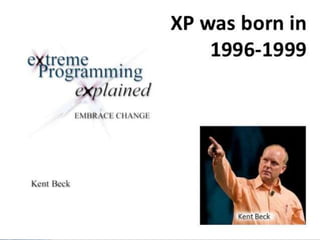
• XP history 
• XP with other methods 
• XP features 
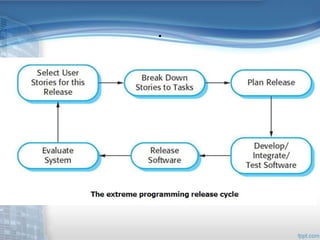
• XP release cycle 
• XP principles 
• XP values 
• The Phases of XP 
• Requirements scenarios 
• XP testing 
• XP advantages and disadvantages 
• summery
Team members 
• Mahmoud Sammy NoorEdeen 
• Mohamed Abdelrahman 
• Yasmeen Magdy 
• Yara Osama 
• Hend Ramadan
Agile method 
• Focus on software rather than it’s design & 
documentation(Working software over comprehensive documentation) 
• Involve customer in development approach 
• Individuals and interactions over processes 
• and tools 
• Rely on incremental approach(change over plan) 
• Deliver software quickly to customers
Agile method continue… 
• Not fit for larger projects 
• Rely on team members understanding 
aspects of system without documentation 
• All development stages are 
interleaved( (متداخله
8 
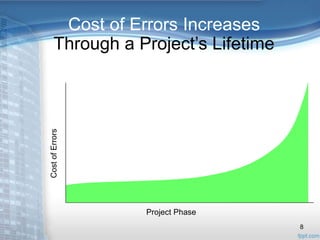
Cost of Errors Increases 
Through a Project’s Lifetime 
Project Phase 
Cost of Errors
Extreme Programming (XP) 
Features 
• New versions may be built several times 
per day; 
• Increments are delivered to customers 
every 2 weeks; 
• All tests must be run for every build and 
the build is only accepted if tests run 
successfully.
.
• The project is divided into iterations. 
(Divide your development schedule into about a dozen عشرات iterations of 1 to 3 
weeks in length. One week is the best choice even though it seems very 
short. Keep the iteration length constant through out the project) 
• Don't schedule your programming tasks in advance. Instead have 
an iteration planning meeting at the beginning of each iteration to plan 
out what will be done
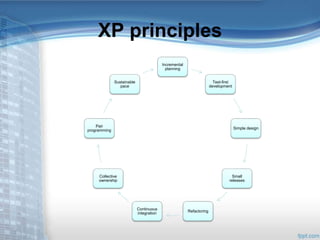
XP principles 
Incremental 
planning 
Test-first 
development 
Simple design 
Small 
releases 
Refactoring 
Continuous 
integration 
Pair 
programming 
Sustainable 
Collective 
ownership 
pace
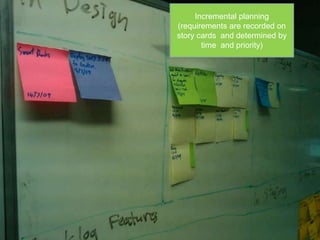
Incremental planning 
(requirements are recorded on 
story cards and determined by 
time and priority)
Small releases 
The minimal useful first
• simple design
Test first 
development
All developers are expected to refactor the code continuously as soon as 
possible code improvements are found (i.e. put comments)
. 
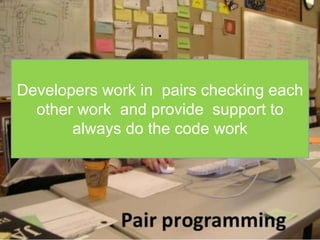
Developers work in pairs checking each 
other work and provide support to 
always do the code work
Collective ownership 
The pairs of developers work on all areas of the system, so 
that no islands of expertise develop all developers take 
responsibility for all the code any one can change any thing
Metaphor 
Names within code and other work artifacts are chosen to be descriptive of the system being created.
Coding Standard 
Each team member follows the team standard for format and appearance of the artifacts.
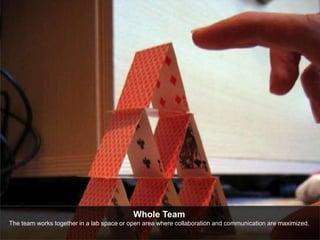
Whole Team 
The team works together in a lab space or open area where collaboration and communication are maximized.
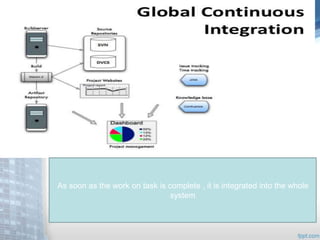
As soon as the work on task is complete , it is integrated into the whole 
system
Large amount of 
overtime are not 
acceptable 
Sustainable pace
On-site customer(representative of the end user of system)
The Values of Extreme 
Programming
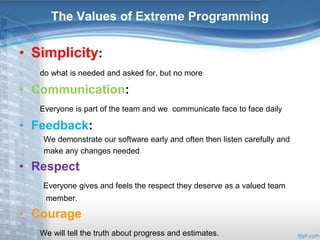
The Values of Extreme Programming 
• Simplicity: 
do what is needed and asked for, but no more 
• Communication: 
Everyone is part of the team and we communicate face to face daily 
• Feedback: 
We demonstrate our software early and often then listen carefully and 
make any changes needed 
• Respect 
Everyone gives and feels the respect they deserve as a valued team 
member. 
• Courage 
We will tell the truth about progress and estimates.
Difference between Values and 
practices 
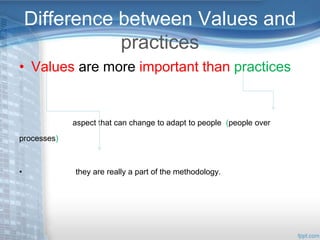
• Values are more important than practices 
aspect that can change to adapt to people (people over 
processes) 
• they are really a part of the methodology.
The Phases of XP
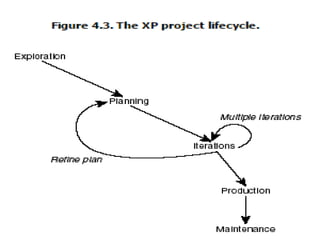
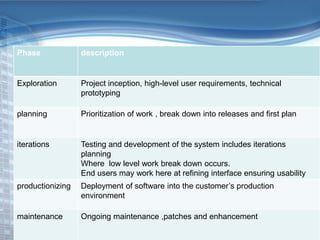
Phase description 
Exploration Project inception, high-level user requirements, technical 
prototyping 
planning Prioritization of work , break down into releases and first plan 
iterations Testing and development of the system includes iterations 
planning 
Where low level work break down occurs. 
End users may work here at refining interface ensuring usability 
productionizing Deployment of software into the customer’s production 
environment 
maintenance Ongoing maintenance ,patches and enhancement
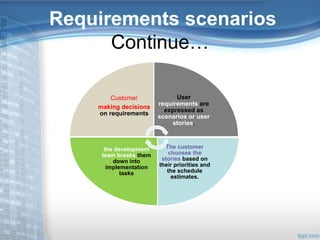
Requirements scenarios
Requirements scenarios 
Continue… 
Customer 
making decisions 
on requirements 
User 
requirements are 
expressed as 
scenarios or user 
stories. 
The customer 
chooses the 
stories based on 
their priorities and 
the schedule 
estimates. 
the development 
team breaks them 
down into 
implementation 
tasks
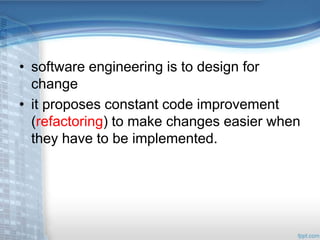
XP and change
• software engineering is to design for 
change 
• it proposes constant code improvement 
(refactoring) to make changes easier when 
they have to be implemented.
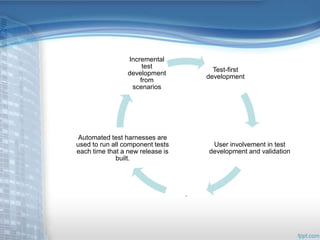
XP testing features
Test-first 
development 
User involvement in test 
development and validation 
. 
Incremental 
Automated test harnesses are 
used to run all component tests 
each time that a new release is 
built. 
test 
development 
from 
scenarios
XP testing difficulties
XP testing difficulties 
continue.. 
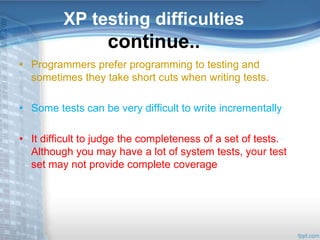
• Programmers prefer programming to testing and 
sometimes they take short cuts when writing tests. 
• Some tests can be very difficult to write incrementally 
• It difficult to judge the completeness of a set of tests. 
Although you may have a lot of system tests, your test 
set may not provide complete coverage
XP advantages 
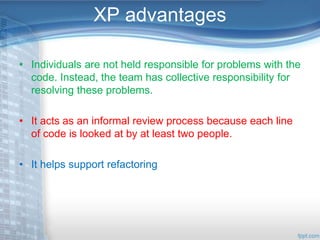
• Individuals are not held responsible for problems with the 
code. Instead, the team has collective responsibility for 
resolving these problems. 
• It acts as an informal review process because each line 
of code is looked at by at least two people. 
• It helps support refactoring
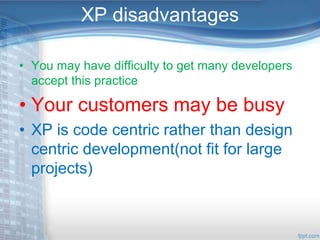
XP disadvantages 
• You may have difficulty to get many developers 
accept this practice 
• Your customers may be busy 
• XP is code centric rather than design 
centric development(not fit for large 
projects)
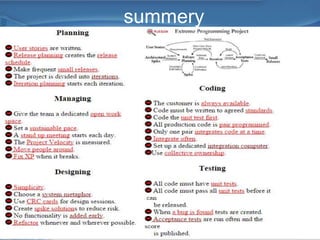
summery
notice 
• Note that CRC not in XP 
• In the summery slide
Extreme programming(XP) 
Reference 
• http://www.extremeprogramming.org 
• http://www.xprogramming.com/xpmag/wha 
tisxp.htm 
• http://www.agilemanifesto.org/ 
• http://www.poppendieck.com/ 
• The Pragmatic Programmer: From Journeyman to Master, 
by Andrew Hunt and David Thomas
Thank you for watching 
BEST WISHES

Extreme programming (xp)

  • 1.
  • 2.
    Agenda • Introduceteam • Agile method(brief) • XP history • XP with other methods • XP features • XP release cycle • XP principles • XP values • The Phases of XP • Requirements scenarios • XP testing • XP advantages and disadvantages • summery
  • 3.
    Team members •Mahmoud Sammy NoorEdeen • Mohamed Abdelrahman • Yasmeen Magdy • Yara Osama • Hend Ramadan
  • 4.
    Agile method •Focus on software rather than it’s design & documentation(Working software over comprehensive documentation) • Involve customer in development approach • Individuals and interactions over processes • and tools • Rely on incremental approach(change over plan) • Deliver software quickly to customers
  • 5.
    Agile method continue… • Not fit for larger projects • Rely on team members understanding aspects of system without documentation • All development stages are interleaved( (متداخله
  • 8.
    8 Cost ofErrors Increases Through a Project’s Lifetime Project Phase Cost of Errors
  • 9.
    Extreme Programming (XP) Features • New versions may be built several times per day; • Increments are delivered to customers every 2 weeks; • All tests must be run for every build and the build is only accepted if tests run successfully.
  • 10.
  • 11.
    • The projectis divided into iterations. (Divide your development schedule into about a dozen عشرات iterations of 1 to 3 weeks in length. One week is the best choice even though it seems very short. Keep the iteration length constant through out the project) • Don't schedule your programming tasks in advance. Instead have an iteration planning meeting at the beginning of each iteration to plan out what will be done
  • 12.
    XP principles Incremental planning Test-first development Simple design Small releases Refactoring Continuous integration Pair programming Sustainable Collective ownership pace
  • 13.
    Incremental planning (requirementsare recorded on story cards and determined by time and priority)
  • 14.
    Small releases Theminimal useful first
  • 15.
  • 16.
  • 17.
    All developers areexpected to refactor the code continuously as soon as possible code improvements are found (i.e. put comments)
  • 18.
    . Developers workin pairs checking each other work and provide support to always do the code work
  • 19.
    Collective ownership Thepairs of developers work on all areas of the system, so that no islands of expertise develop all developers take responsibility for all the code any one can change any thing
  • 20.
    Metaphor Names withincode and other work artifacts are chosen to be descriptive of the system being created.

  • 21.
    Coding Standard Eachteam member follows the team standard for format and appearance of the artifacts.
  • 22.
    Whole Team Theteam works together in a lab space or open area where collaboration and communication are maximized.
  • 23.
    As soon asthe work on task is complete , it is integrated into the whole system
  • 24.
    Large amount of overtime are not acceptable Sustainable pace
  • 25.
    On-site customer(representative ofthe end user of system)
  • 26.
    The Values ofExtreme Programming
  • 27.
    The Values ofExtreme Programming • Simplicity: do what is needed and asked for, but no more • Communication: Everyone is part of the team and we communicate face to face daily • Feedback: We demonstrate our software early and often then listen carefully and make any changes needed • Respect Everyone gives and feels the respect they deserve as a valued team member. • Courage We will tell the truth about progress and estimates.
  • 28.
    Difference between Valuesand practices • Values are more important than practices aspect that can change to adapt to people (people over processes) • they are really a part of the methodology.
  • 29.
  • 31.
    Phase description ExplorationProject inception, high-level user requirements, technical prototyping planning Prioritization of work , break down into releases and first plan iterations Testing and development of the system includes iterations planning Where low level work break down occurs. End users may work here at refining interface ensuring usability productionizing Deployment of software into the customer’s production environment maintenance Ongoing maintenance ,patches and enhancement
  • 32.
  • 33.
    Requirements scenarios Continue… Customer making decisions on requirements User requirements are expressed as scenarios or user stories. The customer chooses the stories based on their priorities and the schedule estimates. the development team breaks them down into implementation tasks
  • 34.
  • 35.
    • software engineeringis to design for change • it proposes constant code improvement (refactoring) to make changes easier when they have to be implemented.
  • 36.
  • 37.
    Test-first development Userinvolvement in test development and validation . Incremental Automated test harnesses are used to run all component tests each time that a new release is built. test development from scenarios
  • 38.
  • 39.
    XP testing difficulties continue.. • Programmers prefer programming to testing and sometimes they take short cuts when writing tests. • Some tests can be very difficult to write incrementally • It difficult to judge the completeness of a set of tests. Although you may have a lot of system tests, your test set may not provide complete coverage
  • 40.
    XP advantages •Individuals are not held responsible for problems with the code. Instead, the team has collective responsibility for resolving these problems. • It acts as an informal review process because each line of code is looked at by at least two people. • It helps support refactoring
  • 41.
    XP disadvantages •You may have difficulty to get many developers accept this practice • Your customers may be busy • XP is code centric rather than design centric development(not fit for large projects)
  • 42.
  • 43.
    notice • Notethat CRC not in XP • In the summery slide
  • 44.
    Extreme programming(XP) Reference • http://www.extremeprogramming.org • http://www.xprogramming.com/xpmag/wha tisxp.htm • http://www.agilemanifesto.org/ • http://www.poppendieck.com/ • The Pragmatic Programmer: From Journeyman to Master, by Andrew Hunt and David Thomas
  • 46.
    Thank you forwatching BEST WISHES