The Attackers Advantage
Ram Charan
Taking control of uncertainty is the
fundamental leadership challenge
of our time.
Structural uncertainty is global
and atomistic.
Every uncertainty is magnified by
quantum increases in the speed of
change, largely brought about by
communications and computing
technologies.
Steering a business through
uncertainty needs a distinctly
different type of leadership.
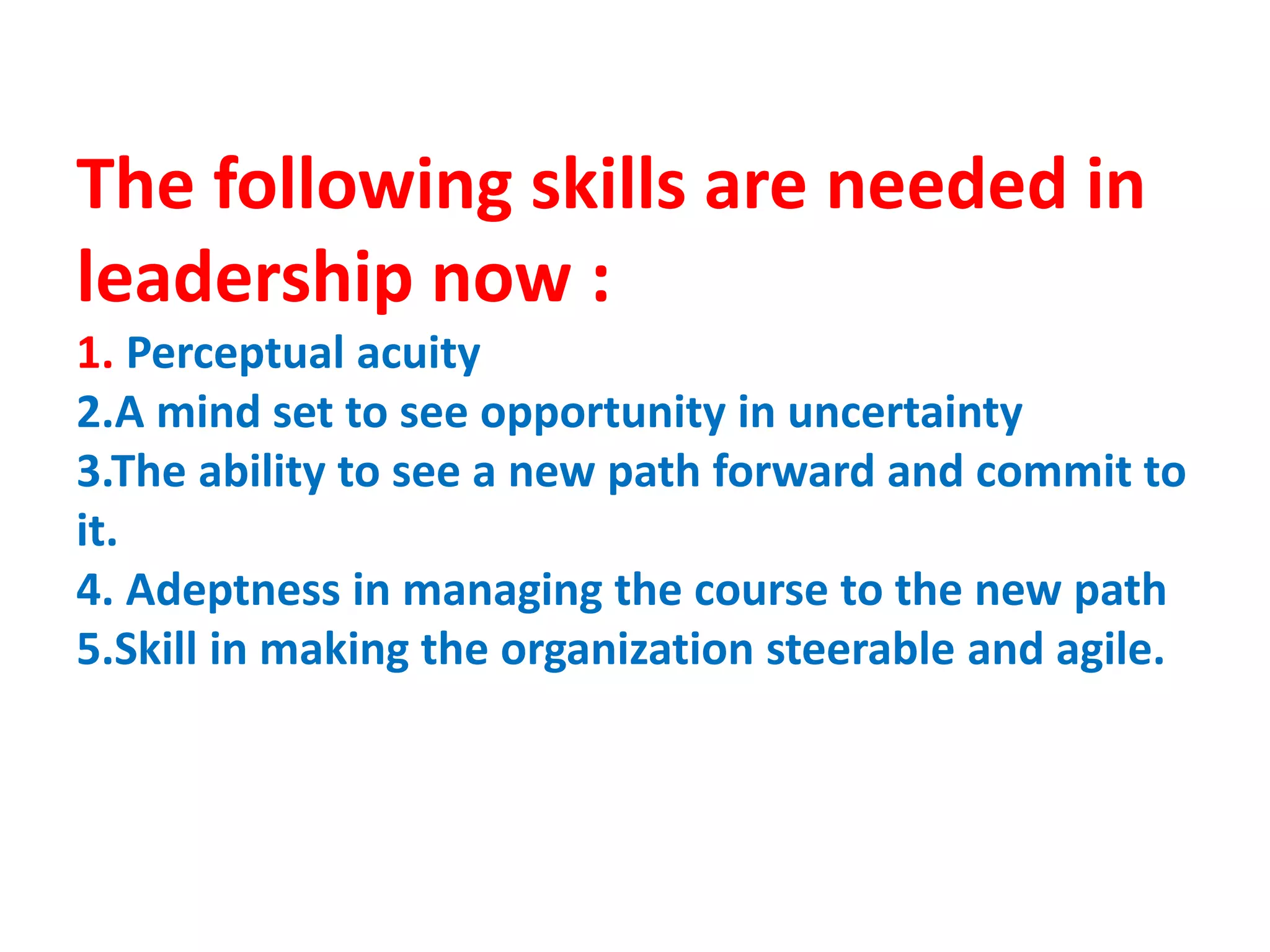
The following skills are needed in
leadership now :
1. Perceptual acuity
2.A mind set to see opportunity in uncertainty
3.The ability to see a new path forward and commit to
it.
4. Adeptness in managing the course to the new path
5.Skill in making the organization steerable and agile.
Few industries are exempt from
the threat of structural
uncertainty.
A structural uncertainty doesn’t
arrive overnight, there are
adequate signals ahead of time.
Nokia was a fantastic brand,
highly profitable with huge share
and strong geographic presence.
Nokia was challenged by a new
consumer experience based on a
new platform from Apple and
Android.
I consulted with the Nokia board
and signaled this to them in
20111. They didn’t take this
structural shift in their planning.
Many companies will need to
change the way they are
organized, managed and led.
Perceptual acuity is your human
radar to see through the fog of
uncertainty so that you can act
before others do.
Catalysts are doers who take risks
partly on facts and partly on their
imagination.
Blackrock CEO Larry Fink spends
twenty minutes everyday viewing
the news on his I pad and looks to
detect any oddity in the news that
will impact his business.
Change doesn’t wait for a
company’s annual planning cycle,
it is good for people to keep
preparing.
Two things that will greatly
improve your ability to find a path
through uncertainty : a sharp
focus on end to end value chain
and a working knowledge of
digitization and analytics.
As a mid level manager or a senior
manager, travel as much into the
market as possible, visit customers
and the field regularly. This will
help you fine tune the system to
keep reacting to change. It will
also help you fix the pain points.
In a digital world, be brave to
make the shift, vacillating doesn’t
help.
Never confuse patience with a
frustrating desire for certainty.
Many managers are well meaning
but5 become blockers due to their
behavior. They have trouble
adapting to a new perspective.
Managers who have been in an industry or a
company a long time have problems
readjusting to new change :
1. Attachment to old core competencies
2.Inability to build a new core competency
3.Fear
4.Avoiding opposition
According to Dean Stamoulis of Russell
Reynolds, a large head hunter, the biggest
derailer at senior levels is ‘ blaming and
rationalizing'. The best leaders do not whine,
which shows a level of accountability and
confidence in themselves to figure things out.
That’s what’s needed in ambiguous situations
Do you have the guts to make moves.
Intellectualizing is one thing, anyone can do it,
Pulling the trigger is a different thing. You have
top harden your inner core to see the world as
objectively as possible, think things through
carefully and act on what you see.
You can never completely eliminate
uncertainty. You have to keep judging each one
carefully.
An organization is steerable and agile when you
link its speed and character to the external
environment.
That means breaking silos and bureaucracy and
getting to the point quickly.
When Mullaly took over as CEO at Ford, he
made team working a priority and the basic
expected behaviors in the system.
Meetings should be used not to share
information but to drive accountability and
action steps to achieve goals.
Mullaly reinforced the importance of team
work through his demand for mutual respect
and collaborative problem solving in meetings.
He asked everyone to be a team player.
A key for turning around a company is to get a
group comfortable with information sharing
and joint decision making. If people have the
same information, there is less chance of them
derailing a decision.
Many times , in large companies, one individual
stalls progress because of his ego. The leader
needs to take this person out.
If a few simple habits change, every individual
will be far better.
A good team player with social skills is one who
will get seek external information, who will
play coach and umpire in a meeting, who will
work through the node to make a decision in a
team without the need for 100 % consensus.
Someone like this has to have candor, candor is
brave and is contagious in companies when the
leader is candid.

The Attackers Advantage

  • 1.
  • 2.
    Taking control ofuncertainty is the fundamental leadership challenge of our time.
  • 3.
    Structural uncertainty isglobal and atomistic.
  • 4.
    Every uncertainty ismagnified by quantum increases in the speed of change, largely brought about by communications and computing technologies.
  • 5.
    Steering a businessthrough uncertainty needs a distinctly different type of leadership.
  • 6.
    The following skillsare needed in leadership now : 1. Perceptual acuity 2.A mind set to see opportunity in uncertainty 3.The ability to see a new path forward and commit to it. 4. Adeptness in managing the course to the new path 5.Skill in making the organization steerable and agile.
  • 7.
    Few industries areexempt from the threat of structural uncertainty.
  • 8.
    A structural uncertaintydoesn’t arrive overnight, there are adequate signals ahead of time.
  • 9.
    Nokia was afantastic brand, highly profitable with huge share and strong geographic presence. Nokia was challenged by a new consumer experience based on a new platform from Apple and Android.
  • 10.
    I consulted withthe Nokia board and signaled this to them in 20111. They didn’t take this structural shift in their planning.
  • 11.
    Many companies willneed to change the way they are organized, managed and led.
  • 12.
    Perceptual acuity isyour human radar to see through the fog of uncertainty so that you can act before others do.
  • 13.
    Catalysts are doerswho take risks partly on facts and partly on their imagination.
  • 14.
    Blackrock CEO LarryFink spends twenty minutes everyday viewing the news on his I pad and looks to detect any oddity in the news that will impact his business.
  • 15.
    Change doesn’t waitfor a company’s annual planning cycle, it is good for people to keep preparing.
  • 16.
    Two things thatwill greatly improve your ability to find a path through uncertainty : a sharp focus on end to end value chain and a working knowledge of digitization and analytics.
  • 17.
    As a midlevel manager or a senior manager, travel as much into the market as possible, visit customers and the field regularly. This will help you fine tune the system to keep reacting to change. It will also help you fix the pain points.
  • 18.
    In a digitalworld, be brave to make the shift, vacillating doesn’t help.
  • 19.
    Never confuse patiencewith a frustrating desire for certainty.
  • 20.
    Many managers arewell meaning but5 become blockers due to their behavior. They have trouble adapting to a new perspective.
  • 21.
    Managers who havebeen in an industry or a company a long time have problems readjusting to new change : 1. Attachment to old core competencies 2.Inability to build a new core competency 3.Fear 4.Avoiding opposition
  • 22.
    According to DeanStamoulis of Russell Reynolds, a large head hunter, the biggest derailer at senior levels is ‘ blaming and rationalizing'. The best leaders do not whine, which shows a level of accountability and confidence in themselves to figure things out. That’s what’s needed in ambiguous situations
  • 23.
    Do you havethe guts to make moves. Intellectualizing is one thing, anyone can do it, Pulling the trigger is a different thing. You have top harden your inner core to see the world as objectively as possible, think things through carefully and act on what you see.
  • 24.
    You can nevercompletely eliminate uncertainty. You have to keep judging each one carefully.
  • 25.
    An organization issteerable and agile when you link its speed and character to the external environment. That means breaking silos and bureaucracy and getting to the point quickly.
  • 26.
    When Mullaly tookover as CEO at Ford, he made team working a priority and the basic expected behaviors in the system.
  • 27.
    Meetings should beused not to share information but to drive accountability and action steps to achieve goals.
  • 28.
    Mullaly reinforced theimportance of team work through his demand for mutual respect and collaborative problem solving in meetings. He asked everyone to be a team player.
  • 29.
    A key forturning around a company is to get a group comfortable with information sharing and joint decision making. If people have the same information, there is less chance of them derailing a decision.
  • 30.
    Many times ,in large companies, one individual stalls progress because of his ego. The leader needs to take this person out. If a few simple habits change, every individual will be far better.
  • 31.
    A good teamplayer with social skills is one who will get seek external information, who will play coach and umpire in a meeting, who will work through the node to make a decision in a team without the need for 100 % consensus. Someone like this has to have candor, candor is brave and is contagious in companies when the leader is candid.