Corporate LifecyclesChris JonesMBA 5320
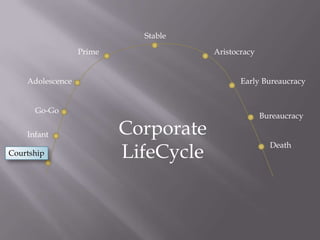
StablePrimeAristocracyAdolescenceEarly BureaucracyGo-GoBureaucracyCorporate LifeCycle InfantDeathCourtship
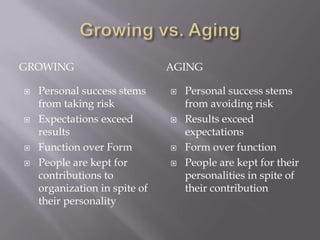
Growing vs. AgingGrowingAgingPersonal success stems from taking riskExpectations exceed resultsFunction over FormPeople are kept for contributions to organization in spite of their personalityPersonal success stems from avoiding riskResults exceed expectationsForm over functionPeople are kept for their personalities in spite of their contribution
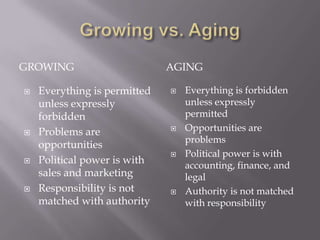
Growing vs. AgingGrowing AgingEverything is permitted unless expressly forbiddenProblems are opportunitiesPolitical power is with sales and marketingResponsibility is not matched with authorityEverything is forbidden unless expressly permittedOpportunities are problemsPolitical power is with accounting, finance, and legalAuthority is not matched with responsibility
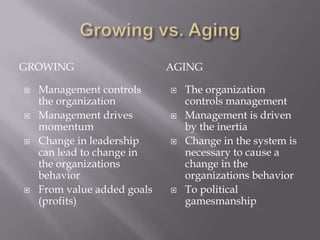
Growing vs. AgingGrowingAgingManagement controls the organizationManagement drives momentumChange in leadership can lead to change in the organizations behaviorFrom value added goals (profits)The organization controls managementManagement is driven by the inertiaChange in the system is necessary to cause a change in the organizations behaviorTo political gamesmanship
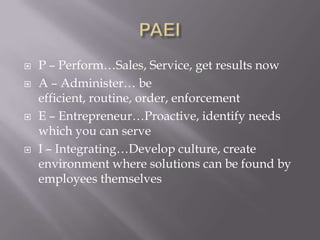
PAEIP – Perform…Sales, Service, get results nowA – Administer… be efficient, routine, order, enforcementE – Entrepreneur…Proactive, identify needs which you can serveI – Integrating…Develop culture, create environment where solutions can be found by employees themselves
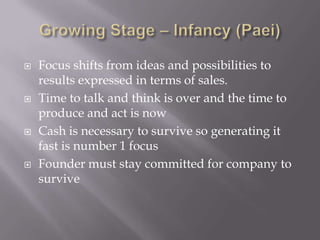
Growing Stage – Infancy (Paei)Focus shifts from ideas and possibilities to results expressed in terms of sales.Time to talk and think is over and the time to produce and act is nowCash is necessary to survive so generating it fast is number 1 focusFounder must stay committed for company to survive
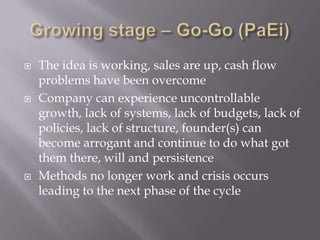
Growing stage – Go-Go (PaEi)The idea is working, sales are up, cash flow problems have been overcomeCompany can experience uncontrollable growth, lack of systems, lack of budgets, lack of policies, lack of structure, founder(s) can become arrogant and continue to do what got them there, will and persistenceMethods no longer work and crisis occurs leading to the next phase of the cycle
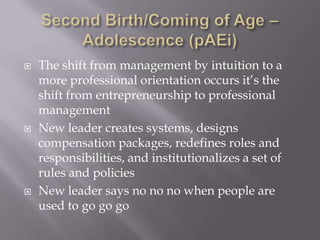
Second Birth/Coming of Age – Adolescence (pAEi)The shift from management by intuition to a more professional orientation occurs it’s the shift from entrepreneurship to professional management New leader creates systems, designs compensation packages, redefines roles and responsibilities, and institutionalizes a set of rules and policiesNew leader says no nono when people are used to go gogo
Second Birth / Coming of Age – Prime (PAEi)Organization achieves balance of self control and flexibility – they know what they’re doing, where they’re going, and how to get there
Aging Organization – Stable (PAeI)Still growing but losing flexibility, sticks to what worked in past, sense of urgency disappears, expectations for growth and new markets are loweredThis organization starts to reward those who do what they are told to do and they are more interested in interpersonal relationships than risk
Aging Organization – Aristocracy (pAeI)Organization places an emphasis on how things are done rather than what and why it is doneIndividuals are still concerned about the company’s vitality, but as a group, the operating motto is don’t make wavesThere is low internal innovation….corporation often buys other companies to acquire new products and markets
Aging Organization – Early bureaucracy (pA-i)Emphasis on who cause the problems rather than what to do about it There is much conflict, backstabbing and infighting, paranoia freezes the organization; everyone is lying low, focus is on internal turf warsThe external customer is a nuisance
Aging organization - Bureaucracy and death (-A--)Has many systems with little functional orientationDisassociates from its environment, and focuses mostly on itselfTo work effectively with the organization, customers must develop elaborate approaches to bypass or break through the system

Corporate Lifecycle Presentation

  • 1.
  • 2.
  • 3.
    Growing vs. AgingGrowingAgingPersonalsuccess stems from taking riskExpectations exceed resultsFunction over FormPeople are kept for contributions to organization in spite of their personalityPersonal success stems from avoiding riskResults exceed expectationsForm over functionPeople are kept for their personalities in spite of their contribution
  • 4.
    Growing vs. AgingGrowingAgingEverything is permitted unless expressly forbiddenProblems are opportunitiesPolitical power is with sales and marketingResponsibility is not matched with authorityEverything is forbidden unless expressly permittedOpportunities are problemsPolitical power is with accounting, finance, and legalAuthority is not matched with responsibility
  • 5.
    Growing vs. AgingGrowingAgingManagementcontrols the organizationManagement drives momentumChange in leadership can lead to change in the organizations behaviorFrom value added goals (profits)The organization controls managementManagement is driven by the inertiaChange in the system is necessary to cause a change in the organizations behaviorTo political gamesmanship
  • 6.
    PAEIP – Perform…Sales,Service, get results nowA – Administer… be efficient, routine, order, enforcementE – Entrepreneur…Proactive, identify needs which you can serveI – Integrating…Develop culture, create environment where solutions can be found by employees themselves
  • 7.
    Growing Stage –Infancy (Paei)Focus shifts from ideas and possibilities to results expressed in terms of sales.Time to talk and think is over and the time to produce and act is nowCash is necessary to survive so generating it fast is number 1 focusFounder must stay committed for company to survive
  • 8.
    Growing stage –Go-Go (PaEi)The idea is working, sales are up, cash flow problems have been overcomeCompany can experience uncontrollable growth, lack of systems, lack of budgets, lack of policies, lack of structure, founder(s) can become arrogant and continue to do what got them there, will and persistenceMethods no longer work and crisis occurs leading to the next phase of the cycle
  • 9.
    Second Birth/Coming ofAge – Adolescence (pAEi)The shift from management by intuition to a more professional orientation occurs it’s the shift from entrepreneurship to professional management New leader creates systems, designs compensation packages, redefines roles and responsibilities, and institutionalizes a set of rules and policiesNew leader says no nono when people are used to go gogo
  • 10.
    Second Birth /Coming of Age – Prime (PAEi)Organization achieves balance of self control and flexibility – they know what they’re doing, where they’re going, and how to get there
  • 11.
    Aging Organization –Stable (PAeI)Still growing but losing flexibility, sticks to what worked in past, sense of urgency disappears, expectations for growth and new markets are loweredThis organization starts to reward those who do what they are told to do and they are more interested in interpersonal relationships than risk
  • 12.
    Aging Organization –Aristocracy (pAeI)Organization places an emphasis on how things are done rather than what and why it is doneIndividuals are still concerned about the company’s vitality, but as a group, the operating motto is don’t make wavesThere is low internal innovation….corporation often buys other companies to acquire new products and markets
  • 13.
    Aging Organization –Early bureaucracy (pA-i)Emphasis on who cause the problems rather than what to do about it There is much conflict, backstabbing and infighting, paranoia freezes the organization; everyone is lying low, focus is on internal turf warsThe external customer is a nuisance
  • 14.
    Aging organization -Bureaucracy and death (-A--)Has many systems with little functional orientationDisassociates from its environment, and focuses mostly on itselfTo work effectively with the organization, customers must develop elaborate approaches to bypass or break through the system