The Art and Science of
Developing CSMs who
Love Their Job
Introduction
Sydney
Glassdoor is a recruiting company
To help people find jobs and companies
they love
Does it really matter whether your Customer
Success Managers love their job?
YES(There are at least 3 reasons you should care about this)
1. Engaged employees have higher productivity
• Disengaged employees have 37% higher absenteeism and
produce 60% more errors and defects [Gallup]
• Employees who are engaged are 27% more likely to
demonstrate “Excellent” performance [Gallup]
2. Engagement impacts the customer experience
• “Happy staff are proud staff and proud staff deliver excellent
customer service” - Virgin
• Engaged employees are more innovative [BI Worldwide]
• Engaged employees are less likely to leave and more tenured
employees develop more expertise [BI Worldwide]
• Customer retention is higher when employees are more
engaged [Cvent]
3. Engagement predicts financial performance
• Organizations with highly engaged employees report revenue
growth >2X their peers [Kenan-Flagler Business School]
• Companies with higher employee ratings on Glassdoor
demonstrate higher revenue per employee, higher market
value and outperform the overall stock market
What factors most impact employee engagement?
• Pay
• Culture
• Career progression
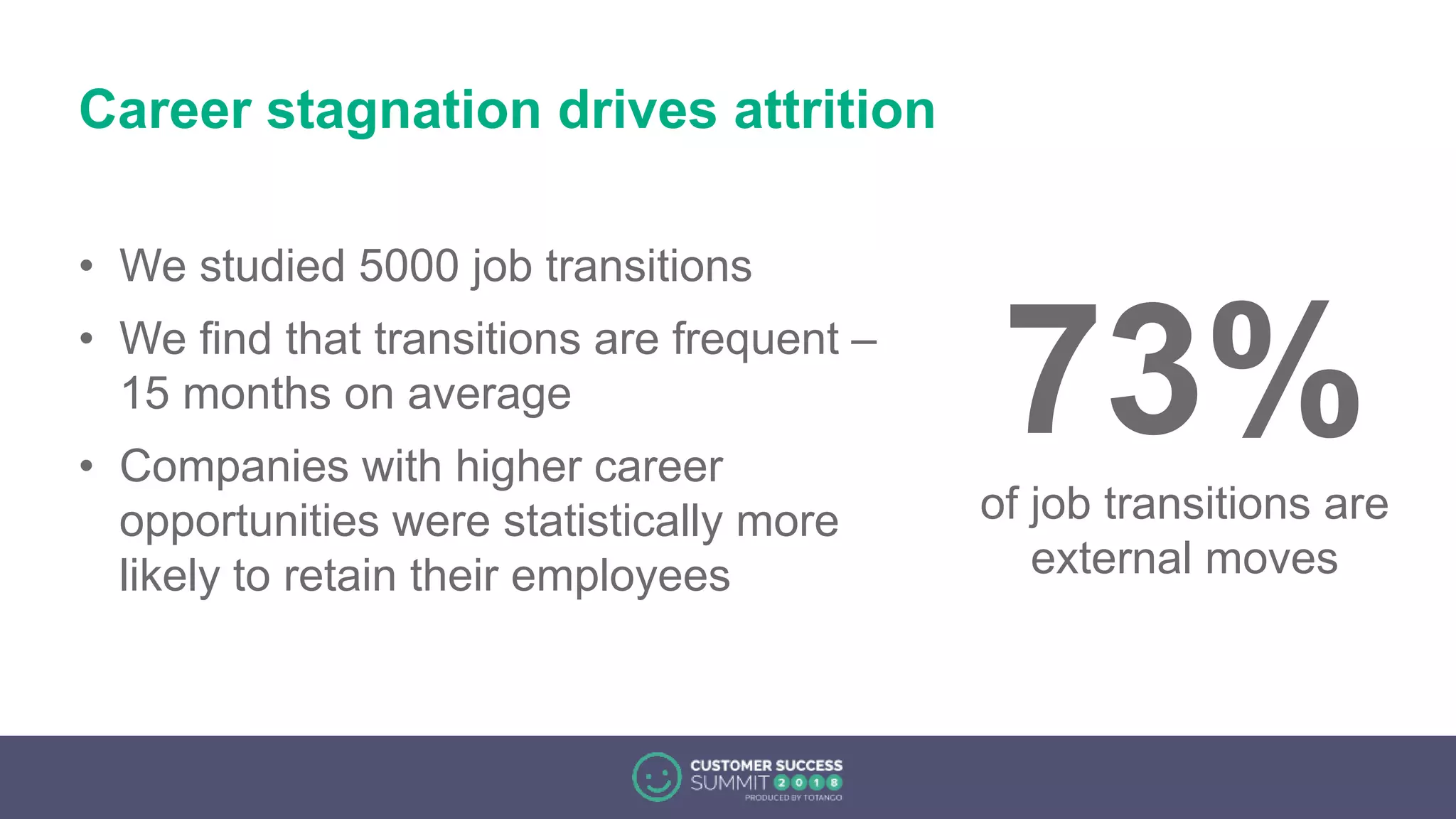
Career stagnation drives attrition
• We studied 5000 job transitions
• We find that transitions are frequent –
15 months on average
• Companies with higher career
opportunities were statistically more
likely to retain their employees
73%of job transitions are
external moves
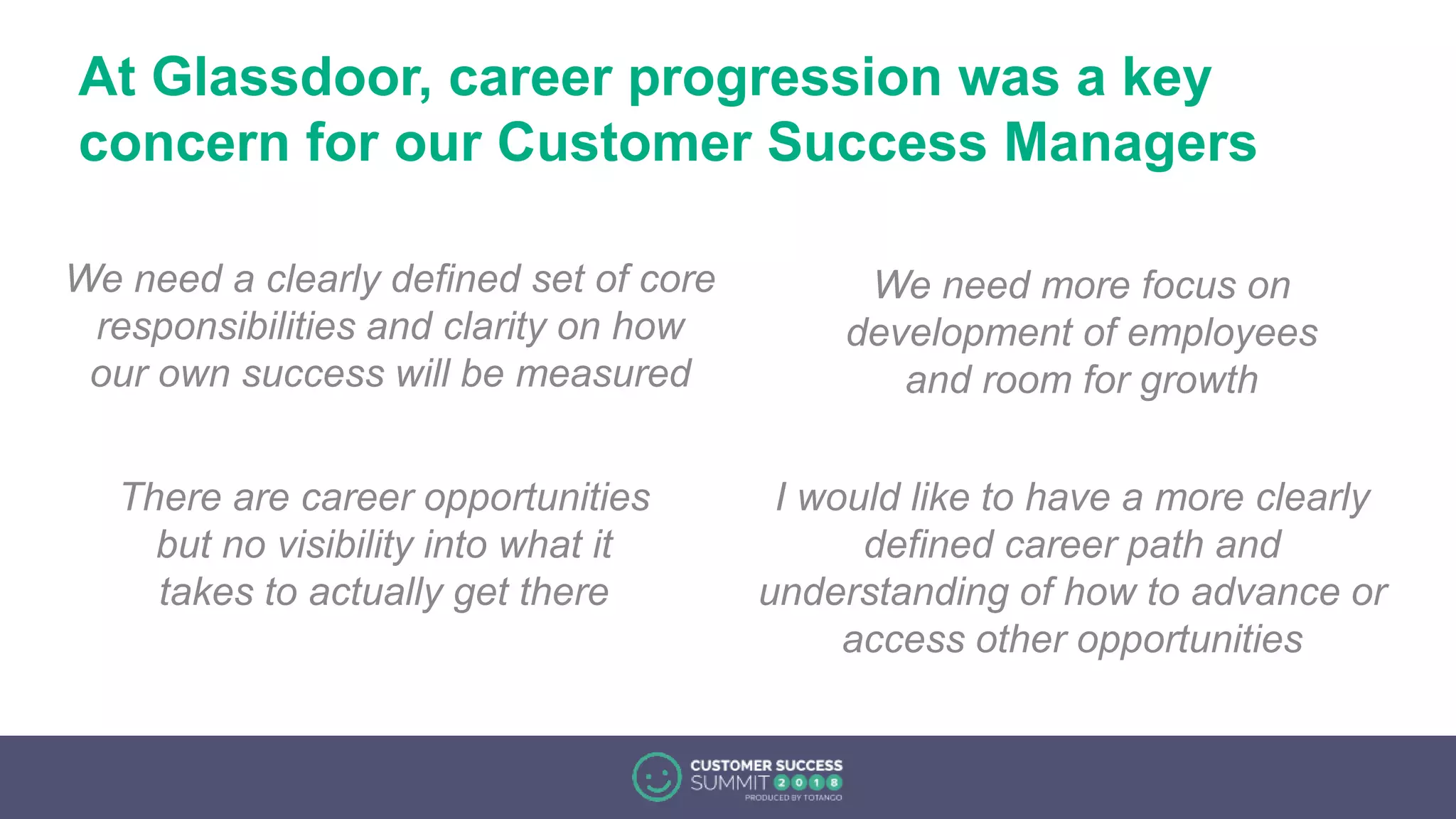
At Glassdoor, career progression was a key
concern for our Customer Success Managers
I would like to have a more clearly
defined career path and
understanding of how to advance or
access other opportunities
We need a clearly defined set of core
responsibilities and clarity on how
our own success will be measured
We need more focus on
development of employees
and room for growth
There are career opportunities
but no visibility into what it
takes to actually get there
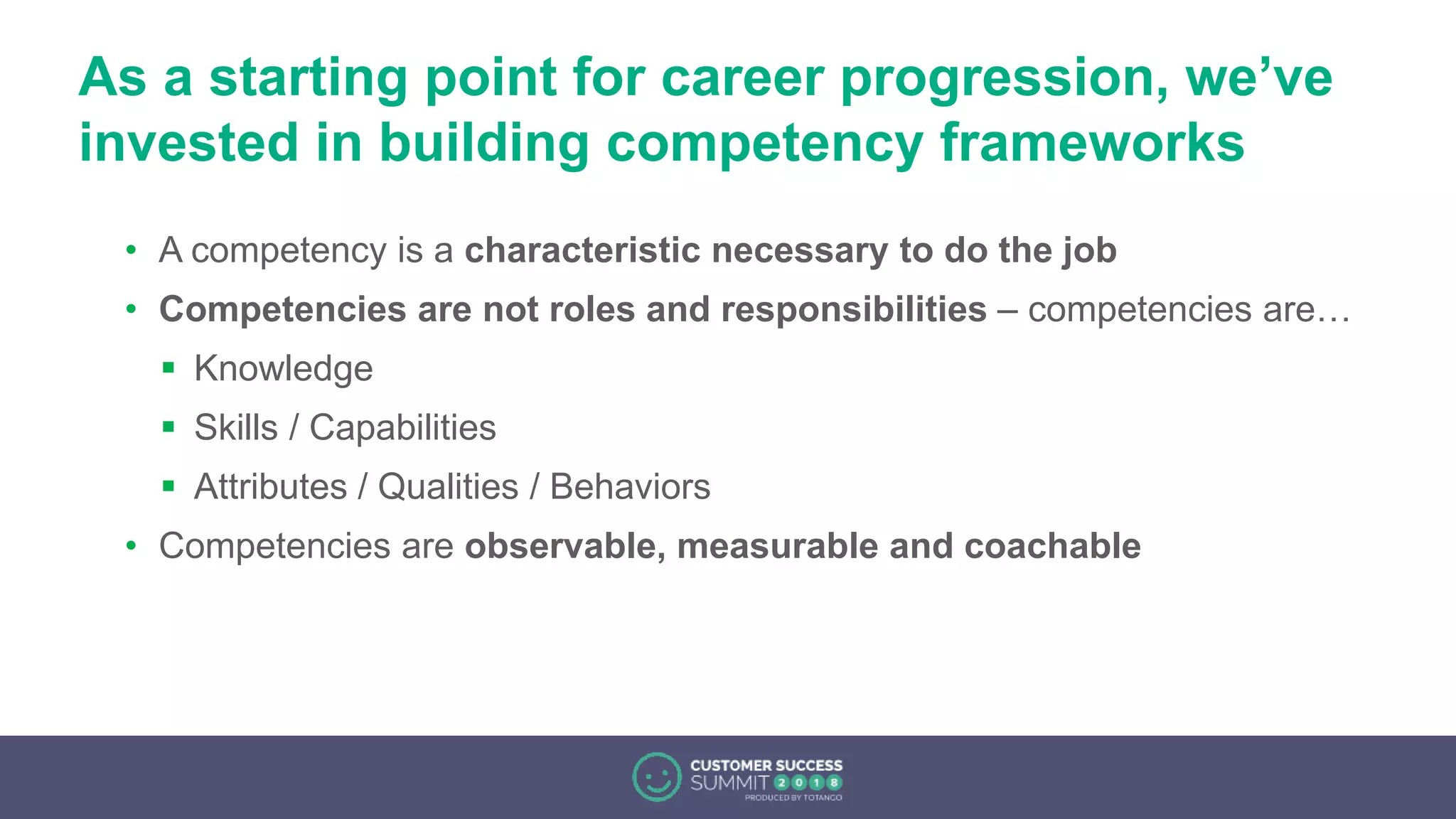
As a starting point for career progression, we’ve
invested in building competency frameworks
• A competency is a characteristic necessary to do the job
• Competencies are not roles and responsibilities – competencies are…
 Knowledge
 Skills / Capabilities
 Attributes / Qualities / Behaviors
• Competencies are observable, measurable and coachable
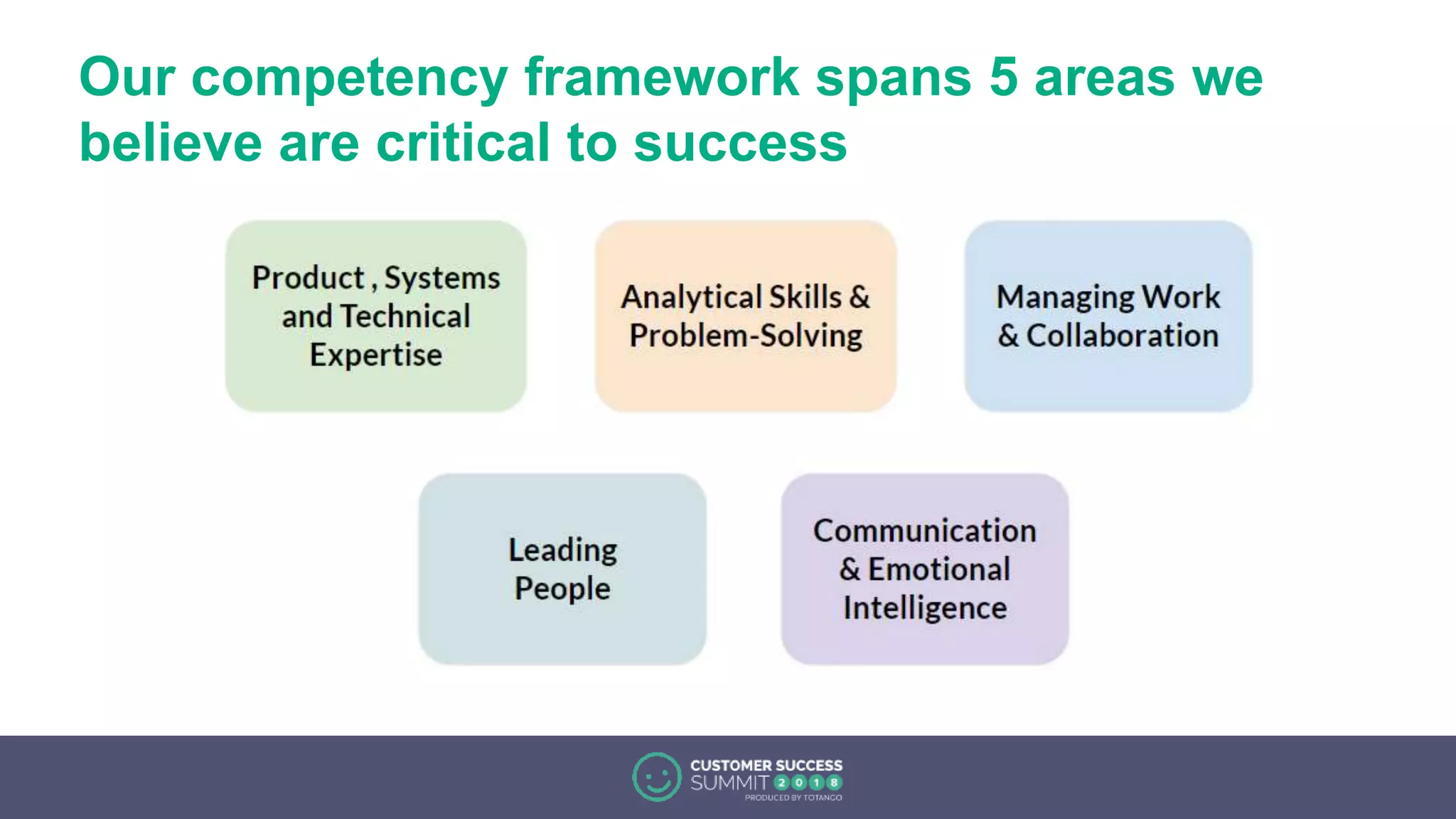
Our competency framework spans 5 areas we
believe are critical to success
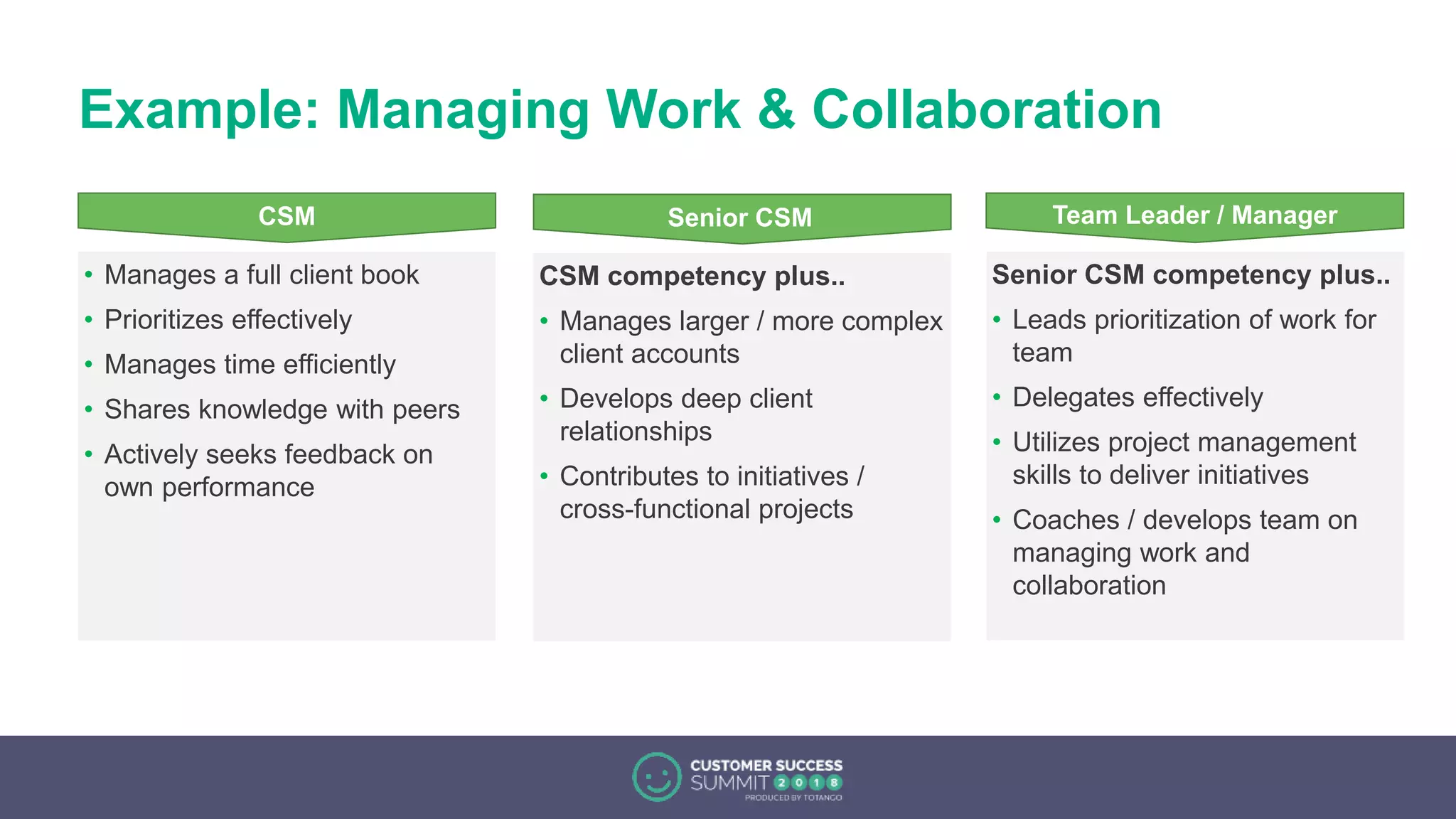
Example: Managing Work & Collaboration
Team Leader / Manager
Senior CSM competency plus..
• Leads prioritization of work for
team
• Delegates effectively
• Utilizes project management
skills to deliver initiatives
• Coaches / develops team on
managing work and
collaboration
ManagerManager Senior CSM
CSM competency plus..
• Manages larger / more complex
client accounts
• Develops deep client
relationships
• Contributes to initiatives /
cross-functional projects
CSM
• Manages a full client book
• Prioritizes effectively
• Manages time efficiently
• Shares knowledge with peers
• Actively seeks feedback on
own performance
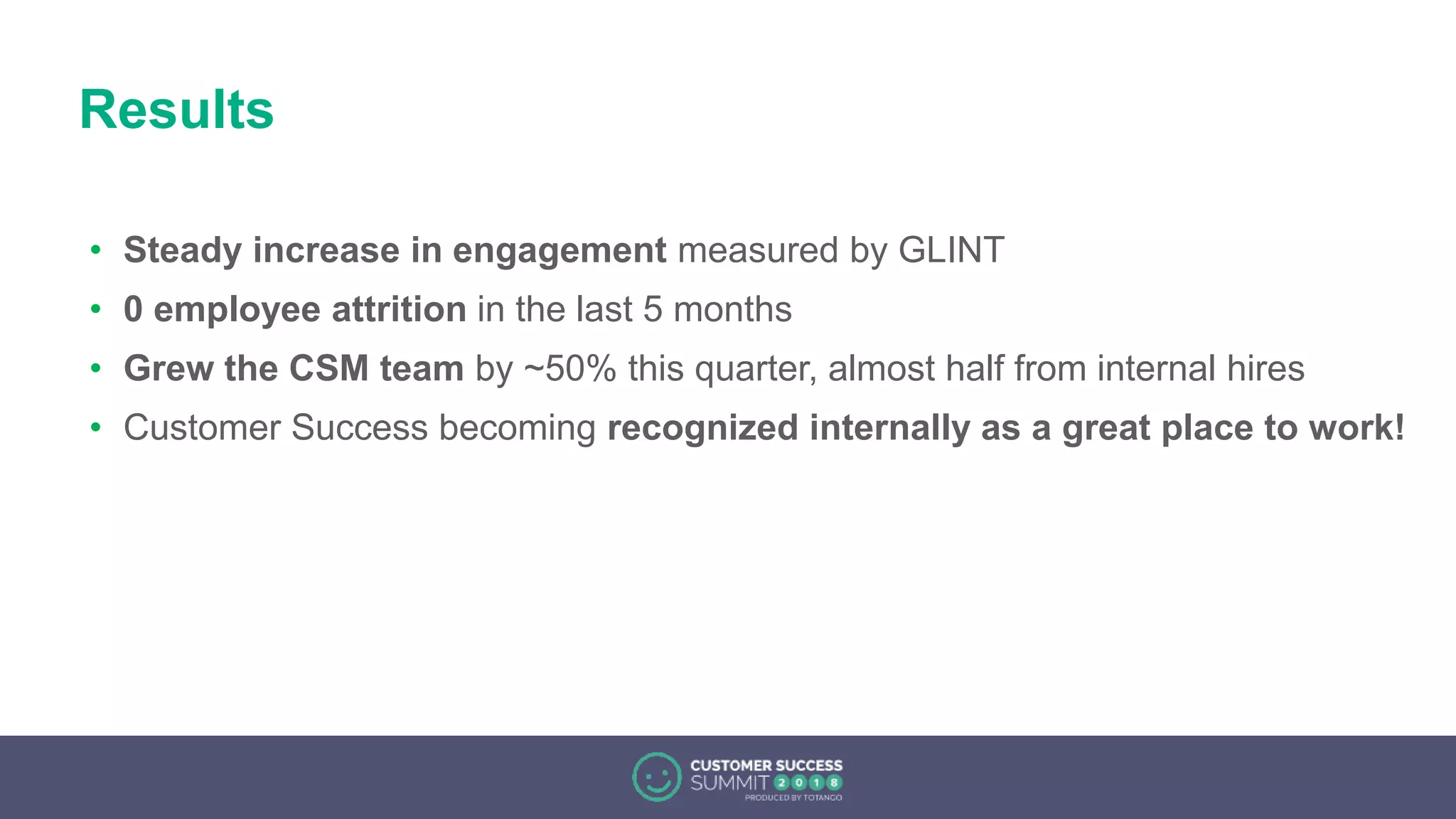
Results
• Steady increase in engagement measured by GLINT
• 0 employee attrition in the last 5 months
• Grew the CSM team by ~50% this quarter, almost half from internal hires
• Customer Success becoming recognized internally as a great place to work!
Recommendations
1. Measure engagement
2. Understanding the drivers
3. Assess Pay, Career Progression and Culture
4. Develop competency frameworks and career paths
5. Rinse. Repeat.
Questions?
Thank you!

The Art and Science of Developing CSMs That Love Their Job - CSSummit18

  • 1.
    The Art andScience of Developing CSMs who Love Their Job
  • 2.
  • 3.
    Glassdoor is arecruiting company To help people find jobs and companies they love
  • 4.
    Does it reallymatter whether your Customer Success Managers love their job?
  • 5.
    YES(There are atleast 3 reasons you should care about this)
  • 6.
    1. Engaged employeeshave higher productivity • Disengaged employees have 37% higher absenteeism and produce 60% more errors and defects [Gallup] • Employees who are engaged are 27% more likely to demonstrate “Excellent” performance [Gallup]
  • 7.
    2. Engagement impactsthe customer experience • “Happy staff are proud staff and proud staff deliver excellent customer service” - Virgin • Engaged employees are more innovative [BI Worldwide] • Engaged employees are less likely to leave and more tenured employees develop more expertise [BI Worldwide] • Customer retention is higher when employees are more engaged [Cvent]
  • 8.
    3. Engagement predictsfinancial performance • Organizations with highly engaged employees report revenue growth >2X their peers [Kenan-Flagler Business School] • Companies with higher employee ratings on Glassdoor demonstrate higher revenue per employee, higher market value and outperform the overall stock market
  • 9.
    What factors mostimpact employee engagement? • Pay • Culture • Career progression
  • 10.
    Career stagnation drivesattrition • We studied 5000 job transitions • We find that transitions are frequent – 15 months on average • Companies with higher career opportunities were statistically more likely to retain their employees 73%of job transitions are external moves
  • 11.
    At Glassdoor, careerprogression was a key concern for our Customer Success Managers I would like to have a more clearly defined career path and understanding of how to advance or access other opportunities We need a clearly defined set of core responsibilities and clarity on how our own success will be measured We need more focus on development of employees and room for growth There are career opportunities but no visibility into what it takes to actually get there
  • 12.
    As a startingpoint for career progression, we’ve invested in building competency frameworks • A competency is a characteristic necessary to do the job • Competencies are not roles and responsibilities – competencies are…  Knowledge  Skills / Capabilities  Attributes / Qualities / Behaviors • Competencies are observable, measurable and coachable
  • 13.
    Our competency frameworkspans 5 areas we believe are critical to success
  • 14.
    Example: Managing Work& Collaboration Team Leader / Manager Senior CSM competency plus.. • Leads prioritization of work for team • Delegates effectively • Utilizes project management skills to deliver initiatives • Coaches / develops team on managing work and collaboration ManagerManager Senior CSM CSM competency plus.. • Manages larger / more complex client accounts • Develops deep client relationships • Contributes to initiatives / cross-functional projects CSM • Manages a full client book • Prioritizes effectively • Manages time efficiently • Shares knowledge with peers • Actively seeks feedback on own performance
  • 15.
    Results • Steady increasein engagement measured by GLINT • 0 employee attrition in the last 5 months • Grew the CSM team by ~50% this quarter, almost half from internal hires • Customer Success becoming recognized internally as a great place to work!
  • 16.
    Recommendations 1. Measure engagement 2.Understanding the drivers 3. Assess Pay, Career Progression and Culture 4. Develop competency frameworks and career paths 5. Rinse. Repeat.
  • 17.
  • 18.