

Logosynthesis
on the Boundary
of Coaching and
Psychotherapy
© 2015, DR. WILLEM LAMMERS
B A H N H O F S T R A S S E 3 8 C H – 7 3 1 0 B A D R A G A Z
WWW.LOGOSYNTHESIS.NET INFO@LOGOSYNTHESIS.NET
Issues
 Definitions of psychotherapy and coaching
 The application of Logosynthesis in these fields
 10 tips for coaches to stay on the safe side
Psychotherapy
 Definition:
 Psychotherapy is the treatment of a patient's mental
health problems by talking with a psychiatrist,
psychologist, licensed clinical social worker or other
trained practitioner
 Its purpose is the exploration of thoughts, feelings and
behaviour for the purpose of problem solving or
achieving higher levels of functioning
Coaching
 Definition (ICF):
 Coaching is partnering with clients in a thought-provoking
and creative process that inspires them to maximise their
personal and professional potential
 The emphasis in coaching is on fulfilling tasks and
roles in everyday life:
 as a professional in organisations
 as a member of groups and teams
 in families
Boundaries
 Questions about boundaries between coaching
and psychotherapy with Logosynthesis come up
time and time again
 Ethical and professional issues are connected
with the question
 Coaches and psychological counsellors can
even run into legal and professional problems
if the boundaries are unclear
Logosynthesis
 Logosynthesis always works from the same
energetic framework
 However, the context may help you decide
which techniques to use
 The following recommendations may help you
to stay within the framework of coaching
How to Avoid Boundary Issues
as a Coach
1. Avoid Diagnostic Categories
 Avoid using established clinical terms and
diagnoses:
 Trauma, Anxiety Disorder, Phobia etc.
 To work with Logosynthesis, it's sufficient to know if
and where energy is blocked or frozen and to
specify the blockage type:
 Frozen structures in the triggers: visual, auditory,
kinaesthetic, olfactory (VAKO)
 Frozen structures in the reactions: physical, emotional,
cognitive, behavioural
2. Stay Close to the Client
 Start from the topic presented by the client and
remain close to the client’s language
 Don’t interpret or search for possible sources of the
presented symptoms
 Don't explicitly ask for childhood experiences
 A counselling intervention:
 Have you experienced that more often?
 A psychotherapeutic intervention:
 Where do you recognise that from?
3. Focus on Beliefs and Fantasies
 Place more emphasis in your work on the
identification and dissolution of beliefs and
fantasies than on memories of distressing events
 Then it will be easier to avoid issues considered
psychotherapeutic
4. Start from the Present
 When resolving triggers, start with distressing
representations of people and situations in the
client's current life
 Work with formulations like:
 This representation of X and everything it stands for
 That way aspects of the past will be neutralised
without being immediately activated
5. Take the Time for the Relationship
 Take plenty of time to build up a working
relationship based on care, support and
accuracy
 This will make the client feel safe and secure with
you if archaic material spontaneously emerges
in the process
Stay Three Steps Behind the Client
 Stay three steps behind the client at all times
 Don't go ahead of him or her:
 Doing so may mean that you introduce your own
images and interpretations
 If you stay behind, no disturbing experiences will
be activated unnecessarily or prematurely
 It also stabilises and confirms the working relationship
7. Reconnect to the Presented
Problem
 During the process, return to the problem that
the client first presented, again and again
 A link will then remain between the client's
conscious reason for seeing you and the
Logosynthesis process with the sentences
 Tendencies towards regression will be reduced
8. Translate the Client’s Psychology
into Logosynthesis Terms
 Clients often have their own psychological
theories to justify or explain their reaction
patterns and the corresponding suffering
 Try to understand and interpret clients' own
psychological interpretations in energy terms,
as triggers and reactions
 Don’t follow clients in their own psychology
9. Think Energy
 Avoid using the sentences for any psychological
concepts or constructs: Think Energy
 Even if the sentences could work in such cases,
they'll work better and more precisely if they're
related to concrete representations of sensory
experiences
10. Use Images and Metaphors
 The use of images and metaphors as topics for
the sentences also allows for processing without
direct reactivation of disturbing events
 Avoid introducing your own metaphors
 Use those, which come from the client
 For the content of the sentences use those
images and metaphors that have the highest
emotional impact
Read the Handbook
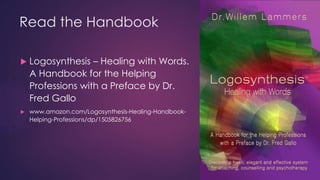
 Logosynthesis – Healing with Words.
A Handbook for the Helping
Professions with a Preface by Dr.
Fred Gallo
 www.amazon.com/Logosynthesis-Healing-Handbook-
Helping-Professions/dp/1505826756
You can also join
one of our Facebook groups:
- Logosynthesis
- Logosynthese
- Logosynthèse
- Logosintesi
Welcome to the world of Logosynthesis!
About the Author
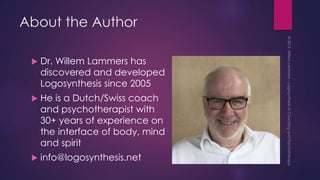
 Dr. Willem Lammers has
discovered and developed
Logosynthesis since 2005
 He is a Dutch/Swiss coach
and psychotherapist with
30+ years of experience on
the interface of body, mind
and spirit
 info@logosynthesis.net

Logosynthesis and Coaching

  • 1.
    Logosynthesis on the Boundary ofCoaching and Psychotherapy © 2015, DR. WILLEM LAMMERS
  • 2.
    B A HN H O F S T R A S S E 3 8 C H – 7 3 1 0 B A D R A G A Z WWW.LOGOSYNTHESIS.NET INFO@LOGOSYNTHESIS.NET
  • 3.
    Issues  Definitions ofpsychotherapy and coaching  The application of Logosynthesis in these fields  10 tips for coaches to stay on the safe side
  • 4.
    Psychotherapy  Definition:  Psychotherapyis the treatment of a patient's mental health problems by talking with a psychiatrist, psychologist, licensed clinical social worker or other trained practitioner  Its purpose is the exploration of thoughts, feelings and behaviour for the purpose of problem solving or achieving higher levels of functioning
  • 5.
    Coaching  Definition (ICF): Coaching is partnering with clients in a thought-provoking and creative process that inspires them to maximise their personal and professional potential  The emphasis in coaching is on fulfilling tasks and roles in everyday life:  as a professional in organisations  as a member of groups and teams  in families
  • 6.
    Boundaries  Questions aboutboundaries between coaching and psychotherapy with Logosynthesis come up time and time again  Ethical and professional issues are connected with the question  Coaches and psychological counsellors can even run into legal and professional problems if the boundaries are unclear
  • 7.
    Logosynthesis  Logosynthesis alwaysworks from the same energetic framework  However, the context may help you decide which techniques to use  The following recommendations may help you to stay within the framework of coaching
  • 8.
    How to AvoidBoundary Issues as a Coach
  • 9.
    1. Avoid DiagnosticCategories  Avoid using established clinical terms and diagnoses:  Trauma, Anxiety Disorder, Phobia etc.  To work with Logosynthesis, it's sufficient to know if and where energy is blocked or frozen and to specify the blockage type:  Frozen structures in the triggers: visual, auditory, kinaesthetic, olfactory (VAKO)  Frozen structures in the reactions: physical, emotional, cognitive, behavioural
  • 10.
    2. Stay Closeto the Client  Start from the topic presented by the client and remain close to the client’s language  Don’t interpret or search for possible sources of the presented symptoms  Don't explicitly ask for childhood experiences  A counselling intervention:  Have you experienced that more often?  A psychotherapeutic intervention:  Where do you recognise that from?
  • 11.
    3. Focus onBeliefs and Fantasies  Place more emphasis in your work on the identification and dissolution of beliefs and fantasies than on memories of distressing events  Then it will be easier to avoid issues considered psychotherapeutic
  • 12.
    4. Start fromthe Present  When resolving triggers, start with distressing representations of people and situations in the client's current life  Work with formulations like:  This representation of X and everything it stands for  That way aspects of the past will be neutralised without being immediately activated
  • 13.
    5. Take theTime for the Relationship  Take plenty of time to build up a working relationship based on care, support and accuracy  This will make the client feel safe and secure with you if archaic material spontaneously emerges in the process
  • 14.
    Stay Three StepsBehind the Client  Stay three steps behind the client at all times  Don't go ahead of him or her:  Doing so may mean that you introduce your own images and interpretations  If you stay behind, no disturbing experiences will be activated unnecessarily or prematurely  It also stabilises and confirms the working relationship
  • 15.
    7. Reconnect tothe Presented Problem  During the process, return to the problem that the client first presented, again and again  A link will then remain between the client's conscious reason for seeing you and the Logosynthesis process with the sentences  Tendencies towards regression will be reduced
  • 16.
    8. Translate theClient’s Psychology into Logosynthesis Terms  Clients often have their own psychological theories to justify or explain their reaction patterns and the corresponding suffering  Try to understand and interpret clients' own psychological interpretations in energy terms, as triggers and reactions  Don’t follow clients in their own psychology
  • 17.
    9. Think Energy Avoid using the sentences for any psychological concepts or constructs: Think Energy  Even if the sentences could work in such cases, they'll work better and more precisely if they're related to concrete representations of sensory experiences
  • 18.
    10. Use Imagesand Metaphors  The use of images and metaphors as topics for the sentences also allows for processing without direct reactivation of disturbing events  Avoid introducing your own metaphors  Use those, which come from the client  For the content of the sentences use those images and metaphors that have the highest emotional impact
  • 19.
    Read the Handbook Logosynthesis – Healing with Words. A Handbook for the Helping Professions with a Preface by Dr. Fred Gallo  www.amazon.com/Logosynthesis-Healing-Handbook- Helping-Professions/dp/1505826756
  • 20.
    You can alsojoin one of our Facebook groups: - Logosynthesis - Logosynthese - Logosynthèse - Logosintesi Welcome to the world of Logosynthesis!
  • 21.
    About the Author Dr. Willem Lammers has discovered and developed Logosynthesis since 2005  He is a Dutch/Swiss coach and psychotherapist with 30+ years of experience on the interface of body, mind and spirit  info@logosynthesis.net