MEBO RESEARCHPresentationCognitive BehaviorTherapy (CBT)
Commonalities between all Cognitive Behavior ApproachesCollaborative relationship between therapist & clientPremise psychological distress is largely a function of disturbance in cognitive processesFocus on changing cognitions behaviors to produce desired changes
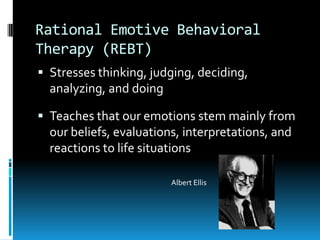
Rational Emotive Behavioral Therapy (REBT)Stresses thinking, judging, deciding, analyzing, and doingTeaches that our emotions stem mainly from our beliefs, evaluations, interpretations, and reactions to life situationsAlbert Ellis
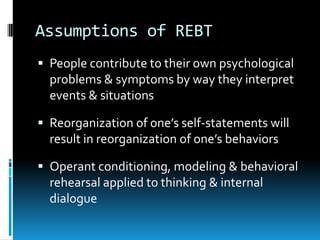
Assumptions of REBTPeople contribute to their own psychological problems & symptoms by way they interpret events & situationsReorganization of one’s self-statements will result in reorganization of one’s behaviorsOperant conditioning, modeling & behavioral rehearsal applied to thinking & internal dialogue
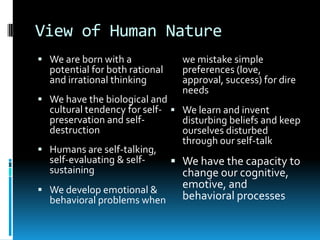
View of Human NatureWe are born with a potential for both rational and irrational thinkingWe have the biological and cultural tendency for self-preservation and self-destructionHumans are self-talking, self-evaluating & self-sustainingWe develop emotional & behavioral problems when we mistake simple preferences (love, approval, success) for dire needsWe learn and invent disturbing beliefs and keep ourselves disturbed through our self-talkWe have the capacity to change our cognitive, emotive, and behavioral processes
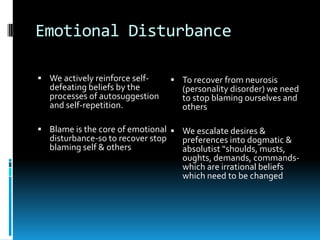
Emotional DisturbanceWe actively reinforce self-defeating beliefs by the processes of autosuggestion and self-repetition.Blame is the core of emotional disturbance-so to recover stop blaming self & othersTo recover from neurosis (personality disorder) we need to stop blaming ourselves and othersWe escalate desires & preferences into dogmatic & absolutist “shoulds, musts, oughts, demands, commands-which are irrational beliefs which need to be changed
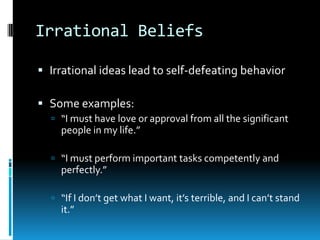
Irrational BeliefsIrrational ideas lead to self-defeating behaviorSome examples:“I must have love or approval from all the significant people in my life.”“I must perform important tasks competently and perfectly.”“If I don’t get what I want, it’s terrible, and I can’t stand it.”
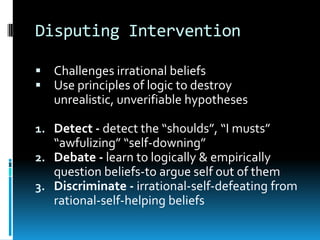
Disputing InterventionChallenges irrational beliefsUse principles of logic to destroy unrealistic, unverifiable hypothesesDetect - detect the “shoulds”, “I musts” “awfulizing” “self-downing”Debate - learn to logically & empirically question beliefs-to argue self out of themDiscriminate - irrational-self-defeating from rational-self-helping beliefs

CBT brief overview

  • 1.
  • 2.
    Commonalities between allCognitive Behavior ApproachesCollaborative relationship between therapist & clientPremise psychological distress is largely a function of disturbance in cognitive processesFocus on changing cognitions behaviors to produce desired changes
  • 3.
    Rational Emotive BehavioralTherapy (REBT)Stresses thinking, judging, deciding, analyzing, and doingTeaches that our emotions stem mainly from our beliefs, evaluations, interpretations, and reactions to life situationsAlbert Ellis
  • 4.
    Assumptions of REBTPeoplecontribute to their own psychological problems & symptoms by way they interpret events & situationsReorganization of one’s self-statements will result in reorganization of one’s behaviorsOperant conditioning, modeling & behavioral rehearsal applied to thinking & internal dialogue
  • 5.
    View of HumanNatureWe are born with a potential for both rational and irrational thinkingWe have the biological and cultural tendency for self-preservation and self-destructionHumans are self-talking, self-evaluating & self-sustainingWe develop emotional & behavioral problems when we mistake simple preferences (love, approval, success) for dire needsWe learn and invent disturbing beliefs and keep ourselves disturbed through our self-talkWe have the capacity to change our cognitive, emotive, and behavioral processes
  • 6.
    Emotional DisturbanceWe activelyreinforce self-defeating beliefs by the processes of autosuggestion and self-repetition.Blame is the core of emotional disturbance-so to recover stop blaming self & othersTo recover from neurosis (personality disorder) we need to stop blaming ourselves and othersWe escalate desires & preferences into dogmatic & absolutist “shoulds, musts, oughts, demands, commands-which are irrational beliefs which need to be changed
  • 7.
    Irrational BeliefsIrrational ideaslead to self-defeating behaviorSome examples:“I must have love or approval from all the significant people in my life.”“I must perform important tasks competently and perfectly.”“If I don’t get what I want, it’s terrible, and I can’t stand it.”
  • 8.
    Disputing InterventionChallenges irrationalbeliefsUse principles of logic to destroy unrealistic, unverifiable hypothesesDetect - detect the “shoulds”, “I musts” “awfulizing” “self-downing”Debate - learn to logically & empirically question beliefs-to argue self out of themDiscriminate - irrational-self-defeating from rational-self-helping beliefs