June 25, 2008 “ Should Your Business Be Friends with Facebook?” New research on how businesses are using Facebook and other social networking strategies -- what’s working, what’s in the way, what’s next?   Jenny Ambrozek, Bill Anderson, Victoria Axelrod, Conveners &  Facebook Group in Business Investigation Participants Eric Edelstein, Francois Gossieaux, Kimberly Samaha
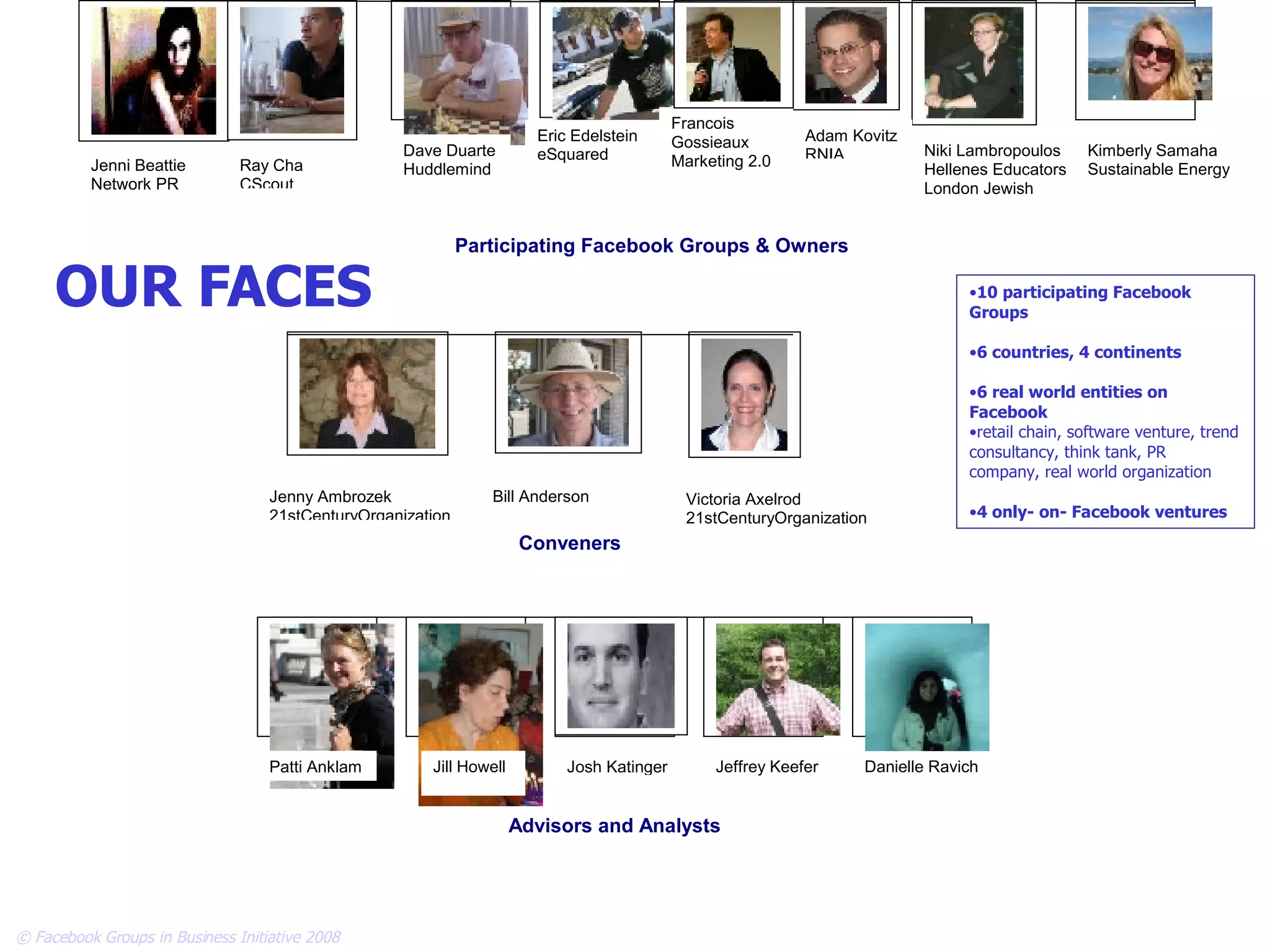
OUR FACES
FGIBI Overview What we did, when, & why What we learned about Facebook  Groups in Business 3.  Discussion  4.  “Should your business be friends with Facebook?”
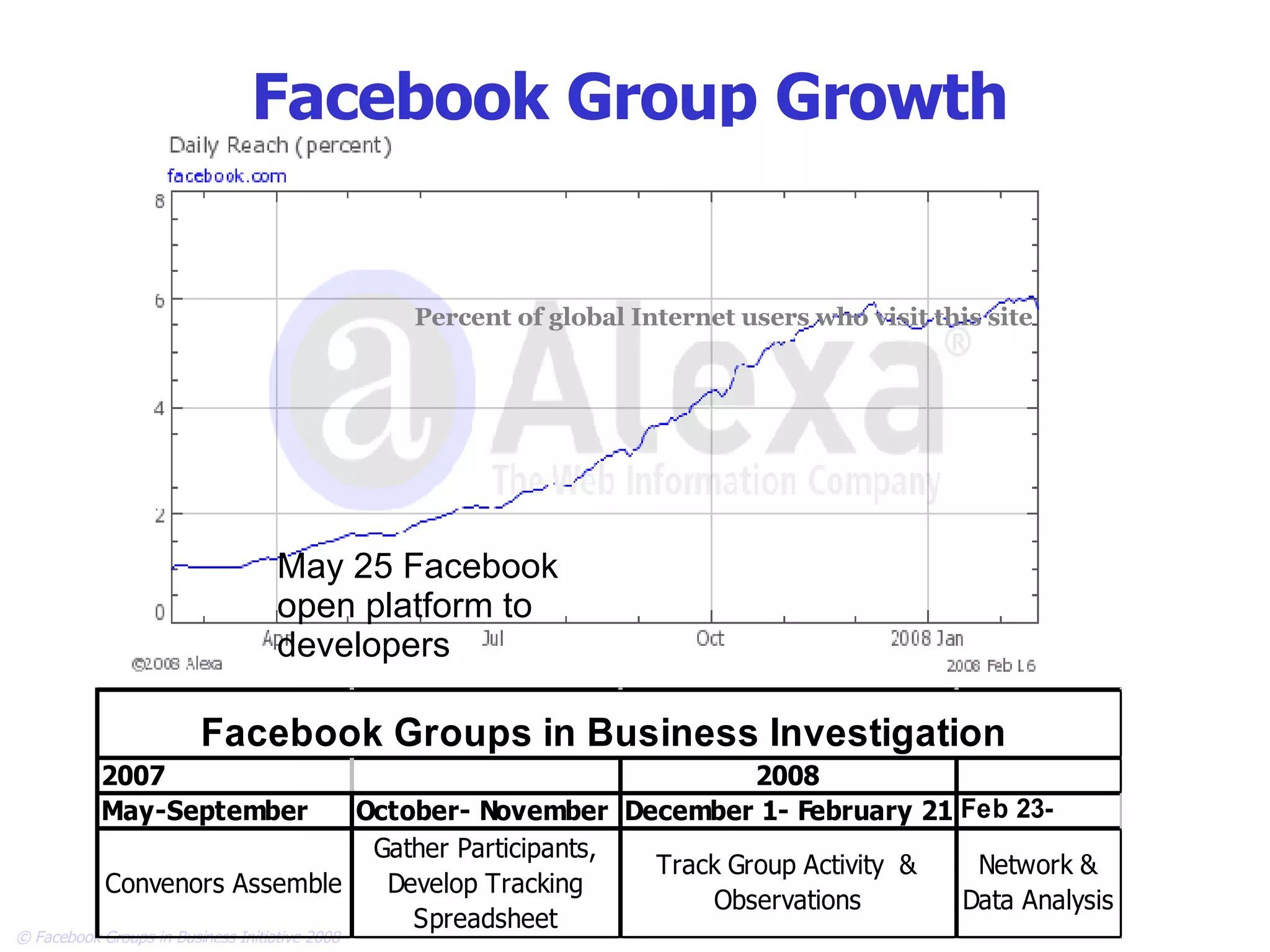
Facebook Group Growth Percent of global Internet users who visit this site May 25 Facebook open platform to developers
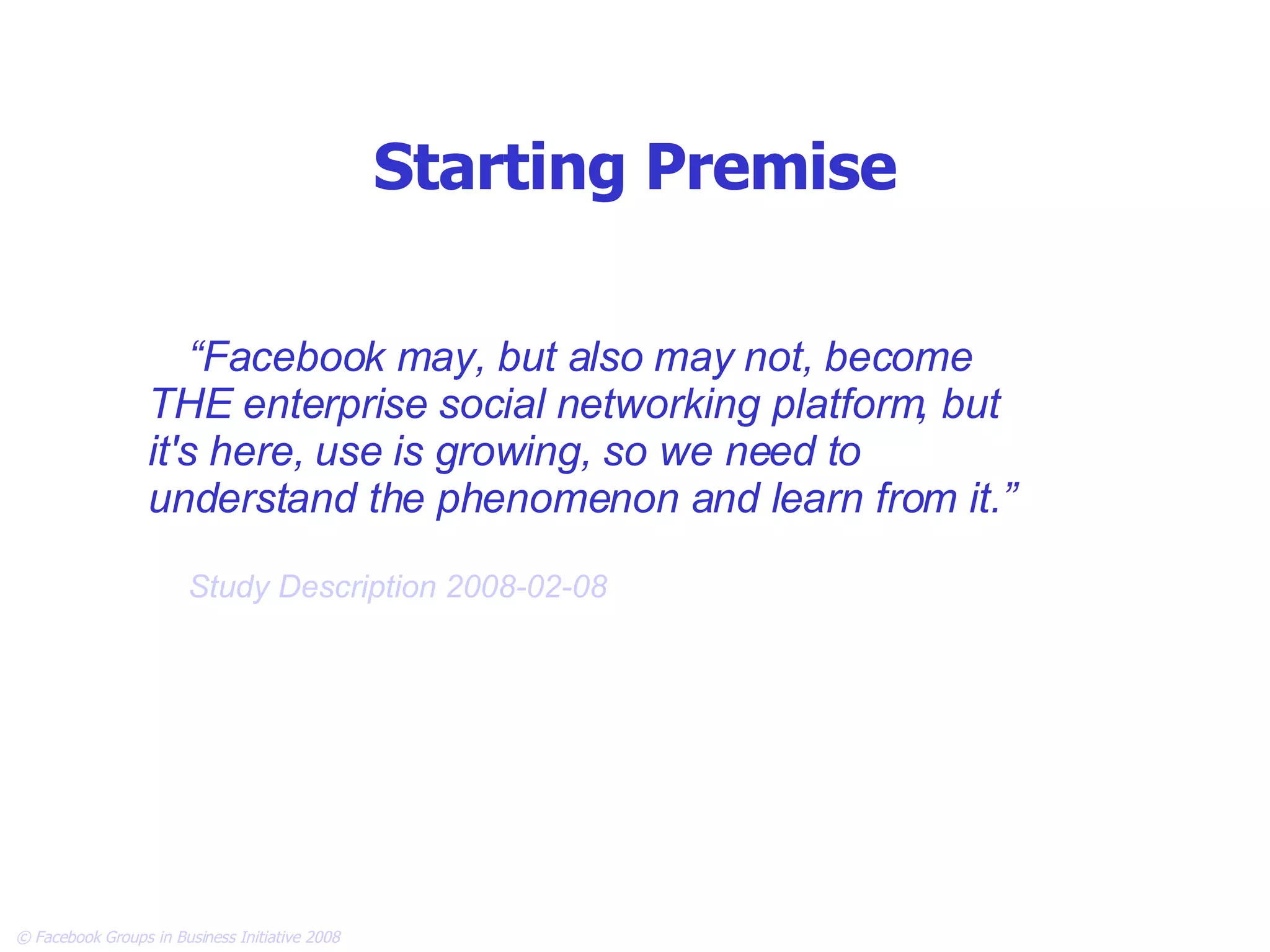
Starting Premise “ Facebook may, but also may not, become THE enterprise social networking platform, but it's here, use is growing, so we need to understand the phenomenon and learn from it.” Study Description 2008-02-08
FGIBI Co- Convener William L. Anderson
 
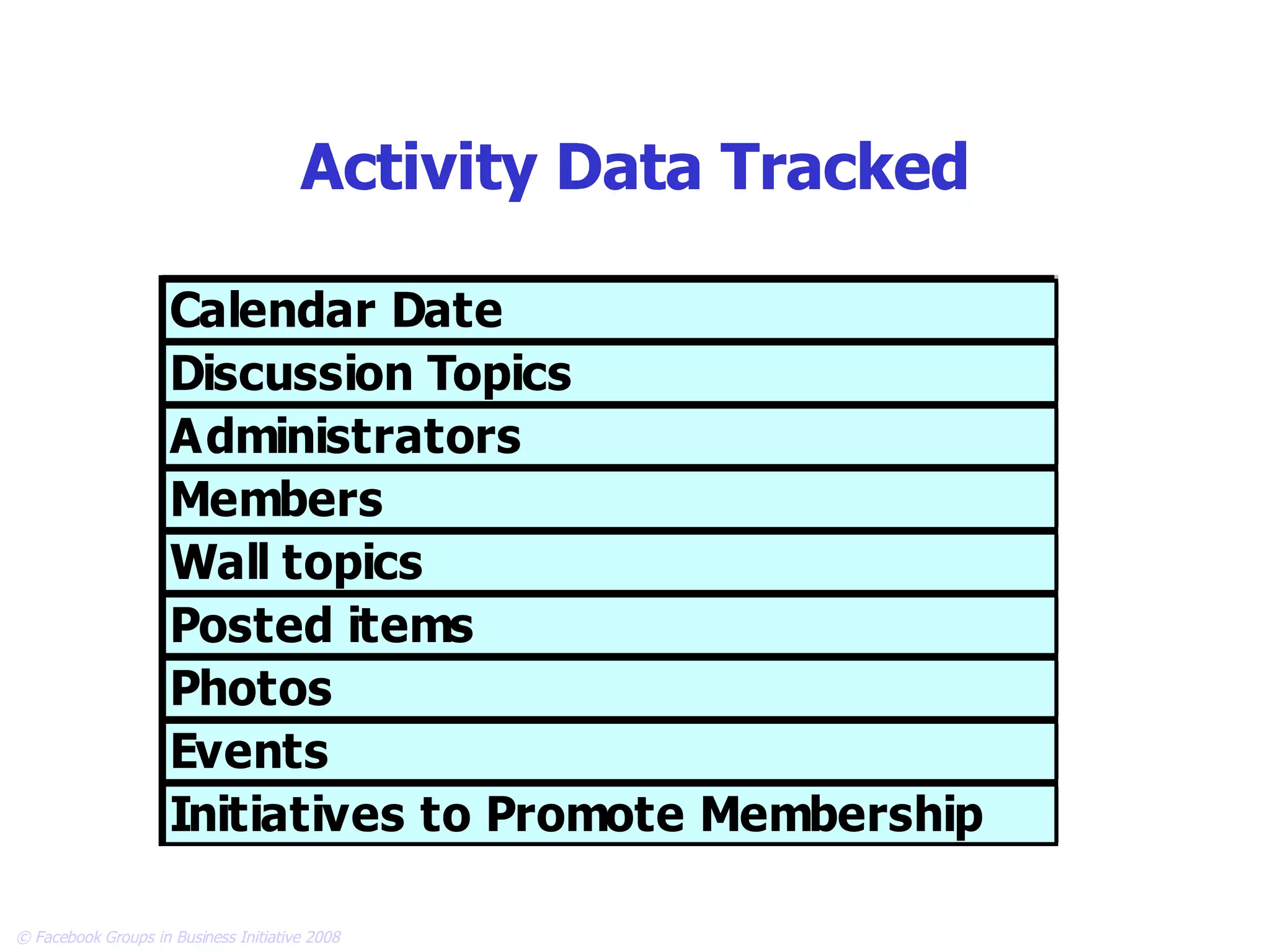
Activity Data Tracked
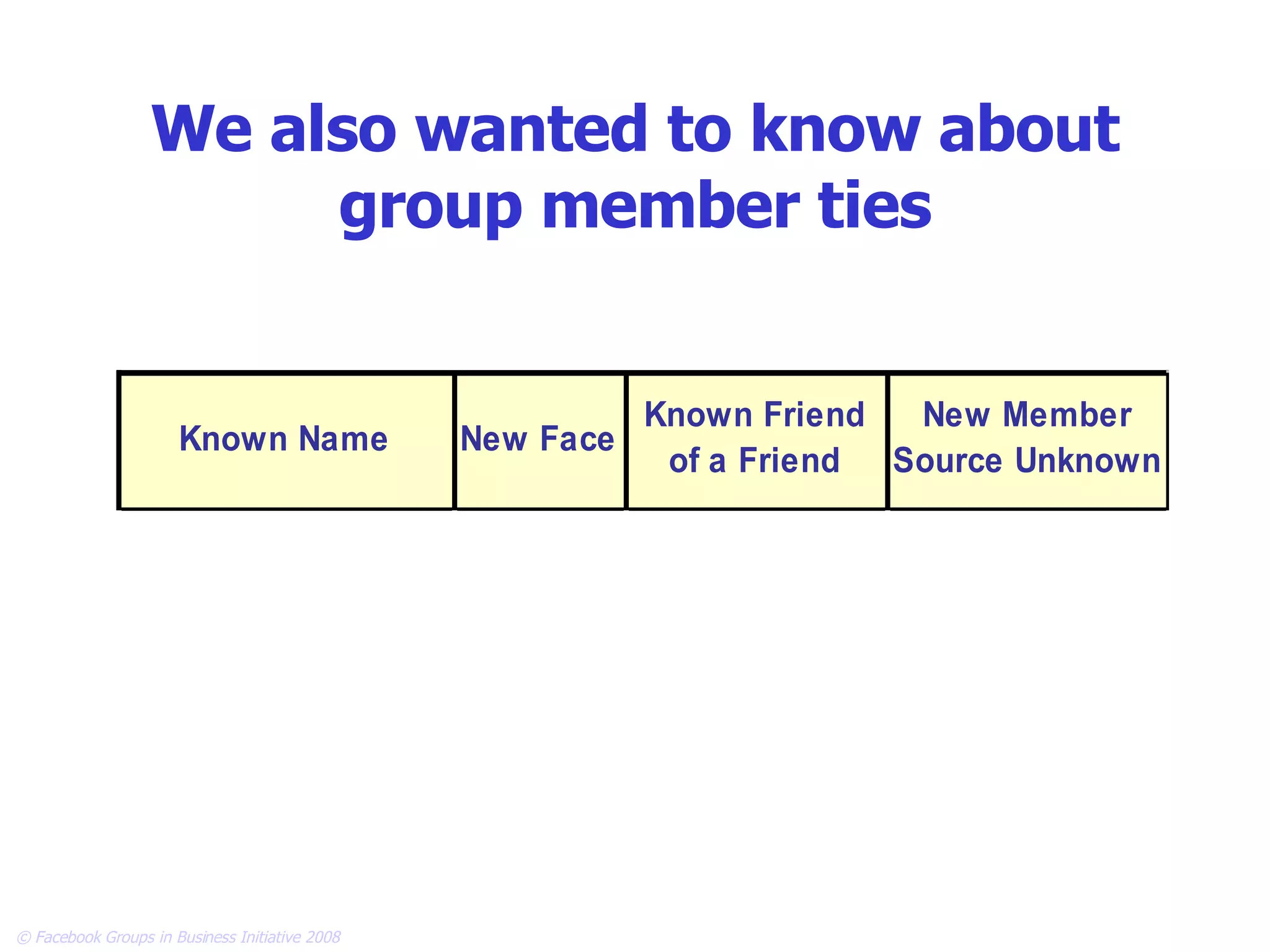
We also wanted to know about group member ties
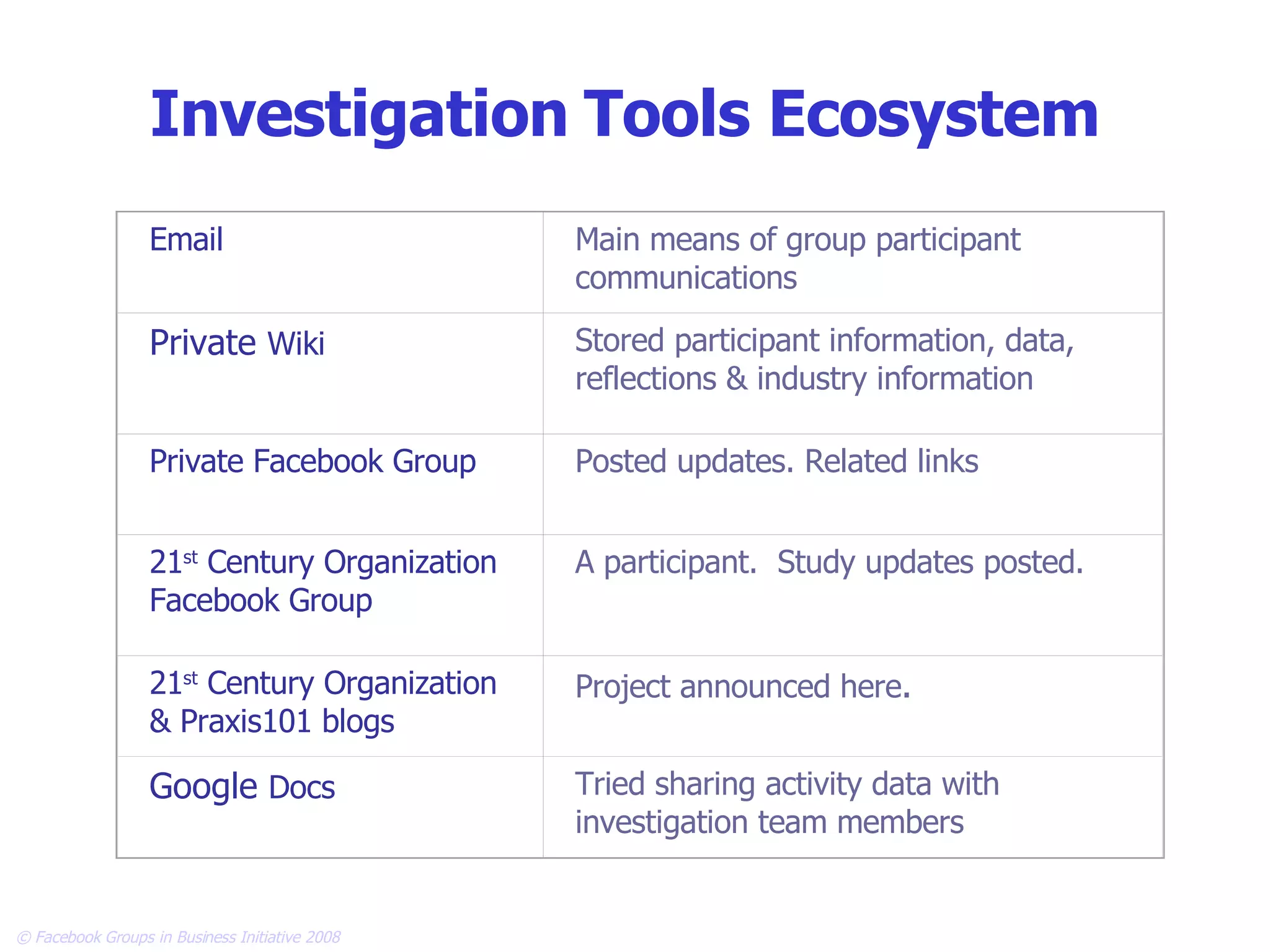
Investigation   Tools Ecosystem Email Main means of group participant communications Private  Wiki Stored participant information, data, reflections & industry information Private Facebook Group Posted updates. Related links 21 st  Century Organization Facebook Group A participant.  Study updates posted.  21 st  Century Organization & Praxis101 blogs Project announced here . Google  Docs Tried sharing activity data with investigation team members
What We Learned
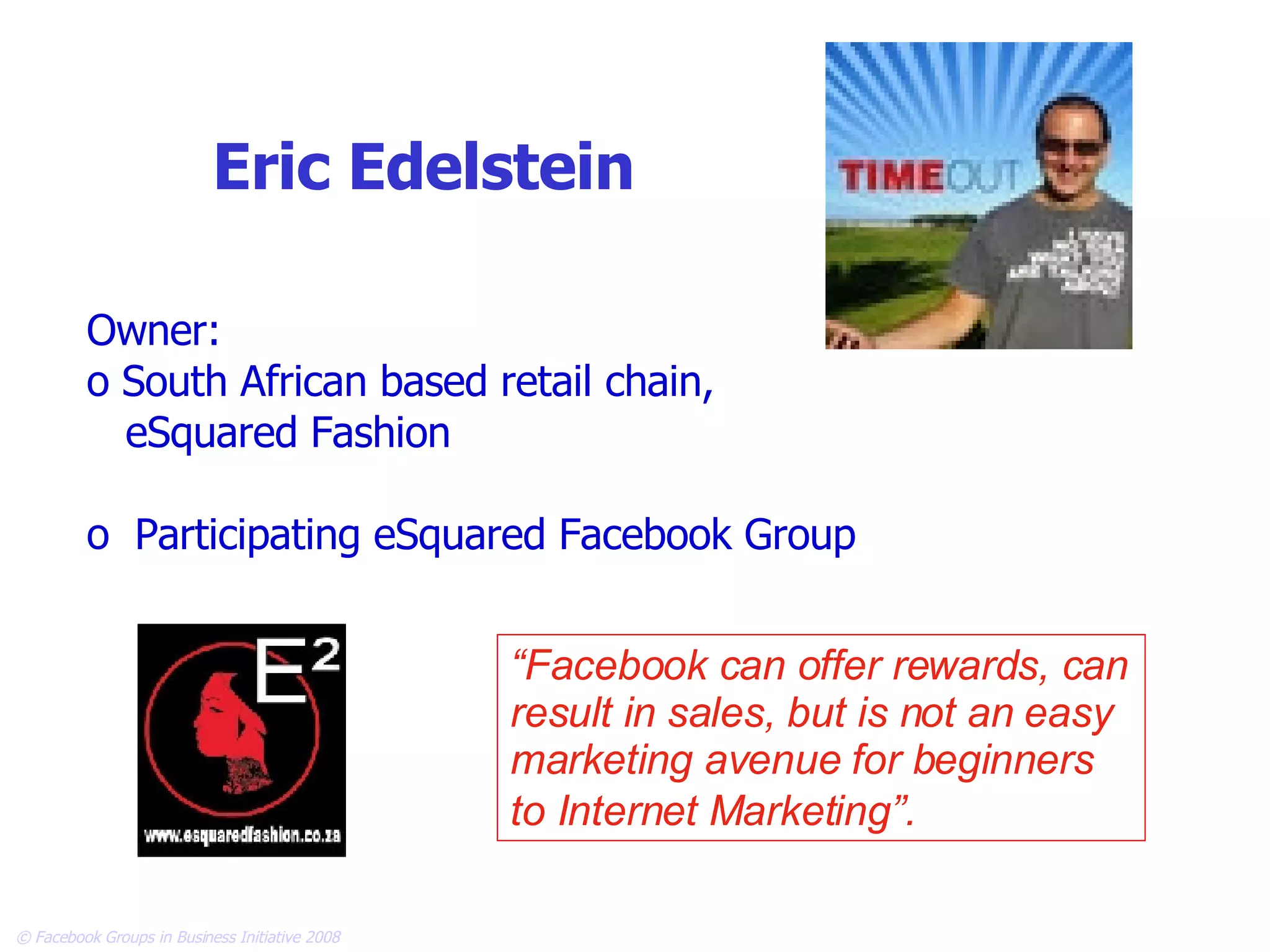
Eric Edelstein Owner: South African based retail chain, eSquared Fashion Participating eSquared Facebook Group “ Facebook can offer rewards, can result in sales, but is not an easy marketing avenue for beginners to Internet Marketing”.
Eric Edelstein Reflections Have to be active to make the Group active We changed from using Facebook Groups to Fan Clubs Better business marketing vehicle Facebook Groups have communication limits Internet Marketing learnings: FB is one channel/medium of many; need to use them all Try it. Be prepared to make mistakes Facebook opened up social networking space Internet marketing gets more exciting the more you do We’re now experimenting with Twitter
Kimberly Samaha   Founder, Bordeaux Colloquium Administrator Participating Facebook Group Sustainable Energy - Innovation & Technology Facebook Researcher
Facebook Group Study: Initial Objectives Create an on-line platform to connect ‘off-line’ members of the Bordeaux Energy Colloquium for exchanges during the year Create outreach to ‘concerned citizens’ – a link between policy makers and consumers Network with other energy professionals  Find interesting energy projects & technologies
Created 5 Facebook Groups Bordeaux Energy Colloquium :  closed, private – members of Colloquium only Sustainable Energy:   3 topics, open to public, used ‘advertising’ to attract new members Innovation & Technology Case Studies Universal Access Sustainable Energy Futures :  event page for a ‘virtual tradeshow’ and on-line case study competition open to public used ‘advertising’ and word-of-mouth recruiting to attract new members
Conclusion: Off-line to On-line   Results disappointing Facebook reputation still an obstacle for professionals  (college or ‘kids thing’, company blocks, privacy concerns) Facebook limitations:  not able to send business type documents only video and photos Over half the BEC members who went on-line are inactive  One action initiative launched: Hold an on-line case study competition on the event page. Over half of on-line members joined the group. Most members are interested to hear status but slow to join or facilitate action
Conclusion: On-line Topic Groups Smaller groups but more committed members Most topic group members are early adopters: found group through searches; involved in the energy industry or sustainability movement 78% found group vs. 22% through friends 92% of IT group became facebook ‘friends’ 35% of group members are ‘very active’  Majority of topic group members also joined the Event group
Conclusions: On-line Event Group W ord-of-mouth works Active recruiting is KEY to growth   Averaged 70 new members per week 44% of member growth from recruiters 33% from the top 5 recruiters 16% from one recruiter  Friends of Friends 47% of new members found group through friends See others join through Facebook ‘newsfeed’ and ‘groups others have joined’ pages Weak Links are harder to maintain Group drop out rates averaged ~ 5% across the 4 active groups 55% of drop outs were friend of friend invites
Important Strategies to be Learned No easy way: High time level involvement required Find other ‘like-minded’ individuals and ask for help Actively facilitate group and group page Members don’t check group pages often Members do respond to ‘message all members’ emails Weave a larger network Reach into non-affiliated groups: establish presence and ‘friends’ to create ‘weak links’ Strengthen weak links around common areas of interest among other groups using surveys, links, etc.
Conclusions: On-line case study competition Facebook is about joining more than action Facebook creates a unique way to diffuse influence; but few advocate or invite “all” to join their activities Facebook groups: more like mailing lists than places where people actively participate Group emails regarded as ‘advertising’ or ‘spam’ and often go unread Recruiting others to join the group was successful: > 60% of the group was invited by a friend Evidence of the “Influentials theory”: top 5 recruiters accounted for 30% of the group membership
Conclusions:  Business expectations Facebook groups are like mailing lists: ~ 15% of total membership participated in the contest Facebook limit on messaging groups is 1200: this is a BIG limitation 1-click campaigns can bring in big numbers but action or education does not go deeper than the click Outreach can be successful: create a few good connections to new advocates and new channels for communication Viral growth is not the norm in Facebook: slowly expanding mission or cause by reaching a reasonable number of new people is achievable
Number 3 in member growth, up 124% Sustainable Energy - Innovation & Technology Facebook Group Analysis by  Accession Media
Francois Gossieaux   Founder, Beeline Labs  Administrator Largest Participating Facebook Group
You can tap the benefits of communities once only reserved for companies with deep pockets Community development and management has to be considered a real investment Pay attention to what you name your group The Marketing 2.0 Group: Lessons to be learned
Patti Anklam FGIBI Contributors Network Analysis
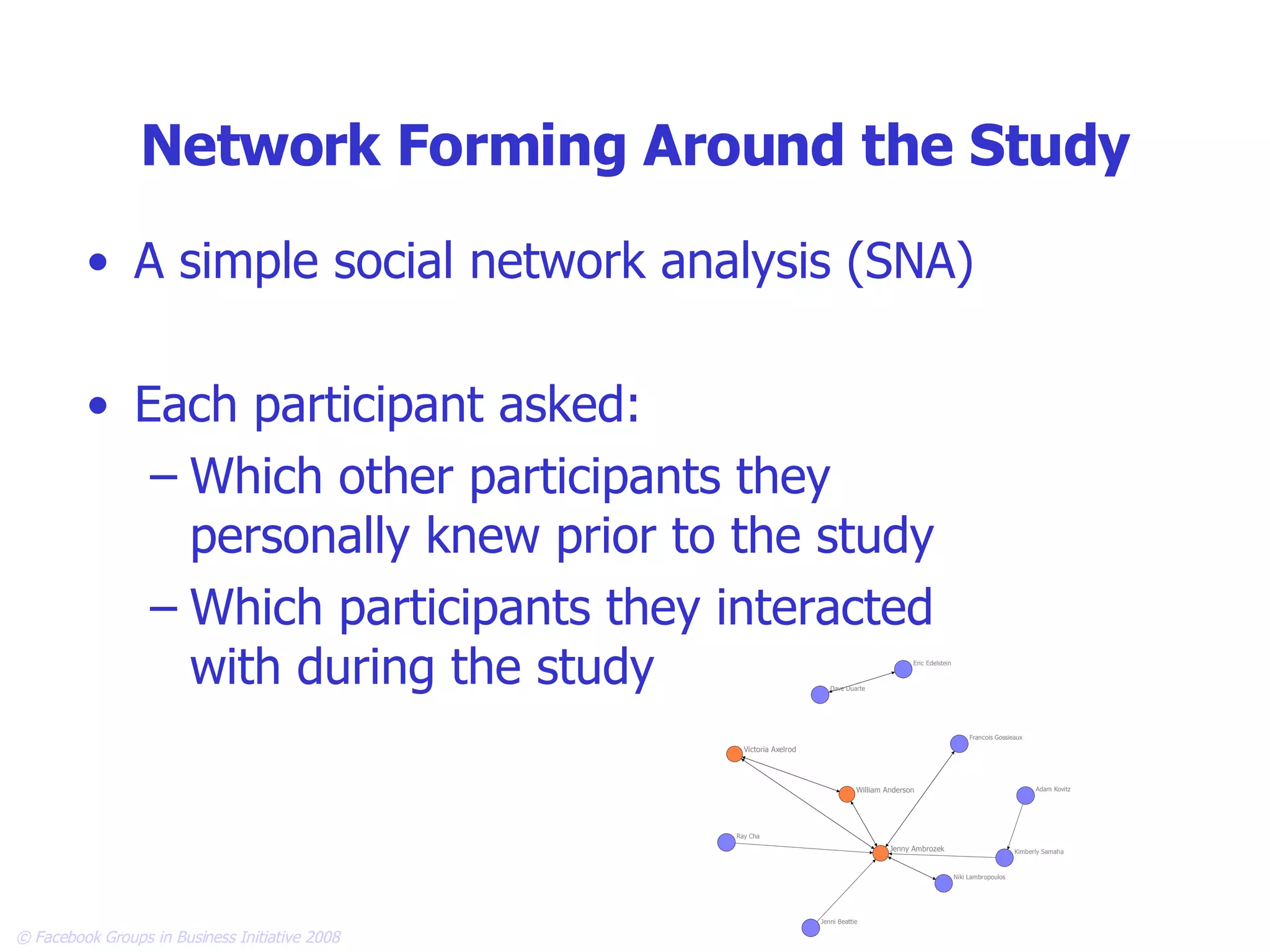
Network Forming Around the Study A simple social network analysis (SNA) Each participant asked: Which other participants they personally knew prior to the study Which participants they interacted with during the study
Before and After – Full Group The role that the researchers play in connecting the people in the network is revealed. Network analysis by  Patti  Anklam
Victoria G. Axelrod FGIBI Co- Convener
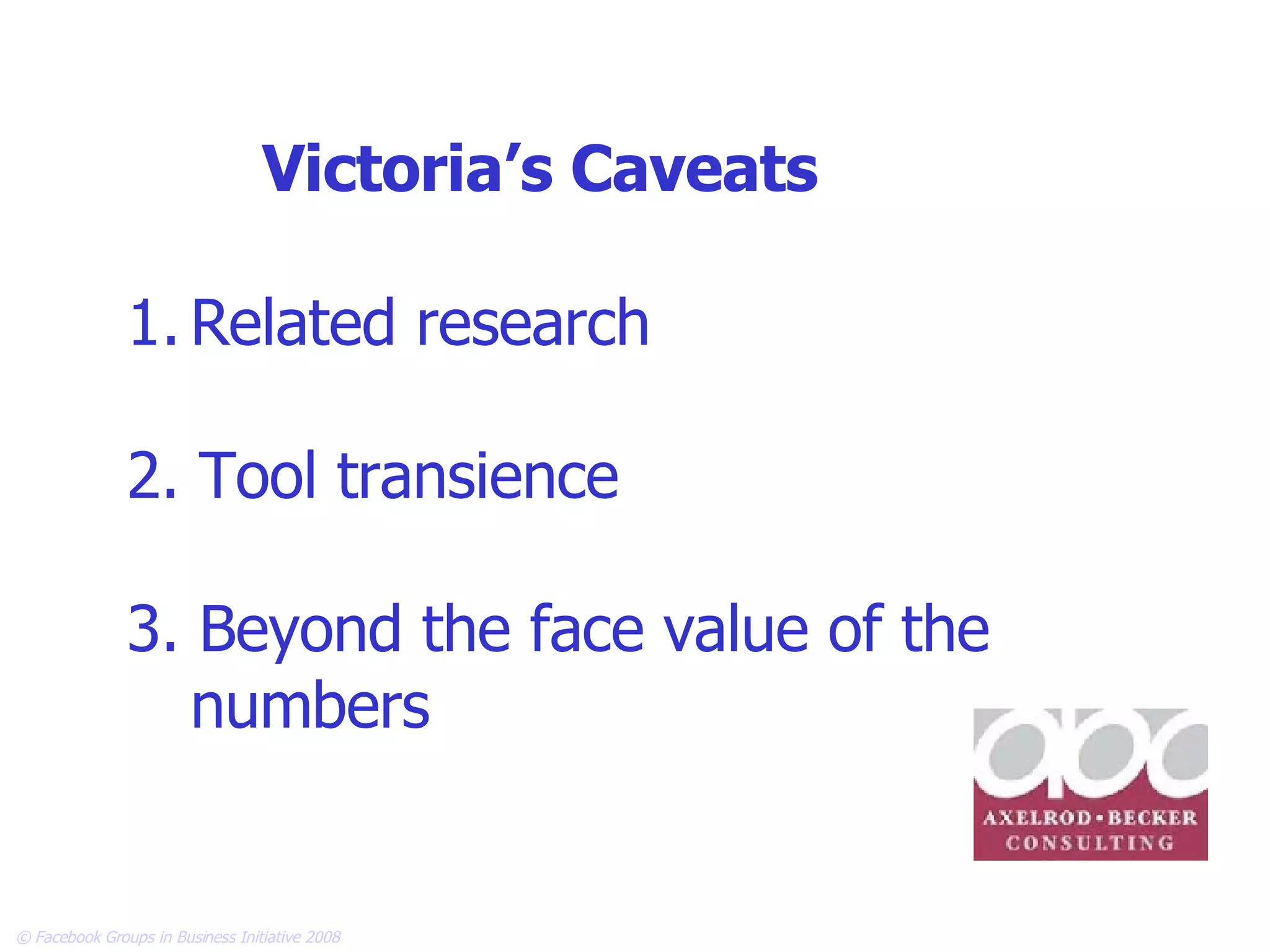
Related research 2. Tool transience 3. Beyond the face value of the numbers Victoria’s Caveats
Facebook Today: What’s Next? Source : www.alexa.com
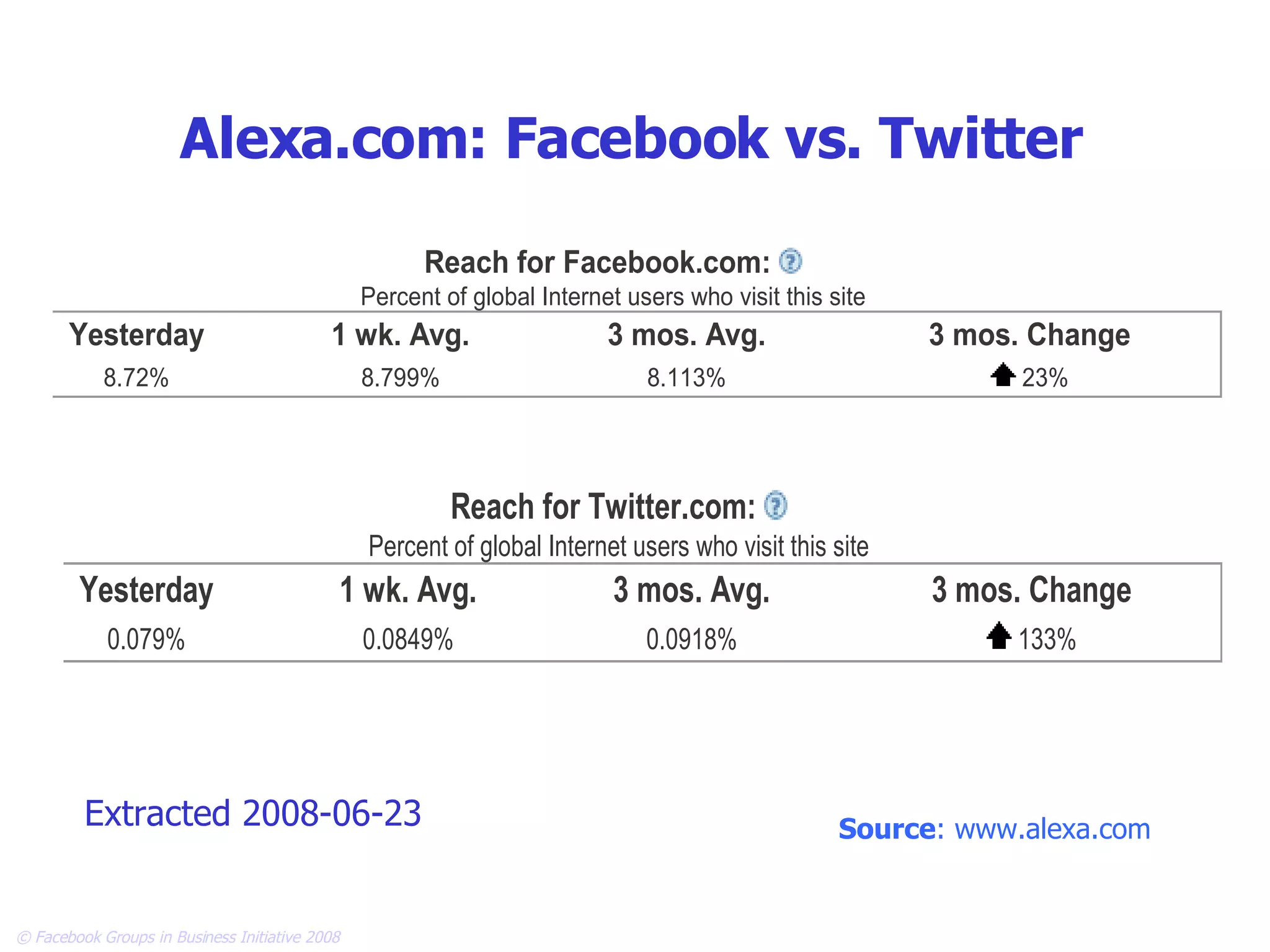
Alexa.com: Facebook vs. Twitter Extracted 2008-06-23 Source : www.alexa.com
Participating Facebook Groups Membership Growth
Over to You- Your Questions Please Discussion
Facebook Groups in Business Investigation  –  The Bottom Line
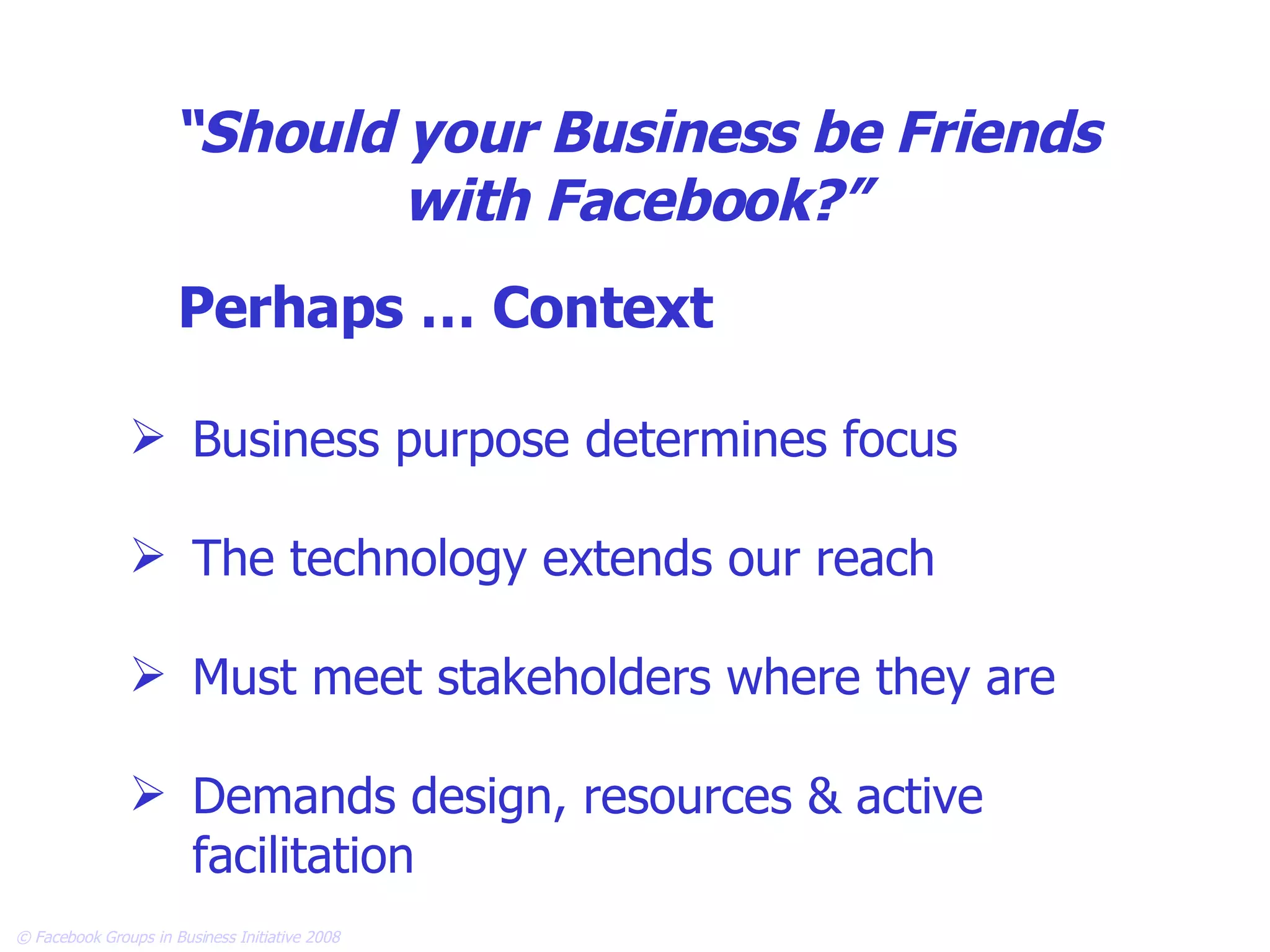
“ Should your Business be Friends with Facebook?” Perhaps … Context Business purpose determines focus The technology extends our reach  Must meet stakeholders where they are Demands design, resources & active facilitation
Continue the Conversation Visit TheAppGap Blog   www.theappgap.com Webinar audio is available here: http://www.theappgap.com/recording-of-facebook-for-business-webinar-now-available.html Join the  21stCenturyOrganization  Facebook Group http://www.facebook.com/group.php?gid=2436782733 Email  jenny at sageway.com

The App Gap FGIBI Webinar Slideshare 2008-06-25

  • 1.
    June 25, 2008“ Should Your Business Be Friends with Facebook?” New research on how businesses are using Facebook and other social networking strategies -- what’s working, what’s in the way, what’s next? Jenny Ambrozek, Bill Anderson, Victoria Axelrod, Conveners & Facebook Group in Business Investigation Participants Eric Edelstein, Francois Gossieaux, Kimberly Samaha
  • 2.
  • 3.
    FGIBI Overview Whatwe did, when, & why What we learned about Facebook Groups in Business 3. Discussion 4. “Should your business be friends with Facebook?”
  • 4.
    Facebook Group GrowthPercent of global Internet users who visit this site May 25 Facebook open platform to developers
  • 5.
    Starting Premise “Facebook may, but also may not, become THE enterprise social networking platform, but it's here, use is growing, so we need to understand the phenomenon and learn from it.” Study Description 2008-02-08
  • 6.
    FGIBI Co- ConvenerWilliam L. Anderson
  • 7.
  • 8.
  • 9.
    We also wantedto know about group member ties
  • 10.
    Investigation Tools Ecosystem Email Main means of group participant communications Private Wiki Stored participant information, data, reflections & industry information Private Facebook Group Posted updates. Related links 21 st Century Organization Facebook Group A participant. Study updates posted. 21 st Century Organization & Praxis101 blogs Project announced here . Google Docs Tried sharing activity data with investigation team members
  • 11.
  • 12.
    Eric Edelstein Owner:South African based retail chain, eSquared Fashion Participating eSquared Facebook Group “ Facebook can offer rewards, can result in sales, but is not an easy marketing avenue for beginners to Internet Marketing”.
  • 13.
    Eric Edelstein ReflectionsHave to be active to make the Group active We changed from using Facebook Groups to Fan Clubs Better business marketing vehicle Facebook Groups have communication limits Internet Marketing learnings: FB is one channel/medium of many; need to use them all Try it. Be prepared to make mistakes Facebook opened up social networking space Internet marketing gets more exciting the more you do We’re now experimenting with Twitter
  • 14.
    Kimberly Samaha Founder, Bordeaux Colloquium Administrator Participating Facebook Group Sustainable Energy - Innovation & Technology Facebook Researcher
  • 15.
    Facebook Group Study:Initial Objectives Create an on-line platform to connect ‘off-line’ members of the Bordeaux Energy Colloquium for exchanges during the year Create outreach to ‘concerned citizens’ – a link between policy makers and consumers Network with other energy professionals Find interesting energy projects & technologies
  • 16.
    Created 5 FacebookGroups Bordeaux Energy Colloquium : closed, private – members of Colloquium only Sustainable Energy: 3 topics, open to public, used ‘advertising’ to attract new members Innovation & Technology Case Studies Universal Access Sustainable Energy Futures : event page for a ‘virtual tradeshow’ and on-line case study competition open to public used ‘advertising’ and word-of-mouth recruiting to attract new members
  • 17.
    Conclusion: Off-line toOn-line Results disappointing Facebook reputation still an obstacle for professionals (college or ‘kids thing’, company blocks, privacy concerns) Facebook limitations: not able to send business type documents only video and photos Over half the BEC members who went on-line are inactive One action initiative launched: Hold an on-line case study competition on the event page. Over half of on-line members joined the group. Most members are interested to hear status but slow to join or facilitate action
  • 18.
    Conclusion: On-line TopicGroups Smaller groups but more committed members Most topic group members are early adopters: found group through searches; involved in the energy industry or sustainability movement 78% found group vs. 22% through friends 92% of IT group became facebook ‘friends’ 35% of group members are ‘very active’ Majority of topic group members also joined the Event group
  • 19.
    Conclusions: On-line EventGroup W ord-of-mouth works Active recruiting is KEY to growth Averaged 70 new members per week 44% of member growth from recruiters 33% from the top 5 recruiters 16% from one recruiter Friends of Friends 47% of new members found group through friends See others join through Facebook ‘newsfeed’ and ‘groups others have joined’ pages Weak Links are harder to maintain Group drop out rates averaged ~ 5% across the 4 active groups 55% of drop outs were friend of friend invites
  • 20.
    Important Strategies tobe Learned No easy way: High time level involvement required Find other ‘like-minded’ individuals and ask for help Actively facilitate group and group page Members don’t check group pages often Members do respond to ‘message all members’ emails Weave a larger network Reach into non-affiliated groups: establish presence and ‘friends’ to create ‘weak links’ Strengthen weak links around common areas of interest among other groups using surveys, links, etc.
  • 21.
    Conclusions: On-line casestudy competition Facebook is about joining more than action Facebook creates a unique way to diffuse influence; but few advocate or invite “all” to join their activities Facebook groups: more like mailing lists than places where people actively participate Group emails regarded as ‘advertising’ or ‘spam’ and often go unread Recruiting others to join the group was successful: > 60% of the group was invited by a friend Evidence of the “Influentials theory”: top 5 recruiters accounted for 30% of the group membership
  • 22.
    Conclusions: Businessexpectations Facebook groups are like mailing lists: ~ 15% of total membership participated in the contest Facebook limit on messaging groups is 1200: this is a BIG limitation 1-click campaigns can bring in big numbers but action or education does not go deeper than the click Outreach can be successful: create a few good connections to new advocates and new channels for communication Viral growth is not the norm in Facebook: slowly expanding mission or cause by reaching a reasonable number of new people is achievable
  • 23.
    Number 3 inmember growth, up 124% Sustainable Energy - Innovation & Technology Facebook Group Analysis by Accession Media
  • 24.
    Francois Gossieaux Founder, Beeline Labs Administrator Largest Participating Facebook Group
  • 25.
    You can tapthe benefits of communities once only reserved for companies with deep pockets Community development and management has to be considered a real investment Pay attention to what you name your group The Marketing 2.0 Group: Lessons to be learned
  • 26.
    Patti Anklam FGIBIContributors Network Analysis
  • 27.
    Network Forming Aroundthe Study A simple social network analysis (SNA) Each participant asked: Which other participants they personally knew prior to the study Which participants they interacted with during the study
  • 28.
    Before and After– Full Group The role that the researchers play in connecting the people in the network is revealed. Network analysis by Patti Anklam
  • 29.
    Victoria G. AxelrodFGIBI Co- Convener
  • 30.
    Related research 2.Tool transience 3. Beyond the face value of the numbers Victoria’s Caveats
  • 31.
    Facebook Today: What’sNext? Source : www.alexa.com
  • 32.
    Alexa.com: Facebook vs.Twitter Extracted 2008-06-23 Source : www.alexa.com
  • 33.
  • 34.
    Over to You-Your Questions Please Discussion
  • 35.
    Facebook Groups inBusiness Investigation – The Bottom Line
  • 36.
    “ Should yourBusiness be Friends with Facebook?” Perhaps … Context Business purpose determines focus The technology extends our reach Must meet stakeholders where they are Demands design, resources & active facilitation
  • 37.
    Continue the ConversationVisit TheAppGap Blog www.theappgap.com Webinar audio is available here: http://www.theappgap.com/recording-of-facebook-for-business-webinar-now-available.html Join the 21stCenturyOrganization Facebook Group http://www.facebook.com/group.php?gid=2436782733 Email jenny at sageway.com