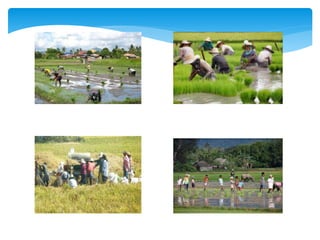
The Agriculture Sector
Presented by: Eduarte, Wendell Aries S.
BSE- Social Studies
SS 7- 11 MW 2:30- 4:00 pm.
Dr. Ronnie G. Cainglet
 Is a science of cultivating the soil, harvesting crops,
and raising livestock. All activities concerning plants
and animals are related to Agriculture.
Agriculture
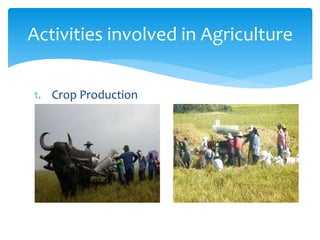
1. Crop Production
Activities involved in Agriculture
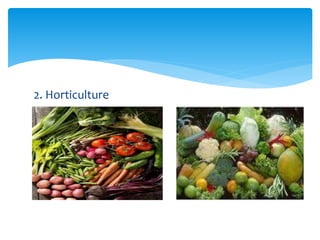
2. Horticulture
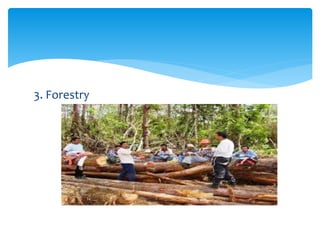
3. Forestry
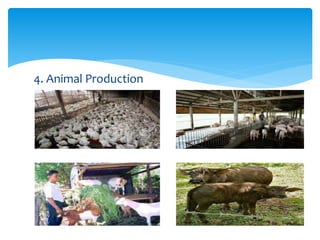
4. Animal Production
5. Aqua Culture
 The agricultural sector serve as a supplier of
raw materials needed by the industries.
 The raw material help the industries in
carrying out of their activities.
 Example: the sugar is needed in the
manufacturing of consumer products like
produced juice and chocolate drinks comes
from the agricultural sector.
Importance of Agriculture
 Consumer of industrial products- example
consumer product like clothes, shoes, soap,
sugar and some processed food.
 Provides employment
 Dollar earner- example exportation of our
local products like tilapia, big shrimp, banana,
sugar, abaca, nata de coco, etc.
Other Importance of Agriculture
 Lack of Modern equipment
 Insufficient infrastructure
 Lack of capital
 No concrete program for land ownership
 Low prices
 Competition from foreign products
Problems of agriculture sector.
 Impose restriction on foreign agricultural
commodities that enter the country.
 Provide infrastructure projects like
warehouses, irrigation system, bridges, and
farm to market roads.
 Include in the budget allocation and allotment
the needs of farmers.
 Provide subsidy for small farmers.
Solutions to Agricultural Problems
 Established cooperatives and rural banks that will
give loans to farmers and fishermen.
 Disseminate information on how to use the modern
technology on agriculture.
 Lower taxes imposed on imported equipment and
machineries of agriculture.
 Set a reasonable price on agricultural products.
 Implement the agrarian reform law.
1. Land reform
 Is a program that aims to provide lands to the
farmer’s.
 It involves the transfer and control of land
ownership to the tillers and farmers.
 Providing aid and services to the farmers,
protecting the price of agricultural products,
infrastructure, and establishment farmer’s
cooperative.
Agrarian Reform
 Land registration Act of 1902- During the
American period, all land titles of the Filipinos
must be registered upon the implementation
of the Torrens System.
 Public land act of 1902- all public lands were
distributed to the families who till the land.
Every family has the right to own not more
than 16 families.
Laws on Land reform
 Republic act 1160- the National Resettlement and
Rehabilitation Administration (NARRA) was established
to manage the distribution of lands to the rebel
returnees and their families who were still landless. This
is part of the effort of President Ramon Magsaysay.
 Republic act 1190 of 1954- provides security and
protection to the Kasama or farm workers against
abuses, maltreatment, and cheating of the owners of
the land they till.
 Agricultural land reform code- land workers are the
true and real owners of the land. The law abolished
the Kasama system. President Diosdado Macapagal
signed it into law in 1963.
 Presidential Decree no. 2 of 1972- According to the
provision PD no. 2 of 1972 the entire Philippines is
under land reform, which was declared by
President Ferdinand Marcos.

 Presidential Decree no. 27- Simultaneous with PD
no. 2, PD no. 27 was implemented for free the
farmers from the chain of poverty and transfer to
them the ownership of the land that they cultivate.
 Lands planted by palay and corns were covered by
this law.
 Wide land area planted with coconut, sugar cane,
pineapple, etc. are not included.
 Republic act 6657 of 1988- known as COMPREHENSIVE
AGRARIAN REFORM LAW (CARL) approved by former
President Corazon Aquino in 1988.
 Republic act 6657 of 1988- known as COMPREHENSIVE
AGRARIAN REFORM LAW (CARL) approved by former
President Corazon Aquino in 1988.
 All public and private agricultural lands are covered in the
law.
 The law distributed all agricultural lands regardless of their
use to the farmers who do not have their own land.
 The lands that are not under the CARP is: parks, national
defense, church/temples, forest and reforestation areas,
fishponds, school, cemetery, and water shed.
Thank you!

The agriculture sector

  • 1.
    The Agriculture Sector Presentedby: Eduarte, Wendell Aries S. BSE- Social Studies SS 7- 11 MW 2:30- 4:00 pm. Dr. Ronnie G. Cainglet
  • 3.
     Is ascience of cultivating the soil, harvesting crops, and raising livestock. All activities concerning plants and animals are related to Agriculture. Agriculture
  • 4.
    1. Crop Production Activitiesinvolved in Agriculture
  • 5.
  • 6.
  • 7.
  • 8.
  • 9.
     The agriculturalsector serve as a supplier of raw materials needed by the industries.  The raw material help the industries in carrying out of their activities.  Example: the sugar is needed in the manufacturing of consumer products like produced juice and chocolate drinks comes from the agricultural sector. Importance of Agriculture
  • 10.
     Consumer ofindustrial products- example consumer product like clothes, shoes, soap, sugar and some processed food.  Provides employment  Dollar earner- example exportation of our local products like tilapia, big shrimp, banana, sugar, abaca, nata de coco, etc. Other Importance of Agriculture
  • 11.
     Lack ofModern equipment  Insufficient infrastructure  Lack of capital  No concrete program for land ownership  Low prices  Competition from foreign products Problems of agriculture sector.
  • 12.
     Impose restrictionon foreign agricultural commodities that enter the country.  Provide infrastructure projects like warehouses, irrigation system, bridges, and farm to market roads.  Include in the budget allocation and allotment the needs of farmers.  Provide subsidy for small farmers. Solutions to Agricultural Problems
  • 13.
     Established cooperativesand rural banks that will give loans to farmers and fishermen.  Disseminate information on how to use the modern technology on agriculture.  Lower taxes imposed on imported equipment and machineries of agriculture.  Set a reasonable price on agricultural products.  Implement the agrarian reform law.
  • 14.
    1. Land reform Is a program that aims to provide lands to the farmer’s.  It involves the transfer and control of land ownership to the tillers and farmers.  Providing aid and services to the farmers, protecting the price of agricultural products, infrastructure, and establishment farmer’s cooperative. Agrarian Reform
  • 15.
     Land registrationAct of 1902- During the American period, all land titles of the Filipinos must be registered upon the implementation of the Torrens System.  Public land act of 1902- all public lands were distributed to the families who till the land. Every family has the right to own not more than 16 families. Laws on Land reform
  • 16.
     Republic act1160- the National Resettlement and Rehabilitation Administration (NARRA) was established to manage the distribution of lands to the rebel returnees and their families who were still landless. This is part of the effort of President Ramon Magsaysay.  Republic act 1190 of 1954- provides security and protection to the Kasama or farm workers against abuses, maltreatment, and cheating of the owners of the land they till.
  • 17.
     Agricultural landreform code- land workers are the true and real owners of the land. The law abolished the Kasama system. President Diosdado Macapagal signed it into law in 1963.  Presidential Decree no. 2 of 1972- According to the provision PD no. 2 of 1972 the entire Philippines is under land reform, which was declared by President Ferdinand Marcos. 
  • 18.
     Presidential Decreeno. 27- Simultaneous with PD no. 2, PD no. 27 was implemented for free the farmers from the chain of poverty and transfer to them the ownership of the land that they cultivate.  Lands planted by palay and corns were covered by this law.  Wide land area planted with coconut, sugar cane, pineapple, etc. are not included.
  • 19.
     Republic act6657 of 1988- known as COMPREHENSIVE AGRARIAN REFORM LAW (CARL) approved by former President Corazon Aquino in 1988.  Republic act 6657 of 1988- known as COMPREHENSIVE AGRARIAN REFORM LAW (CARL) approved by former President Corazon Aquino in 1988.  All public and private agricultural lands are covered in the law.  The law distributed all agricultural lands regardless of their use to the farmers who do not have their own land.  The lands that are not under the CARP is: parks, national defense, church/temples, forest and reforestation areas, fishponds, school, cemetery, and water shed.
  • 20.