
By: Jason LeDay
Introduction
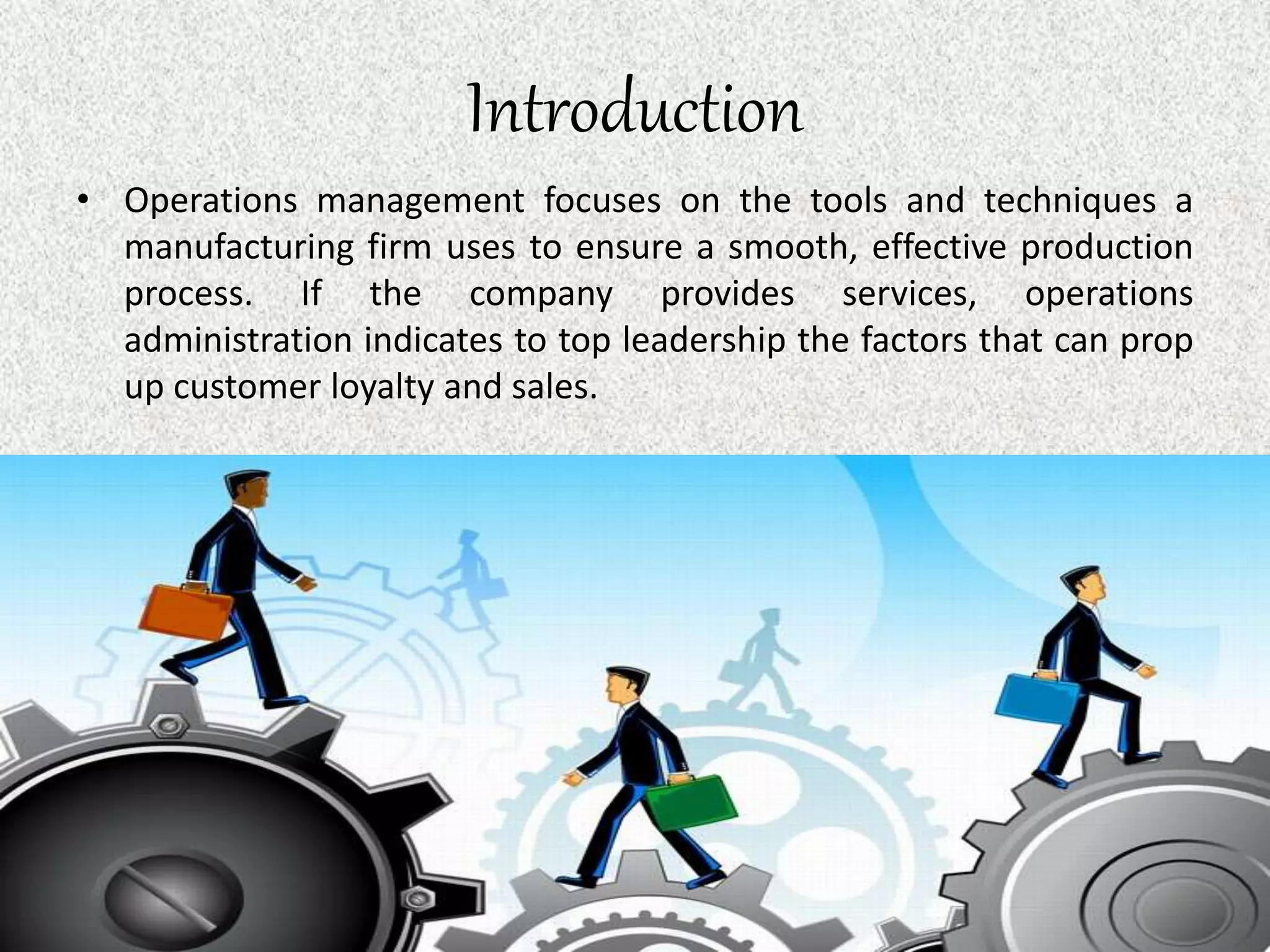
• Operations management focuses on the tools and techniques a
manufacturing firm uses to ensure a smooth, effective production
process. If the company provides services, operations
administration indicates to top leadership the factors that can prop
up customer loyalty and sales.
Benefits of Operation
Management
• Profitability
Management
• Competitive Advantage
• Manufacturing Edge
• Regulatory Compliance
Profitability Management
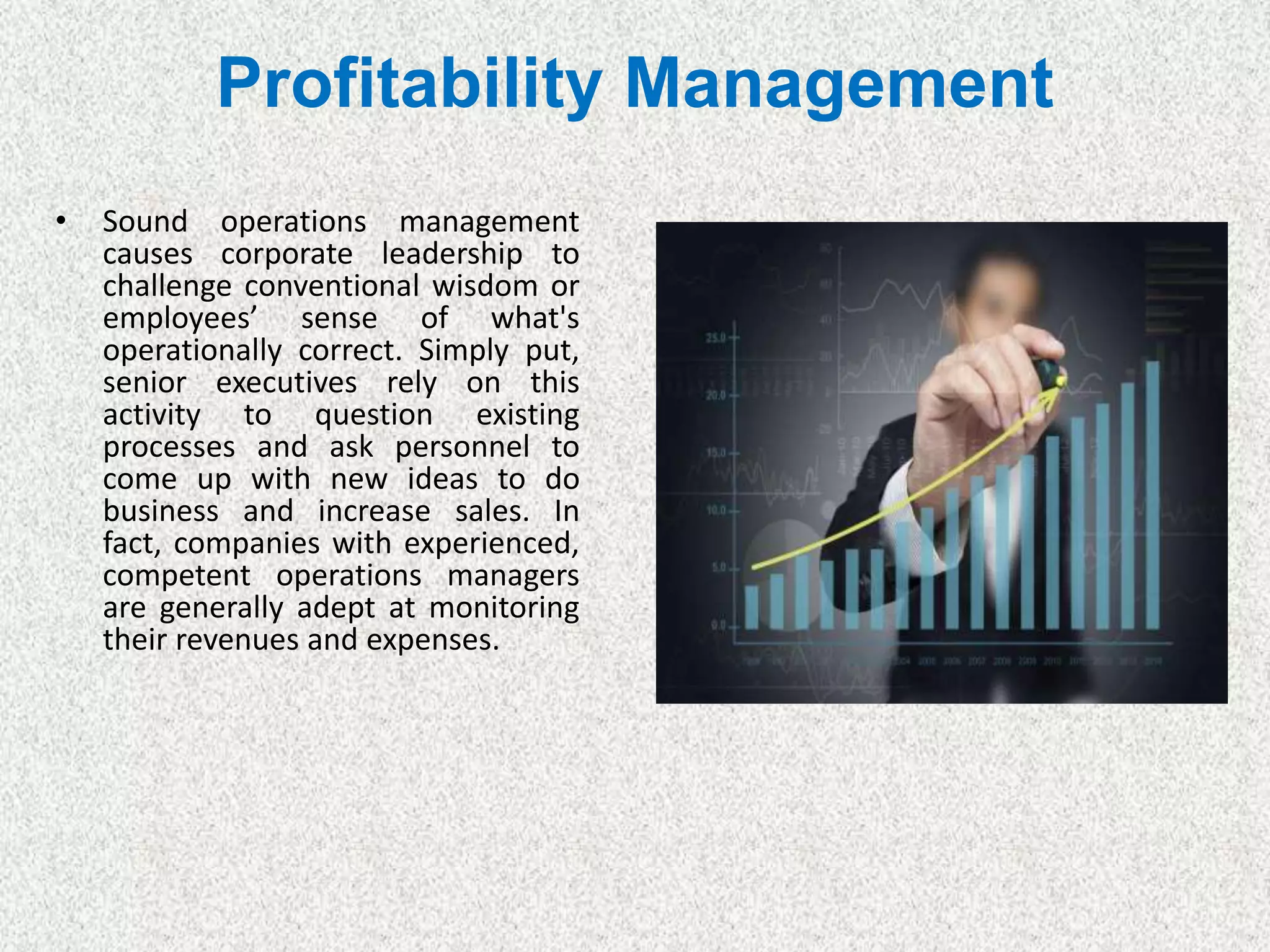
• Sound operations management
causes corporate leadership to
challenge conventional wisdom or
employees’ sense of what's
operationally correct. Simply put,
senior executives rely on this
activity to question existing
processes and ask personnel to
come up with new ideas to do
business and increase sales. In
fact, companies with experienced,
competent operations managers
are generally adept at monitoring
their revenues and expenses.
Competitive Advantage
• Businesses adequately manage their operations to get a handle on key internal and
external factors. Internal factors include operating policies, intellectual capital and the
average attrition rate. This reflects the number of employees leaving as a result of
resignations, retirements and deaths. Forced workforce reductions, such as
terminations, do not count as attrition-rate components. Intellectual capital represents
various abilities, expertise and knowledge that a firm has gathered over time.
Manufacturing Edge
• Operations management allows a manufacturing firm to change or improve the
way it produces goods, as well as how it stores items such as raw materials, work-
in process merchandise and completely finished products. This important benefit
helps the manufacturer prevent a deterioration in debt affordability, which may
happen if the firm incurs losses and cannot repay its existing liabilities.
• By studiously analyzing operating activities, corporate management waves
goodbye to the days of hefty government fines and adverse regulatory
decisions. Department heads and segment chiefs set adequate internal
controls to make sure rank-and-file personnel perform tasks in accordance
with the law.
Importance of Operations
management
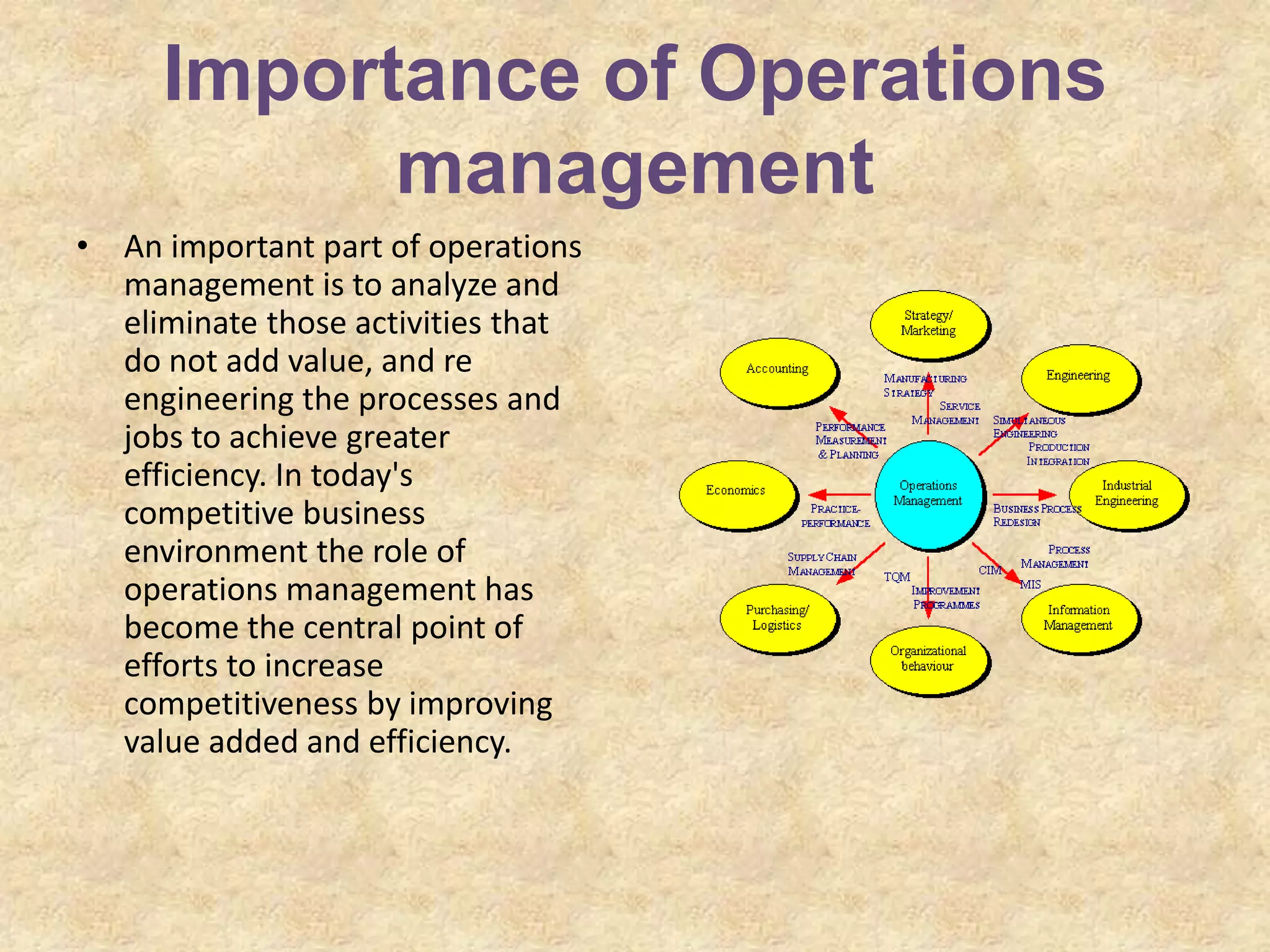
• An important part of operations
management is to analyze and
eliminate those activities that
do not add value, and re
engineering the processes and
jobs to achieve greater
efficiency. In today's
competitive business
environment the role of
operations management has
become the central point of
efforts to increase
competitiveness by improving
value added and efficiency.
• Jason LeDay is a successful businessman who
provides the essential benefits of operation
management through which you can increase the
efficiency and productivity.
The Advantages Of Operations Management By Jason LeDay

The Advantages Of Operations Management By Jason LeDay

  • 1.
  • 2.
    Introduction • Operations managementfocuses on the tools and techniques a manufacturing firm uses to ensure a smooth, effective production process. If the company provides services, operations administration indicates to top leadership the factors that can prop up customer loyalty and sales.
  • 3.
    Benefits of Operation Management •Profitability Management • Competitive Advantage • Manufacturing Edge • Regulatory Compliance
  • 4.
    Profitability Management • Soundoperations management causes corporate leadership to challenge conventional wisdom or employees’ sense of what's operationally correct. Simply put, senior executives rely on this activity to question existing processes and ask personnel to come up with new ideas to do business and increase sales. In fact, companies with experienced, competent operations managers are generally adept at monitoring their revenues and expenses.
  • 5.
    Competitive Advantage • Businessesadequately manage their operations to get a handle on key internal and external factors. Internal factors include operating policies, intellectual capital and the average attrition rate. This reflects the number of employees leaving as a result of resignations, retirements and deaths. Forced workforce reductions, such as terminations, do not count as attrition-rate components. Intellectual capital represents various abilities, expertise and knowledge that a firm has gathered over time.
  • 6.
    Manufacturing Edge • Operationsmanagement allows a manufacturing firm to change or improve the way it produces goods, as well as how it stores items such as raw materials, work- in process merchandise and completely finished products. This important benefit helps the manufacturer prevent a deterioration in debt affordability, which may happen if the firm incurs losses and cannot repay its existing liabilities.
  • 7.
    • By studiouslyanalyzing operating activities, corporate management waves goodbye to the days of hefty government fines and adverse regulatory decisions. Department heads and segment chiefs set adequate internal controls to make sure rank-and-file personnel perform tasks in accordance with the law.
  • 8.
    Importance of Operations management •An important part of operations management is to analyze and eliminate those activities that do not add value, and re engineering the processes and jobs to achieve greater efficiency. In today's competitive business environment the role of operations management has become the central point of efforts to increase competitiveness by improving value added and efficiency.
  • 11.
    • Jason LeDayis a successful businessman who provides the essential benefits of operation management through which you can increase the efficiency and productivity.