Downloaded 21 times
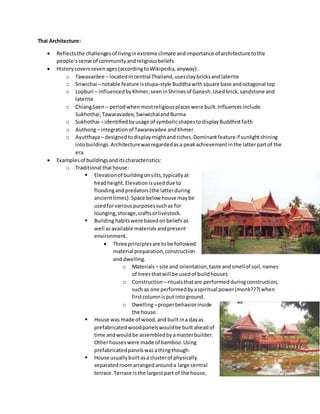
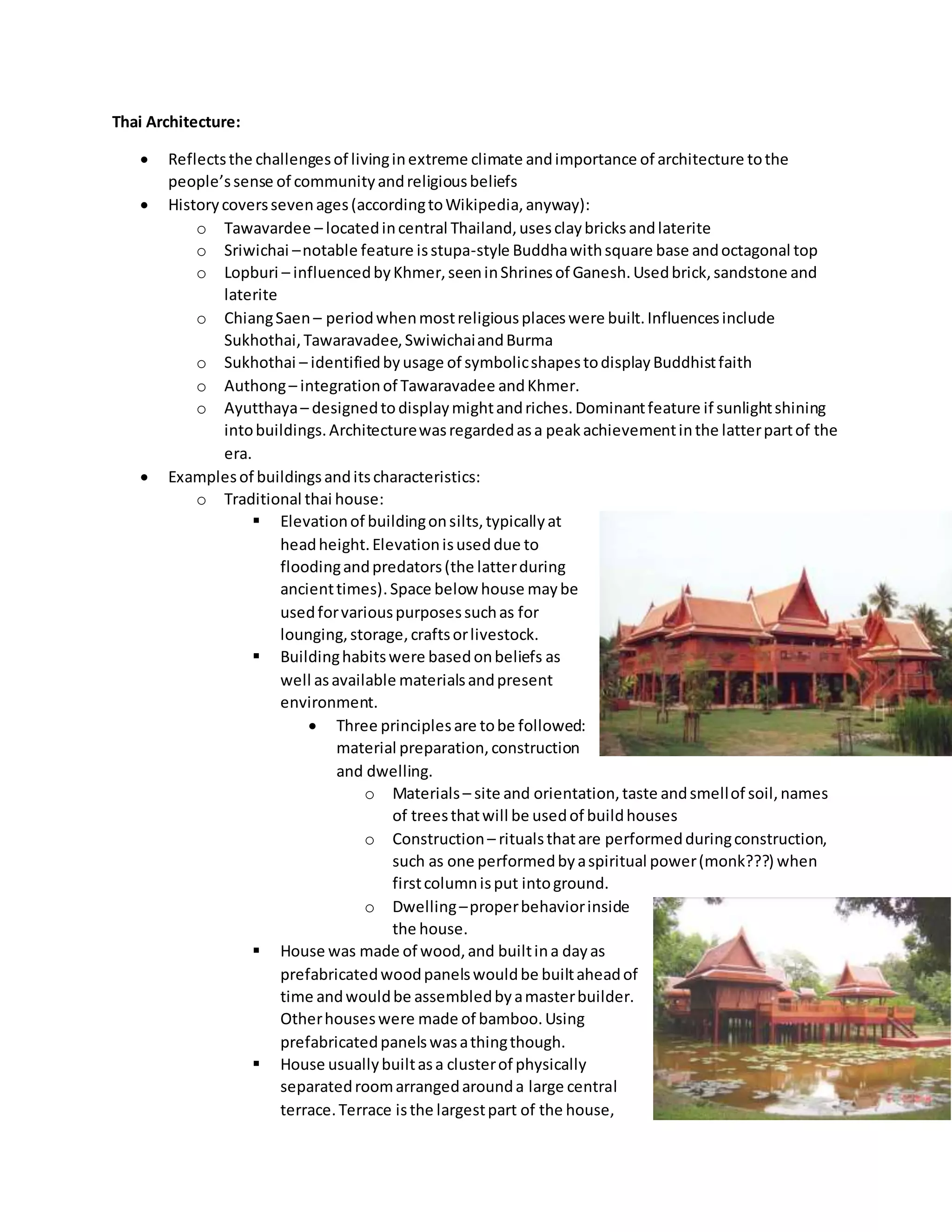
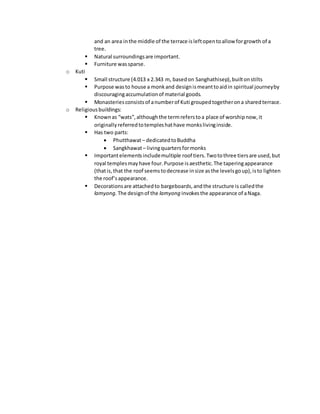
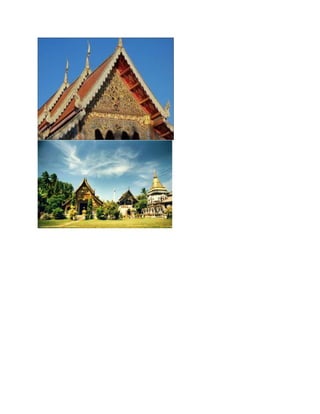

Thai architecture reflects the challenges of the climate and importance of religion, and has developed over seven periods, from early brick and stone structures to designs intended to display wealth and power. Traditional Thai houses are built on stilts to prevent flooding, using wood or bamboo, arranged around a central terrace, while religious buildings called wats consist of prayer halls and monk residences with multiple tiers of tapering roofs. The kuti is a small wooden structure built on stilts to house individual monks and discourage material possessions.


