TEXT ANALYSIS AND ITS
IMPORTANCE
A GUIDE TO
PRESENTATION
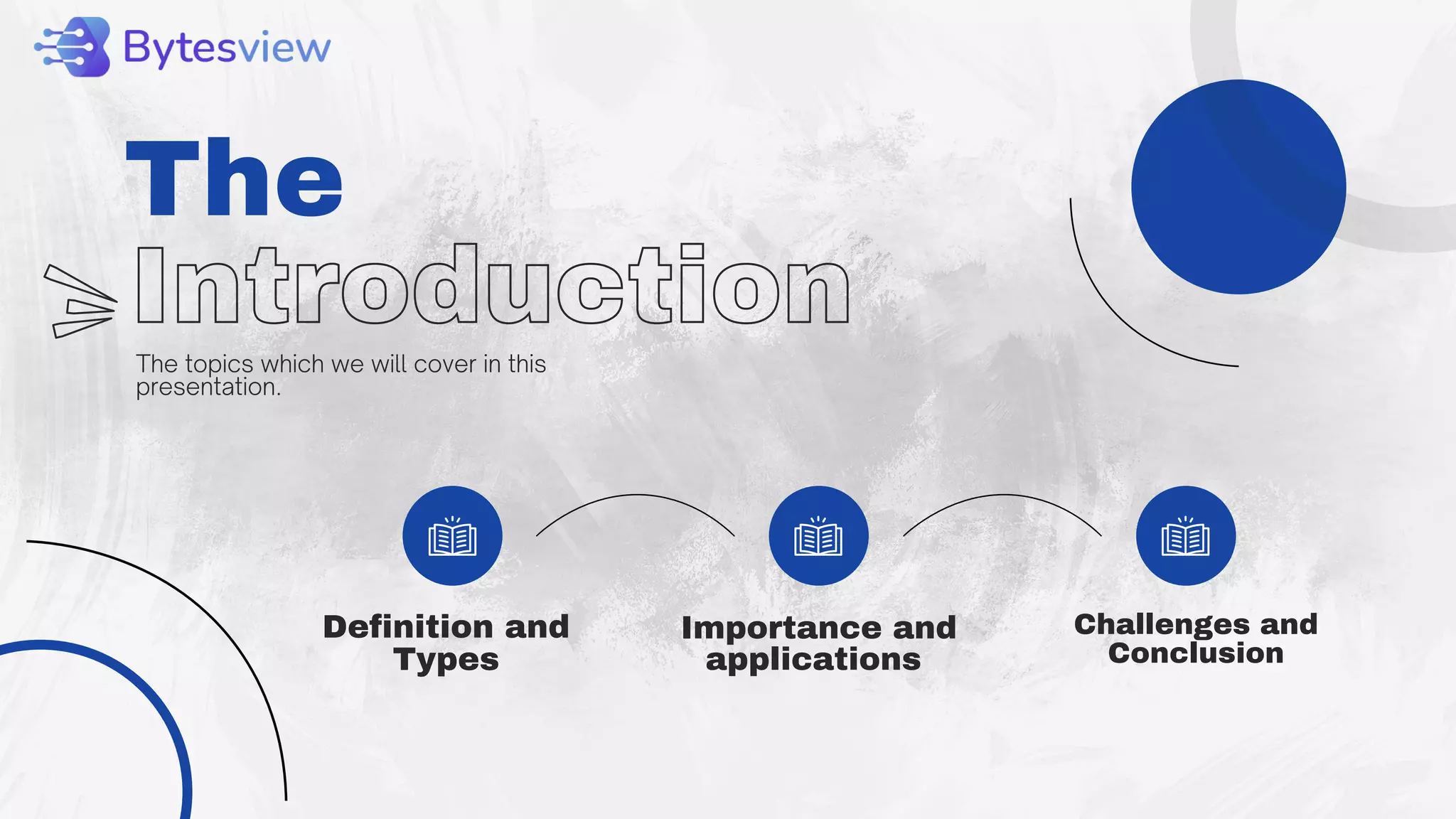
Definition and
Types
Importance and
applications
Challenges and
Conclusion
Introduction
The
The topics which we will cover in this
presentation.
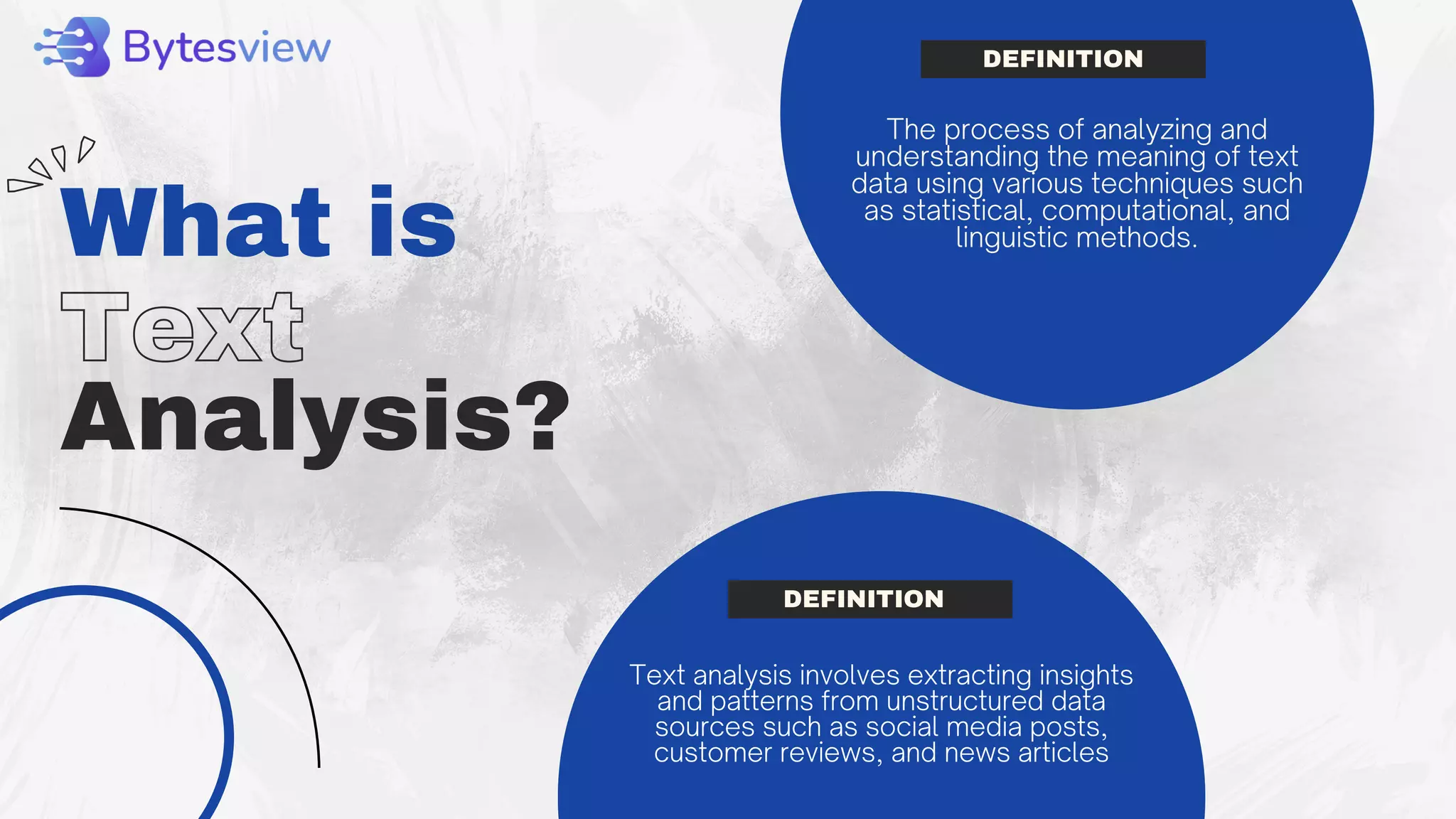
Text
Analysis?
What is
DEFINITION
The process of analyzing and
understanding the meaning of text
data using various techniques such
as statistical, computational, and
linguistic methods.
Text analysis involves extracting insights
and patterns from unstructured data
sources such as social media posts,
customer reviews, and news articles
DEFINITION
Text analysis
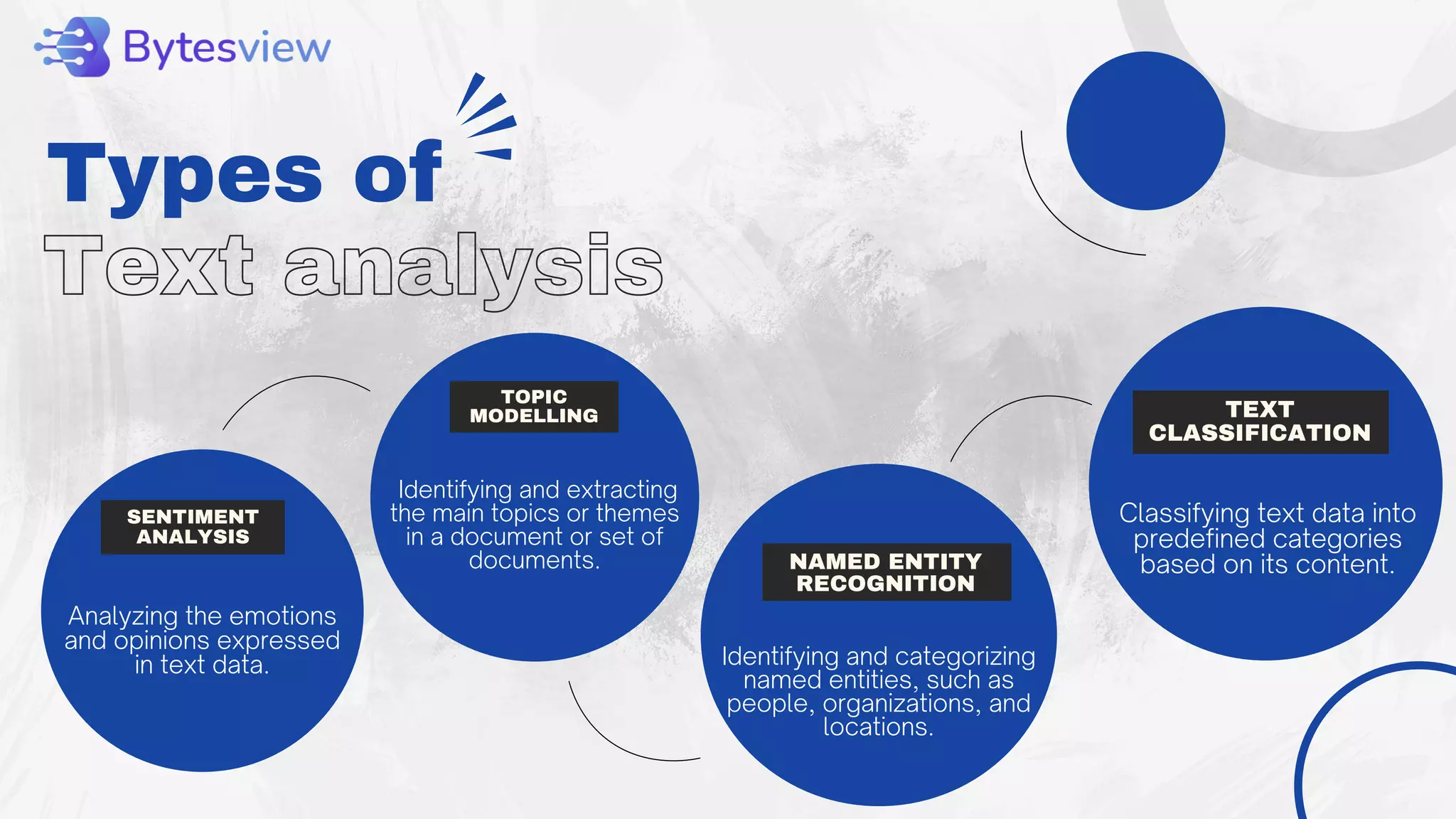
Types of
SENTIMENT
ANALYSIS
TOPIC
MODELLING
NAMED ENTITY
RECOGNITION
TEXT
CLASSIFICATION
Analyzing the emotions
and opinions expressed
in text data.
Identifying and extracting
the main topics or themes
in a document or set of
documents.
Identifying and categorizing
named entities, such as
people, organizations, and
locations.
Classifying text data into
predefined categories
based on its content.
Text analysis
Techniques
NATURAL LANGUAGE
PROCESSING
MACHINE LEARNING
DATA VISUALIZATION
A subfield of computer science
and artificial intelligence that
focuses on the interaction
between computers and human
language.
A type of artificial intelligence that
uses algorithms to identify
patterns in data and make
predictions.
The graphical representation of
data and information to facilitate
understanding and communication.
Text Analysis
Applications of
CUSTOMER FEEDBACK ANALYSIS
NEWS ANALYSIS
SOCIAL MEDIA MONITORING
Analyzing customer reviews and
feedback to understand customer
sentiment and improve product or
service offerings.
Analyzing news articles to identify
emerging trends and changes in
public opinion.
Monitoring social media platforms
to identify trends, customer
opinions, and brand reputation.
Challenges
Text analysis
Data quality Interpretation Multilingual data
Text data can be noisy,
incomplete, and
difficult to standardize.
The meaning of text can be
subjective and context-
dependent, making it
challenging to analyze
accurately.
Analyzing text data in different
languages can pose significant
challenges, especially in
languages with complex syntax
and grammar.
Conlusion
Text analysis is a powerful tool for extracting insights and
understanding the meaning of unstructured data sources.
Through techniques such as natural language processing, machine
learning, and data visualization, we can gain valuable insights from text
data, from customer feedback and social media monitoring to news
analysis and fraud detection.
However, we must also be aware of the challenges of working with text
data, such as data quality, interpretation, and multilingual data. Despite
these challenges, there is no doubt that text analysis will continue to
play a critical role in helping individuals and organizations make
informed decisions and drive business value.
THANK
YOU
www.bytesview.com

Text analysis and its Importance.pdf

  • 1.
    TEXT ANALYSIS ANDITS IMPORTANCE A GUIDE TO PRESENTATION
  • 2.
    Definition and Types Importance and applications Challengesand Conclusion Introduction The The topics which we will cover in this presentation.
  • 3.
    Text Analysis? What is DEFINITION The processof analyzing and understanding the meaning of text data using various techniques such as statistical, computational, and linguistic methods. Text analysis involves extracting insights and patterns from unstructured data sources such as social media posts, customer reviews, and news articles DEFINITION
  • 4.
    Text analysis Types of SENTIMENT ANALYSIS TOPIC MODELLING NAMEDENTITY RECOGNITION TEXT CLASSIFICATION Analyzing the emotions and opinions expressed in text data. Identifying and extracting the main topics or themes in a document or set of documents. Identifying and categorizing named entities, such as people, organizations, and locations. Classifying text data into predefined categories based on its content.
  • 5.
    Text analysis Techniques NATURAL LANGUAGE PROCESSING MACHINELEARNING DATA VISUALIZATION A subfield of computer science and artificial intelligence that focuses on the interaction between computers and human language. A type of artificial intelligence that uses algorithms to identify patterns in data and make predictions. The graphical representation of data and information to facilitate understanding and communication.
  • 6.
    Text Analysis Applications of CUSTOMERFEEDBACK ANALYSIS NEWS ANALYSIS SOCIAL MEDIA MONITORING Analyzing customer reviews and feedback to understand customer sentiment and improve product or service offerings. Analyzing news articles to identify emerging trends and changes in public opinion. Monitoring social media platforms to identify trends, customer opinions, and brand reputation.
  • 7.
    Challenges Text analysis Data qualityInterpretation Multilingual data Text data can be noisy, incomplete, and difficult to standardize. The meaning of text can be subjective and context- dependent, making it challenging to analyze accurately. Analyzing text data in different languages can pose significant challenges, especially in languages with complex syntax and grammar.
  • 8.
    Conlusion Text analysis isa powerful tool for extracting insights and understanding the meaning of unstructured data sources. Through techniques such as natural language processing, machine learning, and data visualization, we can gain valuable insights from text data, from customer feedback and social media monitoring to news analysis and fraud detection. However, we must also be aware of the challenges of working with text data, such as data quality, interpretation, and multilingual data. Despite these challenges, there is no doubt that text analysis will continue to play a critical role in helping individuals and organizations make informed decisions and drive business value.
  • 9.