Texas vs. Johnson
By : Carter Hedden
The Standard
• SSCG16 The student will
demonstrate knowledge of the
operation of the federal judiciary.
Information
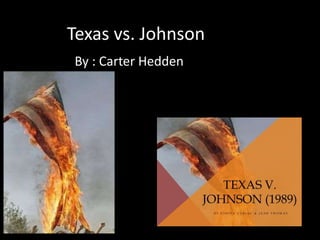
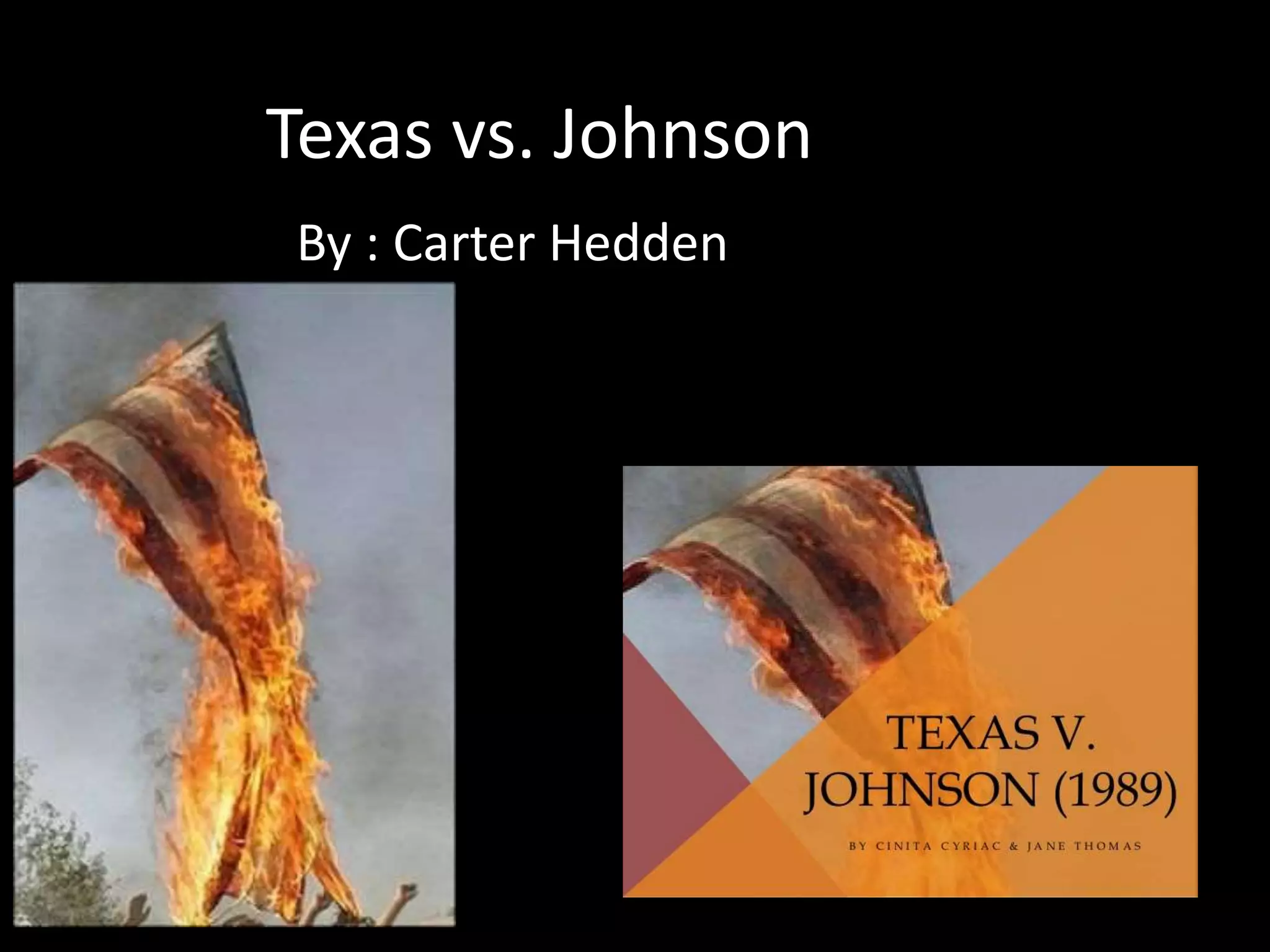
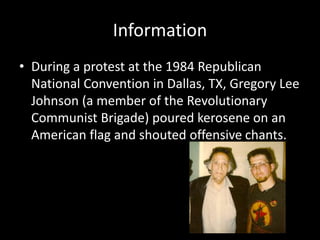
• During a protest at the 1984 Republican
National Convention in Dallas, TX, Gregory Lee
Johnson (a member of the Revolutionary
Communist Brigade) poured kerosene on an
American flag and shouted offensive chants.
Important question to consider...
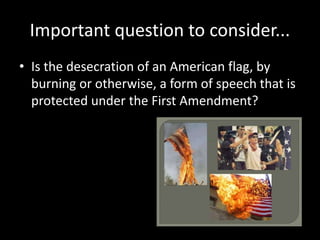
• Is the desecration of an American flag, by
burning or otherwise, a form of speech that is
protected under the First Amendment?
Convicted
• Johnson was charged with violating the Texas
law that prohibits vandalizing respected
objects. He was convicted, sentenced to one
year in prison, and fined $2,000.
Appeals
• Johnson appealed his conviction to the Fifth
Court of Appeals of Texas, but he lost this
appeal
• The Texas Court of Criminal Appeals
overturned his conviction because they
claimed that Johnson was protected under the
first amendment and could not be punished
by the state of Texas because he was
exhibiting symbolic speech.
Supreme Court
• The case went to the supreme court in 1988-
1990.
• In a 5-4 decision, the court ruled in favor of
Johnson. They said Johnson’s burning of the
was protected expression under the First
Amendment.
Impact
• The consequences of Texas vs Johnson still
have effects today, and the issue still remains
controversial. There are many mixed feelings
over the topic. On the constitutional level,
Texas vs Johnson has fueled several bills
proposed by Congress that would prohibit flag
burning in the United States on a national
level.

Texas vs Johnson

  • 1.
    Texas vs. Johnson By: Carter Hedden
  • 2.
    The Standard • SSCG16The student will demonstrate knowledge of the operation of the federal judiciary.
  • 3.
    Information • During aprotest at the 1984 Republican National Convention in Dallas, TX, Gregory Lee Johnson (a member of the Revolutionary Communist Brigade) poured kerosene on an American flag and shouted offensive chants.
  • 4.
    Important question toconsider... • Is the desecration of an American flag, by burning or otherwise, a form of speech that is protected under the First Amendment?
  • 5.
    Convicted • Johnson wascharged with violating the Texas law that prohibits vandalizing respected objects. He was convicted, sentenced to one year in prison, and fined $2,000.
  • 6.
    Appeals • Johnson appealedhis conviction to the Fifth Court of Appeals of Texas, but he lost this appeal • The Texas Court of Criminal Appeals overturned his conviction because they claimed that Johnson was protected under the first amendment and could not be punished by the state of Texas because he was exhibiting symbolic speech.
  • 7.
    Supreme Court • Thecase went to the supreme court in 1988- 1990. • In a 5-4 decision, the court ruled in favor of Johnson. They said Johnson’s burning of the was protected expression under the First Amendment.
  • 8.
    Impact • The consequencesof Texas vs Johnson still have effects today, and the issue still remains controversial. There are many mixed feelings over the topic. On the constitutional level, Texas vs Johnson has fueled several bills proposed by Congress that would prohibit flag burning in the United States on a national level.