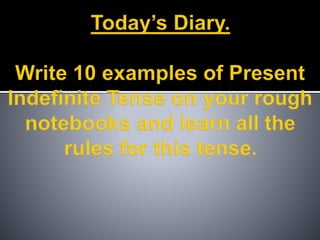
Tenses Learning
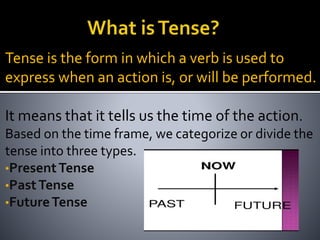
Tense is the form in which a verb is used to
express when an action is, or will be performed.
It means that it tells us the time of the action.
Based on the time frame, we categorize or divide the
tense into three types.
•PresentTense
•PastTense
•FutureTense
•Expresses activities, actions or state of being in
the present.
•We use the Simple Present to express the idea
that an action is repeated or usual.
The subcategories of this tense are:
•Simple/Indefinite
•Continuous/Progressive
•Perfect
•Perfect Continuous
•This tense is used to describe the action that is
either happening right now or that happens
regularly.
•The first form of verb is used with either an –
s or –es depending on the situation.
• Subject + Do/Does +Verb (1st Form)+Object
e,g, I do my work daily
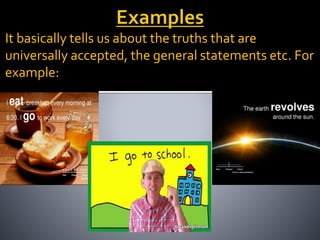
It basically tells us about the truths that are
universally accepted, the general statements etc. For
example:
The action is general.
The action happens all the time, or habitually.
The given statement is always true.
•For Negative Sentences:
Subject+Do/Does+Not+Verb (1st Form)
+Object
•For Interrogative Sentences
Do/Does + Subject +Verb (1st Form) + Object
Tenses

Tenses

  • 1.
  • 2.
    Tense is theform in which a verb is used to express when an action is, or will be performed. It means that it tells us the time of the action. Based on the time frame, we categorize or divide the tense into three types. •PresentTense •PastTense •FutureTense
  • 5.
    •Expresses activities, actionsor state of being in the present. •We use the Simple Present to express the idea that an action is repeated or usual. The subcategories of this tense are: •Simple/Indefinite •Continuous/Progressive •Perfect •Perfect Continuous
  • 6.
    •This tense isused to describe the action that is either happening right now or that happens regularly. •The first form of verb is used with either an – s or –es depending on the situation. • Subject + Do/Does +Verb (1st Form)+Object e,g, I do my work daily
  • 7.
    It basically tellsus about the truths that are universally accepted, the general statements etc. For example:
  • 8.
    The action isgeneral. The action happens all the time, or habitually. The given statement is always true. •For Negative Sentences: Subject+Do/Does+Not+Verb (1st Form) +Object •For Interrogative Sentences Do/Does + Subject +Verb (1st Form) + Object