Telling Direction
Vocabulary
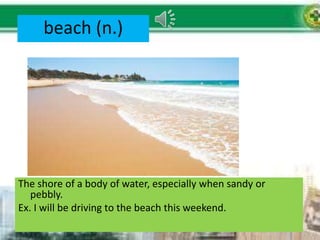
beach (n.)
The shore of a body of water, especially when sandy or
pebbly.
Ex. I will be driving to the beach this weekend.
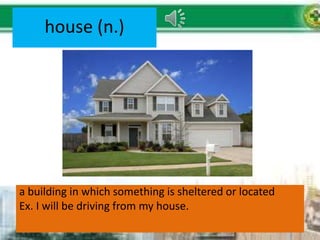
house (n.)
a building in which something is sheltered or located
Ex. I will be driving from my house.
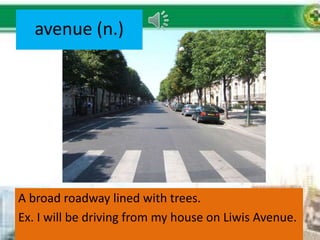
avenue (n.)
A broad roadway lined with trees.
Ex. I will be driving from my house on Liwis Avenue.
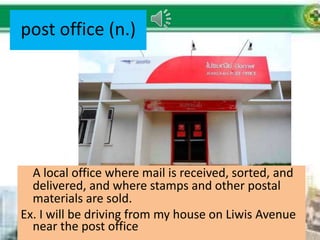
post office (n.)
A local office where mail is received, sorted, and
delivered, and where stamps and other postal
materials are sold.
Ex. I will be driving from my house on Liwis Avenue
near the post office
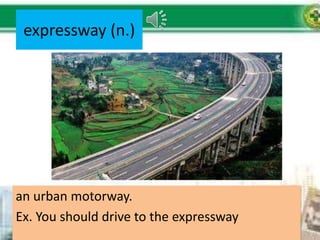
expressway (n.)
an urban motorway.
Ex. You should drive to the expressway
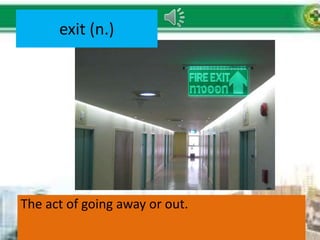
exit (n.)
The act of going away or out.
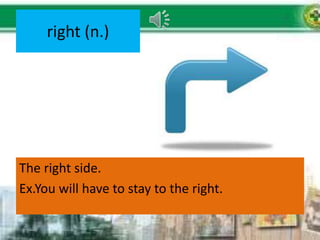
right (n.)
The right side.
Ex.You will have to stay to the right.
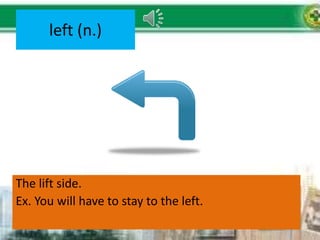
left (n.)
The lift side.
Ex. You will have to stay to the left.
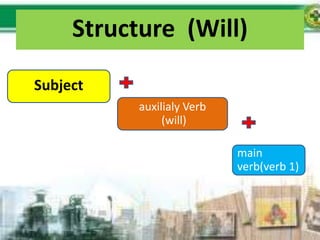
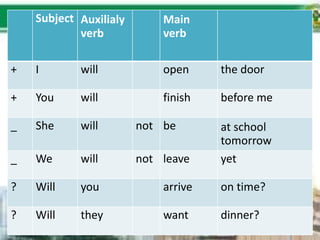
Structure (Will)
Subject
auxilialy Verb
(will)
main
verb(verb 1)
Subject Auxilialy
verb
Main
verb
+ I will open the door
+ You will finish before me
_ She will not be at school
tomorrow
_ We will not leave yet
? Will you arrive on time?
? Will they want dinner?
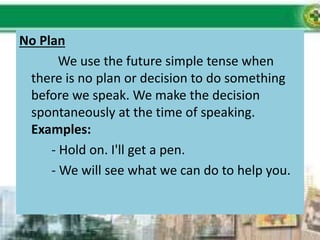
No Plan
We use the future simple tense when
there is no plan or decision to do something
before we speak. We make the decision
spontaneously at the time of speaking.
Examples:
- Hold on. I'll get a pen.
- We will see what we can do to help you.
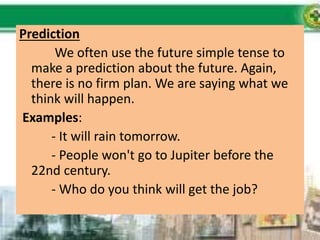
Prediction
We often use the future simple tense to
make a prediction about the future. Again,
there is no firm plan. We are saying what we
think will happen.
Examples:
- It will rain tomorrow.
- People won't go to Jupiter before the
22nd century.
- Who do you think will get the job?
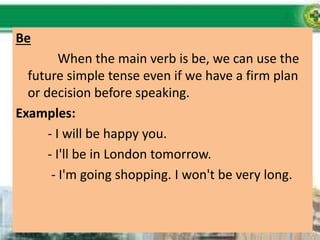
Be
When the main verb is be, we can use the
future simple tense even if we have a firm plan
or decision before speaking.
Examples:
- I will be happy you.
- I'll be in London tomorrow.
- I'm going shopping. I won't be very long.
Telling direction
Jane: I will be driving to the beach this
weekend. Can you help me figure
out how to get there?
Lilly: I will be happy you. Where are you
starting from?
Jane: I will be driving from my house on
Liwis Avenue near the post office.
Lilly: You should drive to the expressway,
take exit 14, and the follow the Belt
Parkway until you see the exit for the
beach.
Jane: Do you know if the beach exit is on the
right or left?
Lilly: You will have to stay to the right.
Jane: Thanks!!!
Time to do activities
Direction
• Make a group of 5 people.
• Each group sent a representative get the
direction from a teacher.
• Each group read the direction and follow the
direction to find things.
• The first group get correct thing will be the
winner.

Telling direction CLT

  • 1.
  • 3.
  • 4.
    beach (n.) The shoreof a body of water, especially when sandy or pebbly. Ex. I will be driving to the beach this weekend.
  • 5.
    house (n.) a buildingin which something is sheltered or located Ex. I will be driving from my house.
  • 6.
    avenue (n.) A broadroadway lined with trees. Ex. I will be driving from my house on Liwis Avenue.
  • 7.
    post office (n.) Alocal office where mail is received, sorted, and delivered, and where stamps and other postal materials are sold. Ex. I will be driving from my house on Liwis Avenue near the post office
  • 8.
    expressway (n.) an urbanmotorway. Ex. You should drive to the expressway
  • 9.
    exit (n.) The actof going away or out.
  • 10.
    right (n.) The rightside. Ex.You will have to stay to the right.
  • 11.
    left (n.) The liftside. Ex. You will have to stay to the left.
  • 12.
  • 13.
    Subject Auxilialy verb Main verb + Iwill open the door + You will finish before me _ She will not be at school tomorrow _ We will not leave yet ? Will you arrive on time? ? Will they want dinner?
  • 14.
    No Plan We usethe future simple tense when there is no plan or decision to do something before we speak. We make the decision spontaneously at the time of speaking. Examples: - Hold on. I'll get a pen. - We will see what we can do to help you.
  • 15.
    Prediction We often usethe future simple tense to make a prediction about the future. Again, there is no firm plan. We are saying what we think will happen. Examples: - It will rain tomorrow. - People won't go to Jupiter before the 22nd century. - Who do you think will get the job?
  • 16.
    Be When the mainverb is be, we can use the future simple tense even if we have a firm plan or decision before speaking. Examples: - I will be happy you. - I'll be in London tomorrow. - I'm going shopping. I won't be very long.
  • 17.
    Telling direction Jane: Iwill be driving to the beach this weekend. Can you help me figure out how to get there? Lilly: I will be happy you. Where are you starting from? Jane: I will be driving from my house on Liwis Avenue near the post office.
  • 18.
    Lilly: You shoulddrive to the expressway, take exit 14, and the follow the Belt Parkway until you see the exit for the beach. Jane: Do you know if the beach exit is on the right or left? Lilly: You will have to stay to the right. Jane: Thanks!!!
  • 19.
    Time to doactivities
  • 20.
    Direction • Make agroup of 5 people. • Each group sent a representative get the direction from a teacher. • Each group read the direction and follow the direction to find things. • The first group get correct thing will be the winner.