BASIC CAMERA FUNCTIONS
PARAMESWARI.P
ASSISTANT PROFESSOR
DR.G.R.D.COLLEGE OF SCIENCE
COIMBATORE
PARAMESWARI.P
ASSISTANT PROFESSOR
DR.G.R.D.COLLEGE OF SCIENCE
COIMBATORE
BASIC CAMERA FUNCTIONS
PARTS OF THE CAMERA
SOURCES: TELEVISION PRODUCTION HANDBOOK BY ZETTL
BASIC CAMERA FUNCTIONS
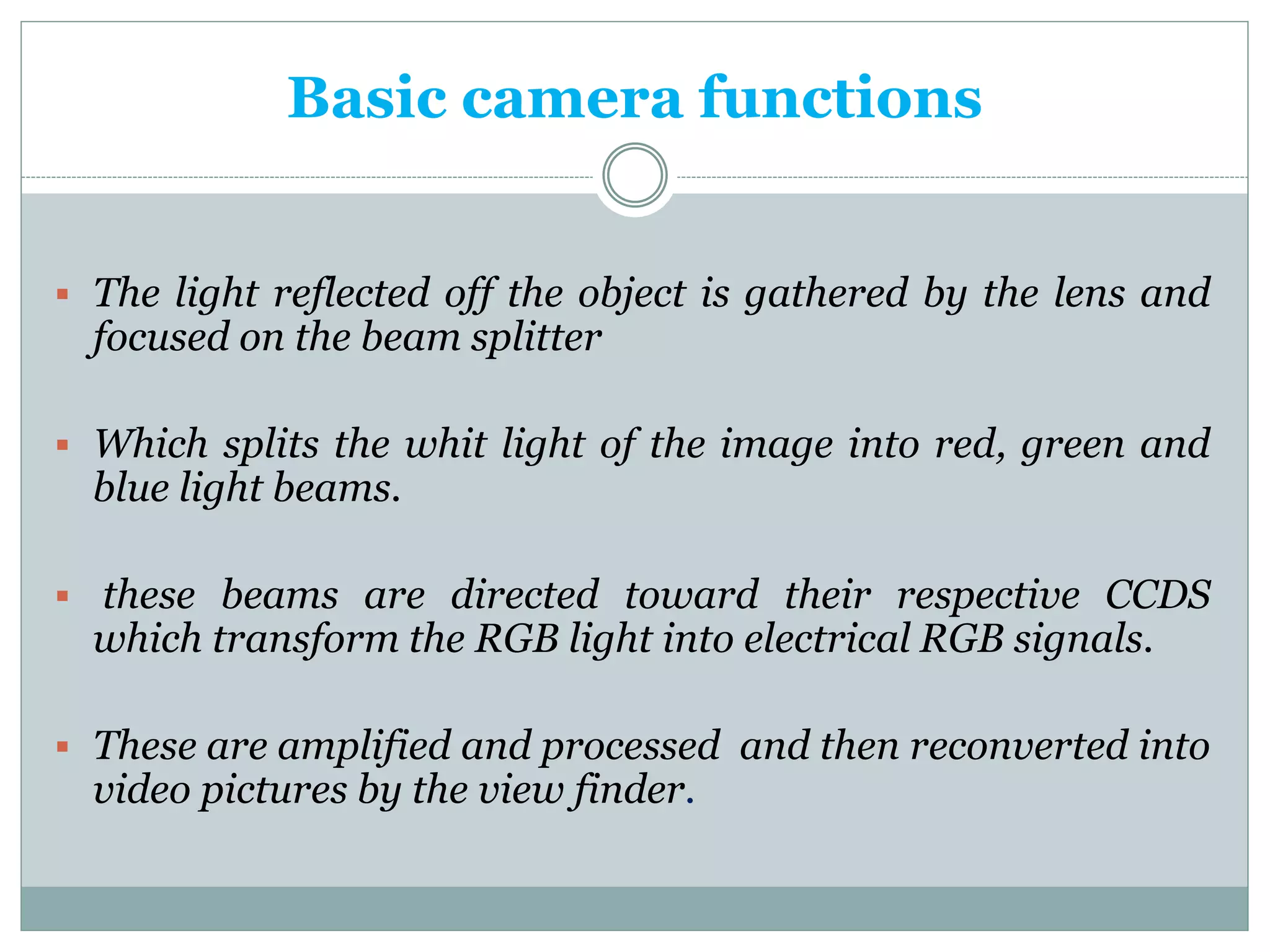
Basic camera functions
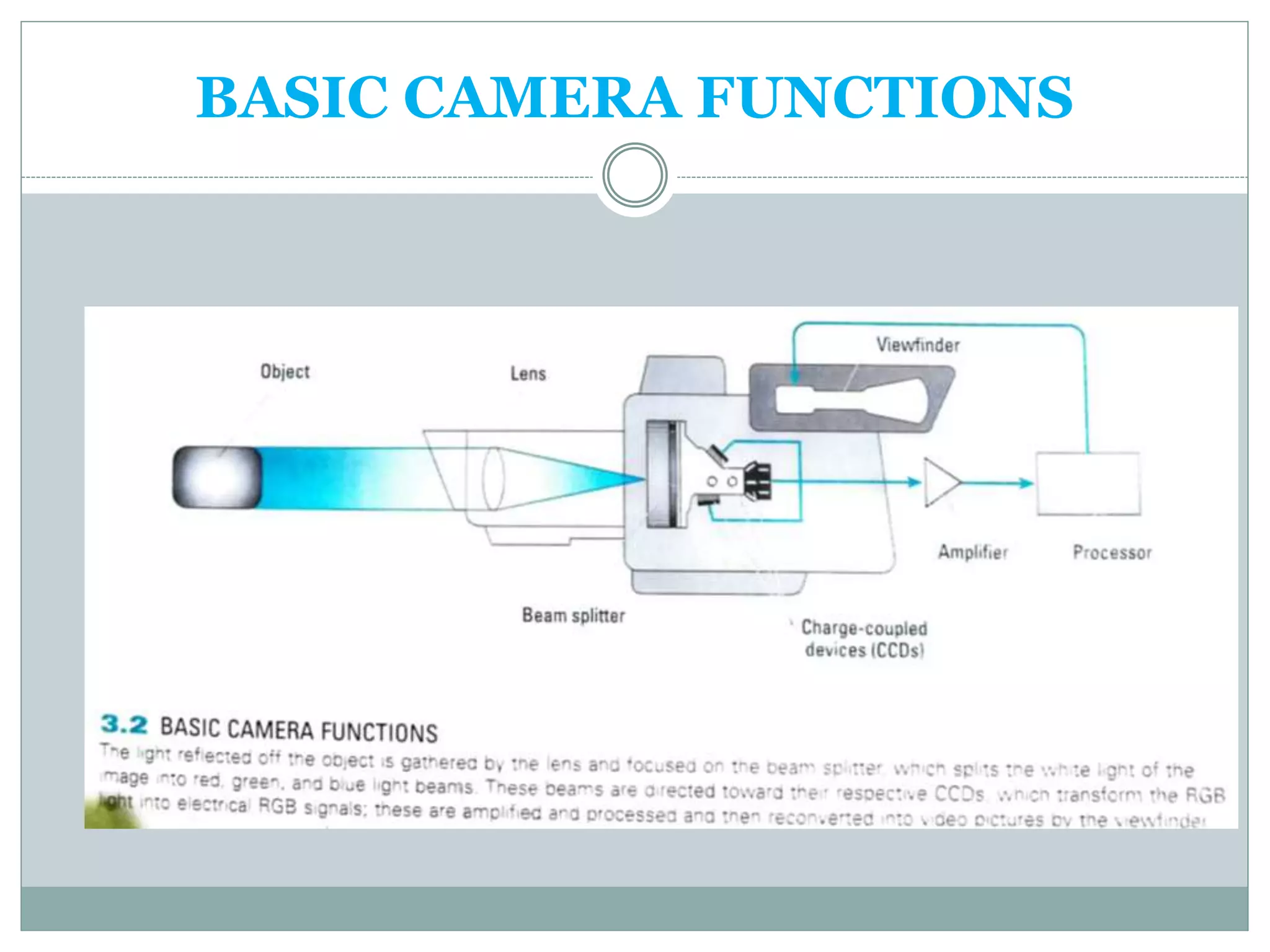
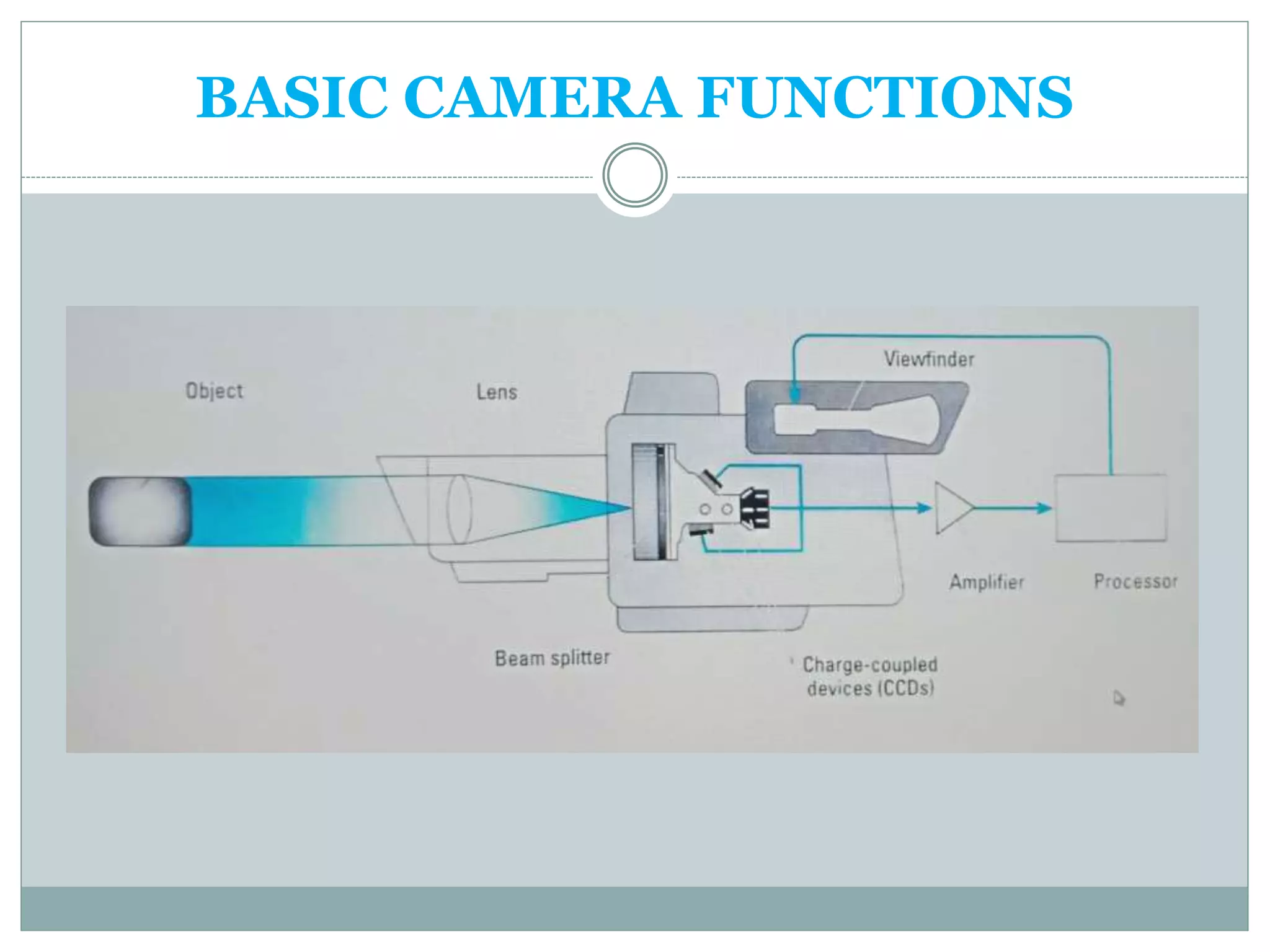
 The light reflected off the object is gathered by the lens and
focused on the beam splitter
 Which splits the whit light of the image into red, green and
blue light beams.
 these beams are directed toward their respective CCDS
which transform the RGB light into electrical RGB signals.
 These are amplified and processed and then reconverted into
video pictures by the view finder.
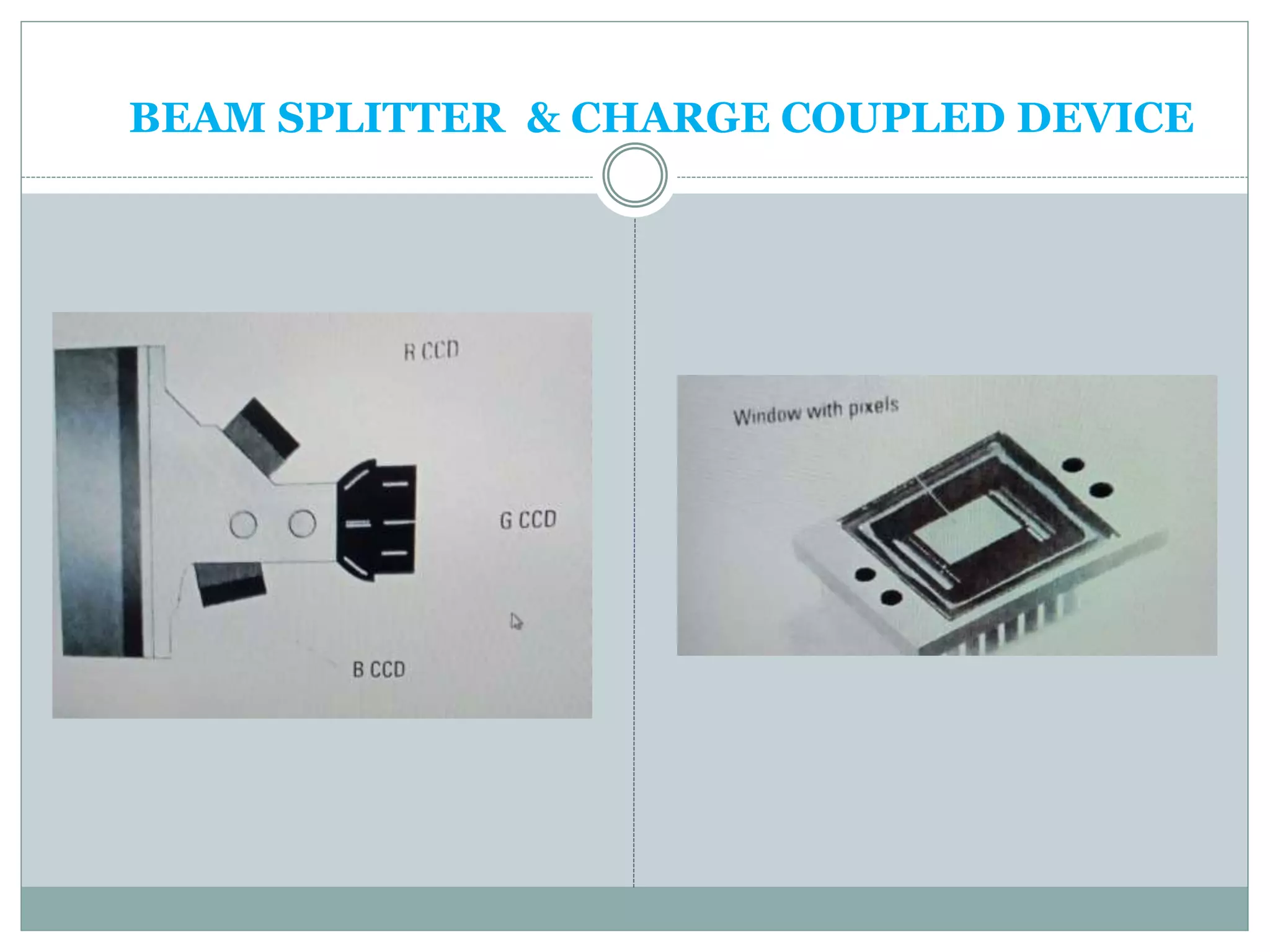
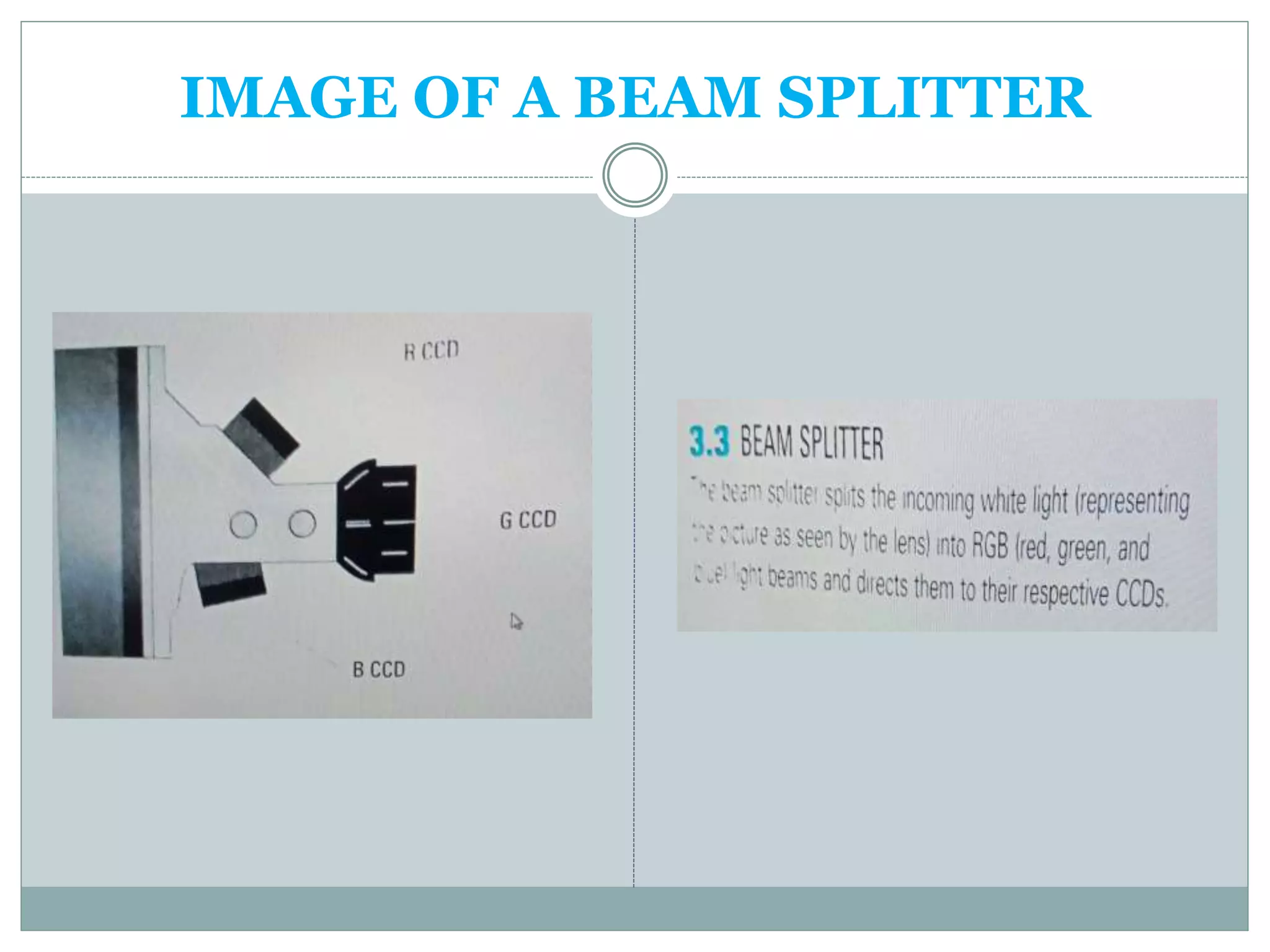
BEAM SPLITTER & CHARGE COUPLED DEVICE
IMAGE OF A BEAM SPLITTER
IMAGE OF CHARGE COUPLED DEVICE
INFORMATION OF BEAM SPLITTER
 The beam splitter consists of various prisms and/or
filters that separate the white light that passes through
the camera lens into the three light primaries-red,
green, and blue, usually referred to as RGB.
 these three primaries are then electronically '"mixed"
into the many colors you see on the television screen.

 Because all these prisms and filters are contained in a
small block, the beam splitter is often called the prism
block.
THE IMAGING DEVICE
 Once the white light that enters through The lens
has been divided into the three primary colors, each
light beam must be translated into electrical
signals.
 The principal electronic component that converts
light into electricity is called the imaging device.
THE IMAGING DEVICE
 The imaging or pickup device consists of a small (about,
or less than the size of a postage stamp with a small
window) solid state device normally called a chip or,
more technical a charge coupled device (CCD).
 The CCD contains hundreds of thousands of image-
sensing elements. called pixel (A word made up of pix,
for picture, and els for elements) that are arranged in
horizontal and vertical rows. See the image given above.
THE IMAGING DEVICE
 Pixels function very much like tiles that make up a
complete mosaic image.
 A certain amount of such concrete elements are obviously
needed to produce a recognizable image.
 If there are relatively few mosaic tile the object may be
recognizable, but the picture will not contain much detail.
THE IMAGING DEVICE
 Each pixel is discrete image element that transforms its color and
brightness into a specific electric charge
 ln digital cameras each pixel has a unique computer address.
 The electric charges from all the pixels eventually becomes the
video signals for the three primary light colors.
 These RGB colours make up the chrominance (color) information ,
or the C signal.
 The black and white of the luminance or luminance information is
provided by an additional signal the y signal.
THE IMAGING DEVICE
 The more and the smaller the tiles in
the mosaic, the more detail the
picture will have.
 The same is true for CCDs: The more
pixels the imaging chip contains. the
higher the resolution of the video
image.
THANK YOU
THANK YOU

Television production handbook zettl (basic camera function)

  • 1.
    BASIC CAMERA FUNCTIONS PARAMESWARI.P ASSISTANTPROFESSOR DR.G.R.D.COLLEGE OF SCIENCE COIMBATORE
  • 2.
    PARAMESWARI.P ASSISTANT PROFESSOR DR.G.R.D.COLLEGE OFSCIENCE COIMBATORE BASIC CAMERA FUNCTIONS
  • 3.
    PARTS OF THECAMERA SOURCES: TELEVISION PRODUCTION HANDBOOK BY ZETTL
  • 4.
  • 5.
  • 6.
    Basic camera functions The light reflected off the object is gathered by the lens and focused on the beam splitter  Which splits the whit light of the image into red, green and blue light beams.  these beams are directed toward their respective CCDS which transform the RGB light into electrical RGB signals.  These are amplified and processed and then reconverted into video pictures by the view finder.
  • 7.
    BEAM SPLITTER &CHARGE COUPLED DEVICE
  • 8.
    IMAGE OF ABEAM SPLITTER
  • 9.
    IMAGE OF CHARGECOUPLED DEVICE
  • 10.
    INFORMATION OF BEAMSPLITTER  The beam splitter consists of various prisms and/or filters that separate the white light that passes through the camera lens into the three light primaries-red, green, and blue, usually referred to as RGB.  these three primaries are then electronically '"mixed" into the many colors you see on the television screen.   Because all these prisms and filters are contained in a small block, the beam splitter is often called the prism block.
  • 11.
    THE IMAGING DEVICE Once the white light that enters through The lens has been divided into the three primary colors, each light beam must be translated into electrical signals.  The principal electronic component that converts light into electricity is called the imaging device.
  • 12.
    THE IMAGING DEVICE The imaging or pickup device consists of a small (about, or less than the size of a postage stamp with a small window) solid state device normally called a chip or, more technical a charge coupled device (CCD).  The CCD contains hundreds of thousands of image- sensing elements. called pixel (A word made up of pix, for picture, and els for elements) that are arranged in horizontal and vertical rows. See the image given above.
  • 13.
    THE IMAGING DEVICE Pixels function very much like tiles that make up a complete mosaic image.  A certain amount of such concrete elements are obviously needed to produce a recognizable image.  If there are relatively few mosaic tile the object may be recognizable, but the picture will not contain much detail.
  • 14.
    THE IMAGING DEVICE Each pixel is discrete image element that transforms its color and brightness into a specific electric charge  ln digital cameras each pixel has a unique computer address.  The electric charges from all the pixels eventually becomes the video signals for the three primary light colors.  These RGB colours make up the chrominance (color) information , or the C signal.  The black and white of the luminance or luminance information is provided by an additional signal the y signal.
  • 15.
    THE IMAGING DEVICE The more and the smaller the tiles in the mosaic, the more detail the picture will have.  The same is true for CCDs: The more pixels the imaging chip contains. the higher the resolution of the video image.
  • 16.