Telecoms and the Cloud:
Does it Make Sense?


Issue 1
www.alanquayle.com/blog
                          © 2011 Alan Quayle Business and Service Development
Outline

•   We live in Hyped Times!


•   Is History Repeating Itself?


•   Why be a Cloud Provider?


•   Background to Telcos and Cloud Computing


•   Quick Market Review


•   Conclusions

                          © 2011 Alan Quayle Business and Service Development   2
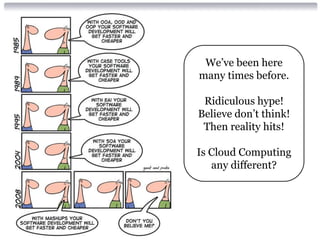
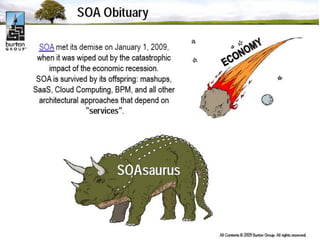
We’ve been here
many times before.

 Ridiculous hype!
Believe don’t think!
 Then reality hits!

Is Cloud Computing
   any different?
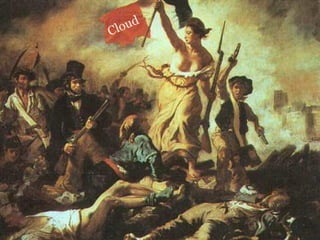
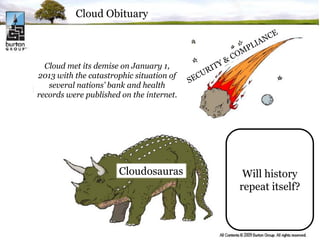
Cloud Obituary


  Cloud met its demise on January 1,
2013 with the catastrophic situation of
   several nations’ bank and health
records were published on the internet.


                      Cloudosauras         Will history
                                          repeat itself?
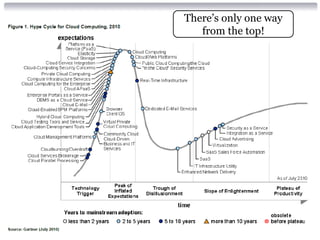
There’s only one way
   from the top!
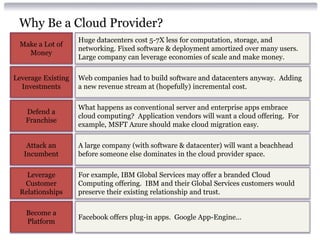
Why Be a Cloud Provider?
                    Huge datacenters cost 5-7X less for computation, storage, and
 Make a Lot of
                    networking. Fixed software & deployment amortized over many users.
   Money
                    Large company can leverage economies of scale and make money.

Leverage Existing   Web companies had to build software and datacenters anyway. Adding
  Investments       a new revenue stream at (hopefully) incremental cost.

                    What happens as conventional server and enterprise apps embrace
   Defend a
                    cloud computing? Application vendors will want a cloud offering. For
   Franchise
                    example, MSFT Azure should make cloud migration easy.

    Attack an       A large company (with software & datacenter) will want a beachhead
   Incumbent        before someone else dominates in the cloud provider space.

   Leverage         For example, IBM Global Services may offer a branded Cloud
  Customer          Computing offering. IBM and their Global Services customers would
 Relationships      preserve their existing relationship and trust.

   Become a
                    Facebook offers plug-in apps. Google App-Engine…
   Platform
Why CSPs have a Role in Cloud Computing
•   Shared infrastructure
          • CSPs have long history of infrastructure, which is networked and
            interoperable via well-defined interfaces.
•   Managed and hosted IT and communications services
          • For a longer time CSPs have relied on vendors’ managed services type of
            professional services, which means that there is no inherent fear of
            outsourcing operative responsibilities.
•   Data centres
          • Data centres operations have been for long time the core of CSP production
            machines.
•   Security, data integrity and trust
          • These are the traditional key characteristics of telco business.
•   Managed network services and end-to-end SLAs.
          • CSPs are familiar with end-to-end SLA thinking and KPI based operations.
•   Communications as a service
          • Communications and connectivity is the bread and butter of CSPs.
•   SME customer base
          • The customer base of CSPs does cover SME, which means that they are
            familiar with the problems and issue within the segment.
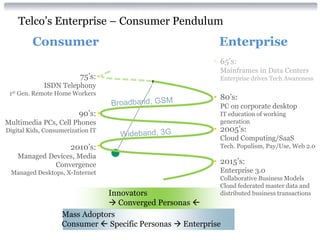
Telco’s Enterprise – Consumer Pendulum
           Consumer                                         Enterprise
                                                           • 65’s:
                                                            Mainframes in Data Centers
                          75’s: •                           Enterprise drives Tech Awareness
               ISDN Telephony
 1st   Gen. Remote Home Workers
                                                           • 80’s:
                                                            PC on corporate desktop
                         90’s: •                            IT education of working
Multimedia PCs, Cell Phones                                 generation
Digital Kids, Consumerization IT                           • 2005’s:
                                                            Cloud Computing/SaaS
                       2010’s: •                            Tech. Populism, Pay/Use, Web 2.0
       Managed Devices, Media
                 Convergence                               • 2015’s:
 Managed Desktops, X-Internet                               Enterprise 3.0
                                                            Collaborative Business Models
                                                            Cloud federated master data and
                               Innovators                   distributed business transactions
                                Converged Personas 
                    Mass Adoptors
                    Consumer  Specific Personas  Enterprise
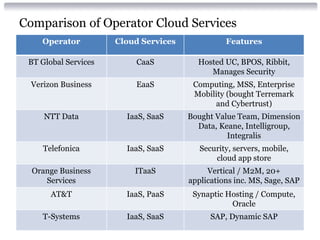
Comparison of Operator Cloud Services
     Operator         Cloud Services             Features

 BT Global Services       CaaS           Hosted UC, BPOS, Ribbit,
                                            Manages Security
  Verizon Business        EaaS          Computing, MSS, Enterprise
                                        Mobility (bought Terremark
                                             and Cybertrust)
     NTT Data           IaaS, SaaS     Bought Value Team, Dimension
                                         Data, Keane, Intelligroup,
                                                 Integralis
     Telefonica         IaaS, SaaS        Security, servers, mobile,
                                              cloud app store
  Orange Business         ITaaS             Vertical / M2M, 20+
     Services                          applications inc. MS, Sage, SAP
       AT&T             IaaS, PaaS      Synaptic Hosting / Compute,
                                                  Oracle
     T-Systems          IaaS, SaaS           SAP, Dynamic SAP
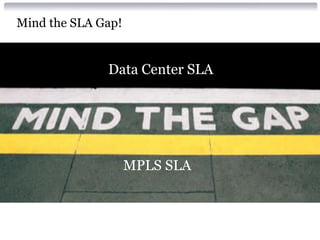
Mind the SLA Gap!


              Data Center SLA


                    MPLS SLA
Beware Lock-In
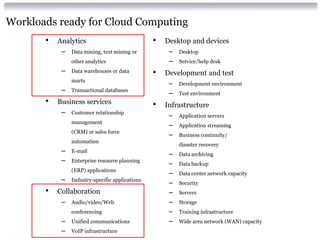
Workloads ready for Cloud Computing
       •   Analytics                             •   Desktop and devices
            – Data mining, text mining or             – Desktop
                other analytics                       – Service/help desk
            –   Data warehouses or data          •   Development and test
                marts
                                                      – Development environment
            –   Transactional databases
                                                      – Test environment
       •   Business services                     •   Infrastructure
            – Customer relationship                   – Application servers
                management
                                                      – Application streaming
                (CRM) or sales force
                                                      – Business continuity/
                automation
                                                          disaster recovery
            –   E-mail
                                                      –   Data archiving
            –   Enterprise resource planning
                                                      –   Data backup
                (ERP) applications
                                                      –   Data center network capacity
            –   Industry-specific applications
                                                      –   Security
       •   Collaboration                              –   Servers
            – Audio/video/Web                         –   Storage
                conferencing                          –   Training infrastructure
            –   Unified communications                –   Wide area network (WAN) capacity
            –   VoIP infrastructure
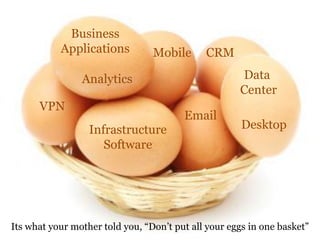
Conclusions
          Business
        Applications             Mobile      CRM

                Analytics                            Data
                                                     Center
      VPN
                                        Email
                  Infrastructure                      Desktop
                     Software


Its what your mother told you, “Don’t put all your eggs in one basket”

Telecoms in the Clouds Issue 1

  • 1.
    Telecoms and theCloud: Does it Make Sense? Issue 1 www.alanquayle.com/blog © 2011 Alan Quayle Business and Service Development
  • 2.
    Outline • We live in Hyped Times! • Is History Repeating Itself? • Why be a Cloud Provider? • Background to Telcos and Cloud Computing • Quick Market Review • Conclusions © 2011 Alan Quayle Business and Service Development 2
  • 4.
    We’ve been here manytimes before. Ridiculous hype! Believe don’t think! Then reality hits! Is Cloud Computing any different?
  • 6.
    Cloud Obituary Cloud met its demise on January 1, 2013 with the catastrophic situation of several nations’ bank and health records were published on the internet. Cloudosauras Will history repeat itself?
  • 7.
    There’s only oneway from the top!
  • 8.
    Why Be aCloud Provider? Huge datacenters cost 5-7X less for computation, storage, and Make a Lot of networking. Fixed software & deployment amortized over many users. Money Large company can leverage economies of scale and make money. Leverage Existing Web companies had to build software and datacenters anyway. Adding Investments a new revenue stream at (hopefully) incremental cost. What happens as conventional server and enterprise apps embrace Defend a cloud computing? Application vendors will want a cloud offering. For Franchise example, MSFT Azure should make cloud migration easy. Attack an A large company (with software & datacenter) will want a beachhead Incumbent before someone else dominates in the cloud provider space. Leverage For example, IBM Global Services may offer a branded Cloud Customer Computing offering. IBM and their Global Services customers would Relationships preserve their existing relationship and trust. Become a Facebook offers plug-in apps. Google App-Engine… Platform
  • 9.
    Why CSPs havea Role in Cloud Computing • Shared infrastructure • CSPs have long history of infrastructure, which is networked and interoperable via well-defined interfaces. • Managed and hosted IT and communications services • For a longer time CSPs have relied on vendors’ managed services type of professional services, which means that there is no inherent fear of outsourcing operative responsibilities. • Data centres • Data centres operations have been for long time the core of CSP production machines. • Security, data integrity and trust • These are the traditional key characteristics of telco business. • Managed network services and end-to-end SLAs. • CSPs are familiar with end-to-end SLA thinking and KPI based operations. • Communications as a service • Communications and connectivity is the bread and butter of CSPs. • SME customer base • The customer base of CSPs does cover SME, which means that they are familiar with the problems and issue within the segment.
  • 10.
    Telco’s Enterprise –Consumer Pendulum Consumer Enterprise • 65’s: Mainframes in Data Centers 75’s: • Enterprise drives Tech Awareness ISDN Telephony 1st Gen. Remote Home Workers • 80’s: PC on corporate desktop 90’s: • IT education of working Multimedia PCs, Cell Phones generation Digital Kids, Consumerization IT • 2005’s: Cloud Computing/SaaS 2010’s: • Tech. Populism, Pay/Use, Web 2.0 Managed Devices, Media Convergence • 2015’s: Managed Desktops, X-Internet Enterprise 3.0 Collaborative Business Models Cloud federated master data and Innovators distributed business transactions  Converged Personas  Mass Adoptors Consumer  Specific Personas  Enterprise
  • 11.
    Comparison of OperatorCloud Services Operator Cloud Services Features BT Global Services CaaS Hosted UC, BPOS, Ribbit, Manages Security Verizon Business EaaS Computing, MSS, Enterprise Mobility (bought Terremark and Cybertrust) NTT Data IaaS, SaaS Bought Value Team, Dimension Data, Keane, Intelligroup, Integralis Telefonica IaaS, SaaS Security, servers, mobile, cloud app store Orange Business ITaaS Vertical / M2M, 20+ Services applications inc. MS, Sage, SAP AT&T IaaS, PaaS Synaptic Hosting / Compute, Oracle T-Systems IaaS, SaaS SAP, Dynamic SAP
  • 12.
    Mind the SLAGap! Data Center SLA MPLS SLA
  • 13.
  • 14.
    Workloads ready forCloud Computing • Analytics • Desktop and devices – Data mining, text mining or – Desktop other analytics – Service/help desk – Data warehouses or data • Development and test marts – Development environment – Transactional databases – Test environment • Business services • Infrastructure – Customer relationship – Application servers management – Application streaming (CRM) or sales force – Business continuity/ automation disaster recovery – E-mail – Data archiving – Enterprise resource planning – Data backup (ERP) applications – Data center network capacity – Industry-specific applications – Security • Collaboration – Servers – Audio/video/Web – Storage conferencing – Training infrastructure – Unified communications – Wide area network (WAN) capacity – VoIP infrastructure
  • 15.
    Conclusions Business Applications Mobile CRM Analytics Data Center VPN Email Infrastructure Desktop Software Its what your mother told you, “Don’t put all your eggs in one basket”