Telecommunication based on IP
Dr. Harwikarya, MT
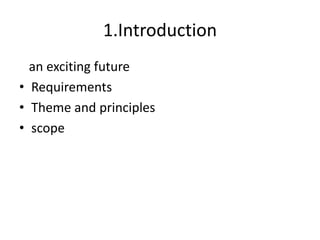
1.Introduction
an exciting future
• Requirements
• Theme and principles
• scope
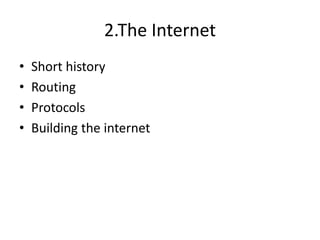
2.The Internet
• Short history
• Routing
• Protocols
• Building the internet
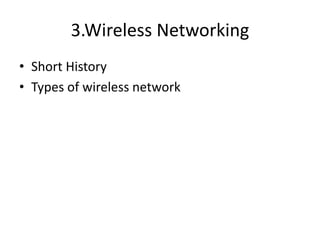
3.Wireless Networking
• Short History
• Types of wireless network
4. Multimedia over IP
• Motivation
• Requirement
• Issues and challenges
• Transport Protocol
• Wireless media over IP
5.Session Initiation Protocol (SIP)
• Requirement for Session initiation
• Fundamental of SIP
• Digging Dipper
• QoS
• SIP in wireless Networks
6.Mobility Management
• A network level solution : mobile IP
• Mobility concept
• Alternative mobility IP mobility scheme
• Micromobility and fast handoff
7. QoS
• Introduction
• IP QoS : Mechanism
• IP QoS frameworks
• QoS in wireless networks
8. Mid Test
• Good luck
9. Network Security
• Introduction
• IP Security
• Security in wireless networks
10. IPv6
• IPv6 design consideration
• IPv6 features overview
• IPv6 selected procedure
• IPv6 and wireless
11.Mobility support for IPv6
• Concept
• Protocol overview of mobile IPv6
• Binding update
• Prefix management
• Handover scheme for mobile IPv6
• Security in mobile IP
12.Services and applications
• IP connectivity
• Middle ware open service access
• How OSA works
• Wireless device service enabling technologies
application of the future
13.Evolution of GSM to UMTS
• From GPS to GPRS
• Moving toward 3G
• UMTS
14.The IP multimedia Subsystem(IMS)
• Motivation and requirements
• IMS architecture
• IMS procedures
15.Future possibilities
• What 4G
• Technology projection
• A complete redesign or evolution ?
• A transformation of wireless IP devices
16. Final Test
• Good luck
Chapter 1. Introduction
Objective:
1.Expansion of Internet Application (2015 latest)
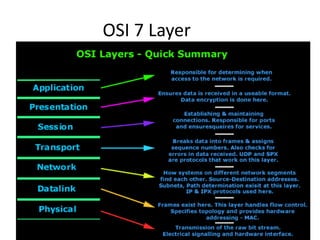
2.Seven Layers ISO
“I don’t understand how people used to live
before the Internet existed”
Thesis
“Today, the Internet and wireless are converging
towards an exciting future. This can be partly
explained by the recent convergence of
communications and computing technologies”.
“could be obtained by merging the features of
the Internet and of wireless communications”
Thesis
Many of these features, related to quality of
service (QoS), security, mobility, and multimedia
traffic support
Requirement
The requirements to realize this new phenomena
include:
1. High level of service integration;
2. Advanced service enabling software technologies
3. High-rate, reliable wireless communications
4. Mobility support
5. Supporting network infrastructure providing:
• Service differentiation;
• Secure communications.
Focus
The subject of wireless is very broad, and we
focuses on the category of wireless personal
communications and, more specifically, terrestrial
wireless personal communications systems.
The wireless systems that support mobility and
handoffs are:
1.infrastructure-backed wireless networks
2. infrastructureless wireless networks
we do not consider here wireless satellite
communications, wireless broadcasting (such as
TV or radio), and fixed wireless systems (such as
point-to-point microwave systems and wireless
local loop). Cordless phones are also out of our
scope because they do not support handoffs.
1. Infrastructure-backed wireless networks have an
infrastructure, typically wired, that supports the
wireless links. Cellular networks are examples of
this type.
2. Infrastructureless wireless networks are self-
contained wireless networks that do not need a
wired infrastructure; they are also known as
multihop ad hoc networks, or ad hoc networks
We focus on infrastructurebacked wireless
networks ( Thesis of Asep)
complete system includes the physical layer as
well as application software and middleware
We focuses on the networking aspects of
wireless Internet telecommunications
We need :
• IP Management
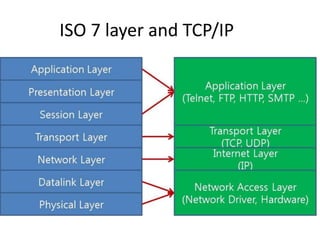
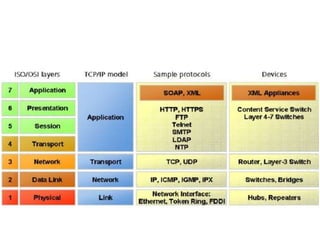
• Traditional seven layers of the protocol
OSI 7 Layer
ISO 7 layer and TCP/IP
Tel ip session1
Tel ip session1

Tel ip session1

  • 1.
    Telecommunication based onIP Dr. Harwikarya, MT
  • 2.
    1.Introduction an exciting future •Requirements • Theme and principles • scope
  • 3.
    2.The Internet • Shorthistory • Routing • Protocols • Building the internet
  • 4.
    3.Wireless Networking • ShortHistory • Types of wireless network
  • 5.
    4. Multimedia overIP • Motivation • Requirement • Issues and challenges • Transport Protocol • Wireless media over IP
  • 6.
    5.Session Initiation Protocol(SIP) • Requirement for Session initiation • Fundamental of SIP • Digging Dipper • QoS • SIP in wireless Networks
  • 7.
    6.Mobility Management • Anetwork level solution : mobile IP • Mobility concept • Alternative mobility IP mobility scheme • Micromobility and fast handoff
  • 8.
    7. QoS • Introduction •IP QoS : Mechanism • IP QoS frameworks • QoS in wireless networks
  • 9.
    8. Mid Test •Good luck
  • 10.
    9. Network Security •Introduction • IP Security • Security in wireless networks
  • 11.
    10. IPv6 • IPv6design consideration • IPv6 features overview • IPv6 selected procedure • IPv6 and wireless
  • 12.
    11.Mobility support forIPv6 • Concept • Protocol overview of mobile IPv6 • Binding update • Prefix management • Handover scheme for mobile IPv6 • Security in mobile IP
  • 13.
    12.Services and applications •IP connectivity • Middle ware open service access • How OSA works • Wireless device service enabling technologies application of the future
  • 14.
    13.Evolution of GSMto UMTS • From GPS to GPRS • Moving toward 3G • UMTS
  • 15.
    14.The IP multimediaSubsystem(IMS) • Motivation and requirements • IMS architecture • IMS procedures
  • 16.
    15.Future possibilities • What4G • Technology projection • A complete redesign or evolution ? • A transformation of wireless IP devices
  • 17.
  • 18.
    Chapter 1. Introduction Objective: 1.Expansionof Internet Application (2015 latest) 2.Seven Layers ISO “I don’t understand how people used to live before the Internet existed”
  • 19.
    Thesis “Today, the Internetand wireless are converging towards an exciting future. This can be partly explained by the recent convergence of communications and computing technologies”. “could be obtained by merging the features of the Internet and of wireless communications”
  • 20.
    Thesis Many of thesefeatures, related to quality of service (QoS), security, mobility, and multimedia traffic support
  • 21.
    Requirement The requirements torealize this new phenomena include: 1. High level of service integration; 2. Advanced service enabling software technologies 3. High-rate, reliable wireless communications 4. Mobility support 5. Supporting network infrastructure providing: • Service differentiation; • Secure communications.
  • 22.
    Focus The subject ofwireless is very broad, and we focuses on the category of wireless personal communications and, more specifically, terrestrial wireless personal communications systems. The wireless systems that support mobility and handoffs are: 1.infrastructure-backed wireless networks 2. infrastructureless wireless networks
  • 23.
    we do notconsider here wireless satellite communications, wireless broadcasting (such as TV or radio), and fixed wireless systems (such as point-to-point microwave systems and wireless local loop). Cordless phones are also out of our scope because they do not support handoffs.
  • 24.
    1. Infrastructure-backed wirelessnetworks have an infrastructure, typically wired, that supports the wireless links. Cellular networks are examples of this type. 2. Infrastructureless wireless networks are self- contained wireless networks that do not need a wired infrastructure; they are also known as multihop ad hoc networks, or ad hoc networks We focus on infrastructurebacked wireless networks ( Thesis of Asep)
  • 25.
    complete system includesthe physical layer as well as application software and middleware We focuses on the networking aspects of wireless Internet telecommunications We need : • IP Management • Traditional seven layers of the protocol
  • 26.
  • 27.
    ISO 7 layerand TCP/IP