Wireless Networking Principles
Wireless networking refers to the method of transmitting data between
devices without using physical cables. It uses radio waves, infrared, or
microwave frequencies to enable communication over short or long
distances. Wireless networking is essential in modern communication,
enabling mobility, flexibility, and scalability in personal, corporate, and
industrial environments.
• All wireless devices must follow a common standard i.e., IEEE 802.11
• Wireless coverage must be there where devices are expected to use.
• Wired network comes under IEEE standard 802.3
• wireless network comes under IEEE standard 802.11
• Transmission Medium: Radio Waves
• Wireless networks rely on electromagnetic waves (mostly radio frequencies) to
transmit data through the air. The key wireless frequency ranges include:
• 2.4 GHz (used in Wi-Fi, Bluetooth)
• 5 GHz (used in newer Wi-Fi standards)
• Sub-6 GHz and mmWave (used in 5G)
Security Principles
• Wireless is more exposed to threats due to its open nature. Common security protocols
include:
• WEP (outdated)
• WPA2 / WPA3 – secure Wi-Fi access
• VPNs – for encrypted communication over public wireless networks
Mobility and Roaming
• Wireless networks support device movement:
• Devices can roam between access points or towers
• Seamless handoff is crucial in cellular and enterprise Wi-Fi
Wireless Standards and Protocols
• Some widely used standards include:
• IEEE 802.11 – Wi-Fi
• IEEE 802.15 – Bluetooth and ZigBee
• IEEE 802.16 – WiMAX
• Cellular protocols – 4G (LTE), 5G NR
Cloud computing Concepts:
• Cloud computing is a technology that enables us to create, configure, and customize
applications through an internet connection. It includes a development platform, a
hard drive, software, and a database.
• Cloud computing provides scalability, flexibility, cost-effectiveness, and security to
individuals and organizations to manage their IT operations.
• In this we have public ,private ,hybrid and community
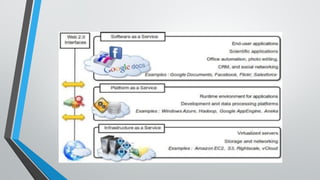
• Infrastructure-as-a-Service(IaaS):It helps businesses to scale their computer
resources up or down whenever needed without any requirement for capital expenditure
on physical infrastructure. Examples of IaaS providers are Amazon Web Service(AWS),
Google Cloud, and Microsoft Azure.
• Software-as-a-Service(SaaS):With the help of SaaS, users can able to access
applications hosted in the cloud, rather than installing and running them on their local
devices. Examples of SaaS applications are Salesforce, Dropbox, and Microsoft Office 365.
• Platform-as-a-Service(PaaS):This helps organizations with a cloud-based platform to
build, deploy, and manage applications. Examples of PaaS providers are Google App
Engine, Microsoft Azure, etc.
Wireless networking principles, cloud computing

Wireless networking principles, cloud computing

  • 1.
    Wireless Networking Principles Wirelessnetworking refers to the method of transmitting data between devices without using physical cables. It uses radio waves, infrared, or microwave frequencies to enable communication over short or long distances. Wireless networking is essential in modern communication, enabling mobility, flexibility, and scalability in personal, corporate, and industrial environments.
  • 2.
    • All wirelessdevices must follow a common standard i.e., IEEE 802.11 • Wireless coverage must be there where devices are expected to use. • Wired network comes under IEEE standard 802.3 • wireless network comes under IEEE standard 802.11 • Transmission Medium: Radio Waves • Wireless networks rely on electromagnetic waves (mostly radio frequencies) to transmit data through the air. The key wireless frequency ranges include: • 2.4 GHz (used in Wi-Fi, Bluetooth) • 5 GHz (used in newer Wi-Fi standards) • Sub-6 GHz and mmWave (used in 5G)
  • 3.
    Security Principles • Wirelessis more exposed to threats due to its open nature. Common security protocols include: • WEP (outdated) • WPA2 / WPA3 – secure Wi-Fi access • VPNs – for encrypted communication over public wireless networks Mobility and Roaming • Wireless networks support device movement: • Devices can roam between access points or towers • Seamless handoff is crucial in cellular and enterprise Wi-Fi
  • 4.
    Wireless Standards andProtocols • Some widely used standards include: • IEEE 802.11 – Wi-Fi • IEEE 802.15 – Bluetooth and ZigBee • IEEE 802.16 – WiMAX • Cellular protocols – 4G (LTE), 5G NR
  • 5.
    Cloud computing Concepts: •Cloud computing is a technology that enables us to create, configure, and customize applications through an internet connection. It includes a development platform, a hard drive, software, and a database. • Cloud computing provides scalability, flexibility, cost-effectiveness, and security to individuals and organizations to manage their IT operations. • In this we have public ,private ,hybrid and community
  • 6.
    • Infrastructure-as-a-Service(IaaS):It helpsbusinesses to scale their computer resources up or down whenever needed without any requirement for capital expenditure on physical infrastructure. Examples of IaaS providers are Amazon Web Service(AWS), Google Cloud, and Microsoft Azure. • Software-as-a-Service(SaaS):With the help of SaaS, users can able to access applications hosted in the cloud, rather than installing and running them on their local devices. Examples of SaaS applications are Salesforce, Dropbox, and Microsoft Office 365. • Platform-as-a-Service(PaaS):This helps organizations with a cloud-based platform to build, deploy, and manage applications. Examples of PaaS providers are Google App Engine, Microsoft Azure, etc.