Lesson 1
Online Distance
Education and
Communities of
Learners
Unit 4:
Flexible
Learning
Environment
Flexible Learning
Environment
Flexible learning
a method of learning
where students are
given freedom in how,
what, when and
where they learn.
addresses physical
space, how students
are grouped and how
time is used.
Pace
- the ability to customize
one's pace, place and
mode of learning, such
as taking accelerated
programs or engaging in
part-time learning.
Mode
- the way content is
delivered by technology,
typically through blended
learning, fully online
courses or technology-
enhanced experiences.
Online Distance
Learning
Distance learning
also known as
distance
education
e-learning
online learning
Main Components of
Distance Learning
 physical separation
of teachers and
students during
instruction
use of various
technologies to
facilitate student-
teacher and student-
student
communication
Different Platforms
Free programs designed
for educational
purposes:
Google Classroom
Edmodo
Schoology
Nearpod
Microsoft Teams
 Google
Classroom
developed by Google for
educational institutions.
- a free blended learning
tool that makes creating,
sharing, and grading
assignments easier.
- its main objective is to
make file sharing
between professors and
students more efficient.
Edmodo
- a global education
network called Edmodo
offers training,
information,
communication, and
collaboration tools to help
all students achieve their
full potential.
- is a safe network for
students and instructors
to communicate and
exchange information.
- has more than 65 million
members across 370,000+
schools worldwide.
- provides packages that
allow school leaders to
benefit from strong
analytics, provide
professional development,
and customize their
educational material.
- their products are free for
instructors and students.
Synchronous
and
Asychronous
Synchronous learning
- instructors and
students gathering at
the same time and
(virtual or physical)
place and interacting in
“real-time”.
Asynchronous
learning
- students accessing
materials at their own
pace and interacting
with each other over
longer periods.
Blended
Learning
- the approach of
utilizing both
online and in-
person learning
experiences while
instructing
students.
Online
Communities
of Learning/
Social
Networking
Networking
– the exchange of
information and
ideas among
people with a
common
profession/special
interest, usually in
an informal social
setting.
Networking
- is used by
professionals to
widen their circles of
acquaintances, find
out about job
opportunities, and
increase their
awareness of news
and trends in their
fields.
Social Networking
Platforms:
Facebook
Twitter
LinkedIn
Google+
YouTube
Pinterest
Instagram
Tumblr
MySpace
Flickr
Lesson 2
Online
Resources,
Educational
Sites and
Portals
Unit 4:
Flexible
Learning
Environment
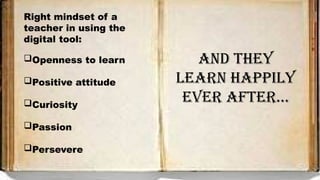
Right mindset of a
teacher in using the
digital tool:
Openness to learn
Positive attitude
Curiosity
Passion
Persevere
AND THEY
LEARN HAPPILY
EVER AFTER…

TECHNOLOGY FOR TEACHING AND LEARNING: UNIT 4 FLEXIBLE LERNING ENVIRONMENT.pptx

  • 1.
    Lesson 1 Online Distance Educationand Communities of Learners Unit 4: Flexible Learning Environment
  • 2.
    Flexible Learning Environment Flexible learning amethod of learning where students are given freedom in how, what, when and where they learn. addresses physical space, how students are grouped and how time is used. Pace - the ability to customize one's pace, place and mode of learning, such as taking accelerated programs or engaging in part-time learning. Mode - the way content is delivered by technology, typically through blended learning, fully online courses or technology- enhanced experiences.
  • 3.
    Online Distance Learning Distance learning alsoknown as distance education e-learning online learning Main Components of Distance Learning  physical separation of teachers and students during instruction use of various technologies to facilitate student- teacher and student- student communication
  • 4.
    Different Platforms Free programsdesigned for educational purposes: Google Classroom Edmodo Schoology Nearpod Microsoft Teams  Google Classroom developed by Google for educational institutions. - a free blended learning tool that makes creating, sharing, and grading assignments easier. - its main objective is to make file sharing between professors and students more efficient.
  • 5.
    Edmodo - a globaleducation network called Edmodo offers training, information, communication, and collaboration tools to help all students achieve their full potential. - is a safe network for students and instructors to communicate and exchange information. - has more than 65 million members across 370,000+ schools worldwide. - provides packages that allow school leaders to benefit from strong analytics, provide professional development, and customize their educational material. - their products are free for instructors and students.
  • 6.
    Synchronous and Asychronous Synchronous learning - instructorsand students gathering at the same time and (virtual or physical) place and interacting in “real-time”. Asynchronous learning - students accessing materials at their own pace and interacting with each other over longer periods.
  • 7.
    Blended Learning - the approachof utilizing both online and in- person learning experiences while instructing students.
  • 8.
    Online Communities of Learning/ Social Networking Networking – theexchange of information and ideas among people with a common profession/special interest, usually in an informal social setting.
  • 9.
    Networking - is usedby professionals to widen their circles of acquaintances, find out about job opportunities, and increase their awareness of news and trends in their fields. Social Networking Platforms: Facebook Twitter LinkedIn Google+ YouTube Pinterest Instagram Tumblr MySpace Flickr
  • 10.
  • 11.
    Right mindset ofa teacher in using the digital tool: Openness to learn Positive attitude Curiosity Passion Persevere AND THEY LEARN HAPPILY EVER AFTER…