Technology and Traditional Sources of Competitive Advantage Tonje Hovland Berntsen
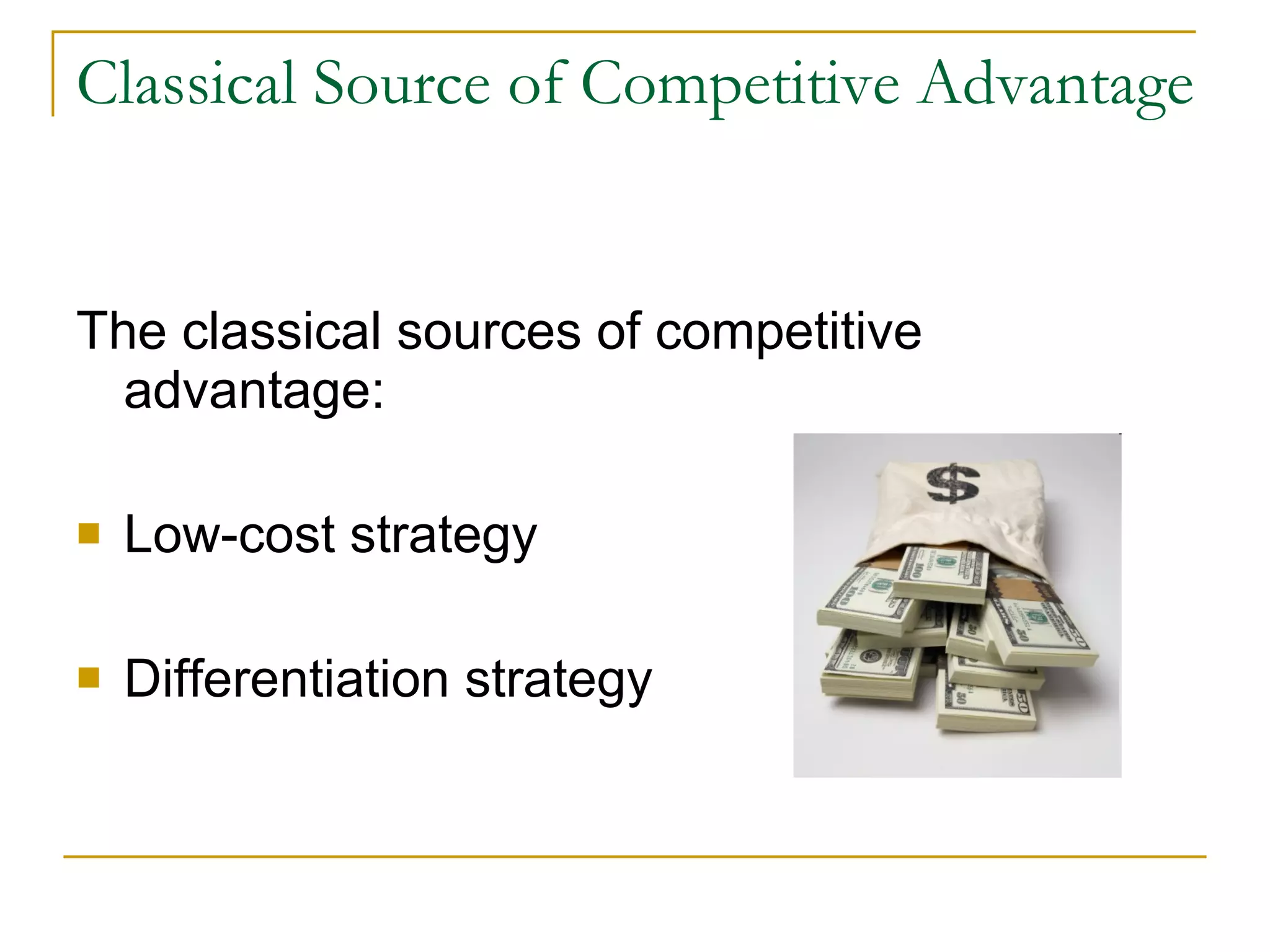
Classical Source of Competitive Advantage The classical sources of competitive advantage: Low-cost strategy Differentiation strategy
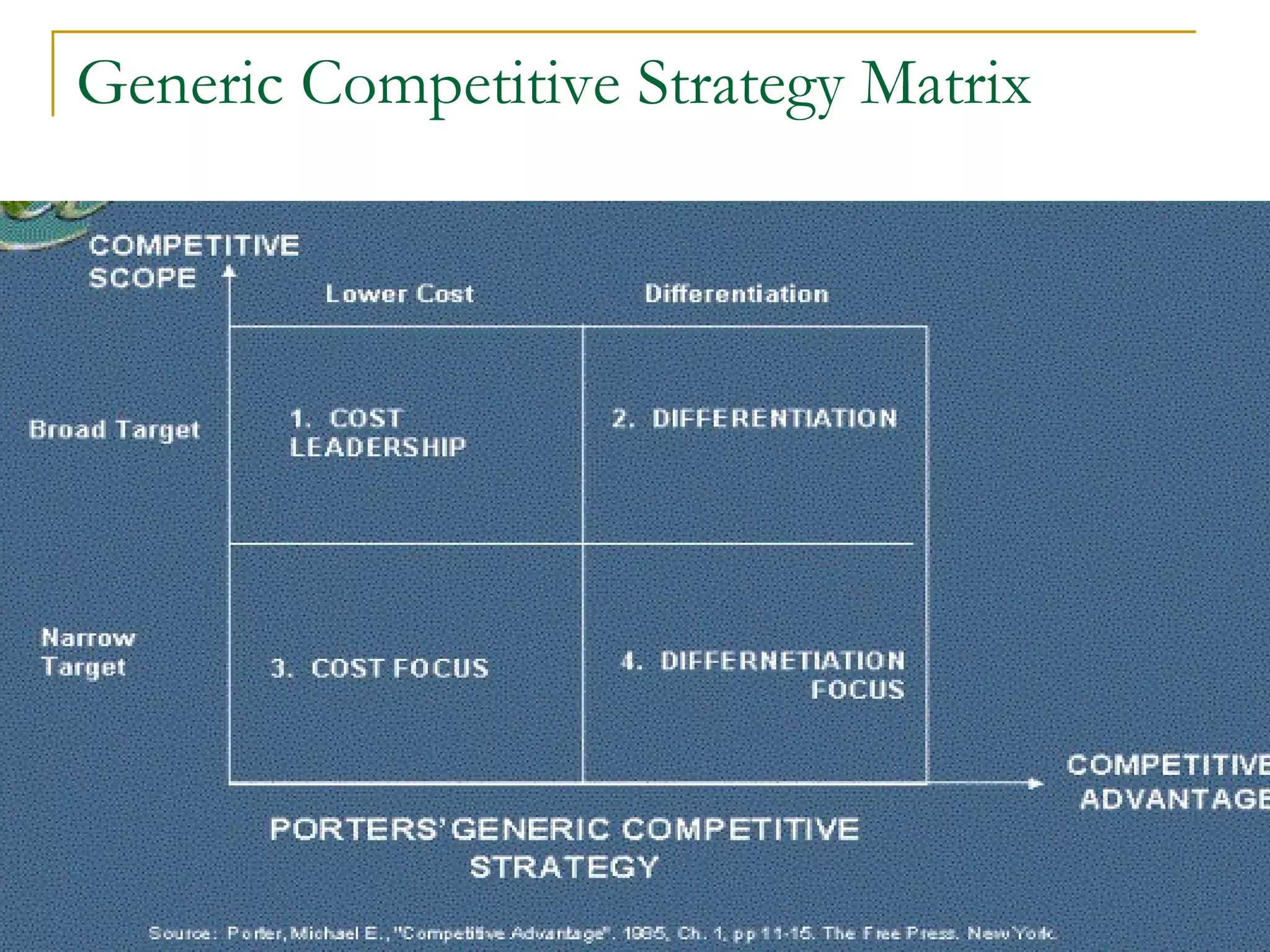
Generic Competitive Strategy Matrix
Cost-Based Strategies Discussion Question: How do cost-based strategies (cost advantages) provide a powerful competitive advantage? Pursue options unavailabe to other firms Lower cost base    ability to win on price and gain market share and volume Win on profit margin and reinvest for further competitive advantage
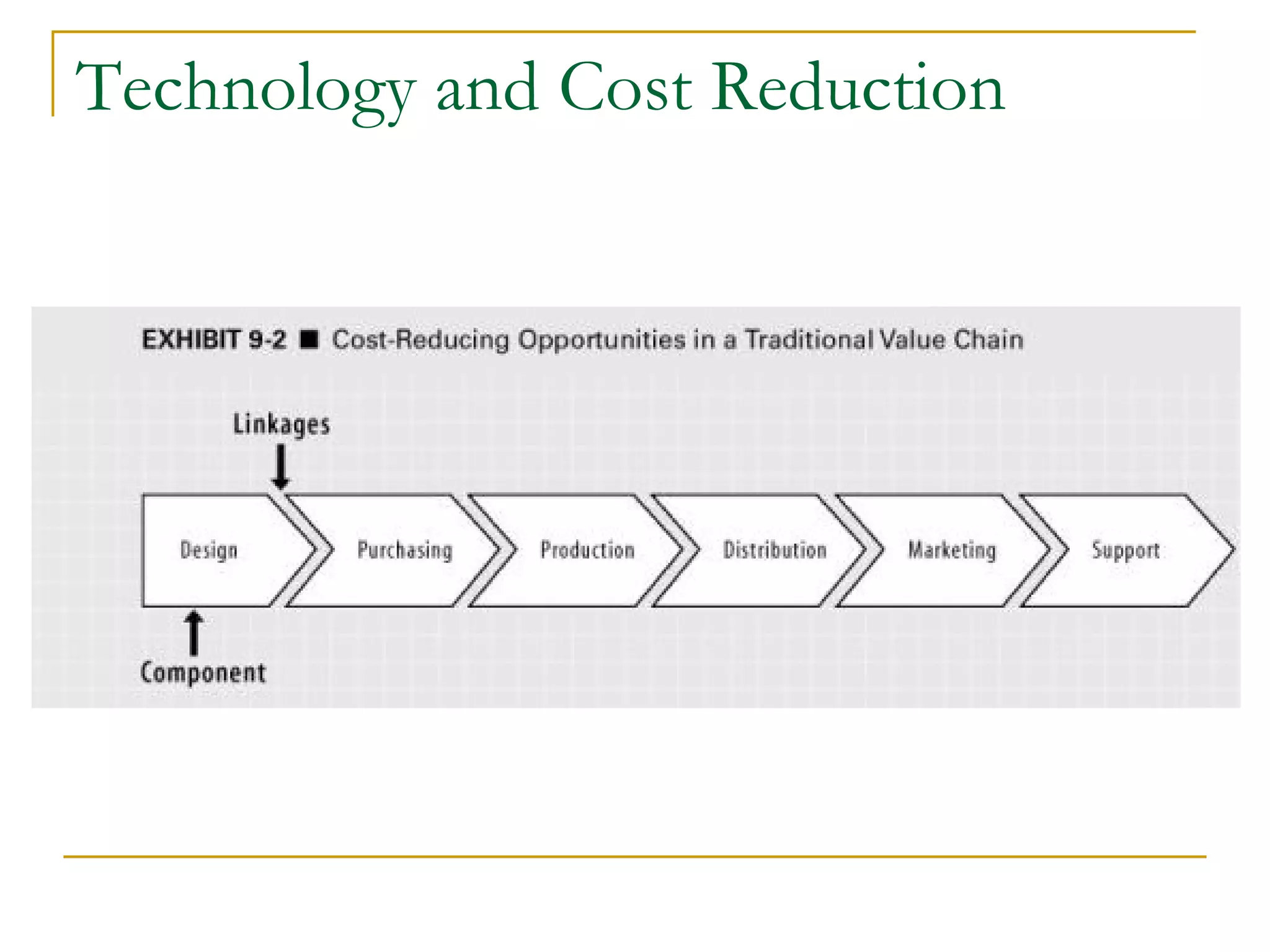
Technology and Cost Reduction
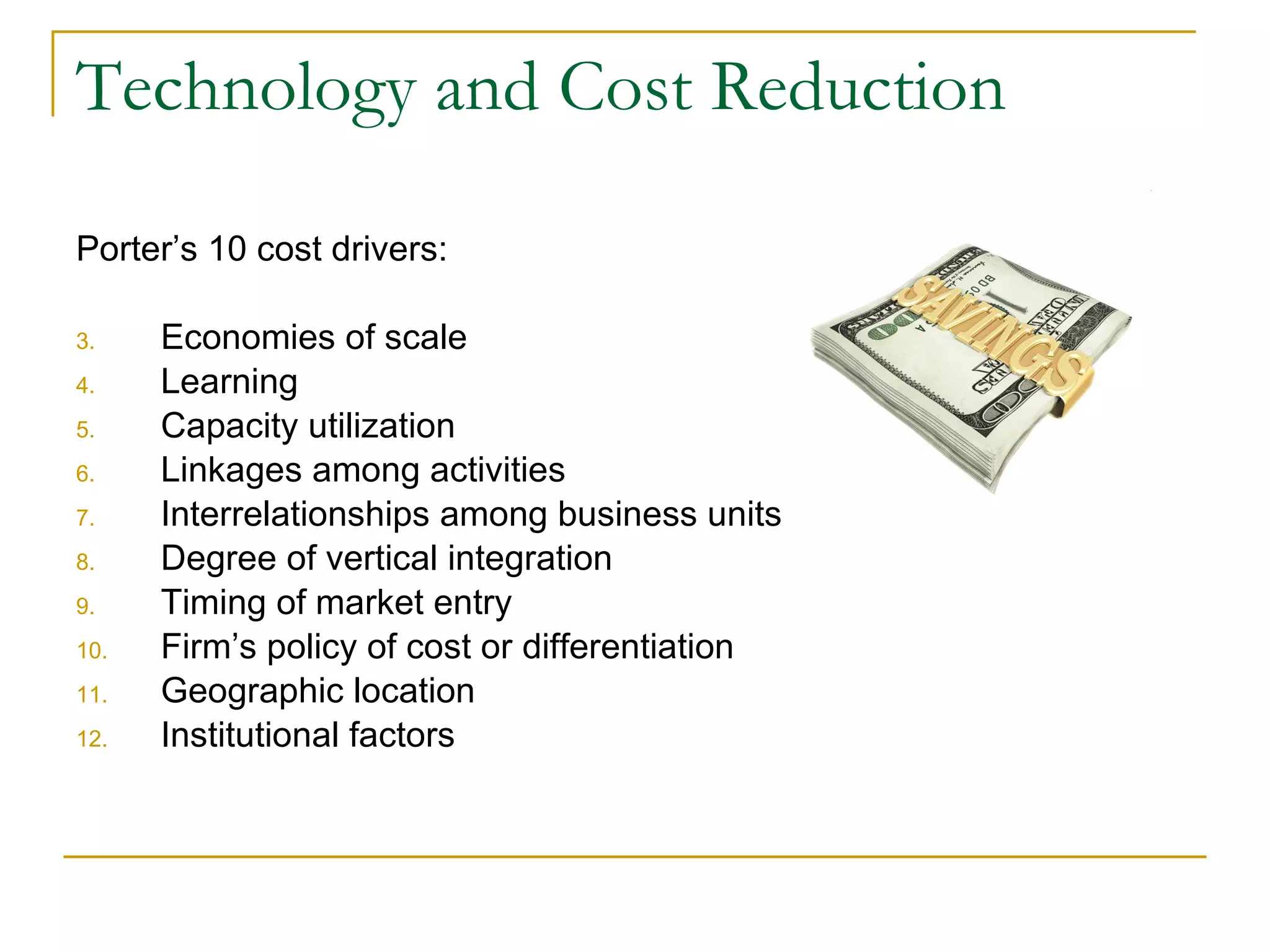
Technology and Cost Reduction Porter’s 10 cost drivers: Economies of scale Learning Capacity utilization Linkages among activities Interrelationships among business units Degree of vertical integration Timing of market entry Firm’s policy of cost or differentiation Geographic location Institutional factors
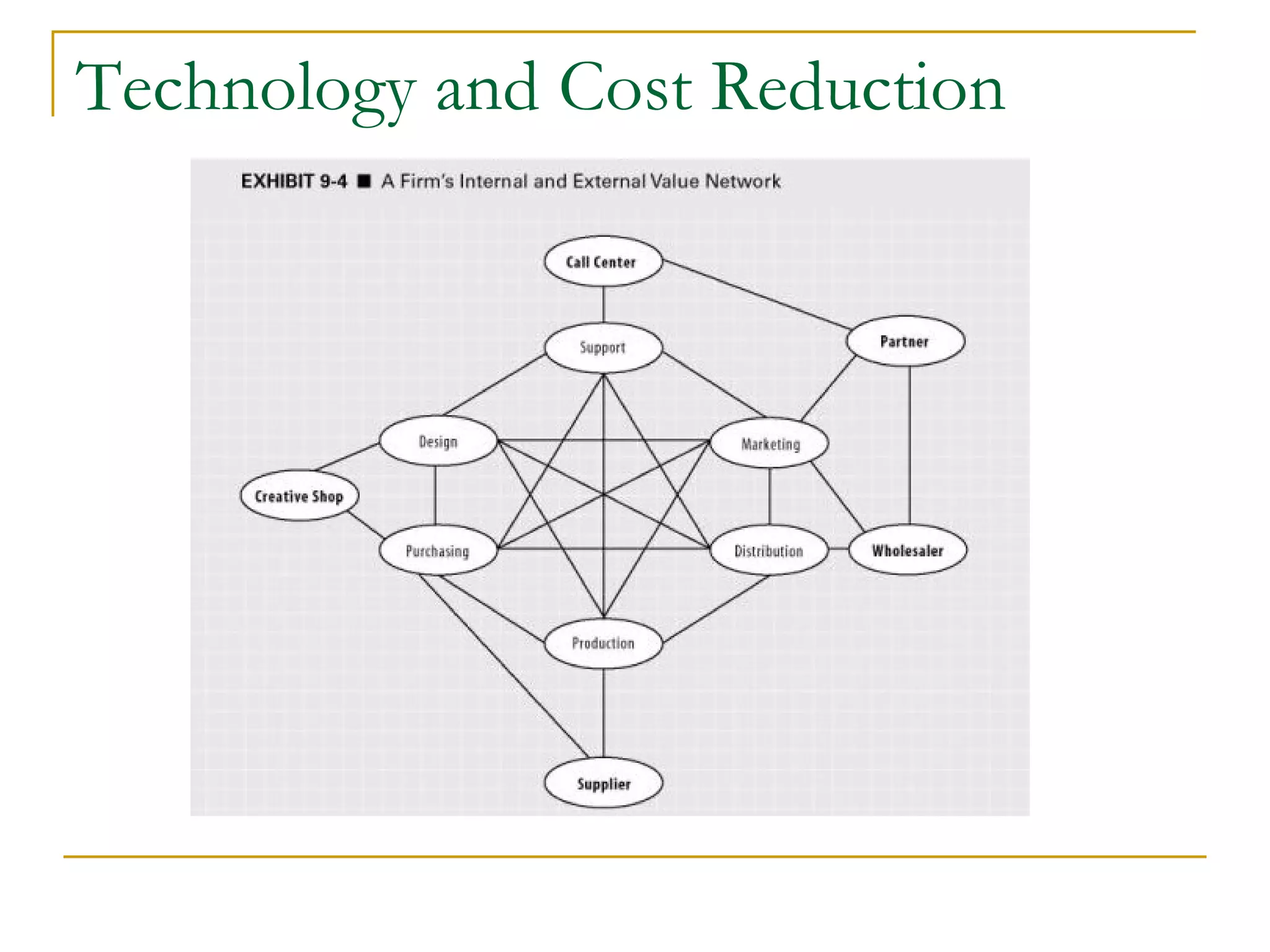
Technology and Cost Reduction
Wal-Mart One of the most efficient retail operators in the world Grown at a double-digit annual pace 2 million employees Technology or scale and supply chain capabilities? http://www.youtube.com/watch?v=b5K1yrICMII
Total Cost of Ownership (TCO) TCO: A tool to assess both direct and indirect costs and benefits Integration costs Maintainance and support costs Learning Ambiguities in process change New technology    Change
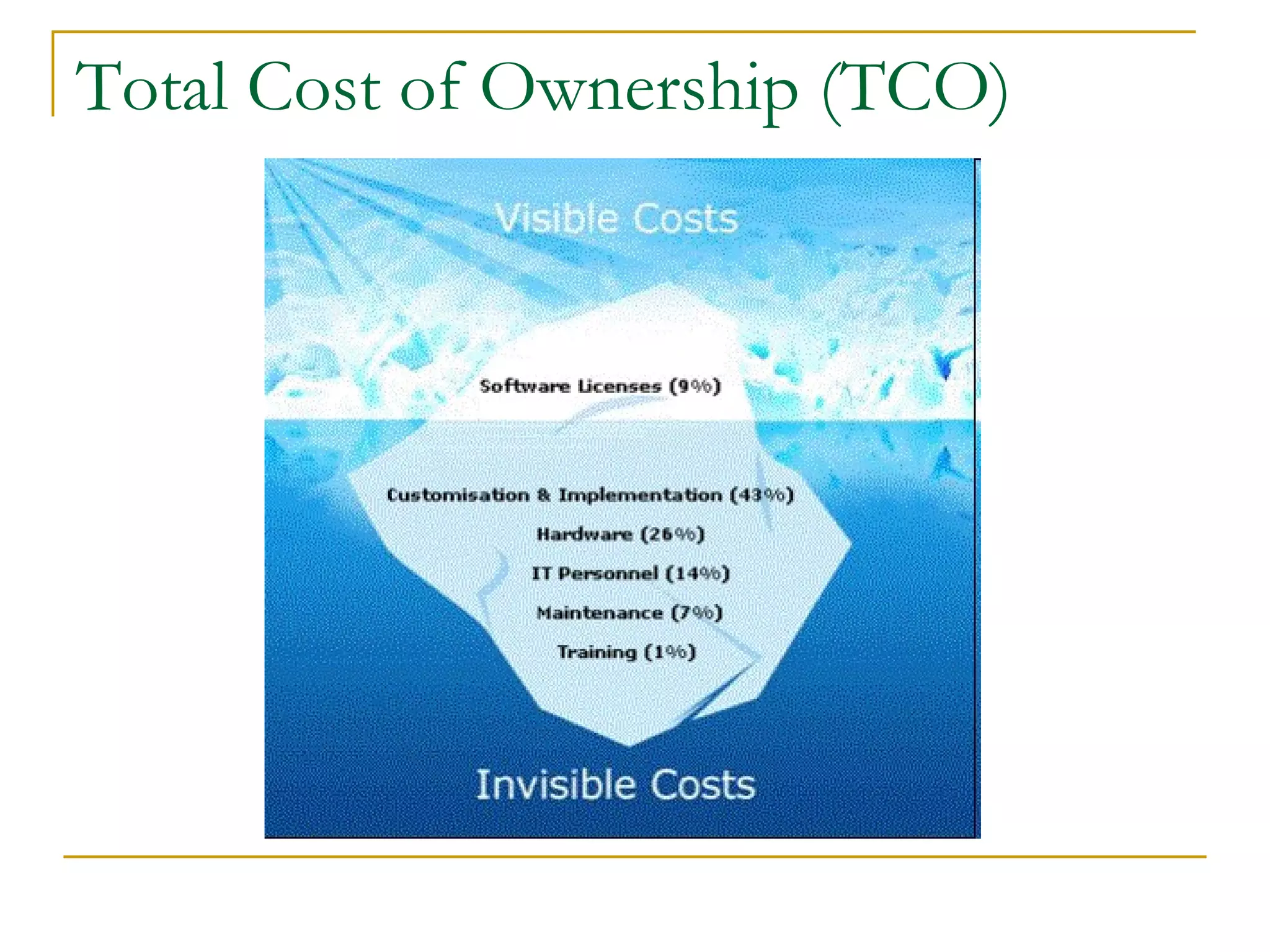
Total Cost of Ownership (TCO)
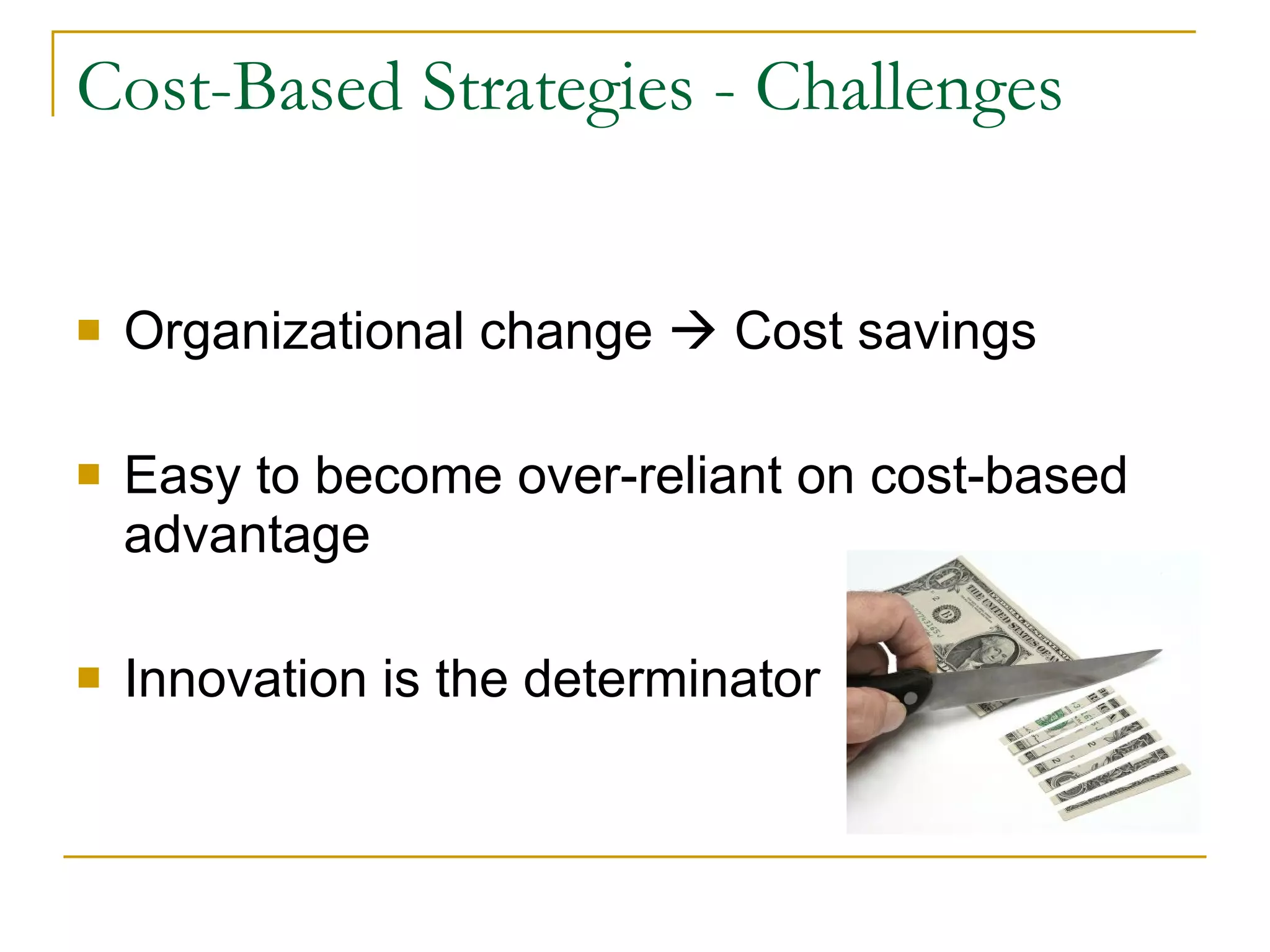
Cost-Based Strategies - Challenges Organizational change    Cost savings Easy to become over-reliant on cost-based advantage Innovation is the determinator
Differentiation-Based Strategies Discussion Question: What makes a differentiation strategy different from a cost-based strategy? Highly ambiguous measure Multiple valuable and unique attributes Multiple firms can succeed Customer based
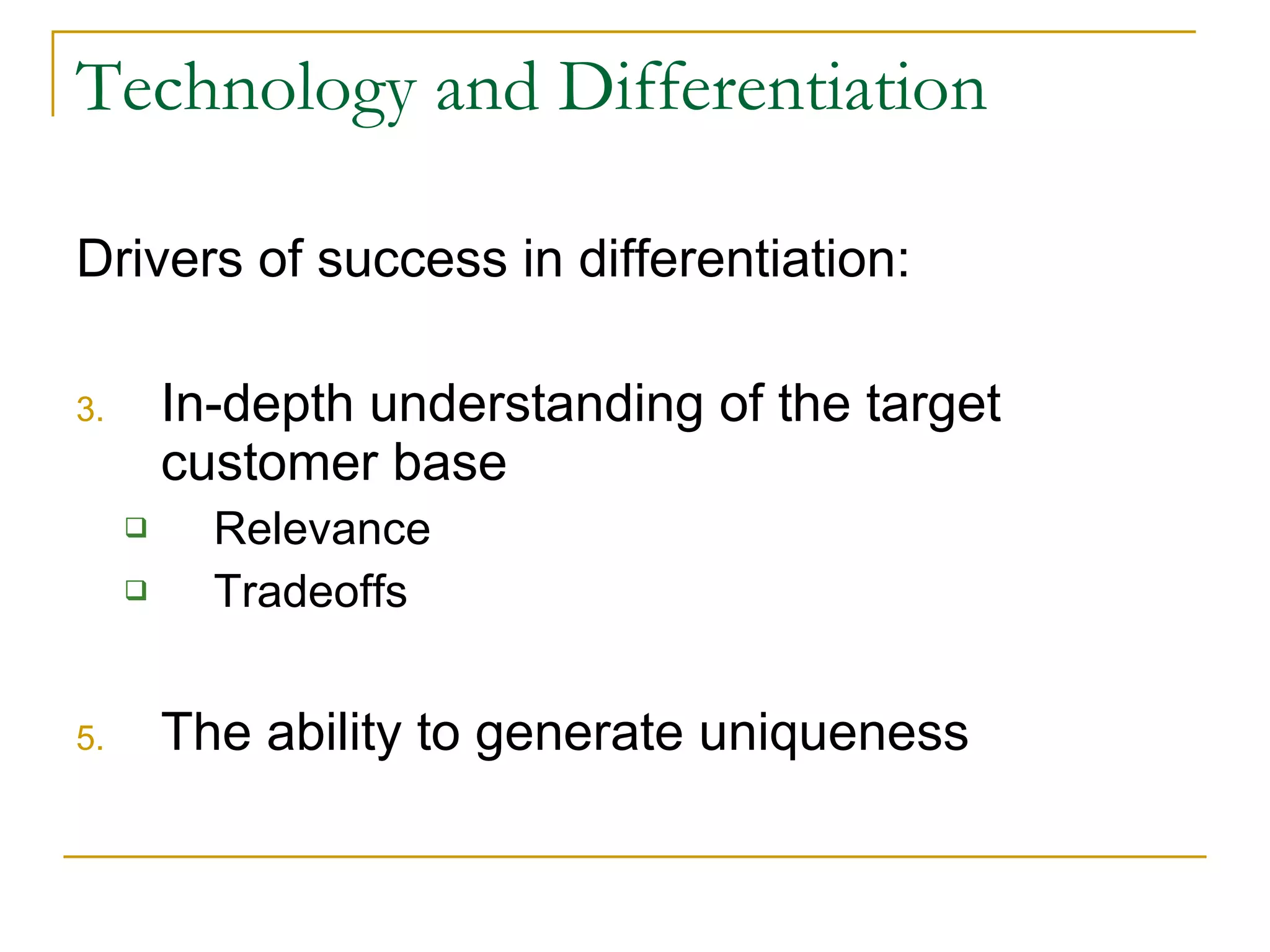
Technology and Differentiation Drivers of success in differentiation: In-depth understanding of the target customer base Relevance Tradeoffs The ability to generate uniqueness
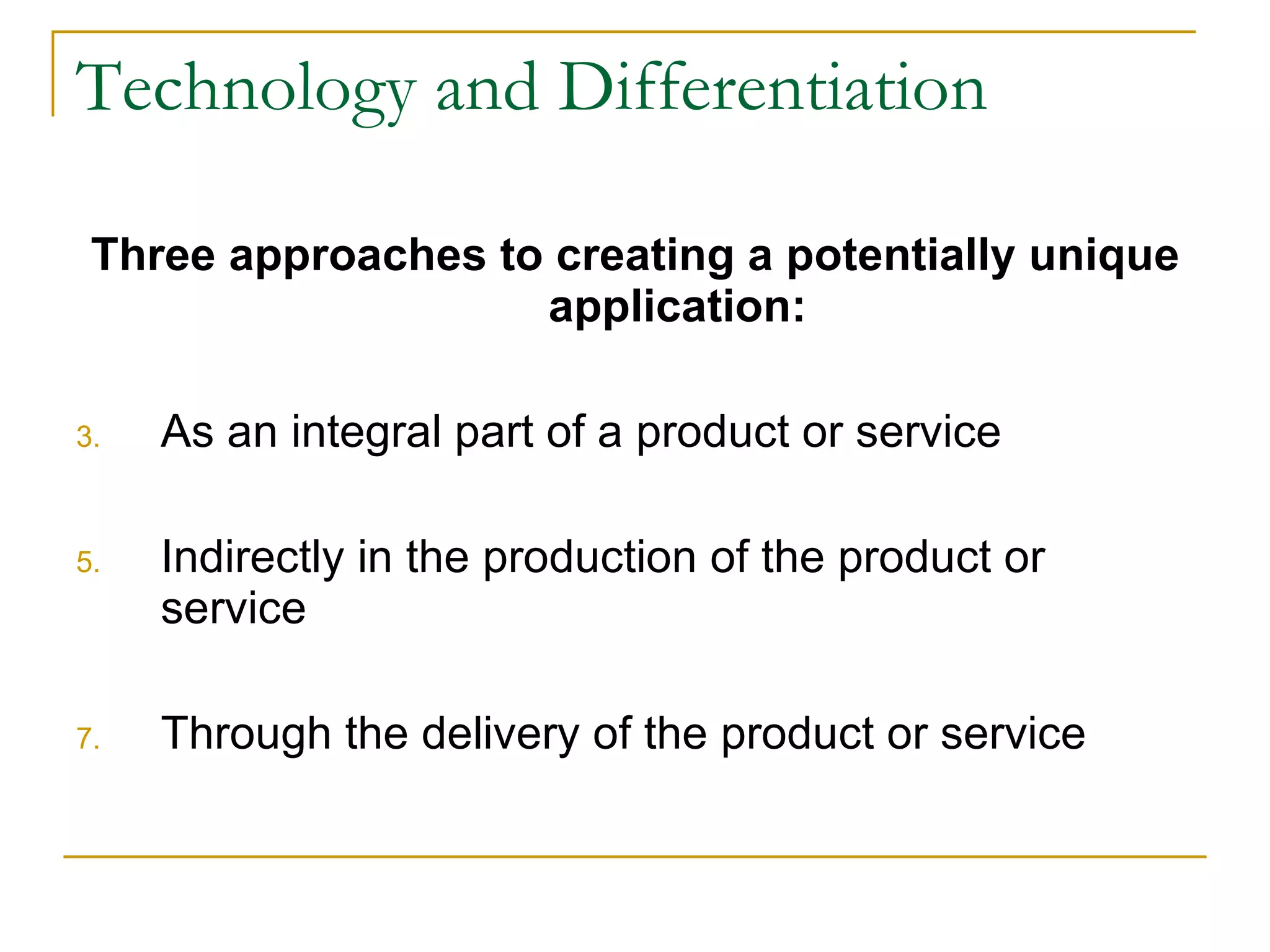
Technology and Differentiation Three approaches to creating a potentially unique application: As an integral part of a product or service Indirectly in the production of the product or service Through the delivery of the product or service
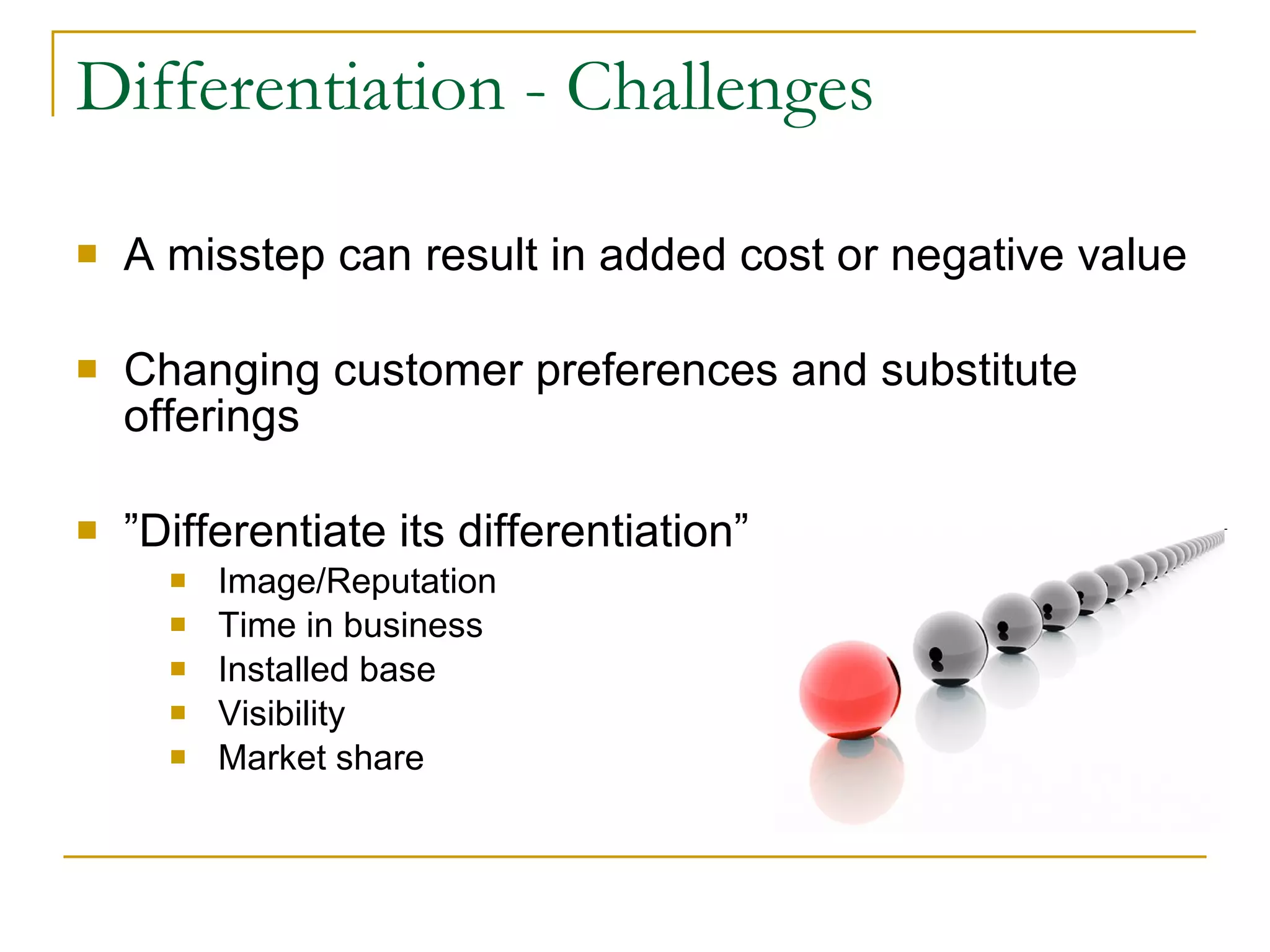
Differentiation - Challenges A misstep can result in added cost or negative value Changing customer preferences and substitute offerings ” Differentiate its differentiation” Image/Reputation Time in business Installed base Visibility Market share
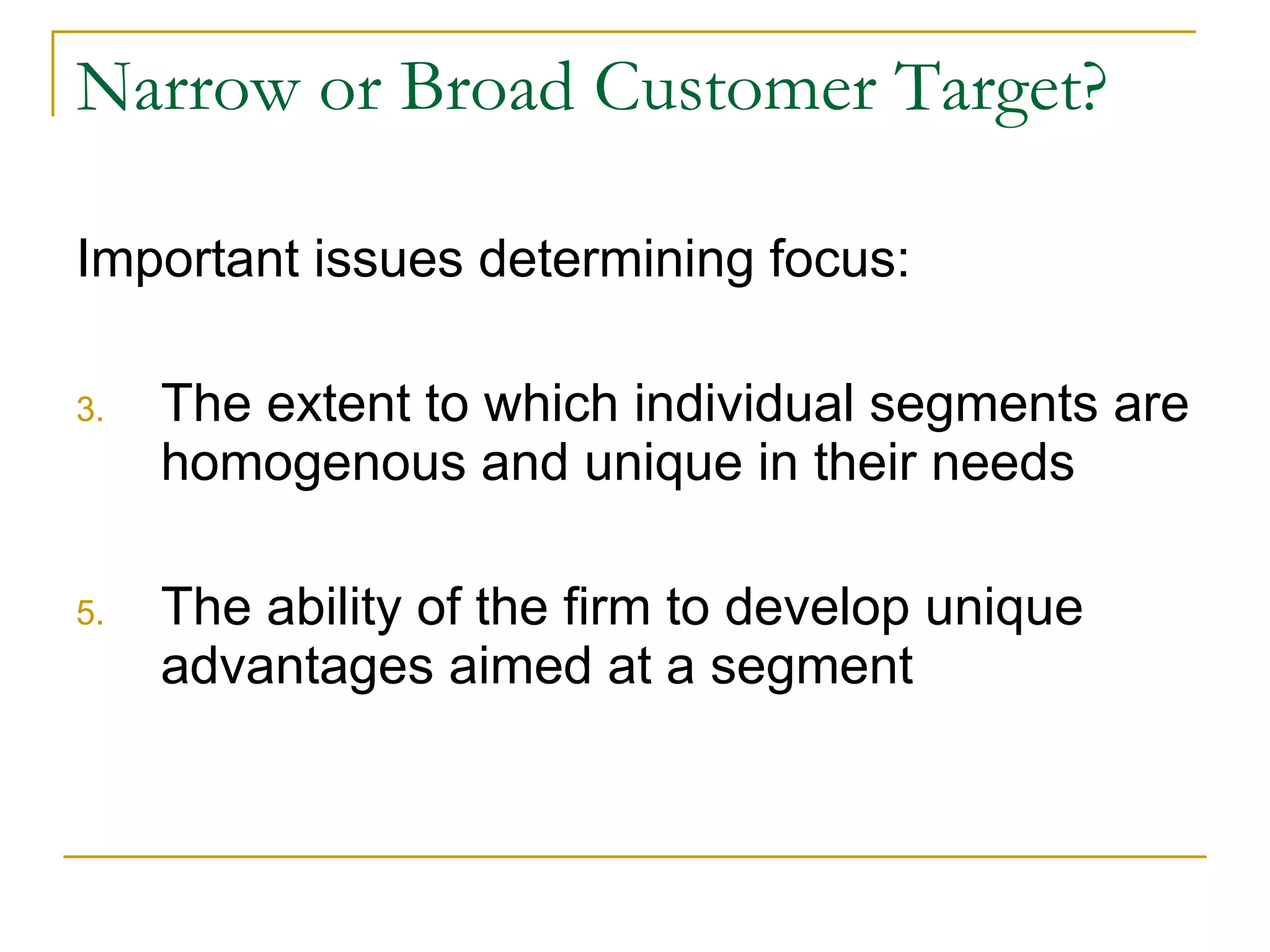
Narrow or Broad Customer Target? Important issues determining focus: The extent to which individual segments are homogenous and unique in their needs The ability of the firm to develop unique advantages aimed at a segment
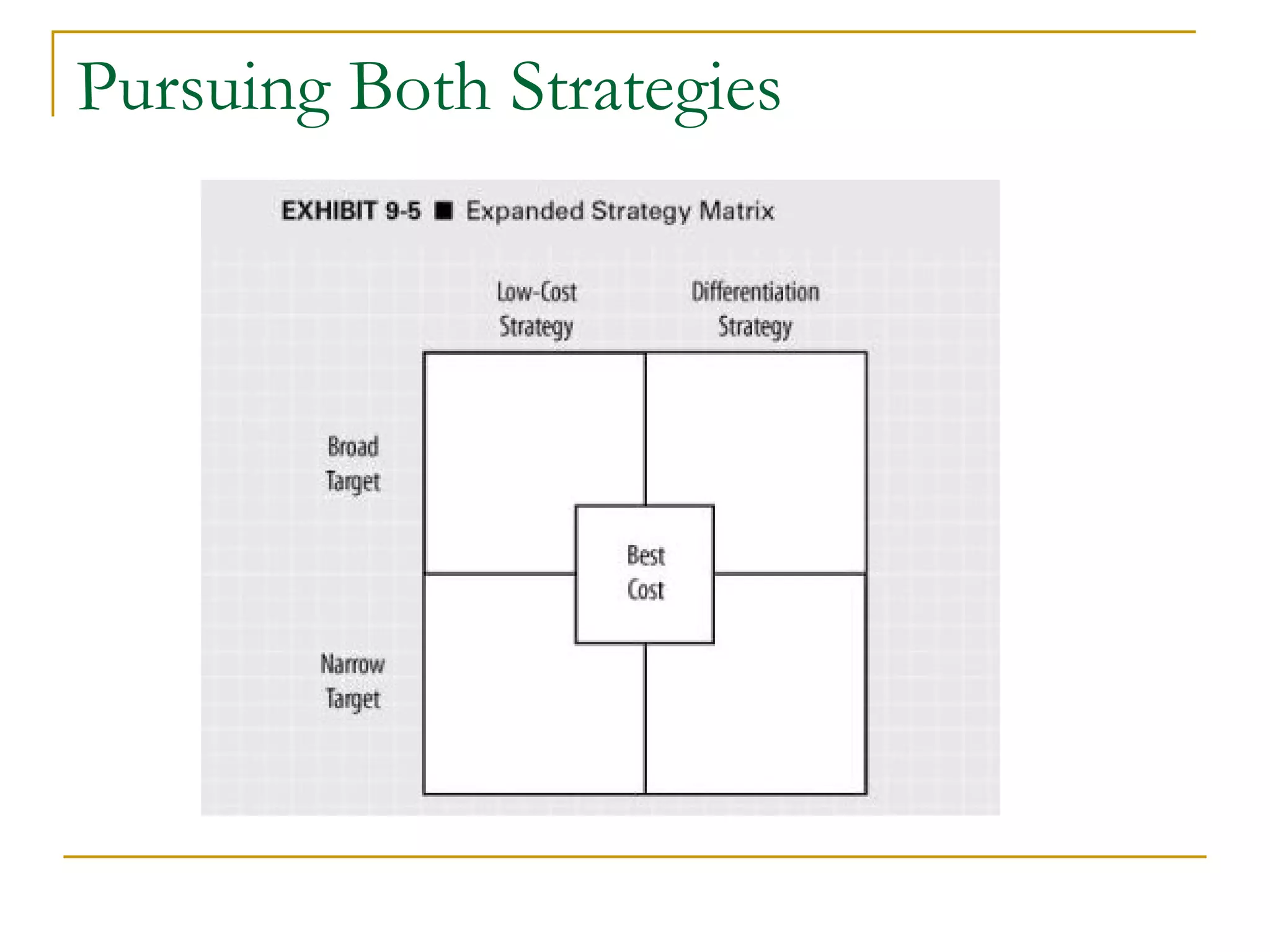
Pursuing Both Strategies
Questions or comments? Thank you!!
References http://www.atwebo.com/porter%27s_comptetitive_strategy.htm http://www.netmba.com/strategy/value-chain/ http://searchdatacenter.techtarget.com/sDefinition/0,,sid80_gci342316,00.html http://www.tascomi.com/images/elements/lcow.gif

Technology and Traditional Sources of Competitive Advantage

  • 1.
    Technology and TraditionalSources of Competitive Advantage Tonje Hovland Berntsen
  • 2.
    Classical Source ofCompetitive Advantage The classical sources of competitive advantage: Low-cost strategy Differentiation strategy
  • 3.
  • 4.
    Cost-Based Strategies DiscussionQuestion: How do cost-based strategies (cost advantages) provide a powerful competitive advantage? Pursue options unavailabe to other firms Lower cost base  ability to win on price and gain market share and volume Win on profit margin and reinvest for further competitive advantage
  • 5.
  • 6.
    Technology and CostReduction Porter’s 10 cost drivers: Economies of scale Learning Capacity utilization Linkages among activities Interrelationships among business units Degree of vertical integration Timing of market entry Firm’s policy of cost or differentiation Geographic location Institutional factors
  • 7.
  • 8.
    Wal-Mart One ofthe most efficient retail operators in the world Grown at a double-digit annual pace 2 million employees Technology or scale and supply chain capabilities? http://www.youtube.com/watch?v=b5K1yrICMII
  • 9.
    Total Cost ofOwnership (TCO) TCO: A tool to assess both direct and indirect costs and benefits Integration costs Maintainance and support costs Learning Ambiguities in process change New technology  Change
  • 10.
    Total Cost ofOwnership (TCO)
  • 11.
    Cost-Based Strategies -Challenges Organizational change  Cost savings Easy to become over-reliant on cost-based advantage Innovation is the determinator
  • 12.
    Differentiation-Based Strategies DiscussionQuestion: What makes a differentiation strategy different from a cost-based strategy? Highly ambiguous measure Multiple valuable and unique attributes Multiple firms can succeed Customer based
  • 13.
    Technology and DifferentiationDrivers of success in differentiation: In-depth understanding of the target customer base Relevance Tradeoffs The ability to generate uniqueness
  • 14.
    Technology and DifferentiationThree approaches to creating a potentially unique application: As an integral part of a product or service Indirectly in the production of the product or service Through the delivery of the product or service
  • 15.
    Differentiation - ChallengesA misstep can result in added cost or negative value Changing customer preferences and substitute offerings ” Differentiate its differentiation” Image/Reputation Time in business Installed base Visibility Market share
  • 16.
    Narrow or BroadCustomer Target? Important issues determining focus: The extent to which individual segments are homogenous and unique in their needs The ability of the firm to develop unique advantages aimed at a segment
  • 17.
  • 18.
  • 19.
    References http://www.atwebo.com/porter%27s_comptetitive_strategy.htm http://www.netmba.com/strategy/value-chain/http://searchdatacenter.techtarget.com/sDefinition/0,,sid80_gci342316,00.html http://www.tascomi.com/images/elements/lcow.gif