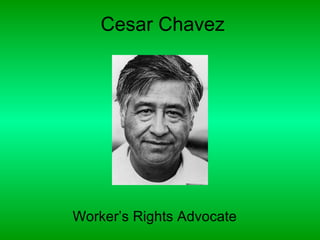
Cesar Chavez


Worker’s Rights Advocate
Standard
• SS3H2 The student will discuss the lives of
  Americans who expanded people's rights
  and freedoms in a democracy.
  – a. Paul Revere (independence), Frederick Douglass
    (civil rights), Susan B. Anthony (women's rights),
    Mary McLeod Bethune (education), Franklin D.
    Roosevelt (New Deal and World War II), Eleanor
    Roosevelt (United Nations and human rights),
    Thurgood Marshall (civil rights), Lyndon B. Johnson
    (Great Society and voting rights), and Cesar Chavez
    (workers' rights).
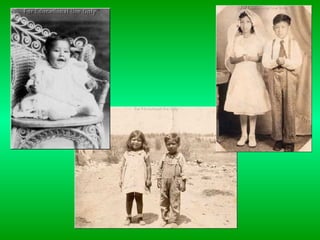
Early Years
• Cesar Chavez was born in 1927 near
  Yuma, Arizona.
• Grandfather was a runaway slave who
  emigrated from Mexico to Texas.
• He wanted a better life for his family and
  soon bought a farm.
• Cesar’s whole family worked hard on the
  100 acre family farm.
Losing the Farm
• Cesar’s family lost their farm during The
  Great Depression, which was a time of
  economic poverty in America.
• Cesar was 10 years old.
• The family left to find work to survive.
• Widespread droughts in the Southwest
  forced The Chavez family to move to another
  state.
• Everything had changed for Cesar and his
  life was very hard.
• The family had to leave most everything they
  owned behind in Arizona.
Migrant Workers
• Cesar’s family became migrant workers
  who followed crops to find work.
• They traveled to pick the fruit or
  vegetables in season for Californian farm
  owners.
• Migrant workers could not own permanent
  homes.
• Families carried their few belongings in
  their trucks and sometimes slept there.
• Some lived in crowned public houses
  without running waster, electricity, or
  bathrooms.
Going to School
• Migrant children attended many different
  school because their families moved a lot.
• Cesar attended 65 different elementary
  schools.
• Some teachers discriminated against
  Spanish speaking students by physically
  punishing them for speaking Spanish at
  school.
• Cesar kept working hard and graduated
  from 8th grade.
• Most children did not make it that far.
After School
• After school Cesar worked all day in the
  field with his family.
• He watched farm owners take advantage
  of their workers.
• Cesar asked for higher wages and safety
  rules for his fellow migrant workers.
• He was just one voice and although the
  workers agreed with Cesar, most were
  silent.
• They were silent because they were afraid
  of losing their jobs.
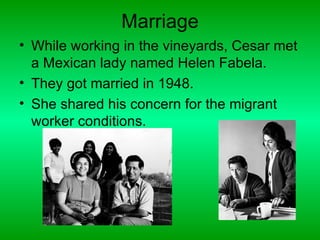
Marriage
• While working in the vineyards, Cesar met
  a Mexican lady named Helen Fabela.
• They got married in 1948.
• She shared his concern for the migrant
  worker conditions.
American Citizens
• In order to become an American citizen,
  foreigners must take an English test about
  America.
• Cesar and Helen taught Mexican migrant
  workers how to read and write.
• Then they could become American
  citizens with rights.
Community Service Organization
• Cesar was asked to help the Community
  Service Organization (CSO) in 1952.
• This group told farm workers about their
  rights.
• Cesar picked fruit all day and registered
  Mexican workers to vote at night.
• He wanted to help workers more than farm
  owners.
• Cesar joined CSO full time.
• He asked farm workers around California
  to stand up for their rights.
Organizing a Farm Union
• Then Cesar left CSO to organize a farm
  union.
• In 6 months there were 300 members in
  the United Farm Workers of America.
• When farm owners ignored their requests
  for better pay and safe working conditions,
  the union held a 5 year strike and nation-
  wide grape boycott.
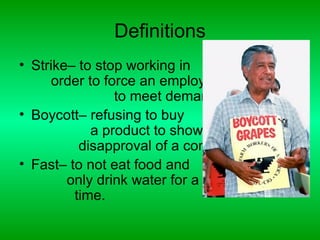
Definitions
• Strike– to stop working in
     order to force an employer
                to meet demands.
• Boycott– refusing to buy
            a product to show
          disapproval of a company.
• Fast– to not eat food and
        only drink water for a set
         time.
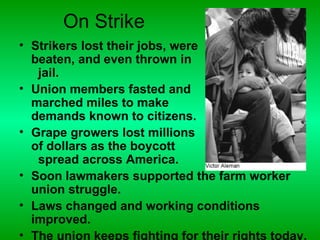
On Strike
• Strikers lost their jobs, were
  beaten, and even thrown in
   jail.
• Union members fasted and
  marched miles to make
  demands known to citizens.
• Grape growers lost millions
  of dollars as the boycott
   spread across America.
• Soon lawmakers supported the farm worker
  union struggle.
• Laws changed and working conditions
  improved.
• The union keeps fighting for their rights today.
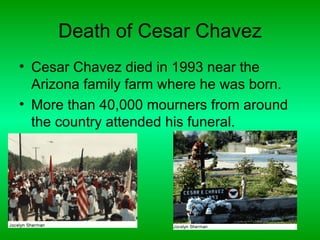
Death of Cesar Chavez
• Cesar Chavez died in 1993 near the
  Arizona family farm where he was born.
• More than 40,000 mourners from around
  the country attended his funeral.
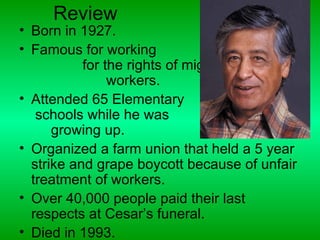
Review
• Born in 1927.
• Famous for working
           for the rights of migrant
                workers.
• Attended 65 Elementary
   schools while he was
      growing up.
• Organized a farm union that held a 5 year
  strike and grape boycott because of unfair
  treatment of workers.
• Over 40,000 people paid their last
  respects at Cesar’s funeral.
• Died in 1993.
Activity
• Create an electronic picket sign that you would have
  carried during the time of protests with Cesar Chavez.

• Upload it to VoiceThread.

• Make a comment on it that includes why you chose the
  words you chose for your sign.

• Post your link so others can comment on your
  VoiceThread.

Cesar Chavez

  • 1.
  • 2.
    Standard • SS3H2 Thestudent will discuss the lives of Americans who expanded people's rights and freedoms in a democracy. – a. Paul Revere (independence), Frederick Douglass (civil rights), Susan B. Anthony (women's rights), Mary McLeod Bethune (education), Franklin D. Roosevelt (New Deal and World War II), Eleanor Roosevelt (United Nations and human rights), Thurgood Marshall (civil rights), Lyndon B. Johnson (Great Society and voting rights), and Cesar Chavez (workers' rights).
  • 3.
    Early Years • CesarChavez was born in 1927 near Yuma, Arizona. • Grandfather was a runaway slave who emigrated from Mexico to Texas. • He wanted a better life for his family and soon bought a farm. • Cesar’s whole family worked hard on the 100 acre family farm.
  • 5.
    Losing the Farm •Cesar’s family lost their farm during The Great Depression, which was a time of economic poverty in America. • Cesar was 10 years old. • The family left to find work to survive. • Widespread droughts in the Southwest forced The Chavez family to move to another state. • Everything had changed for Cesar and his life was very hard. • The family had to leave most everything they owned behind in Arizona.
  • 6.
    Migrant Workers • Cesar’sfamily became migrant workers who followed crops to find work. • They traveled to pick the fruit or vegetables in season for Californian farm owners. • Migrant workers could not own permanent homes. • Families carried their few belongings in their trucks and sometimes slept there. • Some lived in crowned public houses without running waster, electricity, or bathrooms.
  • 7.
    Going to School •Migrant children attended many different school because their families moved a lot. • Cesar attended 65 different elementary schools. • Some teachers discriminated against Spanish speaking students by physically punishing them for speaking Spanish at school. • Cesar kept working hard and graduated from 8th grade. • Most children did not make it that far.
  • 8.
    After School • Afterschool Cesar worked all day in the field with his family. • He watched farm owners take advantage of their workers. • Cesar asked for higher wages and safety rules for his fellow migrant workers. • He was just one voice and although the workers agreed with Cesar, most were silent. • They were silent because they were afraid of losing their jobs.
  • 9.
    Marriage • While workingin the vineyards, Cesar met a Mexican lady named Helen Fabela. • They got married in 1948. • She shared his concern for the migrant worker conditions.
  • 10.
    American Citizens • Inorder to become an American citizen, foreigners must take an English test about America. • Cesar and Helen taught Mexican migrant workers how to read and write. • Then they could become American citizens with rights.
  • 11.
    Community Service Organization •Cesar was asked to help the Community Service Organization (CSO) in 1952. • This group told farm workers about their rights. • Cesar picked fruit all day and registered Mexican workers to vote at night. • He wanted to help workers more than farm owners. • Cesar joined CSO full time. • He asked farm workers around California to stand up for their rights.
  • 12.
    Organizing a FarmUnion • Then Cesar left CSO to organize a farm union. • In 6 months there were 300 members in the United Farm Workers of America. • When farm owners ignored their requests for better pay and safe working conditions, the union held a 5 year strike and nation- wide grape boycott.
  • 13.
    Definitions • Strike– tostop working in order to force an employer to meet demands. • Boycott– refusing to buy a product to show disapproval of a company. • Fast– to not eat food and only drink water for a set time.
  • 14.
    On Strike • Strikerslost their jobs, were beaten, and even thrown in jail. • Union members fasted and marched miles to make demands known to citizens. • Grape growers lost millions of dollars as the boycott spread across America. • Soon lawmakers supported the farm worker union struggle. • Laws changed and working conditions improved. • The union keeps fighting for their rights today.
  • 15.
    Death of CesarChavez • Cesar Chavez died in 1993 near the Arizona family farm where he was born. • More than 40,000 mourners from around the country attended his funeral.
  • 16.
    Review • Born in1927. • Famous for working for the rights of migrant workers. • Attended 65 Elementary schools while he was growing up. • Organized a farm union that held a 5 year strike and grape boycott because of unfair treatment of workers. • Over 40,000 people paid their last respects at Cesar’s funeral. • Died in 1993.
  • 18.
    Activity • Create anelectronic picket sign that you would have carried during the time of protests with Cesar Chavez. • Upload it to VoiceThread. • Make a comment on it that includes why you chose the words you chose for your sign. • Post your link so others can comment on your VoiceThread.